Max Andrews

121 posts

Max Andrews banner
Max Andrews

Max Andrews

@MaxAndrews100

Sports Scientist | PhD BExSS (Hons1) UQ

Brisbane Katılım Haziran 2018
1.2K Takip Edilen609 Takipçiler
Max Andrews retweetledi
Nick Krontiris
Nick Krontiris@nick_krontiris·
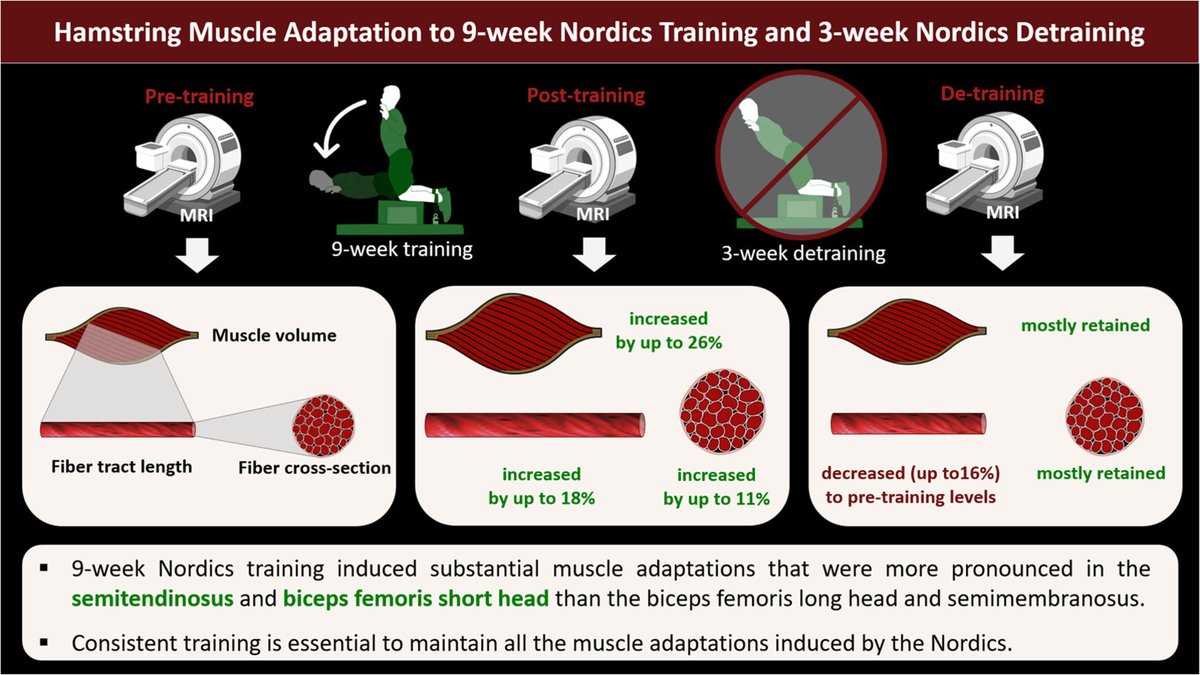
Hamstring muscle architecture and microstructure changes following Nordic hamstring exercise training and detraining (open access) doi.org/10.1016/j.jshs…
English
0
1
2
353
Max Andrews retweetledi
Specialized Training™️
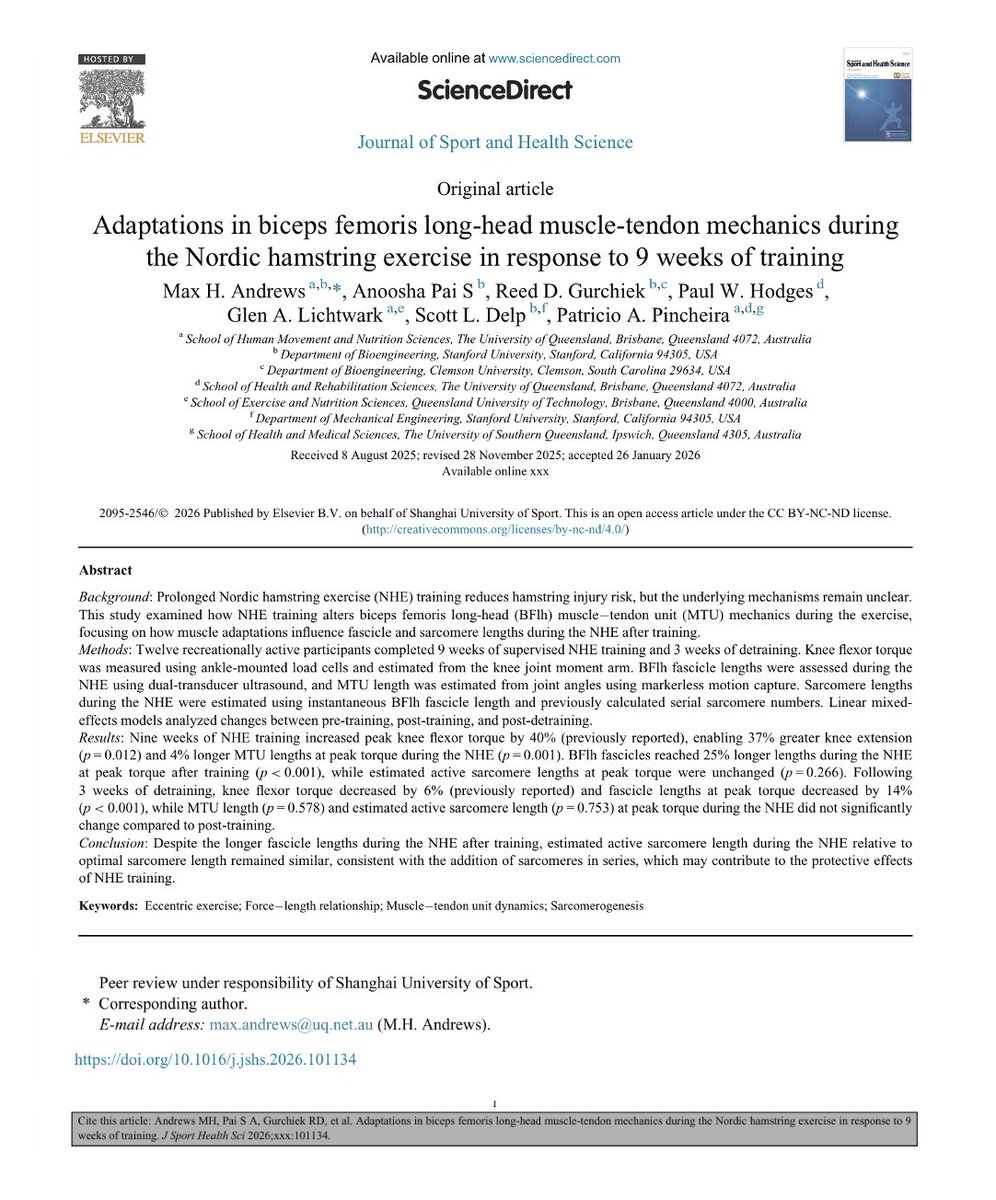
🆕"Consistent training is essential to maintain all the muscle adaptations induced by NHE training" ➡️To be taken into account in S&C program in professional ⚽️ 👉A. Pai et al, 2025 🇺🇸 📂Open Access: sciencedirect.com/science/articl…
Specialized Training™️ tweet media
English
0
1
3
636
Max Andrews retweetledi
José María Oliva Lozano
José María Oliva Lozano@jmolivalozano·
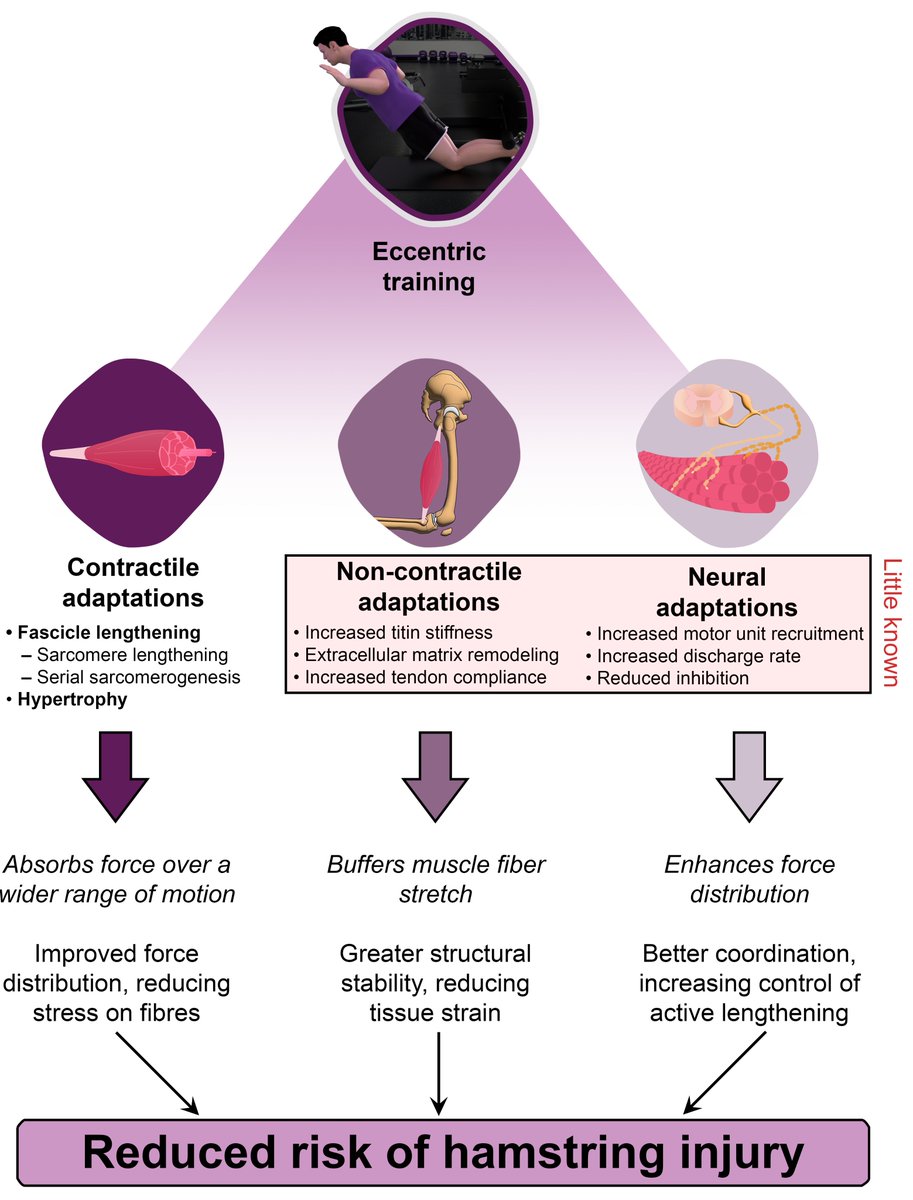
🚨🦵Hamstring injury 🔴 Prevention may be misunderstood 🟡 Most happen in sprinting when hamstrings face 🔝 eccentric load 👀 Eccentric training helps but neural + non-contractile adaptations: key 📩 Comment HAMS to get an visual of protective adaptations through ecc training
English
54
7
70
14.3K
Max Andrews
Max Andrews@MaxAndrews100·
Greater focus on adaptations to muscle behaviour during exercise (e.g., operating lengths), non-contractile (e.g., titin stiffness, tendon compliance) and neural adaptations (e.g., motor unit recruitment, inhibition) is needed to improve hamstring injury prevention strategies.
English
0
0
3
226
Max Andrews
Max Andrews@MaxAndrews100·
While eccentric training is known to increase resting muscle fascicle length (initially via sarcomere elongation, later via serial sarcomerogenesis), current research overlooks how these adaptations influence hamstring function during exercise.
Max Andrews tweet media
English
1
1
2
395
Max Andrews
Max Andrews@MaxAndrews100·
Why did three @brisbanebroncos players tear their hamstrings in one game vs the Storm? 🤕 In the @ConversationEDU, we unpack why hamstring injuries happen so often — and how sprinting & eccentric training can help prevent them Anoosha Pai @ActivateGlutes @MBourne5 @patricio_ppm
The Conversation - Australia + New Zealand@ConversationEDU

More than 80% of hamstring injuries in sport occur during sprinting. Two training approaches can help reduce these injuries. @MaxAndrews100 @Griffith_Uni @QUT @UQ_News @unisqaus theconversation.com/why-do-hamstri…

English
0
3
7
823
Max Andrews
Max Andrews@MaxAndrews100·
@lahti_johan @ActivateGlutes @WSWayland @BasVanHooren Totally agree that we need more comparisons in the same study. Not published yet, but results I’ve been shown show that knee flexion moments during Nordics are much lower than during sprinting. Certainly hope to see a number of common hamstring exercises looked at in the future
English
1
0
5
206
Johan Lahti, PhD
Johan Lahti, PhD@lahti_johan·
Well this will piss off the rdl > nordic crowd 😆 pubmed.ncbi.nlm.nih.gov/40644675/ New by Ross et al “Integration of a Knee Flexor Bias or Hip Hinge Bias Resistance Training Program With Combined High-Speed Running in Academy Soccer Players”. Not taking sides here, as ive said it before; both exercises can be valuable and train different things. Dont fall in love with a single exercise for transfer to a complex task!
English
4
6
35
4.1K
Max Andrews
Max Andrews@MaxAndrews100·
@ActivateGlutes @lahti_johan @WSWayland Really interesting discussion. To make meaningful comparisons, we need to consistently monitor and report global load in training studies.%1RM for traditional exercises is straightforward, but for Nordics, reporting average knee flexor torque should become standard for studies
English
2
0
2
144