Maxim Osovsky

1.3K posts

Maxim Osovsky banner
Maxim Osovsky

Maxim Osovsky

@MaximOsovsky

Founder of the Graphic Thinking Method School Leader of the informal Schematization Research Group ex-Xsolla Director of Methodology https://t.co/QQwfB3JscE

Katılım Mart 2010
529 Takip Edilen65 Takipçiler
Maxim Osovsky retweetledi
Heather Cooper
Heather Cooper@HBCoop_·
Decided to test myself out in the storyboard workflow. Reference → Chat GPT Image 2 → Seedance 2.0
English
27
29
409
21.8K
Maxim Osovsky retweetledi
Heather Cooper
Heather Cooper@HBCoop_·
Working on different ways to combine a detailed storyboard and prompt for a full video sequence in Seedance 2.0. Storyboard generated in ChatGPT and video generated in @runwayml
English
5
4
57
3.9K
Maxim Osovsky retweetledi
fal
fal@fal·
🚨 Smart Resize is now live on fal. A multi-model pipeline, that takes any image + the dimensions you want and returns the same image at pixel-perfect size even when the aspect ratio changes. One endpoint. Any aspect. Same image, new dimensions.
English
24
47
614
76.3K
Maxim Osovsky retweetledi
Heather Cooper
Heather Cooper@HBCoop_·
ChatGPT made a storyboard from a single reference image, then I used Seedance 2.0 to animate the storyboard shots:
English
121
313
3.4K
285.3K
Maxim Osovsky retweetledi
Yasir Ai
Yasir Ai@AiwithYasir·
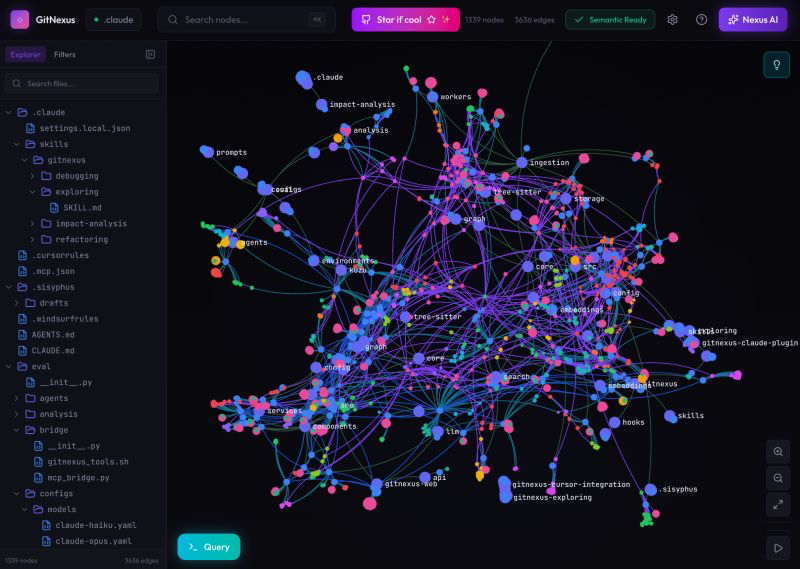
🚨Breaking: Someone open sourced a knowledge graph engine for your codebase and it's terrifying how good it is. It's called GitNexus. And it's not a documentation tool. It's a full code intelligence layer that maps every dependency, call chain, and execution flow in your repo -- then plugs directly into Claude Code, Cursor, and Windsurf via MCP. Here's what this thing does autonomously: → Indexes your entire codebase into a graph with Tree-sitter AST parsing → Maps every function call, import, class inheritance, and interface → Groups related code into functional clusters with cohesion scores → Traces execution flows from entry points through full call chains → Runs blast radius analysis before you change a single line → Detects which processes break when you touch a specific function → Renames symbols across 5+ files in one coordinated operation → Generates a full codebase wiki from the knowledge graph automatically Here's the wildest part: Your AI agent edits UserService.validate(). It doesn't know 47 functions depend on its return type. Breaking changes ship. GitNexus pre-computes the entire dependency structure at index time -- so when Claude Code asks "what depends on this?", it gets a complete answer in 1 query instead of 10. Smaller models get full architectural clarity. Even GPT-4o-mini stops breaking call chains. One command to set it up: `npx gitnexus analyze` That's it. MCP registers automatically. Claude Code hooks install themselves. Your AI agent has been coding blind. This fixes that. 9.4K GitHub stars. 1.2K forks. Already trending. 100% Open Source. (Link in the comments)
Yasir Ai tweet media
English
66
279
2.1K
135.6K
Maxim Osovsky retweetledi
Michael Adams
Michael Adams@m_adams·
Introducing a new type of civic tech made possible by AI. Every citizen should have a live, systems view of their government and today we bring that to SF! Track gov entities, spending, news, and more in real time. With LLMs, we can bring this to every city. Who's next?
English
150
232
2K
217.9K
Maxim Osovsky retweetledi
Harry Rushworth
Harry Rushworth@Hrushworth·
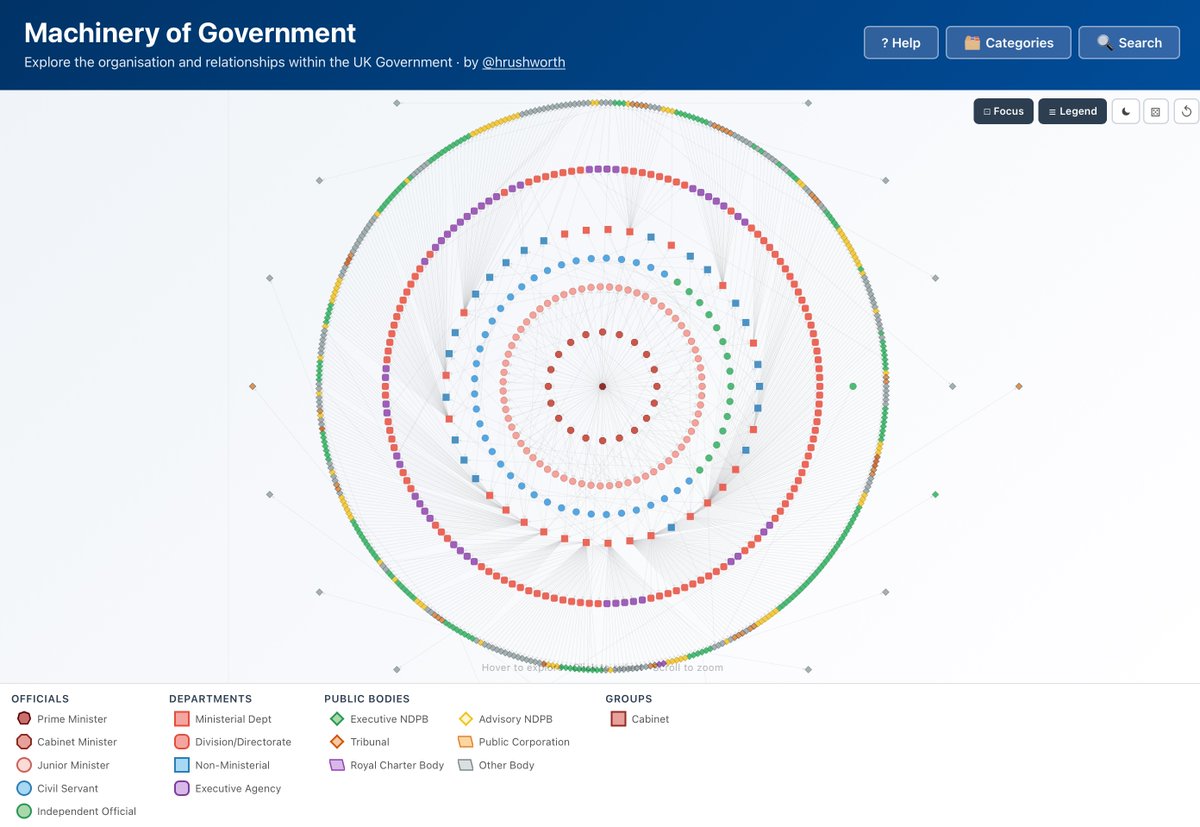
You can check it out for free here: machinery-of-government.vercel.app I've got ambitions to build this out even further so thank you to the countless many who have already tried it and given feedback. I'm always open to more!
English
21
43
389
27.1K
Maxim Osovsky retweetledi
Harry Rushworth
Harry Rushworth@Hrushworth·
The British Government is a complicated beast. Dozens of departments, hundreds of public bodies, more corporations than one can count... Such is its complexity that there isn't an org chart for it. Well, there wasn't... Introducing ⚙️Machinery of Government⚙️
Harry Rushworth tweet media
English
101
423
2.9K
1M
Maxim Osovsky retweetledi
Andrej Karpathy
Andrej Karpathy@karpathy·
Farzapedia, personal wikipedia of Farza, good example following my Wiki LLM tweet. I really like this approach to personalization in a number of ways, compared to "status quo" of an AI that allegedly gets better the more you use it or something: 1. Explicit. The memory artifact is explicit and navigable (the wiki), you can see exactly what the AI does and does not know and you can inspect and manage this artifact, even if you don't do the direct text writing (the LLM does). The knowledge of you is not implicit and unknown, it's explicit and viewable. 2. Yours. Your data is yours, on your local computer, it's not in some particular AI provider's system without the ability to extract it. You're in control of your information. 3. File over app. The memory here is a simple collection of files in universal formats (images, markdown). This means the data is interoperable: you can use a very large collection of tools/CLIs or whatever you want over this information because it's just files. The agents can apply the entire Unix toolkit over them. They can natively read and understand them. Any kind of data can be imported into files as input, and any kind of interface can be used to view them as the output. E.g. you can use Obsidian to view them or vibe code something of your own. Search "File over app" for an article on this philosophy. 4. BYOAI. You can use whatever AI you want to "plug into" this information - Claude, Codex, OpenCode, whatever. You can even think about taking an open source AI and finetuning it on your wiki - in principle, this AI could "know" you in its weights, not just attend over your data. So this approach to personalization puts *you* in full control. The data is yours. In Universal formats. Explicit and inspectable. Use whatever AI you want over it, keep the AI companies on their toes! :) Certainly this is not the simplest way to get an AI to know you - it does require you to manage file directories and so on, but agents also make it quite simple and they can help you a lot. I imagine a number of products might come out to make this all easier, but imo "agent proficiency" is a CORE SKILL of the 21st century. These are extremely powerful tools - they speak English and they do all the computer stuff for you. Try this opportunity to play with one.
Farza 🇵🇰🇺🇸@FarzaTV

This is Farzapedia. I had an LLM take 2,500 entries from my diary, Apple Notes, and some iMessage convos to create a personal Wikipedia for me. It made 400 detailed articles for my friends, my startups, research areas, and even my favorite animes and their impact on me complete with backlinks. But, this Wiki was not built for me! I built it for my agent! The structure of the wiki files and how it's all backlinked is very easily crawlable by any agent + makes it a truly useful knowledge base. I can spin up Claude Code on the wiki and starting at index.md (a catalog of all my articles) the agent does a really good job at drilling into the specific pages on my wiki it needs context on when I have a query. For example, when trying to cook up a new landing page I may ask: "I'm trying to design this landing page for a new idea I have. Please look into the images and films that inspired me recently and give me ideas for new copy and aesthetics". In my diary I kept track of everything from: learnings, people, inspo, interesting links, images. So the agent reads my wiki and pulls up my "Philosophy" articles from notes on a Studio Ghibli documentary, "Competitor" articles with YC companies whose landing pages I screenshotted, and pics of 1970s Beatles merch I saved years ago. And it delivers a great answer. I built a similar system to this a year ago with RAG but it was ass. A knowledge base that lets an agent find what it needs via a file system it actually understands just works better. The most magical thing now is as I add new things to my wiki (articles, images of inspo, meeting notes) the system will likely update 2-3 different articles where it feels that context belongs, or, just creates a new article. It's like this super genius librarian for your brain that's always filing stuff for your perfectly and also let's you easily query the knowledge for tasks useful to you (ex. design, product, writing, etc) and it never gets tired. I might spend next week productizing this, if that's of interest to you DM me + tell me your usecase!


English
450
815
8.9K
1.3M
Maxim Osovsky retweetledi
Yoko Ono
Yoko Ono@yokoono·
POWER TO THE PEOPLE: HOUND DOG 🎟️ Tickets USA → fandango.com 🎟️ Tickets Worldwide → powertothepeoplefilm.com Experience John Lennon & Yoko Ono's legendary One To One shows on the big screen! Exclusively in cinemas worldwide April 29 for a limited time only. #powertothepeople @Fandango
English
12
76
384
22.9K
Maxim Osovsky retweetledi
Corey Ganim
Corey Ganim@coreyganim·
Best breakdown of Karpathy's "second brain" system I've seen. My co-founder turned it into an actual step-by-step build. The 80/20: 1. Three folders: raw/ (dump everything), wiki/ (AI organizes it), outputs/ (AI answers your questions) 2. One schema file (CLAUDE.md) that tells the AI how to organize your knowledge. Copy the template in the article. 3. Don't organize anything by hand. Drop raw files in, tell the AI "compile the wiki." Walk away. 4. Ask questions against your own knowledge base. Save the answers back. Every question makes the next one better. 5. Monthly health check: have the AI flag contradictions, missing sources, and gaps. 6. Skip Obsidian. A folder of .md files and a good schema beats 47 plugins every time. He includes a free skill that scaffolds the whole system in 60 seconds.
Nick Spisak@NickSpisak_

x.com/i/article/2040…

English
73
310
3.3K
590.7K
Maxim Osovsky retweetledi
Garry Tan
Garry Tan@garrytan·
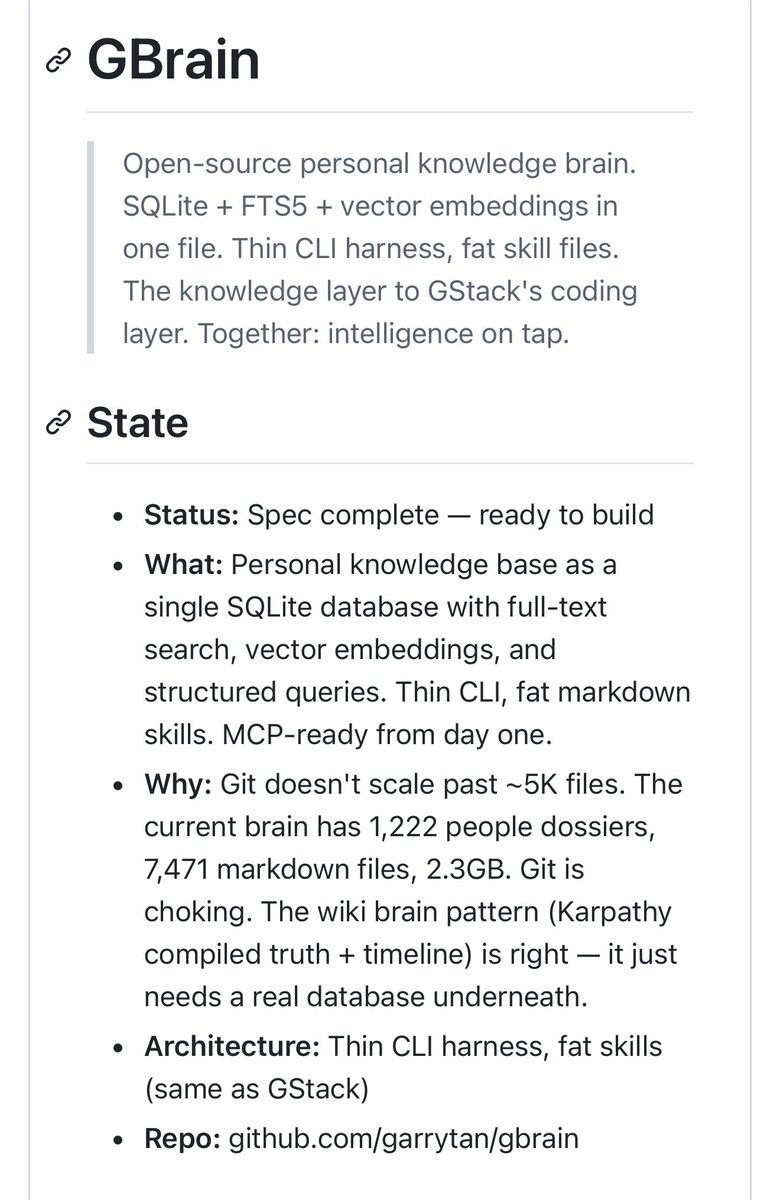
My Karpathy-style git wiki knowledge base for OpenClaw got to 2.3GB and I know git limit is 5GB so my GStack autoplan skill one line prompted this spec for my upgraded GBrain with SqlLite. This will be MIT license open source soon. gist.github.com/garrytan/49c88…
Garry Tan tweet media
English
95
113
1.5K
115.6K
Maxim Osovsky retweetledi
el.cine
el.cine@EHuanglu·
this changes filmmaking completely Seedance 2.0 now can key green screen precisely and.. edit film scene layer by layer separately.. AI just made months of work one click.. full tutorial on OpenArt + prompts:
English
125
305
2K
644.7K
Maxim Osovsky retweetledi
CyrilXBT
CyrilXBT@cyrilXBT·
SOMEONE JUST BUILT A 3D MAP OF THEIR ENTIRE MIND. Not a diagram. Not a mind map. A LIVING BREATHING NETWORK that shows you the actual shape of how you think. They took their Obsidian vault, converted every note into embeddings, and rendered them as a 3D thought network in real time. And what they discovered stopped me cold. Your mind has a shape. CENTRALIZED means all your thinking orbits one or two dominant ideas. DECENTRALIZED means your knowledge lives in clusters that rarely talk to each other. DISTRIBUTED means your ideas are deeply interconnected across every domain. Most people assume their thinking is distributed. The map shows them it is not. They have been building knowledge in silos without realizing it. Gaps they never knew existed. Connections they never thought to make. The most interesting part is not the technology. It is what happens when you SEE your own thinking for the first time. Because you cannot improve what you cannot see. And nobody has ever been able to see the actual structure of their mind until now. This is what Obsidian plus AI is becoming. Not a note taking app. A mirror for your intelligence.
English
132
505
4.1K
277.6K
Maxim Osovsky retweetledi
Ali Abdaal
Ali Abdaal@AliAbdaal·
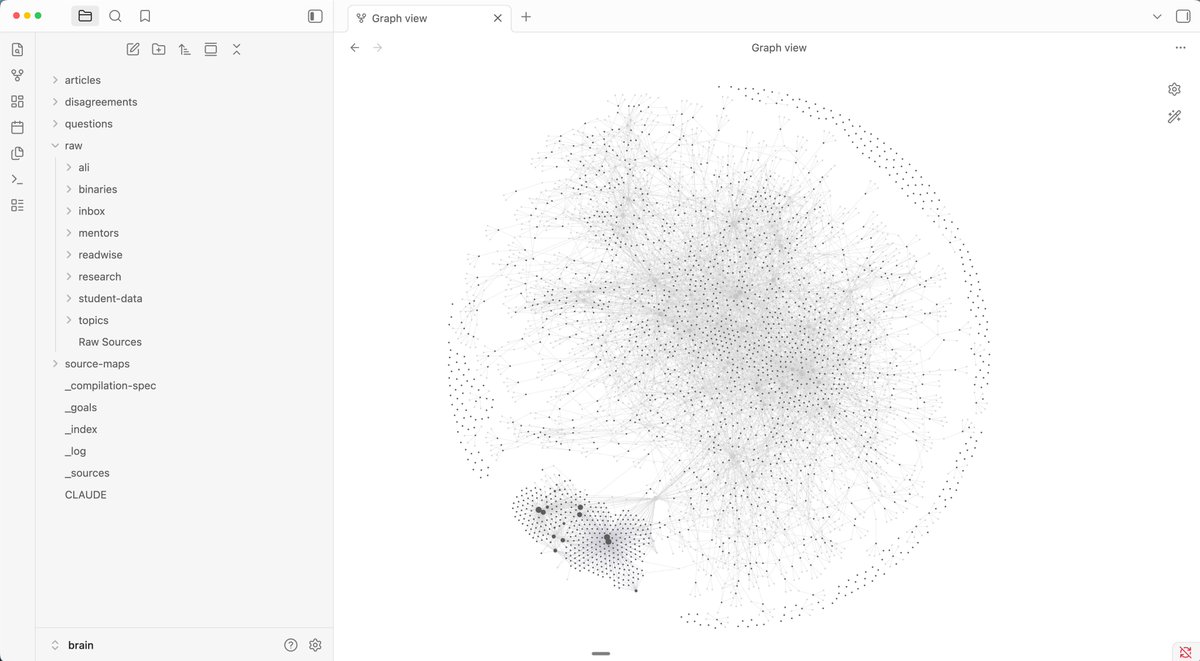
building out the llm second brain inspired by all the @karpathy shenanigans over the past few days
Ali Abdaal tweet media
English
77
40
1.2K
86.8K
Maxim Osovsky retweetledi
WorldofAI
WorldofAI@intheworldofai·
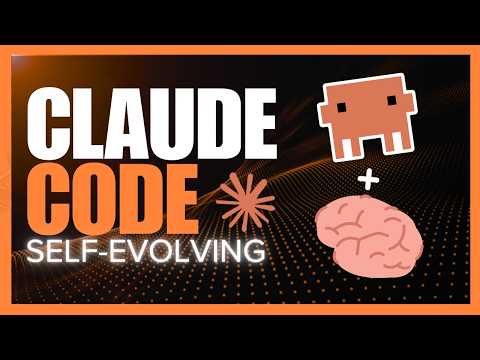
Used Karpathy's LLM Wiki to turn Claude Code into a self-evolving system. Fed it my frontend & CRM sources, and it built a fully updating dashboard with Shadcn packages and constantly improving and linking everything for smarter outputs! Full setup video: youtu.be/9iWTRMjbBvo
YouTube video
YouTube
Andrej Karpathy@karpathy

LLM Knowledge Bases Something I'm finding very useful recently: using LLMs to build personal knowledge bases for various topics of research interest. In this way, a large fraction of my recent token throughput is going less into manipulating code, and more into manipulating knowledge (stored as markdown and images). The latest LLMs are quite good at it. So: Data ingest: I index source documents (articles, papers, repos, datasets, images, etc.) into a raw/ directory, then I use an LLM to incrementally "compile" a wiki, which is just a collection of .md files in a directory structure. The wiki includes summaries of all the data in raw/, backlinks, and then it categorizes data into concepts, writes articles for them, and links them all. To convert web articles into .md files I like to use the Obsidian Web Clipper extension, and then I also use a hotkey to download all the related images to local so that my LLM can easily reference them. IDE: I use Obsidian as the IDE "frontend" where I can view the raw data, the the compiled wiki, and the derived visualizations. Important to note that the LLM writes and maintains all of the data of the wiki, I rarely touch it directly. I've played with a few Obsidian plugins to render and view data in other ways (e.g. Marp for slides). Q&A: Where things get interesting is that once your wiki is big enough (e.g. mine on some recent research is ~100 articles and ~400K words), you can ask your LLM agent all kinds of complex questions against the wiki, and it will go off, research the answers, etc. I thought I had to reach for fancy RAG, but the LLM has been pretty good about auto-maintaining index files and brief summaries of all the documents and it reads all the important related data fairly easily at this ~small scale. Output: Instead of getting answers in text/terminal, I like to have it render markdown files for me, or slide shows (Marp format), or matplotlib images, all of which I then view again in Obsidian. You can imagine many other visual output formats depending on the query. Often, I end up "filing" the outputs back into the wiki to enhance it for further queries. So my own explorations and queries always "add up" in the knowledge base. Linting: I've run some LLM "health checks" over the wiki to e.g. find inconsistent data, impute missing data (with web searchers), find interesting connections for new article candidates, etc., to incrementally clean up the wiki and enhance its overall data integrity. The LLMs are quite good at suggesting further questions to ask and look into. Extra tools: I find myself developing additional tools to process the data, e.g. I vibe coded a small and naive search engine over the wiki, which I both use directly (in a web ui), but more often I want to hand it off to an LLM via CLI as a tool for larger queries. Further explorations: As the repo grows, the natural desire is to also think about synthetic data generation + finetuning to have your LLM "know" the data in its weights instead of just context windows. TLDR: raw data from a given number of sources is collected, then compiled by an LLM into a .md wiki, then operated on by various CLIs by the LLM to do Q&A and to incrementally enhance the wiki, and all of it viewable in Obsidian. You rarely ever write or edit the wiki manually, it's the domain of the LLM. I think there is room here for an incredible new product instead of a hacky collection of scripts.

English
30
93
862
132.8K
Maxim Osovsky retweetledi
Muhammad Ayan
Muhammad Ayan@socialwithaayan·
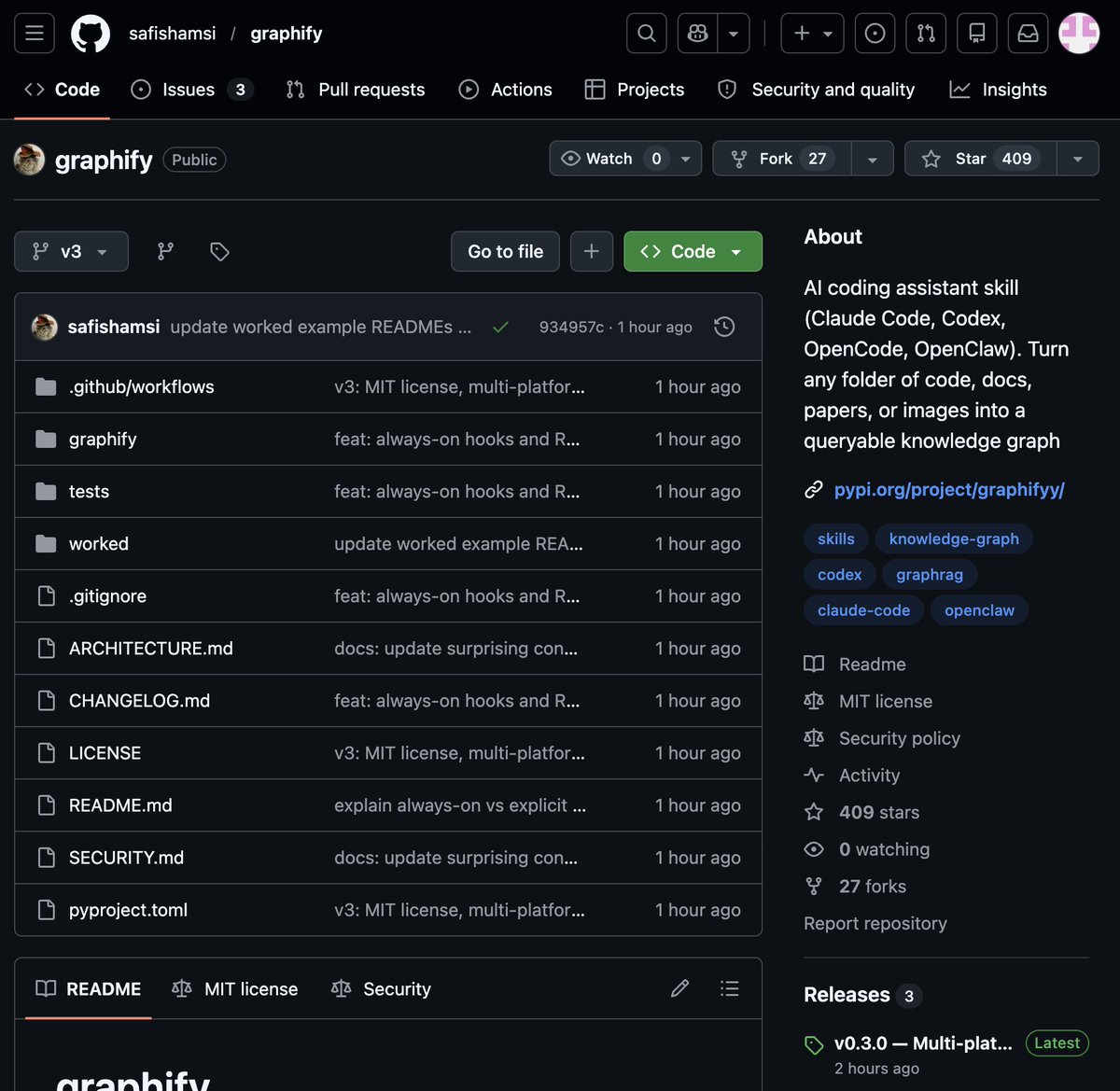
🚨 BREAKING: Someone just built the exact tool Andrej Karpathy said someone should build. 48 hours after Karpathy posted his LLM Knowledge Bases workflow, this showed up on GitHub. It's called Graphify. One command. Any folder. Full knowledge graph. Point it at any folder. Run /graphify inside Claude Code. Walk away. Here is what comes out the other side: -> A navigable knowledge graph of everything in that folder -> An Obsidian vault with backlinked articles -> A wiki that starts at index. md and maps every concept cluster -> Plain English Q&A over your entire codebase or research folder You can ask it things like: "What calls this function?" "What connects these two concepts?" "What are the most important nodes in this project?" No vector database. No setup. No config files. The token efficiency number is what got me: 71.5x fewer tokens per query compared to reading raw files. That is not a small improvement. That is a completely different paradigm for how AI agents reason over large codebases. What it supports: -> Code in 13 programming languages -> PDFs -> Images via Claude Vision -> Markdown files Install in one line: pip install graphify && graphify install Then type /graphify in Claude Code and point it at anything. Karpathy asked. Someone delivered in 48 hours. That is the pace of 2026. Open Source. Free.
Muhammad Ayan tweet media
English
270
1.4K
12.7K
942.2K
Maxim Osovsky retweetledi
Louis Gleeson
Louis Gleeson@aigleeson·
I just discovered an open source AI research agent that does in seconds what takes PhDs hours. It's called Feynman. Type a topic. It searches papers, synthesizes findings, verifies every claim against real sources, and hands you a cited research brief. Not a chatbot. Not a summary tool. A full multi-agent research system running from your terminal. Four agents work automatically: → Researcher pulls evidence from papers, repos, docs, and the web → Reviewer runs simulated peer review with severity-graded feedback → Writer drafts paper-style outputs from your research notes → Verifier checks every citation and kills dead links It can also replicate experiments on local or cloud GPUs, audit a paper against its own codebase for claim mismatches, and run recurring research watches on topics you care about. One install command. Every output source-grounded. 100% Open Source. MIT License.
Louis Gleeson tweet media
English
55
363
2.8K
168.5K
Maxim Osovsky retweetledi
0xMarioNawfal
0xMarioNawfal@RoundtableSpace·
Someone built an open-source engine that runs 500 AI agents with different personalities to debate any news story in real time. They post, argue, and change each other's minds. Hour by hour. On your laptop.
English
36
95
661
82.6K