Sabitlenmiş Tweet
MEDIC'SINWEB3 DAO
416 posts

MEDIC'SINWEB3 DAO
@Medicsinweb3
Bridging healthcare with Web3 through quality education, encouraging preventive medicine and Blood donation through the power of NFTs and tokenization.
Nigeria Katılım Haziran 2024
34 Takip Edilen222 Takipçiler

Healthcare decisions affect people’s lives every single day.
Yet in many systems, the people closest to the problems often have the least influence.
Doctors see the gaps in care.
Researchers understand the science.
Patients experience the outcomes.
Builders know how to design new tools.
But these voices rarely sit at the same decision-making table.
Healthcare DAOs introduce a different possibility — a system where influence isn’t limited to a single institution, but shared among the people who understand the problems from different angles.
If we’re going to rethink healthcare through decentralized systems, an important question remains:
Who should influence healthcare DAOs the most?
Doctors?
Researchers?
Patients?
Builders?
Or should it be a balance of all four?
Curious to hear your thoughts.

English

Healthcare decisions affect people’s lives every single day.
Yet in many systems, the people closest to the problems often have the least influence.
Doctors see the gaps in care.
Researchers understand the science.
Patients experience the outcomes.
Builders know how to design new tools.
But these voices rarely sit at the same decision-making table.
Healthcare DAOs introduce a different possibility — a system where influence isn’t limited to a single institution, but shared among the people who understand the problems from different angles.
If we’re going to rethink healthcare through decentralized systems, an important question remains:
Who should influence healthcare DAOs the most?
Doctors?
Researchers?
Patients?
Builders?
Or should it be a balance of all four?
Curious to hear your thoughts.

English

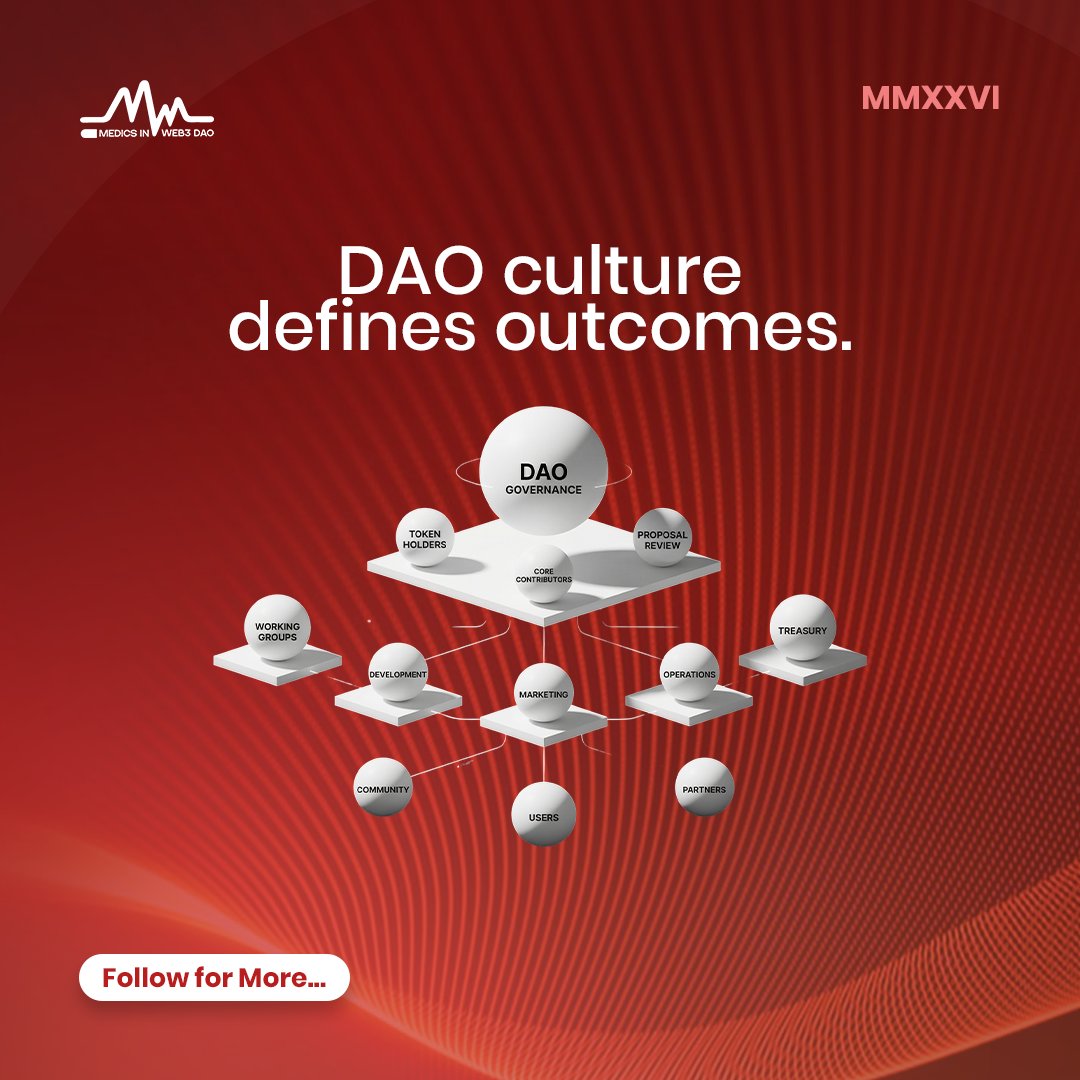
In most traditional organizations, outcomes are defined by hierarchy.
A few people make decisions.
Everyone else executes.
DAOs work differently.
You can deploy the best governance framework, create tokens, write smart contracts, and design a beautiful system…
But none of it matters if the culture inside the DAO isn’t strong.
If people don’t feel ownership, proposals don’t get written.
If discussions aren’t encouraged, ideas don’t evolve.
If contributors aren’t valued, builders quietly leave.
And slowly, the DAO becomes inactive.
This is why experienced builders understand something important:
DAO infrastructure enables coordination.
DAO culture determines outcomes.
Because at the end of the day, a DAO isn’t just software.
It’s a community of people deciding to build something together.
That’s why culture is not secondary.
It’s the foundation.

English

Healthcare systems fail when decisions happen behind closed doors.
Research gets buried.
Funding lacks accountability.
Communities are excluded.
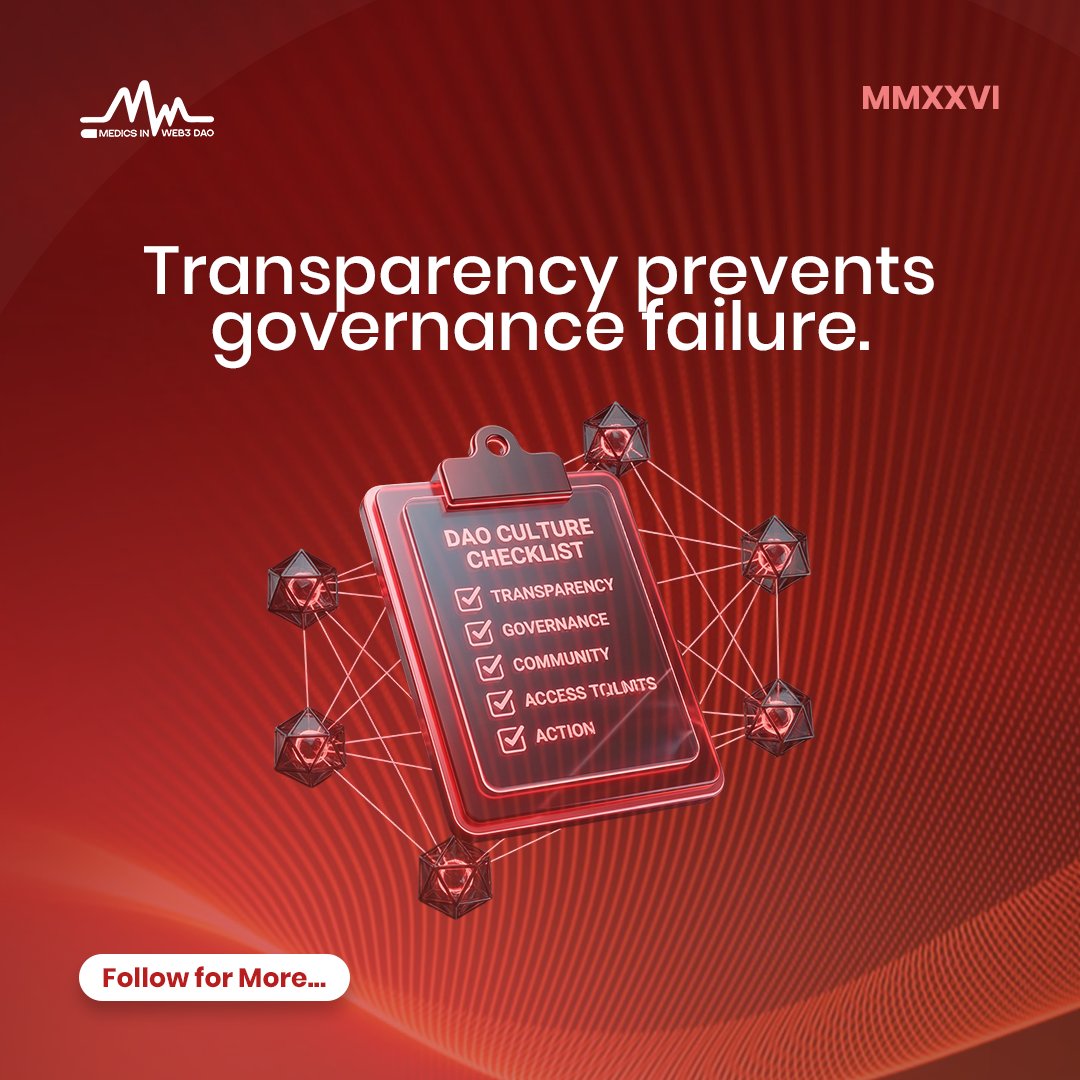
At MedicsInWeb3 DAO, we believe transparency changes everything.
Open governance.
Open collaboration.
Open innovation for global health.
Because transparency prevents governance failure.

English

Is your birthday telling the full story? 🎂
Chronological age is just a number, but biological age reveals the true state of your health at a cellular level. Factors like genetics, diet, and sleep dictate how fast you’re actually aging.
The good news? You can influence it. 🧬
Learn the difference and how to take control:
Why does biological age matter?
The first step to understanding your health profile is to know your biological age. Biological age indicates how much damage has occurred to your body's cellular and metabolic functions. It predicts age-related diseases such as diabetes, cardiovascular diseases, and mortality risk better than chronological age.
Chronological vs. Biological
Chronological age is determined by the number of years you've been alive. Biological age, however, is multifaceted and influenced by genetics and lifestyle factors. It is calculated by analyzing a person's DNA for methylation, epigenetic changes (changes to DNA), and other biomarkers.
How to Lower Your Biological Age.
1. Eating a healthy diet
2. Exercising
3. Managing stress
4. Quitting smoking
5. Improving your sleep
6. Changing your environment
FOR BUILDERS, FOUNDERS, TRADERS AND WEB3 COMMUNITY YOUR HEALTH MATTERS.
At MEDICSINWEB3DAO we care for you.

English

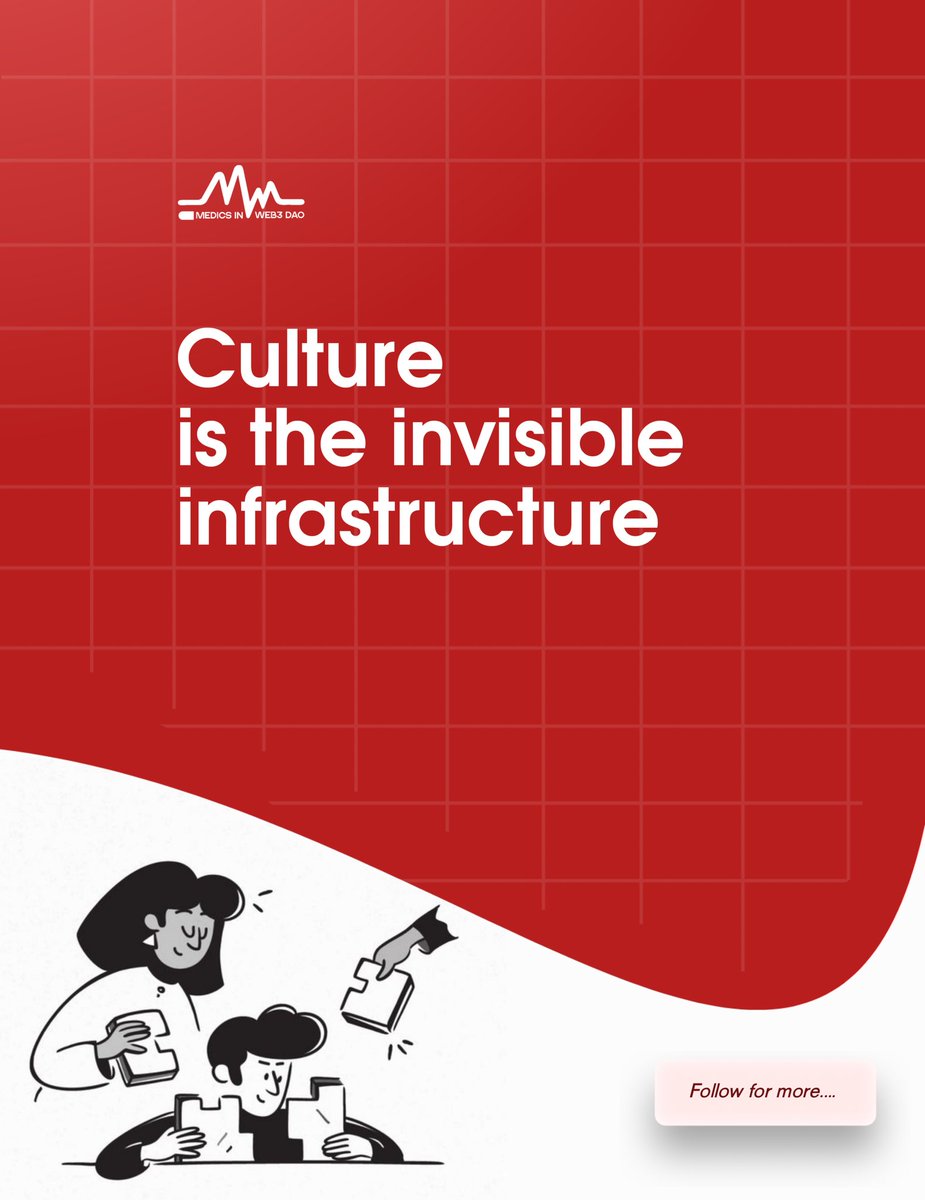
No one really notices culture when it’s healthy.
But you feel it when it’s missing.
In healthcare communities, culture decides whether ideas are welcomed or ignored,
whether questions are supported or silenced, whether people grow — or quietly burn out.
Culture is the invisible infrastructure.
It’s what holds everything together when there’s no spotlight.
At @Medicsinweb3, we’re intentional about building a culture of support, shared responsibility, and trust — because systems don’t save lives alone.
People do. 🩺🤝
#MedicsInWeb3 #DAOCulture #HealthcareCommunity #Web3ForGood

English

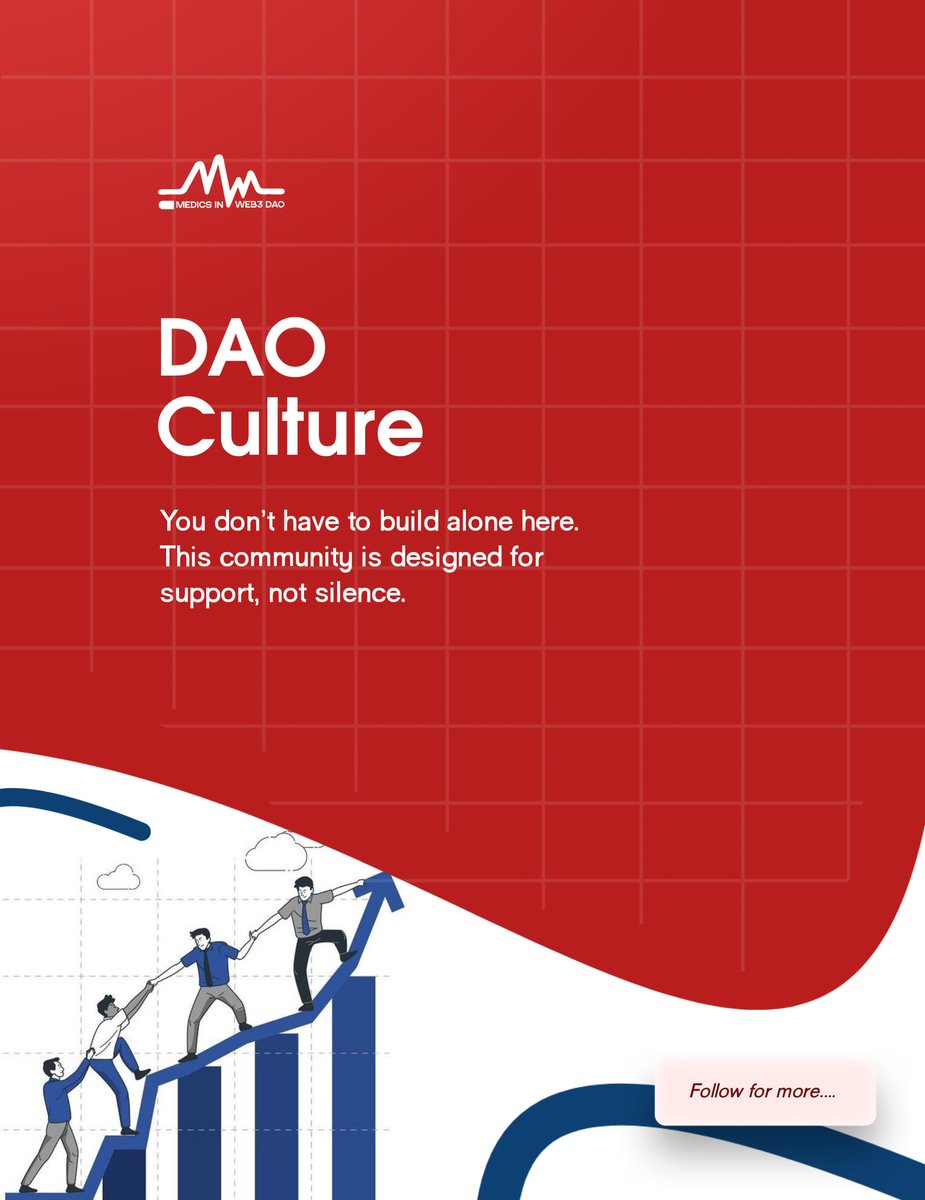
Progress slows when responsibility lives on one shoulder.
Most people don’t quit building because they lack ideas.
They quit because they’re building alone.
In healthcare, isolation costs more than motivation — it costs progress, burnout, and sometimes lives.
DAO culture changes that.
It replaces silence with support.
One person shares an idea.
Another improves it.
A community stands behind it.
At MedicsInWeb3, you don’t have to carry the weight alone.
You build with people who understand the problem — and care about the outcome.
That’s not just collaboration.
That’s how real impact is made. 🩺🤝
#MedicsInWeb3 #DAOCulture #HealthcareCommunity #Web3ForGoo

English

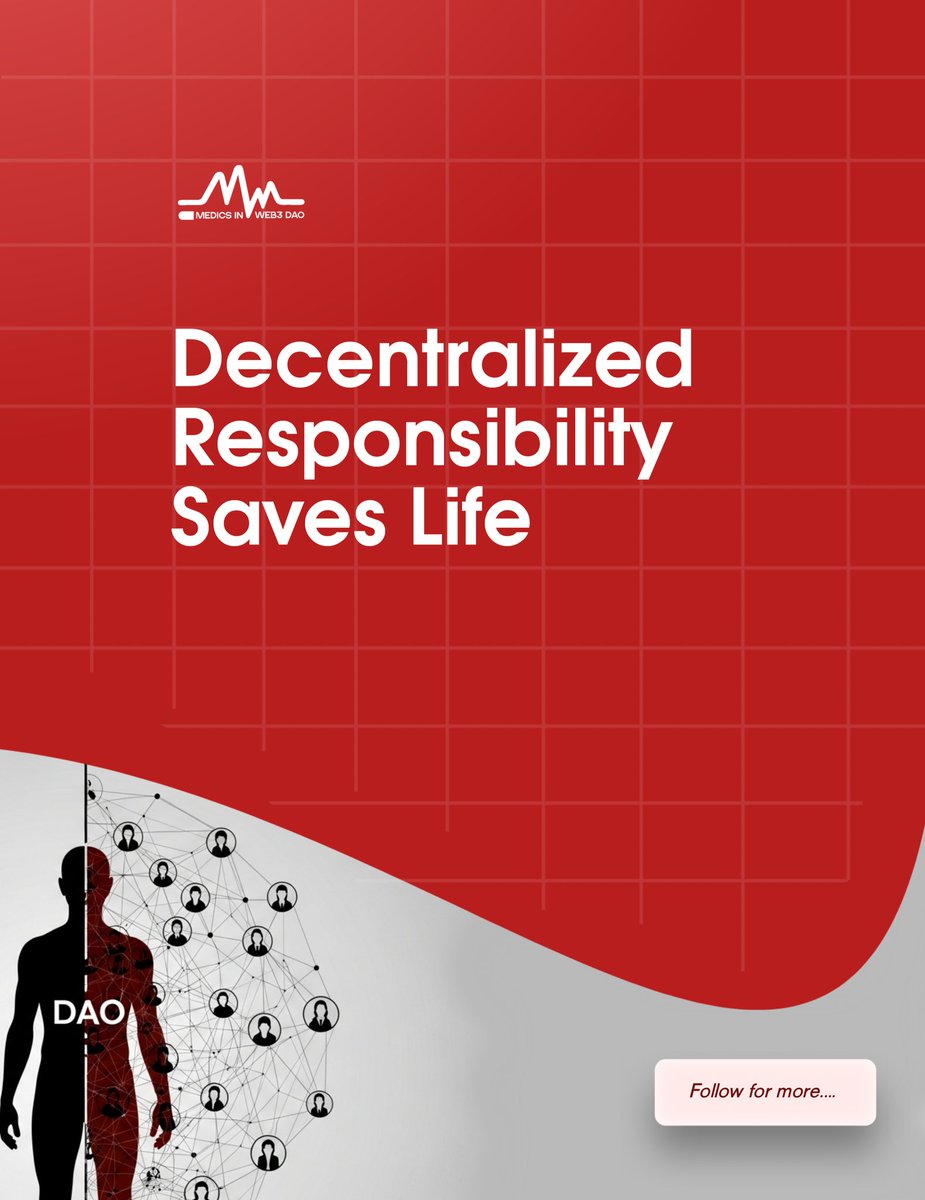
Decentralized responsibility saves lives.
In healthcare, no single person has all the answers.
That’s why shared decision-making matters.
With DAOs, doctors, nurses, researchers, and builders can come together, share ideas, vote openly, and act faster — without waiting on one central authority.
When responsibility is shared, solutions improve.
When voices are heard, outcomes get better.
This is what @Medicsinweb3 is about:
healthcare people building healthcare solutions — together. 🩺🤝
#MedicsInWeb3 #HealthcareCommunity #Web3ForGood

English

Burnout in healthcare isn’t a weakness — it’s a system failure.
The problem? We wait until doctors are exhausted, disengaged, or leaving the profession before we act. By then, recovery is costly, slow, and sometimes impossible.
At @Medicsinweb3, we advocate early intervention: using community governance, transparent proposals, and Web3 tools to identify stress points early, fund preventive initiatives, and support healthcare professionals before burnout escalates.
When care systems are proactive, not reactive, everyone wins — medics, patients, and the future of healthcare.

English

Mental health support in Web3 isn’t about slowing people down.
It’s about keeping builders functional for the long term.
Web3 moves fast:
24/7 markets, global teams, constant updates, public pressure, and the feeling that if you step away, you’ll be left behind. In that environment, burnout isn’t caused by lack of ambition — it’s caused by unsustainable design.
Without mental health support:
Focus degrades before productivity drops
Decision-making becomes reactive
Creativity shrinks under constant stress
Talented builders quietly exit the space
That doesn’t make ecosystems faster.
It makes them fragile.
Real performance comes from systems that:
Normalize recovery as part of output
Create psychological safety, not constant urgency
Encourage pacing instead of permanent sprinting
Catch overload early instead of treating breakdowns later
Prevention scales better than recovery because:
A rested builder produces consistently
A supported team makes fewer costly mistakes
Healthy minds sustain innovation longer than hype cycles
You fix root causes, not symptoms
Web3 is building the future of systems.
Those systems shouldn’t be powered by exhausted humans.
Mental health support isn’t a slowdown.
It’s infrastructure for sustainable performance.

English