
Sabitlenmiş Tweet
Mekong Dam Monitor
1.4K posts

Mekong Dam Monitor
@MekongMonitor
Mekong Dam Monitor: Providing near-real-time monitoring of Mekong River Basin dams and their impact. By @StimsonCenter & @EyesonEarth2.
Katılım Aralık 2020
529 Takip Edilen2K Takipçiler
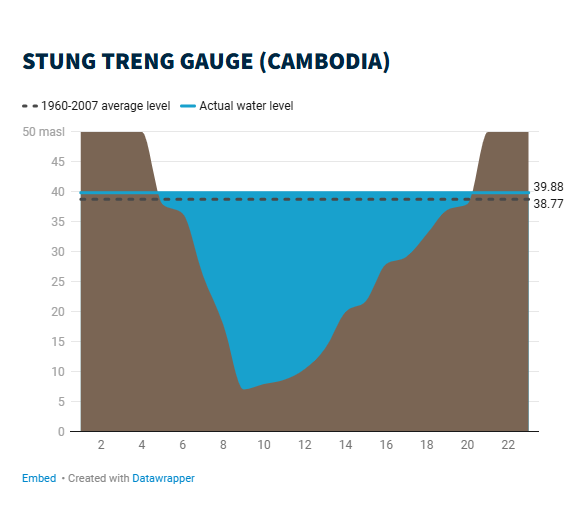
River Levels: Levels throughout the lower Mekong are several meters higher than normal for this time of year. Many points along the Mekong are at an all-time high for the end of March. Learn more at mekongmonitor.stimson.org. 4/4
English
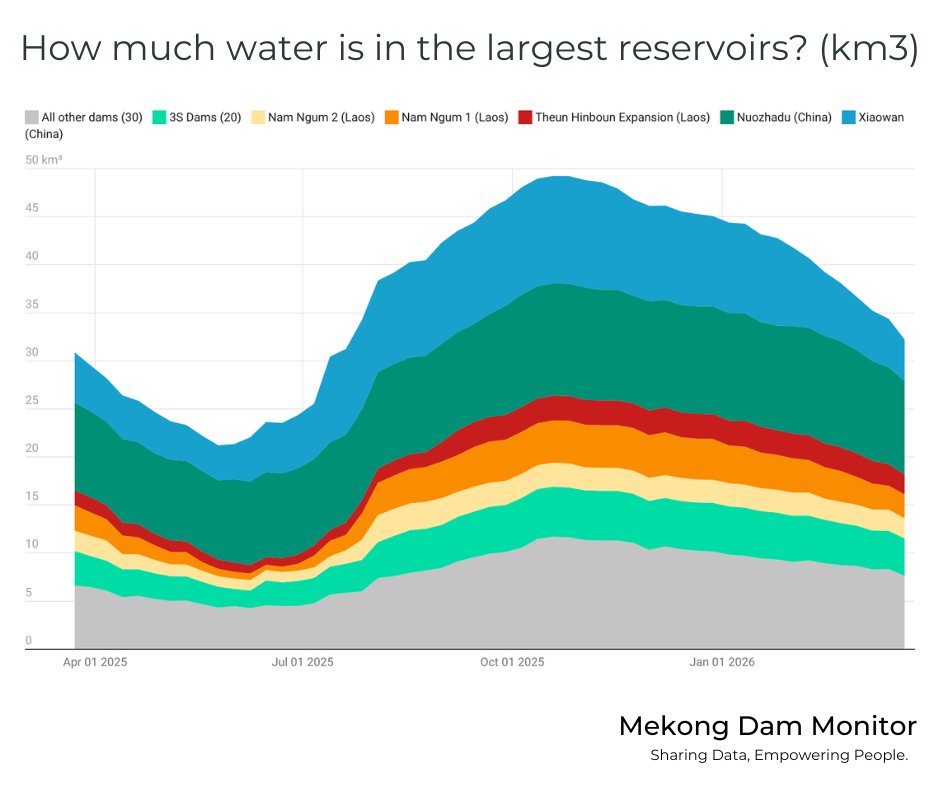
Collectively, dams throughout the basin recorded exceptionally high releases last week, totaling an estimated 2.1 billion cubic meters. Major releases last week came from Xiaowan (PRC, 758 million cubic meters), Nuozhadu (PRC, 314 million cubic meters), Nam Ngum 2 (LAO, 143 million cubic meters), Theun Hinboun Expansion (LAO, 212 million cubic meters), and Sirindhorn (THA, 101 million cubic meters). 3/4
English
Between February 25 and March 23 China’s Xiaowan Dam, the 2nd largest in the basin, released almost 1.8 billion cubic meters of water for hydropower production. The comparative image shows the reservoir level dropping dramatically during this time. Throughout the entirety of the mainstream from Thailand to Vietnam, the releases caused river levels downstream to reach a near all-time high for this time of year. Artificially high river levels are dangerous for important ecological cycles in the Mekong. Learn more at mekongmonitor.stimson.org. 1/4

English
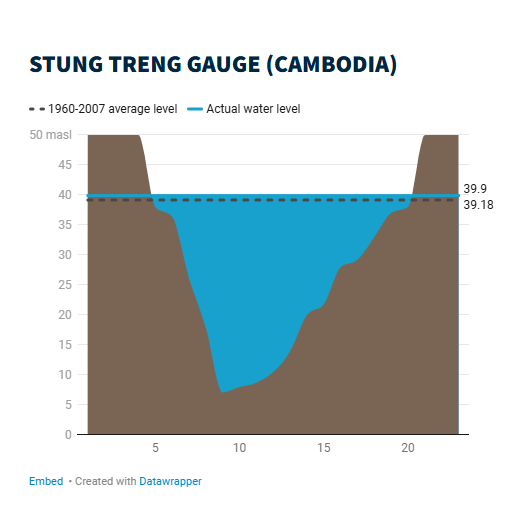
River Levels: Levels throughout the lower Mekong are more than one meter higher than normal for this time of year. Learn more at mekongmonitor.stimson.org. 4/4
English
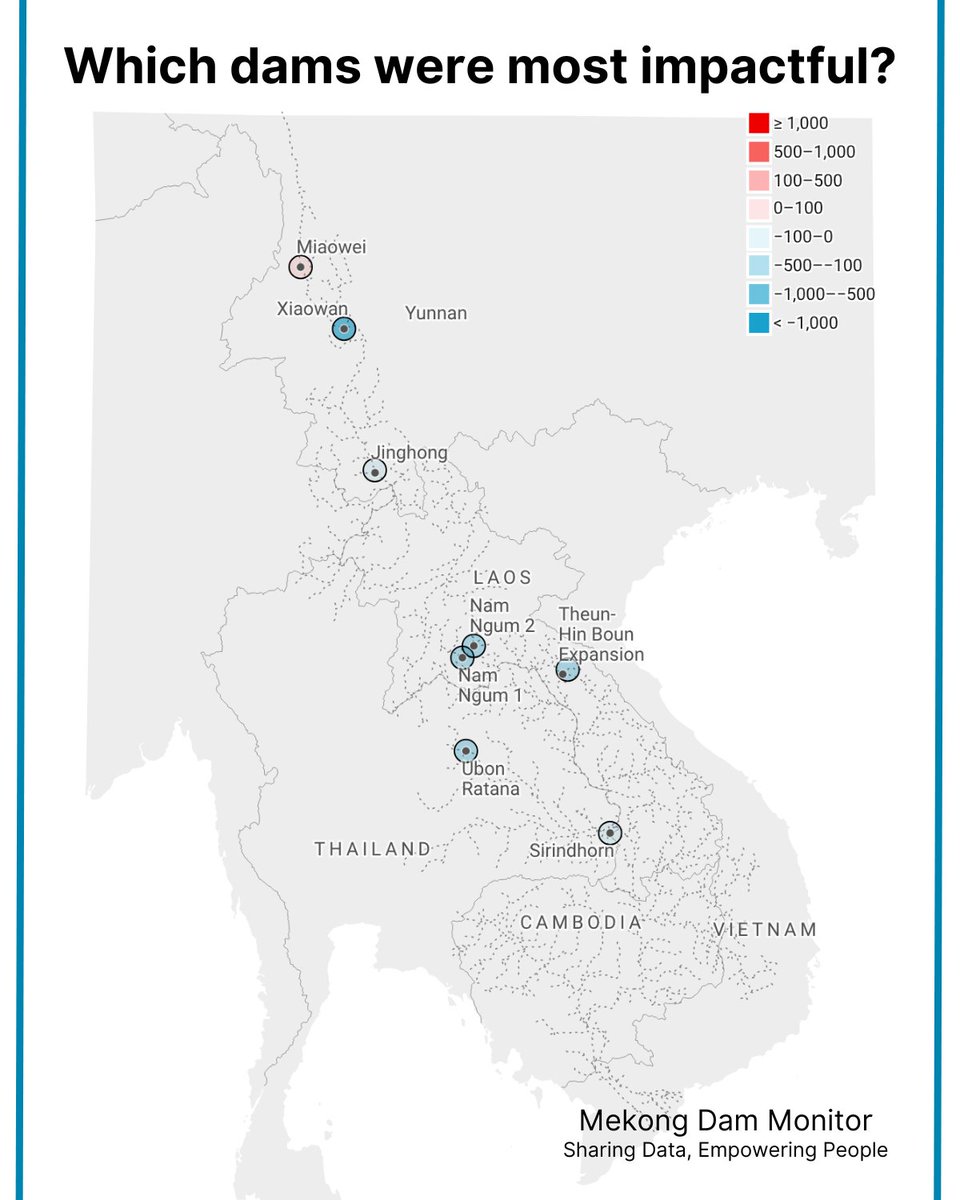
Where’s the Water: Collectively, dams throughout the basin recorded exceptionally high releases last week, totaling an estimated 1.5 billion cubic meters. Major releases last week came from Xiaowan (PRC, 616 million cubic meters), Nam Ngum 2 (LAO, 193 million cubic meters), Nam Ngum 1 (LAO, 112 million cubic meters), Theun Hinboun Expansion (LAO, 113 million cubic meters), and Ubol Ratana (THA, 112 million cubic meters). 3/4
English
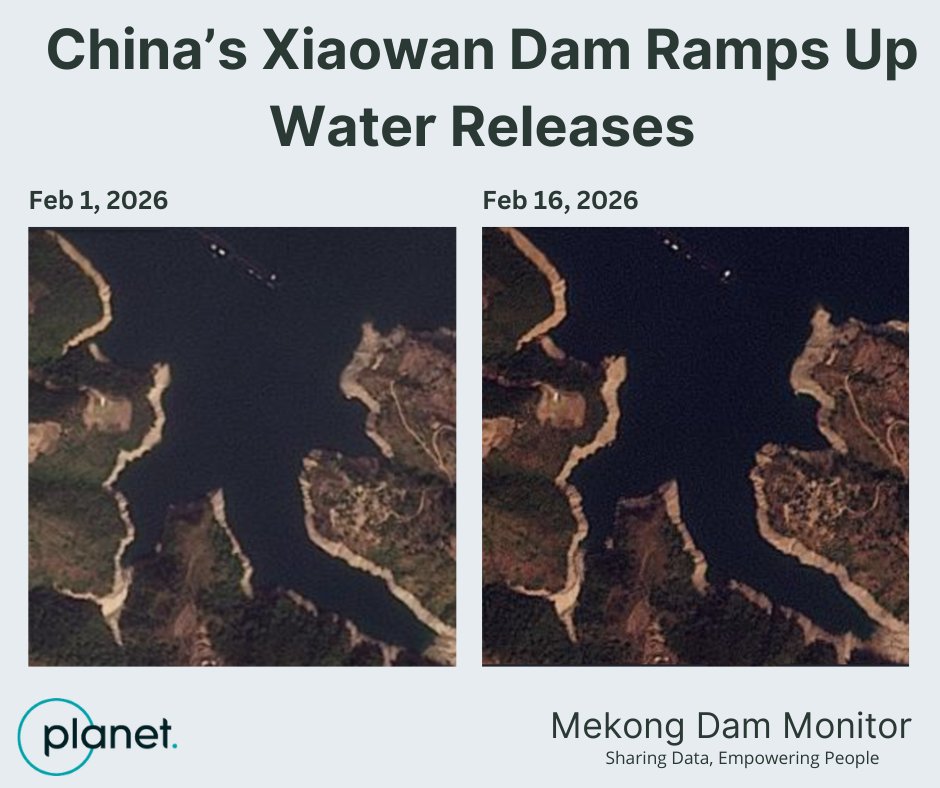
According to our estimates, over the past two weeks China’s Xiaowan Dam, the second largest in the Mekong Basin, released more than 1.5 billion cubic meters of water. The image shows much higher reservoir levels in early February compared to mid-February. While these releases generate large quantities of electricity, they significantly raise the river level downstream causing harm to local ecologies and the communities that rely on them. Learn more at mekongmonitor.stimson.org. 1/4
English
River Levels: Levels throughout the lower Mekong are about one meter higher than normal for this time of year. Learn more at mekongmonitor.stimson.org. 4/4
English
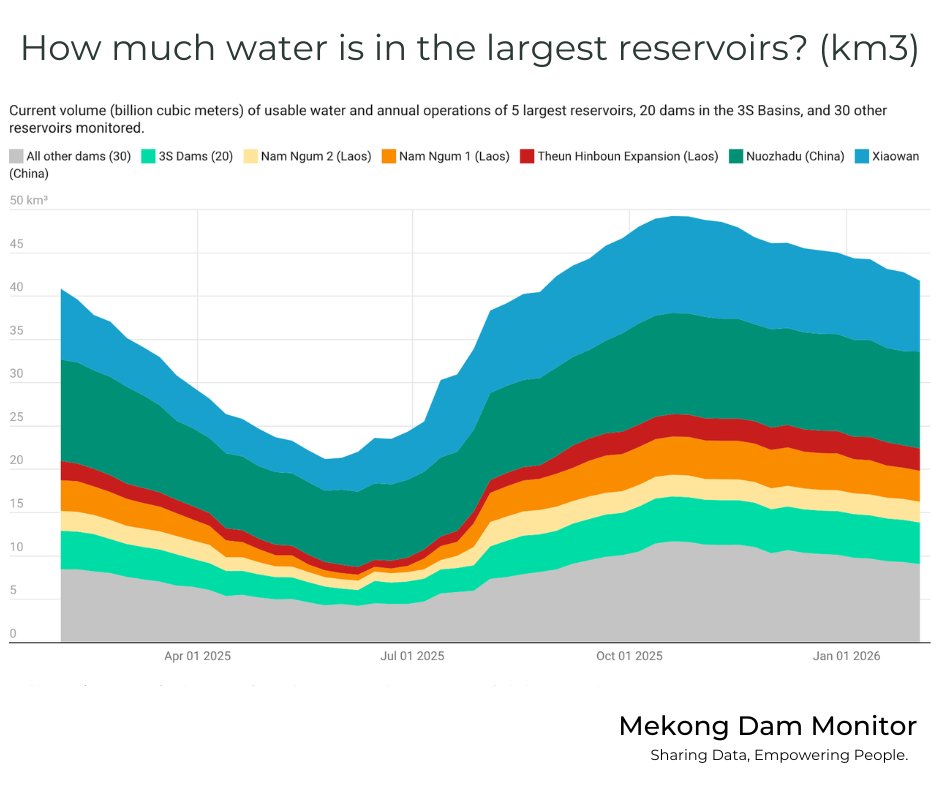
Where’s the Water: Last week, dams throughout the basin released an estimated 1 billion cubic meters of water for hydropower production. Major releases last week came from Xiaowan (PRC, 960 million cubic meters) and Jinghong (PRC, 110 million cubic meters). 3/4
English
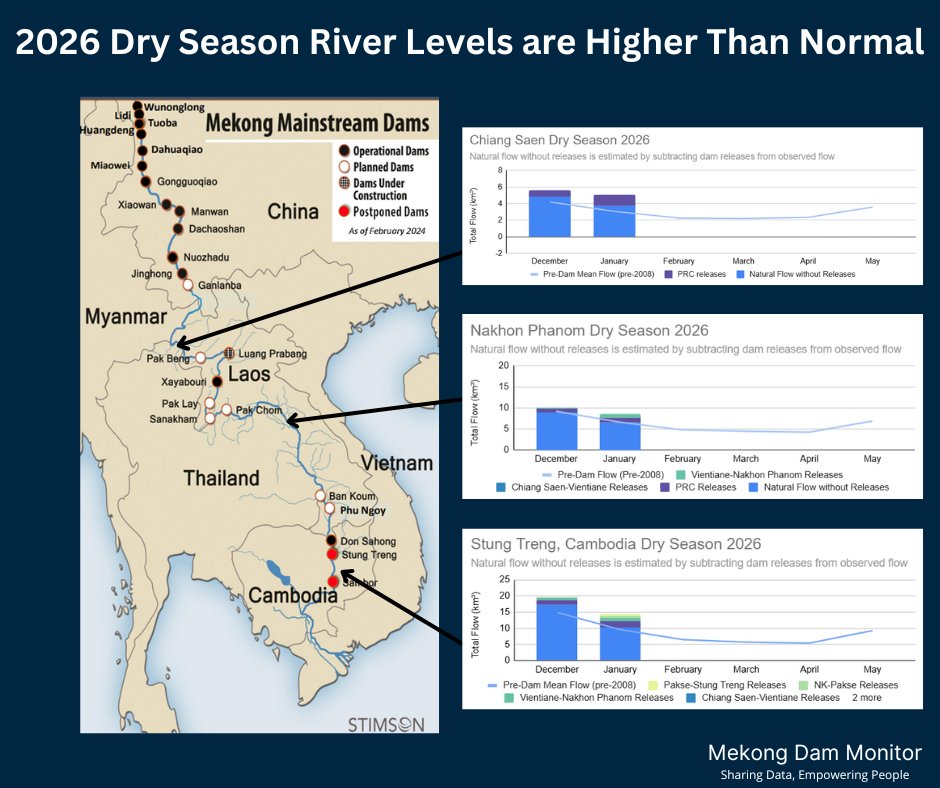
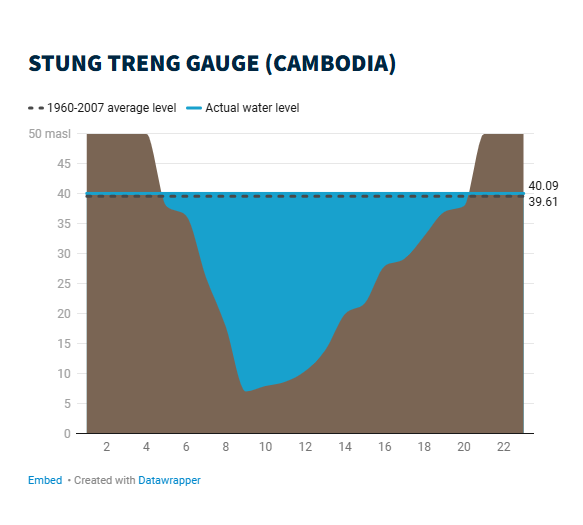
Spotlight: 2026 Dry Season River Levels are Higher Than Normal. Throughout the Mekong, river levels are high, primarily due to dam releases for hydropower production. At Chiang Saen river levels in January were 66% higher than the long-term average. Without dam releases—most of which came from dam releases in China—natural flow would have been about 23% higher than normal. At Nakhon Phanom, dam releases from Laos and China are raising the river almost 30% above the long -term average. At Stung Treng, dam releases from China, Thailand, and Laos are raising the river level nearly 50% above its normal level. Without dam releases, river levels at Nakhon Phanom and Stung Treng, river levels would have been close to normal.
Over five years of monitoring, flow volumes this high in the early dry season have not previously been recorded. Ecosystems along the river, such as wetlands and flooded forests, rely on drying out during the dry season for their ecological sustainability—potentially putting these ecosystems at risk of dying. Additionally, certain fish migration patterns are triggered by low river levels. These higher-than-normal river levels not only threaten the mighty Mekong’s flora and fauna but also prevent dry season farming and food collection practices that support communities along riversides. Each of these threats is tied to the security of communities, food systems, and local economies upon which tens of millions of people rely. Learn more at mekongmonitor.stimson.org. 1/4
English
Levels throughout the lower Mekong are about one meter higher than normal for this time of year. Learn more at mekongmonitor.stimson.org. 4/4
English
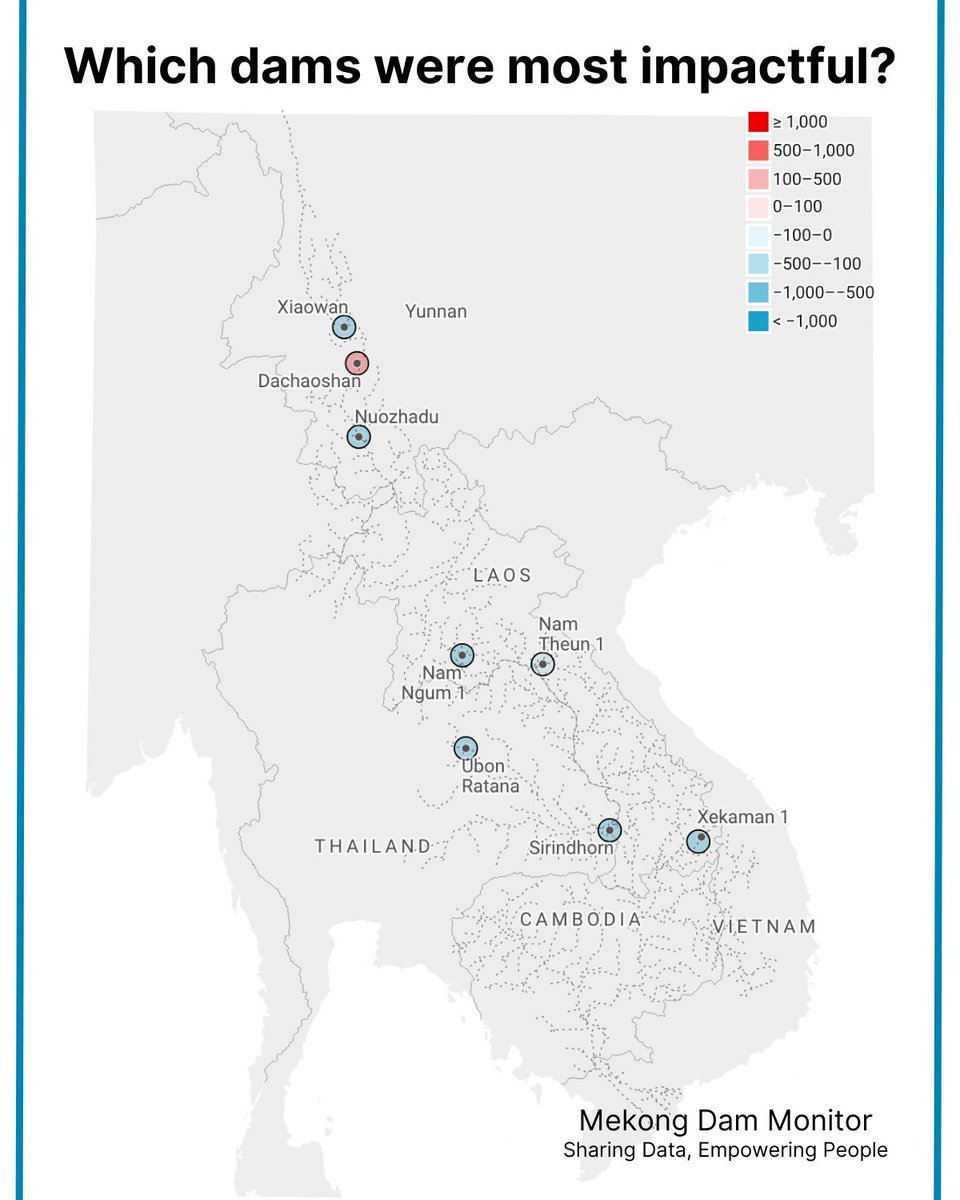
Last week, dams throughout the basin released an estimated 1.054 billion cubic meters of water for hydropower production. Major releases last week came from Xiaowan (PRC, 197 million cubic meters), Nam Ngum 1 (LAO, 244 million cubic meters), Ubol Ratana (THA, 133 million cubic meters), Sirindhorn (THA, 108 million cubic meters), Sekaman 1 (LAO, 102 million cubic meters). 3/4
English
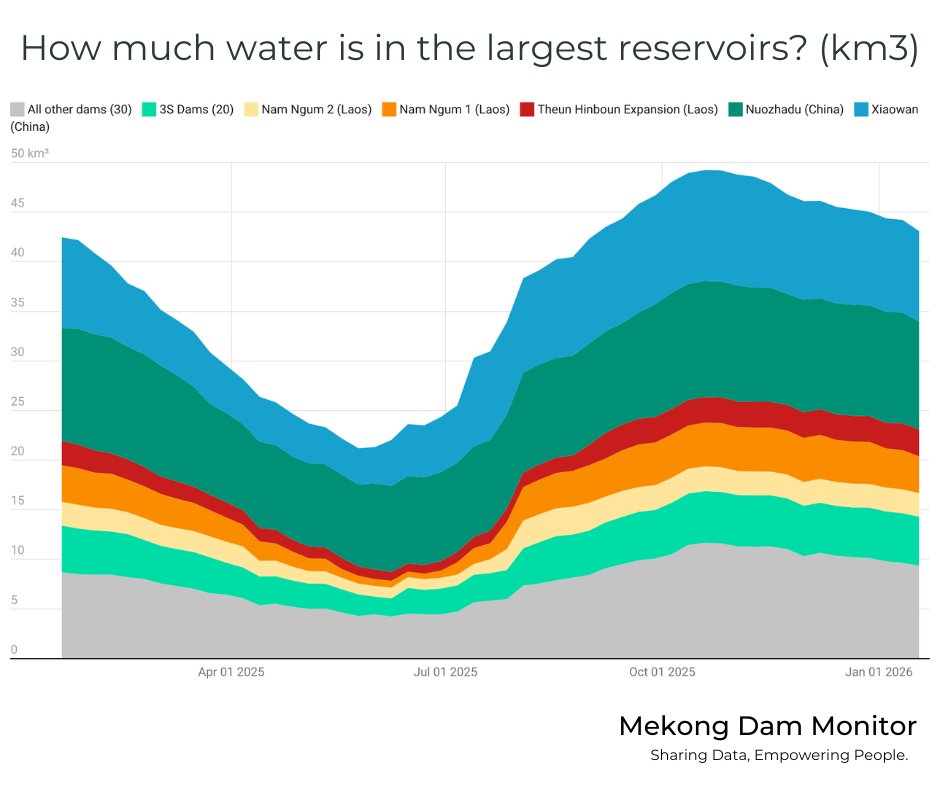
For the first time this dry season, dams throughout the basin are releasing water. Last week, dams released more than one billion cubic meters of water. These releases artificially raised the level of the river to more than one meter above the pre-dam average. The Where’s the Water section of this weekly update illustrates which dams released the most water. Higher than normal levels have adverse effects on local communities, such as flooding out local riverside gardens and preventing local people from collecting food in shallow parts of the river. Learn more at mekongmonitor.stimson.org. 1/4
English
Levels throughout the lower Mekong are slightly higher than normal for this time of year. Learn more at mekongmonitor.stimson.org. 4/4

English
Major releases over the last three weeks came from Nam Ngum 1 (LAO, 299 million cubic meters), Ubol Ratana (THA, 121 million cubic meters), and Sirindhorn (THA, 147, million cubic meters). 3/4

English
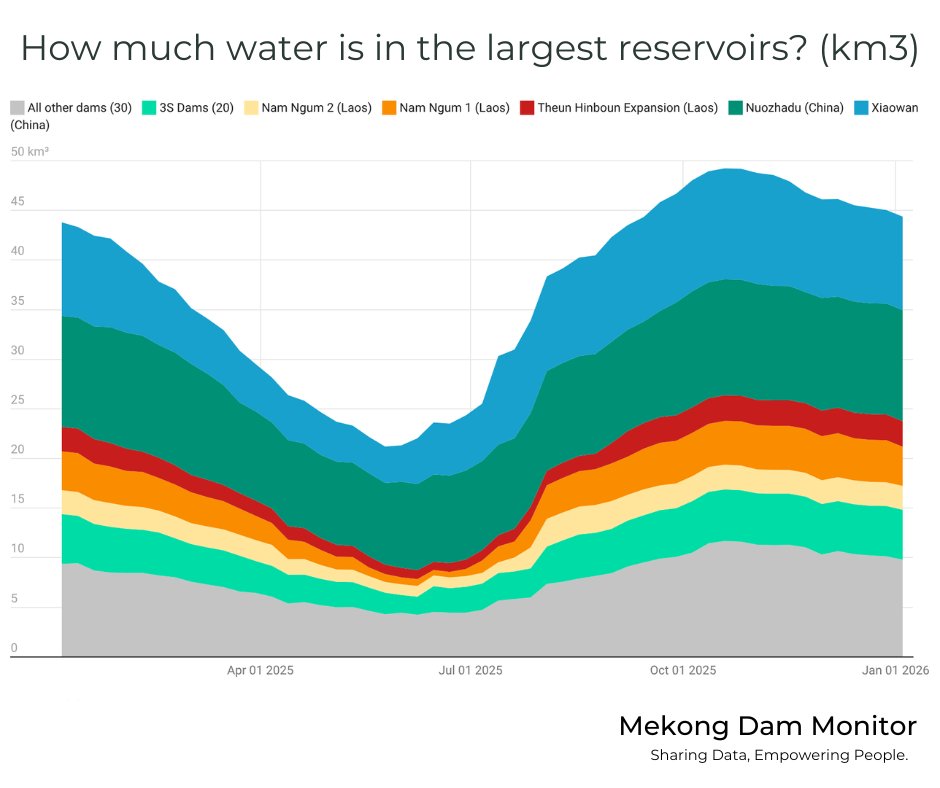
From mid-December to early January, dam releases totaled 500 million cubic meters of water released across 60 dams monitored by the MDM. Unseasonable rains are likely causing reservoirs to stay full even as they release water for hydropower production. Most reservoirs in the Mekong are still high and near to full capacity, meaning that dry season releases have yet to significantly and artificially raise the level of the Mekong. Learn more at mekongmonitor.stimson.org. 1/4
English