
Andrew Meng

97 posts

Andrew Meng banner
Andrew Meng

Andrew Meng

@MengMengDuck

300M+ Impressions Generated | Co-Founder https://t.co/kTTslF7tQw | MengMengDuck 🐤 (800k+) on Socials | Ex. Investment Banker

Katılım Ocak 2015
64 Takip Edilen336 Takipçiler
Andrew Meng
Andrew Meng@MengMengDuck·
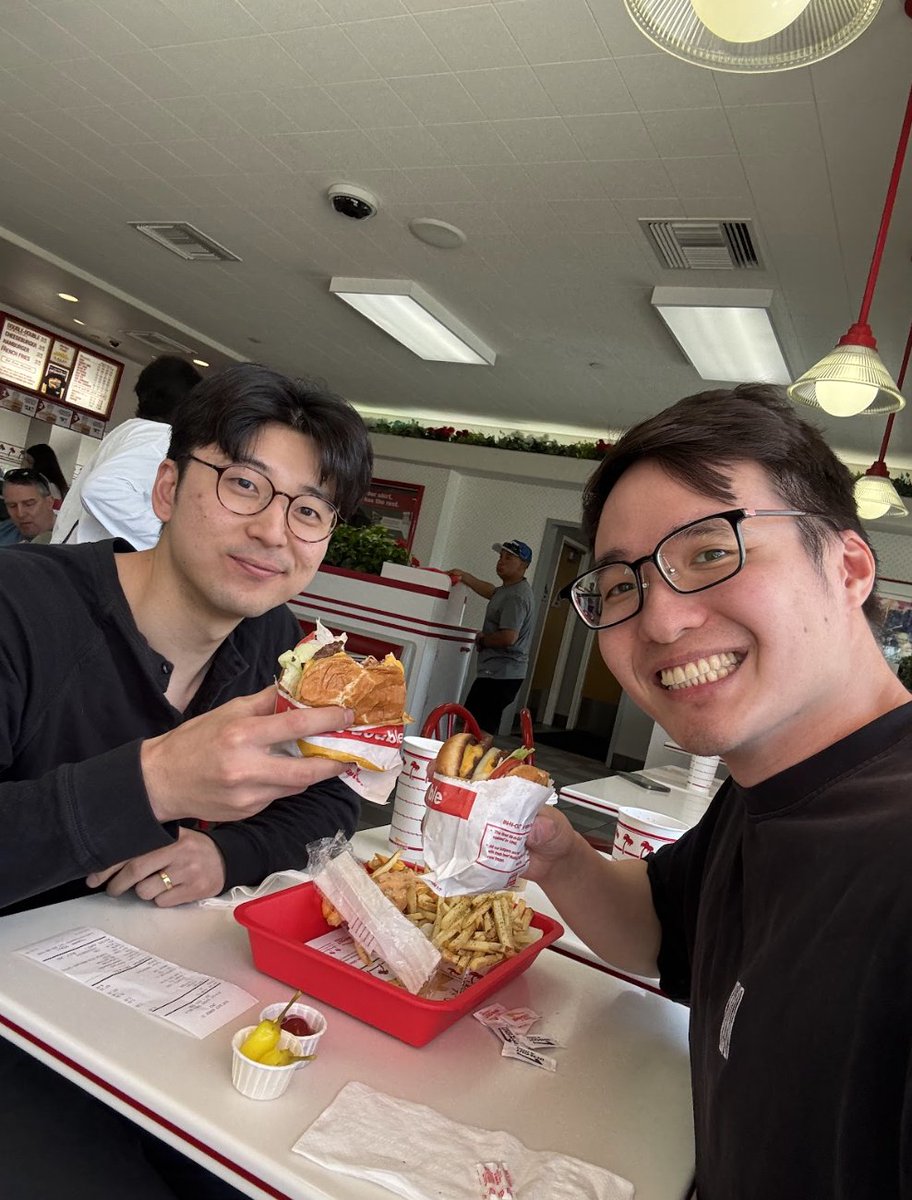
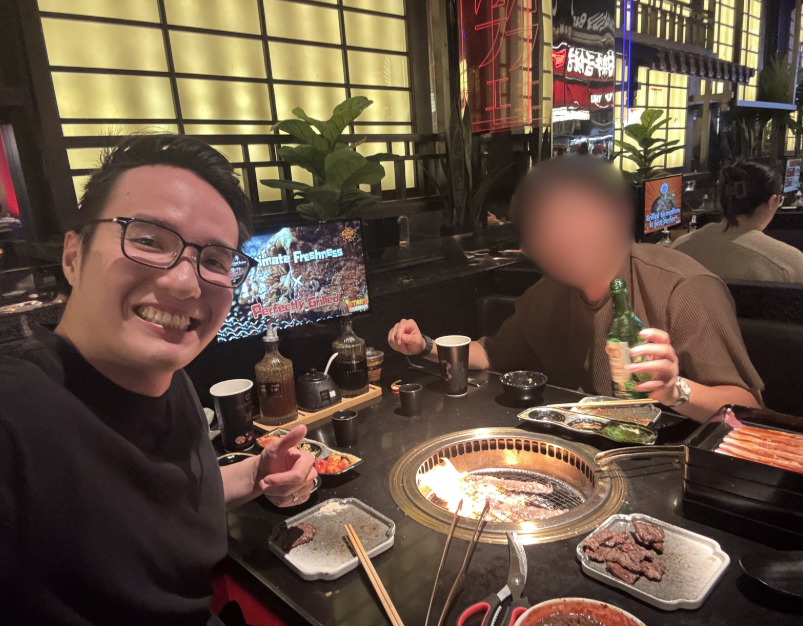
Got dinner with a founder buddy yesterday. Halfway through the meal he hits me with "Andrew, when do you know it's time to fire someone?" I told him about an employee I had to let go from my agency years ago. She was great to start, super motivated and driven. Then over time, the quality of her work just went down. I tried asking her how I could help turn things around, but nothing changed. - She stopped showing up to our one-on-ones. - Couldn't do her job without explicit instructions. - She would do the bare minimum task and turn in work with a bunch of mistakes I hate firing people, so naturally I gave her the benefit of the doubt. “Maybe my own expectations are unreasonable.” Eventually I ended up letting her go, but long after I should’ve made the call. So when my friend told me about a similar situation, I straight up told him - let them go. If you’re finding yourself needing to write out explicit instructions for stuff that feels like “common sense”, that’s a red flag. If it feels like common sense, that’s because it is. Also, if you have to spend more time and energy fixing their work than doing it yourself, why did you hire that person in the first place? At a larger company, there’s more leeway for underperformance. But in an early stage company, you simply don't have the luxury of waiting to find out. A wise man once said: “Fire fast, hire slow.”
Andrew Meng tweet media
English
0
0
0
24
Andrew Meng
Andrew Meng@MengMengDuck·
I sent 2000+ cold emails last week and managed to get an SVP at a Fortune 500 Media company on a call. Two-minutes in, he told me “you’re wasting your time. We’re not going to buy this”. Ouch. For context, I’m building an AI social media marketing tool called Yorby.ai, and we’ve decided to target enterprise B2B customers (e.g., Coca Cola, General Electric, Conde Nast, etc.). I’ve been going ham on outreach, hence the call with the SVP at a F500 Media company. I was excited and thought it was going to go well, but instead I got hit with: “There’s nothing special about your tool Andrew, it’s just a scriptwriter” “We just don’t need this” It stung at first, but then I realized his raw feedback was extremely rare and valuable. My 2 takeaways from the convo (besides that we have some work to do): 1. Enterprise Sales is very relationship driven. The only reason large companies switch tools is if someone knows someone else, or you’re just such an amazing new tool nobody’s seen before that they decide it’s worth the risk to try you out. The sales cycle can be months to years, which is very different from selling to SMBs. 2. Having a personal brand can be the difference between landing a conversation or getting ghosted I asked, “why did you reply to my email?”, and he told me that the only reason he hopped on a call with some random founder was he clicked my instagram profile and saw I had 800k+ followers, solid engagement, and was an ex-investment banker. Beyond the vanity metrics, a personal brand signals who you are as a person and opens doors that would otherwise stay shut. It's the only reason I've been able to get in front of enterprise customers and investors like Jason Calacanis. If you’re a founder, how are you standing out from the crowd?
Andrew Meng tweet media
English
0
0
0
12
Andrew Meng
Andrew Meng@MengMengDuck·
The human brain is wired to avoid risk and to be careful. In corporate, you’re trained from day one to make sure something is “perfect” before it gets sent out. This makes sense in corporate, but is some of the worst advice to grow with content. Most beginners who struggle to grow ask things like: - "how often should I post?" - “whats the optimal time to post? - “what format has been crushing it on Instagram?” What they’re really struggling with is perfectionism. I have a founder friend who's been "about to start posting" for six months but always comes up with excuses not to start. Here’s what I told him (took me 5+ years to realize): Posting 70% “perfect” content, 100% of the time, always beats 100% perfect, 0% of the time. Growing online in 2026 requires (1) rapid iteration and testing, and (2) a level of volume most beginners underestimate. 9 out of 10 times, people try to have a “perfect” first post, because they are scared of flopping and embarrassing themselves. In reality, if your post flops, I can guarantee no one saw it, and for the few that did, they won’t even remember it 15 minutes from now. Let’s be real - you cannot engineer a viral first post because you don't know what's gonna hit. - You don't know your audience yet. - You don't even know your ideal format yet. The only way to find any of that is reps. So what are you waiting for?
English
0
0
0
12
Andrew Meng
Andrew Meng@MengMengDuck·
"How do you come up with ideas?" A friend asked me this recently. Here’s how I’d get my first 100,000 followers if starting over again in 2026. Here's how I think about it. There are two kinds of content, “soulful” and “soulless”. Despite what you’re probably thinking, both have a key role in making you grow. 1. Start with making “soul-less” content Soul-less content is the stuff anyone can make. Think news and educational content. Stuff like "3 ways to write better hooks." These are topics that you can copy from another channel, then remix in your voice. Or someone can rip it from you. Despite what the name implies, soulless content has a place. It's how you show up consistently, ride a trend, and teach. People save it, share it, and learn from it. It has a place in every creator’s arsenal, and it’s where I’d start because it’s easiest to make. 2. Start injecting “soulful” content into your rotation The problem with “soul-less” content is that it’s easily replicated. There are ten other people are posting the same thing this week. Enter, soulful content. This is the stuff ONLY YOU can make, like your personal stories and experiences. This is the dumb thing your eighth grade history teacher said that became your online handle for the rest of your life (how I became “mengmengduck”), the reason you started your business, or the convo you had with your buddy yesterday you can’t stop thinking about. This is what makes someone go "he's the guy who gets it + that I can relate to”. The best content in my experience tends to touch on both soul-less and soul-ful elements (e.g.., starting with a personal story and ending with tactical “how to” tips. Soulless content gets you views, soulful gets you remembered. Combine both, and it’s impossible not to grow.
English
1
0
0
12
Andrew Meng
Andrew Meng@MengMengDuck·
Hot take: “shiny object” syndrome is good. After generating over 10M+ lifetime views on social media, one of the most counterintuitive learnings I’ve had is that being distracted is actually very, very helpful. Conventional wisdom lionizes focus. "Stick with one thing" "Don't get distracted" “Focus is what lead to 10x results” This advice makes for easy soundbites, and that’s why it’s so commonly repeated. However, it often comes from people who’ve already found the right goal or project to commit to. It ignores the fact that 90% of young people have no idea what they want. And in order the find the right “thing” to commit to - there’s HUGE VALUE in being “distracted” and seeing a few different options. This is the same reason that: - students do internships, and - people typically go on a few dates before going exclusive “Dating” around helps you learn about the other person, but also yourself - what you prefer, where you might be lacking, and what your strengths are. I started my content career making videos about investment banking. They got views, but I HATED IT. If I had stuck with it and followed the LinkedIn advice of "don’t be distracted", I'd probably be miserable right now. I'm so glad I had shiny object syndrome. I got bored, tried being a comedy creator, and that led me to my first viral videos. If you still aren’t following here’s an analogy: Imagine telling a 21-year-old to marry the first person they ever date. Because "real love is loyalty." What if she's a psychopath? You wouldn't even know. You have no reference point. You don't know what good looks like until you've seen what bad looks like. Same thing with your career or business. You don't know if you're on the wrong idea until you've seen the other ones. My honest advice for my younger self is - it’s ok to have shiny object syndrome. Spend time figuring out what actually brings you energy, not just what people tell you to do. Then, commit and don’t look back.
Andrew Meng tweet media
English
0
0
2
35
Andrew Meng
Andrew Meng@MengMengDuck·
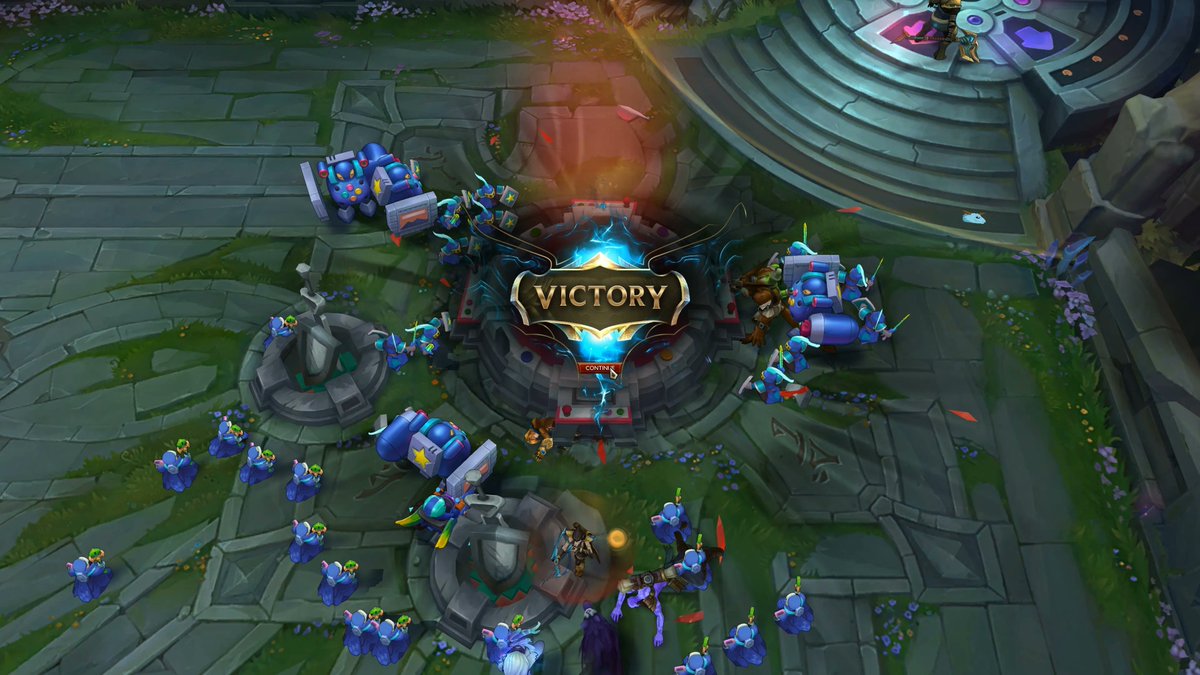
Here’s what playing 2,000 hours of league of legends in my early 20s taught me about B2B sales: The game ain’t over until it’s over (and my nexus explodes). For the non-gamers here, the nexus is your team’s “homebase”. The enemy team’s goal is to destroy it, but before they get there they’ve gotta destroy a bunch of turrets and obstacles in the way. Games go from 30-60+ mins. Most of the time you’re fighting until the enemy team’s nexus is destroyed, or yours is. But there’s also a sneaky little “surrender” button. Anyone can initiate a surrender vote, but majority has to agree for it to go through. 9/10 times there’s some demoralized guy who starts the vote after dying. I abide by a few KEY PRINCIPLES in my life. 1. Always make sure my wife is fed 2. NEVER vote yes in a surrender vote 3. Even if we’re hanging on by a thread and all our defenses have been destroyed, if there’s even a 0.1% chance we turn it around, I’m putting money on that. You might think I’m childish but I think how you treat small things is how you treat big things. Building a business is like playing a video game, except the stakes are higher. Thomas and I are 5+ months in to building yorby.ai, and just crossed 30k users and 6k MRR. As creators ourselves, we’re care deeply about the mission - to help creators and brands go viral on social media - and we told ourselves we aren’t giving up till we see this through. The game ain’t until it’s over (or my bank account is empty - just don’t tell my wife).
Andrew Meng tweet media
English
0
0
1
45
Andrew Meng
Andrew Meng@MengMengDuck·
Last Friday I spent 2 hours talking to a creator who grew his following to over 200k+ on YouTube in 3 years, then quit Big Tech to go all-in on a new business. What we talked about was fascinating. Matt Huang and I were talking about how YouTube (and social media) used to be this magical place where people created purely because they wanted to. But recently there’s been an explosion of people creating content with the PRIMARY GOAL of making $$$$. We call this new class the “mercenary” creator. In the absence of economic opportunity, they would not be making content. Case in point: UGC creators, TikTok Shop hustlers, rage-baiters who create only to drive traffic to their link in bio. I’m not saying creating content because you want to make money is bad. I’ve done my fair share of sponsorships, and I’m building yorby.ai with my cofounder Thomas because we believe in the power of content for businesses. But what happened to creating content for the love of the game? If you create content, what’s your primary motivation?
Andrew Meng tweet media
English
0
0
1
57
Andrew Meng
Andrew Meng@MengMengDuck·
“Taste” is a word that has been thrown around ad naseum recently. But how the heck do you develop it? After posting 531 videos to build my audience of 800k+, here’s how I’d develop good taste in the age of AI slop (even if you aren’t a genius): And no, it’s not by asking Claude “how to create a viral post”. Step 1: Understand thy self What works for someone else may not work for you, and vice versa. You’ve first gotta understand how you are perceived, and what your unique angle is. For example, Steven Bartlett is a world-class podcaster, but he’d probably fail miserably as a standup comic. Kevin Hart is funny as sh** but would probably struggle to do what Steven does. Step 2: Copy the greats Steal like an artist, as Rick Rubin says. You can’t break the rules until you’ve learned the rules. Steve Jobs was obsessed with the radio and Dr. Dre studied musical greats of the past. They studied history before trying to create something new. Step 3: Break the rules Most people never graduate beyond the “copying” phase to this level. But the key here is to start having fun with your content. Try injecting something different even if it feels stupid at first. Understand not everything will hit, but that’s all part of the process. Over time you’ll develop your unique style. As Thomas and I build Yorby AI (the “taste-layer” for content creation), we’re focused on identifying what separates good from great content. In a world where software and content are easier to create than ever, the only moat left is brand and taste.
Andrew Meng tweet media
English
1
0
1
35
Andrew Meng
Andrew Meng@MengMengDuck·
Marc Andreesen just said he practices “zero introspection”. He may be cofounder of one of the most successful Venture Capital firms in history (and I’m but a humble early-stage founder), but I can’t help but consider the implications of his statement. Deep introspection is not something only the ancient Greeks, philosophers and academics in ivory towers do. It’s extremely practical. I’ve worked with hundreds of creators and built my own following to 800k+ on social media, and the #1 thing I’ve learned is that the top 0.01% of creators generating millions of views are all DEEPLY INTROSPECTIVE. AI has made it incredibly easy for anyone to now produce content. We’re already seeing a notable spike in content volume across all social platforms. Which begs the question, why isn’t everyone going viral? Why doesn’t anyone using AI to produce content have 1M followers? Because AI only amplifies what’s already there. Creators who command the attention of the masses have spent the time to consider the data, look within themselves, and understand who they are / what makes them unique. For example, John Coogan and Jordi Hayes (Whose podcast TBPN was acquired last week by OpenAI for a reported 9-figure sum) didn’t become the definitive voice of unbiased reporting in Silicon Valley by simply thinking at the surface level. They deeply understood their audience, but also themselves. Introspection is far from a waste of time. Unless it’s overdone, it might be one of the most productive exercises you can do for your career.
Andrew Meng tweet media
English
0
0
0
65
Andrew Meng
Andrew Meng@MengMengDuck·
I told a paying customer not to use our product last week. For an early stage startup founder, intentionally increasing our churn seems incredibly dumb. But it wasn’t for the reason you think. She's building a fashion brand and signed up for Yorby. Booked a call to learn how to get more out of it. 30 minutes in, I just said it: "I don't think we're the best platform for you right now. It's not what we're special at." Let me back up a bit. Yorby is incredible for talking head videos, educational content, scripted content. Any content where there’s a speaker. But her brand sells aspirational fashion. Her best content was an influencer friend who organically showed off her outfits on camera. No script or hook. Just music and vibes. That's not our lane (at least not yet), and pretending it is would've just wasted her time. So instead of doing a product demo, I spent the rest of the call helping her with: • Which influencers to target • UGC platforms I personally use • Why her best-performing content was working (and how to do more of it) I could've let her stay subscribed and figured it out on her own. But what I've learned building Yorby is that reaching the right audience, not just ANY audience, is key. Also, telling people "this isn't for you" builds more trust + creates more long-term value than letting 100 people churn off on their own. Thomas and I are in this for the long game. We know our sweet spot and who we can deliver for. So when someone isn't a fit, we just say so.
Andrew Meng tweet media
English
0
0
0
50
Andrew Meng
Andrew Meng@MengMengDuck·
I learned something uncomfortable last week after pitching at Jason Calacanis’ Launch event: Silicon Valley VCs do not think my startup Yorby is cool. You know what they think is cool? • B2B invoice analysis software. • GovTech. • Agentic agricultural farming AI. Industries most people would consider “boring”, had the VCs practically drooling. Yorby AI is a tool that helps creators & marketers go viral. It’s too consumer-y, saturated, trendy, and not "B2B enterprise" enough to fit into the current meta of what most VCs would get excited by. Am I upset? Nah, not really. The investors aren’t wrong. Unsexy businesses tend to have lower competition, stickier customers, and deeper moats. Scott Galloway famously said he doesn’t invest in sexy businesses. But here's the thing about being in a "sexy" market, nobody wastes your time questioning if the opportunity is real. That showed up in every single pitch we gave. First, marketing is a trillion dollar market. Nobody needs to be convinced it's big. While other founders were spending precious pitch minutes justifying their TAM, we skipped that conversation entirely. Second, AI disrupting marketing isn't a thesis investors need to be sold on. It's already happening. The problem is obvious. The opportunity is obvious. There's no story to tell there. Third, and most importantly: our market is competitive, which means traction is the only thing that actually matters. Investors aren't asking "is this a good idea?" They're asking "why are you the ones who win?" The only honest answer to that question is the scoreboard. We went from 0 to 25k users in under 3 months, and we are only just getting started. That's the only proof that matters, and it's the story we're selling.
Andrew Meng tweet media
English
1
0
1
59
Andrew Meng
Andrew Meng@MengMengDuck·
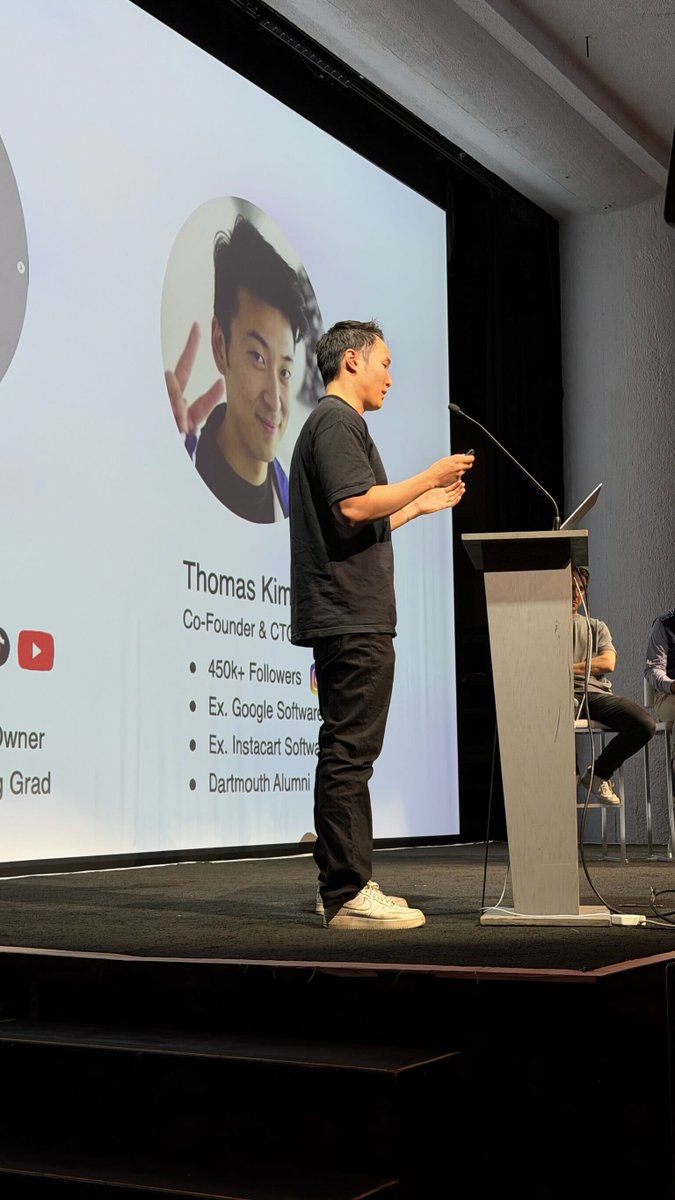
Last week at Launch, I sat through 20+ founder pitches to top tier Silicon Valley VCs. I couldn’t help but notice something interesting about the founders who caught the attention of investors vs those that didn’t. Every founder who crushed it was playing a completely different game than everyone else. One guy leaned hard into the "I'm an engineer, I barely know how to talk to people, but I built something insane" energy. The people loved him because you could tell he wasn't performing. Another founder was full Steve Jobs mode. Dramatic pauses, big vision, and walking the stage like he owned the building. Then there were the founders who clearly watched too many YC demo day videos and tried to be someone they weren't. I spent a while thinking about where I fall. Am I the charismatic visionary? Not really. Am I the brilliant technical founder who barely speaks? Definitely not. I'm more of the witty guy who makes the room feel comfortable, cracks a joke at the right moment, and somehow gets people to like me enough to actually listen. The worst thing to do as a founder is cosplay an archetype that isn't yours. The quiet technical genius will bomb trying to be a smooth storyteller, and vice versa. If you're a founder still trying to figure out your archetype: stop watching other people's pitch breakdowns and pay attention to the moments where rooms respond to you without you trying. There’s probably something there you didn’t realize before.
Andrew Meng tweet media
English
0
0
0
36
Andrew Meng retweetledi
LAUNCH
LAUNCH@LAUNCH·
🚀 Introducing LA36, the newest cohort in the LAUNCH Accelerator! 8 startups. 14 weeks. 1 mission: grow fast & raise capital. Here’s who’s in 👇
LAUNCH tweet media
English
1
5
30
2.6K
Andrew Meng
Andrew Meng@MengMengDuck·
The hardest part of building a startup isn't the product. It's that you have to become a completely different person depending on who picks up the phone. I learned this the hard way. Early on I'd hop off calls with VCs, where I'd just spent 20 minutes talking about building an agentic AI copilot that replaces entire marketing teams. Then I would immediately jump into a call with a potential customer and open with the same energy I used to charm the VC. 99% of the time, most people would look at me and go "okay but can it write my script right now?" I did that more times than I'd like to admit. With investors, I pitch Yorby AI as Claude Code/Cursor for marketers. The kind of thing that makes a content team of 10 look like a content team of 1. That's what they need to hear to get excited. With customers, nobody cares about any of that. They want to see a script written in front of them in 30 seconds. That's the whole pitch. Same product but two completely different conversations. It took me an embarrassingly long time to realize that having the discernment to know which version of the truth to lead with is such an undervalued skill. I still catch myself slipping into VC mode mid-demo sometimes, but it’s something I’m getting better at every day.
Andrew Meng tweet media
English
0
0
1
68
Andrew Meng
Andrew Meng@MengMengDuck·
I have 800k followers and ran UGC campaigns that generated millions of views, but I'm still paying someone else to run my $60k campaign. Here's why. My co-founder Thomas and I have a combined 1.3 million followers. We've both built thriving content businesses and deeply understand how to run UGC campaigns. But last week I had to accept an uncomfortable truth. My main job now is to be a founder, not a content creator. And letting go of that identity feels like watching your kid leave for college. For the past four years, I've been the guy in the weeds. Testing hooks, editing videos, managing creators, and obsessing over every detail. But if I'm spending 6 hours a day managing 100 creators, I'm not doing my actual job. I'm playing marketing manager when I should be playing CEO. Here's the thing that happens when you're good at something. You convince yourself nobody else can do it as well as you, so you hold onto it way longer than you should. I had to ask myself an honest question. Am I the best person to run this campaign for Yorby AI right now? Or am I just scared to give up control? The answer was obvious. The people running UGC today are using the new strategies that I haven’t kept up with. And if I’m to be completely honest, I no longer love the content game as I used to anymore. So I'm hiring an external agency. They've run campaigns across dozens of brands and built systems I haven't seen yet. They won't care about my startup as much as I do, but they've seen patterns at scale that I'm still blind to. If you're a founder still doing everything yourself because "nobody can do it like you can," ask yourself this: are you actually helping your company grow, or are you just protecting your own identity?
Andrew Meng tweet media
English
0
0
3
81
Andrew Meng
Andrew Meng@MengMengDuck·
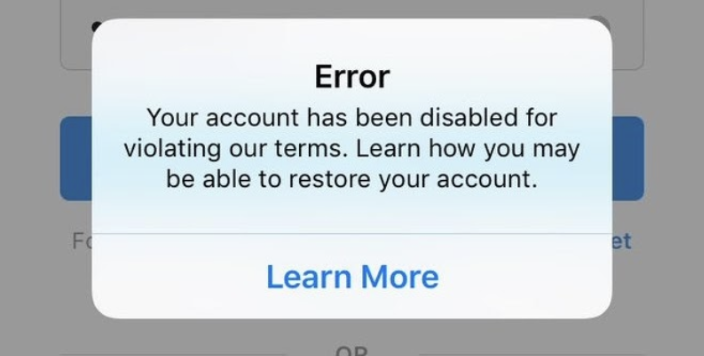
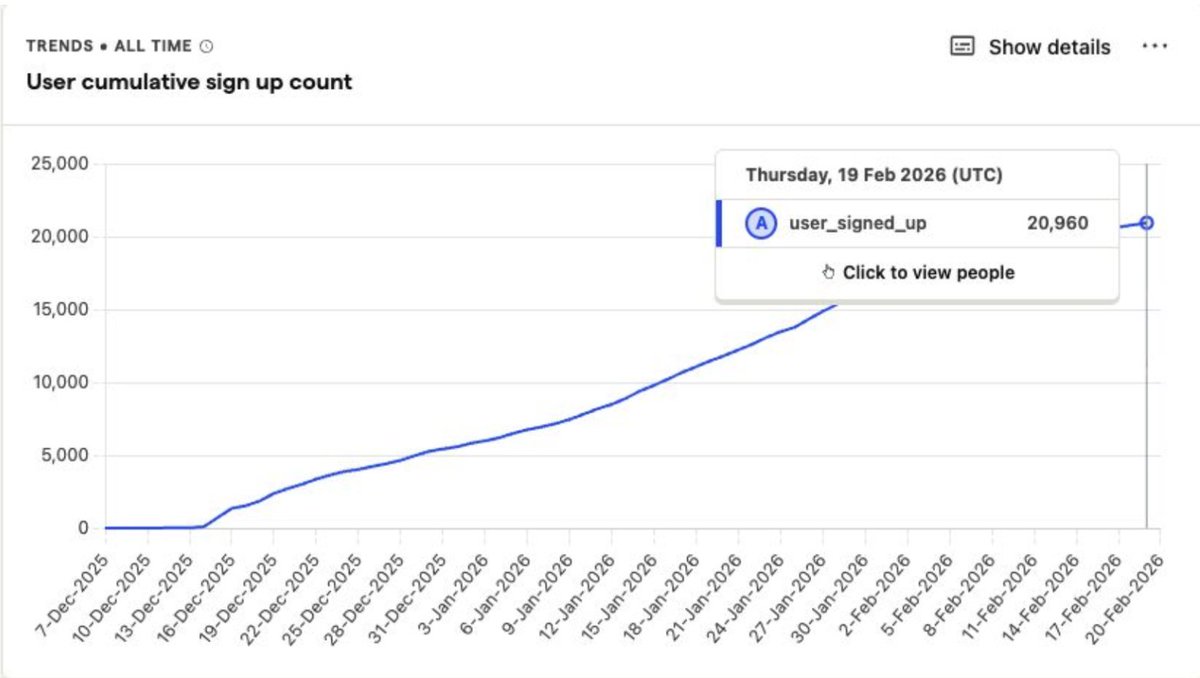
Mark Zuckerberg nearly killed my startup last month. Well, not him personally. But his platform did. Let me explain. I grew Yorby AI to 20K users using AI-generated influencers. It was working insanely well, capturing us millions of views and tens of thousands of signups. Then I woke up one day and saw Insta banned my account. I’ve seen this happen before and so I didn’t think much. A few days later, my second AI account got hit too. Zuck’s algorithms looked at my posting pattern and basically said "yeah, we see what you're doing, stop." The growth engine behind Yorby came to a stop. I’ve realized platforms don't actually hate AI content, they hate spam and “content farm” like activities. And right now, posting the same AI face multiple times a day + posting on multiple accounts from a single IP address probably looks like spam to them. I could probably run 2 or 3 AI accounts safely. But 50? My startup would get nuked off the platform in weeks. That’s why I’m spending $60K to hire human creators for the next 6 months, even in the age of AI. But the plan is to find the killer marketers, and then have them leverage AI to 10x their output. My cofounder thinks I’m crazy but I'm going to prove him wrong. Follow to see the journey.
Andrew Meng tweet media
English
0
0
2
98
Andrew Meng
Andrew Meng@MengMengDuck·
I'm hiring a Head of UGC at Yorby AI (Part-time/Full-time, remote). My co-founder Thomas Kim and I have been heads-down building for the past several months and we've quietly grown to 20,000 users. We’ve also been accepted into Jason Calacanis’ Launch Accelerator. We are building the Claude Code/Cursor for marketing, where we turn every creator and marketer into a 10x version of themselves. Thomas and I have built a combined audience of 1.3M+ across our personal brands. So we aren’t just explorers in the space, we live and breathe this space. Now we need someone to pour fuel on the fire. We're gearing up for our largest UGC campaign to date and need an absolute killer to lead it. Someone who's been here before, knows what it takes to scale UGC campaigns, and is hungry to do it again. You’ll own our UGC growth from end to end: sourcing creators, coaching their performance, and driving millions of organic views for the brand. Only requirement: you've gone viral before (for a software brand) This won't be an easy role. We're building a generational company and expect a lot. But here's what you’ll get. Best case: You help us hit 200,000 users in 3 months and either join us full-time or walk away with a sick case study that makes you incredibly hireable. Worst case: I let you blow $100k and you learn lessons that would've taken 2 years to figure out on your own. You will be compensated fairly. DM me if interested or tag someone who’d be a good fit!
Andrew Meng tweet media
English
0
0
3
142
Andrew Meng
Andrew Meng@MengMengDuck·
My cofounder and I have 1.3 million followers. Our startup hit 10K users and our personal brands had almost nothing to do with it. Here’s how: A year ago, we launched a different tool (an AI notetaker) and everyone assumed we'd crush it. We had the right audience (students and professionals), the credibility, and the built-in distribution (1.3M+ combined followers). But after months of marketing, we couldn't break $2K MRR. Why? Because we never figured out how to grow it beyond our personal brands. We eventually saturated our entire audience base, and without any new growth channels working, we were hard stuck at $2K MRR. But with our latest startup Yorby (a tool for content creators and marketers), our personal brand’s distribution channels were actually useless because of the difference in demographic. So when we started building Yorby, we made a decision that confused a lot of people. My cofounder Thomas and I ditched our personal pages and created a brand new Instagram/Tiktok page (with 0 followers) to market our product. This channel was laser-focused on our actual customers: creators and marketers. We then used Yorby AI (the tool we're building) to actually figure out what content would work. That strategy went viral, drove millions of views, and brought us our first 10K users. Here’s the reality: A personal brand can give you an initial spike in users, but that eventually caps out. Your product can't live off your personal brand forever. So invest into building other distribution channels that work without you.
Andrew Meng tweet media
English
0
0
3
63
Andrew Meng
Andrew Meng@MengMengDuck·
After I quit my investment banking job in 2021, I spent the next year telling everyone their 9-5 was a trap. I genuinely thought I'd cracked some secret code everyone else was too scared to see and I made SURE to tell everyone around me. Fast forward 4 years where I am on my honeymoon in Europe and responding to client requests every 2 hours. Suddenly I am very quiet about the whole thing. I see this trend going around the internet where quitting your 9-5 is glorified and staying in one is somehow embarrassing. But here’s what nobody tells you: My friends in corporate jobs take two weeks off and genuinely don't think about work once. I have not experienced that since the day I quit. And I’m not saying this to sound superior or pretentious. But when you're running your own thing, clients don't care that you're on vacation. A campaign goes sideways at 11pm? That's your problem. A customer needs you during dinner? You're answering. Entrepreneurship never fully shuts off. Some people want the freedom to build something from scratch and are fine with it living in their head 24/7. Others want clear boundaries, predictable income, and the ability to actually disconnect on weekends. Neither path is better than the other, there are just distinct tradeoffs associated with each. So if you're thinking of quitting your 9-5 to do something you care about, I'm rooting for you, but understand that your work will become your life. However, if the main reason is because some guy selling a $3000 course told you dropshipping would “give you the freedom you seek”, strongly reconsider.
Andrew Meng tweet media
English
1
0
3
60
Andrew Meng
Andrew Meng@MengMengDuck·
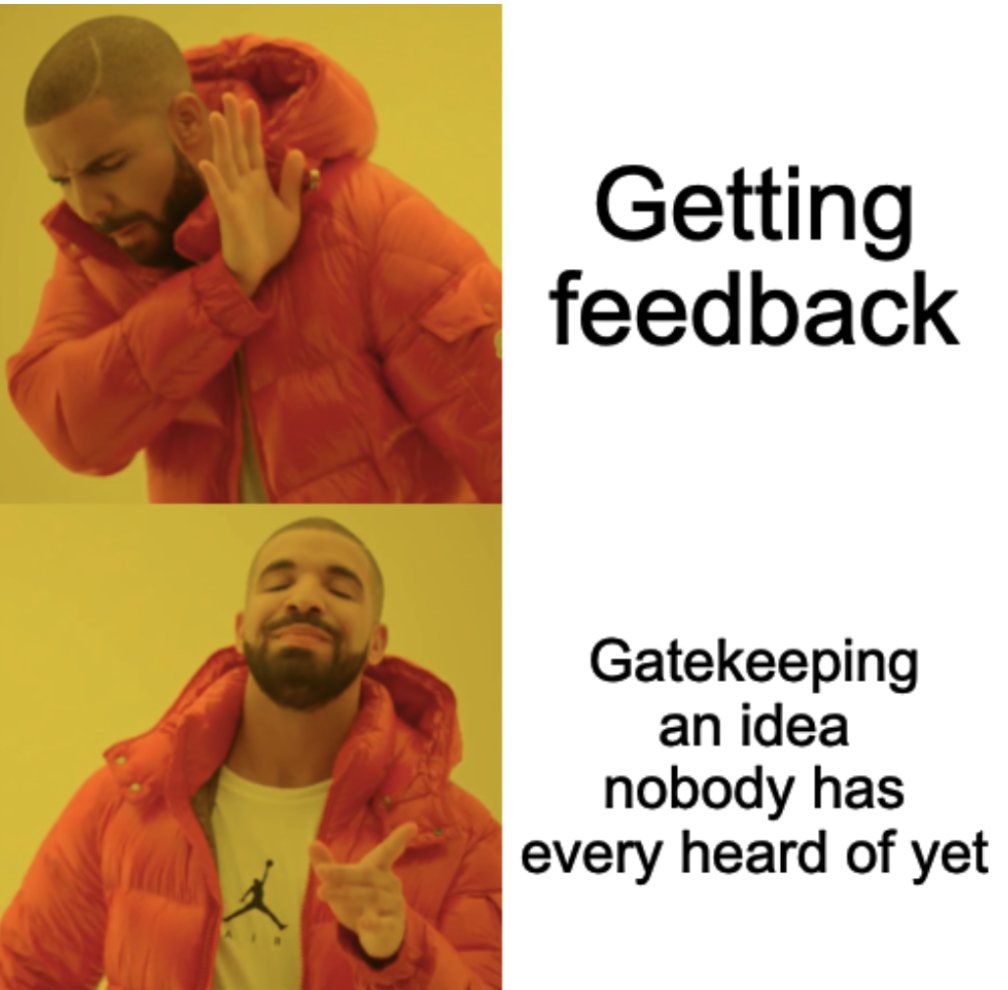
My friend who's "building in stealth" asked me for startup advice yesterday. Here's how that went (kinda): Me: "Sooo what are you building?" Him: "Can't say. Stealth mode." Me: "Okay, what problem does it solve?" Him: "I can’t really disclose the details but it’s a big one" Me: "Who's your target customer?" Him: "That's confidential." Me: "Have you talked to any customers yet?" Him: "No because that would compromise our stealth positioning." Me: "So you want advice on a product I know nothing about, for customers you haven't talked to, solving a problem you can't describe?" Him: "Exactly. Thoughts?" Here's my advice: If you're working on breakthrough tech or real IP: sure, stay quiet. But 99% of "stealth mode" startups aren't protecting IP. They're avoiding reality and valuable feedback. I'm building Yorby AI in the exact opposite way: completely in the open to iterate and build on the feedback of my users. So unless you’re in that 1% of Stealth founders, just ship that LinkedIn post.
Andrew Meng tweet media
English
0
0
3
28