Arshaluis

110 posts

Arshaluis banner
Arshaluis

Arshaluis

@Mghdesyan

Reporter at Deutsche Welle Reporter at https://t.co/gcHmhFSfGU Reporter at https://t.co/owj8ydlksU, Armenia

Yerevan, Amenia Katılım Aralık 2009
316 Takip Edilen204 Takipçiler
Arshaluis
Arshaluis@Mghdesyan·
In short: regarding the last two days in Armenia 🙂 But seriously, now that passions have cooled a bit, I’ll try to address the topic more calmly and in greater detail. Here are a few observations: 1#Solovyov is not a decision-maker in Russian foreign policy. He never has been, and never will be. He is merely a propagandist. It is not up to him to decide whether Russia should start an "SVO" (Special Military Operation); otherwise, #Russia shouldn't have started a war against #Ukraine at all, nor should it have taken Crimea. Years ago, when Solovyov was asked about "taking back" Crimea, he replied, "God forbid." You all know well what happened in 2014. 2By the way, what "SVO" in Armenia or Central Asia? While one power solves the Maduro issue in four hours, another can’t manage Kyiv in four years (though, to be fair, the other one didn’t succeed in Afghanistan in 20 years either). 3However, Solovyov's words shouldn't be completely dismissed or devalued. When the main "star" of political shows on Russian state TV allows himself such statements regarding Central Asia and Armenia, it speaks to a qualitative shift in Russia's relations with these countries. And qualitative changes don't always imply positive developments; the scale doesn't only go up. If you follow Solovyov's podcasts and shows permanently, you’ll hear scandalous statements of varying quality fired off at machine-gun speed, only to be forgotten the next day. In any case, one must distinguish Vladimir Rudolfovich from Vladimir Vladimirovich. 4And yes, there is no need to look for conspiracies behind Solovyov's words. As if he did it on purpose or gave a "pass" to the Armenian authorities so they could use anti-Russian sentiments to consolidate their electorate before elections. Solovyov may be many things, but he is not stupid, and he won’t shoot himself in the foot. 5Formalities and flirtations, including those at the level of "pro-Armenian" media figures, are in the past. Moscow and other geopolitical centers no longer worry about what people will think of them, even in friendly countries. To quote a classic: you have to look and see (listen) to what Trump says about taking Greenland by force, or about Europe in general, to understand that the world is returning to the basic settings of a global "thug-style" bazaar. Look at what Russia is doing now in Ukraine—a country Putin completely identified with the Russian world, previously lavishing Ukrainians with the "we are one people" thesis. 6Another important factor: Solovyov is also a showman. No matter how monolithic the Russian media landscape seems from the outside, there is competition for ratings in that market. Everyone and every media outlet, even the most pro-government ones, tries to prove their worth to the authorities every day by demonstrating their influence on a large audience. So, Solovyov's current vocabulary, while very harsh, is not a new phenomenon and shouldn't come as a surprise. 7Just remember what was said about Armenia and what epithets were lavished on Russian state airwaves back during Serzh Sargsyan's presidency. Do you remember the humiliating comparison on NTV in 2017—"Armenia is a wandering/unfaithful wife"—used to label Armenia's foreign policy for its attempts to interact with the West? And this was in 2017, when Armenia was already a member of the EAEU, and the agenda was the development of the CSTO... Conclusion: This is neither the beginning nor the end. Situations like this will happen again because Armenia-Russia relations are truly transforming, and it won't be painless. The solution is as old as humanity and trivial: show maturity as a state and society, and work, work, and work again on developing our own capabilities, opportunities, and alternatives.
Arshaluis tweet media
English
0
0
0
29
Arshaluis
Arshaluis@Mghdesyan·
Soon, the first batch of Kazakh wheat will enter Armenia via the Aktau-Baku route, and then along the Azerbaijani and Georgian railways. Minister of Economy Gevorg Papoyan announced this on his Facebook page.
English
0
0
0
37
Arshaluis
Arshaluis@Mghdesyan·
Azerbaijan has lifted all restrictions on the transit of goods to Armenia that had been in place since the first #Karabakh war. According to Azerbaijani media, this was stated by the President of Azerbaijan, #IlhamAliyev, in a joint press statement with the President of Kazakhstan, Kassym-Jomart Tokayev. #Aliyev noted that the first such transit cargo was a shipment of Kazakh grain to Armenia. What this actually means and how this transit will operate under the conditions of a closed border is not yet clear. It is also unclear whether this signals an announcement of the imminent opening of the border between Armenia and Azerbaijan, which could, with greater likelihood, also lead to the unblocking of #ArmenianTurkish communications. This refers to the transit of goods destined for Armenia through the territory of Azerbaijan to Georgia, and from there to Armenia.
Arshaluis tweet media
English
2
0
0
60
Arshaluis
Arshaluis@Mghdesyan·
The Republic of Armenia welcomes the statement of the President of the Republic of Azerbaijan regarding the lifting of restrictions on the transit of goods to Armenia. The Prime Minister's spokesperson, Nazeli Baghdasaryan, wrote about this on her Facebook page. "This step is significant for the opening of regional communications, strengthening mutual trust, and the institutionalization of established peace between Armenia and Azerbaijan, in line with the agreements reached in Washington," wrote Baghdasaryan.
English
0
0
0
45
Arshaluis
Arshaluis@Mghdesyan·
I am delighted to announce that my article, "Civil society in Armenia: from peak to decline in advocacy," has been published in the latest issue of @NewEastEurope Europe magazine. This was a very important project for me, where I dive into the complexities and challenges facing NGOs and civil society in Armenia. My analysis covers everything from rising polarization and geopolitical pressure to the role of civil society as a pillar of democracy. I believe that understanding these issues is critical for anyone working in the region. And of course I am very grateful to @tatevik_arm for this opportunity and important experience. Link - lnkd.in/eFaYMNxX
Arshaluis tweet media
English
1
0
1
77
Arshaluis
Arshaluis@Mghdesyan·
#НовыйАватар
Arshaluis tweet media
QME
0
0
0
37
Arshaluis
Arshaluis@Mghdesyan·
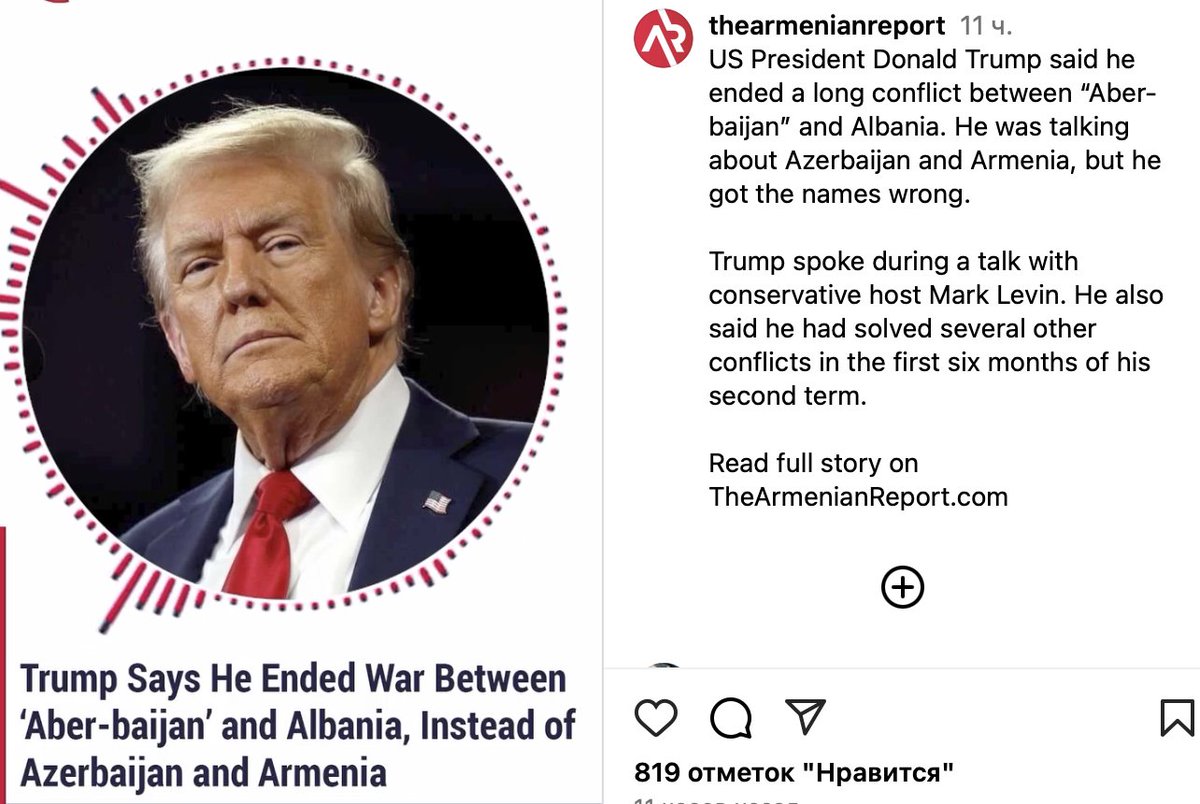
In an interview with journalist #MarkLevin, while discussing the Armenian–Azerbaijani settlement and U.S. efforts, #Trump misspoke twice—calling #Azerbaijan “Aberbadjan” and #Armenia “Albania.” This alone is no reason to draw sweeping conclusions; nevertheless, such slips inadvertently recall the degree of focus the U.S. administration brings to the issue and where it ranks among the administration’s priorities.
Arshaluis tweet media
English
0
0
0
75
Arshaluis
Arshaluis@Mghdesyan·
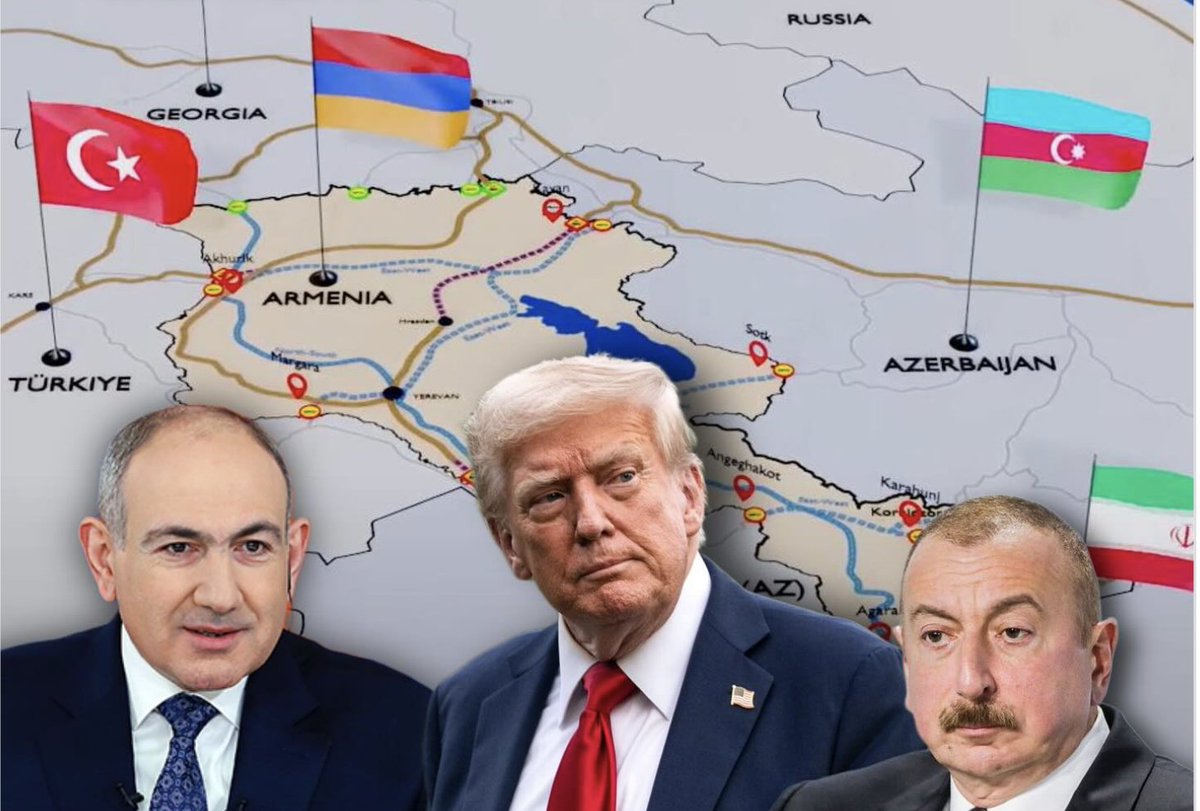
Look at what’s happening or what will happen: A few kilometers from the border with Iran, the #TrumpRoute, handed over to the U.S. government by Tehran's adversary for 99 years, will pass through Syunik. #Russian border guards are stationed along the same border. Around these parts, one of the most difficult and capital-intensive sections of the 'North-South' road is being constructed by an Iranian company. Of course, it has 'nothing to do' with official Tehran—just as much as the U.S. company managing the 'Trump Route' will have 'nothing to do' with the U.S. government. And yet, the money is all public... The funds for building the 'North-South' road are allocated by international financial institutions, which, for example, have no financial ties or relations with Iran. Meanwhile, in Kapan, the #Iranian Consulate operates. Do you think this small piece of land marks the end of the geopolitical puzzle? Of course, not. At the same time, on Armenia's east and west borders, including Nakhichevan, the European Union's monitoring mission is carrying out patrols. This is happening in a country where #Russia's 102nd military base is located, and Russian border guards, in addition to monitoring the Iranian border, also patrol the Turkish border. In the meantime, #Armenia, albeit in a passive status, continues to be a member of the #CSTO, a military-political ally of Russia at the bilateral level, and is in the same Customs Union with that country, represented by the EAEU. And, attention, Armenia has applied to join the Shanghai Cooperation Organization. A geopolitical Matryoshka. Djibouti, the only country in the world hosting military bases from both the U.S. and China, can calmly and nervously smoke on the sidelines.
Arshaluis tweet media
English
0
0
0
60
Arshaluis
Arshaluis@Mghdesyan·
🇺🇸🇦🇲🇦🇿 BREAKING: Peace Move Brokered by the U.S. in Washington 🕊️ A preliminary Armenia–Azerbaijan Peace Agreement is set to be signed in the presence of the U.S. President. The parties pledge to: ▫️ Avoid acts of revenge ▫️ Renounce territorial claims now and in the future ▫️ Uphold lasting peace 📜 It is affirmed that the administrative borders of the former USSR fully correspond to the current borders of Armenia and Azerbaijan. ❌ The parties will jointly appeal to the OSCE with a proposal to dissolve the Minsk Group, stating its continued existence is now meaningless and risks undermining mutual trust. 🤝 De facto peace is established. The agreement is to be signed and ratified, with the U.S. President assuming responsibility for its implementation. 🚆 The “Trump Corridor” is presented as a strategic infrastructure project aimed at connecting the region and boosting international connectivity. It may serve as the foundation for a future Armenia–U.S. investment agreement. #Washington #PeaceDeal #Armenia #Azerbaijan #Trump #Pashinyan #Aliyev #BreakingNews
English
0
1
1
260
Arshaluis
Arshaluis@Mghdesyan·
Washington Summit: The End of the Minsk Group and the Bet on the “Trump Route” Armenia and Azerbaijan, with the mediation of the United States, are preparing for a step that could symbolically mark the end of the Minsk Group era and become the starting point for a new format of regional geopolitics. According to information from Washington sources, reported by Azerbaijani journalist Alex Raufoglu, Armenian Prime Minister Nikol Pashinyan and Azerbaijani President Ilham Aliyev are planning to sign a joint declaration at the White House, officially withdrawing their countries from the OSCE Minsk Group. This structure, long regarded as the key international platform for the Karabakh settlement, effectively ceased functioning after the 2020 war and Russia’s invasion of Ukraine. Discontent with the Minsk Group is not limited to Aliyev Signing such a declaration, reportedly devoted to principles of peaceful resolution, would symbolically conclude the period during which France, Russia, and the United States acted as co-chairs of the Karabakh process. In Armenia, this move is increasingly interpreted as a release from the constraints of past foreign policy frameworks. Supporters of Pashinyan argue that the Minsk Group kept Armenia “entrenched in the past,” preventing it from advancing an independent foreign policy agenda. In recent months, Pashinyan has repeatedly emphasized that "the Karabakh issue has long served as a noose around Armenia’s neck," hindering the development of full-fledged statehood. In this context, dismantling the Minsk Group is not seen as the loss of a diplomatic instrument, but rather as the removal of a relic that obstructed a sovereign foreign policy strategy. Hence, Pashinyan’s bold statement: “We didn’t lose Nagorno-Karabakh — we gained the Republic of Armenia.” According to Raufoglu, the same summit may also result in another significant document — a joint declaration affirming the "irreversibility of the path to peace." A preliminary version of a bilateral peace agreement may also be signed. While a comprehensive treaty is not yet anticipated, even the declaration could represent the most serious U.S. attempt to assert itself as an active mediator in the South Caucasus, amid Moscow’s waning influence. “Trump Route”: Geopolitical Message? Particular attention is being paid to the proposed transport route through Syunik — the Armenian region connecting mainland Azerbaijan with its Nakhichevan exclave. Known in Azerbaijani rhetoric as the “Zangezur Corridor,” the route is now presented as a commercial initiative under Western management, reportedly bearing the working name “Trump Route.” According to Reuters, citing its sources, the corresponding document includes provisions granting the United States exclusive rights to implement a strategic transit corridor across the South Caucasus. Under the agreement, Armenia would grant the U.S. long-term exclusive rights to develop the corridor, designated as TRIPP — Trump Route for International Peace and Prosperity. Sources emphasize that this section of the document was thoroughly negotiated. Geopolitical Doubts U.S. representatives have stated that the corridor would not be extraterritorial, will remain under Armenian jurisdiction, and there are no plans to deploy American troops. Instead, the route would be operated by private companies responsible for secure and uninterrupted functioning. Nevertheless, skepticism persists among analysts. Given the broader geopolitical context, it seems unlikely that Washington’s interest in the project is purely altruistic. Many experts view this initiative as part of a wider strategy aimed at reducing Russian and Iranian influence in the region — especially amid rising tensions between these states and the U.S. across various global theaters. Tellingly, diplomatic activity between Yerevan and Tehran intensified immediately after reports of the proposed route emerged. This coincides with preparations for Iranian President Masoud Pezeshkian’s upcoming visit to Armenia, during which the project is expected to be a central issue on the agenda. Considering Tehran’s previous objections to the presence of European civil monitors on Armenia’s border with Azerbaijan, the potential appearance of an American presence — even in the form of a private company — just kilometers from Iran’s borders could provoke an equally strong response. Iran’s Reaction: Red Lines and Diplomatic Balance For Iran, Syunik is not just an Armenian province but a strategic access point to northern markets. Any attempt to create a transport corridor in this region involving Western actors is viewed by Tehran as a direct threat. Tehran has consistently declared that an extraterritorial route through Syunik constitutes a "red line." In 2022, as a sign of its engagement, Iran opened a consulate in the city of Kapan. Against the backdrop of deteriorating U.S.-Iran relations, Armenia is working to demonstrate that the project remains within the bounds of its national sovereignty. Yerevan is pursuing a balanced dialogue with Tehran, including through economic and political tools aimed at easing tensions. One such instrument is the participation of Iranian businesses in infrastructure development. In particular, an Iranian company is currently constructing one of the most complex and capital-intensive sections of the North–South Highway — a major investment project connecting Iran with Georgia, supported by international financial institutions. Additionally, with Yerevan’s consent, Iran has expanded its diplomatic presence in Syunik by opening a consulate. Meanwhile, Russian attempts to open a similar diplomatic mission in the region have so far failed to yield results. Domestic Political Risks and Opposition Concerns Despite official assurances regarding the preservation of sovereignty, concerns are growing within Armenian society and among opposition forces. In the absence of reciprocal steps from Baku, the deployment of an American private operator solely on Armenian territory (with no equivalent presence in Azerbaijan) could be perceived as a unilateral concession. In effect, cargo transit from Azerbaijan to Nakhichevan via Armenia would occur under international oversight, while Armenian transit through Nakhichevan would remain entirely under Azerbaijani control. This asymmetry is seen by critics as a departure from the “hard sovereignty” policy previously declared by Yerevan. Following the loss of Nagorno-Karabakh in 2023, one of the central justifications offered by Pashinyan’s supporters was that, despite the painful loss, Armenia had managed to retain control over its internationally recognized territory and avoid the establishment of an extraterritorial corridor — a demand supported by Baku and Moscow. Any new developments perceived as one-sided concessions — especially in the run-up to the 2026 parliamentary elections — are likely to fuel heated domestic political debate. Conclusion The signing of agreements in Washington could mark the beginning of a new diplomatic track, with the United States seeking to assert a leading role in the post-Soviet South Caucasus. However, Armenia still faces the complex challenge of balancing the interests of external powers — Iran, Russia, and the West — while preserving domestic political legitimacy amid increasing internal and external pressure.
Arshaluis tweet media
English
0
0
0
115
Arshaluis
Arshaluis@Mghdesyan·
Interesting Data on Yandex’s Operations in Armenia In 2024, the total volume of transactions carried out through Yandex in Armenia amounted to approximately 1.1% of the country’s GDP — around $260 million. Currently, Yandex offers 10 services in Armenia, which, according to the company, are used by every second adult citizen. These services provide income-generating opportunities to around 120,000 people, which is about 10% of the economically active population. In other words, Yandex has become one of the largest sources of income in the country — not by creating traditional jobs, but by offering broad opportunities to earn money. While Armenian authorities continue to speak about economic diversification — often implying the need to reduce dependence on Russia — the reality suggests otherwise. Not only are trade and economic ties with Russia expanding, but Russian companies are also strengthening their presence in Armenia’s economic structure. In 2024, trade turnover between Armenia and Russia hit a record high of $12 billion, reaffirming Russia’s status as Armenia’s top trading partner, with over 35% share in the country’s total foreign trade. Nearly half of Armenian exports — including alcohol, jewelry, agricultural products, and light industry goods — are destined for the Russian market. On the import side, Armenia heavily relies on Russia for energy supplies, raw materials, and processed goods. Russia’s dominance is especially pronounced in the energy sector. Gazprom not only supplies natural gas to Armenia but also operates the country’s gas distribution infrastructure. Each year, Armenia imports approximately 2.3 billion cubic meters of Russian gas, covering around 85% of domestic consumption. Russian petroleum products meet about 76% of Armenia’s fuel needs, and Russian grain and flour make up as much as 98% of imports in that category. Disengaging from these supply chains without a comprehensive alternative strategy would come at significant economic cost — a factor the Armenian government is acutely aware of in its policy planning.
Arshaluis tweet media
English
0
0
0
41
Arshaluis
Arshaluis@Mghdesyan·
Pashinyan vs. Karapetyan: What Did the Stockholm Arbitration Really Decide? The international arbitration court in #Stockholm has unexpectedly intervened in the high-profile standoff between the Armenian government and the business structures of #Samvel_Karapetyan, halting the progress of the nationalization process of the Electric Networks of Armenia (ENA). The emergency ruling issued in response to Karapetyan’s legal team served as a temporary shield for the ENA owners - but it is far from being the final word in the dispute. Let's break it down. According to a public statement by the Tashir Group, the Emergency Arbitrator of the Arbitration Institute of the Stockholm Chamber of Commerce (SCC) issued a ruling on July 22 ordering the Armenian government to refrain from further steps related to the recently adopted energy and utilities regulation laws as applied to ENA. Specifically, the court prohibited changes to the management of the company, seizure of assets, license revocation, or any other interventions that might disrupt its commercial operations. Karapetyan’s team declared it a “victory in international court,” but the official decision has yet to be made public. According to SCC rules, such measures are urgent and interim in nature - designed to prevent potentially irreversible harm before the full arbitration hearing begins. If full arbitration is not initiated within 30 days, the emergency decision loses its binding force. If the case is not handed over to a full tribunal within 90 days, the ruling becomes legally null and void. The Armenian government, which launched the nationalization process and placed ENA under state control by appointing a new manager, considers the ruling a temporary procedural safeguard unrelated to the substance of the case. However, if - as Karapetyan’s team claims - the decision explicitly prohibits changes to ENA’s management, it could undermine the regulator’s recent appointment of a state administrator who, ironically, receives a salary from Karapetyan himself. Whether this interpretation holds water is a question for legal experts to clarify. This conflict extends far beyond corporate ownership. Samvel Karapetyan is one of the wealthiest Armenian-Russian businessmen, featured in Forbes, with deep business and political ties in Russia. Armenian authorities strongly hint that his role in the country may go beyond economics - they suspect a political mission to destabilize the domestic situation and engineer a change of power in Yerevan. These suspicions have only intensified amid Prime Minister Nikol Pashinyan’s public declarations of Armenia’s aspiration to join the European Union, despite the country’s current membership in the Russia-led Eurasian Economic Union. Yerevan’s Western pivot is seen in Moscow as a provocation - especially under conditions of open geopolitical confrontation with the EU and the U.S. Karapetyan and his allies deny any interference, but recently went public with plans to form a new political force aimed at “removing Pashinyan,” thereby signaling their political ambitions. The stakes are high for #Armenia. Ignoring the arbitration ruling - even if it is temporary - could come at a steep cost: the country is a signatory to the #NewYork Convention and is legally obliged to comply with such decisions. Defiance could damage its investment reputation, relations with international lenders, and trust in its legal institutions. Ultimately, this is not (yet) a victory or defeat. It is a pause before the real legal battle begins. The winner will not be the one who shouts louder about the ruling - but the one who convinces the arbitrators of the legal merit of their case. For now, Stockholm has served as a reminder: even domestic nationalization efforts must navigate the boundaries of international law.
Arshaluis tweet media
English
0
0
1
74
Arshaluis
Arshaluis@Mghdesyan·
A Journalist’s Reflections on the Prime Minister’s Major Press Conference The press conference held by #PrimeMinister #Nikol_Pashinyan on July 16, which lasted four and a half hours, initially appeared to be a model of open dialogue between the government and the public. Journalists were present, and the format allowed questions without prior moderation. Yet in the end, many—including myself—were left with a feeling of disappointment: most of the truly pressing questions remained unanswered. In my view, the main issue lies in the format itself. Each journalist is given exactly two minutes, during which they can ask as many questions as they manage to fit in. However, the format allows for no follow-up, no clarification, no response to the answers received. The prime minister replies however he sees fit—sometimes directly, sometimes evasively, and at times completely sidestepping the core of the issue by reframing the question or shifting the focus to suit his narrative. This is precisely where #Pashinyan excels. A former journalist and seasoned politician, he is highly skilled in the tools of public rhetoric. When faced with uncomfortable questions, he redirects, brings in emotional analogies, or drifts into abstractions. His monologues can stretch on, eventually causing both the core of the question and the question itself to be forgotten. One vivid example is journalist’s question about double standards in the justice system: why, years later, no one has been held accountable for the tragic incident involving the prime minister’s motorcade that led to the death of a pregnant woman, while today a mother of an eight-month-old infant has been arrested on fraud charges. The question was fundamentally about inequality before the law. But instead of addressing that, Pashinyan began explaining why he wasn’t personally to blame for the incident, drawing comparisons to buses and public transportation. Arakelyan repeatedly tried to steer the conversation back to her actual question, but to no avail—he had already launched into an emotional narrative of his own. Many other critical questions—including mine, about the vacant position of deputy energy minister and how the government plans to ensure effective management in the context of strategic infrastructure nationalization—also went unanswered. Instead, we heard broad generalities about state control and accountability, followed by another shift in topic. The fact that a key sector lacks a designated coordinator remains unexplained. Today’s press conferences have become less a dialogue and more a political performance. They create an illusion of openness but, in practice, serve as a platform for broadcasting the same narratives as before—only now in a setting that leaves journalists with no tools for meaningful engagement. What could be improved? First, it would be reasonable to limit each journalist to two questions and to allow one follow-up after the response. This wouldn’t create chaos, but it would help prevent the simulation of dialogue that currently defines the format. Second, we as journalists must also rethink our approach. Too often, when a critical question goes unanswered, the next journalist simply ignores it and asks unrelated questions. Rarely do we see someone circle back and insist on an answer to a colleague’s question. We act individually, not as a professional collective. And yet, cooperation could significantly improve both the quality of press conferences and their public value. Ultimately, the prevailing sense is that even the sharpest and most important questions drown in a sea of words, analogies, and political theatrics. Answers are elusive, while the prime minister walks away confident he once again controlled the narrative. This communication model may benefit those in power—but it is a loss for society.
Arshaluis tweet mediaArshaluis tweet media
English
0
0
0
32
Arshaluis
Arshaluis@Mghdesyan·
Just published an investigation into the re-export of Russian gold through Armenia to the UAE and China. The gist: Russian gold gave Armenia's economy a statistical boost — but in reality, it only deepened the country’s economic vulnerability. civilnet.am/en/news/956651
Arshaluis tweet media
English
0
0
0
36
Arshaluis
Arshaluis@Mghdesyan·
The “credit” and “cash” of Armenian politics, summed up in PM Pashinyan’s 4.5-hour press conference: Credit: “I believe Armenia will be an EU member in 20 years.” Cash: “Armenia has applied to join the Shanghai Cooperation Organization.” — Nikol Pashinyan
English
0
0
0
40
Arshaluis
Arshaluis@Mghdesyan·
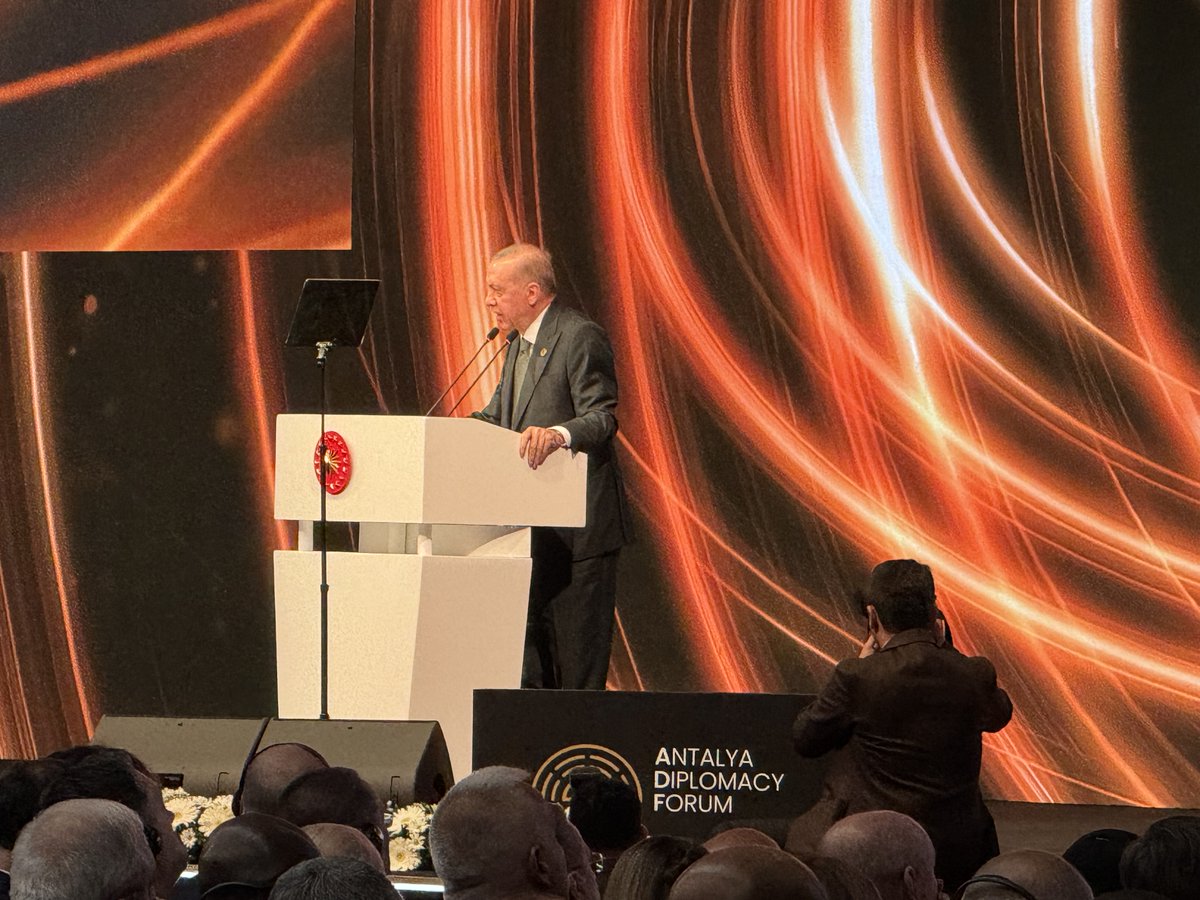
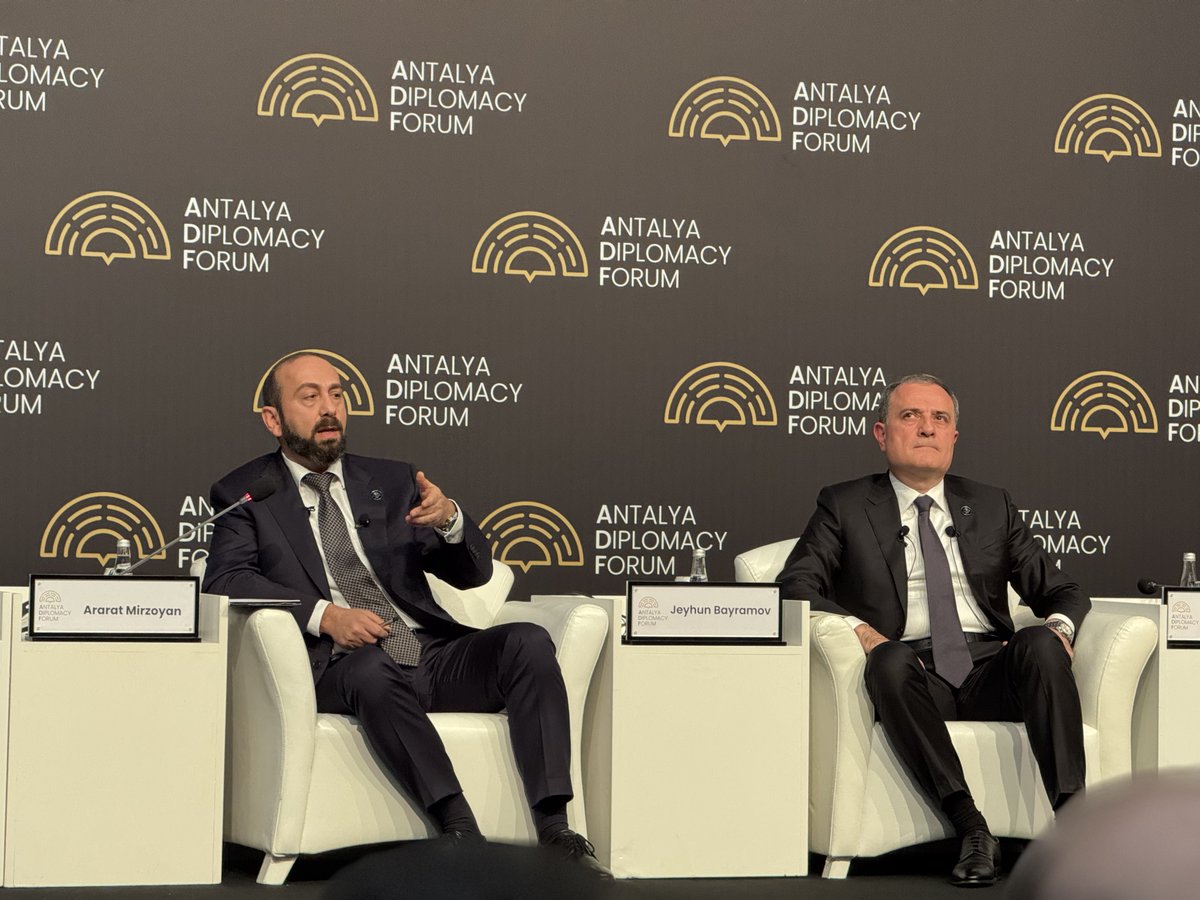
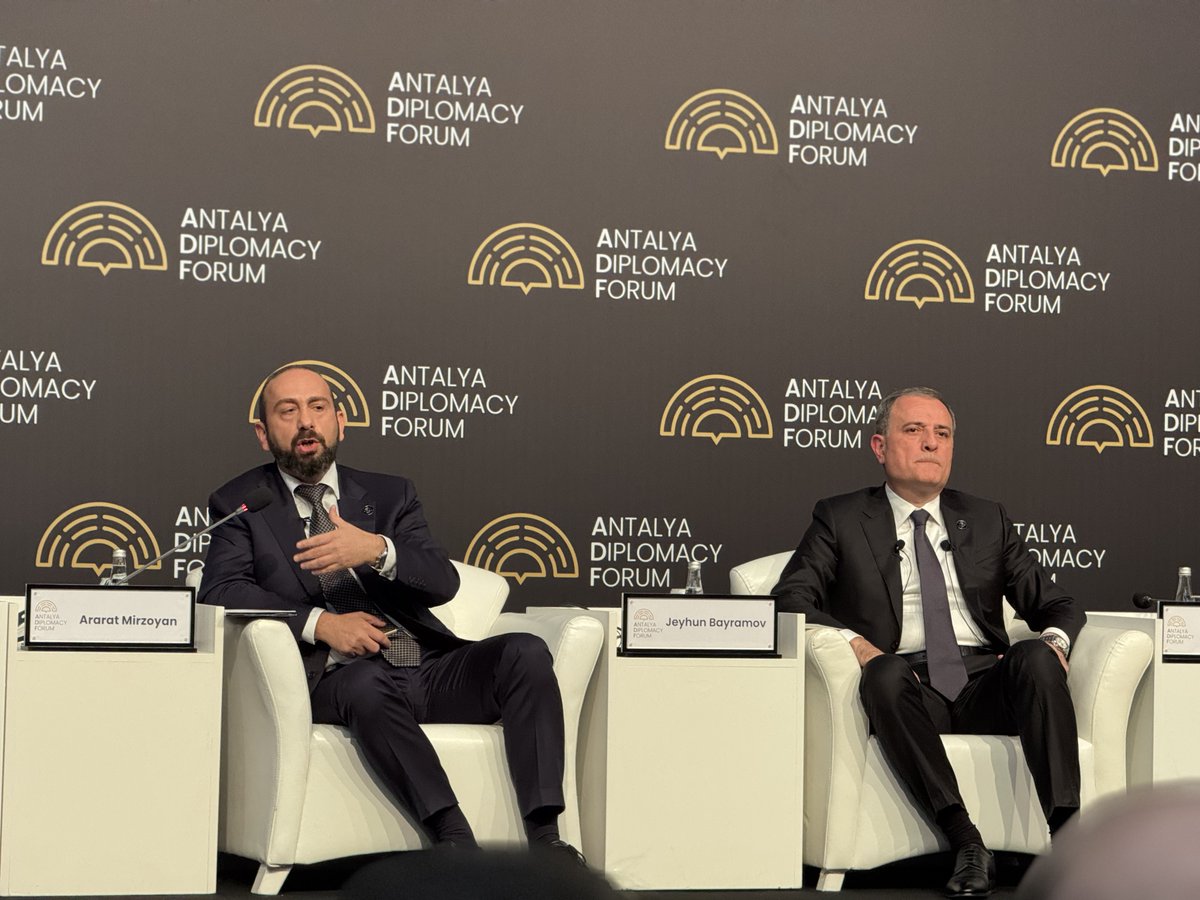
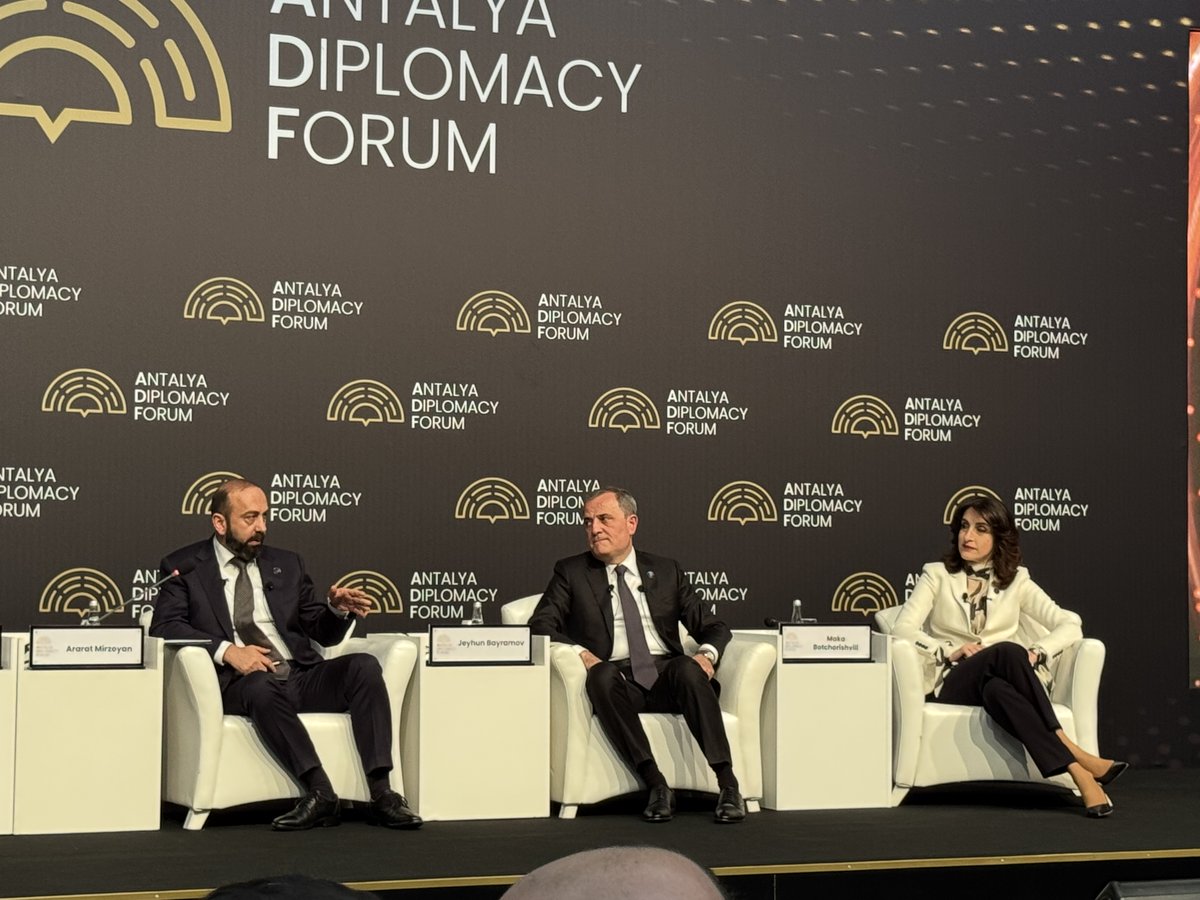
The #Antalya Diplomacy Forum (#ADF2025 ) has become more than just another international platform — it has served as a showcase for Turkey's foreign policy ambitions. Covering the event as a journalist, I witnessed how Ankara is working to shape its image as a country playing an increasingly prominent role on the global stage. President #RecepTayyipErdoğan, who has been in power for nearly a quarter of a century, continues to pursue a course aimed at strengthening Turkey’s international standing — despite serious domestic economic challenges. The scope of Turkey's foreign policy interests is impressive, spanning from Central Asia to the #Balkans, from Europe to #Africa . The participation of representatives from these regions at the forum further emphasized not only their significance for Turkey, but also their growing interest in Turkey’s expanding role. Nonetheless, despite its assertive rhetoric and active diplomacy, Turkey remains, above all, a regional power with global aspirations. This duality was evident throughout the forum — from the themes of the sessions to the makeup of the participants. The crisis in Gaza was the central focus — and unquestionably the main leitmotif — of the forum. Ankara’s sharp criticism of Israel was delivered loudly and clearly. Turkish Foreign Minister Hakan Fidan devoted a significant portion of his closing press conference to this issue, which clearly illustrated the country's current foreign policy priorities. The second most prominent topic was European security. Amid the ongoing war in #Ukraine and statements by #DonaldTrump suggesting that the United States may no longer act as a security guarantor for Europe, Turkey is seeking to strengthen its role as a regional actor that can "export" one of today’s most sought-after commodities: security. Discussions on the militarization of the continent and potential restructuring of the European security architecture highlighted that Turkey sees these developments as an opportunity to expand its influence both within #NATO and beyond. Against this backdrop, the limited attention paid to the South Caucasus was surprising. The region was represented by only a single session involving the foreign ministers of #Armenia, #Azerbaijan, and #Georgia, apart from individual bilateral meetings held by Minister Fidan with his Armenian and Azerbaijani counterparts. This suggests that, despite Turkey’s geographical proximity and deep involvement in regional processes, the #SoutCaucasus occupied a relatively modest place in the forum’s agenda. The Antalya Forum reflected the duality of Turkish foreign policy: on the one hand, energetic and persistent diplomacy with the goal of being at the heart of global processes; on the other — the need to acknowledge the limitations that still prevent Turkey from becoming a fully-fledged global power.
Arshaluis tweet mediaArshaluis tweet mediaArshaluis tweet mediaArshaluis tweet media
English
0
0
0
90
Arshaluis
Arshaluis@Mghdesyan·
Yerevan-Baku Dialogue in Antalya — A Step Toward Peace or an Entrenchment of Differences? The panel discussion titled “Challenges and Opportunities for Regional Cooperation in the South Caucasus”, held within the framework of the Antalya Diplomacy Forum, highlighted how complex and contentious the dialogue between #Armenia and Azerbaijan remains. The foreign ministers of the two countries — #Ararat_Mirzoyan and #Jeyhun_Bayramov — responded to questions concerning the current stage of negotiations, particularly the obstacles to signing a peace agreement. Baku's Perspective: Conditional Peace Bayramov’s remarks once again underscored #Azerbaijan's firm stance. Baku continues to insist on two key conditions: the formal dissolution of the #OSCE #Minsk_Group — the framework through which the Karabakh conflict had traditionally been discussed — and amendments to Armenia’s Constitution, which Azerbaijan views as containing potential territorial claims, a notion Yerevan categorically rejects. Bayramov argued that once these conditions are met, “no further obstacles to peace will remain.” However, framing the issue in this way risks escalating tensions — the demand to amend another country’s constitution is widely perceived as interference in domestic affairs and may provoke pushback even among pro-normalization forces in Yerevan. Yerevan’s Response: A Focus on the Future Mirzoyan, in turn, advocated for shifting the focus away from the past and toward a discussion of the future. He emphasized that delving into historical disputes over territorial claims and mutual grievances would only lead to a renewed cycle of conflict. According to him, the peace agreement under discussion will not resolve every issue, but it can serve as a foundation for normalization. This approach reflects a strategy of gradual conflict resolution and demonstrates Armenia’s willingness to move forward despite ongoing disagreements. Notably, in response to accusations of harboring territorial ambitions, Mirzoyan referred to a ruling by Armenia’s Constitutional Court, which confirmed that Yerevan’s participation in the negotiation process and fulfillment of related obligations do not contradict the country's Basic Law.
Arshaluis tweet mediaArshaluis tweet media
English
0
0
0
79