Micha Germann

313 posts

Micha Germann

Micha Germann

@Micha_Germann

Senior Lecturer (Associate Professor) in Comparative Politics, University of Bath

Katılım Mart 2015
595 Takip Edilen299 Takipçiler
Nishith Prakash
Nishith Prakash@Prof_Nishith_P·
Apart from Netflix’s “The Chair”, are there good books that capture the drama of academia — politics, egos, hiring, tenure, all of it? Would love recommendations.
English
55
25
489
68.4K
Mimi Mihailescu
Mimi Mihailescu@HereIsMimi95·
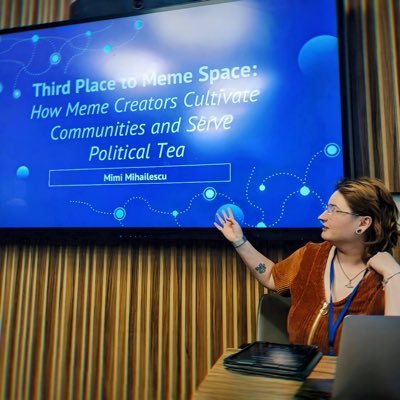
Just submitted my #PhD thesis 🎓💀 Proof that with enough ☕ + 😵‍💫, you can turn shitposting into scholarship 💻📚✨ Pray for my examiners 🙏 They have to read it unironically #PhDLife #MemeWarfare #ThesisSubmitted
Mimi Mihailescu tweet media
English
2
0
5
68
Micha Germann retweetledi
Mauro Lubrano
Mauro Lubrano@ma_lubrano·
Author copies of Stop the Machines are here! When I started this book in 2021, the topic felt important. Now, as the AI revolution unfolds, it feels urgent. Out 23 May (UK) / 28 July (US). Big thanks to my publisher @politybooks. Looking forward to taking it out on the road!
Mauro Lubrano tweet media
English
0
4
10
863
Micha Germann retweetledi
EJPR journal
EJPR journal@EJPRjournal·
🆕 Improving issue representation with candidate-level #VotingAdvice applications Most VAAs match users with parties as opposed to candidates. 🗳️ This might be a missed opportunity! What is the potential of candidate-level VAAs? 🤨 Read more below! 🔗 ow.ly/4yO050VHG4a
English
0
2
5
460
John B. Holbein
John B. Holbein@JohnHolbein1·
Coefficient plots are all the rage! You see them all over the place as a means of visualizing regression output. In a coefficient plot, you take the coefficient estimate from a regression model and plot it as a point on an axis. Then, on the same axis, you take your confidence intervals and place them as bars around the point. A while back, I heard someone argue that we should use smoothed/fuzzy confidence intervals in our coefficient plots, like in the figure below. This approach aligns with Gelman's classic principle: the difference between “significant” & “not significant” is not itself statistically significant. Thoughts about this approach? #DataViz
John B. Holbein tweet media
English
13
17
148
20.7K
Micha Germann retweetledi
Sara Hobolt
Sara Hobolt@sarahobolt·
🚨 LSE Postdoc Fellow in Political Behaviour 🚨 We're hiring a 2-3 year postdoc fellow at the LSE to join our great team @LSEGovernment! Please spread the word and reach out with questions! jobs.lse.ac.uk/Vacancies/W/68…
English
1
58
118
15.5K
Micha Germann retweetledi
John B. Holbein
John B. Holbein@JohnHolbein1·
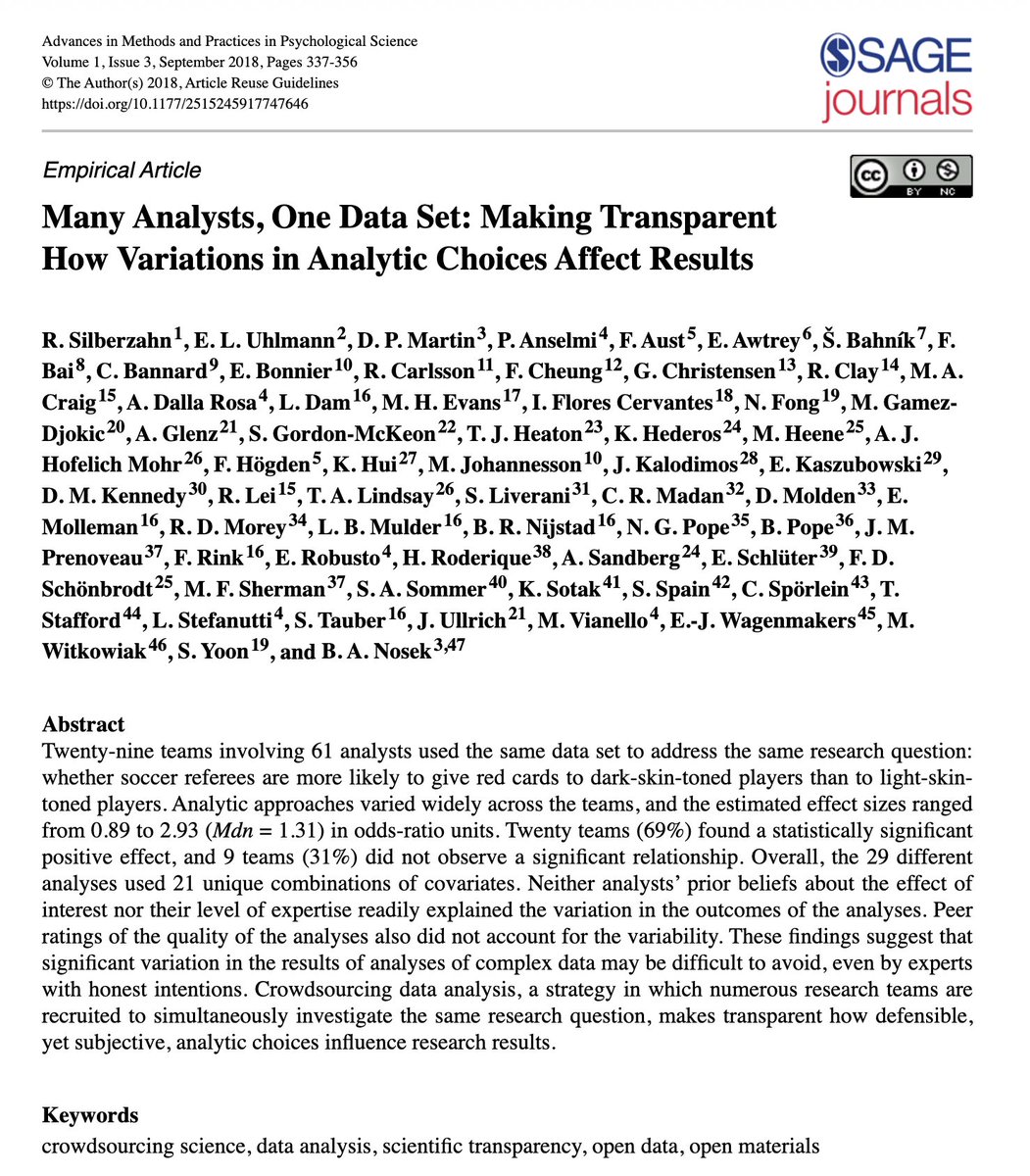
Let me take you back for a moment to 2018. A team of powerhouse psychologists have just published a (seemingly) groundbreaking article. The premise of the article was simple--give multiple research teams the same research question with the same dataset. Would teams with the same research question and the same data come to the same conclusions? The research question was: are soccer referees more likely to give red cards to players with dark skin tone than light skin tone? The results obtained by the teams differed extensively. Many concluded from this widely noted exercise that the social sciences are not rigorous enough to provide definitive answers. This finding was widely shared in the popular press and on social media. Fast forward a few years: a new (less covered) article comes out and shows that the main reason teams came to different answers was the original research question was unclear. Teams differed in their interpretation of the research question and therefore used diverse research designs and model specifications. When you reanalyze the data with a clear research question, a precise definition of the parameter of interest, and theory-guided causal reasoning, results across teams don't vary that much. From the authors of the new study: "The broad conclusion of our reanalysis is that social science research needs to be more precise in its `estimands' to become credible."
John B. Holbein tweet mediaJohn B. Holbein tweet media
English
14
139
609
82.8K
R. Michael Alvarez
R. Michael Alvarez@rmichaelalvarez·
One thing that's not gotten a lot of discussion on #AcademicTwitter is the supposed cyberattack that hit some of the major academic publishers earlier this summer. It's delayed publication and open access payments for some of our papers. This of course hits hard for those who need those pubs on their CVs for the job market this coming academic year. I wish that journals were more transparent about their production and publication delays.
English
1
6
21
8.2K
Jon Mellon
Jon Mellon@jon_mellon·
What’s the best 1-2 papers to read to get me up to speed with what’s best practice for diff-in-diff (and the whole TWFE bun fight that’s going on)
English
5
2
30
8.8K
Dr. Sofie Marien
Dr. Sofie Marien@_SofieMarien·
Exactly one month ago my absolute best coauthored work came out. Happy to introduce Marlon Sente. Even reviewer 2 agrees not a single revision is needed.
Dr. Sofie Marien tweet media
English
10
1
86
4.5K
Dominic Nyhuis
Dominic Nyhuis@dominic_nyhuis·
Far be it from me to take sides in this debate, but it is a little surprising how the debate on the Biden withdrawal only focuses on the winnability of the election and not at all on his ability to govern another four years
English
1
0
8
1.5K
Vincenzo Bove
Vincenzo Bove@_vincenzobove·
📣++Personal announcement++ This will be my last term at the University of Warwick after 10 amazing years. I will soon be joining IMT Alti Studi Lucca as a Professor of Economics. It is with a heavy heart that I say goodbye to my amazing friends and colleagues in @PAISWarwick .
English
14
2
108
13.4K