Michael Button

1.4K posts

Michael Button banner
Michael Button

Michael Button

@MichaelButtonX

Ancient History BA | 200K on YouTube | JRE #2368

WATCH NOW 👉 Katılım Aralık 2024
95 Takip Edilen20.6K Takipçiler
Sabitlenmiş Tweet
Michael Button
Michael Button@MichaelButtonX·
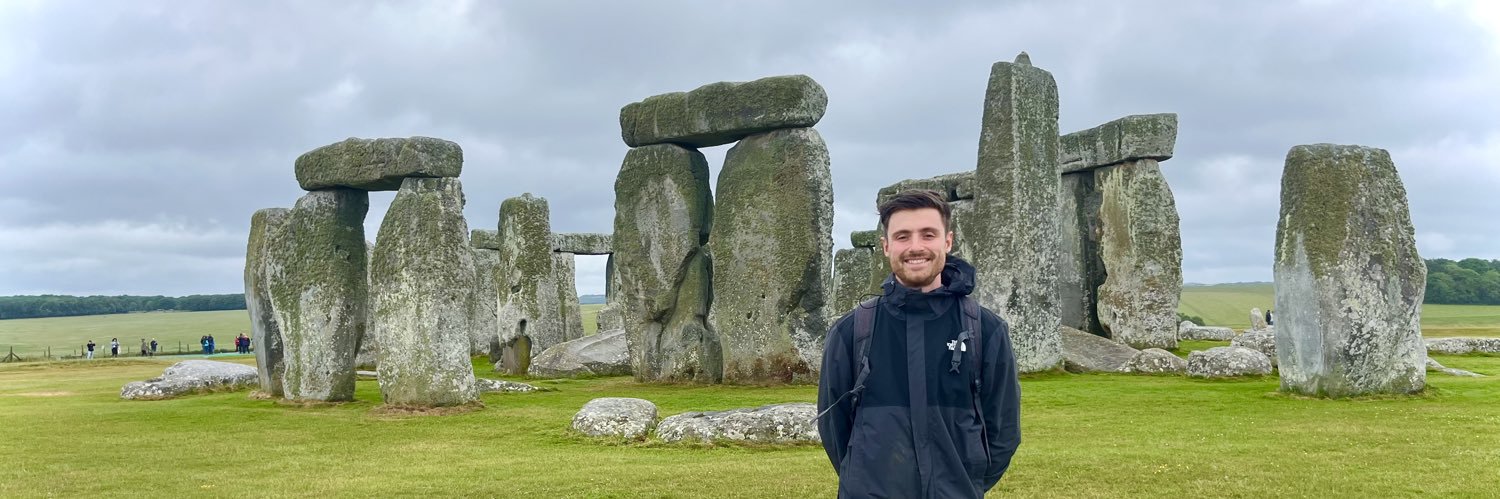
What a privilege to sit down with the legend @joerogan and talk all things ancient history, lost civilizations and more! Thanks so much Joe - it was an honour!
Michael Button tweet mediaMichael Button tweet media
English
155
126
3.1K
212.2K
Michael Button
Michael Button@MichaelButtonX·
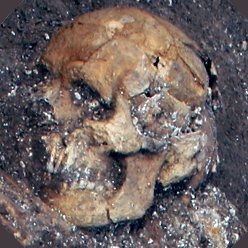
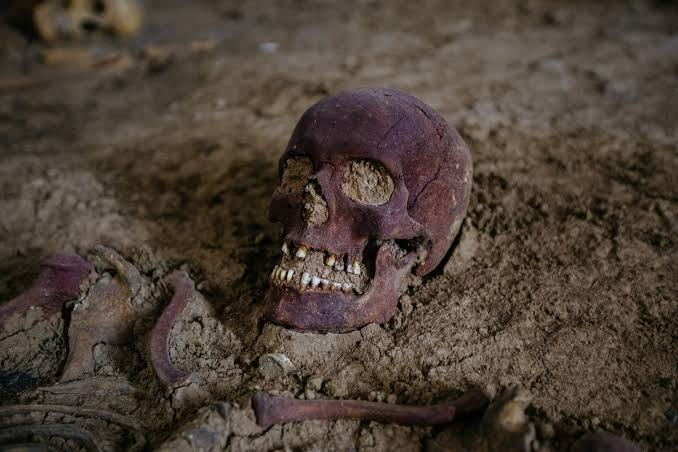
In 1996, an amateur archaeologist spotted a human bone sticking out of a German riverbank. It was the first trace of a massive battle that history had completely forgotten. The Tollense Valley has since yielded the remains of more than 140 people, from a clash around 1250 BC that may have involved thousands of fighters. Skulls crushed by clubs. Arrowheads lodged in bone. Old wounds showing some were veteran warriors. Northern Europe at the time was long thought too sparsely populated and politically fragmented to produce warfare on this scale. But isotope analysis shows many fighters grew up hundreds of kilometres away. They travelled a long way to die at a river crossing. No name. No record. No memory. Just the bones.
Michael Button tweet media
English
4
4
89
2.1K
Michael Button
Michael Button@MichaelButtonX·
Today in 927 AD, England became a unified kingdom under King Athelstan. Happy 1,099th birthday England! 🏴󠁧󠁢󠁥󠁮󠁧󠁿
Michael Button tweet media
English
3
3
74
1.5K
Michael Button
Michael Button@MichaelButtonX·
In 2015, ISIS captured Palmyra and demanded its head of antiquities reveal where the treasures were hidden. He was 81 years old. He refused. Khaled al-Asaad had spent over 50 years excavating and protecting Palmyra, the caravan city that once rivalled Rome in the Syrian desert. He learned Aramaic to read its inscriptions. He raised his children among its ruins and named his daughter Zenobia, after its rebel queen. Before the city fell, he helped evacuate hundreds of artefacts to safety. ISIS interrogated him for weeks to find them. But he gave them nothing. They executed him in the square and left his body among the columns he had spent his life defending. Archaeology is not a soft profession. Sometimes the people who guard the past die for it.
Michael Button tweet media
English
513
5.4K
27K
2.7M
Michael Button
Michael Button@MichaelButtonX·
9000 years ago, thousands of people lived in a town in central Turkey with no streets. At Çatalhöyük, the houses were packed wall to wall, and you entered through a hole in the roof. One of the largest settlements on Earth at the time, home to perhaps 8000 people. They buried their dead beneath the floors they walked on and painted the walls with hunting scenes and what may be one of the world's earliest paintings of an erupting volcano. But then, after more than a thousand years of continuous life, they left. No invasion. No clear catastrophe. Instead, the settlement gradually emptied, and the experiment in living that close together quietly came to an end. We tend to think the city is the inevitable shape of human life, the direction everything was always heading. Çatalhöyük was a city before cities were supposed to exist, and then it wasn't, and people scattered back into smaller worlds. To the people who lived there, that crowded warren of rooms was simply how humans lived. We assume our arrangement is the permanent one too.
Michael Button tweet media
English
25
21
308
14.5K
Michael Button
Michael Button@MichaelButtonX·
🚨110,000-year-old discovery rewrites human history: Neanderthals and Homo sapiens worked together. The first-ever published research on Tinshemet Cave reveals that Neanderthals and Homo sapiens in the mid-Middle Paleolithic Levant actively interacted, sharing technology, lifestyles, and burial customs. In other words, they collaborated, and it may change everything. These interactions fostered cultural exchange, social complexity, and behavioral innovations, such as formal burial practices and the symbolic use of ochre for decoration. The findings suggest that human connections, rather than isolation, were key drivers of technological and cultural advancements, and suggests different human species were far more collaborative than we thought.
Michael Button tweet media
English
16
17
114
5.3K
Michael Button
Michael Button@MichaelButtonX·
Why did they burn their own cities?
English
5
1
34
1.8K
Michael Button retweetledi
Ancestral Whispers
Ancestral Whispers@Sulkalmakh·
Facial reconstruction of a 315,000-year-old man from Morocco The first discovery at the Jebel Irhoud site was made in 1961, when a remarkably complete skull of an archaic human was unearthed. Subsequent excavations revealed another cranial vault, the mandible of a child, and several additional bone fragments. The site has been dated multiple times, with estimates ranging from 30,000 to 190,000 years ago. By 2007, the accepted age was approximately 160,000 years. However, new analyses conducted by the same research team demonstrated that the Jebel Irhoud deposits are significantly older, dating between 240,000 ± 35,000 and 378,000 ± 30,000 years ago, with an average age of approximately 315,000 ± 34,000 years. The Jebel Irhoud individuals occupy an intermediate position between modern humans (including Upper Paleolithic Cro-Magnons) and more archaic groups such as Heidelberg humans, Neanderthals, and African Middle Pleistocene populations. This pattern is evident across nearly all studied anatomical features, including the skull, mandible, brain, and dentition. The occipital and temporal bones of Irhoud 1 retain several archaic characteristics, whereas the frontal bone exhibits more derived traits. The face of Jebel Irhoud 1 is essentially indistinguishable from that of modern humans and, in some respects, appears even more modern than that of certain Upper Paleolithic Homo sapiens specimens. The mandible displays a receding chin, although a very weak indication of chin prominence may be present. Considered in isolation, the jaw appears relatively archaic; however, in combination with the facial morphology, it does not seem particularly primitive. Viewed from a three-quarter angle, Irhoud 1 appears remarkably modern, while its archaic features become most apparent in profile. The cranial vault bones of Jebel Irhoud 1 are thick, and the vault itself is low and elongated. The forehead is low and receding, although less sloping than that of European Neanderthals. The brow ridge is massive, postorbital constriction is pronounced, and the occipital region exhibits a chignon-like morphology. The mandibular fossa of the temporal bone is moderately deep and spacious. The articular eminence is well developed, and the postglenoid process is large. The face is extremely high and broad. The upper face is relatively flattened, while alveolar prognathism is strongly expressed. The orbits are tall and square-shaped, and the nose is very broad. A canine fossa is absent, and the alveolar process is high. The teeth are large. The brain morphology resembles that of the Kabwe (Broken Hill) specimen. Cranial capacity has been estimated at 1,305–1,480 cm³. (Hublin et al. (2017), Richter et al. (2017), Antropogenez, S. Drobyshevski (2017)).
Ancestral Whispers tweet mediaAncestral Whispers tweet media
English
55
98
573
103.7K
Michael Button
Michael Button@MichaelButtonX·
Archaeologists spend their careers on their knees in the dirt. They do this so the rest of us can know who we are. Every settlement pattern they map, every seed they carbon-date, every fragment of pottery they piece back together - it's a tiny sentence added to the only story that includes all of us. They've pushed back the timeline of art, music, medicine, and cooperation further than anyone predicted. They've shown that ordinary people, thousands of years before writing existed, were already solving problems with real ingenuity. None of that knowledge was owed to us. It had to be earned, one careful brushstroke of dirt at a time. That's worth celebrating.
Michael Button tweet media
English
6
5
62
2.6K
Michael Button
Michael Button@MichaelButtonX·
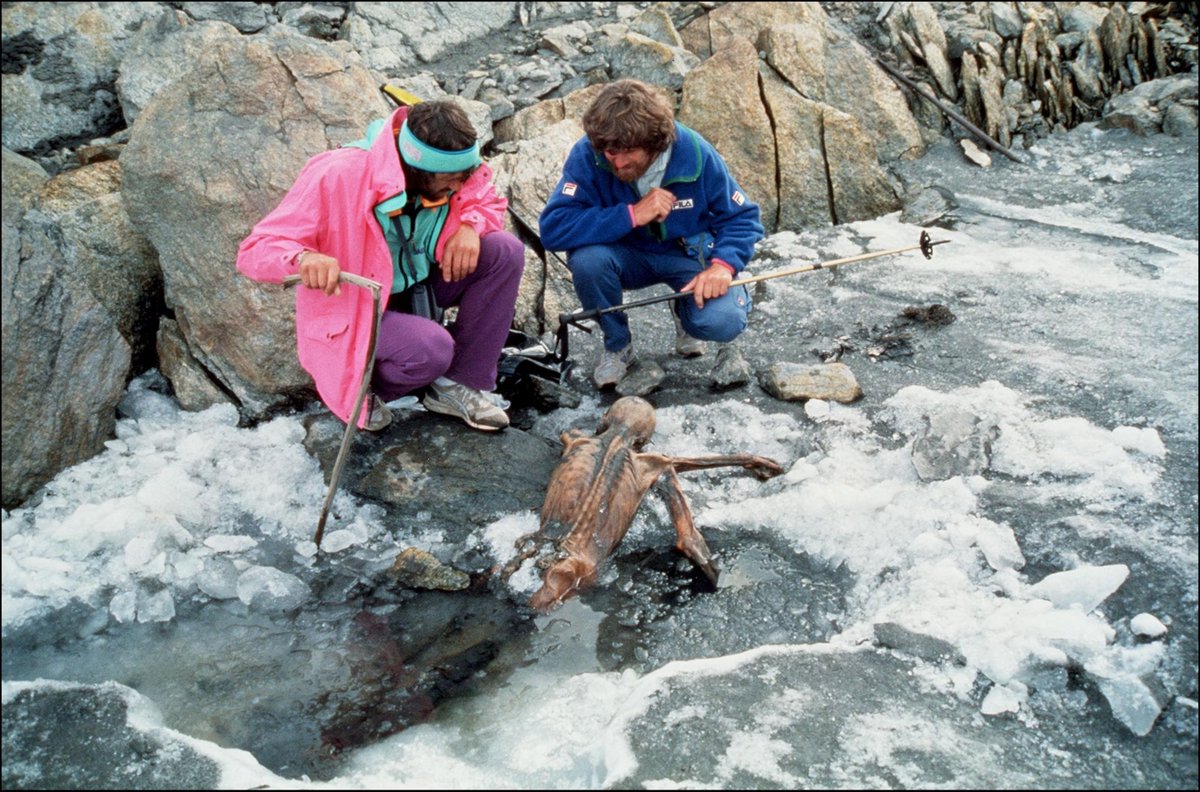
In 1991, two hikers found a body melting out of a glacier in the Alps. Everyone assumed it was a lost mountaineer. Police bagged it like a modern death. But tests showed it was 5,300 years old. Ötzi had a copper axe, a hide quiver, tattoos made from charcoal, and a stomach full of ibex meat eaten hours before he died. Archaeologists could reconstruct his last meal, his last day, the arrow that killed him from behind. We know more about one Copper Age man's final hours than we know about most people who died last century. And that's the pretty nuts. Preservation isn't about importance. It's about accident. Ötzi didn't survive because his life mattered more. He survived because ice happened to cover him before decay could start. Everyone else from his world is gone. Not just forgotten - never even recorded in the first place. So when archaeologists hand us a find like this, they're not just showing us the past. They're showing us the one person luck decided to keep.
Michael Button tweet media
English
15
37
418
25.1K
Michael Button retweetledi
Michael Button
Michael Button@MichaelButtonX·
Which 'settled' piece of history do you suspect we've got completely wrong?
English
126
3
85
14K
Michael Button
Michael Button@MichaelButtonX·
We call it the Stone Age because stone is what survived. They probably built much more in wood - and it's all lost to time
English
39
12
334
21.9K
Spoken Past
Spoken Past@spokenpast·
@MichaelButtonX You are still wrong and still confusing preservation with periodization. It's called the Stone Age because stone was the defining technology, not because it's what we find most. Christian Jürgensen Thomsen created the Three-Age System. Would help to Google him.
English
4
0
5
156
Michael Button
Michael Button@MichaelButtonX·
We call it the Stone Age because stone tools dominate the archaeological record. But that almost certainly understates how important organic technologies were - those made from wood, leather, textiles, rope, bark and other perishable materials. Most of those technologies have simply disappeared.
Michael Button@MichaelButtonX

We call it the Stone Age because stone is what survived. They probably built much more in wood - and it's all lost to time

English
18
6
84
5.4K
Michael Button
Michael Button@MichaelButtonX·
@spokenpast Stone technology defines the period because stone technology survives
English
4
0
17
621
Spoken Past
Spoken Past@spokenpast·
@MichaelButtonX You're confusing two completely different concepts. It's called the Stone Age because stone technology defines the period, not because stone happened to survive. This is very, very basic stuff, Michael.
English
5
1
21
764
Michael Button retweetledi
Michael Button
Michael Button@MichaelButtonX·
Somewhere under the sea is a culture who lived for thousands of years. Nobody will ever know who they were
English
45
16
382
15.6K