
MichaelKitces

131.5K posts

MichaelKitces banner
MichaelKitces

MichaelKitces

@MichaelKitces

One nerd’s perspective on the financial planning world… CFP, #LifelongLearner, Entrepreneur-In-Denial, Advisor #FinTech, & publisher of the Nerd’s Eye View blog

Katılım Ekim 2008
460 Takip Edilen95.2K Takipçiler
Sabitlenmiş Tweet
MichaelKitces
MichaelKitces@MichaelKitces·
Our list of "Best Conferences 2025!", and be sure to take advantage of the discount codes that several have offered to Nerd's Eye View readers! Best in: -Overall Planning: @FPANorCal -Technology: @t3techhub -Advanced Tax Planning: @AICPA Engage and more! bit.ly/4fisUpb
MichaelKitces tweet media
English
19
15
70
26.1K
MichaelKitces
MichaelKitces@MichaelKitces·
As it turns out, the look of a financial advisor's office goes far beyond just setting the interior design decor, and establishing a sense of perceived professionalism for clients. In this guest post, Dr. John Grable of the University of Georgia shares some thoughts, ideas, and research on how to best design a financial advisory office... all the way down to some specifics on the use of light, sound, smell, texture, and temperature to create a more comfortable atmosphere for clients that is conducive to helping them make good financial decisions!kitc.es/41Zp27T #financialadvisor #advicers
English
1
2
19
4.7K
MichaelKitces
MichaelKitces@MichaelKitces·
Hiring qualified and competent individuals isn't necessarily sufficient to create a dynamic, thriving firm, as even strong teams can stagnate over time. Building a "superteam" is not the result of a single tactic, but rather takes a commitment to consistent improvement towards a shared goal. 7 Research-Backed Practices To Build A Superteam That Keeps Getting Better 🦸: kitc.es/4n67FvS  (Ron Friedman | @HarvardBiz)
English
1
0
1
1.9K
MichaelKitces
MichaelKitces@MichaelKitces·
There are 2 points in a firm's growth journey that can help solo advisors decide when to make their first hire: the profitability and capacity wall. On one hand, it usually makes more sense for solo advisors to hire well before they reach their capacity, but on the other hand, hiring too early can cause a financial strain. A framework that solo advisory firm owners can use to decide when their firm will be ready to make an initial hire, based on data from Kitces Research on Advisor Productivity and Advisor Wellbeing as well as industry benchmarking studies on advisor capacity: kitc.es/4udCT6C #hiring #advicers
English
1
0
8
2.9K
MichaelKitces
MichaelKitces@MichaelKitces·
Bond Funds That Have Offered Some Inflation Protection ➡️Returns data indicate that Treasury Inflation-Protected Securities (TIPS) funds and high-yield bond funds offered purchasing power protection during the past decade (including the recent inflationary period), while many investors in short- and long-term government bonds saw their purchasing power erode (Maciej Kowara | @MorningstarInc). More on investment planning this #WeekendReading: kitc.es/4n67FvS
English
1
0
2
2.1K
MichaelKitces
MichaelKitces@MichaelKitces·
When It Comes To Bonds, Don't Be A Hero: Why taking a strategic approach to bond investments based on an investor's time horizon and cash needs could be superior to a tactical approach focused on anticipating future interest rate moves. (@christine_benz | @MorningstarInc) More on investment planning this #WeekendReading: kitc.es/4n67FvS
English
1
1
8
3.3K
MichaelKitces
MichaelKitces@MichaelKitces·
The Impact Of CFP Certification On How Much A Financial Advisor Makes ➡️ The results were striking. 👀 When measuring the median revenue of non-CFP professionals vs CFP professionals, the study found those who had earned CFP certification generated substantially higher revenue in their businesses. The results were true amongst both solo advisors (CFP vs not), and team practices (that either included a CFP professional on the team, or not). And notably, the results were not merely driven by the fact that CFPs may be more experienced. #CFP" target="_blank" rel="nofollow noopener">kitc.es/4e8yc9q#CFP #CFPcertification kitc.es/4e8yc9q
English
1
1
10
4.8K
MichaelKitces
MichaelKitces@MichaelKitces·
We're officially hitting the "robo" stage of AI startups as it pertains to advice, with Astor offering a $39.99/month subscription for access to a 'trained' AI chatbot/voicebot. For advisors, this is reminiscent of the robo-investing phase a decade ago. If you have to manage the whole chatbot process, is it really advice, or just a chatbot software for DIY investors (who were never going to hire an advisor anyway)? If it's DIY though, it's still an interesting contrast to what firms like Range are doing, which have also stated a goal to do no-human-AI-only advice, but are pricing like human advisors at $3k to $10k/year (not $39.99/month like Astor). Will Astor cause price compression for firms like Range? Or does Range's higher price point allow them to invest into better advice software to win DIY market share from Astor? Or will Astor hit the price wall as most robos did a decade ago, where if you price "too low" you don't have enough revenue per client to be able to MARKET and win clients in a hyper-competitive high-client-acquisition-cost marketplace? What do you think? "Y Combinator-backed AI robo-advisor Astor raises $5 million" kitc.es/3OCl02l
English
4
0
5
6K
MichaelKitces
MichaelKitces@MichaelKitces·
What it takes to find, attract, and retain top next generation advisor talent, based on his own experience on the front of lines of recruiting young talent: kitc.es/3O5zZRX
English
0
0
8
2.2K
MichaelKitces
MichaelKitces@MichaelKitces·
Interesting framing from Jason Wenk on the stay-or-go decision for G2 advisors who get acquired into PE-owned firms (that may have limited or no track to their own equity). I'd quibble on the numbers a bit - we see revenue yields of 70-75 bps more commonly than 80bps, and at $800M of AUM we see 25%-35% margins more commonly than 40%. And at that size there have to be multiple lead advisors, which often means sharing some equity with them and being partially diluted (or they're at risk of leaving, just as the G2 advisors Wenk is talking to may be thinking about leaving for the same lack-of-equity-path issues). Still, even if adjusting for all of the above cuts the future valuation in HALF, it's still a pretty big future enterprise value. The caveat, of course, is that you have to BUILD it, and not everyone wants to be a business owner and deal with all the stress that goes with it. (And if they do and are really entrepreneurial, often-albeit-not-always there are paths to equity with their current firm.) So curious who finds Wenk's argument compelling? Is this only appealing to independent-minded folks (who probably already have their own firms and didn't choose the employee path in the first place)? Or do you think there will be a material shift/rise in former-employees-going-independent now? "From breakaways to breakouts: How Altruist's Jason Wenk sees next-gen RIAs moving forward" kitc.es/4eiNzfI
MichaelKitces tweet media
English
4
0
21
10.5K
MichaelKitces
MichaelKitces@MichaelKitces·
How can you clearly signal what your firm is really about? In this article, Daniel Yerger explains how to use signaling theory to describe the job in a way that attracts talented, relevant applicants: kitces.com/blog/daniel-ye……listing-template/ kitc.es/3Qhi63x
English
0
0
1
1.4K
MichaelKitces
MichaelKitces@MichaelKitces·
As tax-aware long-short popularity grows, Schwab now putting some of its own limits in place alongside Fidelity's recent announcement. Any #Advicers out there materially impacted by the new limits in practice? How is this showing up for your firm/with your clients? "Schwab limits RIAs from allocating more than 30% to long-short SMAs" kitc.es/3OVUL75
English
2
1
14
7.7K
MichaelKitces
MichaelKitces@MichaelKitces·
Advisors naturally want to be helpful and solve their clients’ problems, but this instinct can be counterproductive when the advisor jumps to solutions too early. kitc.es/4cSeCvE If the client is still processing uncertainty or doesn’t fully understand their goals, then the solutions may not resonate – even if, by all appearances, the client is “asking” for a solution. In this 189th episode of Kitces & Carl, we discuss how advisors can lead effective conversations amid ongoing ambiguity. Listen to the latest episode on podcast platforms 🎧
English
0
1
6
1.9K
MichaelKitces
MichaelKitces@MichaelKitces·
Interesting debate for estate planning attorneys playing out in #AdvisorTech - to what extent will consumers trust AI-driven tools to draft most/all of their estate documents? Current state of affairs, per Trust & Will survey: - Only 30% trust AI more than an attorney (albeit up from 20% last year) - Only 5% would use AI for documents with an attorney review If AI tools have to keep lawyers involved, the question becomes: are these AI-driven estate tools, or law firms that use AI to deliver (human) documents efficiently? Perhaps a distinction without a difference, but it's ultimately reflected in pricing (given costs of lawyers) and client (and advisor?) willingness to adopt. What do you think, #advicers? What would it take to trust "purely" AI-created estate documents? Will attorneys always play a role? Should they? "The legal fine print behind estate planning tech: What RIAs need to know" kitc.es/4ta1uIL
English
2
0
3
2.1K
MichaelKitces
MichaelKitces@MichaelKitces·
Associate advisors with several years in the role often find themselves in a professional limbo: ready to take on more responsibility, but without a clear pathway to do so, which can lead to dissatisfaction and, ultimately, attrition. In this article, Senior Financial Planning Nerd Sydney Squires details how managers can develop scalable career development plans that clearly articulate expectations in a measured and balanced way. A useful framework begins with identifying six core domains of senior advisor capability: kitc.es/4t7GuTM #advicers #careergrowth
English
0
0
13
3.2K
MichaelKitces
MichaelKitces@MichaelKitces·
Tax-free retirement distributions sound straightforward until you get into the actual rules.  Join Tim Steffen for this Kitces webinar, where Tim will cover five strategies advisors use to get money out of retirement accounts without a tax hit: rollovers, after-tax basis recovery, NUA, Roth withdrawals, and QCDs. Each one has specific conditions, sequencing requirements, and common failure points that can quietly cost clients.  ➡️Kitces Members-Register here: kitc.es/4tuKcHl ➡️Non-Members-Register here: kitc.es/3PdtXzf #KitcesWebinars #CECourses #CFP
English
0
2
16
4.6K
MichaelKitces
MichaelKitces@MichaelKitces·
Advisors are seeing more and more clients who have a big chunk of their portfolio concentrated in a single highly-appreciated security. In those cases it’s almost always best to diversify to avoid the risk of investing in a single company – but is it possible to do so without generating a massive tax bill? kitc.es/4ddk39S An exchange fund aims to solve this conundrum with a structure that allows investors to contribute their appreciated securities into a partnership and pool them with different assets from other investors, giving them ownership of a share of the diversified ‘basket’ of investments inside of the fund. Which effectively diversifies their concentrated single-stock investment while also allowing them to defer their unrealized gains. It’s no surprise, then, that exchange providers like @usecache have generated significant interest in recent years from advisors looking to help their clients minimize the tax impact of diversifying their concentrated holdings. Our guide to exchange funds goes into detail about the true risk and reward potential of exchange funds, which types of clients they may be good for (and who might be better off going the ‘sell-and-reinvest’ route instead), and how to calculate when it’s really worth taking the additional risk! Click on the article link to read more ☝️☝️
MichaelKitces tweet media
English
0
0
28
6.4K
MichaelKitces
MichaelKitces@MichaelKitces·
The conventional view is that taxable investment accounts should be liquidated first, while tax-deferred accounts are allowed to continue to compound. Except in practice, it’s possible to be “too good” at tax deferral, where the IRA grows so large that future withdrawals (or even just RMD obligations) actually drive the retiree into higher tax brackets! kitc.es/3R3NAKA #retirementplanning
English
0
2
50
11.1K
MichaelKitces
MichaelKitces@MichaelKitces·
Advisor wellbeing is closely linked to client affluence, but only when that affluence translates into higher revenue per client through effective pricing. While there is little difference in the income or investable assets of clients served by advisors who report very low levels of wellbeing ("Unwell") versus those reporting very high levels ("Thriving"), a notable gap exists in median net worth - $2 million for thriving advisors compared to $1.7 million for those who are unwell. The most striking difference, however, is in the revenue generated: thriving advisors earn an average of $6,923 per client, nearly 40% more than the $5,000 earned by those in the unwell group. This suggests that wellbeing isn't just about finding wealthy clients, but about having the pricing confidence and a value proposition that justifies higher fees. As shown in the data, wellbeing scores rise from 7.0 for those earning under $3,000 per client to 7.6 for those in the $10,000 to $25,000 range. After that point, however, the benefits to happiness eventually plateau. We unpack this and more in our latest Advisor Wellbeing Study, which is now available here: kitc.es/4r4l0pN
MichaelKitces tweet mediaMichaelKitces tweet media
English
1
0
7
3.4K
MichaelKitces
MichaelKitces@MichaelKitces·
What if you could build a financial planning firm that serves thousands of clients without managing assets at all? Today’s guest has seen firsthand how that model can work – and scale. kitc.es/4meOhfR Lori Atwood is the founder of Fearless Finance. In this episode, she shares how she built an advice-only, hourly financial planning firm that has served nearly 3,000 client households in just three years by focusing on working-age clients facing major financial decisions and building systems to serve them efficiently.  #FASuccess #financialadvisorpodcast #podcast
English
0
0
5
3.2K
MichaelKitces
MichaelKitces@MichaelKitces·
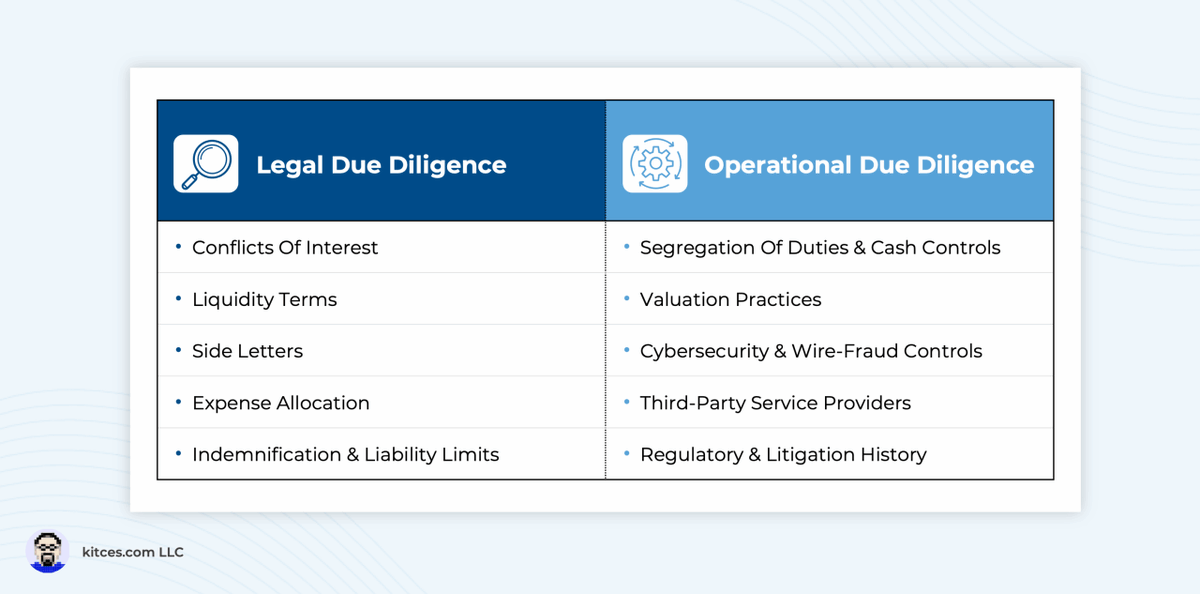
Through recent guidance and enforcement actions, the SEC has made clear that so-called ‘hedge clauses' – provisions that limit an adviser's liability to gross negligence or willful misconduct, or that suggest clients waive certain legal rights – may mislead clients and conflict with an adviser's fiduciary duty. Cases against advisory firms have found that common formulations – such as limiting liability to gross negligence, disclaiming responsibility for good-faith decisions, or requiring clients to indemnify the adviser – can violate antifraud provisions.  kitc.es/4snwwfM Isaac Mamaysky, Partner of Potomac Law Group and Cofounder and COO of QuantStreet Capital, explains how to identify hedge clauses, why hedge clauses have become such a significant regulatory concern, and how advisers can revise their IMAs without raising compliance red flags. #SEC #compliance
English
0
0
2
1.9K