Mighty Pursuit
20 posts

Mighty Pursuit
@MightyPursuit
We're all searching for something. Follow along as we make sense of the human experience -- mind, body & spirit. Visit our website (and podcast) 👇
Katılım Haziran 2018
0 Takip Edilen844 Takipçiler

@RCarhartHarris Thank you so much for all you do. To clarify that claim, looking at Google Scholar, you had more citations than anyone in the field over the past three years, including all the heavyweights (unless we're missing someone). 10,217 in 2025 alone. Truly groundbreaking work! 🙏
English

A pastor and divorce lawyer debate marriage. Now streaming on YouTube, Spotify and Apple Podcasts! Click the link in our bio to watch. @nycdivorcelaw
English

Wrestling with our emotions is one of the greatest challenges our generation faces. In an era where emotional awareness is emphasized more than ever, we often struggle with how to properly engage with our feelings. And usually, this leads us down one of two destructive paths.
As Dr. Arianna Brandolini put it in an episode of our podcast last year, some of us let our emotions “drive the car,” allowing every feeling to dictate our actions and decisions. This can lead to impulsivity, heightened reactivity, and emotional dysregulation.
When emotions take the lead unchecked, we risk making choices that are short-sighted or misaligned with our values—lashing out in anger, retreating in fear, or giving up in despair simply because of a passing emotional state.
Others, however, take the opposite approach: shoving emotions into the trunk and hoping they’ll disappear.
But suppressed emotions don’t die; they resurface in unexpected ways—whether through burnout, numbness, or physical symptoms like stress-related illness. Over time, this disconnection from our emotions can leave us feeling lost, detached, or even incapable of experiencing deep joy and connection.
The real challenge, then, is finding the balance between these extremes—acknowledging and processing emotions without letting them control our lives.
Emotions are powerful signals, but they are not absolute truths. The key is learning to sit with them, understand their roots, and then respond with intention rather than impulse or avoidance.
This balance is one of the most critical skills to develop. Emotions should be passengers in our lives—neither the driver nor locked away in the trunk.
The beauty is when we learn to navigate them with awareness and wisdom, we cultivate resilience, clarity, and the ability to move through life with conscious choice rather than reaction.
Visit our YouTube, Spotify or Apple Podcasts to watch the full episode with Dr. Brandolini!
English

STRESS & LIFE EVENTS:
But sexuality is rarely static; it evolves and shifts based on what’s happening in your life. Your sense of arousal can fluctuate depending on circumstances —such as dealing with the loss of a loved one, financial stress, or a health crisis.
This is why sex should always be an ongoing conversation that adapts to life’s changes. There may be seasons when your sexual frequency increases or decreases, simply reflecting what the current conditions allow.
Expecting your sexual frequency to remain constant through life’s ups and downs is not only unrealistic but also overlooks the importance of flexibility and understanding in a relationship.
English

SEXUAL LIBIDOS:
People naturally have different baseline levels of “arousability” or sexual sensitivity that they experience daily. We all exist on a spectrum when it comes to how often and easily we feel sexually inclined.
For some, thoughts of sex can persist even amidst life’s stressors, while for others, it’s the furthest thing from their mind until those stressors are resolved. These differences can sometimes create tension in a relationship if not navigated with care.
Instead of viewing each other as obstacles to fulfilling our own desires, it’s far more productive to focus on finding a balance that respects and accommodates both partners' needs. Meeting each person where they are is essential for developing a shared baseline for sexual frequency that works for the relationship.
English

The reason it was censored was because it’s “misinformation” even though, as you can see from Casey’s response, each talking point is 100% factual. So much is wrong with this picture, but it’s not surprising. This type of behavior — the claims that news reports are “misinformation” — is typical for Big Food and Big Pharma, who try to pretend they’re doing nothing wrong behind the scenes and that their products are perfectly safe for the general population to consume.

English

This video of me speaking on pharma influence on medical school education was censored on TikTok.
Below are REFERENCES for each statement said in this video. We have to scratch our heads and ask WHY this type of information is being silenced!
1. Fewer than 20% of medical schools require a nutrition course: hsph.harvard.edu/news/hsph-in-t…
2. More than 19,000 drugs are approved for marketing currently: fda.gov/media/115824/d….
3. $3 million Pfizer grant for Stanford for curriculum while I was a medical student: philanthropynewsdigest.org/news/stanford-…
4. Chronic diseases are driven by food: cdc.gov/cdi/indicator-…
5. NIH funding includes 8,000 major conflicts of interest since 2012: pbs.org/newshour/healt….
6. FDA receives majority of drug budget from pharma companies: forbes.com/sites/johnlama…
English

Don't let political opinions tear apart your family. There is a way to move forward, and still maintain a close relationship with your parents, kids and siblings.
Episode 18 of the Mighty Pursuit Podcast is now live with Dr. Arthur Brooks, who is the world's leading expert on the topic of human happiness. Link in bio to watch on YouTube, Spotify and/or Apple Podcasts.
English

At the same time, this does NOT mean someone should be written off forever.
Especially when there has been repentance, and a real effort to right their wrongs. This is where cancel culture goes off-course.
Cancelling someone is not the same thing as holding them accountable, because there is often an air of superiority when we cancel someone.
Pridefully, we think we are better than them, and co-sign them to a permanent sentence in hell.
English

So this begs the question: should everyone be forgiven?
“If you behave like a monster, nowadays you’re going to get called out for that. And you f**cking should. People have been getting away with this sh*t for
too long,” Bernthal said.
There is truth in this. There is something to be said about justice, and holding people accountable
for their wrongdoing.
Though Spacey did not commit a crime, his behavior has negatively impacted people - which has to be addressed.
English

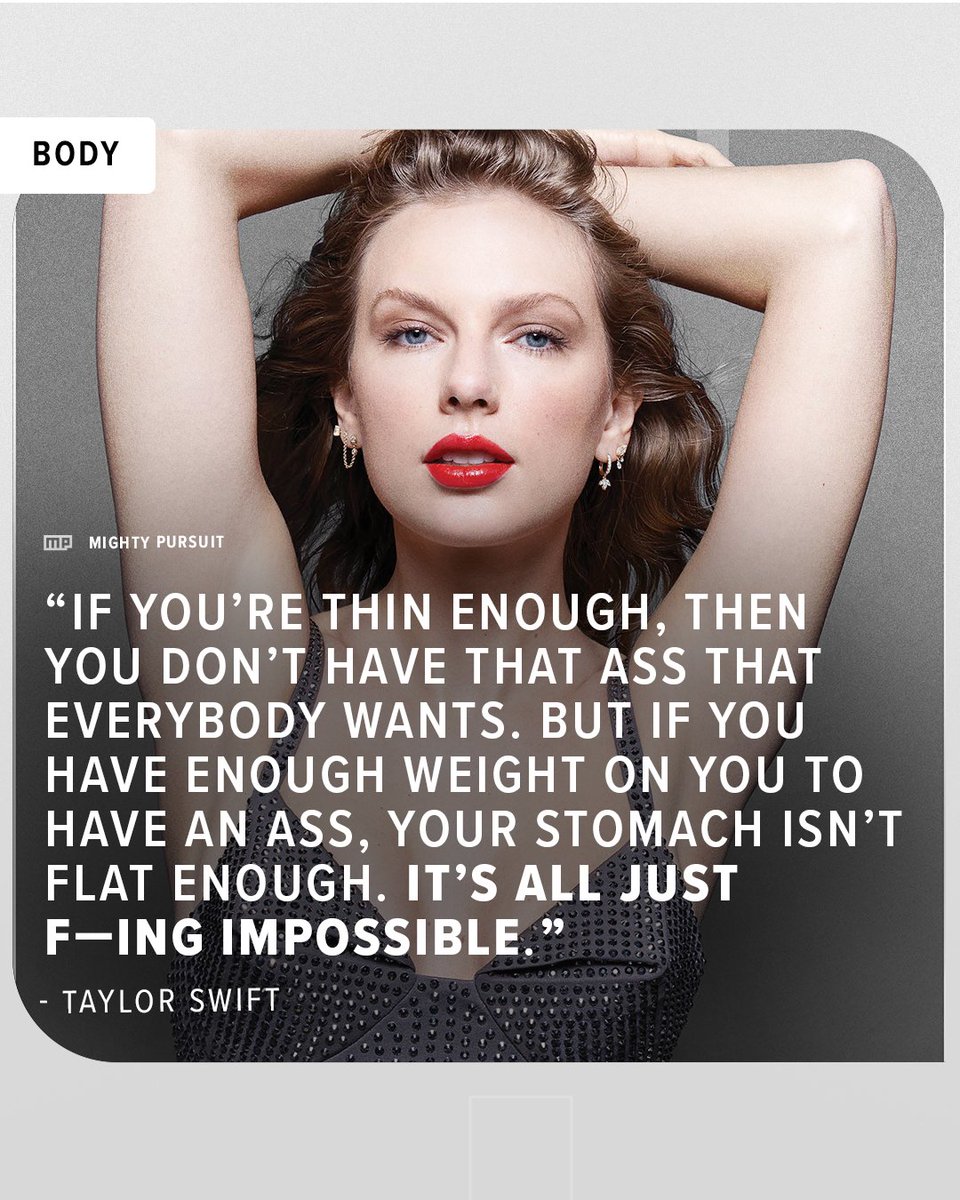
2023 marked the year that Taylor Swift officially became the most famous person the world. She won the TIME Person of The Year award, and had the highest grossing tour of all-time. The tendency is to look at someone in this position and pedestal them, believing that they have the luxury of being detached from the normal human experience. But the opposite is actually true.
Everything is heightened and accentuated. Taylor has always been viewed as objectively very beautiful, and as the most famous person in the world, she's had to deal with more comments on her body then nearly anyone. In her Miss Americana biopic, Taylor opened up about how damaging this has been, and how this has led her down a path of obsessing about her body.
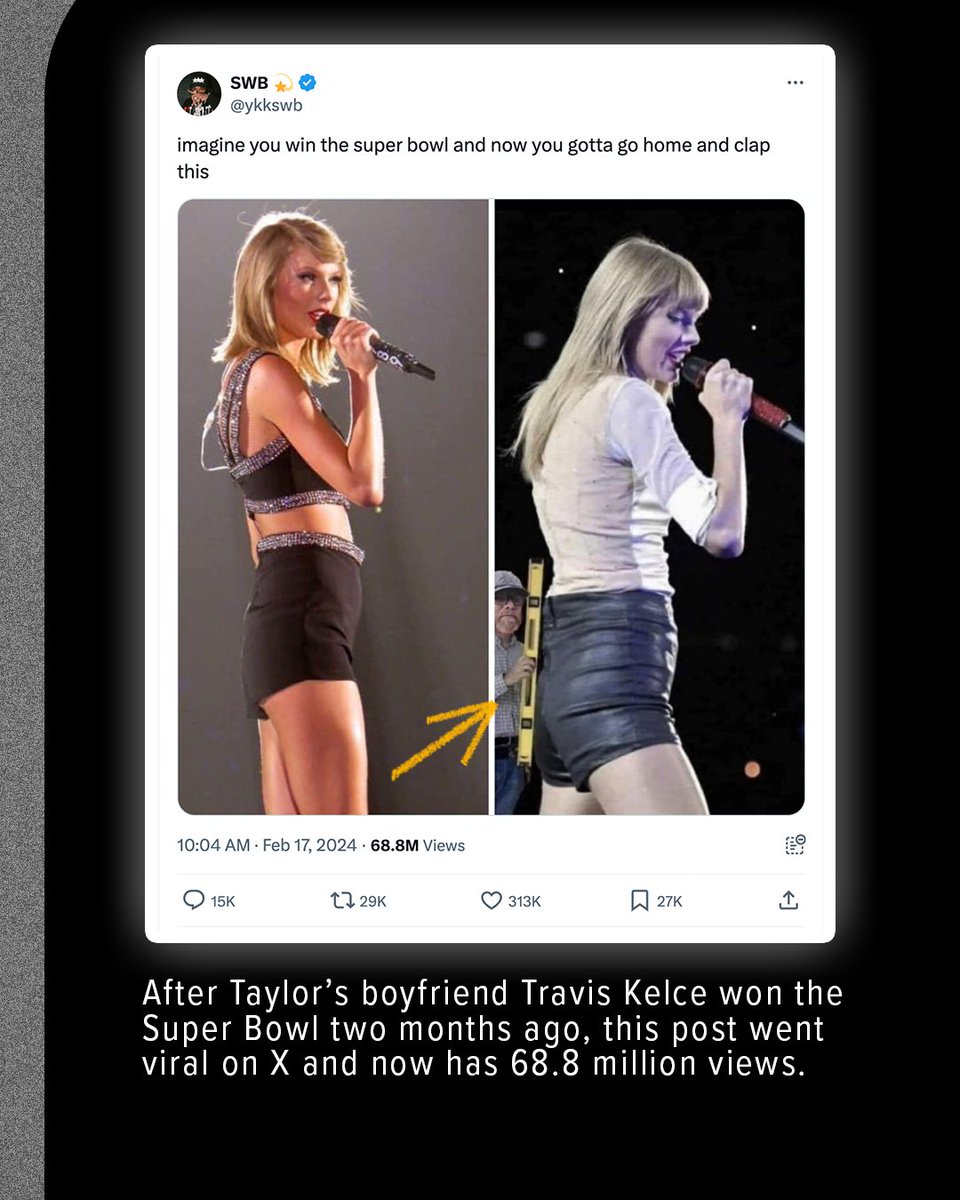
In this way, her experience is exactly the same as the rest of us, which can feel very much like a seesaw. On one hand, thinness is celebrated in our society. Taylor is thin, but then she has also has Reddit threads popping up called "r/TaylorSwiftHasNoAss". So we start gaining a little weight for a fuller figure and then you’re met with the people who criticize you that your stomach is not flat.
When she was 18, Taylor wore an outfit for a magazine cover that made her stomach look fuller. This led to headlines suggesting she might be pregnant. Taylor says, "If I was given a pat on the head, I registered that as good. If I was given a punishment, I registered that as bad.” But what do you do when some people are praising you for being thin, but others are punishing you for a "flat ass"?
Posts like the one that went viral in X have caused Taylor to "go into a real shame/hate spiral" in the past. That is, the cycle of negative self-talk and self-criticism that we experience when grappling with body image issues. You fixate on what some people tell you is a flaw and you become your own worst critic, which ultimately leads to destructive behaviors, like not eating or obsessive gym routines.
When we are in this mode, we really are only seeing our bodies through other people's eyes. We start believing that if we could just fix this one flaw, things would be different. It was Emily Ratajkowski, model and sex symbol, who said "as a woman, I'm always thinking if my ass was a little tighter or my nose was a little smaller my whole life would be different".
But the pursuit of the perfect body is like a race that has no finish line. You will never be able to look perfect from every angle. And even if you did, there will still be critics. There will still be people that say your ass is too fat, or your boobs are too big, or not big enough. Or that your lips are too plum now, and should be slightly smaller.
Or for men, maybe this means you are too muscular now, and thus not attractive. This cycle has even caused the Kardashians and Jenners, who have "fit" the standard of beauty ten times over, to keep changing their appearance. There is never peace. There is never relief. Participating in this race only really has one outcome: an extremely fragile self-esteem.
Taylor says, "It’s ridiculous to say “I don’t care what anyone thinks about me,” because that’s not possible. But you can decide whose opinions matter more and whose opinions you put more weight on. And I think that is really part of growing up, if you’re going to do it right. That’s part of hoping to find some sort of maturity and balance in your life.”
It is active decision for Taylor to see that post on X and say "this guy’s opinion of my ass does not hold any weight, nor do any of the comments.” This is not easy, but what's the alternative? To keep putting our self-worth and happiness into the hands of other people? To make life one giant emotional rollercoaster, where a complement makes your day, but criticism causes you to spiral?
Even if we like someone, and they reject us, does that suddenly mean we’re ugly or not valuable anymore? Do we really want to live as if that is true? How does that serve us? The truth is that peace only becomes possible when we stop attaching our worth to our appearance and release the need for approval.
On some level it is natural to want to be affirmed and loved, but to Taylor’s point, it matters who that is coming from. So consider the spiritual perspective. The only thing really capable of satisfying our need for approval is unconditional love. You may (or may not) believe God exists, but perhaps we are looking in the wrong place for a love that humans are notoriously inconsistent at providing.
When living a culture that is so fixated on beauty, negative thoughts and comments are a matter of if, not a when. Since “women are held to such a ridiculous standard of beauty... you kind of need a mantra to repeat in your head when you start to have harmful or unhealthy thoughts," Taylor says. This means that it matters what we meditate on.
When we feel like we’re losing the battle, we have to counteract those negative thoughts with a mantra of what’s true. Worth is something that is innate and that we receive, not work for. If we are persistent enough with this, we will eventually break the shame/hate spiral. We will have trained our brain to look at the world (and our bodies) with a different perspective.
Taylor concludes, “I pick and choose now, for the most part, what I care deeply about. And I think that’s made a huge difference.”
Click the link in our bio to visit our Body Image Hub
for more. #TaylorSwift #taytay #TheTourturedPoetsDepartment #THETORTUEDPOETSDEPARTMENT


English