
Mike Schmitz

5.1K posts

Mike Schmitz banner
Mike Schmitz

Mike Schmitz

@MikeSchmitz

I help people apply values-based productivity principles and systems, primarily using Obsidian. Follow to improve your productivity and creativity workflows.

Katılım Ekim 2008
192 Takip Edilen2.9K Takipçiler
Sabitlenmiş Tweet
Mike Schmitz
Mike Schmitz@MikeSchmitz·
The trick to turning chaos to clarity? Understanding what job you hired each app to do and how it facilitates the free flow of information in (and out) of your PKM system. Here’s a simple frame work to help you make more of your notes & ideas. 👇🏼🧵
English
2
1
22
15.1K
Mike Schmitz
Mike Schmitz@MikeSchmitz·
Taste is having the conviction to say something the LLM wouldn't.
English
0
0
2
174
Mike Schmitz
Mike Schmitz@MikeSchmitz·
Listening to a tech podcast and heard a developer say they "built a new app with a little bit of help from Claude." I also hear non-developers say they "vibe-coded an app but Claude did the whole thing." To the developer, Claude is merely there to help with the grunt work. To the non-developer, Claude is the thing that allowed their crazy idea to exist in the real world. Who's right? They both are. And they have a lot more in common than you may realize. In both scenarios, the thing AI helps with is the transition from idea → reality. For the developer, it means they can now afford to build that app that scratches their own itch. For the non-developer, it means they can get their idea out into the world without relying on someone else to make it happen. (And before anyone says it: no, non-developers using AI to build apps isn't "irresponsible." That gatekeeping is exactly the barrier these tools should be removing.) Here's what's interesting: Neither one is just telling Claude "make me an app" and walking away. They're both deeply involved in the process. They're defining the features, testing the functionality, iterating on what works and what doesn't. The technical barrier dropped. But the thinking barrier? That's still there. You still need to know what problem you're solving. You still need to envision how it should work. You still need to communicate your requirements clearly enough that the AI can help you build it. In both cases, the real skill isn't writing the code. It's defining what you want to make and being able to articulate that vision. AI didn't eliminate the need for clear thinking. If anything, it made it even more valuable. Because now, the gap between "I have an idea" and "I built the thing" isn't technical skill. It's the ability to think critically about what you're trying to create. That's the bottleneck. That's always been the bottleneck.
English
0
1
1
179
Nicolas Cole 🚢👻
Nicolas Cole 🚢👻@Nicolascole77·
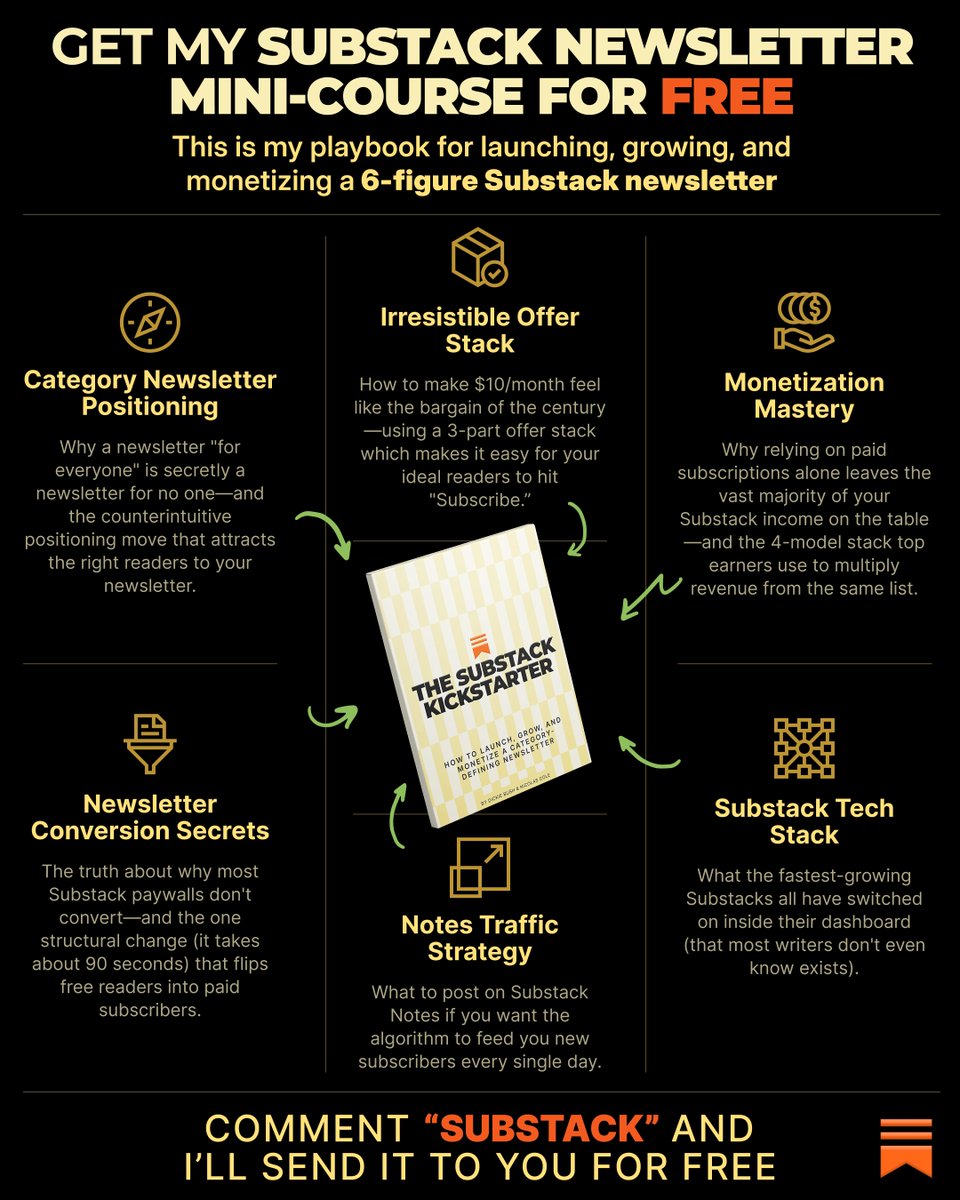
I took our paid Substack from $0 to $10K/month in under 30 days. So I created a free email course to help you: • Turn free readers into paid subs • Monetize your newsletter in 4 ways • Attract your ideal readers with Notes And more! Comment "substack" & I'll DM it to you.
Nicolas Cole 🚢👻 tweet media
English
155
9
85
15.5K
Mike Schmitz
Mike Schmitz@MikeSchmitz·
There's a recognizable pattern to AI slop. The "It's not just X, it's Y" structure. The smooth, generic tone. The five bullets that all start with a strong verb. It's competent. But it's also completely soulless. Here's the thing: AI isn't the problem. It's how people are using it. Most creators treat AI like a ghostwriter. They hand it a prompt, copy the output, and hit publish. The result? Content that sounds like everyone else's content. But there's a better way. For example, I've been using Claude to help me make book summary videos at @mikeschmitzreads" target="_blank" rel="nofollow noopener">youtube.com/@mikeschmitzre…. It's something I've wanted to do for years but couldn't justify the time investment. Thanks to AI, now I can Here's what that actually looks like: → I read the book and take detailed notes in Obsidian → I record a 90-minute podcast conversation about it → Claude pulls my notes, transcripts, and rating system → It drafts a video script using my existing material → I edit the script, record the video, and publish What used to take me a full day now takes about an hour and a half. But here's what didn't change: • I still do the reading • I still do the thinking • I still have the conversations • I still get in front of the camera Claude doesn't replace any of that. It just helps me get more out of the work I've already done. That's the difference between using AI as a tool vs. using it as a replacement. The key? Go for connection, not generation. The creators who will thrive in the AI era aren't the ones who can generate the most content. They're the ones who can use AI to amplify their unique perspective without losing what makes them worth following in the first place. Your voice. Your ideas. Your taste. Those are the things AI can't replicate. And if you're letting it try, in my opinion, you're doing it wrong.
English
0
0
0
307
Mike Schmitz
Mike Schmitz@MikeSchmitz·
Most people use Obsidian to store ideas. They should be using it to spark them. Storage mode is a graveyard. Static and silent. Connection mode is a living constellation of nodes sparking off each other. → Your vault is a laboratory for thinking, not a warehouse for data.
Mike Schmitz tweet media
English
0
0
2
218
Mike Schmitz
Mike Schmitz@MikeSchmitz·
📬 Want more frameworks like this for designing your week (instead of just reacting to it)? I share PKM workflows and productivity systems in my weekly newsletter: practicalpkm.com
English
0
0
0
151
Mike Schmitz
Mike Schmitz@MikeSchmitz·
Most people don't plan their week. They triage it. It's Sunday night. You open the calendar. You shuffle a few meetings. You push a project to Friday. You add a couple of urgent tasks from your inbox. Twenty minutes later, you close the laptop and tell yourself you've planned the week. You haven't. The shape of your week was set the moment you started. By what was already on your calendar. By what landed in your inbox. By what your task manager queued up from last week. You didn't decide what your week would look like. You just tried to cram as much as possible into the space that you had left. This is why the things you say matter most keep getting crowded out. Nobody triages their way into deep work. Nobody "finds" time for a regular date night. The urgent defaults are loud — and the things that actually move the needle on your life tend to speak more softly. It's a game of volume. The things that matter most lose every time. Designing a week works differently: → You start with a blank grid. → You decide what shape the week should hold. → You protect that shape before any specific task or meeting gets in. Once the shape is set, real life lives inside it. Not the other way around. The weekly calendar template gives you structure and helps you protect time for what really matters. I built a free tool to make this easier: idealweek.practicalpkm.com Twenty minutes. No account required. Your week is saved in your browser, and you can export it several different ways (including a .ics file you can add to your calendar or Markdown if you want to save it in Obsidian).
English
3
0
6
772
PKMJisho
PKMJisho@PKMJisho·
@mikeschmitz I already do block planning in my calendar, mostly following @CharlieGilkey's methods. But I really like this tool except for one thing - I wake up & get started earlier than this calendar allows. Or am I missing a customization option? Fine work though!
English
1
0
0
34
Mike Schmitz retweetledi
Paul Brown
Paul Brown@paulbrown·
Check out this awesome tool from @mikeschmitz to plan your ideal week
Mike Schmitz@MikeSchmitz

Most people don't plan their week. They triage it. It's Sunday night. You open the calendar. You shuffle a few meetings. You push a project to Friday. You add a couple of urgent tasks from your inbox. Twenty minutes later, you close the laptop and tell yourself you've planned the week. You haven't. The shape of your week was set the moment you started. By what was already on your calendar. By what landed in your inbox. By what your task manager queued up from last week. You didn't decide what your week would look like. You just tried to cram as much as possible into the space that you had left. This is why the things you say matter most keep getting crowded out. Nobody triages their way into deep work. Nobody "finds" time for a regular date night. The urgent defaults are loud — and the things that actually move the needle on your life tend to speak more softly. It's a game of volume. The things that matter most lose every time. Designing a week works differently: → You start with a blank grid. → You decide what shape the week should hold. → You protect that shape before any specific task or meeting gets in. Once the shape is set, real life lives inside it. Not the other way around. The weekly calendar template gives you structure and helps you protect time for what really matters. I built a free tool to make this easier: idealweek.practicalpkm.com Twenty minutes. No account required. Your week is saved in your browser, and you can export it several different ways (including a .ics file you can add to your calendar or Markdown if you want to save it in Obsidian).

English
0
1
1
391
Mike Schmitz
Mike Schmitz@MikeSchmitz·
@paulbrown Thanks Paul! Sorry this one didn't work for you, but I get it. Stay tuned, I've got a few more tools I'm working on😉
English
0
0
0
25
Paul Brown
Paul Brown@paulbrown·
@mikeschmitz Mike, this tool looks amazing. It's crafted with excellence. Well done! Then, I tried filling it out, and for a variety of reasons, I realize that my life doesn't currently afford crafting a consistent week. It's a useful exercise to try and make an ideal week, though.
English
1
0
0
34
Joseph Wood
Joseph Wood@josephmwood·
In response to Tiago's crashout over @obsdmd...existing, I am going to popularize the term 'Obsidianmaxxing'. Obsidianmaxxing is when you use Obsidian for as many things as you possibly, conceivably can. Do you track helpdesk tickets, play Pokemon, track Habitca stats, make an inventory of your whole house, etc. How are you Obsidianmaxxing?
English
21
5
126
13.1K
Mike Schmitz
Mike Schmitz@MikeSchmitz·
Latest video is going crazy 🎉 It only took 102 videos to get there 😂 I don't mind though. I tell people all the time that quantity is the path to quality. You have to ship enough to learn what that looks like. If you're frustrated by a lack of results, just keep shipping!
Mike Schmitz tweet media
English
1
1
2
160
Mike Schmitz
Mike Schmitz@MikeSchmitz·
Frustrated by macOS Tahoe putting your favorite app icons in "squircle jail?" Here's how to bust them out:
English
0
0
2
465