Mike Shell | Asymmetry®

34.1K posts

Mike Shell | Asymmetry® banner
Mike Shell | Asymmetry®

Mike Shell | Asymmetry®

@MikeWShell

Investment manager of ASYMMETRY® | Managed Portfolios for asymmetric risk/reward. Edge, trend, momentum, convexity, optionality, flows, sentiment, volatility.

Tennessee Katılım Nisan 2009
627 Takip Edilen31K Takipçiler
Mike Shell | Asymmetry®
Mike Shell | Asymmetry®@MikeWShell·
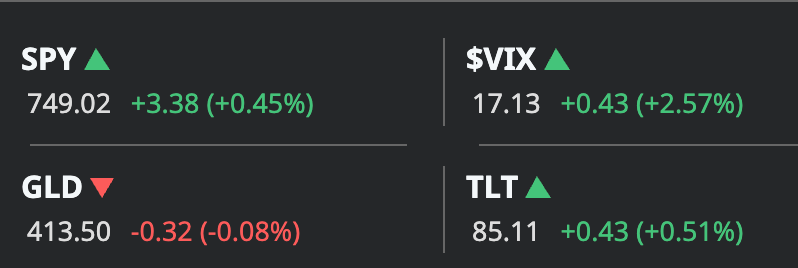
The market is pushing into record territory, but it isn't a blind rally. The simultaneous rise in bonds ($TLT ) and volatility ($VIX) suggests while traders are riding the bullish wave, they are keeping one foot firmly planted near the exit door by buying protection.
Mike Shell | Asymmetry® tweet media
English
0
2
4
406
Mike Shell | Asymmetry®
Mike Shell | Asymmetry®@MikeWShell·
The market is showing rotation rather than broad deterioration. A massive defensive surge into Utilities (94% above the 5-day MA) and sustained runs in Tech/Real Estate are keeping the index afloat, while the primary uptrend in Energy remains intact despite recent short-term profit-taking.
English
1
1
6
414
Javier Blas
Javier Blas@JavierBlas·
Over the last six years, BP has had 4 CEOs and 3 chairs! One CEO was fired for "serious misconduct" Now a chair is fired due to "serious concerns" I do wonder if the board is doing any due diligence...
English
31
38
303
32.7K
Mark Valorian
Mark Valorian@markvalorian·
I always wonder how guys like that even enjoy a situation like this. The whole appeal of a festival is to meld with people on a level playing field. It’s a visceral thing where you are experiencing the moment alongside others and if your paths happen to collide and combine, that’s serendipity, and that’s what makes the whole thing worthwhile. But if you’re a well known billionaire…none of that is available to you. Nobody there is going to organically cross your path; they are all angling to get a piece of you. You cannot drop your guard and just experience the moment; you have to continually have your defenses up to fend off the Scavenger Siren class. I don’t get how that could possibly be enjoyable.
litquidity@litcapital

Ken Griffin spotted spitting game while Tom Brady stands right in front of him at Palm Tree Club yesterday They’re fully in their Miami eras

English
45
7
182
133.1K
Mike Shell | Asymmetry®
Mike Shell | Asymmetry®@MikeWShell·
The S&P 500 EQUAL Weight breaking out signals the soldiers are following the generals.
Mike Shell | Asymmetry® tweet media
English
0
1
6
323
Mike Shell | Asymmetry®
Mike Shell | Asymmetry®@MikeWShell·
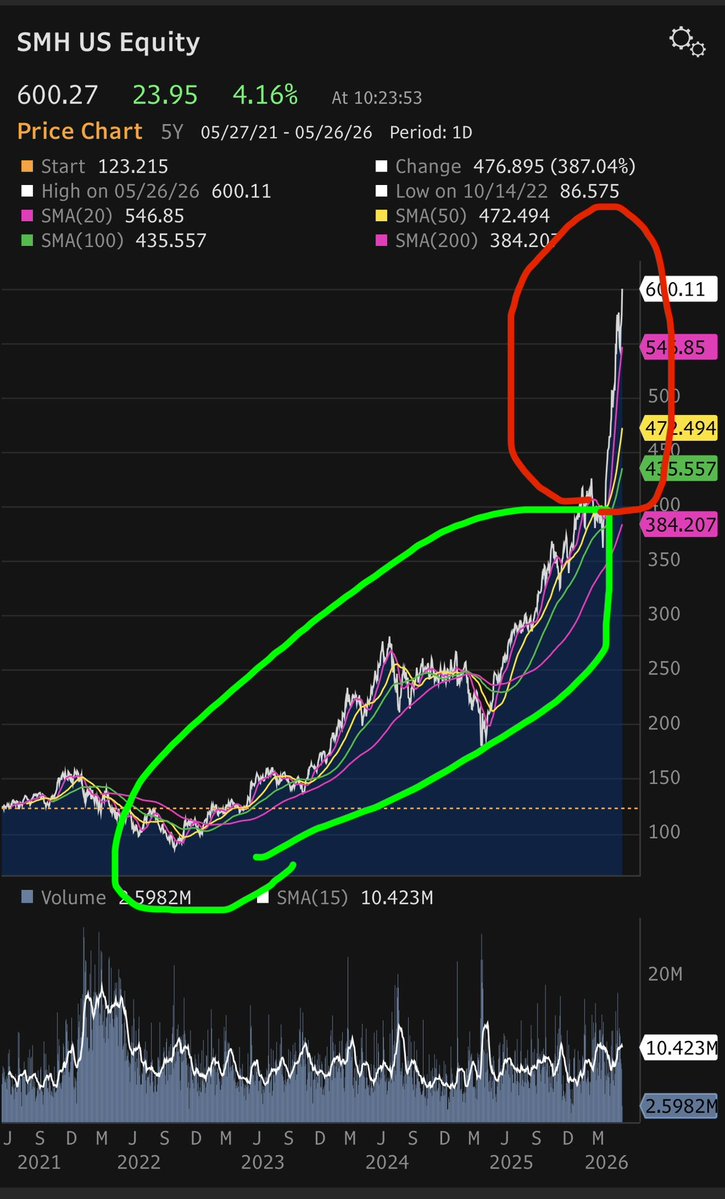
@dampedspring Remember when $SMH first came out? Like right at the very top if not starting to roll over. It was Merrill Lynch Semiconductor HOLDRS and went along with their Be Bullish ads.
English
1
0
3
1.3K
Andy Constan
Andy Constan@dampedspring·
These two things are different.
Andy Constan tweet media
English
27
9
231
33.1K
Mike Shell | Asymmetry®
Mike Shell | Asymmetry®@MikeWShell·
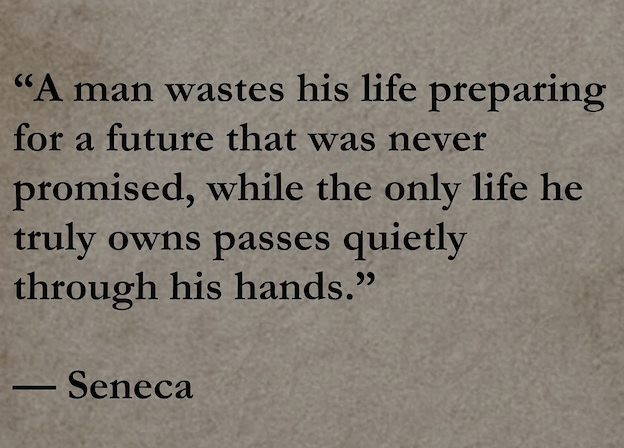
@drgurner The core idea is very Senecan: life isn’t inherently too short; we make it short by wasting it, postponing living, and surrendering the present to an imagined future.
English
0
0
4
164
Dr. Julie Gurner
Dr. Julie Gurner@drgurner·
Seneca hits you with a brick. Pay attention to your life.
Dr. Julie Gurner tweet media
English
124
2.4K
14.3K
263.8K
Mike Shell | Asymmetry®
Comes Now an investment adviser who's managed portfolios through every boom, bust, recession, and bear market since the '90s. Completely agree - make a plan, let it rip. The problem is most people's idea of "a plan" isn't enough. Owners don't build durable businesses by ignoring risk. Legal structure, insurance, contracts, cash-flow controls, and operating discipline protect what took decades to build. Portfolio management works the same way. Allocating X% to bonds or alternatives isn't the same as drawdown control. Drawdown control requires predetermined exits that follow the trend but don't give it all back — along with reentry points and hedges defined before the bear market arrives. Without that, the plan usually fails when losses get too large to afford or tolerate emotionally. A lot of investors today didn't have meaningful capital during 1999–2002 or 2008–2009. They've lived through fast ~20% declines and quick recoveries, so they assume they know their risk tolerance. A long, drawn-out recessionary bear market is different. Very few of us avoided those disasters. Most tapped out near the lows and never felt confident enough to get back in. When would they? When it makes a new high? When it trends even lower? For owners who've sold a business, this is even more critical. They've shifted from operator to investor. They've traded operating control for liquid market exposure. That capital now has consequences — it may need to fund lifestyle, income, family, taxes, and future opportunity. That's why I'm risk management first. Knowing the exit, reentry, and hedge is what makes letting it rip possible.
English
1
0
6
195
SMB Attorney
SMB Attorney@SMB_Attorney·
I’m a lawyer. I’m the first to suggest caution and point out the risks. But listen guys, if you’re sitting waiting for a recession, scoffing at others and thinking you’re the smarter than them, you’re a loser. Make a plan, then let it fucking rip. We’ll be dead soon anyways.
Andrew Lokenauth@FluentInFinance

“A crash is coming.” Andrew Ross Sorkin says a massive crash is inevitable. He’s one of the most credible financial journalists in the world.

English
40
8
273
63.2K
Mike Shell | Asymmetry® retweetledi
Trey Wallace
Trey Wallace@TreyWallace·
Omg! Felix Rosenqvist at the bricks! That was incredible, Things you don’t expect to hear at the #Indy500 👇 “Morgan Wallen just won a race”
English
6
21
259
133.1K
Mike Shell | Asymmetry®
@rjpjr12 The edge isn’t replacing judgment with an algorithm. It’s converting judgment into rules, testing those rules across regimes, and then letting the system execute when emotion wants to interfere.
English
0
0
2
172
Mike Shell | Asymmetry®
I started studying accounting and finance in school in the 90s and came across many head scratchers. So I'm learning how to create a P&L and balance the ledger, but in personal finance they're saying you want balance in risk/return—huh? And they still say it today. It's a logical inconsistency, so the edge is Asymmetry®
English
0
0
0
42
Slower Investor
Slower Investor@gemfinderaf·
@MikeWShell This. There is a reason Buffett talks about circle of competence. 'Balanced' is what you settle for when you can't find asymmetry.
English
1
0
1
28
Mike Shell | Asymmetry®
Investors are told to want a “balanced” portfolio. I’ve never liked that word. Balanced upside and downside? Balanced profit and loss? Balanced risk and reward? That’s not the goal. The goal is asymmetry: more upside than downside, more reward than risk, more potential gain than potential loss. A 60/40 portfolio is often called balanced, but it’s really just a static mix of stocks and bonds. And when stocks and bonds start trending together, that so-called balance can disappear exactly when investors need it most. I engineer ASYMMETRY®.
English
1
1
7
546
Mike Shell | Asymmetry®
Access to alternative investments isn’t the edge. That may be the most important point in alternatives. More private funds are being packaged for private wealth management. More evergreen funds. More private credit. More private equity. More real estate. More infrastructure. It doesn’t mean more opportunity automatically. It means more need for judgment, skilled decisions, and experience. The family that sold a business doesn’t need Wall Street investment bank inventory. They need disciplined filtering. What belongs in the portfolio? What should be avoided? What is too illiquid? What is too crowded? What is priced for perfection? What actually improves the portfolio’s risk/reward? That’s where I see alternative investments differently. The mission isn’t just access to alternatives to stocks and bonds. The mission is asymmetric exposure: return drivers selected, sized, and monitored for capital that can’t afford careless complexity.
English
0
1
4
416
Mike Shell | Asymmetry®
Private credit is popular because the yield looks good. But families with real capital should ask a harder question: Why is the yield higher? Is it strong lending? A better borrower? A better term? A better position in the capital stack? Or is it weaker credit, looser terms, less liquidity, and income that may not actually be paid in cash? Yield isn’t the same as safety. It’s often the market’s way of telling you where the risk lives. For ASYMMETRY® Alternative Investments, we don’t look at income in isolation. We look at the borrower, the terms, the liquidity, the downside, the position size, and how the exposure fits the total portfolio. For capital with consequences, the question is not “what does it yield?” The question is “what risk did we accept to get it?”
English
1
0
2
308
Mike Shell | Asymmetry®
The dangerous part of wealth management is that losses feel different after the money becomes permanent capital. A business owner can recover from volatility while still operating, earning, and growing. After selling the business, the portfolio is the operating company. It has to fund life. It has to absorb shocks. It has to handle inflation. It has to avoid forced selling. It has to survive bad timing. That’s why “balanced” isn’t enough. A 60/40 portfolio may own stocks and bonds, but that doesn’t mean the downside is defined or the return drivers are independent. ASYMMETRY® Managed Portfolios are engineered around a different objective: not symmetry, not balance, but asymmetric risk/reward. More upside than downside. More reward than risk. More ways to compound without letting one market regime control the whole outcome.
English
0
0
6
338
Mike Shell | Asymmetry®
A family office doesn’t think like a retiree chasing yield. It thinks like a capital operator. Income matters. Liquidity matters. Risk matters. Control matters. Taxes matter. Sequence of returns matters. And one bad decision can create problems that a spreadsheet didn’t show. That’s why I don’t like the phrase “just add alternatives.” Private credit, private equity, real estate, infrastructure, and hedge funds can all play a role. They can also become expensive, illiquid complexity if they’re bought for the wrong reason. Inside ASYMMETRY® Managed Portfolios, I look at alternatives through the whole portfolio: What risk are we taking? What return driver are we adding? What can go wrong? How do we size it? And does it improve the asymmetric risk/reward of capital with consequences?
English
0
0
3
332