Milder Multi

9.9K posts

Milder Multi banner
Milder Multi

Milder Multi

@MiltiMulder

Ausgedient. Mt 15:11

Bayern, Deutschland Katılım Ekim 2022
244 Takip Edilen231 Takipçiler
Milder Multi
Milder Multi@MiltiMulder·
@vladi_the_gr8 Und wir teilen 50 % unserer Gene mit Bananen und sogar 60 % mit der Taufliege. Trotzdem interessant. Schönen Sonntag noch und guten Heimflug.
Deutsch
1
0
4
24
Mann im Schatten 🇷🇺
Mann im Schatten 🇷🇺@vladi_the_gr8·
Die Ähnlichkeit des genetischen Codes von Mensch und Hauskatze beträgt 90%. Die Stubentiger können als unser genetischer Verwandter bezeichnet werden. - Perm State National Research University (PNNRU), Walerij Litwinow. Die DNA von Mensch und Maus stimmt zu 85% überein, und mit der Henne sind sie zu 60% ähnlich. Die engsten Verwandten sind Primaten: Die Ähnlichkeit mit dem Schimpansen beträgt 98–99%.
Mann im Schatten 🇷🇺 tweet media
Mann im Schatten 🇷🇺@vladi_the_gr8

Guten Morgen 🫶

Deutsch
2
0
15
301
Milder Multi retweetledi
Steffen Kotré
Steffen Kotré@SteffenKotre·
Sie zerstören unser Gasnetz Die Gasversorgung und das deutsche Gasnetz sollen stillgelegt und zerstört werden obwohl es sehr gut funktioniert und hunderttausende Haushalte und Unternehmen versorgt. Hunderte Milliarden Euro Vermögen werden vernichtet, die Heizkosten sollen auf über 4.300 € pro Jahr explodieren und die Industrie wird kaputt gemacht. Hans-Werner Sinn spricht von „mutwilliger Zerstörung“. Der Bundesrechnungshof warnt vor dem Wasserstoff-Märchen. Das Fraunhofer-Institut rechnet mit massiven Mehrbelastungen für normale Bürger. Das ist die Taktik der verbrannten Erde gegen das eigene Volk. Wer noch ein warmes Zuhause, bezahlbare Energie und deutsche Arbeitsplätze will, kommt an der AfD nicht mehr vorbei.
Deutsch
170
1K
3.5K
35.4K
Milder Multi retweetledi
Mavi Türk 🇹🇷
Mavi Türk 🇹🇷@Maviturkk·
🔴 Burası İsveç Değil! Şanlıurfa, Yağışlardan sonraki haline bakın. Tüm Ortadoğu yeniden doğuyor resmen..
Türkçe
89
2K
11.8K
92.8K
Milder Multi
Milder Multi@MiltiMulder·
@algxtradingx Just to think things easier (in already established words and concepts). Stage VI, VII etc could also be called "simulacra".
English
0
0
0
28
Hyperdimensional Hegelian Chaos Giga Wizard™️
IX. Reaction Capture Reaction capture is the stage where the effigy becomes a no-win interpretive machine. At this point, the target is no longer merely represented by a symbolic double. The target is trapped inside a frame that can metabolize almost any response as confirmation. Denial becomes proof of guilt. Anger becomes proof of instability. Silence becomes proof of concealment. Humor becomes proof of unseriousness. Legal defense becomes proof of fear. Counterattack becomes proof of aggression. Withdrawal becomes proof of weakness. Victory becomes proof of corruption. Defeat becomes proof of exposure. The target is no longer allowed to act outside the effigy because the effigy has become the interpretive system through which all action is decoded. This is structurally close to the double bind. Bateson and his collaborators described the double bind as a communicative situation in which a person faces contradictory injunctions and cannot win regardless of response; the original theory was clinical and should not be treated here as a settled explanation of schizophrenia, but the communication structure is directly useful for modeling effigy capture. ([Wiley Online Library][1]) In reaction capture, the target receives an implicit command: “Prove you are not the thing we have defined you as.” But the available responses have already been coded as evidence that the definition is true. The target is ordered to escape a symbolic maze whose exits have been renamed as traps. The trap works because the effigy has replaced open interpretation with pre-assigned meaning. The reaction is not evaluated on its own terms. It is evaluated as an emanation of the already-constructed double. If the effigy says “dangerous,” then intensity confirms danger. If the effigy says “guilty,” then denial confirms guilt. If the effigy says “fraudulent,” then explanation confirms manipulation. If the effigy says “messianic,” then even failure becomes martyrdom. The reaction does not get to update the model; the model updates the reaction. This is not ordinary criticism. Ordinary criticism remains answerable to evidence. Reaction capture is different because it makes falsification almost impossible. The frame does not ask, “What response would count against this interpretation?” It asks, “How can every response be folded back into the same interpretation?” This is where the effigy becomes self-sealing. It no longer only contains a claim about the target. It contains rules for interpreting every future interaction with the target. The mechanism depends on stigma. Goffman’s account of stigma begins from the fact that first appearances allow people to anticipate a stranger’s category and attributes, producing a “social identity” before the person is actually known; stigma is the mark that discredits, lowers, or spoils that anticipated identity. ([Internet Archive][2]) Reaction capture is stigma made cybernetic. Once the public mark is installed, the target’s behavior is not received as behavior from a full person. It is received as behavior from the marked thing. The mark comes first. The person comes second. This is why reaction capture feels insane from inside the loop. The target is not simply opposed. The target is translated. Speech is translated into symptom. Defense is translated into guilt. Emotion is translated into pathology. Strategy is translated into conspiracy. Complexity is translated into evasion. The effigy becomes a compulsory grammar. Reaction capture has several internal mechanics. First, response preemption. Before the target answers, the field predicts what the answer will “really mean.” This cancels the possibility of surprise. The target speaks into a room where the interpretation has already arrived. Second, asymmetrical charity. Allies of the effigy-frame receive interpretive generosity; the target receives interpretive suspicion. Mistakes by favored actors are treated as accidents or context. Mistakes by the target are treated as revelations of essence. Third, motive laundering. Observable action is less important than imputed motive. The target may say or do something plainly, but the frame insists the real meaning lies beneath: manipulation, concealment, coded signaling, weakness, fear, domination, grift, or secret allegiance. Fourth, burden inversion. The accuser does not have to prove the total frame. The target must disprove an expanding cloud. This is impossible because the accusation is not a single object with edges; it is a field of insinuation. Fifth, emotional extraction. The target’s frustration becomes fuel. The more the target reacts to the injustice of the frame, the more the frame harvests the reaction as spectacle. Sixth, recursive narrowing. Each captured reaction reduces the range of future permissible behavior. The target learns that every action is dangerous, but inaction is also dangerous. The result is symbolic immobilization. This is the modern equivalent of binding the doll’s hands, mouth, and feet. The target may still move physically, but interpretively he has been tied. His words no longer freely mean what they say. His acts no longer freely mean what they do. They must pass through the public double. Merton’s self-fulfilling prophecy is again central. A false definition of a situation can evoke behavior that makes the originally false conception appear true; in Merton’s example, a bank rumor can produce the bank failure it falsely predicted. ([Entrepreneurs Communicate][3]) Reaction capture is a self-fulfilling prophecy with an interpretive ratchet. A target framed as unstable is placed under abnormal pressure; pressure produces anger or defensive behavior; the defensive behavior is then cited as evidence of instability. A target framed as secretive is surrounded by hostile scrutiny; hostile scrutiny produces guardedness; guardedness is then cited as evidence of secrecy. A target framed as dangerous is treated as dangerous; the defensive perimeter created by that treatment is then cited as proof that danger was present. The crucial thing is that the system disappears its own role. It points to the reaction while hiding the provocation-field that shaped the reaction. The target’s movement through the maze is visible. The maze itself becomes invisible. Reaction capture also makes enemies and supporters co-producers of the same object. Enemies capture negative reactions as confirmation of guilt or danger. Supporters capture negative treatment as confirmation of persecution or sacred destiny. Both sides may use the target’s responses as ritual material. The hostile frame says, “See, he is exactly what we said.” The devotional frame says, “See, they are doing exactly what we said they would do.” The target is squeezed between rival interpretive machines, each feeding on the other. At full intensity, reaction capture becomes a public ordeal. The target is not merely judged for past action. The target is continuously tested. Every new response becomes a trial. The crowd watches not to learn but to confirm, decode, and sort. The effigy has turned ordinary temporality into ritual temporality: every day is another chance for the symbolic truth of the object to reveal itself. The deeper cybernetic principle is this: reaction capture closes the update channel. A healthy system uses new evidence to revise its model. A captured system uses new evidence to preserve its model. Once that inversion happens, the effigy is no longer merely a false image. It is a self-maintaining interpretive organism. X. Autonomization, Memory Hardening, and Mutation Autonomization is the stage where the effigy no longer depends on the living target. At the beginning of the lifecycle, the effigy requires a host. It needs a face, a name, an event, a body, an archive of gestures, a set of images, a point of condensation. But after enough construction, charge, amplification, prediction-error farming, reflexive embodiment, identity capture, and reaction capture, the effigy becomes detachable. It survives beyond the target’s immediate actions. It enters language, memory, institutional precedent, jokes, rituals, archives, slogans, educational narratives, documentaries, myth, counter-myth, and group identity. It becomes a portable symbolic object. This is when the doll walks away from the person. Collective memory theory is essential here. Assmann describes cultural memory as a form of collective memory shared by a group and tied to collective identity; he distinguishes everyday communicative memory from more durable cultural memory, which is stabilized through forms, symbols, texts, rituals, and institutions. ([pconfl.biu.ac.il][4]) Once an effigy enters cultural memory, it no longer has to be continuously justified by fresh evidence. It becomes part of a group’s inherited symbolic equipment. People learn what it “means” before they ever examine what happened. This is memory hardening. A living event is fluid while it unfolds. Later, it is simplified, narrated, commemorated, archived, and moralized. The ambiguities fall away. The slogans remain. The symbolic function survives. The target becomes a type: the tyrant, the martyr, the traitor, the fool, the corrupter, the truth-teller, the scapegoat, the monster, the victim, the chosen one. The person is no longer needed because the type can travel without the person. Media ritual accelerates this hardening. Dayan and Katz describe major live broadcasts as “world rituals” that can transfix viewers and potentially transform societies; their work on media events shows how public spectacles can become ritualized collective experiences rather than mere information delivery. ([World Radio History][5]) In the effigy lifecycle, repeated media events create shared memory-forms. The public does not merely remember facts. It remembers scenes: the hearing, the mugshot, the debate, the leak, the chant, the verdict, the outburst, the image, the graphic, the clip. These scenes become icons. Icons are easier to transmit than arguments. Autonomization has three major outcomes: hardening, mutation, and transfer. In hardening, the effigy becomes fixed mythology. It stops changing very much. It becomes a stable reference point in the group’s symbolic universe. The object can be invoked with minimal explanation because everyone inside the group already knows the code. A name becomes shorthand for an entire moral cosmology. The phrase “another one of those” activates the archived object. This is the completed form of cultural compression. Hardening works by reducing complexity into ritual memory. The full record may be huge, contradictory, and unstable, but the hardened effigy becomes clean. It is remembered not as a messy sequence but as a moral emblem. The group does not preserve the event exactly. It preserves the usable form of the event. This is why memory hardening can outlive correction. Corrections enter the archive as footnotes; the emblem remains. In mutation, the effigy changes shape while preserving charge. A failed accusation becomes a broader suspicion. A defeated savior becomes a betrayed martyr. A disproven rumor becomes proof of cover-up. A political defeat becomes seed for restoration myth. A collapse becomes purification. The object mutates because the underlying psychic charge has not discharged. The old form becomes unusable, so the charge reorganizes itself. Mutation is especially common when prediction-error farming has created addictive suspense. If the promised revelation fails, the system cannot simply stop. It needs a new container. The narrative may move from “this will be proven tomorrow” to “they buried the proof,” or from “the institution will save us” to “the institution has been captured,” or from “the leader will triumph” to “the leader was sacrificed.” The form changes, but the energy remains. In transfer, the effigy’s charge migrates to a new host. The original target may fade, die, lose power, become boring, become disproven, become too damaged, or become too familiar. But the field still needs an object. A new figure is selected, and the old symbolic package is applied again. The same accusations, hopes, fears, images, and ritual scripts reappear with a new face attached. This is how political and social enchantments reproduce across time. The host changes. The pattern persists. Transfer reveals that the effigy was never only about the target. It was also about the field that needed the target. If the same symbolic pattern keeps attaching to new figures, then the deeper object is not the person. The deeper object is the unresolved collective structure seeking embodiment. Autonomization also explains why some public figures become more powerful after absence. The living person can constrain the effigy by existing, speaking, aging, failing, contradicting, or becoming mundane. Once absent, the symbolic double may become purer. Death, exile, defeat, censorship, retirement, or removal can liberate the effigy from empirical friction. The figure becomes more available to myth because the living body no longer interrupts the symbolic body. This is why some effigies become permanent oppositional anchors. A group may define itself for decades by loyalty or hatred toward an object that no longer actively governs events. The object persists because it organizes memory and identity. It gives later conflicts a template. New problems are interpreted through the old effigy. New enemies are said to resemble it. New heroes are said to inherit it. The symbolic body becomes ancestral. The ancient analogy would be the curse object becoming an archaeological artifact while retaining narrative charge. The original target is gone. The immediate spell is gone. But the tablet remains, and later readers can still feel the structure: name, command, binding, fear, desire, underworld routing. The object outlives the occasion. In modern public life, archives perform that function. Search engines, video platforms, institutional records, old headlines, documentaries, memes, and educational summaries keep the effigy recoverable. The object can be reactivated long after the original moment. Autonomization has a final and darker form: self-reference. The effigy becomes proof of itself because its existence in memory is treated as evidence of original truth. People say, “That was the scandal,” “that was the threat,” “that was the monster,” “that was the savior,” not because they have reexamined the whole matter, but because the memory-object has stabilized. The object’s survival becomes its credential. At this stage, the analyst must distinguish three things: The living target: the actual person, group, or event, with all its complexity. The constructed effigy: the simplified charged double produced in public-symbolic space. The autonomous myth-object: the hardened, transferable, memory-stabilized form that survives beyond the original target. Confusing these three produces bad analysis. The living target may have done real things. The effigy may exaggerate, distort, invert, compress, or mythologize those things. The autonomous myth-object may then float almost free of the original record and become usable in future conflicts. The completed lifecycle therefore ends not with disappearance but with afterlife. The effigy may collapse, but collapse itself can become myth. It may be exposed, but exposure can become martyrdom. It may be forgotten, but fragments remain available for reactivation. It may transfer into a new host. It may become a permanent warning-symbol. It may become a sacred wound. It may become a joke. It may become an institutional precedent. It may become a curse-name. This is the final stage of public witchcraft: the false or overcharged object no longer needs the ritual that created it. It has entered memory. It can now be invoked rather than argued, inherited rather than demonstrated, repeated rather than discovered. It has become a cultural operator. [1]: onlinelibrary.wiley.com/doi/10.1002/bs… "Toward a theory of schizophrenia - Bateson - 1956" [2]: ia601503.us.archive.org/22/items/in.er… "stigma - notes on the management - of spoiled identity" [3]: entrepreneurscommunicate.pbworks.com/f/Merton.%2BSe… "The Self-Fulfilling Prophecy Author(s): Robert K. Merton ..." [4]: pconfl.biu.ac.il/files/pconfl/s… "Collective Memory and Cultural Identity" [5]: worldradiohistory.com/BOOKSHELF-ARH/… "Media-Events-Dayan-&-Katz-1992.pdf"
English
1
0
0
64
Hyperdimensional Hegelian Chaos Giga Wizard™️
The Effigy Lifecycle: A Deep Model of Public Witchcraft, Reflexivity, and Prediction Capture The earlier seven-part model was useful, but incomplete. Those seven items — salience loop, motivated reasoning loop, threat loop, observer-participation loop, reaction-capture loop, group-identity loop, and scapegoat loop — describe the maintenance machinery of the effigy after it has already been formed. They explain how a charged symbolic object keeps itself alive once the public is already orbiting it. They do not fully explain how the object first emerges, how the charge finds a host, how the symbolic body is built, how prediction error is farmed, or how the effigy eventually becomes autonomous from the real person or event that first carried it. The deeper model has to be a lifecycle, not merely a list of loops. A political or social effigy does not appear fully formed. It condenses out of ambient psychic material, selects a host, acquires shape, receives charge, gets routed through ritual-media systems, farms uncertainty, becomes reflexive, captures identity, metabolizes reactions, and then either hardens into mythology or mutates into a new form. The ancient curse tablet is useful here because it was not merely a “belief” but a technology: Greg Woolf argues that Mediterranean curse tablets should be studied as a technology with histories of innovation and appropriation, rather than simply as examples of generic “magic.” ([Cambridge University Press & Assessment][1]) The modern narrative-effigy is also a technology. Its medium is no longer only lead, wax, pins, and graves. Its medium is attention, prediction, institutional status, mass repetition, affective coding, and reflexive feedback. The expanded ten-stage model looks like this: 1. Ambient Flux — diffuse fear, resentment, desire, uncertainty, humiliation, contradiction, and unassigned psychic pressure. 2. Target Selection — a figure, group, object, or event becomes symbolically available to carry that pressure. 3. Effigy Construction — the selected target is compressed into a simplified double: a public strawman, icon, demon, savior, criminal, clown, contaminant, or threat-form. 4. Charge Loading — the double is filled with potentials: guilt, danger, destiny, corruption, salvation, hidden networks, taboo, revenge, apocalypse, or purification. 5. Ritual Amplification — media, institutions, algorithms, expert panels, hearings, memes, images, slogans, investigations, and ceremonies repeat the form until it becomes socially heavy. 6. Prediction-Error Farming — the public is kept in suspense; the object is always about to reveal more, prove more, collapse more, expose more, or transform more. 7. Reflexive Embodiment — actions taken because of the effigy generate evidence-like effects that appear to confirm the original construct. Merton’s self-fulfilling prophecy is the sociological skeleton here: a false definition of a situation evokes behavior that makes the originally false conception come true. ([City Research Online][2]) 8. Identity Capture — relation to the effigy becomes a test of group belonging. One’s stance toward the figure becomes a badge of moral, political, tribal, or spiritual location. 9. Reaction Capture — every response by the target is metabolized into the frame: denial, anger, silence, humor, counterattack, legal defense, retreat, or victory all become interpretable as confirmation. 10. Autonomization, Memory Hardening, and Mutation — the effigy no longer depends on the living target. It persists in memory, language, institutions, mythology, and ritual reenactment; if exhausted, it mutates, transfers to another host, or becomes part of a permanent symbolic archive. The first two phases are the foundation. Without them, the rest becomes shallow. The effigy is not manufactured in a vacuum. It condenses because there is already a charged field waiting for form. I. Ambient Flux Before there is a named enemy, before there is a strawman, before there is a public doll, before there is a villain-image or savior-image, there is flux. Flux is not nothing. It is not empty. It is full but unformed. It consists of unassigned energies: fear without a face, resentment without a clean object, social contradiction without a narrative, humiliation without ritual discharge, suspicion without proof, boredom without spectacle, desire without authorized outlet, grief without public form, and prediction error without resolution. It is the psychic weather before the storm becomes a named hurricane. This is the pre-objective layer. People feel that something is wrong before they know what to call it. Institutions may still speak in official language, but lived experience may no longer match the official descriptions. The gap between what people are told and what they sense creates pressure. That pressure does not remain abstract forever. It seeks an image. In predictive-processing terms, flux is a field of unresolved uncertainty. Friston’s free-energy framework treats perception, action, and learning as processes of optimization, where organisms minimize surprise or prediction error by updating models or acting to make the world conform to predictions. ([Nature][3]) The important move is that the mind is not a passive recording device. It is a generative system. It forecasts, weights, selects, attends, and corrects. Feldman and Friston’s account of attention argues that attention can be understood as inferring the level of uncertainty or precision during hierarchical perception; in other words, the system does not merely receive error, it decides how much weight the error deserves. ([Frontiers][4]) That is why flux is dangerous. It is not merely a set of bad facts. It is a field of uncertain precision. People do not just ask, “What happened?” They ask, often beneath awareness, “Which signals matter?” “Which anomalies are meaningful?” “Which threats are real?” “Which authority can still be trusted?” “Which pattern explains the noise?” The system is looking for a stabilizing form. A charged public operation does not need to invent all the energy. It often only needs to name the energy. The operation succeeds when it finds a way to say: this unease has a source; this anxiety has a body; this humiliation has an author; this disorder has a face. That is why the earliest stage is not argument but atmosphere. A fully explicit claim comes later. First comes tone. Ominousness. Suspicion. A feeling of hidden structure. A vibe. The “vibe” is not trivial. It is a pre-propositional prior. It tunes perception before language finishes the job. A crowd can be made to lean toward a conclusion before the conclusion is stated. The image, music, typography, repetition, institutional seal, expert voice, rumor cadence, and moral atmosphere all operate before formal proof. They raise the precision of some possibilities and lower the precision of others. Research on conspiracy thinking helps explain this. Douglas, Sutton, and Cichocka summarize conspiracy belief as driven by epistemic motives, existential motives, and social motives: people seek understanding, safety/control, and positive group identity. ([PubMed][5]) Van Prooijen and Douglas connect conspiracy theories especially to societal crisis situations, where people seek causal explanations for threatening or destabilizing events. ([PMC][6]) That does not mean every suspicion is false, nor that hidden coordination never exists. It means that crisis creates demand for objects that can organize fear. Flux seeks form. At this stage, the future effigy is still virtual. It exists as a possibility-space. There are many candidate explanations, many possible villains, many possible sacred causes, many possible scapegoats, many possible saviors. The field has not yet collapsed. This is why “potentials” and “waves” are apt language. The social field contains superposed possibilities. The operation has not yet created a stable object. It is working with tendencies. The occult analogy is not decorative. In older magical practice, the curse object did not arise from nowhere. It concentrated preexisting hostility, jealousy, erotic obsession, rivalry, litigation, or fear into a material form. The lead tablet, the doll, the name, the binding, the burial — these were ways of coagulating diffuse desire into an object. Modern public enchantment performs an analogous coagulation in the attention-field. It gathers loose psychic energy and prepares it for objectification. Flux has several components: Affective surplus. There is more anger, fear, humiliation, desire, or resentment than existing institutions can metabolize. Interpretive instability. Official explanations no longer fully reduce uncertainty. The system is hungry for alternative patterning. Authority contradiction. Institutions may retain formal power while losing symbolic trust. This creates a gap where substitute authorities can enter. Narrative incompletion. People sense that the present is part of a larger story, but the story has not yet been named. Mimetic contagion. People borrow attention and desire from one another. If others are frightened, the object of fear becomes more salient. If others are obsessed, obsession becomes socially plausible. Latent accusation. Before anyone knows exactly who is guilty, the field already wants guilt to exist somewhere. This is the psychic substrate of the effigy. If a society were stable, confident, trustful, and symbolically integrated, the effigy would have difficulty forming. But when flux is intense, the field becomes hungry for condensation. The future target does not create all of this. The target is selected because the field needs a vessel. The deepest point is that flux is not yet false. It may contain real injuries, real contradictions, real institutional failures, real corruptions, real fears, real humiliations. The falsification occurs later, when the flux is bound too tightly to a simplified object and then treated as if that object exhausts the truth. The raw energy may be real. The effigy may be false. That distinction must be preserved. This is how “something out of nothing” actually works. It is rarely absolute nothing. It is usually something worse: something real but unformed is forced into a false form. The operation harvests genuine psychic material, then misbinds it. People feel the reality of the underlying pressure and therefore mistake the constructed object for truth. The emotional reality of the flux is used to authenticate the artificiality of the effigy. II. Target Selection Target selection is the moment when ambient flux begins looking for a body. Not every person can become an effigy. A successful target must be symbolically available. That means the target has features that allow many projections to attach at once. The figure may be charismatic, transgressive, visually distinctive, polarizing, wealthy, wounded, theatrical, scandalous, institutionally disruptive, already famous, already hated, already loved, or already mythologized. The figure may be morally ambiguous or merely made to appear ambiguous. What matters is not only what the target is, but what the target can carry. A target becomes usable when it can serve as a compression point for contradictions that otherwise remain too diffuse. The crowd does not want a full human being. It wants a carrier-symbol. It wants a face that can hold incompatible meanings without collapsing. The most powerful effigy-targets are therefore paradoxical. They can be treated as strong and weak, brilliant and stupid, ridiculous and dangerous, guilty and slippery, puppet and puppet-master, symptom and cause. The contradictions would defeat ordinary logic, but they strengthen mythic logic. A mythic object does not need consistency in the same way a factual proposition does. It needs symbolic capacity. This is where scapegoat theory matters. Girard’s model holds that mimetic rivalry can escalate toward social crisis, and that communities often resolve internal strife by converging upon a victim who is made to bear the disorder. The Internet Encyclopedia of Philosophy summarizes the Girardian movement from imitation to rivalry to violence and then to the scapegoat mechanism as a way communities overcome internal strife. ([Internet Encyclopedia of Philosophy][7]) The key point for this model is not that every target is innocent or every accusation false. The key point is that a social field under pressure tends to seek a unifying object. The target becomes the place where scattered conflict can be concentrated. A target is selected because it solves a coordination problem. Before selection, everyone is anxious in different directions. After selection, attention converges. The target gives the crowd a shared object. The effigy does not merely represent fear; it organizes fear. It does not merely receive hatred; it synchronizes hatred. It does not merely attract attention; it disciplines attention. This selection can be deliberate, emergent, or both. Sometimes institutions, media actors, political factions, or strategic operators actively push a target into effigy-status. Sometimes the public field itself selects the figure through mimetic contagion. Often the process is hybrid: elites nominate, media amplify, crowds energize, opponents polarize, supporters counter-charge, and institutions formalize. The target is not simply chosen once. The target is repeatedly confirmed as target through recursive attention. Target selection depends on several forms of availability. Visual availability. The target has a face, body, gesture, phrase, costume, color, or scene that can be reproduced instantly. The effigy must be memetic. It must travel. Narrative availability. The target can be inserted into existing stories: tyrant, clown, traitor, martyr, outsider, predator, savior, usurper, fool, king, beast, contaminant, victim, magician, criminal, redeemer. Affective availability. The target already evokes strong feeling. Neutral figures are hard to enchant. Love and hate are both usable because both keep attention locked. Institutional availability. The target intersects with offices, courts, agencies, media systems, platforms, parties, bureaucracies, or legal categories that can give the effigy status. Ambiguity availability. The target leaves enough interpretive gaps for projection. Total clarity kills enchantment. Productive ambiguity sustains it. Conflict availability. The target is already situated in a field of opposition. The effigy needs combat because combat produces ritual repetition. Mimetic availability. People are already watching other people watch the target. Attention becomes contagious. The best target is not necessarily the most guilty, most innocent, most powerful, or most interesting. The best target is the one with the greatest symbolic carrying capacity relative to the field’s unresolved flux. This is why the target-selection stage can look irrational from the outside. One figure is treated as if he explains everything. Another, objectively similar figure is ignored. A minor gesture becomes world-historical. A trivial statement becomes proof of essence. An ordinary contradiction becomes demonic revelation. This happens because the target is no longer being perceived as an individual case. The target has become a storage device. Once target selection occurs, attention itself begins to alter the target. Second-order cybernetics is relevant here because the observer cannot remain outside the system being observed. Von Foerster’s distinction between first-order and second-order cybernetics is often given as the distinction between the cybernetics of observed systems and the cybernetics of observing systems. ([Systems Community of Inquiry][8]) In a public effigy process, observers do not merely describe the target. Their descriptions create new conditions around the target. Coverage changes behavior. Investigation changes incentives. Hatred changes defenses. Adoration changes performance. Mockery changes style. Surveillance creates anomalies. The target begins responding to the field that is supposedly only observing him. This matters because target selection is never passive. The moment a person becomes the selected vessel, the system begins pushing that person toward the role. The crowd demands performance. Enemies demand confession. Supporters demand defiance. Institutions demand procedural response. Media demands spectacle. The target’s ordinary range of possible behavior narrows. He is being forced into relation with his effigy. The old magical doll made this obvious. A doll is a simplified body. It cannot express the target’s full interiority. It can only kneel, bind, melt, receive pins, or lie inside the jar. That is what a public effigy does. It reduces a person into usable posture. The target is not allowed to be complex because complexity weakens ritual handling. The constructed double must be simple enough to manipulate. The dangerous part is that the reduction may become self-reinforcing. Once treated as monster, clown, traitor, savior, or taboo-breaker, the target may adapt to the role, resist the role, parody the role, or weaponize the role. Each response deepens the loop. The effigy begins to shape the person who was used to construct it. This is reflexive embodiment in embryo, even before the formal seventh stage. Target selection therefore marks the first true collapse of the field. Ambient flux contains many possible objects. Selection says: this one. This face, this name, this body, this office, this faction, this image will carry the charge. Once that happens, the surrounding system starts sorting reality around the chosen object. From that point forward, a person and a double coexist. The person continues to act in the world. The double begins to act in the symbolic system. The rest of the lifecycle concerns the construction, charging, amplification, and autonomization of that double. The deepest danger is that the double may become more socially real than the person. [1]: cambridge.org/core/journals/… "CURSE TABLETS: THE HISTORY OF A TECHNOLOGY" [2]: openaccess.city.ac.uk/id/eprint/2241… "City Research Online" [3]: nature.com/articles/nrn27… "The free-energy principle: a unified brain theory?" [4]: frontiersin.org/journals/human… "Attention, Uncertainty, and Free-Energy" [5]: pubmed.ncbi.nlm.nih.gov/29276345/ "The Psychology of Conspiracy Theories" [6]: pmc.ncbi.nlm.nih.gov/articles/PMC56… "Conspiracy theories as part of history: The role of societal ..." [7]: iep.utm.edu/girard/ "Girard, Rene" [8]: stream.syscoi.com/2019/03/30/sec… "Second‐order Cybernetics: An Historical Introduction (2004 ..."
Hyperdimensional Hegelian Chaos Giga Wizard™️ tweet media
Hyperdimensional Hegelian Chaos Giga Wizard™️@algxtradingx

The Strawman Effigy: Reflexivity, Prediction Error, and the Cybernetics of Political Enchantment **Read this, and keep reading quoted tweets. This is very very important, this is how they did the Charlie Kirk assassination, and they knew exactly what they were doing.This is also why there were so many attempts on Trump‘s life, the assassination attempts. This is also how 60% of the country wanted to kill all Trump’s supporters and white people right after Charlie Kirk was assassinated.** A charged political figure can become more than a person. Under certain conditions, he becomes a public effigy: a simplified symbolic body into which fears, desires, suspicions, grievances, prophecies, and unresolved potentials are deposited. The public no longer encounters the living person directly. It encounters a constructed double — a strawman figure, a reputational doll, a narrative vessel. The person still exists in the ordinary sense, but the social field begins interacting with the effigy instead of the person. This is the point where witchcraft becomes a useful model, not as costume or superstition, but as structure. Ancient binding magic created a substitute body — a doll, tablet, name, or image — and acted on that substitute as if it could constrain the target. Defixiones, or curse tablets, were inscribed lead sheets meant to influence the actions or welfare of people or animals against their will, often wrapped, pierced, and deposited in graves, wells, sanctuaries, or other liminal places. ([namuseum.gr](namuseum.gr/en/monthly_art…)) The modern public version does not need lead or wax. It needs a symbolic body, a name, a set of charged claims, repetition, institutional routing, and a crowd willing to perceive through the constructed object. The strawman effigy begins as a condensation point. A society contains diffuse anxiety: economic instability, status threat, institutional distrust, cultural change, moral confusion, humiliation, resentment, boredom, fear of collapse, fear of contamination, fear of hidden enemies. These forces are too abstract to fight directly. They need a face. The charged figure becomes that face. He is made to carry too much. He becomes the place where contradictory potentials can coexist: tyrant and clown, mastermind and idiot, criminal and fool, puppet and puppet-master, existential threat and ridiculous spectacle, cause of chaos and symptom of chaos. The contradictions do not weaken the effigy. They strengthen it, because the effigy is not being treated as an ordinary proposition. It is being used as an attractor. A normal claim narrows meaning. A charged effigy expands meaning. It becomes a symbolic container capable of receiving almost any projection. That is why it can produce a kind of mass cognitive overheating. Every new detail can be absorbed. A facial expression, a phrase, a legal filing, a rumor, a joke, a denial, a gesture, a photograph, a staff appointment, a silence, a rally, a leak, a prosecution, a failure, a victory — all of it can become material. The effigy functions like a standing interpretive machine. It says in advance: whatever happens next will reveal the same hidden essence. This is where prediction error becomes central. In predictive-processing models, the brain does not simply record sensory input; it generates expectations and updates them against incoming evidence. Friston’s free-energy framework describes perception and action as processes of minimizing prediction error or surprise through hierarchical generative models. ([nature.com](nature.com/articles/nrn27…)) Feldman and Friston describe attention as the optimization of “precision,” meaning the estimated reliability or weight assigned to prediction errors; in predictive coding, what matters is not merely error but precision-weighted error. ([frontiersin.org](frontiersin.org/journals/human…)) A political effigy works by hijacking this weighting system. It does not merely introduce a belief. It changes which signals feel important. The charged figure becomes a precision magnet. Ambiguous signals around him are weighted too heavily. Minor anomalies feel revelatory. Coincidences feel patterned. Contradictions feel like concealment. Ordinary behavior feels coded. Uncertainty becomes intolerable, so the mind rushes to complete the pattern. A loose set of potentials — “something is there,” “something is coming,” “something hidden will be revealed,” “this all connects” — becomes more compelling than a stable fact because it keeps prediction error alive. The mind is not allowed to settle. It is held in interpretive suspense. That suspense is not accidental. It is the fuel. A finished accusation can be tested. A suspended potential can be endlessly renewed. “Questions remain.” “Sources suggest.” “Investigators are examining.” “Patterns are emerging.” “Experts warn.” “The walls are closing in.” “This could be bigger than anyone knows.” Each phrase preserves the gap between evidence and conclusion. The gap itself becomes charged. The public nervous system keeps trying to collapse the waveform, but the operation keeps reopening it. The result is not knowledge but entrainment. This is why the “waves” and “vibes” language is not stupid. It names a pre-propositional layer. Before a person has a clean belief, the body can already be tuned. The image feels ominous. The voiceover feels grave. The font feels official. The seal feels authoritative. The silhouette feels conspiratorial. The red line, arrow, boxed phrase, leaked document, blurred face, and anonymous source all establish a field of expectation. A vibe is a prior before it becomes a sentence. It tells the system how to weight what comes next. The old magical doll did this through resemblance and contact. The modern strawman effigy does it through salience and repetition. The doll said: this figure is the target. The narrative effigy says: this frame is the person. Ancient practitioners used names, pins, knots, lead, graves, and underworld routing. Modern public enchantment uses headlines, institutional labels, hearings, dossiers, graphics, experts, social feeds, clips, rumors, and official language. The material substrate changes. The substitutional act remains. Reflexivity is the next layer. Merton’s classic definition of the self-fulfilling prophecy is a false definition of a situation that evokes new behavior, which then makes the originally false conception come true. ([entrepreneurscommunicate.pbworks.com](entrepreneurscommunicate.pbworks.com/f/Merton.%2BSe…)) That is exactly how the effigy grows a body. A charged model is installed. People act on the model. Their actions alter the field. The altered field then appears to confirm the model. Suspicion produces surveillance; surveillance produces anomalies; anomalies produce reports; reports produce coverage; coverage produces pressure; pressure produces reactions; reactions are interpreted as confirmation. This is not linear causation. It is circular causation. The model does not simply describe the system. It enters the system and changes it. That is the cybernetic hinge. First-order observation pretends the observer stands outside the observed system. Second-order cybernetics brings the observer back into the system. Von Foerster’s distinction is often summarized as first-order cybernetics being the cybernetics of observed systems, while second-order cybernetics is the cybernetics of observing systems. ([researchgate.net](researchgate.net/publication/23…)) In public politics, there is no clean outside observer. The journalist, prosecutor, analyst, platform, audience, opponent, supporter, and target all become components in the same feedback machine. The result is an observing system that manufactures what it observes. Not necessarily from absolute nothing, but from charged partiality. The effigy begins as an interpretive compression, then the system acts through it, then the effects of acting through it are cited as proof that the compression was accurate. This is the witchcraft structure in cybernetic terms: create the substitute body, route action through it, harvest the consequences, and treat those consequences as evidence that the substitute was real all along. Speech acts intensify the process. Austin’s theory of performative utterance matters because some utterances do not merely report reality; under the right conditions, they enact something. His example is that saying “I do” in the right ceremonial context is not a report on a marriage but participation in the act. ([philadelphia.edu.jo](philadelphia.edu.jo/academics/mjay…)) Public-political language contains many such quasi-performatives: “under investigation,” “credible threat,” “person of interest,” “extremist,” “foreign-linked,” “corrupt,” “dangerous,” “illegitimate,” “disinformation,” “newly revealed,” “classified,” “declassified,” “officials say.” These phrases do not merely add information. They change the status-field. Searle’s theory of institutional facts explains why this is powerful. Social reality depends on collective recognition of status-functions: X counts as Y in context C. Institutional facts are not imaginary in the weak sense; they are real because people and institutions recognize them and act accordingly. ([epistemh.pbworks.com](epistemh.pbworks.com/f/6.%2BThe%2BC…)) A public figure “under investigation” is not merely a person plus a rumor. He has been given a new status. That status changes how journalists write, how allies behave, how opponents attack, how institutions justify action, and how the public interprets ambiguity. This is the institutional version of sticking a pin into the doll. The person is marked. The mark changes the interpretive environment. Once marked, every later act is received through the mark. Denial becomes suspicious. Anger becomes instability. Silence becomes concealment. Humor becomes evasion. Legal defense becomes consciousness of guilt. Victory becomes proof of corruption. Defeat becomes proof of exposure. The effigy is built to metabolize every response. A good model of this process has to include at least seven feedback loops. First, there is the salience loop. The charged figure becomes constantly visible. Repeated information tends to be perceived as more truthful than new information; this is the illusory truth effect, and experimental work shows that repetition can increase perceived truth even for false or implausible claims. ([pmc.ncbi.nlm.nih.gov](pmc.ncbi.nlm.nih.gov/articles/PMC81…)) Repetition gives the effigy perceptual fluency. What is familiar begins to feel known. What is known begins to feel proven. The public no longer remembers where the impression came from; it only feels that it has always known. Second, there is the motivated reasoning loop. Kunda’s foundational account proposes that motivation influences reasoning through biased strategies for accessing, constructing, and evaluating beliefs. ([fbaum.unc.edu](fbaum.unc.edu/teaching/artic…)) Taber and Lodge’s work on motivated skepticism in political beliefs found that people often evaluate congenial arguments as stronger than uncongenial ones, and they describe political citizens as biased information processors under conditions of prior attitude and affective charge. ([fbaum.unc.edu](fbaum.unc.edu/teaching/artic…)) A charged effigy exploits this by giving different groups different satisfactions. One group gets an object of hatred. Another gets an object of loyalty. Both become bound. Third, there is the threat loop. Conspiracy belief research repeatedly finds that uncertainty, threat, and loss of control can increase attraction to conspiracy explanations. Douglas, Sutton, and Cichocka describe conspiracy beliefs as connected to epistemic, existential, and social motives: the need to understand, the need to feel safe or in control, and the need to maintain a positive image of the self or group. ([pmc.ncbi.nlm.nih.gov](pmc.ncbi.nlm.nih.gov/articles/PMC57…)) Van Prooijen and Douglas likewise emphasize the role of societal crisis and threat in conspiracy thinking, especially when people seek certainty and control. ([journals.sagepub.com](journals.sagepub.com/doi/10.1177/17…)) The effigy offers a simple attractor for diffuse threat: this person explains the disorder. Fourth, there is the observer-participation loop. In second-order cybernetics, the observer is part of the observed system. A media outlet “covering” the effigy is not outside it. A prosecutor “examining” the effigy is not outside it. A supporter “defending” the effigy is not outside it. A critic “exposing” the effigy is not outside it. Every observation becomes input. Every input changes the next observation. The charged figure becomes a recursive machine for producing more of himself as symbol. Fifth, there is the reaction-capture loop. The target is placed under a frame that converts any output into confirmation. This is the logic of the double bind. If the figure reacts, the reaction proves guilt or danger. If he does not react, silence proves calculation. If he jokes, the joke proves contempt. If he is serious, seriousness proves menace. The effigy is not a falsifiable proposition but a capture-device. It does not ask, “What would disconfirm this?” It asks, “How can the next event be folded back into the form?” Sixth, there is the group-identity loop. The effigy becomes a badge. To hate him signals membership in one symbolic community; to defend him signals membership in another. The person becomes less important than the ritual relation to the person. The public figure is converted into a test-object. Reactions to him reveal who belongs, who is contaminated, who is awake, who is deceived, who is loyal, who is dangerous. The effigy now functions like a sacramental divide. Seventh, there is the scapegoat loop. Girard’s mimetic theory is relevant because it treats social conflict as contagious and explains how crisis can concentrate upon a victim or scapegoat who is made to bear disorder for the group. Scholarly summaries of Girard’s work emphasize the connection between mimetic desire, rivalry, violence, and the scapegoat mechanism as a way cultures generate order from crisis. ([link.springer.com](link.springer.com/rwe/10.1007/97…)) A political effigy can become the place where society deposits its intolerable contradictions. The group says: the disorder is here, in this body. If this body is exposed, conquered, purified, removed, or worshipped, the contradiction will resolve. This is why people can become cognitively and emotionally unstable around such figures. The instability is not merely “irrationality.” It is the product of recursive overloading. Too many symbolic functions are assigned to one object. The person becomes a carrier for incompatible collective energies. He is not just a candidate, official, celebrity, or factional leader. He becomes apocalypse, comedy, revenge, corruption, liberation, decline, transgression, punishment, exposure, taboo, vitality, and death-drive all at once. The nervous system cannot process him as ordinary. In predictive terms, the effigy becomes a high-voltage generative model. It predicts too much. It explains too much. It absorbs too much. It gives meaning to too many disconnected events. That is why the experience can feel intoxicating. Every day brings new data, and every datum appears to matter. The public enters an interpretive casino where every headline may be the one that finally resolves the suspense. The system distributes tiny prediction-error shocks, then offers temporary reductions through explanation, outrage, meme, rumor, or ritual denunciation. The charged political effigy therefore does not merely persuade. It entrains. It trains attention to orbit the object. It trains emotion to fire on cue. It trains memory to retrieve confirming fragments. It trains language to repeat approved phrases. It trains the body to experience the figure as threat, joke, savior, demon, or destiny before any deliberate judgment occurs. This is why “vibes” are not trivial. Vibes are low-resolution priors distributed through aesthetic and affective channels. The role of ambiguity is decisive. A clear falsehood can be corrected. A clear truth can be assimilated. But a charged ambiguity can be farmed. It continually generates prediction error without requiring closure. The effigy thrives in the zone between proof and possibility. Too much evidence would end the ritual. Too little evidence would collapse the charge. The optimal condition is suggestive incompletion: enough fragments to sustain the model, enough gaps to keep the imagination working. This is why corrections often fail to end the spell, even when they matter. Nyhan’s later review of misperceptions notes that the early “backfire effect” finding was anomalous and that fact-checking usually improves accuracy, but he also emphasizes that misperceptions can be durable and that corrections are not uniformly powerful across contexts. ([sites.dartmouth.edu](sites.dartmouth.edu/nyhan/files/20…)) In an effigy-system, the problem is not only a false belief sitting in the head. The belief is embedded in identity, group belonging, media ritual, emotional reward, and social status. Correcting a claim may not dissolve the object because the object is bigger than the claim. The effigy becomes especially powerful when it is both hated and needed. The enemies need him to organize fear. The supporters need him to organize defiance. The media needs him to organize attention. Institutions need him to organize legitimacy or emergency. The public needs him to organize uncertainty. This gives the figure strange autonomy. The person may act, but the effigy also acts through the people who react to it. In cybernetic terms, the symbolic double has become a node in a self-maintaining system. This is the point where the witchcraft analogy becomes exact at the structural level. Ancient binding magic took a name and attached it to a substitute object. The substitute was pierced, bound, buried, or commanded. The practitioner then acted as if the target’s real condition could be governed through the substitute. Modern public enchantment takes a person’s name and attaches it to a narrative construct. The construct is accused, mocked, indicted, sanctified, demonized, memed, analyzed, and ritually repeated. The public then acts as if the person’s real being can be exhausted by the construct. The strawman effigy is therefore not just a rhetorical fallacy. It is a political magical object. It is a simplified double used for operations. It allows a crowd to act upon a person without encountering the person. It allows institutions to act upon a frame while claiming to act upon evidence. It allows supporters and enemies alike to sustain a psychic economy around the same central object. It allows diffuse social energies to become coherent by becoming personal. The deepest mechanism is misbinding. The wrong thing is bound to the wrong level. A set of potentials is bound to a person as if the person were their source. A set of fears is bound to an image as if the image were their cause. A set of probabilities is bound to a narrative as if the narrative were a fact. A set of symbolic associations is bound to a body as if the body contained them essentially. The effigy becomes a false unity imposed on flux. This is also why the object feels occult. The real operation happens below explicit argument. It happens in salience assignment, affective tagging, repetition, group signaling, status transformation, and recursive feedback. The public may argue about “facts,” but the stronger force is often the pre-factual arrangement of perception. By the time a claim is debated, the figure may already feel guilty, heroic, dangerous, ridiculous, sacred, or contaminated. The verdict is installed as atmosphere before it appears as proposition. There is a specific sequence by which this occurs. A figure is first selected because he is symbolically available. He already has traits that make projection easy: visibility, conflict, taboo-breaking, ambiguity, charisma, wealth, scandal, institutional friction, or theatricality. Then he is compressed into a small number of charged signs: face, slogan, gesture, phrase, silhouette, scandal-name, visual style. Then he is loaded with potentials: threat, corruption, revenge, hidden network, secret plan, national destiny, moral contamination. Then he is routed through institutions and media, which gives the object external body. Then he is repeated until fluency masquerades as truth. Then he is polarized, so that every relation to him becomes identity-revealing. Finally, he is autonomized: the effigy can now operate even when the person is absent. At that final stage, the symbolic double becomes more powerful than the body. The person can leave the room, but the effigy remains. The person can speak, but the effigy speaks louder. The person can contradict the frame, but contradiction enters the frame as fuel. The person can be gone, defeated, vindicated, exposed, or transformed, and still the effigy persists. It has migrated into memory, language, institutional precedent, jokes, fears, and group identity. That is what it means for a political figure to become enchanted. Not enchanted in the sentimental sense. Enchanted in the technical sense: surrounded by a field of imposed significance that makes ordinary perception difficult. People do not see him and then interpret. They interpret first and then see. The effigy preloads perception. The resulting “craziness” is therefore a systems effect. It is not simply that individuals are foolish. It is that the system is designed to produce overinterpretation. Prediction error is kept open. Salience is over-weighted. Threat is personalized. Repetition increases fluency. Institutions perform status changes. Group identity rewards extreme readings. Reflexive loops manufacture confirmation. The target’s responses are captured. The effigy becomes a shared hallucination in the sociological sense: not a clinical hallucination inside one skull, but a collectively maintained object that organizes perception despite being partly or largely constructed. The ancient world called this kind of thing binding. A name is bound to a figure. A figure is bound to a fate. A fate is handed to hidden powers. The modern world calls it narrative, framing, perception management, information warfare, social construction, motivated reasoning, or mass mediation. These are not identical vocabularies, but they converge on the same dangerous fact: a symbolic object can be made operational. The final definition is this: a charged political effigy is a cybernetic curse-object. It is a constructed double that captures prediction, attention, and social behavior by converting uncertainty into ritualized interpretation. It begins as flux — rumors, vibes, fragments, potentials, waves — and becomes an object through repetition, institutional speech, group emotion, and feedback. Once formed, it does not merely represent the target. It regulates how the target can be perceived. It becomes a public doll, and the crowd, believing itself to be observing, becomes part of the ritual that keeps sticking pins into it.
English
1
0
2
447
Milder Multi retweetledi
Hyperdimensional Hegelian Chaos Giga Wizard™️
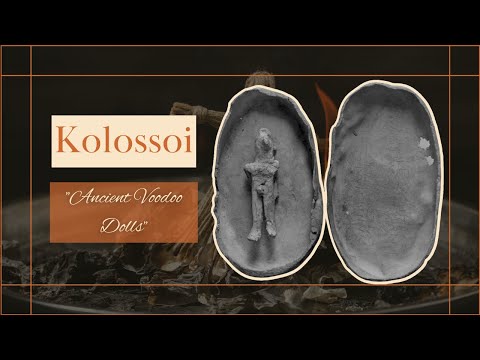
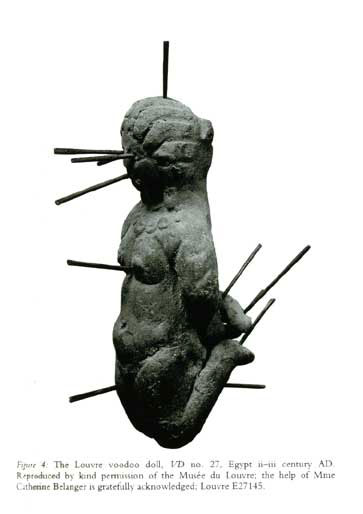
Witchcraft and the Manufacture of False Objects What is witchcraft? The question is usually answered too quickly. Modern people hear the word and picture stage-fog: candles, dolls, muttered formulas, village superstition, broomsticks, hocus-pocus, frightened peasants, and old women blamed for spoiled milk or failed crops. The reflex is dismissal. Witchcraft becomes a synonym for irrational fear, and the past becomes a place populated by fools. But that reflex is too shallow. It mistakes the outer costume for the underlying technology. The serious answer begins here: witchcraft is an operation on the boundary between psyche, symbol, body, and world. It is the attempt to create an operative substitute-object — a name, image, doll, curse tablet, accusation, narrative, diagnosis, label, or social designation — and then compel perception and behavior to organize around that substitute as if it were the real thing. Witchcraft is not merely “belief in magic.” It is the weaponization of symbolic substitution. This is why the old material matters. It is not necessary to accept every historical witchcraft accusation as true in order to recognize that the old world was studying a real danger: the power of false objects to seize the mind and then feed back into reality. Ronald Hutton notes that a standard anthropological definition of a witch was “somebody who causes harm to others by mystical means,” and that historians of early modern witch trials usually use “witch” to mean an alleged practitioner of harmful magic. He also shows that in Tudor and Stuart England, “witchcraft” in legal records commonly meant destructive magic, while calling someone a witch functioned as a dangerous accusation rather than a neutral description. That gives the first layer: witchcraft is hidden harm. But the deeper question is how the harm is imagined to work. The answer is substitution. James Frazer’s old theory of sympathetic magic is dated in some of its anthropology, but the mechanism he isolates remains essential: magic often works through the “law of similarity” and the “law of contact.” Similarity says that like acts upon like; contact says that things once joined remain linked across distance. Frazer’s own formulation is brutally relevant: the magician assumes that whatever he does to a material object will affect the person with whom that object was once connected. ([Project Gutenberg][1]) This is the grammar of the false object. The wax figure is not the person, but it is treated as the person. The name is not the body, but it is treated as a handle on the body. The hair, nail, footprint, blood, garment, image, signature, or private message is not the whole being, but it is treated as a tether to the whole being. Witchcraft begins when the symbolic layer is forced to impersonate the ontological layer. Ancient curse tablets make this visible in physical form. Greg Woolf describes curse tablets as a long-lived Mediterranean “technology,” not merely as texts but as objects with affordances, agencies, ritual contexts, and social uses. They were typically small inscribed objects, often metal, designed to bind, restrict, compel, punish, or control another human being; they were deposited in graves, springs, fires, temples, or other charged locations as durable remains of ritual action. ([Cambridge University Press & Assessment][2]) The point is not only that someone wrote hostile words. The point is that the tablet became a manufactured object of causality: a reduced artificial world in which the target was already captured, named, folded, buried, handed over, or constrained. Plato understood the psychic side of this. In Laws 933, he distinguishes ordinary bodily poisoning from another category involving sorceries, incantations, and spells. He says such practices persuade both the would-be attacker and the victim that injury is really being done; he then mentions molded wax images placed at doorways, crossroads, and tombs, and says it is not easy to know the truth or persuade others once suspicion has seized the soul. ([ToposText][3]) That is an ancient description of a feedback loop. The object is outside the body, but the terror of the object enters the interpretive system. Once the target believes an invisible hostile form has been installed, sensation, expectation, fear, memory, attention, and social interpretation begin to reorganize around it. So witchcraft is not just “a spell.” It is a model implanted under charge. The spell is the total apparatus: object, name, fear, ritual, secrecy, authority, timing, witness, rumor, and expectation. The victim is no longer living in neutral reality. He is living inside a charged predictive environment where ambiguous events begin to point back toward the installed object. Modern cognition gives a colder vocabulary for the same structure. In predictive-processing terms, the mind is not a passive mirror of the world; it is constantly generating models, predictions, and error-corrections. Karl Friston’s free-energy account treats perception, action, and learning as processes that optimize predictions and reduce prediction error. ([Nature][4]) Witchcraft, in this cybernetic sense, is a hostile intervention into the model-building layer. It attempts to install a high-precision false prior: this person is cursed, this person is guilty, this event proves contamination, this symbol means doom, this label reveals essence. Once installed, the prior begins consuming evidence. Contradiction does not necessarily dissolve it. In a captured system, contradiction can be reinterpreted as concealment, denial, suppression, or deeper proof. That is the mismatch between becoming and being. Being is the actual thing: the living person, the actual event, the real causal structure, the true lineage, the body, the deed, the order of reality. Becoming is the layer where signs, models, accusations, possibilities, potentials, fears, and interpretations are still forming. In a healthy system, becoming remains answerable to being. Models update when the real pushes back. In witchcraft, becoming revolts against being. The constructed image is protected from correction and then imposed downward onto the real. This is where the old “castle in the sky” image becomes exact. A false object can have structure, ornament, guards, seals, rituals, maps, experts, witnesses, documents, and ceremonies, while still lacking a tether to reality. It can be socially operative without being ontologically true. It can have effects without having a living core. Sociology has already described parts of this mechanism. Berger and Luckmann’s account of social reality turns on externalization, objectivation, and internalization: human beings produce social meanings, those meanings harden into object-like realities, and then people internalize them as the world. ([amstudugm][5]) Merton’s self-fulfilling prophecy gives the dangerous version: a false definition of a situation evokes behavior that makes the originally false conception come true. ([Psychology Today][6]) Speech-act theory adds another layer. Austin showed that some utterances do not merely describe reality; under the right conditions, they perform acts. “I name,” “I promise,” “I accuse,” “I pronounce,” “I certify,” “I condemn” — these are not just reports. They are operations. ([Internet Archive][7]) Searle’s social ontology then shows how institutional facts are produced by status-functions and collective recognition; status-functions create deontic powers, meaning obligations, authorizations, rights, duties, and prohibitions that people must then navigate. ([Sage Journals][8]) That is the modern machinery of false-object production. A label can become a curse tablet. A dossier can become an effigy. A headline can become an incantation. An institutional designation can become a binding charm. A rumor can become a haunting. An accusation can become a surrogate body placed between the public and the person accused. Once that surrogate body exists, people stop encountering the real being directly. They encounter the constructed double. This is why witchcraft is best understood as misbinding. It binds the wrong layer to the wrong object. It makes the symbol claim authority over the being. It makes the map devour the territory. It makes the model overrule the world. It takes what should be a tentative interpretation and hardens it into an operative idol. Medieval demonology recognized this as pact and illegitimate mediation. The Malleus Maleficarum is not a neutral guide to what accused people actually did; it is a witch-hunting demonological text. But it is useful because it shows how late medieval Europe imagined the mechanism: witchcraft required the devil, the witch, and divine permission, and it framed witchcraft around pact, oath, inversion, hidden agency, and harmful works. ([University of Oregon][9]) In that system, the witch is not merely a person with powers. The witch is a node through which an illegitimate invisible agency enters the world. Structurally, this is the same concern: an unlawful channel is opened, a substitute authority is invoked, and reality is attacked through a hidden mediation. Now the contrast with the real mystery becomes critical. A true mystery is not a false object. It is not a castle in the sky. It is not a symbolic shell pretending to have a center. A true mystery is a living transmission-object: something that cannot be reduced to a flat proposition because its reality includes the conditions by which it is received, sealed, carried, and unfolded. The Letter of Isis to Horus is crucial here. Michèle Mertens describes it as an alchemical initiation scene in which the secret preparation of gold and silver is presented as the fruit of revelation. She identifies the initiatory themes directly: revelation, oath, law of silence, and transmission of the secret only to the son, with connections to the Corpus Hermeticum, astrology, Gnosis, and especially the Greek magical papyri. Fabiana Lopes da Silveira’s Oxford thesis pushes the point further: early alchemical writings are not merely technical recipes; they are literary and ritualized experiments that mix spiritual, magical, philosophical, and technical motifs so that the text itself becomes a kind of laboratory, drawing the reader into the search for hidden knowledge. That is the living pattern. The mystery is not dumped into the world as bare information. It comes through order: desire, threshold, recognition, revelation, oath, silence, lineage, instruction. It has a protocol. It has a carrier. It has a lawful crossing. It has a way of reproducing itself without becoming mere public chatter. The Kore Kosmou gives the cosmic version of the same structure. The text places heaven above nature, greater mysteries over lesser, and celestial order over terrestrial order. Hermes sees, understands, manifests, writes, conceals, and transmits through successors; sacred books are hidden until worthy souls appear; nature is commanded into being; forms are differentiated and filled with mysteries; subtle substance is formed into self-consciousness and souls through order and measure. This is not the logic of arbitrary fantasy. It is the logic of tethered becoming: higher order descends into manifestation through measure, hierarchy, concealment, worthiness, and transmission. That is why the difference between the real thing and the fake thing matters. The true mystery has an interior source. The false object has only exterior maintenance. The true mystery generates practice from a living center. The false object requires endless amplification because it cannot self-generate. The true mystery transforms the receiver. The false object occupies the receiver. The true mystery deepens under pressure. The false object fragments under scrutiny, unless new layers of fear, secrecy, taboo, and institutional force are added to protect it. This is also why counterfeit systems imitate mystery. They copy secrecy, but not depth. They copy revelation, but not truth. They copy oath, but not covenant. They copy ritual, but not transformation. They copy tokens, but not recognition. They copy authority, but not legitimacy. They copy transmission, but not lineage. They copy symbolic charge, but not being. The old curse tablet and the modern narrative operation therefore belong to the same structural family. Both create a substitute object. Both bind a name to an artificial form. Both charge the form with fear or desire. Both seek hidden enforcement. Both depend on repetition, concealment, and belief. Both try to make the living target answer to a manufactured double. The serious definition is this: Witchcraft is the coercive animation of a substitute-object in the symbolic-psychic layer, sustained by ritual, fear, repetition, authority, or feedback until perception and behavior begin to conform to it despite its lack of living tether to reality. That is why the modern dismissal of witchcraft is dangerous. The danger was never only that someone might light a candle and mutter over wax. The danger is that human beings can be made to live under false objects. They can be made to fear an image more than they trust their senses. They can be made to treat accusation as essence, status as truth, repetition as proof, and symbolic construction as reality. They can be captured by a model that does not arise from being but nevertheless governs becoming. Our ancestors were not necessarily stupid for fearing witchcraft. They were often trying, in the language available to them, to describe the terrifying fact that symbols can be weaponized, doubles can be animated, and false objects can be installed between the soul and the real. The stupidity would be to think that this stopped when the costumes changed. [1]: gutenberg.org/files/3623/362… "The Golden Bough | Project Gutenberg" [2]: cambridge.org/core/journals/… "CURSE TABLETS: THE HISTORY OF A TECHNOLOGY | Greece & Rome | Cambridge Core" [3]: topostext.org/work/484 "Work - ToposText" [4]: nature.com/articles/nrn27… "The free-energy principle: a unified brain theory?" [5]: amstudugm.wordpress.com/wp-content/upl… "The Social Construction of Reality" [6]: psychologytoday.com/za/blog/being-… "Beware of Your Self-Fulfilling Prophecy" [7]: archive.org/download/austi… "jl austin - how to do things with words" [8]: journals.sagepub.com/doi/10.1177/14… "Social ontology - John R. Searle, 2006" [9]: pages.uoregon.edu/dluebke/Witche… "Malleus Maleficarum" ----- In the ancient Greco-Roman world, wax dolls used for witchcraft were known as kolossoi (singular: kolossos). These figures functioned as magical "stand-ins" for the target of a spell, operating on the principle of sympathetic magic—the belief that actions performed on the doll would physically or emotionally affect the person it represented. [1, 2, 3] Key Characteristics and Uses - Materials: While wax was common, these dolls were also fashioned from lead, clay, bronze, or even molded around human bones. - Ritual Binding: Dolls were often found bound, twisted into violent positions, or pierced with bronze pins (frequently 13) to "bind" the target's will. - Defixiones (Curse Tablets): They were frequently discovered inside ceramic jars alongside [lead curse tablets](namuseum.gr/en/monthly_art…) (defixiones) that inscribed the specific ritual command. - Love Spells (Agōgē): Though they look like malevolent hexes, many—such as the famous [Louvre Doll](facebook.com/groups/archeol…)—were actually used for erotic binding spells meant to compel a target to love or desire the practitioner. - Deposition: Practitioners typically buried these dolls in graves, sanctuaries, or bodies of water to facilitate contact with underworld spirits or chthonic deities. [4, 5, 6, 7, 8, 9, 10, 11] Famous Examples - The Louvre Doll: A 4th-century figure found in Egypt, pierced with 13 pins and accompanied by a lead tablet containing a sadistic love spell by a man named Sarapammon targeting a woman named Ptolemais. - Anna Perenna Dolls: A set of unique wax dolls found at the fountain of Anna Perenna in Rome, notably molded around animal bones for ritual significance. - The Cyrene Ritual: One of the earliest Greek references (c. 630 B.C.) involved melting and burning wax dolls to finalize a binding oath during the founding of the colony of Cyrene. [6, 8, 12, 13, 14, 15] [1] [deliriumsrealm.com](deliriumsrealm.com/voodoo-dolls/) [2] [youtube.com](youtube.com/watch?v=VoPCGZ…) [3] [mythcrafts.com](mythcrafts.com/2017/07/27/gre…) [4] [anthropology-news.org](anthropology-news.org/articles/magic…) [5] [deliriumsrealm.com](deliriumsrealm.com/voodoo-dolls/) [6] [academia.edu](academia.edu/38558213/Bones…) [7] [cambridge.org](cambridge.org/core/journals/…) [8] [facebook.com](facebook.com/10005716145139…) [9] [namuseum.gr](namuseum.gr/en/monthly_art….) [10] [brentnongbri.com](brentnongbri.com/2023/01/07/a-c….) [11] [facebook.com](facebook.com/groups/1497793…) [12] [facebook.com](facebook.com/groups/6196177…) [13] [academia.edu](academia.edu/38558213/Bones…) [14] [mythcrafts.com](mythcrafts.com/2017/07/27/gre…) [15] [mythcrafts.com](mythcrafts.com/2017/07/27/gre…)
YouTube video
YouTube
Hyperdimensional Hegelian Chaos Giga Wizard™️ tweet media
Hyperdimensional Hegelian Chaos Giga Wizard™️@algxtradingx

What is witchcraft? Have you ever actually asked yourself that question? Most people dismiss it instantly as hocus-pocus, superstition, fairy-tale nonsense — proof, they think, that our ancestors were primitive fools trembling in the dark. But what if that assumption is the real stupidity? What if they were not morons at all? What if they were describing, in the symbolic language available to them, a real technology of influence: the manipulation of psyche, symbol, fear, desire, image, and belief in order to bend perception and behavior? If that is true, then modern people have not outgrown witchcraft. They have simply lost the vocabulary for recognizing it. And that loss does not make them enlightened. It makes them defenseless. Because the most dangerous kind of witchcraft is not the theatrical kind with candles, dolls, and costumes. It is the kind that installs false objects into the mind and into the world: artificial narratives, symbolic doubles, reputational effigies, cursed images, institutional labels, and reality-frames that do not arise from truth but are forced into circulation until people begin acting as if they are real. Our ancestors were not stupid for fearing that. We may be stupid for forgetting it. I am going to teach you what witchcraft is, and I’m going to teach you how to carry out witchcraft, black magic, and worse. You’ll need to understand this material in order to understand what happened the last 87 years in US/European history. —— So what is witchcraft? The academic baseline: witchcraft as harmful mystical causality Scholars do not define “witchcraft” in one universal way, because the term changes across cultures. In Greek and Roman contexts, “magic” can include curses, protections, divination, alchemy, and other non-normative ritual activities; whether something is labeled “magic” often depends on who is doing the labeling and under what social conditions. See here: #550528874" target="_blank" rel="nofollow noopener">academic.oup.com/edited-volume/… But the hard historical core of “witchcraft,” especially in European and anthropological usage, is harm by hidden or mystical means. Ronald Hutton summarizes the standard scholarly definition as someone believed to cause harm by mystical means; in early modern trial contexts, “witch” generally meant an alleged practitioner of harmful magic. See here: research-information.bris.ac.uk/ws/files/18144… So the first layer is: Witchcraft = malefic invisible causality. A hidden act is believed to bind, damage, distort, sicken, seduce, deceive, or constrain a target through non-obvious means.


English
1
3
5
218
Milder Multi
Milder Multi@MiltiMulder·
@punktpreradovic @BBarucker Woher hatte Müller Kenntnis von dem Missbrauch? Kohn musste ja zwangsweise zur psychiatrischen Begutachtung. Hat der ehemalige Dienstherr die Gesundheitsunterlagen weitergegeben? Das wäre ein echter Skandal.
Deutsch
0
0
0
28
Milder Multi retweetledi
Milena Preradovic
Milena Preradovic@punktpreradovic·
@BBarucker Müller verkörpert die ganze Bösartigkeit des Corona-Regimes...
Deutsch
25
59
757
4.4K
Milder Multi
Milder Multi@MiltiMulder·
@ChanasitJonas Woher wusste denn Herr Müller, was in dem psychiatrischen Gutachten steht, das der Dienstherr angeordnet hatte? Wie kommt ein CDU Abgeordneter an Kohns Gesundheitsunterlagen? Es geht hier um viel mehr, als nur schlechten Stil.
Deutsch
2
0
15
182
Milder Multi retweetledi
Jonas Schmidt-Chanasit
Jonas Schmidt-Chanasit@ChanasitJonas·
Es sei „gewiss nicht“ seine Absicht gewesen „Herrn Kohns Leiden zu instrumentalisieren,sondern sein Handeln im Jahr 2020 nachvollziehbarer zu machen“.👉 Wenn es nicht seine Absicht war, sollte er es auch nicht tun. Er sollte einfach um Verzeihung bitten.🙏 stern.de/gesellschaft/w…
Deutsch
118
116
720
9.7K
Milder Multi retweetledi
Boris Reitschuster
Boris Reitschuster@reitschuster·
Corona-Whistleblower Kohn sagte früh die Wahrheit — die Macht antwortet, indem sie versucht, ihn mit dem intimsten Trauma seiner Kindheit zu beschmutzen. CDU-Mann Axel Müller zeigt in der Enquete-Kommission ein Gesicht, das hinter keinem Wahlplakat Platz findet. reitschuster.de/post/cdu-mann-…
Deutsch
85
509
2.1K
18.1K
Milder Multi retweetledi
_horizont_
_horizont_@hori_____zont·
@tomdabassman Absolut skrupellos. Müllers Gesichtsausdruck, nachdem Stefan Homburg „Er macht einfach weiter“ sagte >>>
_horizont_ tweet media
Deutsch
23
70
673
7.6K
Milder Multi retweetledi
TheRealTom™ - Trusted Flagger
CDU-Abgeordneter Axel Müller (Ravensburg) löst durch eine schamlose Aktion in der Enquete-Kommission des Bundestages einen Skandal aus! Müller versucht den Sachverständigen Stephan Kohn, 2020 Referatsleiter für Krisenmanagement im Innenministerium, durch einen versteckten Hinweis auf dessen sexuellen Missbrauch in der Kindheit durch den Stiefvater in seiner Kompetenz zu beschädigen. Von geheucheltem Mitgefühl wechselt er ansatzlos zum unwürdigen persönlichen Angriff. Obwohl die Sitzungsleiterin eingreift, macht Müller einfach weiter.
Deutsch
403
1.3K
5K
299K
Milder Multi retweetledi
Apollo News
Apollo News@apollo_news_de·
Laut ifo-Institut wurde fast das ganze Sondervermögen Infrastruktur zweckentfremdet. Dagegen wehrt sich nun das Bundesfinanzministerium in der FAZ – und kündigt eine Gegenstudie an. Die Extra-Schulden hätten geholfen, „Konsolidierungszwänge zu reduzieren“. apollo-news.net/zweckentfremdu…
Deutsch
84
195
591
21K
Milder Multi retweetledi
freigeist
freigeist@frei_geist_·
Die Diskrepanz von 45.069 Stimmen bei der #Sachsenwahl 2024 ist nun seit mehr als achtzehn Monaten ungeklärt - und wird es wohl bleiben. Die seltsamen Sprünge der Auszählungsergebnisse unter wahlen.sachsen.de in der Wahlnacht sind vielen von euch aufgefallen.
freigeist tweet media
Deutsch
10
76
225
8.2K
Milder Multi retweetledi
Maik Pittel
Maik Pittel@maikpi70·
‼️Horst Seehofer (CSU) – 15.10.2015 - Regierungserklärung‼️ Zitat: Es gilt zur Zeit keine Ordnung — es gilt kein Vertrag — es gilt kein Gesetz
Deutsch
3
10
17
504
Milder Multi retweetledi
Die ganze Geschichte
Die ganze Geschichte@GanzeGeschichte·
Weitermachen? Fördern: paypal.me/dieganzegeschi… Kommunismus 1986: Der Westdeutsche Johann Dick wandert entlang der deutsch-tschechoslowakischen Grenze. Auf einmal stehen dem 59-jährigen Touristen tschechoslowakische Grenzer gegenüber, die ihn erschießen. Diese hatten den Westdeutschen irrtümlich für einen polnischen Flüchtling gehalten. Erst als sie seinen westdeutschen Pass entdecken, bemerken die Grenzer, dass sie selbst sich 200 Meter tief auf westdeutschem Gebiet befanden. Sie schleppen den Getroffenen auf tschechoslowakisches Gebiet, wo er stirbt. oberpfalzecho.de/politik/cssr-g…
Die ganze Geschichte tweet media
Deutsch
16
70
439
13.3K