This is one of the most shameless displays of financial gaslighting I've seen in 45 YEARS.
This week Blue Owl Capital disclosed that investors demanded 41% of their money back from one fund and 22% from another.
$5.4 BILLION in total redemption requests in a single quarter.
Blue Owl's response? They capped withdrawals at 5%.
Meaning if you had $1 million in Blue Owl's tech fund, you asked for $410,000 back, and they gave you $50,000.
Then they put out a LinkedIn post blaming "heightened negative sentiment" and insisting their fund performance is "robust."
That's like a restaurant blaming Yelp reviews while the kitchen is on fire.
Here's what they don't want you to focus on:
70% of Blue Owl's lending book is concentrated in software companies. They admitted this on their own earnings call.
These are the exact businesses most at risk of being disrupted or destroyed by AI.
And when the Wall Street Journal investigated further, they found Blue Owl's flagship fund reported 11.6% software exposure in public filings. The Journal's own analysis found it was actually closer to 21%.
That's not just a rounding error...
The timeline tells you everything:
In February, Blue Owl sold $1.4 billion in loans to meet redemptions. They claimed 99.7 cents on the dollar.
Sounds great right?
Except one of the buyers was Kuvare - an insurance company whose asset management arm Blue Owl ACQUIRED for $750 million in 2024. Blue Owl manages their money.
They sold assets to a company they control and called it an arm's length transaction.
Barclays downgraded the stock. Shareholders filed a lawsuit. Congress is now demanding disclosures on sales practices, leverage, and risk management.
The stock hit a record low of $7.95 - down over 60% from its 52 week high.
And through all of this, Blue Owl's CEO went on the earnings call and said: "We don't have red flags. We don't have yellow flags. We actually have largely green flags."
$5.4 billion in redemption requests. 60% stock decline. Gated exits. Congressional scrutiny.
All green flags, apparently.
I've been warning about private credit for months.
The sales pitch was always the same: equity-like returns with bond-like stability. No volatility. No correlation to public markets. Safe. Predictable.
Except when investors actually want their money, they discover the exits are bolted shut.
You can't eliminate volatility. You can only HIDE it.
And that's exactly what Blue Owl has been doing - hiding risk behind opaque valuations, related-party transactions, and withdrawal gates.
This isn't "negative sentiment."
This is what happens when the tide goes out.
Are you listening?
In 2026, Claude is my operating system.
After 300+ hrs, I built the full blueprint:
→ Claude Projects + Code + Cowork
→ n8n MCP + SEO MCPs
→ Opus 4.6 + Skills Blueprint
Agencies charge $5K–$10K for this.
Free for you.
If you want it:
Like + comment “Claude”
I’ll DM you.
@Bogachan_1971 So if the number of ‘coin’ is controlled and limited, how can both sides of this even happen with out verification? Some form of interposed exchange structure ‘linked’ to bitcoin?
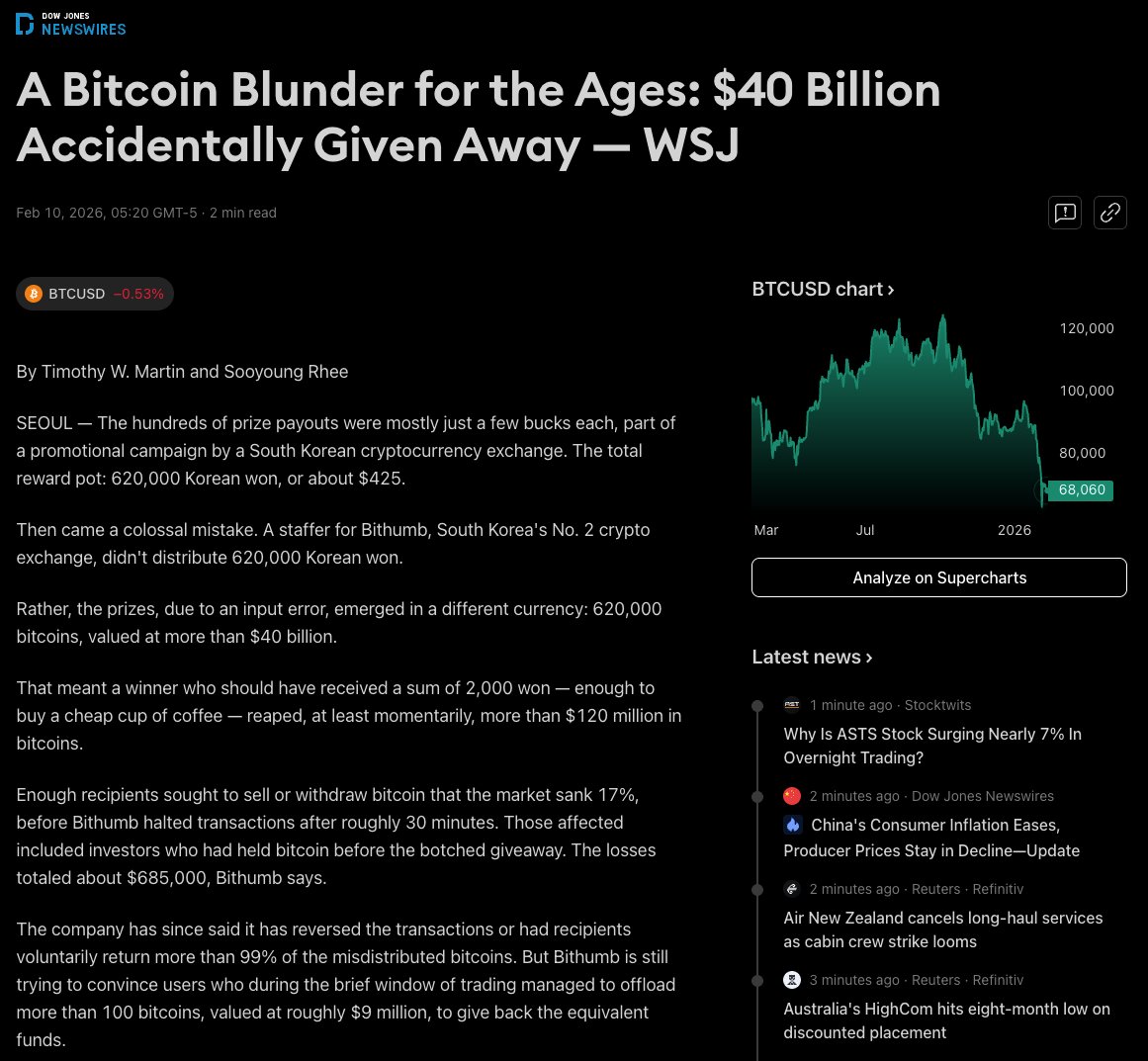
A Bithumb staffer in Korea distributes 620,000 #Bitcoins instead of 620,000 KRW and that is the reason why $BTC sank 17%.....
620K BTC is worth $40 billion... how does a staffer have access to sell that? Then story gets even more interesting... Bithumb loses only $685,000 after distributing 620,000 Bitcoins ... because it gets back 99% of those Bitcoins and only 100 BTC was offloaded.... so how come BTC went down 17%? 100 BTC is worth around $7 million now, how come loss is less than $700k?
This story is printed by #wsj.... 🤡🤡🤡
tradingview.com/news/DJN_DN202…
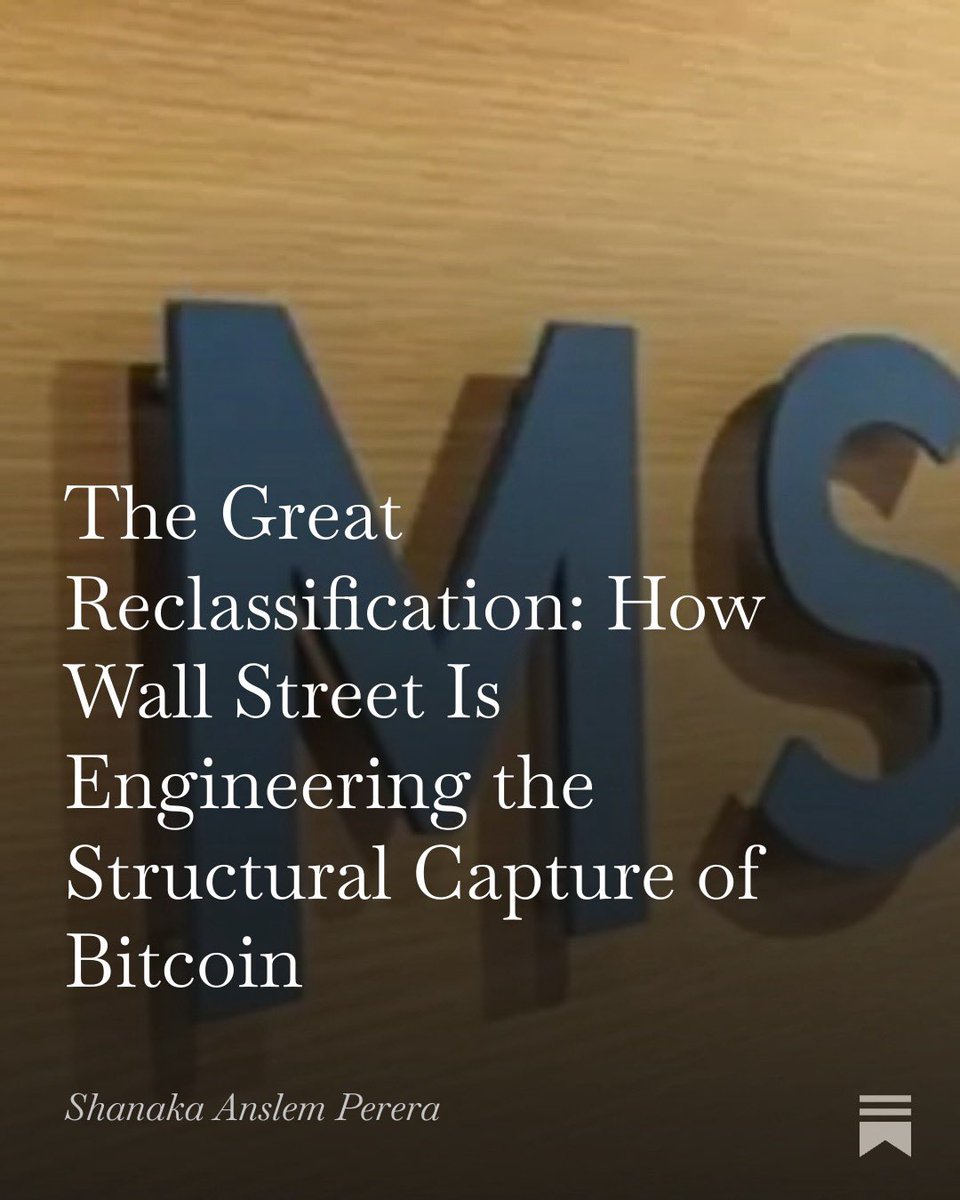
Wall Street is about to ban corporations from holding Bitcoin.
Not through Congress. Not through the SEC. Through an index rule.
On January 15, 2026, MSCI (Morgan Stanley Capital International) will decide whether companies holding more than 50% of their assets in crypto can remain in global stock indices.
Fail the test, and you are cut off from $15 trillion in passive investment capital. Permanently.
Here is what they are not telling you.
This affects 142 companies worldwide. They hold $137.3 billion in digital assets. Together, they own 5% of all Bitcoin that will ever exist.
The hit list includes Strategy, Marathon, Riot, Metaplanet, and American Bitcoin, which is 20% owned by the US President’s sons.
Now look at what happened this year.
May: Short sellers attacked the model.
July: JPMorgan raised margin requirements to 95%.
September: The S&P 500 rejected Strategy despite it qualifying.
November: JPMorgan warned of $8.8 billion in forced selling.
December: JPMorgan launched its own Bitcoin products to absorb the money.
The same banks calling this a risk are building the replacement.
This is the largest structural attack on corporate Bitcoin ownership ever attempted. Companies can borrow forever. But they cannot save in hard money. They can hold dollars that lose value. But not Bitcoin that gains it.
If this passes, every CEO considering a Bitcoin treasury will abandon the idea. The model dies. Capital flows back to Wall Street through ETFs and bank products.
The decision is 47 days away.
Read the full investigation. Link in bio.
open.substack.com/pub/shanakaans…