𝐌𝐢𝐭𝐜𝐡 𝐇𝐨𝐫𝐨𝐰𝐢𝐭𝐳

24.9K posts

𝐌𝐢𝐭𝐜𝐡 𝐇𝐨𝐫𝐨𝐰𝐢𝐭𝐳 banner
𝐌𝐢𝐭𝐜𝐡 𝐇𝐨𝐫𝐨𝐰𝐢𝐭𝐳

𝐌𝐢𝐭𝐜𝐡 𝐇𝐨𝐫𝐨𝐰𝐢𝐭𝐳

@MitchHorowitz

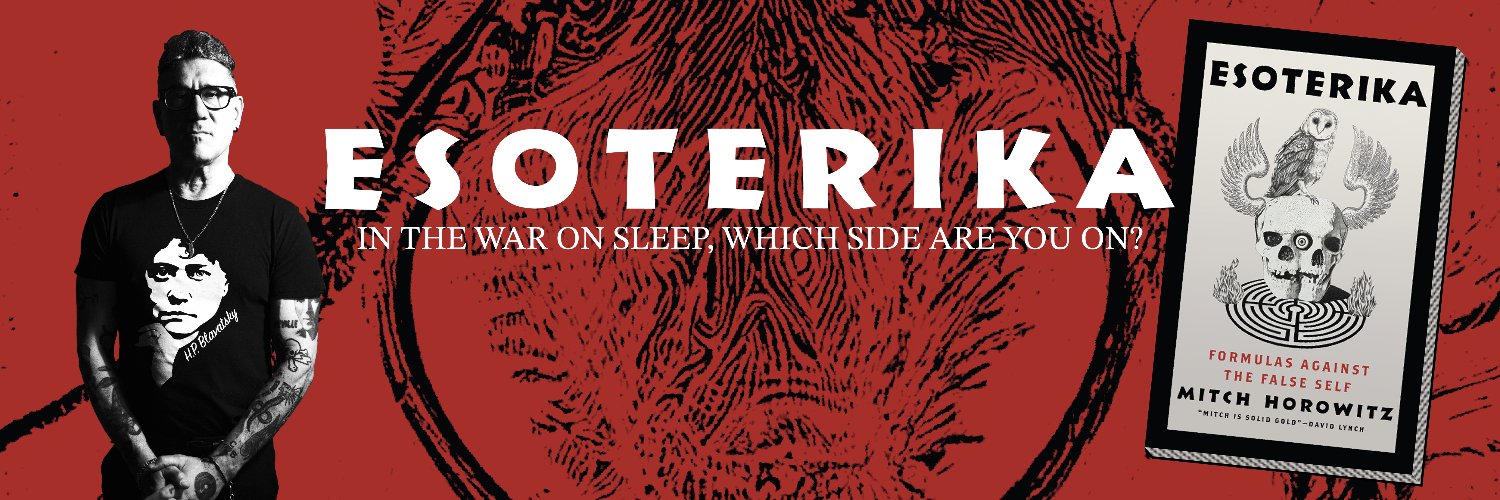
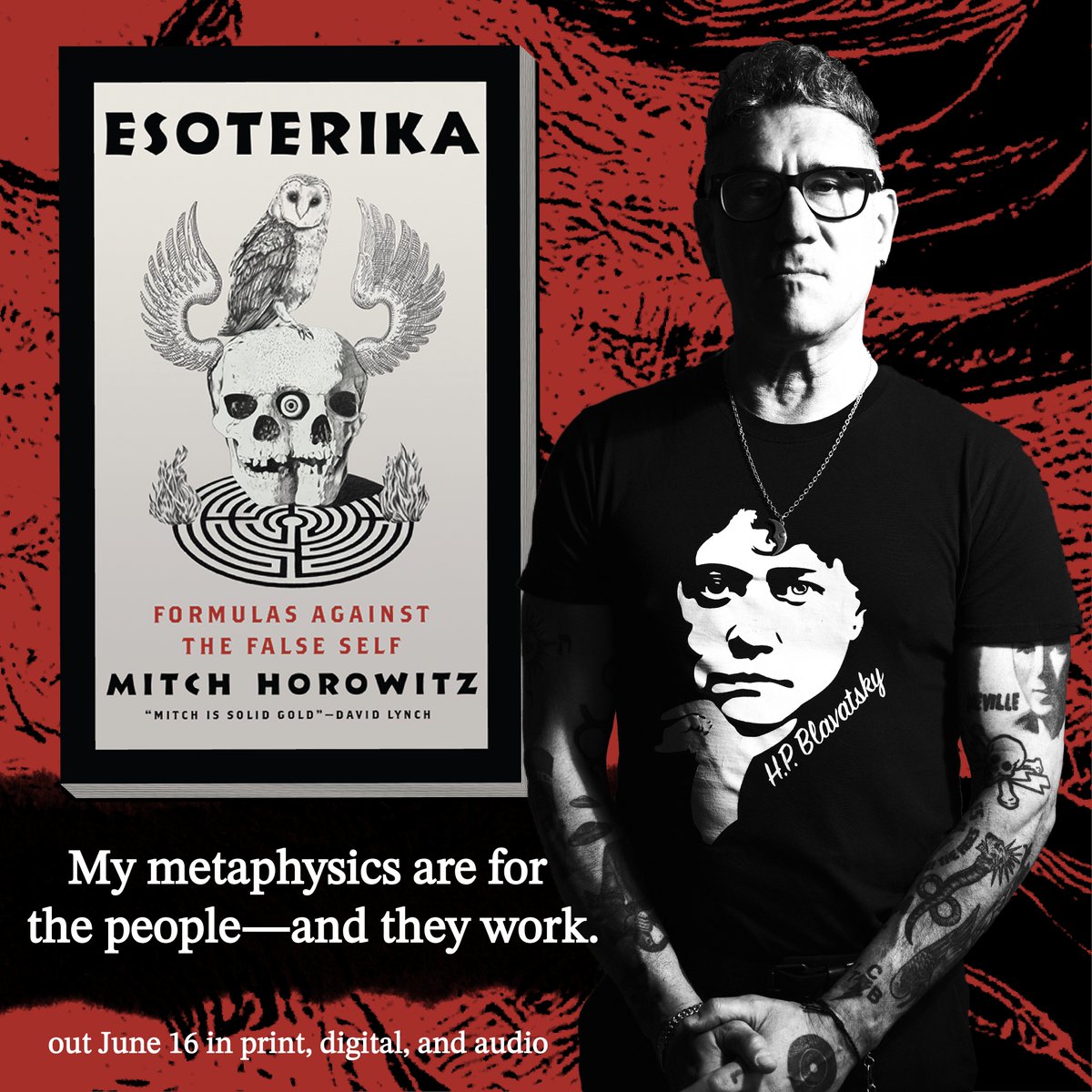
Esoterika | "Mitch is solid gold"—David Lynch

🚫 suede-denim secret police Katılım Mayıs 2013
1.3K Takip Edilen22.2K Takipçiler
𝐌𝐢𝐭𝐜𝐡 𝐇𝐨𝐫𝐨𝐰𝐢𝐭𝐳
For those interested in Western astrology, Mercury, retrograde in Pisces / Aquarius since Feb 26, stations direct tomorrow (Friday) at 3:33 pm ET in Aquarius. This has been a cycle of inner doubt. That will reverse with a rush of energy and clarity Friday afternoon. Chin up.
English
2
3
30
473
𝐌𝐢𝐭𝐜𝐡 𝐇𝐨𝐫𝐨𝐰𝐢𝐭𝐳
Our religious approaches to anger are narrowly understood—and, hence, narrowly useful. We lack perspective on this vexing, perennial issue. The rabbinic tractate Pirkei Avot or Ethics of the Fathers (4:1), a classical compendium of ethical teachings, reads (in my adaptation): "Who is mighty? He who controls his passions. Who is greater than mighty? He who controls his anger. He who controls his anger is greater than he who takes a city." This outlook more or less echoes Abrahamic, Vedic, and Confucian traditions, as they commonly and dominantly reach us. It is not all there is. History records counter perspectives. In the Vedic guide to civil conduct, Arthashastra (earliest form 4th century B.C.), the semi-legendary sage Bháradvája, who lived before recorded time, is attributed with a dissenting statement about the destructiveness of anger: "No, says Bháradvája, anger is the characteristic of a righteous man. It is the foundation of bravery; it puts an end to despicable (persons); and it keeps the people under fear. Anger is always a necessary quality for the prevention of sin." (1915 translation by R. Shamasastry) We are left, then, not with a contradiction—but a tension. David Lynch told me in a 2016 interview: “This thing of righteous anger is fine, you can be against something, really truly against something, and fight for something you believe in. You’ll have more energy to do that. You’ll have more power, more edge to really get in and get the thing the way you want it.” He said this in reference to Transcendental Meditation, a practice I share. Do not rush heterodox ideas into hasty application. Do not embrace them without context. Even Bháradvája’s brief statement contains several folds. But I wish to note: the path is yours. It does not belong to decisions made by someone else. This applies to anger as much as to any other question facing the seeker . . . mitchhorowitz.substack.com/p/anger
𝐌𝐢𝐭𝐜𝐡 𝐇𝐨𝐫𝐨𝐰𝐢𝐭𝐳 tweet media
English
0
2
10
525
𝐌𝐢𝐭𝐜𝐡 𝐇𝐨𝐫𝐨𝐰𝐢𝐭𝐳
The spiritual search is a riddle. It is a journey in search of a land we cannot identify. The very difficulty of the search is that it is intimate in practice—but undefined in aim. The aim is described—sometimes—by people assumed to have attained it. But—I do not know this. Neither do you. Teachers are usually known to us historically not practically. Many times, I cannot recognize another person’s state. People extol teachers because they mistake sycophancy for apostlehood. So, why do we search? In this article I provide several principles—and pitfalls to avoid—that deepen this question. There exists a belief, I think warranted, that life is more than appetite. As such, there exists a greater life. Some “gold star” pupils call it transcendence of appetite or related concepts. Maybe—maybe—the destination is fulfillment of appetite. That should be sufficient to make divines stop reading. I want us to be very careful about saying what the search is and is not. I do not care what someone wrote somewhere, whatever its vintage. Such an approach invites lines of demarcation that may appear starker than they really are. I recently watched a documentary about the strange life of actor Corey Feldman. In between odd musical performances, Feldman greets fans. There is palpable affection. During a Q&A following the film, it was remarked how sad it is that a life bereft of love—Feldman suffered as a child—stands on the empty compensation of nostalgic adoration. I am not so sure . . . open.substack.com/pub/mitchhorow…
𝐌𝐢𝐭𝐜𝐡 𝐇𝐨𝐫𝐨𝐰𝐢𝐭𝐳 tweet media
English
2
3
15
711
𝐌𝐢𝐭𝐜𝐡 𝐇𝐨𝐫𝐨𝐰𝐢𝐭𝐳
I am proposing a month-long experiment—and I am engaging in it with you. Reduce your output—e.g., commitments, posting, relationships, talking—and your consumption—e.g., food, purchases, energy use, gambling, booze—by twenty percent. See what occurs. If a tiny number of us do this, I reckon that self and surroundings will improve. By improve, I mean: greater happiness, health, power, and reason. You will think better. You will be more appealing. You will be stronger. I am not interested in “more” of anything, including the supposed good things, like reading and community (I dislike that mauve term). Even exercise, although I encourage it. In this case, I am interested in less—approached in a fixed and doable fashion. The supposed more—should any be needed—will naturally fill the gap. I have no idea what it will be. That is not our concern. Our concern is the victory that reduction necessitates. Falsity abounds in excess . . . mitchhorowitz.substack.com/p/twenty-perce…
𝐌𝐢𝐭𝐜𝐡 𝐇𝐨𝐫𝐨𝐰𝐢𝐭𝐳 tweet media
English
4
7
40
1.1K
𝐌𝐢𝐭𝐜𝐡 𝐇𝐨𝐫𝐨𝐰𝐢𝐭𝐳 retweetledi
The SPR Psi Encyclopedia
The SPR Psi Encyclopedia@psiencyclopedia·
The Irish poet WB Yeats  (1865–1939) held a lifelong interest in mysticism, theosophy and spiritualism, and pursued activities in mediumship and psychical research. SPR Psi Encyclopedia: psi-encyclopedia.spr.ac.uk/articles/wb-ye…
English
1
2
9
723
𝐌𝐢𝐭𝐜𝐡 𝐇𝐨𝐫𝐨𝐰𝐢𝐭𝐳
I have no macro solutions to our present crises. You will not find them in me or my work. But I have intimate solutions for any who want them. They are more dangerous. What I prescribe represents true rebellion to our coarse and mean era. The word mean in Middle English denotes inferior and small. Do not tell me about your positions or your trophies of self. Pull the plug on the hate machine. If you cannot—if I cannot—I have nothing to offer another. I possess no self. Here I propose three principles. If they appeal to you, act on them—and do not look back. Each will make you stand taller. Try what I suggest for one hour. See what occurs. Is your life worth an hour? The three are: 1. Get away from cruel people. 2. Greet trash with silence. 3. Do not humiliate people. We as a society do not talk enough about the problem of intimate human cruelty. When you are insulted, the reason you cannot think of a rejoinder is not because you are mentally slow or that you need a book that tells you how to deal with assholes. It is because emotions move faster than thought. The last thing that ever occurs to us is severing ties with cruel people. And burning your bridges behind you. I think it is wonderful to be nobly alone. I think loneliness has a terrible rap. I think it is far superior to be nobly alone than to settle for debased company. You do not have to participate in anything. You can already feel the power in that. There is absolutely nothing wrong with refusing to go to whatever holiday you celebrate, if those things are sources of pain to you. Just like that . . . mitchhorowitz.substack.com/p/whatever-thi…
𝐌𝐢𝐭𝐜𝐡 𝐇𝐨𝐫𝐨𝐰𝐢𝐭𝐳 tweet media
English
5
7
49
1.2K
𝐌𝐢𝐭𝐜𝐡 𝐇𝐨𝐫𝐨𝐰𝐢𝐭𝐳
"Opposition is true Friendship," wrote poet-mystic William Blake in 1793 in The Marriage of Heaven and Hell. But—only worthy opposition. In that vein, I terribly miss the influence of historian and philosopher Christopher Lasch (1932–1994), with whom this article opens and ends. Lasch was one of the most trenchant and formidable critics of New Age and alternative spirituality—woo-woo in popular epithet—as he was of many facets of what he considered America’s cultural decline. He foresaw our current political crackup and pierced the hypocrisy and self-inflation of selfish spiritualities and philosophies, including some to which I ascribe. Lesser critics argue taste and call it reason. Lasch argued values—and arrived at reason. Let me define terms. I consider New Age a radically ecumenical culture of therapeutic spirituality. Its modus operandi is positive-mind metaphysics or, more commonly, Law of Attraction-manifesting—my term is selecting—concepts I both interrogate and fitfully support. In this article I try to fairly represent Lasch’s critique—for its excellence—and offer my counter-reckoning of the legitimacy of New Age and positive-mind metaphysics. Lasch saw New Age spirituality as narcissistic escape. I believe the matter turns on a different question: whether life consists of limits—or self-expression. This is one of the most searching essays I have written on the philosophical basis of modern metaphysics. It is demanding and long. It is not for everyone. It is also free. If you take seriously what ideas we live by—and why—you are in the right place. Those who possess a particular thought style will find profit here. It is: looking twice at what we are educated to dismiss. -M- mitchhorowitz.substack.com/p/the-case-for…
𝐌𝐢𝐭𝐜𝐡 𝐇𝐨𝐫𝐨𝐰𝐢𝐭𝐳 tweet media
English
4
5
27
1.3K
𝐌𝐢𝐭𝐜𝐡 𝐇𝐨𝐫𝐨𝐰𝐢𝐭𝐳 retweetledi
59 Coupe
59 Coupe@Arfanthalus·
@MitchHorowitz Everyone should thank you for this post! For me it began when I noticed the beauty and skill of a particular bronze sculpture. I wondered, how can someone do that? That led to studying and practice which led to glass casting (as seen in my profile photo.) Now, "I can do that"
English
0
1
4
497
𝐌𝐢𝐭𝐜𝐡 𝐇𝐨𝐫𝐨𝐰𝐢𝐭𝐳
Experience has taught me that no single factor under fitful human control proves of greater consequence than one passionately felt and clearly formed aim. Here is a powerful, simple exercise which may make all the difference in helping you identify your true and practical purpose. I hear from many people who say they have difficulty finding one overarching aim. Some write that they feel divided among several aims, or they worry that their aim is not financially feasible, or they lack the training. These are valid concerns. But: an aim, in nascence, must not be bound to resources—or nothing would ever get pursued. Training, while limited by myriad factors, can often be cultivated and drilled at. I did not publish my first book until age forty-three. I did not appear on television until forty-one. I did not deliver my first public talk until forty. I already had kids and a demanding corporate publishing job with zero parental money. I am not exceptional—just goddamn hungry. I urge: begin from the idea. The idea must be focused. Diffusion depletes energy—that is a natural law as much as a psychical one. Answers can be a long time coming. When they come, they are usually simple. So much so that they can slip past us. Do not let them. Watch for emotionally pitched and focused moments when you see someone doing something remarkable, at the peak of his or her abilities—and from a place deep within you think: “I can do that.” Such a moment is usually a unifying instant of physical, mental, and emotional awareness and stillness. All other stimuli fleetingly fade as soft background noise. Many artists, speakers, writers, and exemplary people mark their start from when they witnessed someone performing or expressing with prowess or production, and they seriously and maturely told themselves: “I can do that.” Like a conversion experience or moment of clarity, the episode brought purpose—and objectively altered their life. To illustrate this, I offer four portraits. They may surprise you. In them, you may discover yourself . . . mitchhorowitz.substack.com/p/i-can-do-that
𝐌𝐢𝐭𝐜𝐡 𝐇𝐨𝐫𝐨𝐰𝐢𝐭𝐳 tweet media
English
3
7
26
1.1K
𝐌𝐢𝐭𝐜𝐡 𝐇𝐨𝐫𝐨𝐰𝐢𝐭𝐳
This important and serpentine story—a neglected chapter in occult history—is now free. ______________ There exist two interweaving currents of history: transcendent and forensic. Most scholarly historians neglect the former, overlooking if not devaluing experience and its esoteric expression, which can be state-based. In a mirror-reversal, many seekers neglect the latter, which requires comparative understanding, primary sourcing, and records. As a “believing historian,” I attempt to unite these strands. In that framing, here is a hard-won exegesis of a truly opaque but compelling thread of alternative history. It integrates both currents—and opens a new window through which to view the occult revival of the late-nineteenth century, whose aftereffects impact us today. -M- *** No rendering of modern occult history is complete without considering what has come to be called the “hidden-hand” theory. The backstory of this drama is so serpentine that it nearly defies summation, which is part of its charm—and intrigue. The other part of the theory’s intrigue is that, in whole or part, it may be true. To recover this hidden thread requires gazing back to 1884, when a secretive European occult order called the H.B. of L., for Hermetic Brotherhood of Luxor, appeared in England. Even the group’s name is riddling . . . mitchhorowitz.substack.com/p/did-a-hidden…
𝐌𝐢𝐭𝐜𝐡 𝐇𝐨𝐫𝐨𝐰𝐢𝐭𝐳 tweet media
English
3
8
34
1.8K