

Chimma🤎
10 posts
Chimma🤎
@Mmaa_trades
Learning the market daily while documenting my Journey 📊
Katılım Şubat 2026
42 Takip Edilen10 Takipçiler

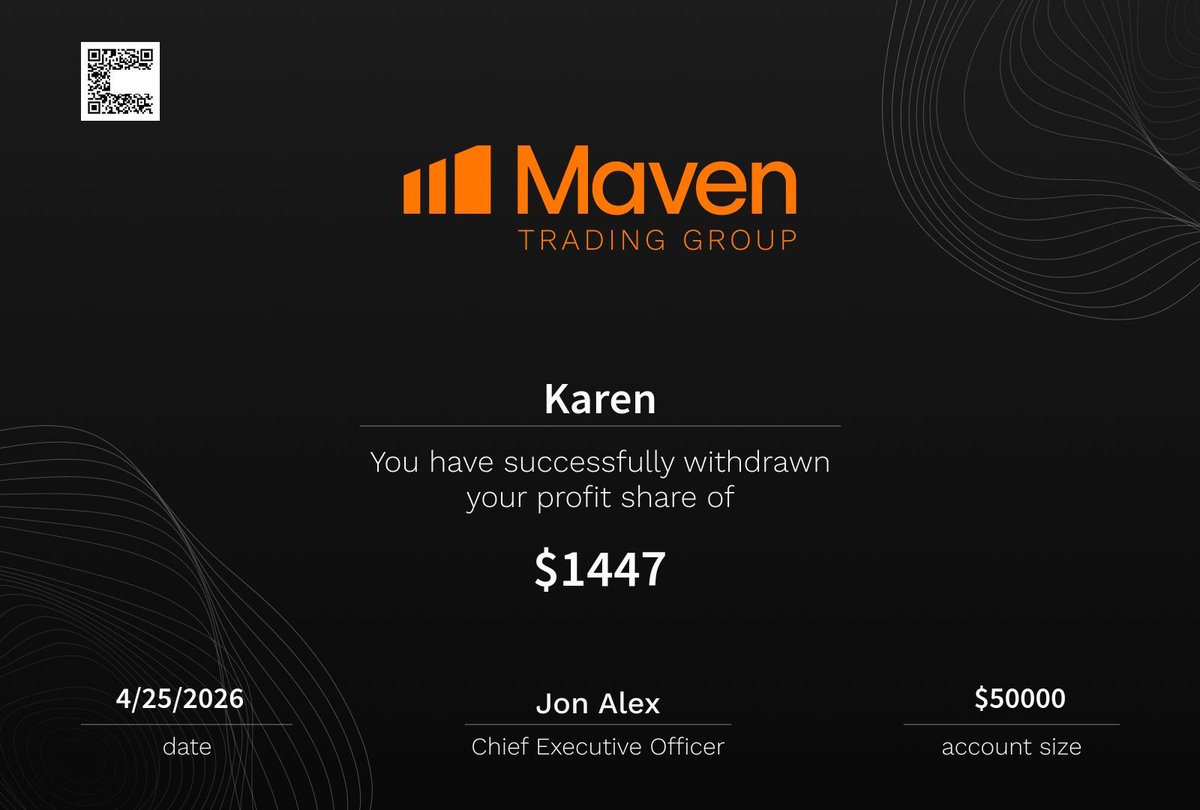
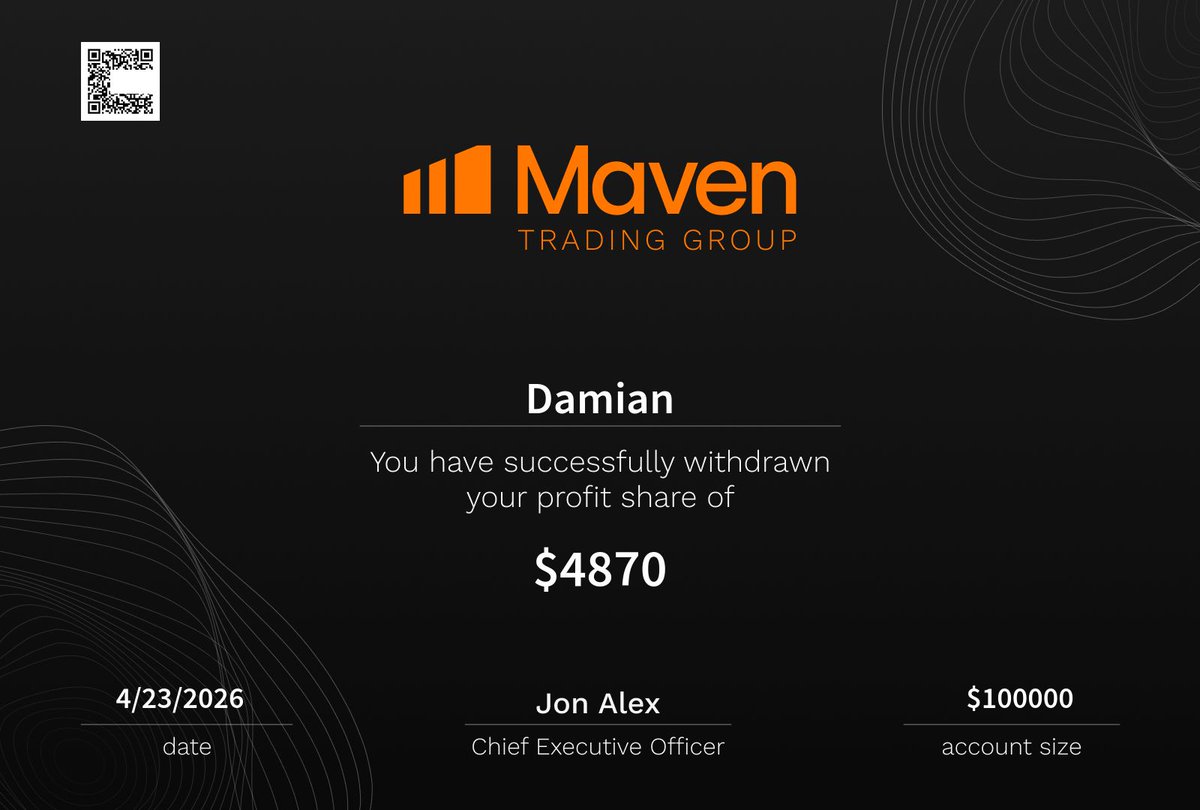
When other Prop fails to Pay traders
@Maventrading can never be in such category
Here's a proof that labourer's deserve their wages 😌
Sign up with Maven today and
You get 6% Discount using the code
Fznation01
maventrading.com/?ref=ztnmngj


English


Chimma🤎 retweetledi
Best way to celebrate?
Let's Kick start with a little giveaway
4 × $10k accounts
Criteria:
Must Follow
★ @Fznation01 | @Maventrading | @DumbMoneyHunter
★Tag 5 Friends ( Non - influencers)
★Like and Repost
Good Luck

English


QME
Chimma🤎 retweetledi

A trader can know every pattern on the chart and still lose money. He can spot support and resistance, mark out liquidity, understand structure, and still fail when real money is on the line.
Why? Because trading is not just a chart game. It is a behaviour game.
The chart shows you what the market is doing, but your mind decides what you will do about it. If you cannot control your fear, greed, impatience, and ego, then all your technical skills will keep getting sabotaged by your own actions.
That is why self-mastery takes a trader further than chart mastery alone.
A lot of traders think the problem is that they need one more setup, one more indicator, or one more strategy. But many times, that is not the real issue.
The real issue is that they do not follow what they already know. They enter too early because they are scared of missing out. They move stop losses because they do not want to be wrong. They close winners too fast because they are afraid the market will take profits away.
Then, when they lose, they blame the market or the setup, when in truth the mistake came from a lack of discipline. A trader who masters himself can take a simple system and make money from it because he knows how to stay calm and execute properly.
Self-mastery in trading means emotional control. It means you do not let one winning trade make you feel like a genius, nor let one losing trade make you feel broken.
It means you stay level-headed. You understand that one trade means very little in the big picture. What matters is the next 50 trades, the next 100 trades, and whether you can keep applying your edge with consistency.
A trader who has mastered himself does not chase the market after a loss. He does not get overconfident after a win. He stays focused on process, not feelings. That is the kind of trader who survives long enough to grow.
The market has a way of exposing every weakness in a trader. If you are impatient, the market will show it. If you are greedy, the market will punish you. If you need always to be right, the market will humble you fast.
Charts do not care about your emotions, but your P&L does. That is why mindset, discipline, and risk control matter so much. A trader who has mastered himself knows when to sit on his hands and do nothing. He knows that not trading is sometimes the best trade.
He knows that protecting capital is part of the game. That kind of patience is not easy, but it is what separates professionals from gamblers.
Many traders spend years trying to master entries but very little time mastering their habits. Yet habits are what shape results.
Do you journal your trades honestly? Do you respect your risk on every single setup? Do you accept losses quickly and cleanly? Do you wait for confirmation, or do you force trades because you want action?
These are the questions that really define a trader. The trader who masters himself builds routines that protect him from his own bad tendencies. He does not rely on motivation. He relies on structure.
And in trading, structure beats emotion every single time.
In the end, charts can give you an edge, but self-mastery is what allows that edge to pay you. Without discipline, knowledge is wasted. Without patience, good setups are ruined. Without emotional control, even the best strategy can fail in your hands.
The trader who masters himself will always go further because he is stable, consistent, and hard to shake. He understands that success in trading is not just about reading the market right. It is also about reacting to the market effectively.
Master the chart, yes. But more importantly, master the person looking at it. That is where real growth begins.
English
Chimma🤎 retweetledi

You buy a $10k account for $62 from @fxifycom
Give yourself a target of 5% profit each month.
That’s $500 in payout.
Split and reinvest 50% ($250) for a $50k account And aim for same 5% ($2500)
That’s how you grow your income. Gradually.
English
Chimma🤎 retweetledi
You need this 5 principles to be a profitable trader…
1. Do one thing: stop the urge to trade everything, find the discipline to do just One Thing.
2. You will make mistakes and it’s fine: You’re not a robot so making a mistake is inevitable. Learn to forgive yourself easily and move on.
3. how you react to one lost trade will determine if you’ll take more losses along the way. So maintain composure
3. Don’t expect: let every trade be a swing of the unknown. Never see profit before the end of a trade. Expectations will hurt you badly.
4. Never compare your results with the next person. Celebrate your $5 profits like you made $50,000.
5. Don’t quit.
English
Chimma🤎 retweetledi
You asked and we listened
Trade like FZ 3.0 is now open for payment
Fee : $100
Payment Window: Now to 18th April
Come and let's transform you into a King/ Queen 💕
For more enquiries click the link
wa.link/h7v44d

English
Chimma🤎 retweetledi
Step 1 : get a mentor
Step 2 : lock in with your mentor knowledge till you derive your own experience from it ..do it with few pair
Step 3 : get a prop account (if you don’t have money bill your mentor for the prop 😂I’m joking)
Step 4 : split your big goals in small steps
Step 5 : don’t trade small prop account size for long your first job with your payout is to use high % of it to get big prop account size 100k /200k
Step 6 : always have a prop account you can use it payout to fund your personal account and learn to scale up that account not flipping but compounding
Step 7 : don’t always aim for big payouts at a go but always get a payout
Step 8 : invest your payouts in real achievements
Step 9 : you are a professional and profitable trader
Ps : it beautiful if your prop account has diff purpose for it
..a prop account for saving for you car or house or business..allocate your prop accounts too different goals ..
English
Chimma🤎 retweetledi
New traders do this;
- pick one strategy and
- challenge yourself to take 100 trades on it
- on all trades go for 1:3RR minimum on all setup
- don’t touch trade until either TP or SL nothing like partial profits
I want to dare you to do this and come back to this tweet
English