We also profiled some of the drugs that inhibit MCL-1, but failed thus far in clinical trials due to (cardio)toxicity, and we think there is room for improving them.
We thank many wonderful colleagues who collaborated to make this possible.
Happy Easter for those who celebrate!
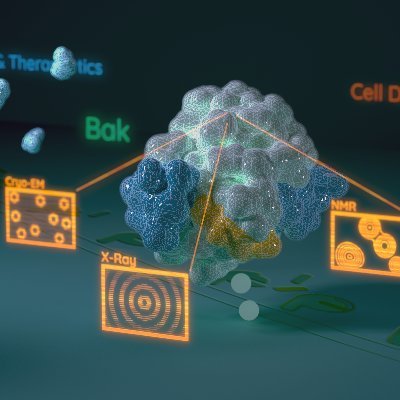
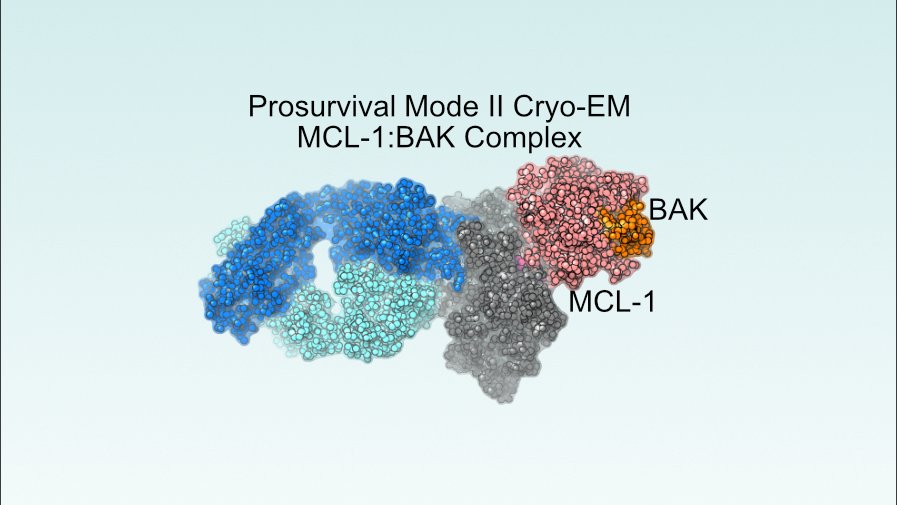
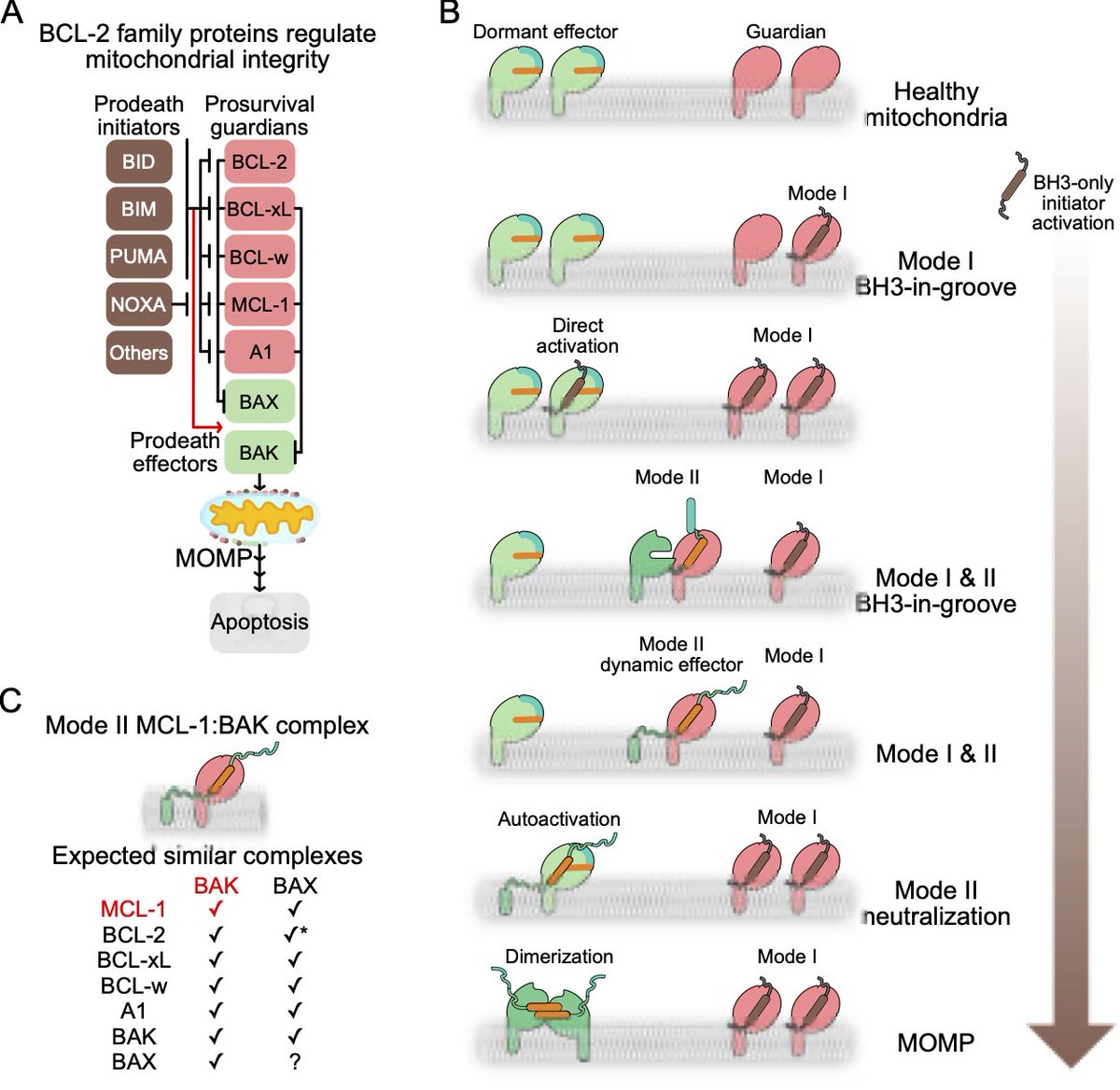
The paper has a bit of something for everyone who enjoys structure, function, & cancer targeting. For instance, we presented a cryo-EM structure of the 40 kDa MCL-1:BAK complex revealing features we think apply to the relevant BCL-2 family interactome.
Apoptosis inhibition: MCL-1 vs BAK
Our new study published in Molecular Cell featuring classic BCL-2 family proteins inhibition of apoptosis by oncogene MCL-1 who blocks mitochondrial outer membrane permeabilization by the pore-forming protein BAK:
authors.elsevier.com/a/1ktSg3vVUPVZ…
BTW, our new lab @UAMS_Biochem@uamscancer is now seeking scientists interested in addressing open questions in cell death research and cancer biology with structural (cryo-EM🤍) and chemical biology tools! DM me if curious. We make science fun!
Are all folded BCL-2 family proteins pore-forming?
It surely seems that if one tries hard enough they could be made pore-formers, but now clearly 4 of them stand out: BAK, BAX, BOK & tBID. I reflect on this problem in #BioEssaysonlinelibrary.wiley.com/doi/full/10.10…
📰Our analysis of apoptosis regulation in vascular endothelial and smooth muscle cells is now published! We find that cells comprising the vasculature are primed to die, rendering them hypersensitive to anti-cancer agents to drive cardiovascular tox! 🧵1/n science.org/doi/10.1126/sc…
Delighted to share that I have been promoted to Associate Professor (tenured) at @UniBarcelona@CampusClinicUB@CellComBcn. This would not have been possible without the support of my family, friends, colleagues and mentors @DrTonyLetai@samitierjosep and Prof. Agell. Thank you!
RNA splicing defects contribute to Alzheimer’s disease - St. Jude. Grateful for the contribution of all group members and collaborators, Drs. Yu, Beach, Bennett, Wu, Chen, Zakharenko, @mikedyerlab, @RSmeyne, @MoldoveanuLab stjude.org/media-resource…
Co-senior author @ShaynaSarosiek and I are incredibly grateful to the patients for participating and to 1st author @camfraser13 for YEARS of hard work. We also want to thank the team at @BU_Amyloidosis and especially @vsanchorawala for their pivotal expertise and support. (/end)
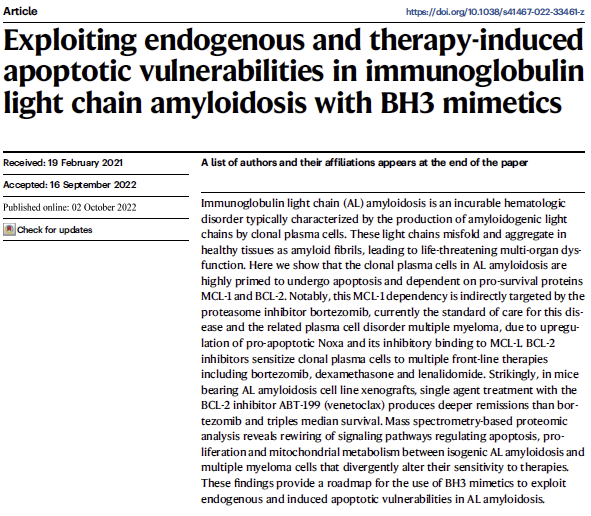
We're excited to share our report on apoptotic vulnerabilities in AL amyloidosis. We analyzed over 50 primary specimens from AL patients at @BU_Amyloidosis and find that clonal plasma cells are frequently dependent on BCL-2 or MCL-1 for survival. (1/n) nature.com/articles/s4146…
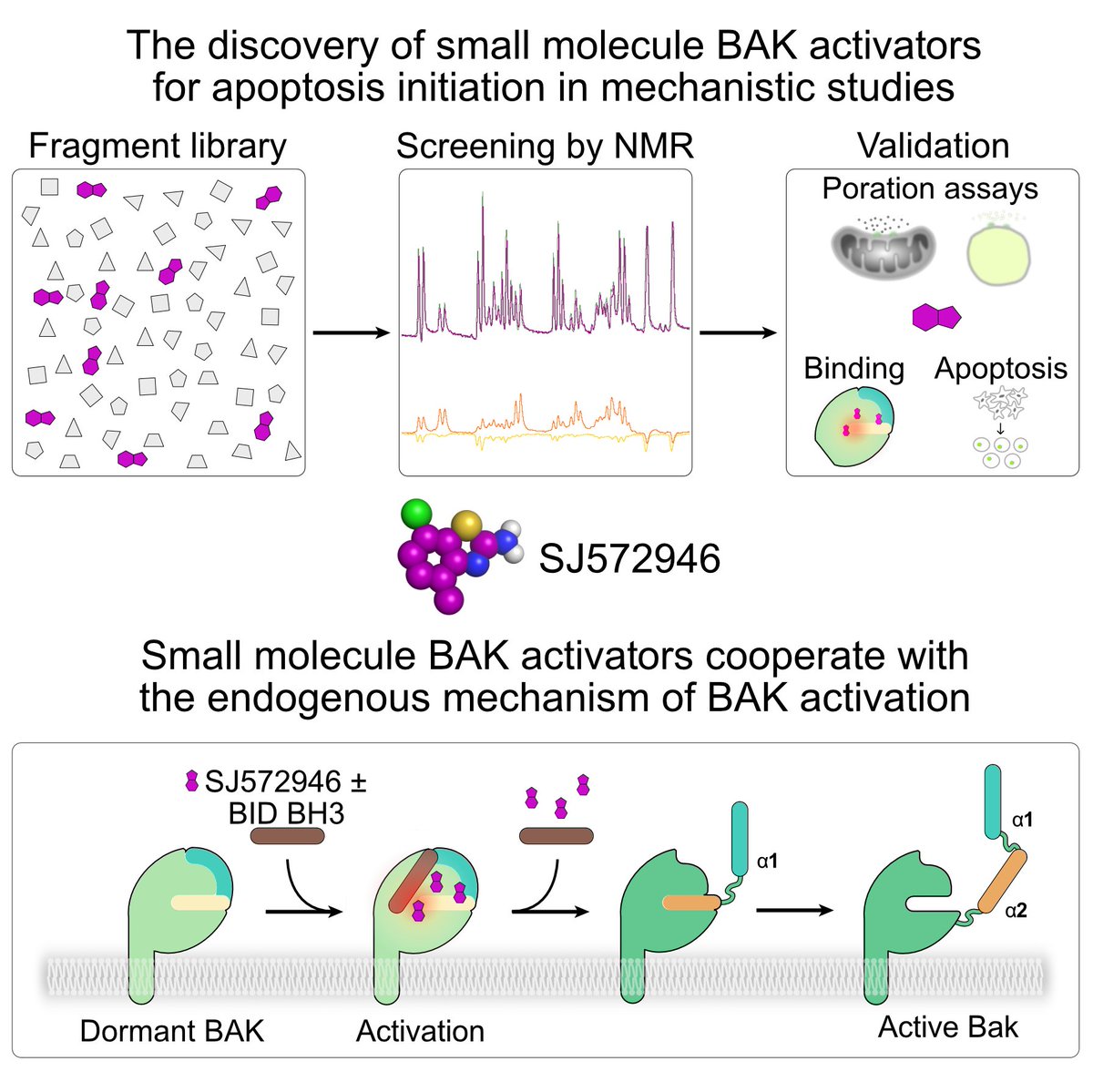
@MoldoveanuLab@iScience_CP@GeetikaGitika2 We are honored to have contributed to this exciting discovery of the novel BAK activator SJ572946. We believe direct modulation of #apoptosis can help treat or prevent a wide range of diseases, including cancers, and this discovery helps bring us closer to that goal.
Special thanks to our outstanding lab members and collaborators at St. Jude and Harvard including @CristinaGuibao, @RichardLeeLab, Kris Sarosiek and his crew @CellDeathLab including @zintisinde, and all twitter-less others. RIP Geetika
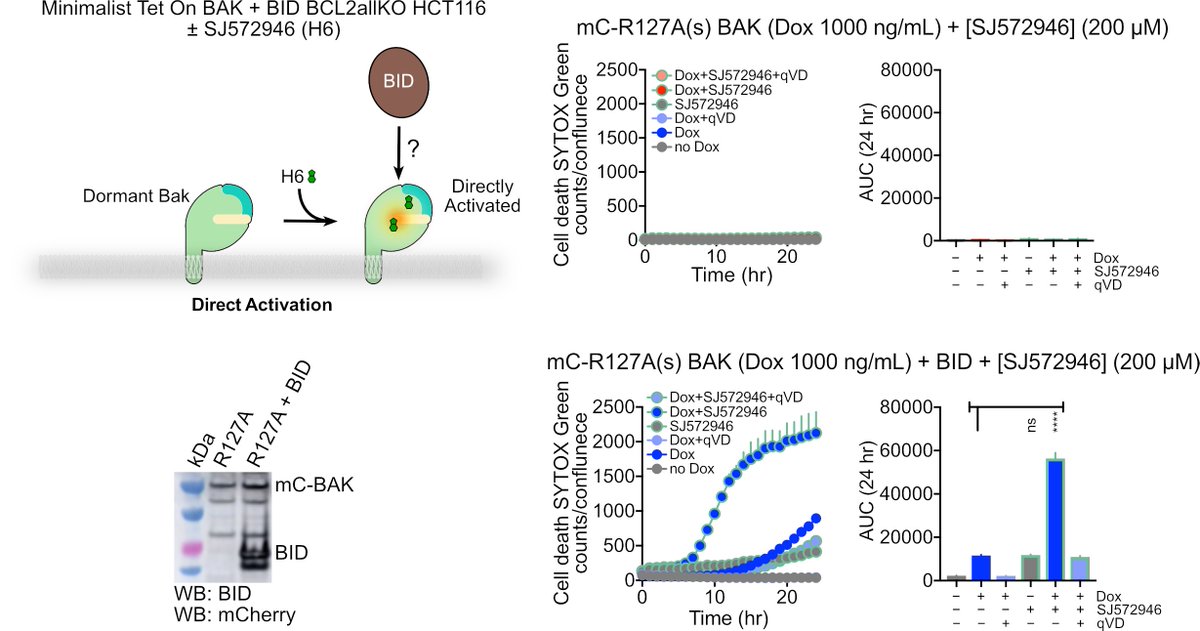
The most useful use, however, has been to probe the mechanism of BAK activation and we show that our lead compound cooperates with BID to activate a BAK mutant severely impaired in apoptosis initiation
We dedicate @iScience_CP paper on #apoptosis initiation with BAK activators to Dr. Geetika Singh @GeetikaGitika2, who recently lost her life to cancer. We are humbled by this tragedy and grateful for life and important contributions at many levels.
doi:10.1016/j.isci.2022.105064