Carmelite Monastery

3.7K posts

Carmelite Monastery banner
Carmelite Monastery

Carmelite Monastery

@MonasteryOCarm

Visit https://t.co/jE0ETu5lbF for critical information for salvation! https://t.co/V0iQ77RpOA

Katılım Aralık 2024
77 Takip Edilen218 Takipçiler
Sabitlenmiş Tweet
Carmelite Monastery
Carmelite Monastery@MonasteryOCarm·
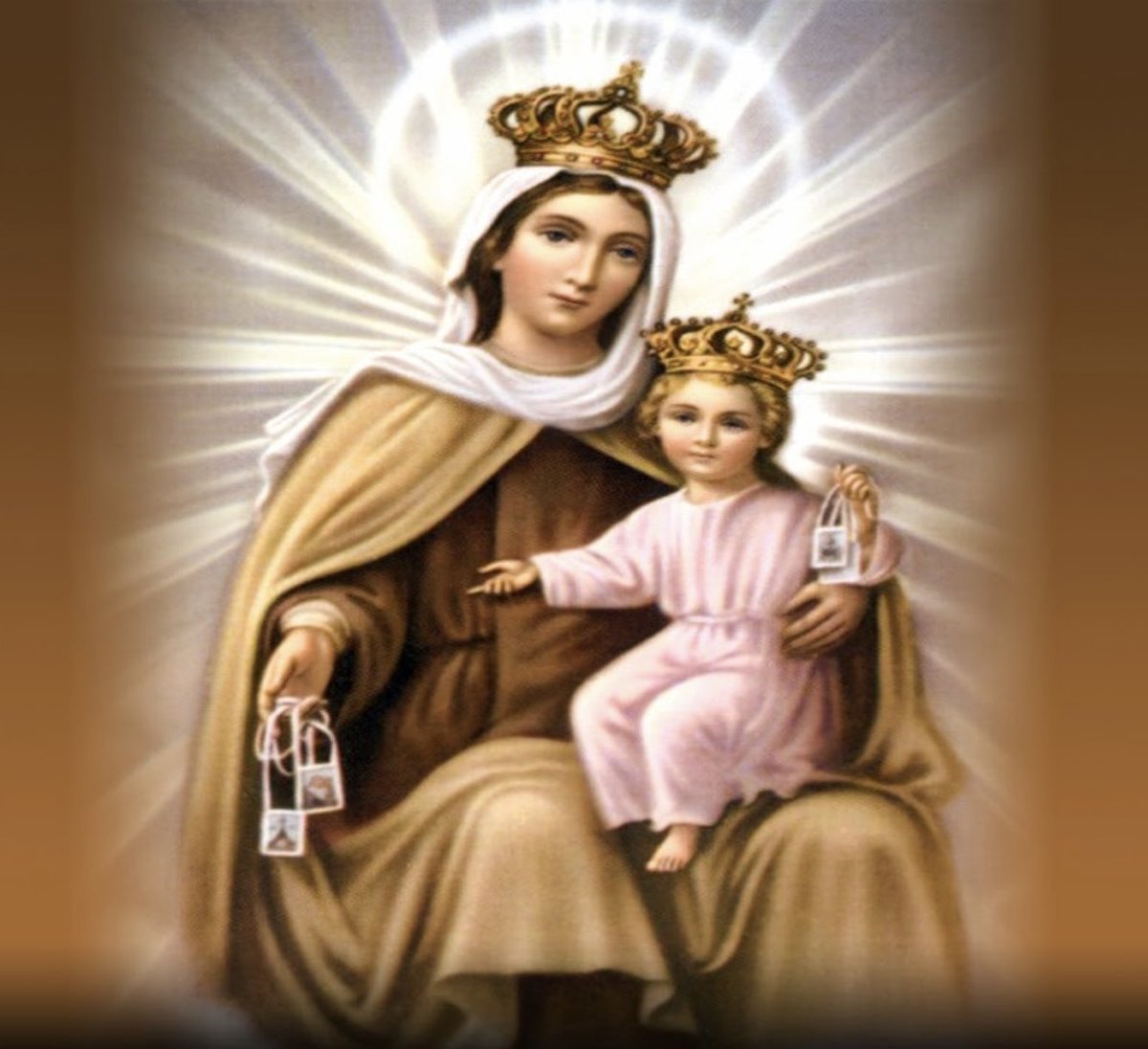
#MARY #QUEEN_OF_HEAVEN_AND_EARTH #CATHOLICTWITTER Luke 1:32 He shall be great, and shall be called (the Son of the most High); and the Lord God shall give unto him the (throne of David) his father; and he shall reign in the house of Jacob (for ever). 3 Kings 2:19 ...and... king (Solomon) arose to meet her, and bowed to her, and sat down upon his throne: (AND A THRONE WAS SET FOR THE KING'S MOTHER, AND SHE SAT ON HIS RIGHT SIDE).
Carmelite Monastery tweet media
English
0
15
23
12.5K
Carmelite Monastery
Carmelite Monastery@MonasteryOCarm·
Mary in speaking to St. Dominic; “My son," she said one day, "do not be surprised that your sermons fail to bear the results you had hoped for. You are trying to cultivate a piece of ground which has not had any rain. Now when God planned to renew the face of the earth, he started by sending down rain from heaven - and this was the Angelic Salutation. In this way God reformed the world. Taken from St. Louis De Montfort “Secret of the Rosary”. When St. Dominic was battling heretics, Mary revealed the rosary to him. She said, “This land will be sterile until rain falls upon it.” This rainwas the rosary which Dominic began to preach and which Catholics embraced. Taken from St. Alphonsus “Glories of Mary”. The Holy Rosary and Devotion to the Virgin Mary vaticancatholic.com/pray-holy-rosa…
Carmelite Monastery tweet media
English
0
1
0
44
Carmelite Monastery
Carmelite Monastery@MonasteryOCarm·
Titus 3:10-15 in the Douay Rheims has an amazing footnote! "Heretics, more unhappy, run out of the church of their own accord"! Hence they cannot be pope or hold authority. "A man that is a heretic, after the first and second admonition, avoid. Knowing that he, that is such an one, is subverted, and sinneth, being condemned by his own judgment. When I shall send to thee Artemas or Tychicus, make haste to come unto me to Nicopolis. For there I have determined to winter. Send forward Zenas, the lawyer, and Apollo, with care, that nothing be wanting to them. And let our men also learn to excel in good works for necessary uses: that they be not unfruitful. All that are with me salute thee: salute them that love us in the faith. The grace of God be with you all. Amen." Footnote: [11] "By his own judgment": Other offenders are judged, and cast out of the church, by the sentence of the pastors of the same church. Heretics, more unhappy, run out of the church of their own accord, and by doing so, give judgment and sentence against their own souls. See debate on this topic... youtu.be/tIauJB2_y1c
YouTube video
YouTube
English
0
6
12
662
Carmelite Monastery retweetledi
Most Holy Family Monastery
You are simply wrong. It has been dogmatically defined that heretics are outside the Church (Eugene IV, Cantate Domino), and it's absurd to imagine that one who is outside can command in the Church (Leo XIII). Pope Leo XIII, Satis Cognitum (#15), June 29, 1896: “... it is absurd to imagine that he who is outside can command in the Church.” Further, Pope St. Celestine and Pope Nicholas taught that Nestorius lost his authority from the moment he began to preach heresy. That fact was cited by St. Robert Bellarmine, who taught the opposite of what you are promoting. St. Robert Bellarmine, De Ecclesia Militante, Chap. 10: “For that reason [Popes] Celestine and Nicholas, in the passages cited, say that a heretical bishop, from the time he began to preach heresies, was not able to loose or bind anyone…” Hence, the automatic loss of authority for notoriously preaching heresy is not just a theological opinion. It’s the teaching of the popes. There's a unity of faith in the Catholic Church. Thus one must not profess communion with people who publicly preach a false religion. Your false position also requires you to venerate the notorious heretic Antipope John Paul II as a saint. That's a rejection of the Catholic faith and a mortal sin.
English
1
14
38
389
Carmelite Monastery
Carmelite Monastery@MonasteryOCarm·
Excerpt from the Practice of Christian and Religious Perfection: THAT THE DEVIL IS ABLE TO DO BUT VERY LITTLE AGAINST US. To encourage us in temptations, it will be a very great help, to consider the weakness of our enemy; and how little he is able to do against us, as he cannot make us fall into any sin against our own will. Behold, my brethren, says St Bernard, how weak our enemy is; he cannot overcome but him, who has a mind to be overcome. (Serm lxxiii. in Cant.) If a man who is going to fight, were sure to overcome if he would; how joyful would he be? Would not he think himself sure of a victory, which depended only upon his own will? With the same confidence and joy we might fight against the devil. For we know very well, that he cannot conquer us, if we ourselves will it not. It is this that St Jerome very well observes upon the words the evil spirit said to our Saviour, when having carried him up to the pinnacle of the temple, he counselled him to throw himself down headlong. Cast thyself down, said the tempter; ( Matt. iv. 6.) and this, adds the saint, is the true language of the devil, who desires nothing so much as the fall of all men. He can indeed persuade them to throw themselves down, but he cannot throw them down himself. The voice of the devil that tempts you, says, throw yourself down into hell. You must answer him; do so yourself; you know the way; as for me I will not do it; for he cannot have the power to make you, if you have not the will to do it. A certain person, finding that he was continually tempted by the devil to destroy himself, discovered to his confessor the trouble and perplexity he was in. His confessor having convinced him that the motions of the evil spirit, could have no further power over him, than what he himself would give him, advised him, that as often as he found himself troubled with that temptation, he should answer — I am resolved I will not do what you would have me; and that he should come again to him eight days after. This man did what his confessor bid him, and by this means delivered himself from the temptation which tormented him, and so came to thank him afterwards for the remedy he had prescribed him. And it is of this remedy, that I shall now speak. The opinion of St Augustine agrees very well with what I have now asserted. He says, that the devil was not bound before the birth of our Saviour, and that till then he freely exercised his tyranny over men; but that Jesus Christ by coming into the world, chained him up, as St John declares to us in the Apocalypse: And I saw an angel coining down from heaven, having the key of the bottomless pit, and a great chain in his hand; and he laid hold upon the dragon, that old serpent, which is the devil and satan, and bound him for a thousand years, and cast him into the bottomless pit, and shut him up, and set a seal upon him, that he should deceive the nations no more, till the thousand years should be fulfilled, and after that he must be loosed for a little season. (Apoc. xx.1.) God has therefore chained up the devil, continues the holy doctor, and do you know how he has done it? After such manner that he permits him not to do the evil he might and would do, if he had the liberty of tempting and deceiving men, by all those ways and artifices of which he is capable. But you may say, if he be chained, how comes it to pass that he still does so much mischief? It is true, answers the father, he does much indeed, but it is to those who take no care of themselves; he is chained up like a dog, that is, so tied that he can bite none but those that come near him: He is able to bark, he is able to fawn and flatter, but he cannot at all bite any one, except such as will be bitten by him. ( Lib. xx. de Civit. Dei. , c. 8.) So that as, adds the saint, we laugh at a man that permits himself to be bitten by a dog in a chain, so we may also laugh at those who let themselves be overcome by the devil; because he is so fast tied, that he can do no hurt to any, but such as come near him. It is then your own fault, if he does you any hurt in the state you are in; since he cannot hurt you unless you will yourself, so that you may even contemn him as much as you please. It is this the saint teaches us, explaining these words of the psalmist, the dragon which thou hast formed to serve us for sport: ( Ps. ciii. 26) have you not seen, says he, how children feel pleasure in looking upon a bear, or any other wild beast that is chained, and how they amuse themselves with it: you may also mock the devil as often as he tempts you; for he is like a dog in a chain, who can only hark and make noise, but cannot bite you unless you will it yourself. The devils once appeared to St Anthony under several horrid and frightful shapes, and surrounded him as if they were ready to devour him; but the. saint only laughed at them, saying, if you have power to hurt me, the least, of you is able to do it, but because you have not, you come in troops to affright me. If God has given you any power over me, behold here I am, devour me; but if he has not, all your endeavours are in vain. We may make the same answer in all our temptations; because since Jesus Christ became man, the devil has no power left; as he one day told St Anthony, who answered him, though you are the father of lies, yet you have at present spoken truth against your will. For this reason our Saviour bids us confide and take courage. I says he, have overcome the world: (John xvi. 33.) and therefore let us say with St Paul, thanks be to God, who gives us the victory through our Lord Jesus Christ. (I Cor. xv. 57.) Visit VaticanCatholic.com
Carmelite Monastery tweet media
English
0
2
8
157
Carmelite Monastery
Carmelite Monastery@MonasteryOCarm·
1st Corinthians 2: St. Paul destroys CMRI (and others like them) in it's development of "BOD" and "BOB" 1 And I, brethren, when I came to you, came not in loftiness of speech or of wisdom, declaring unto you the testimony of Christ.  2 For I judged not myself to know anything among you, but Jesus Christ, and him crucified.  3 And I was with you in weakness, and in fear, and in much trembling.  4 And my speech and my preaching was not in the persuasive words of human wisdom, but in shewing of the Spirit and power;  5 That your faith might not stand on the wisdom of men, but on the power of God.  6 Howbeit we speak wisdom among the perfect: yet not the wisdom of this world, neither of the princes of this world that come to nought;  7 But we speak the wisdom of God in a mystery, a wisdom which is hidden, which God ordained before the world, unto our glory:  8 Which none of the princes of this world knew; for if they had known it, they would never have crucified the Lord of glory.  9 But, as it is written: That eye hath not seen, nor ear heard, neither hath it entered into the heart of man, what things God hath prepared for them that love him.  10 But to us God hath revealed them, by his Spirit. For the Spirit searcheth all things, yea, the deep things of God.  11 For what man knoweth the things of a man, but the spirit of a man that is in him? So the things also that are of God no man knoweth, but the Spirit of God.  12 Now we have received not the spirit of this world, but the Spirit that is of God; that we may know the things that are given us from God.  13 Which things also we speak, not in the learned words of human wisdom; but in the doctrine of the Spirit, comparing spiritual things with spiritual.  14 But the sensual man perceiveth not these things that are of the Spirit of God; for it is foolishness to him, and he cannot understand, because it is spiritually examined.  15 But the spiritual man judgeth all things; and he himself is judged of no man. 16 For who hath known the mind of the Lord, that we may instruct him? But we have the mind of Christ. Footnote: [14] "The sensual man": The sensual man is either he who is taken up with sensual pleasures, with carnal and worldly affections; or he who measureth divine mysteries by natural reason, sense, and human wisdom only. Now such a man has little or no notion of the things of God. Whereas the spiritual man is he who, in the mysteries of religion, takes not human sense for his guide: but submits his judgment to the decisions of the church, which he is commanded to hear and obey. For Christ hath promised to remain to the end of the world with his church, and to direct her in all things by the Spirit of truth. Visit VaticanCatholic.com
Carmelite Monastery tweet media
English
0
3
8
199
Carmelite Monastery
Carmelite Monastery@MonasteryOCarm·
Excerpt from the Practice of Christian and Religious perfection: THAT THERE IS NO TRUE CONTENT BUT IN GOD ALONE, AND THAT IT IS NOT TO BE OBTAINED BY ANY OTHER MEANS. Those who establish their content in God, and his holy will, enjoy a perpetual satisfaction, because clinging to the immoveable pillar of the divine will, they participate of the immutability of this will; and remain by this means always constant and firm, always immoveable, and always in the same state of heart and mind. But those who are attached to the things of this life, who have settled their heart, and fixed their affections and content therein, can never receive any satisfaction that is constant and durable. For they follow the impression and nature of the objects they embrace; and in the same manner are exposed to all the vicissitudes and revolutions to which the objects are. St. Augustine explains this admirably well, speaking of those words of the Psalmist: He has conceived sorrow, and brought forth iniquity: (Ps. vii. 15.) You will never see, says he, a term of your sufferings and discontents unless you bend all your affections upon one only thing, which in spite of yourself, you cannot be deprived of. When St. Francis Borgia, being as yet in the world, arrived at Granada with the corpse of the empress Isabella; and being to deliver it up to those charged to receive it, was according to his orders to open the coffin of lead where it lay, and expose the face of this princess; the dreadful change and deformity which caused such a horror in all present, struck him so in particular, that, the grace of God touching his heart at the same time, and giving him a lively sense of the vanity of this life, he made from that very moment a firm resolution in himself to renounce and forsake the world; and elevating his soul to God, I promise, O Lord, said he, never to serve a master more, who is subject to death: let us imitate him in this — let us form the like resolution, and say to God; yes, O Lord, I promise for the future, never to place my affection upon any thing that is mortal, upon any thing that is subject to perish, or any thing which can be taken from me against my own will and desire. Without this we can never have true content. For when we love any thing, which can be taken from us against our will, says St. Augustine, we must necessarily meet with a thousand discontents and afflictions.(Tract, xxiv. Sup. Joan.) For either the apprehension we have of losing it, makes us uneasy, and disquiets our thoughts; or sorrow for having lost it, afflicts and torments us. It is with grief, we see ourselves deprived of what we are much attached to; and the more close the attachment, the more violent and sensible will be our grief. He confirms this in another place, where he says, He who seeks his content in himself, shall be contristated. (Ibid.) If you seek your content in administering such a charge, or in such an employ, or in living in such a place, or in any other thing of this nature; it is a content which your superior can rob you of, and thus you will never feel real satisfaction. If you make it depend on objects, which please you for the present — if you place it in the accomplishment of your temporal desires; these are things easily subject to change; and supposing they do not change, yet you will change of yourself; and what was pleasing to you today , will be displeasing tomorrow. Were not the Israelites disgusted with the manna, though delicious and extremely nourishing? When they shook off the Egyptian yoke, did they not grow weary of liberty — did they not long again for bondage and for the onions and flesh-pots of Egypt? You will never feel thorough satisfaction, as long as you build it upon things that have no solid foundation, and are subject to change. But he, continues the saint, who places his joy in God, shall have an eternal joy, because God is eternal. And if you desire your joy should be eternal, apply yourself to God who is eternal, to God who admits of no change, and who remains ever immoveable in the same state and condition. .(Tract, xxiv. Sup. Joan.) The difference which the Holy Ghost makes between a fool, and a wise and just man, is that the fool changes like the moon; and the just man in his prudence, is like the sun. (Ecclus. xxvii. 12.) In reality, there is not more change in the body of the moon, than there is in the mind of a fool. He is today in his increase, tomorrow in his decrease; today , transported with joy; tomorrow, oppressed with grief. In fine, he is sometimes in one temper, sometimes in another; because he seeks his content in things of this world, which by reason of their inconstancy and vicissitude, make him variable as themselves, and according to the diversity of his success he is carried away by different emotions. But as for the just man, like the sun, he is ever in the same state. He has neither increase nor decrease: he is always composed, always at peace, always satisfied: because having fixed his content and happiness in God, and in the performance of his holy will, he partakes of a good which never changes, and which he cannot be despoiled of. The holy abbot Deicola is said to have always had a smile on his countenance, and being once asked, why he was uniformly so cheerful, he answered, that it was, Because no one could deprive him of Jesus Christ. He had experienced a real content, since he had placed all his felicity in that which could never fail, and which could never be taken from him. Let us do the same, and, let the just rejoice in our Lord. ( Ps. xxxii. 1 ) Take notice, says St. Basil, of these words. The prophet bids us not rejoice in the abundance of temporal goods, nor in the attaining a great capacity and learning; nor in the enjoyment of perfect health, or of a strong constitution and bodily strength; nor in fine, in being esteemed by other? But he says, rejoice in our Lord, that you have placed all your joy and hope in him: and that you make all your satisfaction and content consist in the accomplishing of his will. In effect, it is but this can give us entire satisfaction — every thing else is incapable thereof. St Bernard in a sermon made upon those words of St. Peter, Behold we have left all things, and followed thee. (Matt. xix. 17.) sufficiently proves this truth. A rational soul, says he, may well he employed and taken up in things of this life, but can never he satisfied with them. (Sup. illud Matt.) They can only inflame its thirst, they are not able to allay it. The covetous man, says Ecclesiasticus, shall never have his fill of riches. (Eccles. v 9.) The more he has, the more he desires, and never says, " enough." The same may be said of all transitory goods. And learn, says St. Bernard, the cause why they cannot satisfy him: Because they are not the proper and natural food of his soul. For as the air and wind can never serve for a nourishment to our bodies; and he would be looked upon as a madman, who being just upon the point of dying of hunger, would open his mouth, like a chameleon, to suck in the air, thinking thereby to get new food and sustenance: just so, says the saint, it would be a notable piece of folly, to imagine a rational soul, which is a pure spirit, can be satiated with sensible or corporal things. It may he puffed up, but can never he filled; because it receives not a nourishment adapted to its nature. Give every thing what is proper for it — to the body, a corporal refection; to the soul a spiritual one: since justice and perfection is the soul's bread; and none can he happy, but they who have a hunger after it; because they only shall be filled. St Augustine explains this more at large in his soliloquies; where treating of a rational soul, he addresses himself to God in these terms: — You have made it capable, says he, of containing your infinite majesty; that you alone may he able to satiate ? (Cap. xxx. Solil.) Enchase a ring for the reception of a particular diamond, and you will see that no other diamond will fit the enchasing. If the work is of a triangular form, no object whatsoever of a different form will correspond to it. Our soul has been created to the image of the blessed trinity, and adorned with an enchasing, as I may say, which is designed and formed for God alone, so that it is impossible any other thing should fill the void exactly. Not all the earth, nor all we can conceive except God will ever be able to fill it. You have created us, Lord, for yourself and our heart will never be at rest till it reposes in you. (Conf. cap. 1) The comparison usually made of the needle of a compass, is very applicable, and explains exceedingly well the words of St. Augustine . The property of this needle when touched on the loadstone, is, to turn always to the north: and the impression and virtue it receives by this touch is so forcible, that move it which way you please, it never ceases to be in agitation, till it has recovered its first direction. It is the same with us, in respect of God. He has inspired into us a natural inclination, which carries us continually to him, as to our north pole and our last end. So that as long as our heart turns not to God, so long like this needle shall we be in continual motion and disquiet. Of all the moveable parts of heaven, whatever part it beholds in its motion, yet it rests not. But as soon as it has found the fixed and immoveable north pole it stands still and immoveable. Just so, as long as your eyes and heart are cast upon the things of this world, which are subject to daily alterations and changes, you will never have repose and satisfaction; but turn them towards God, who is unalterable and still the same, and you will obtain a perfect joy and tranquillity. Though we were influenced by no other motive, we should at least, in consideration of our own interest, make it our chief end to seek God. For we know well my brethren, says St. Augustine , that the world seeks its content; but unfortunately it seeks it not where it should. (Ser. xxx, dc Sanctis.) The principal thing, is to be able to discern between true and false content; and it is our misery, that we suffer ourselves more frequently to be deceived by the vain representations of pleasure, and false appearances of good. The covetous, the ambitious, the proud, the gluttonous, and the carnal man, each seeks his content. But the one makes it consist in amassing riches; the other in climbing up to the highest degrees of dignity and preferment; another in being respected and honoured by men; another in making good cheer; and the carnal man in complying with and satisfying his impure and unlawful desires. None of all these seek their content, where they ought; and therefore shall never find it. Because whatever they covet, and whatever the world can afford them, is not capable of satiating their soul, and giving it true joy and satisfaction. Wherefore then, imprudent as you are, continues the same saint, do you torment yourselves in an unprofitable search after those goods, with which you would satisfy your Soul and body? Love and seek one only good, which comprehends all other goods, and that suffices. (De spir. & in. cap. lxiv.) Aspire to one only good, which is both sovereign and universal, and it is enough. And you, O my soul, bless our Lord, who satisfies your desires with his heavenly treasures. (Ps cii. 5) Visit VaticanCatholic.com
Carmelite Monastery tweet media
English
2
5
8
452
Carmelite Monastery
Carmelite Monastery@MonasteryOCarm·
"It is the spirit that quickeneth: the flesh profiteth nothing. The words that I have spoken to you, are spirit and life." [John 6:64] Visit VaticanCatholic.com
Carmelite Monastery tweet media
English
0
3
5
94
Carmelite Monastery retweetledi
Most Holy Family Monastery
John Paul II: Practicing Islam Is Obedience To God & Leads To Heaven In his April 3, 1991, “Message to the Faithful of Islam at the End of Ramadan”, John Paul II taught heresy, blasphemy and religious indifferentism. John Paul II, Message to the Faithful of Islam at the End of Ramadan, April 3, 1991: “Every year it is the custom of the Pontifical Council for Interreligious Dialogue to send a message of greetings, on behalf of Catholics around the world, to Muslims on the occasion of your Feast of the Breaking of the Fast at the end of Ramadan.  This year… I have decided to send you these greetings myself.      First of all, I wish to express my sympathy and solidarity with all those who have lost loved ones.  As you Muslims believe, so do we Christians affirm with hope that they have returned to the merciful judgment of God.  May this time of mourning be tempered by the awareness that God’s mercy and love are without limit.  He alone knows ‘that which he has prepared for HIS CHOSEN ONES, what no eye has seen, no ear has heard, things beyond the mind of humans’ (1 Cor. 2:9)… YOU WHO HAVE COMPLETED THE ARDUOUS MONTH OF FASTING ACCORDING TO THE DICTATES OF YOUR RELIGION GIVE TO MODERN SOCIETIES A NEEDED EXAMPLE OF OBEDIENCE TO GOD’S WILL, to the importance of prayer and self-discipline… On this feast, my Muslim brothers and sisters, our prayer is that God will grant his peace to you and to all who turn to him in supplication.” First, he encourages Muslims to practice the false religion of Islam.  That’s a manifestation of apostasy.  The true popes firmly taught that Islam is a diabolical religion and an abomination that must be rejected and repudiated; for it leads to damnation.  Second, he refers to Muslims who have died.  He affirms with hope that they have returned to the merciful judgment of God.  That is to indicate that they are saved.  To confirm his point he then cites 1 Cor. 2:9 about how God prepares eternal happiness for His chosen ones.  His message clearly means that, in his view, deceased Muslims were saved and are God’s “chosen ones”.  That’s heresy and blasphemy.  It’s a denial of the dogma that Christ and the Catholic faith are necessary for salvation.  Third, he tells the Muslims that their observance of the Ramadan fast “according to the dictates of your religion” are “a needed example of obedience to God’s will”.  That is also heresy, for it means that people obey God when they practice the false and diabolical religion of Islam.  John Paul II’s message is an obvious endorsement of the practice of Islam and an expression of religious indifferentism.  It’s the kind of message that Antipope John Paul II delivered on a regular basis when addressing members of false religions.  He ends his blasphemous message by indicating that God grants the Muslims peace in their false religion.  That’s also blasphemous, for peace is only found in Jesus (John 16:31-33).  This message alone proves that John Paul II was a notorious heretic and an antipope, and there are many others like it.
Most Holy Family Monastery tweet media
English
0
34
91
3.6K
Carmelite Monastery
Carmelite Monastery@MonasteryOCarm·
Excerpt from the Practice of Christian and Religious Perfection: THAT PRAYER IS AN EXCELLENT REMEDY AGAINST SADNESS. Cassian says, that the elevating our mind to God in prayer; and the hope of those eternal goods he has promised us, is an excellent remedy against all sorts of sadness; it dissipates all those clouds of our mind, and drives away this evil spirit of sadness, just as David with his harp chased away the evil spirit which tormented Saul. The apostle St James proposes this remedy to us in his canonical epistle, when he says, if any one amongst you he sad, let him pray. (Jam. v. 13.) And the royal prophet tells us that he was wont to make use of it: My soul, says he, rejected all sorts of comfort. I thought of God, and I found myself in joy. (Ps. lxxvi. 4.) And in another place, thy decrees, O Lord, were the subject of my songs of joy in the place of my banishment. (Ps. cxviii. 54. ) Oftentimes the conversation of a friend is sufficient to drive away our discontent, and to give us joy; what consolation and sweetness therefore, ought we with greater reason hope for, and find in our conversation with God? It is not therefore in conversing with men, nor in reading profane authors, nor in the harmony of music, nor in other worldly amusements, that religious ought to seek ease or help against sadness — they must seek it at God's feet by means of prayer; and it is there they will infallibly find true joy and consolation. We read in the holy scripture, that after the ark rested upon the mountains of Armenia, Noah in order to know whether the waters were quite fallen, put a crow out of the ark, which returned no more; and afterwards he sent out a dove, which finding no place to rest its feet upon, returned again to the ark. The holy fathers hereupon object and say, that without doubt, since the crow returned not, it found some place to rest itself upon; how then comes it to pass that the scripture says, the dove found none? It is, say they, because the crow, which is a bird of prey, and unclean, found a place to repose itself in the mire, and upon dead bodies; and that the dove which is an image of purity, could not for a moment repose thereupon. It is in this manner a good religious, and a good servant of God conducts himself. He finds nothing, in the vain amusements of the world, that gives him any pleasure; he cannot meet any thing in the corruption of worldly objects to dwell on, and therefore he presently returns as the dove did to the ark. That is to say, he recollects himself; he makes it his business to think of God, to adore him to pour out his heart in his presence, and to say unto him, O my God, how can I be sad in your presence — You that are the source of all joy and comfort. St Augustine explaining these words of the Psalmist, thou hast put joy into my heart — it is not without, then, says he, that we must seek for joy, but it is in the interior man, it is within ourselves; and it is the retreat of the heart which is proper for meditation and prayer. Sulpicius Severus says, that St Martin found no other means to refresh himself, when he was spent and tired out with labours, than to apply himself to prayer; and as smiths in forging iron, refresh themselves by sometimes ceasing to strike upon the anvil; so this great saint refreshed himself by having recourse to repose in prayer, at the time he was thought to give himself to rest. It is related of another servant of God, that being one day in his cell, and finding himself oppressed with extreme bitterness of heart, whereby God was pleased from time to time to try him, he heard a voice from heaven, that resounded in the bottom of his heart, saying, why do you permit yourself to be unprofitably consumed with sadness? Arise and meditate upon the mysteries of my passion. He arose; put himself into profound meditation, and presently all his sadness was dissipated; and he found himself filled with fervour and consolation; and this holy exercise, which he daily continued ever after, entirely freed him from this troublesome temptation. Visit VaticanCatholic.com
Carmelite Monastery tweet media
English
0
4
10
239
Carmelite Monastery
Carmelite Monastery@MonasteryOCarm·
Excerpt from the Practice of Christian and religious perfection: THAT WE OUGHT TO SERVE GOD WITH JOY— REASONS THAT OBLIGE US TO DO SO Rejoice always in our Lord, says the apostle; I say again unto you, rejoice. (Phil. iv. 4. ) The psalmist also recommends the same to us very often; let the just, says he, rejoice in the Lord, and exult with joy, and let those of an upright heart glory in him. (Ps. xxxi. 14.) Let all those who seek after thee, O Lord, exult and rejoice in thee.(Ps. lix. 5.) Let all the earth rejoice in God; let it serve the Lord with joy, and present itself before him with gladness. (Ps. xcix. 1.) Let the heart of those that seek our Lord, rejoice. (Ps. civ. 3. ) He exhorts us also in divers other places to serve God with joy. And when the angel Raphael saluted Tobias, he said nothing to him but this, let joy always be with thee. (Tob. v. 11 ) St Francis was wont to say, that the devil, and wicked men only ought to be sad; and that, those who are true religious men, ought always rejoice. The cries of joy only for their salvation, ought to be heard in the tabernacles of the just. (Ps. xcvii. 15.) And how is it possible we should be sad — we whom God has chosen from amongst so many, to place us in his own house and family? What I have already said of the effects of sadness, and the care the holy scripture takes, so often to invite the just to rejoice, sufficiently shew how much it imports us to serve God with joy; but that the advantages derivable from it, may excite us the more, I shall here touch on some of the reasons that ought to move us to it. The first is, that God wishes to be served in this manner. For as St Paul says, God loves him, who gives him what he has with joy, and not with discontent or constraint. ( 2 Cor. ix. 7.) The wise man also teaches the same in these words, whatsoever thou givest, give it always with a cheerful countenance. (Ecclus. xxv. 11. ) As in the world masters wish to be served by their domestics with joy, and cannot endure they should serve them with sadness; even so God who is our supreme Lord and Master, desires to be served with joy and affection, and rejects those that serve him with chagrin and sadness. The holy scripture takes notice, that when the people of Israel offered a great quantity of gold, silver and precious stones, for the building of the temple, they did it with an exceeding great joy; and that David gave public thanks to God for the zeal and good will of the people. It is properly this that God esteems; he regards not so much the present that is made him, as the good will and affection with which it is made. Do they not even in the world, say, that they think more of the good will than of all the rest; and it is that gives an infinite value even to the smallest things, whereas without that, even considerable services are not at all grateful, but rather displeasing? They are good viands but dressed in such manner, as spoils them and quite takes away their taste and flavour. The second reason is, that when we serve God with joy, we promote his honour and glory; because we shew we do it with affection; and that all we do is nothing, in comparison of what we wished to do. It is not so with those that serve God with sadness. One would say, that they think they do very much; because they groan under the burden, and would seem, as it were, oppressed by the heaviness of the yoke. Now this extremely displeases God, and is a very bad sign; and it was on this account, St Francis was always displeased, when he saw any of his religious sad; because sadness is a sign of a will much indisposed, and of a burdensome body On the contrary those that serve God with joy and promptitude, seem to say, that all they do is nothing in comparison of what they have a wish to do. All that I do for you, O Lord, says St Bernard, seems scarce to take up an hour's time; or if it takes up more, love hinders me from perceiving it. (Serm. xiv. sup. Cant.) But see what God requires of us when he says, take care, when you fast, of being sad, as hypocrites are; who make their countenance pale and disfigured, that men may perceive they fast; but for thy part, when thou fastest, anoint thy head, and wash thy face, that none may perceive thee to fast. (Mat. vi. 16) It is good to take notice here, by the bye, that some imagine, that to preserve decorum and religious modesty, they ought always to keep their eyes fixed upon the ground, and shew sadness in their countenance: but they are deceived herein. Religious modesty, says St Leo Pope, ought to be holy, but not sad. (Serm. iv. Quadr.) Their modesty therefore ought to be mixed with cheerfulness and their cheerfulness tempered with modesty; which when joined together, have a good effect, and are graceful in a religious prison. The third reason is; that God is not only hereby more honoured, but that our neighbour also is more edified, and the esteem of virtue more increased: for those who serve God with joy, prove to worldlings that on the road of virtue there are not so many obstacles and difficulties as is imagined and as men naturally love joy, they willingly travel the road whereon they expect to find it. But we, above all — we, whose profession particularly engages us in the help of souls, and consequently in worldly commerce, ought exercise our functions with joy, as there is nothing more proper than this to inspire the love of virtue and perfection in others: and it has often happened, that the joy visible in the countenance of true religious, has been the cause that many have embraced a religious state. All the world seeks to live contented, and if they did but know the satisfaction a true religious enjoys, the world would soon become a desert. But this satisfaction is a hidden manna, which our Lord discovers only to those, whom he is pleased to make choice of. He has discovered it to you, and has concealed it from your brother; which is the reason that he remained in the world, and that you entered into religion; and this favour ought also oblige you to render continual thanks for it to Almighty God. The fourth reason, for which we ought to serve him with joy, is, that our good actions gain hereby a greater merit in his sight, and become more holy and perfect; for it is a maxim in philosophy, that joy perfects a work, and sadness corrupts it. And do we not daily see, that there is a great difference between him that does a work with cheerfulness, and another that performs it unwillingly and with regret? It seems that the one does it slightly and superficially, and only to be able to say that he has done it; but the other applies himself to do well what he does, and to acquit himself of his duty in the best manner he is able. Add to this, what St Chrysostom says, that joy and contentment give strength and courage to perform good works; wherefore the royal prophet spoke thus to God, I have run the way of thy commandments after thou hadst dilated my heart.(Ps. cxviii. 82.) But it is joy which dilates the heart, and it is joy also that hinders the just from feeling pain in whatsoever they do — That they run, and are not at all tired, that they walk and feel no difficulty therein. (Isa. xl. 31. ) Sadness on the contrary shuts up the heart, and takes from it not only the desire, but even the force of acting; and causes that which before was very easy, to become very hard and insupportable. Aaron felt this weakness in himself, when having lost his two sons, whom the fire of heaven had destroyed; and being reprehended by Moses for not having entirely consummated the sacrifice, how was it possible, says he, I should please God, carrying along with me so sad a heart to these ceremonies? (Levit. x. 19.) And the children of Israel also in the captivity of Babylon cried out: How is it possible we should sing canticles to our Lord in a strange land? (Ps cxxxvi. 4.) Lastly, experience daily teaches us, not only that sadness dejects the mind, (Prov. xv. 13. ) as the wise man says, but that it weakens the body also to such a degree, that it seems to have neither force nor vigour; and it is on this account the saints counsel us not to let ourselves be dejected by sadness in time of temptation, for this does nothing else than discourage us, and render us less able to resist it. The fifth reason, why it is extremely to be wished, that Christians, but above all, religious, would serve God with joy, is, because, when one begins in this manner to serve him, there is all the reason in the world to hope for a perseverance therein; whereas when one begins in a different manner, there is reason to fear that they will not go far or persevere. When we see a man that is loaden, walk heavily and uneasily, and that he seems out of breath, and stops almost at every step to rest himself, or replace and refit his burden anew, and that he lets sometimes one thing, sometimes another fall down; we judge presently that he is a man who is quite spent, and able to do no more, seeing him even ready to fall under his burden. But on the contrary, when we see another who steadily carries his burden, and sings all the way he goes, we conclude he will carry it on, and that he will not fail upon the way. It is the same with religious; those who have sorrow imprinted on their foreheads, whilst they perform the duties of their profession; and seem to groan under their burden, give no flattering hopes of perseverance; for to ply continually the oar as a slave, is a task difficult to be performed for any length of time. But those who bear the yoke of our Lord with joy, and perform with cheerfulness even the meanest duties, and the most painful exercises of religion, and who find nothing too hard, give great hopes of remaining always faithful and constant in their vocation. Visit VaticanCatholic.com
Carmelite Monastery tweet media
English
0
3
7
390
Carmelite Monastery retweetledi
Most Holy Family Monastery
@calvinrobinson Leo XIV is a heretical antipope, and the Vatican II Sect is not the Catholic Church. But the SSPX has major doctrinal problems: 1) They continue to profess communion with the Vatican II Sect, and 2) they contradict Catholic teaching on salvation. See our most recent video.
English
1
12
27
427
Carmelite Monastery retweetledi
Most Holy Family Monastery
Rule Of One In The Old Testament Supports Papal Primacy In The New In the Old Testament God repeatedly chose a monarchic form of government to rule His people.  He conferred upon His representative (e.g. Moses, Joshua) supreme authority over the rest of the people, which they exercised under God who was the ultimate king.  It therefore makes sense that in the New Testament God would establish His Church with one person (St. Peter, the first pope) serving as Christ’s primary representative and holding supreme authority over the rest. St. Robert Bellarmine, De Romano Pontifice, Book 1, Chap. 2: “But setting these things aside, what form of rule God wished to confirm by His own authority can also be gathered — and especially from this source — from that Republic which He established among the Hebrew people. For the government of the Hebrews was not, as Calvin claims (but does not prove), aristocratic and close to a polity [rule by many, elders and nobles], but plainly a monarchy. The princes among the Hebrews were first patriarchs, such as Abraham, Jacob, Judah, and the rest; then leaders (generals), such as Moses and Joshua; next judges, such as Samuel, Samson, and others; afterwards kings, such as Saul, David, and Solomon; and finally again leaders, such as Zerubbabel and the Maccabees.”
Most Holy Family Monastery tweet media
English
1
25
43
1.3K
Carmelite Monastery retweetledi
Most Holy Family Monastery
John Paul II Esteemed The False Religions Of Buddhism & Shintoism (1980) Buddhism and Shintoism are, of course, false pagan religions. Shintoism is a blatantly idolatrous and polytheistic religion in which its followers worship many spirits and false deities.  John Paul II explicitly expressed esteem for the false religions themselves.  He was an apostate. John Paul II, To A Group Of Buddhists And Shintoists, Feb. 20, 1980: “Venerable friends, representatives of Buddhism and Shinto in Japan, I am very happy to welcome you today… The Catholic Church EXPRESSES HER ESTEEM FOR YOUR RELIGIONS and for your high spiritual values, such as purity, detachment of heart, love for the beauty of nature, and benevolence and compassion for everything that lives.”
Most Holy Family Monastery tweet media
English
0
23
59
1.7K