
Moonab retweetledi

BITCOIN ISN’T CRASHING IT’S RESETTING.
We’re entering Bitcoin’s second best month, November.
October didn’t exactly turn out to be Uptober, but this isn’t the start of a bear phase.
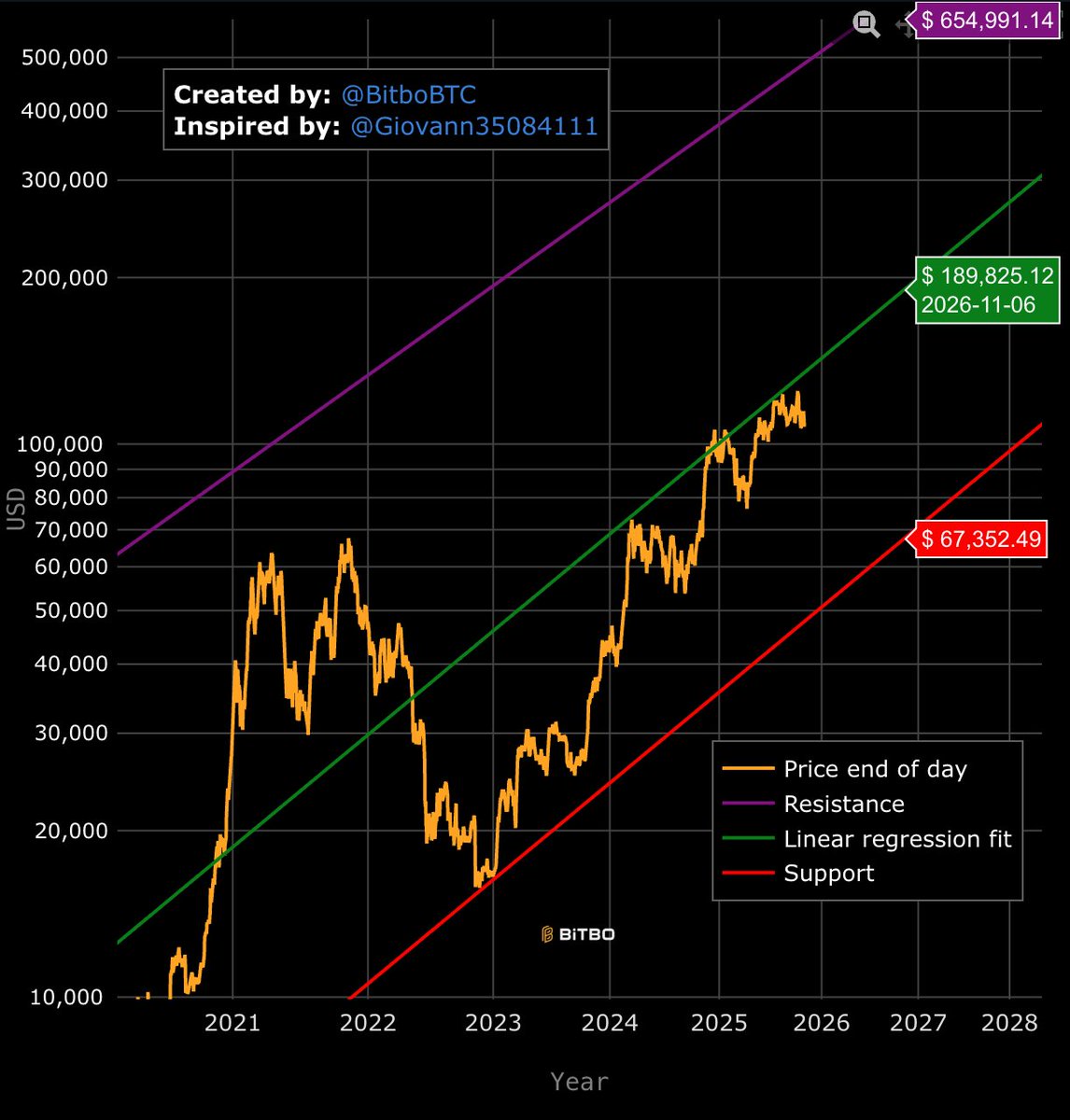
→ When you look at the BTC Mean Reversion + Regression Chart, price broke lower yesterday, touching $106K, the second major flush after the 10/10 crash earlier this month.
→ Both drops landed right on the same mean trendline, the level that has supported every rally this year.
Despite the correction, the regression slope remains upward, and both the 100-day and 200-day MAs continue to hold their trend.
→ That means the broader structure hasn’t turned bearish.
This is still a pullback inside an ongoing uptrend.
→ The BTC Fractal Echo shows the same pattern we’ve seen before every major leg — momentum cooled off after an extended push, then started flattening near the mean.
That’s what BTC does before the next expansion phase.
Now look at the $BTC Exchange Inflow Chart.
Even after the 10/10 crash and the recent move to 106K, inflows haven’t spiked.
If this were a real top, we’d see coins rushing to exchanges.
→ Instead, reserves are falling meaning coins are being held, not sold.
It’s accumulation during fear, not distribution at a peak.
→ So yes, volatility picked up, but it cleared leverage, not conviction.
And macro just flipped supportive:
The Fed cut rates by 25 bps, QT ends on December 1, and U.S.–China tariffs were lowered, easing global liquidity pressure.
→ Historically, this mix of a market flush, rising liquidity, and policy easing has marked the start of every major BTC rally.
October cleared the noise.
November brings the setup.
This isn’t the end of the run, it’s the reset before the next expansion.

English