Mourning Talk Show

15K posts

Mourning Talk Show banner
Mourning Talk Show

Mourning Talk Show

@MourningTalk

Mourning Talk Show is an interview-based podcast about philosophy, spirituality, psychology and art. Reciprocal conversations with diverse thinkers.

Katılım Ekim 2019
457 Takip Edilen330 Takipçiler
Mourning Talk Show
Mourning Talk Show@MourningTalk·
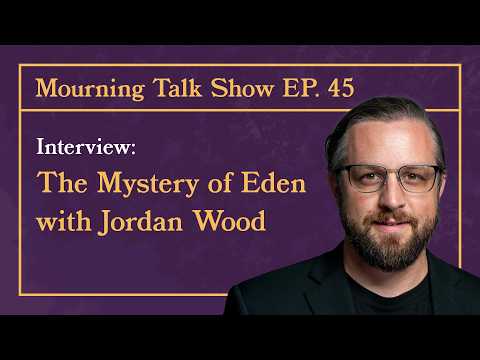
Ok, folks, here's my episode with Jordan Daniel Wood. What a brilliant guy. I'm obsessed with the fall and the garden of Eden, so it was nice to chat with such an expert. Let's talk about it! youtu.be/Qb9DpS_aETY
YouTube video
YouTube
Mourning Talk Show tweet media
English
2
1
5
82
Mourning Talk Show
Mourning Talk Show@MourningTalk·
Come, my Way, my Truth, my Life: such a way as gives us breath; such a truth as ends all strife; such a life as killeth death. ~George Herbert
English
0
0
0
25
Mourning Talk Show
Mourning Talk Show@MourningTalk·
“Magic, art and giving birth are essentially analogous and pertain to the same category of projection or exteriorisation of the inner life.” Meditations on the Tarot
English
0
0
0
40
Mourning Talk Show
Mourning Talk Show@MourningTalk·
@NickFreiling In my experience of almost leaving my faith, I've become pretty convinced that there must be a pretty wide field of grace around eschatology. DBH asserts how he feels about annihilation. I share his feeling, to be honest. I'm not sure we can demand specific feelings.
English
0
0
1
17
Nick Freiling
Nick Freiling@NickFreiling·
Last year, David Bentley Hart wrote an essay about his personal faith. I liked the essay – I'd bet it was the most popular one on his Substack in 2025. But I take issue with his admitted indifference about the prospect of his annihilation after death (elsewhere in the post: "I think I could reconcile myself quite easily, if not necessarily cheerfully, to 'total eclipse'"). While I appreciate his candor and can relate to this sentiment (life is hard – it simply ending, once and for all, doesn't always seem like such a bad deal), I'm increasingly unsure that this posture isn't totally opposed to the very substrate of Christian hope – that is, "life everlasting." DBH doesn't go so far as to relinquish his hope that "love may yet prove to be eternal," but I suppose I've come to decide this is the premise upon which I can make any other assertions about the nature of God's love. For example: it's pretty tenuous, I think, to criticize someone who alleges to believe that God is Love for being an annihilationist or a merely "hopeful" universalist whilst admitting that I, who also believes that God is Love, might be easily reconciled with the prospect of annihilation, too. You can't both have your cake and eat it, as they say. This is complicated stuff, I know. And I'm probably way in the weeds here. But I think the parts of me that find room for truly entertaining, let alone enjoying, the prospect of annihilation ("total eclipse") are parts of me that I should try to throw out.
English
2
0
8
241
Mourning Talk Show
Mourning Talk Show@MourningTalk·
I'm working through the idea that our lust for AI development reflects a misguided attempt to return to Eden. Computers, strangely, can be seen as a metaphor for the human capacity to behave "automotically" without the Spirit.
English
0
0
4
59
Mourning Talk Show
Mourning Talk Show@MourningTalk·
@OGRoseWriting I felt the same way. I was actually blown away by it. I appreciated that she validated Derrida’s underlying intuition. I have kind of been hoping to hear someone do that.
English
2
0
1
8
Mourning Talk Show
Mourning Talk Show@MourningTalk·
@OGRoseWriting do you folks have episodes where you discuss postmodernism? I’d love your take on it. If not, let’s talk!
English
2
0
3
62
Mourning Talk Show
Mourning Talk Show@MourningTalk·
It seems that the word “Christianity” can mean everything from a still-small-voice in the heart to an all-pervasive civilizational juggernaut.
English
0
1
4
72
Mourning Talk Show
Mourning Talk Show@MourningTalk·
Pursue the path ardently and intensely, but hold it lightly and laugh at yourself.
English
0
0
3
44
Mourning Talk Show
Mourning Talk Show@MourningTalk·
Things I'd like to manifest: A mentor A collaborator An IRL conversation partner about the shit I actually think about.
English
0
0
5
69
Mourning Talk Show
Mourning Talk Show@MourningTalk·
@Kilbride_in_ROK It feels like paying for friends I should get from the strength of my posts. Plus I already subscribe to too many things.
English
0
0
0
5
Matthew Kilbride
Matthew Kilbride@Kilbride_in_ROK·
@MourningTalk Good. Not sure why, but the Great Blue Check strikes me as Mammon morship, like auto-tuning music.
English
1
0
1
11
Mourning Talk Show
Mourning Talk Show@MourningTalk·
I really like the five-to-ten people I interact with on here. I do wonder if I’d find more of you nice folks if I paid. But I shall never know.
English
1
0
1
54
Layton Elyas
Layton Elyas@origina1ange1·
I would also like to note that, when I was primarily working as a somatic practitioner, a large portion of men who I worked with were actively working through deep sexual shame, including some of the topics I have discussed below. Some cried, some shook, most expressed that they experienced suicidality at various points in their life because of certain thoughts or desires that stemmed from either deep sexual trauma, extreme identity wounding, or porn addiction. Some of the things I was told were difficult to hear, but not in the way you might think. The shame was so palpable, and often stemmed from early childhood experiences. I became very aware, during that time, how many men have deeply lacked support, love, mutual care and intimacy….and the impact even that has had on sexual development.
Layton Elyas@origina1ange1

(Sexual) Paraphilia’s offer significant insight into one’s psychological and spiritual condition. If we brush them off as simply sexual deviance or perversion, we miss a deeper opportunity for proper integration. They arise as a result of a psychologically and spiritually fragmented society—which is a symptom of humanity’s current state of consciousness. Though these topics are “taboo,” avoiding them within spiritual and occult circles will ultimately do more harm than good. Chronic and toxic shame is the birthplace of fragmentation. There are some things I have wanted to talk about for a long time, but are not easily received as these topics often trigger extreme reactions. For example, if I suggest a compassionate perspective toward a person who is experiencing sexual attraction toward animals, there is a high likelihood that my sentiment will be twisted into excusing the behavior of those who commit abuse against animals. When I think of any paraphilia, I am always thinking of what unmet childhood need is attempting expression, or what lower aspect is begging for integration. However, these questions seek only to build a foundation for those who are deeply struggling, and is not en excuse for or endorsement of abusive behavior. In the case of sexual attraction toward animals (again, I am not necessarily talking about those who go on to abuse animals) what I see and hear coming from the inner child of the individual is, “I feel so deeply unworthy of human love and mutual affection. I feel so lowly, like an animal. At some point, I was made to feel less than human.” I would like to add the disclaimer here that each experience is unique, and I do not believe these thoughts are conscious…but rather, unconscious identity beliefs that manifest through sexuality as sexual expression is our first attempt at mature individuation. Thus, what manifests is either a result of our integration, or our fragmentation. Understanding the root of our fragmentation, through our misplaced sexuality, can help us to heal those identity wounds. Similar sentiments can be said about pedophilia. When we think of pedophilia, we often think of predatory adult men who go on to abuse children. However, even post-puberty children themselves may experience pedophilic desires in response to their own sexual or emotional abuse. To categorize these children as inherent monsters is to sentence them to a life of sexual and spiritual inversion, instead of inviting them into an experience of healing by offering them a safe place to discuss their feelings and the root of these desires. We often forget, when discussing these topics, that many of these paraphilia’s develop around puberty…which, from the perspective of occult science, is when the astrally body is “birthed,” or is “liberated.” Trauma stored in the astral body will inevitably express itself through sexual arousal, and inversion. Leading up to my own sexual development, I had fantasies of being sexually abused because that had been my experience up until my development, and it was what I learned that “love” looked like. Masochism may manifest as a coping mechanism to feign a sense agency or glorify weakness and submission as a liberating sexual choice to “replace” our feelings of powerlessness. Likewise, sadism may develop as an inverted and misdirected way to feel empowered. Sadism isn’t always about genuine pleasure in harming others. It can serve as a way to externalize pain, assert boundaries, or experience intimacy without making oneself vulnerable in the process. It may also correlate with an imbalanced/unintegrated masculine polarity. (Same with masochism + the rejected/defiled feminine) To conflate sexual trauma identities with authentic sexuality is to flatten complex trauma responses into a fixed sexual identity, negating personal agency. Things obviously become more complex when we move into the territory of intentional harm and abuse, but that is for another day.

English
1
0
25
1.3K
Mourning Talk Show
Mourning Talk Show@MourningTalk·
@origina1ange1 Great post. It is good to desire the healing of as many as possible. The western sexual ethic is damaged and many suffer.
English
1
0
4
136
Layton Elyas
Layton Elyas@origina1ange1·
(Sexual) Paraphilia’s offer significant insight into one’s psychological and spiritual condition. If we brush them off as simply sexual deviance or perversion, we miss a deeper opportunity for proper integration. They arise as a result of a psychologically and spiritually fragmented society—which is a symptom of humanity’s current state of consciousness. Though these topics are “taboo,” avoiding them within spiritual and occult circles will ultimately do more harm than good. Chronic and toxic shame is the birthplace of fragmentation. There are some things I have wanted to talk about for a long time, but are not easily received as these topics often trigger extreme reactions. For example, if I suggest a compassionate perspective toward a person who is experiencing sexual attraction toward animals, there is a high likelihood that my sentiment will be twisted into excusing the behavior of those who commit abuse against animals. When I think of any paraphilia, I am always thinking of what unmet childhood need is attempting expression, or what lower aspect is begging for integration. However, these questions seek only to build a foundation for those who are deeply struggling, and is not en excuse for or endorsement of abusive behavior. In the case of sexual attraction toward animals (again, I am not necessarily talking about those who go on to abuse animals) what I see and hear coming from the inner child of the individual is, “I feel so deeply unworthy of human love and mutual affection. I feel so lowly, like an animal. At some point, I was made to feel less than human.” I would like to add the disclaimer here that each experience is unique, and I do not believe these thoughts are conscious…but rather, unconscious identity beliefs that manifest through sexuality as sexual expression is our first attempt at mature individuation. Thus, what manifests is either a result of our integration, or our fragmentation. Understanding the root of our fragmentation, through our misplaced sexuality, can help us to heal those identity wounds. Similar sentiments can be said about pedophilia. When we think of pedophilia, we often think of predatory adult men who go on to abuse children. However, even post-puberty children themselves may experience pedophilic desires in response to their own sexual or emotional abuse. To categorize these children as inherent monsters is to sentence them to a life of sexual and spiritual inversion, instead of inviting them into an experience of healing by offering them a safe place to discuss their feelings and the root of these desires. We often forget, when discussing these topics, that many of these paraphilia’s develop around puberty…which, from the perspective of occult science, is when the astrally body is “birthed,” or is “liberated.” Trauma stored in the astral body will inevitably express itself through sexual arousal, and inversion. Leading up to my own sexual development, I had fantasies of being sexually abused because that had been my experience up until my development, and it was what I learned that “love” looked like. Masochism may manifest as a coping mechanism to feign a sense agency or glorify weakness and submission as a liberating sexual choice to “replace” our feelings of powerlessness. Likewise, sadism may develop as an inverted and misdirected way to feel empowered. Sadism isn’t always about genuine pleasure in harming others. It can serve as a way to externalize pain, assert boundaries, or experience intimacy without making oneself vulnerable in the process. It may also correlate with an imbalanced/unintegrated masculine polarity. (Same with masochism + the rejected/defiled feminine) To conflate sexual trauma identities with authentic sexuality is to flatten complex trauma responses into a fixed sexual identity, negating personal agency. Things obviously become more complex when we move into the territory of intentional harm and abuse, but that is for another day.
English
5
1
47
2.9K
Θωμᾶς del Vasto
Θωμᾶς del Vasto@Thomasdelvasto_·
If we talk to God and hear only silence in reply, perhaps silence is what we need
English
1
2
12
139