Average Moyo

883 posts

Average Moyo

Average Moyo

@MoyoAverage

Katılım Ekim 2022
115 Takip Edilen524 Takipçiler
Average Moyo
Average Moyo@MoyoAverage·
Psyops 101: Never make your opponent sound unstoppable.
Dereck Goto@dereckgoto

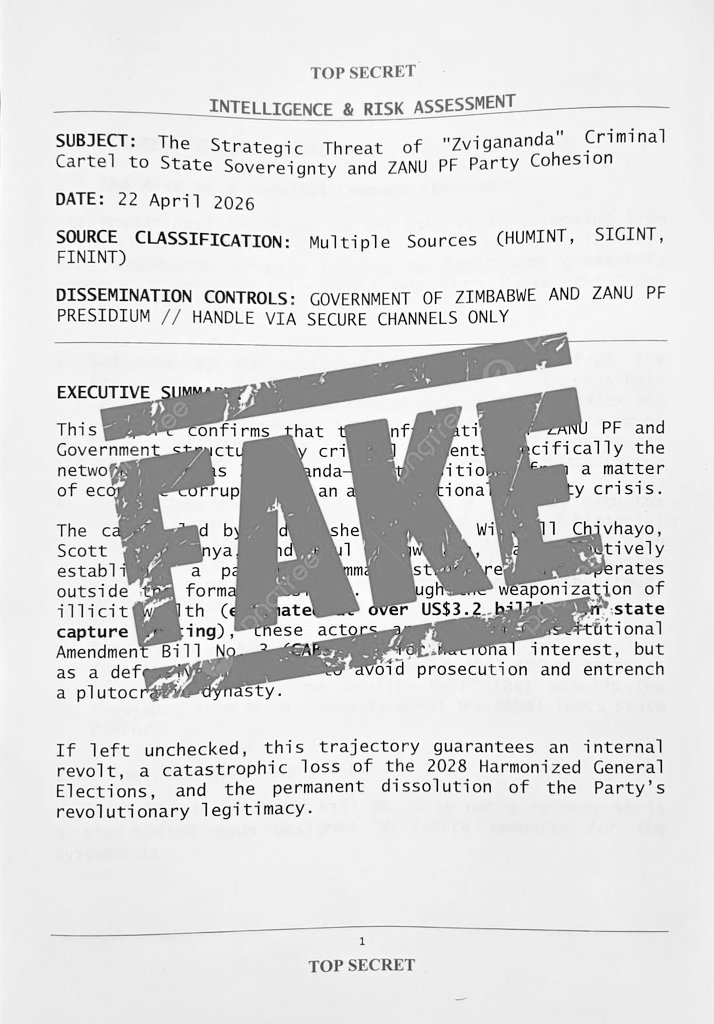
Here is a free lesson in Political Science 101. If you want to discredit someone, do not - under any circumstances - write report after report declaring them unstoppable. Yet that is precisely what these so-called intelligence documents shared by @LynneStactia on her X (Twitter) handle have accomplished. In one report, the "Zviganandas" have captured the military. In the next, they own the intelligence services. Then ZANU-PF itself, the Central Committee, the Presidency, the whole Government. And now - USD 3.2 billion at their disposal. Congratulations. You have just made them invincible legends. No rational Zimbabwean reads that pile of claims and thinks "someone must stop these people." The only logical conclusion available is: NOBODY CAN. This is the law of unintended consequences in its most embarrassing form. You aimed for discreditation. You delivered mythology. Effective psychological operations require discipline and strategic intelligence. What this operation reveals instead is poor coordination, zero editorial oversight, and a complete absence of strategic thinking. You do not defeat an enemy by making them invincible on paper. You have not exposed the Zviganandas. YOU HAVE CROWNED THEM. Ndangoti tionesane. Ndatenda.

English
0
0
1
5
Average Moyo retweetledi
Dereck Goto
Dereck Goto@dereckgoto·
Here is a free lesson in Political Science 101. If you want to discredit someone, do not - under any circumstances - write report after report declaring them unstoppable. Yet that is precisely what these so-called intelligence documents shared by @LynneStactia on her X (Twitter) handle have accomplished. In one report, the "Zviganandas" have captured the military. In the next, they own the intelligence services. Then ZANU-PF itself, the Central Committee, the Presidency, the whole Government. And now - USD 3.2 billion at their disposal. Congratulations. You have just made them invincible legends. No rational Zimbabwean reads that pile of claims and thinks "someone must stop these people." The only logical conclusion available is: NOBODY CAN. This is the law of unintended consequences in its most embarrassing form. You aimed for discreditation. You delivered mythology. Effective psychological operations require discipline and strategic intelligence. What this operation reveals instead is poor coordination, zero editorial oversight, and a complete absence of strategic thinking. You do not defeat an enemy by making them invincible on paper. You have not exposed the Zviganandas. YOU HAVE CROWNED THEM. Ndangoti tionesane. Ndatenda.
Dereck Goto tweet media
English
11
16
29
802
Average Moyo retweetledi
Dereck Goto
Dereck Goto@dereckgoto·
I spent my early years in Sanyati, Kadoma. I learned at Chiguvare Primary School and later did my secondary education at Sanyati Baptist High School. That’s why I’m still active in several local whatsapp groups from the area. One of those groups has recently uncovered the truth: Knox is not a war veteran. He was nowhere near our liberation war. His real surname is Mutimusakwa. He only became friends with Geza when he worked as an ARDA manager in Sanyati. Right now, he’s hiding in South Africa. Let there be no doubt - the man is an outright phony.
Dereck Goto tweet media
English
65
24
41
15.8K
Dereck Goto
Dereck Goto@dereckgoto·
These are the voices that matter - not the hollow, self-serving noise manufactured by social media elites who have turned narratives into a revenue stream. In the end, it is the quiet, unfiltered verdict from the people on the ground that decides outcomes. It is this enduring disconnect that explains the ritual shock of urban social media circles after every decisive electoral defeat at the hands of ZANUPF. Nyaya yese iri paground. Pano, it is all performance and echo chambers. Confuse the two, and you will continue to misread the country's politics. Once you grasp this distinction, you begin to understand ZANUPF politics in its true form. Uyu ari kutoti tinoda 20 years chaidzo nekuti 2 years ishoma. Ndatenda.
English
41
13
27
2.2K
Average Moyo
Average Moyo@MoyoAverage·
@dereckgoto The issue is about trust of the custodians of the power not that the ideas in the ammendment proposal are bad. They are good ideas but vanhu vacho
English
1
0
2
24
Average Moyo retweetledi
Dereck Goto
Dereck Goto@dereckgoto·
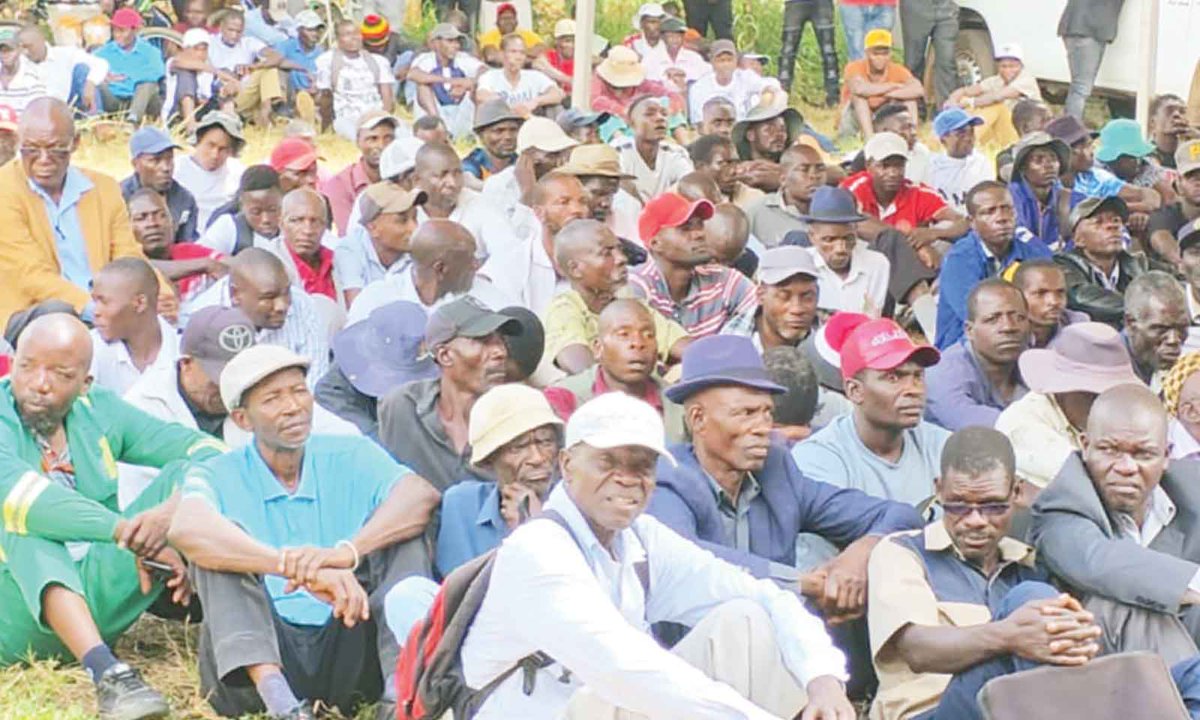
Development or Disruption? The Real Battle Behind Amendment No. 3 There is a certain kind of observer who insists that constitutional reform must always be treated with suspicion – that any adjustment to presidential terms is, by definition, a retreat. It is a tidy theory, comfortably held at a distance. Yet it begins to unravel the moment one steps into the charged, restless atmosphere of a public hearing – where people queue for hours, where seats run out, where voices strain to be heard because they carry something urgent. What has emerged across Zimbabwe in these hearings is something far less convenient for the cynic: a pattern. Not a perfect uniformity of opinion, but a convergence of instinct. A shared recognition, cutting across age, class and geography, that the country’s greatest constraint is no longer political choice, but political interruption. You hear it, quietly but firmly, in the words of Mr Amon Murandu, who speaks with the authority of lived experience, framing the Bill in terms of stability, peace and accountability. You hear it again, from a different generation entirely, in Mr Godknows Makucheti, whose concerns are immediate and unforgiving – jobs, drug abuse, the narrowing horizon confronting young people. Between those two voices lies the country itself: stretched across generations, yet arriving, almost reluctantly, at the same conclusion – that five years is often too short for anything meaningful to take root. The point, ultimately, is structural. As Bindura lawyer Mr Rainos Gumbo observed with disarming clarity, Zimbabwe has long been caught in a cycle of motion without completion – a perpetual election mode that consumes energy, fragments attention, and leaves too many projects suspended between promise and delivery. It is not that elections are undesirable. It is that their frequency, in a developing context, carries costs that polite debate rarely confronts. A road does not adjust itself to campaign cycles. A dam does not accelerate because a manifesto demands it. Development follows its own tempo – slower, more exacting, and far less forgiving of disruption. When political timelines fail to respect that tempo, the outcome is familiar: half-finished infrastructure, policies that never quite mature, momentum lost just as it begins to gather force. What is striking about this moment is that such insights are no longer confined to economists or policy analysts. They are being articulated, plainly and without ornament, by citizens themselves. They have seen projects stall. They have watched priorities reset with each electoral cycle. They have endured the peculiar fatigue of a nation that is always preparing to choose, but rarely allowed to complete. It is within this context that the language of continuity has gained traction. Not as a slogan, but as a demand for coherence – for a governance framework that allows what is started to be finished, what is planned to be realised. Amendment No. 3, in this light, attempts something deceptively simple: it seeks to align political time with developmental time. There is, whether one admits it or not, a certain strategic clarity in that move. Predictably, critics reach for familiar alarms – concerns about over-centralisation, or worries about reduced electoral frequency. These are not trivial points. They deserve serious engagement. But they lose much of their force when detached from the context that has produced this conversation. The hearings themselves – open, crowded, at times chaotic – are a reminder that participation in Zimbabwe is not being suppressed; it is being exercised, visibly and insistently. Perhaps the more revealing shift lies in how accountability is being understood. For years, it has been framed almost exclusively in terms of frequency – how often leaders must return to the electorate. Yet another interpretation is now asserting itself, more quietly but with growing persistence: that accountability also resides in delivery, in whether commitments made are commitments fulfilled. This is not a rejection of democracy. It is an evolution of it. A recognition that the ballot is not an end in itself, but a means toward a larger objective – a functioning, developing state. For ZANUPF, this moment carries a certain resonance. The emphasis on infrastructure, stability and long-term planning has long been central to its framing of the Second Republic. What is changing now is not the message, but its reception. It is no longer confined to official platforms; it is being echoed, in varied accents and lived realities, by the citizens themselves. And so the debate settles into something more grounded than its critics might prefer. Not a contest of slogans, but a negotiation with reality. How long does it take to build? What does it cost to interrupt? What kind of state emerges when policy is allowed to mature rather than perpetually restart? Increasingly, the answers are not coming from think tanks or social media timelines. They are coming from crowded halls, from patient queues, from individuals who have chosen – sometimes at real personal cost – to participate in shaping the framework that governs their lives. What they are saying is neither radical nor obscure. It is, in fact, disarmingly straightforward. That stability is not stagnation. That continuity is not the enemy of change, but its precondition. That a nation serious about development must, at some point, organise its politics around the demands of building rather than the rituals of constant contestation. Amendment No. 3 does not resolve every question. No constitutional reform ever does. But it reflects, with notable fidelity, the direction in which public sentiment appears to be moving – toward a politics that values completion over interruption, substance over spectacle, and progress measured not in cycles, but in outcomes. It is a shift worth paying attention to because it is already underway!
Dereck Goto tweet mediaDereck Goto tweet mediaDereck Goto tweet mediaDereck Goto tweet media
English
9
6
13
1.2K
Average Moyo retweetledi
Dereck Goto
Dereck Goto@dereckgoto·
Trial by Headline Is Not Justice Zimbabwe is not a lawless frontier where rumours are laundered into verdicts through repetition. It is a constitutional republic governed by institutions, procedures, and due process. Any attempt to suggest otherwise is not merely careless - it is reckless, destabilising, and dangerous. This must be stated plainly at the outset. This is not an argument against investigation. Allegations of corruption, wherever they arise, must be examined thoroughly, independently, and without fear or favour by legally mandated authorities. If wrongdoing is established, the law must act decisively. No individual, no company, and no institution is immune. That principle is settled and non-negotiable. What is contested is the irresponsible manner in which allegations are increasingly framed, amplified, and weaponised in the public domain long before investigations are concluded. Such conduct risks inflicting premature and potentially irreversible reputational damage on critical national institutions. When this behaviour is presented as “accountability”, it ceases to be legitimate oversight and begins to resemble sabotage. Recent reporting by NewsHawks, driven by narratives publicly associated with Senziwani Sikhosana, illustrates this concern. The language deployed does not merely inform the public of the existence of an investigation by the Zimbabwe Anti-Corruption Commission. It appears to presume criminal intent, treats allegation as fact, and constructs an elaborate storyline of corruption, greed, and conspiracy in the absence of any judicial finding or regulatory determination. That is not neutral reporting. It is pre-judgment. Words matter. Headlines matter. Framing is not neutral. The repeated portrayal of the Central Intelligence Organisation, the National Social Security Authority, and private financial institutions as active participants in a so-called “looting spree” is not objective journalism. It is prosecutorial theatre conducted outside the courtroom. Once such narratives are released into the public domain, they cannot be easily recalled or neutralised, even if later contradicted by investigative or judicial outcomes. The press statement issued by Chigama Architectural and Project Management is instructive, not because it exonerates anyone - that authority lies exclusively with investigators and courts - but because it highlights a fundamental ethical lapse in the reporting process. The company states that it was not approached for comment prior to publication. That omission alone undermines a core principle of professional journalism. Verification is not discretionary. Right of reply is not a courtesy. It is an obligation. More concerning are the accumulating indicators suggesting that certain narratives may not have been merely reported, but curated. Claims of prior knowledge of alleged “illegalities”, possession of confidential institutional communications, and apparent advance awareness of impending publications raise legitimate questions about narrative construction rather than dispassionate inquiry. Confidential documents belonging to statutory bodies are not public commodities. If such material was accessed unlawfully, selectively disclosed, or distorted to create the appearance of proof, that would constitute abuse rather than journalism. If the documents are genuine but incomplete, publishing them without full institutional context or verification is equally irresponsible. In either scenario, public trust is weakened. This is where personal grandiosity risks becoming a national liability. Transitional societies often produce actors who mistake proximity to influence, donor networks, or media platforms for permanent authority and immunity. They begin to believe they can drag State institutions into scandal at will, that the national brand is expendable, and that collateral damage is acceptable so long as the spectacle is loud enough. History is unforgiving to such arrogance. Zimbabwe’s international standing is not theoretical. Investor confidence, regulatory credibility, and compliance with global financial standards are fragile, cumulative assets. Reckless allegations involving pension funds, intelligence institutions, and banks - framed as established fact rather than contested claims under lawful investigation - risk attracting heightened scrutiny from global oversight bodies, not because wrongdoing has been proven, but because irresponsibility has been broadcast. That is the real danger. Not investigation, but inflation. Not accountability, but exaggeration. Not transparency, but theatre. The country is experiencing measurable economic stabilisation, infrastructure development, and renewed international engagement. This progress is collective. It does not belong to politicians, corporations, journalists, or activists alone. It belongs to the nation. Those who, through over-excited opportunism or unresolved personal disputes, seek to derail it should be challenged firmly and lawfully. Zimbabwe is not a circus. Its institutions are not props. Its future is not fodder for click-driven crusades. If investigations establish wrongdoing, the law must act with firmness. If they do not, reputations unjustly damaged must be restored with equal resolve. What must never be tolerated is the substitution of due process with performance, or evidence with insinuation. The rule of law and institutional strength will always outlast monkeys in giant robes. As a citizen of Zimbabwe, I state this as a matter of principle: no individual has the right to recklessly broadcast unsubstantiated allegations against vital State institutions. Authority to determine guilt does not come from volume, access, or bravado. It comes from the law. Zimbabwe deserves better than noise. It deserves discipline, responsibility, and respect for its institutions and the rule of law.
Dereck Goto tweet media
English
11
10
22
2K
Average Moyo retweetledi
H-Metro
H-Metro@HMetro_·
#FRONTPAGE EXACTLY 135 years since the first ball was bowled in the first cricket match played in this country in Masvingo on August 12, 1890, Zimbabwe will today host a World Cup final game for the first time. heraldonline.co.zw/a-world-cup-fi…
H-Metro tweet media
English
1
5
9
1.1K
Average Moyo retweetledi
Nick Mangwana
Nick Mangwana@nickmangwana·
Honestly, some of the impressions we give foreigners about our country, we shouldn’t be surprised if they believe we live in caves. They are always shocked how normal and advanced we are. Imagine someone shocked that our shops have groceries!
English
126
46
228
42.9K
Average Moyo
Average Moyo@MoyoAverage·
@dereckgoto There is no other explanation other than thst Nelson Chamisa is under full Zanupf payroll. Everything about his politics just doesn't make sense.
English
0
0
0
59
Average Moyo retweetledi
Dereck Goto
Dereck Goto@dereckgoto·
Chamisa’s Ritual of Failure – ZANUPF’s Enduring Insurance Policy Nelson Chamisa’s latest re-emergence is not a comeback but a ritual repetition. His interview with the South African Broadcasting Corporation merely reaffirmed what has long been evident to serious observers of Zimbabwean politics. He speaks fluently of “structures, systems, and institutions” while embodying their negation. Across every political formation he has led, Chamisa has governed by personal decree rather than constitutional process. These movements did not collapse solely due to external pressure; they disintegrated because authority was never delegated, never contested, and never renewed. The consequence has been a lost decade of opposition development. This is not because Zimbabwe lacks intellectual or organisational talent, but because that talent has been systematically expelled, discouraged, or rendered redundant. After each electoral cycle, the same choreography unfolds - purges, abrupt dissolutions, and ideological resets marketed as “renewal.” In practice, these episodes function as rolling institutional amnesia. Lawyers, economists, organisers, diplomats, and administrators - those capable of building durable political machinery - are either marginalised or pushed out entirely. Chamisa does not merely inherit institutional weakness; he reproduces it, ensuring that every cycle begins poorer in experience than the last. This reality invites a darker, though increasingly plausible, hypothesis. Have Chamisa’s serial failures, by disposition if not by design, become ZANUPF’s most reliable insurance policy? A fragmented opposition is useful to incumbents; a hollowed-out one is invaluable. Nowhere is this more evident than in Chamisa’s systematic elimination of the opposition’s intellectual and strategic backbone. By sidelining figures such as Tendai Biti, Thokozani Khupe, Douglas Mwonzora, Morgan Komichi, and more recently Jameson Timba and Charlton Hwende, Chamisa presided over a deliberate excision of institutional memory. These were not mere personalities; they were repositories of constitutional practice, statecraft, and organisational discipline. Replacing them with politically agile but institutionally thin figures such as Ostallos Siziba and Fadzayi Mahere has produced a leadership layer that is loyal but lightweight - fluent in social media and gobbledygook, barren in systems. The contrast with ZANUPF is instructive. For all the criticism it attracts, ZANUPF has demonstrated continuity across generations. It respects its veterans, some politically active since the 1960s, and anchors authority in structured organs such as the Politburo and Council of Elders. Institutional memory is preserved rather than purged. Authority is layered, not personalised. Leaders rise, fall, and retire, but the organisation endures because it understands a foundational truth of political longevity - movements survive by remembering, not by endlessly starting over. The comparison with Lovemore Madhuku is equally revealing. Madhuku is combative and electorally marginal, yet his politics are structurally disciplined. His organisations possess constitutions, congresses, and defined leadership pathways. Both men lose elections, but Madhuku’s institutions persist. Chamisa excels at hashtags and theatre while leaving behind organisational ruins. One builds structures capable of surviving their founder; the other builds vehicles that collapse the moment the driver exits. Chamisa’s own language exposes the pathology. He speaks of “my project,” “my movement,” “my plan.” This possessive reflex is fatal to democratic growth. Authority that is claimed rather than conferred must be defended through purges and perpetual suspicion - hence the obsession with infiltration narratives and the serial sidelining of peers. Zimbabwe does not suffer from a shortage of opposition energy. It suffers from an opposition leadership deficit rooted in personalism, opacity, and unresolved questions of integrity. Until leadership submits to rules it cannot override, and until financial and organisational accountability replace improvisation, Chamisa will remain what he has become - not a challenger to solid ZANUPF power, but its most reliable crowd-control foil.
Dereck Goto tweet media
English
24
9
22
2.9K
Average Moyo retweetledi
Dereck Goto
Dereck Goto@dereckgoto·
Me: Tiri kufara, baba… tiri kufara baba! 🎼🎵🕺 Tiri kufara, baba… tiri kufara baba! 🎼🎵🕺 (Singing in Frets' voice...) Curious Bystander: Ko muri kufareiko kudaro nhai? Me: Uri mutsva kuJerusalem here, kana kuti wakabva kure nhasi? Curious Bystander: Aa, chii chiri kuitika? Nditsanangurirewo. Me: Open cheque yedu kuZANUPF - yakadzoka kupolitics. Yakadzoka zvayo yakarara nemusana! Curious Bystander: Open cheque? Ipi iyoyo? Me: Inonzi Nelson Chamisa. Curious Bystander: Haa? Sei muchifara nezvazvo? Me: Because the man is a certified political failure. Two elections - two very clear defeats. Anopatsanura nekurwisanisa vanhu, saka hapana opposition yakabatana ingambomira pasi pake. He is a religious zealot anonyepa kuti anorota hope dzaMwari masikati machena. A strategist asina strategy. Uye pamusoro pezvose - akatopupura nemuromo wake kuti vanomutevera vese vari stupid! Curious Bystander: Mira zvishoma… uri kureva kuti munhu akadaro ndiye credible opposition leader here? Me: Credible? Handina basa nazvo! That's neither here nor there for me. Chandinoda ndechekuti aripo, aine vateveri vake vakajaira zvakapusa. In fact, if I'm being honest - we want him more than his own supporters want him. Curious Bystander: Ko sei? Me: Nekuti anovimbisa electoral victory zvefake. Anoziva kuparadza momentum yeopposition panguva chaiyo - chaiyo yakafanira. He is easy to distract, easy to divide, easy to neutralise. He is the safest opposition ZANUPF could ever ask for! Curious Bystander: Haa… pakaipa apa. Me: Hapana kuipa - pakanaka chose! (Breaking into song again) 🎼🎵 Tiri kufara baba… tiri kufara baba! Tiri kufara baba… tiri kufara baba! 🕺🕺🎶
Indonesia
13
12
23
1.8K