
Sabitlenmiş Tweet
Ashton
864 posts

@fabrizio_60 @abban98192288 خوب پس خاک بر سر براندازا که از پس این چند هزارتا بر نمیان!
فارسی

@abban98192288 ببین
ایست بازرسیای تهران دستکم نصفش یادست نیرو انتظامیه یا عراقیاس یا افغانیا.
ینی تهران ۱۵ میلیونی اگه فرض کن ۵۰۰ تا ایست بازرسی داشته باشه (که نصفشم نداره)و هر کدوم سه شیفت ۱۰ نفره باشن (که نیستن)و نصفشون بسیج و سپاه باشن.این بدبختا توو تهران ۱۵ میلیونی؛ ده هزار جانفدا ندارن!
فارسی

۳۰ میلیون جانفداتون چی شد؟!
چرا هرکی آنلاین شده از ماست
فارسی
Ashton retweetledi
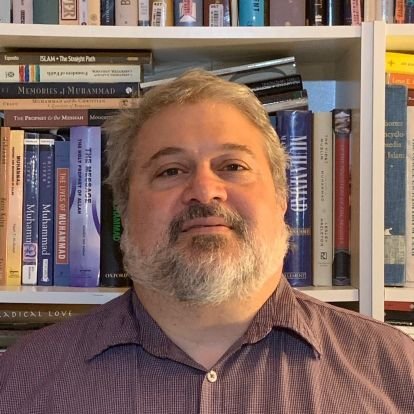
🟣 A Must See/Listen Debate between John Mearsheimer and Stephen Walt on one side, and Mike Pompeo and Victoria Nuland on the other side. (Sound Problem Corrected)
This debate is part of the Munk Debates series, which was held last Wednesday, May 20, 2026, in Toronto, Canada, under the title "America's Foreign Wars." 📷
About the Debate
John Quincy Adams’s 1821 warning that America “goes not abroad in search of monsters to destroy” remains the touchstone for modern advocates of foreign policy restraint.
This school of thought argues that decades of overextension and “global policing” have eroded domestic prosperity, destabilized the world, and allowed foreign actors to exert undue influence over domestic politics.
From this perspective, prolonged interventions have yielded diminishing strategic returns while compromising national security and unity.
Conversely, liberal interventionists argue that active U.S. engagement with the world is the bedrock of global order.
They maintain that American leadership secures vital trade routes, promotes economic prosperity, and prevents bad actors from exploiting power vacuums.
As the world’s preeminent democracy, they contend that the U.S. bears a unique responsibility to underwrite global stability; without it, the rules-based international system—and the eighty years of peace it has provided—will disintegrate.
📷Arguing in favour of the motion were two of the world’s leading proponents of U.S. foreign policy restraint:
John Mearsheimer, the R. Wendell Harrison Distinguished Service Professor of Political Science at the University of Chicago
and Stephen Walt, Professor of International Affairs at Harvard Kennedy School.
munkdebates.com/debates/foreig…
youtu.be/ZfagSRczSeg?si…
YouTube
English
31
این، دقیقترین و البته تلخترین واقعیتِ فردای روزِ جراحی است. وقتی گرد و غبار حملات بنشیند و آن هیمنهی سخت و آهنینِ دروغین متلاشی شود، میدانِ نبرد از آسمان و دریا، مستقیم به روی زمین و درون مغزها منتقل میشود. اینجاست که سنگینترین مسئولیتها بر دوش جامعه فرود میآید.
فارسی
#موقت
کالبدشکافی ۴۸ ساعت جراحیِ لایهای
پیشگفتار استراتژیک:
وسعت خاک ایران دقیقاً ۱,۶۴۸,۱۹۵ کیلومتر مربع است؛ پهنهای عظیم از کوهستانهای چینخورده و کویرهای ساکت.
ژنرالهای پنتاگون، باهوشترین طراحان ستاد مشترک و نوابغ موساد، سالهاست که میدانند طراحی و ابلاغ کارزار در چنین/
فارسی

A Hezbollah video shows a direct FPV drone strike targeting an Israeli military Hummer carrying Israeli occupation forces in southern Lebanon.
English
@ianbremmer The general perspective among Iranians (inside Iran) is that if enrinched uranium is gone (destroyed or removed from country) US will use nukes on Iran.
Dilution might be acceptable.
English

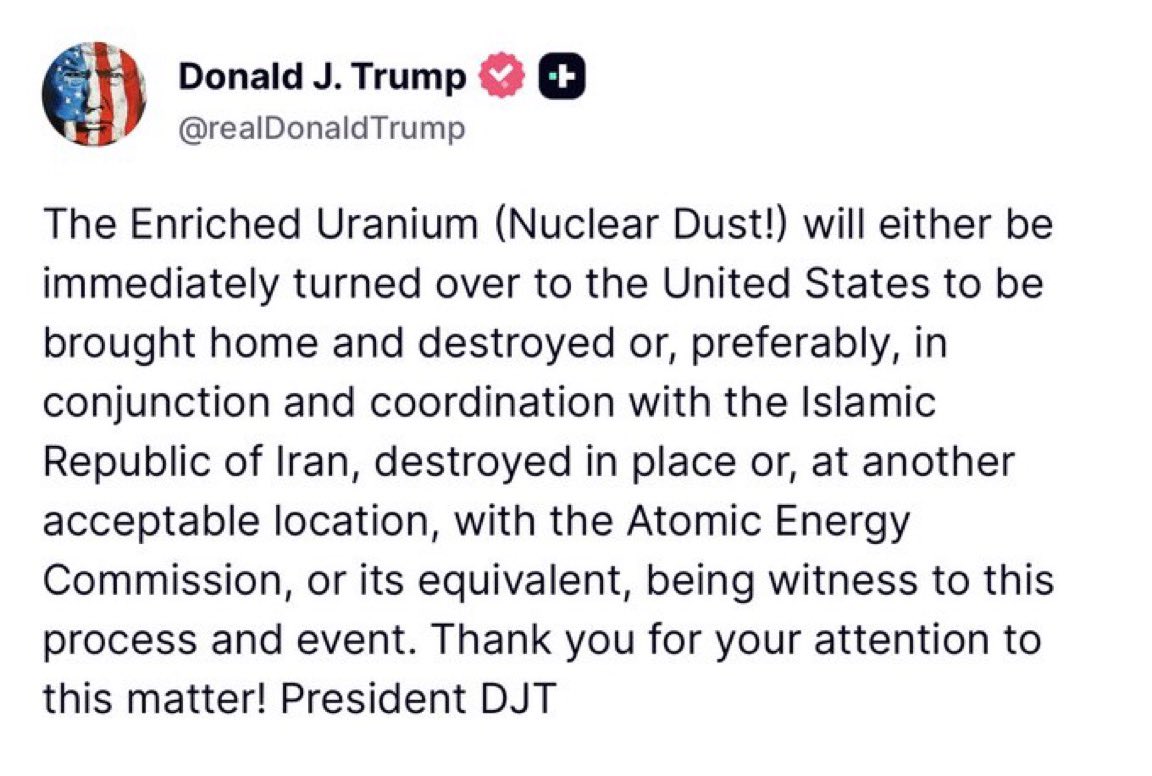
significant additional climbdown in war goals from president trump.
iranian leaders have to be pleased with the progress on their “how about nothing” negotiating efforts.
English
@marcthiessen If you want dust go and ge it yourself, if you dare ofcourse!
English

Qatar should not be allowed to give Iran $12B up front as part of any deal. No money until Iran hands over the nuclear dust!
Amit Segal@AmitSegal
New details emerging on the difficulties in U.S.–Iran negotiations: As of now, Iran is only willing to commit to not developing nuclear weapons, while the U.S. is pushing for concrete steps to reduce enriched uranium—either by selling it, transferring it abroad, or diluting it. A major sticking point is the Strait of Hormuz: Iran wants it under its management, while the U.S. insists on full freedom of navigation. There’s also no agreement on financial relief. Qatar has stepped in with a proposal to provide Iran a $12B humanitarian loan. Notably, Lebanon is now part of the broader framework under discussion.
English
@AmitSegal I bet @netanyahu is sleeping every night with the hope of waking up to see he has never attacked iran on Feb 28 and it's all a nightmare!
GIF
English

New details emerging on the difficulties in U.S.–Iran negotiations:
As of now, Iran is only willing to commit to not developing nuclear weapons, while the U.S. is pushing for concrete steps to reduce enriched uranium—either by selling it, transferring it abroad, or diluting it.
A major sticking point is the Strait of Hormuz: Iran wants it under its management, while the U.S. insists on full freedom of navigation.
There’s also no agreement on financial relief. Qatar has stepped in with a proposal to provide Iran a $12B humanitarian loan.
Notably, Lebanon is now part of the broader framework under discussion.
English
@DAVIDHALBRIGHT1 Wrong!
Before the war, almost everyone was scared of the almighty US power (@JZarif in an interview said if US attacks us, we would be finished in 1 day!), but now after 40 days of US Air Force + Navy (strongest branch of US army), no one (even Zarif) is afraid of the US in Iran
English

Please, Iran was very close to building nuclear weapons very rapidly before the June 2025 war. Military threats no longer worked. Deterrence had already failed.
Today, Iran isn’t able to be close to building nuclear weapons.
The Iranian regime may very well be more frightened of crossing the line today because it has seen the level of damage these strikes can inflict, and Iran needs a lot longer to build a nuclear weapon. That period after deciding but not having is a very vulnerable, dangerous time, a time period far longer now because of the war
If the world learns Iran is building a nuclear weapon, I would bet that even PM Starmer would join in a strong, even a military response.
Danny (Dennis) Citrinowicz ,داني سيترينوفيتش@citrinowicz
The Collapse of Deterrence Against Iran? Paradoxically, one of the most serious consequences of this campaign may be the erosion of deterrence vis-à-vis Iran, specifically, the loss of the implicit sword hanging over Tehran as it considers whether to move toward nuclear weapons capability. For years, one of the main factors restraining the Iranian leadership under Khamenei from openly advancing toward a bomb was the fear that doing so could trigger a large-scale military campaign aimed not merely at damaging Iran’s capabilities, but at threatening the regime itself. From Tehran’s perspective, however, Iran has now endured precisely such a confrontation and survived it. More importantly, the conflict exposed the significant limitations facing both Israel and the United States in any future campaign against Iran: the reluctance to commit ground forces, constraints on available munitions, and Israel’s deep operational and strategic dependence on the United States. At the same time, Iran may have concluded that its ability to threaten or disrupt the Strait of Hormuz, thereby inflicting severe damage on the global economy, gives it a level of coercive leverage that the West is ultimately unwilling to challenge decisively. It is important to acknowledge that Iran withstood an unprecedented military assault in terms of the scale of firepower directed against it, yet the regime remained intact and did not capitulate. That reality may lead Tehran to conclude that the deterrent credibility of both Israel and the United States has been fundamentally weakened. This perception could become even stronger after the U.S. elections and under future American administrations, many of which may be even less willing to enter into direct confrontation with Iran. From Tehran’s perspective, Iran’s resilience during the conflict may have shattered the aura of overwhelming Israeli-American deterrence. Paradoxically, deterrence may have been more effective when it remained ambiguous and untested. Once military power was actually employed, it may have demonstrated the limits, rather than the strength, of Western coercive capacity against Iran. This is a deeply consequential development. One indication is that Iran reportedly adopted tougher positions in post-war negotiations than it held before the conflict began. The loss of the deterrence card could ultimately convince the Iranian leadership that this is precisely the moment to move toward nuclear weapons capability, believing that neither Israel nor the United States possesses either the will or the ability to stop it. The core problem is that neither Israel nor the United States was prepared, or perhaps even capable, of going all the way in a confrontation with Iran. Instead, they appeared to rely on external variables, whether Kurdish unrest, internal regime instability, or hopes for political fragmentation inside Iran by supporting Ahmadinejad, as substitute mechanisms that could spare them the enormous manpower requirements and the prospect of a campaign stretching over months or even years. Once those assumptions collapsed, what remained was essentially an air campaign. While tactically impressive, its achievements may ultimately pale in comparison to the strategic damage caused by exposing the actual limits of Israeli and American power in Iranian eyes. From Tehran’s perspective, the war may have revealed not overwhelming Western dominance, but rather the boundaries of what Israel and the United States are truly willing and able to do militarily against Iran. That, in itself, may become one of the most damaging long-term consequences of the entire campaign. This should force both Israel and the United States back to the drawing board. They will need to reassess how deterrence against Iran can be rebuilt under the current circumstances. That will not be easy. Restoring deterrence after it has been tested , and, in Tehran’s eyes, exposed as limited, is far more difficult than maintaining an ambiguous threat that has never been put to the test. Most importantly, the conflict likely helped Iran better understand its adversaries through direct friction and real-world confrontatio. #IranWar #iran
English
@mohsenreyhani01 آره علتش اصلا این نبود که از سر استیصال بود چون نمیتونست کس مهمتری رو پیدا کنه!
فارسی

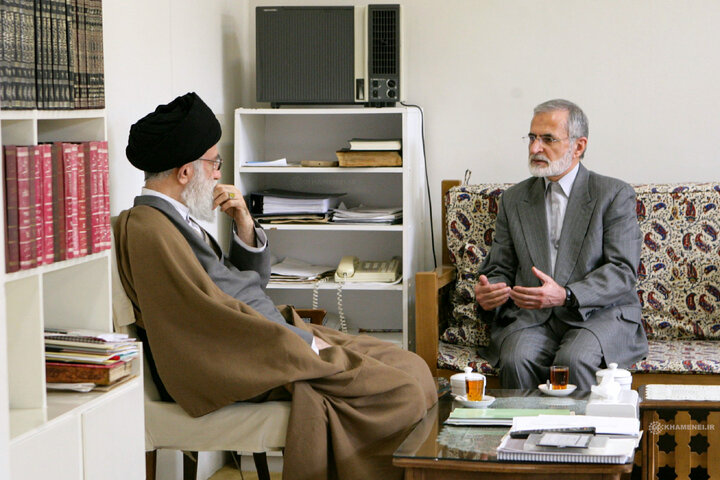
در روزهایی که نتانیاهو،دستور ترور هر مقام در دسترس را صادر کرد.کمال خرازی ترور شد.برخی میگفتند او پشت مذاکرات بود و اسرائیل مذاکره نمیخواست.اما یک علت احتمالی این بود که خرازی چند بار تهدید به ساخت سلاح اتمی در صورت لزوم کرده بود.بنظر اسرائیل او را در مقام مشوق موثر احتمالی میدید
Mohsen.Reyhani@mohsenreyhani01
پس از سالهای پر کار برنامه هستهای ج.ا در بخش نظامی، اسرائیلیها بدلایل مدیریت فنی فخری زاده، به سراغ او نرفتند. این عملیات جنبه سیاسی قوی داشت. سالها پیش از این،اسرائیلیها فخری زاده را بدین امر متهم میکردند که نقش یک مشوق و ترغیب کننده را برای برنامه توسعه سلاح هستهای ایفا میکند
فارسی
@gnuseibeh Iran doesn’t have to use it again!
What the 40 day war showed?
-It showed Iran cannot be militarily defeated
-US cannot fight prolonged war
-Regime change is a pipe dream
- Iran is important for China
-Iran is a regional power
English

No. Iran has been threatening to use Hormuz for decades, including during the Shah in mid 1970s. The Gulf is aware of this and as the Gulf came of age, it worked around this threat. Iran has used this threat now, but can’t use it again with anywhere near effectiveness than the first time.
Kaznonomous Rex@capreseboy
@gnuseibeh In the long run, the US will have lost. Iran will be able to do whatever it wants with the Strait as its hostage.
English
@omriceren @ABSamson1 You’re supposed to learn you don’t need navy to close the waterway! 😀
Hope lesson learned
English
I'm not sure what I'm supposed to do with this.
"Yes, in physical reality the US military dismantled Iran's navy, missile capacity, and ability to supply and control terrorist proxies. But actually Iran will emerge many times stronger."
It's gibberish. It's not how words work.
Murtaza Hussain@MazMHussain
“On the present trajectory, Iran will emerge from the conflict many times stronger and more influential than it was before the war.” theatlantic.com/international/…
English

Deeply sorry for her husband’s terrible diagnosis and wishing him a full and speedy recovery. But a MAJOR THREAT TO OUR NATIONAL SECURITY has now been eliminated—by her own resignation.
Tulsi Gabbard 🌺@TulsiGabbard
I am deeply grateful for the trust President Trump placed in me and for the opportunity to lead @ODNIgov for the last year and a half. Unfortunately, I must submit my resignation, effective June 30, 2026. My husband, Abraham, has recently been diagnosed with an extremely rare form of bone cancer. He faces major challenges in the coming weeks and months. At this time, I must step away from public service to be by his side and fully support him through this battle.
English
@MsJamshidi With all due respect, that was for before Iran being threatened that their “civilization will be wiped out” or “you will see one big glow coming out of Iran”.
Feb 28 is Iran’s inflection point.
English

These are the “intellectual heavy weights” influencing US foreign policy. Anyone who understands Iran knows full well that the enriched uranium has long meant to serve as leverage for a deal with the U.S. & was pursued in response to the Trump breach of the JCPOA.
Robert A. Pape@ProfessorPape
Only reason for 60% enriched uranium is to go to 90% For nuclear weapons Iran is pursuing more power, not a deal. Key question: Can world learn to live with Iran as nuclear weapons state? reuters.com/world/asia-pac…
English
استاد با جدیت پیشنهاد میده آمریکا بیاد 100 کیلومتر عمق خاک ایران اشغال کنه!
بعد میگه چرا ملت مسخرش میکنن!
Mohsen.Reyhani@mohsenreyhani01
برای آمریکاییها با فرض قبول تلفات، گرفتن جزایر و گرفتن عمق چند ده کیلومتری از خط ساحلی میتواند روی امن سازی نسبی تنگه هرمز اثر بگذارد. چون روی توان نظارتی و سلاح های دقیق تر سپاه اثر دارد، طبعا امنیت تنگه را کاملا تضمین نمیکند. سپاه همچنان میتواند از عمق خاک ایران بالستیک و کروز ضد کشتی روانه کند، نه تنها برای تنگه، بلکه کل خلیج فارس و دریای عمان. اما کاهش توان نظارتی و فاصله بی تاثیر نیست (کمک اطلاعاتی چین؟). پهپادهای رعد 3 یک نمونه هستند که با برد عملیاتی 100km توان دقیق هدف گیری انتخابی شناورها را دارند. فاصله از خط آبراهه اثر بخشی چنین ابزارهایی را کاهش میدهد که نیازمند عمق بخشی در اشغال خط ساحلی به ابعاد چند ده کیلومتر است. هوش مصنوعی میتواند این مشکل را برای سپاه پاسداران کمی حل کند. در کل تعلل آمریکاییها از ابهامات عملیاتی و ریسک عملیاتی بالا ناشی میشود.
فارسی
@andreas_krieg How about these GCC countries first stop giving their soil and air space to attack Iran first?
English

The GCC should create the Arab Gulf Strait Authority to put something on the table as a bargaining chip with Iran.
Unlike the illegal Iranian approach, the GCC authority should be based on
- right of transit passage in straits used for international navigation (UNCLOS Part III, Articles 37–44)
- prohibition on hampering or impairing transit passage (UNCLOS Article 42)
- no suspension of passage in international straits (UNCLOS Article 44; also 1958 Territorial Sea Convention Article 16(4))
- cooperation requirement in semi-enclosed seas (UNCLOS Part IX, Article 123)
- limits on coastal-state sovereignty in territorial seas within straits (UNCLOS Article 34)
IranView24 News Agency@IranView24
Iran formally defines its Strait of Hormuz management zone: All vessels must coordinate with and obtain authorization from the PGSA. Zone runs from Kuh-e Mubarak (Iran) to south of Fujairah (UAE) in the east, and from the tip of Iran's Qeshm Island to Umm Al-Quwain (UAE) in west.
English

@KalanisCalves Taxes are about services and resources expenditure,
If you have a business, you use more services and spend more resources consequently you gave to pay more taxes.
English

This is what our society fails to comprehend.
If I work as a physical therapist, and I’m good, I’ll make $100,000/yr. And pay $15,000 in taxes. I can see 60 patients per week. But that’s the end of it. No additional tax money, no more patients can get my services. I provide a living for myself and my family.
If I own a practice and employee 10 therapists that each make $100,000, now I’m providing a living for 10 families, and because of my efforts there is now $250,000 in tax revenue.
So why should businesses get taxed more? Why should they even have to pay payroll taxes? My value to society is way more than 10X at this point.
But the vast majority of Americans can’t comprehend that, neither do our congressional representatives.
CNBC@CNBC
Jeff Bezos: "If I do my job right, the value to society and civilization from my for-profit companies will be much, much larger than the good that I do with my charitable giving."
English
@Amena__Bakr Now that they have defeated Russia, and freed Ukrainian lands now they want to open the Strait! [sarcasm]
English

Reports now emerging that NATO is considering deployment in Hormuz…. It’s been almost 3 months since the disruption happened, what took them so long.
English

اظهارت امشب ترامپ که گفته جنگ "به سرعت" تمام خواهد شد و قیمت نفت "سقوط خواهد کرد" به قصد آرام کردن بازار های نفت بوده یا واقعا خبری هست؟
President Trump told a crowd of lawmakers gathered at the White House Tuesday evening that the Iran war will end "very quickly" and afterwards oil prices will "plummet."

فکت واضح:
کشوری که به آسانی توسط دیگران محاصره دریایی میشود، ابرقدرت نیست.
کشوری که در جنگ زیرساختهایش به آسانی نابود میشوند، ابرقدرت نیست.
کسی که اندازه واقعی خود را نشناسد،خود را به هلاکت خواهد انداخت.
علی ع فرمود: رَحِمَ اللّه ُ امرَأً عَرَفَ قَدرَهُ و لَم يَتَعَدَّ طَورَهُ
فارسی