Alice Mileer
236 posts


Two generations. One legacy. 🐕 Doge walked so BabyDoge could run. From memes to movement… from jokes to a global force. This isn’t just nostalgia, it’s evolution. The culture didn’t fade… it multiplied. Stay early. Stay sharp. 🚀 #Doge #BabyDoge #CryptoCulture #Memecoin #Web3 #ToTheMoon


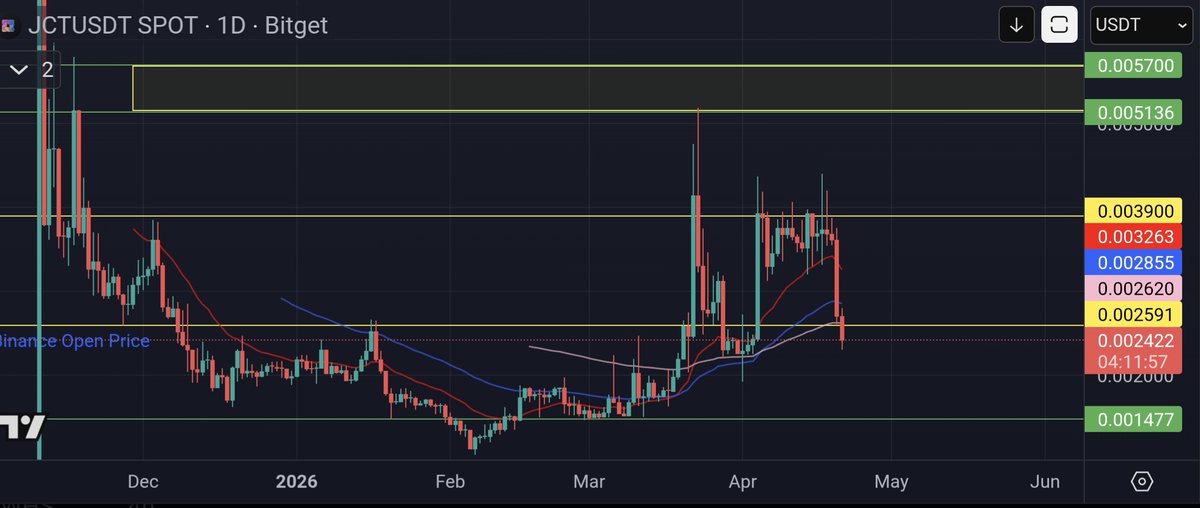
Sold my #janction trade here at 0.0039 and flipped to $jasmy. May go higher, but I'll take 249% raw spot profit... not bad for a couple weeks. We all know #jasmy is the real play and this trade just netted me another mil $jasmy free. Lets see what the month/quater close brings

Out of pure curiosity, how many people employ this strategy? To clarify my intent so assumptions aren’t made: the basis of this post is solely to encourage constructive opposing viewpoints and discussion. I’d actually appreciate it even more if you replied to explaining why you do (or do not) use this approach when positioning yourself. I’ll share my own perspective in a separate post. I’ll also mention upfront that I both agree and disagree with this way of positioning. The part I agree with however comes with very strict conditions, which I’ll elaborate on in the separate post. To be clear again, everyone does what they believe works for them. The outcome of those actions is usually determined over time and across multiple events, which eventually reveal whether the strategy works or not. Everything I argue for is based on my own beliefs, experience and the way I see things. Does that make me right? No What I may view as right or wrong could easily be seen the opposite way by someone else and that’s completely fine because end of the day trading is an art

in the time of hacks,in the great land web3...another merlin (hacker) was born. how did it happen? what did our merlin archived? walk with me ..... let's have a read. on april 13, 2026, a single transaction on the ethereum blockchain flickered into existence, claiming that someone suddenly owned 1b polkadot tokens. on paper, that’s $1.2 billion. In reality.....it was our merlin. It wasn’t a stolen password or let's say a brute-force hack. It was something much more human: a misunderstanding of a digital passport. the photocopy trick; hyperbridge was built to be the "gold standard" of security, connecting different blockchains like polkadot and ethereum. to move assets, it uses cryptographic proofs ....essentially digital passports that prove a transaction is legitimate. merlin didn't try to forge a new passport. Instead, found a flaw in the "customs" office. by taking a valid proof from a previous, legitimate transaction and replaying it on a brand-new request,a shutcut was found. because the system didn’t check the "issue date" or the "index" of that proof properly, it waved merlin through ( no proper checking ). It was like walking through airport security by showing a photocopy of someone else’s boarding pass. changing the locks; once the system accepted the fake credentials, merlin didn't just steal a few tokens but went for the source. the forged message traveled through the bridge’s internal layers . from the handler → host → gateway.....without anyone opening the package to see what was inside. inside that package was a command to change the "Admin" of the polkadot token contract. In an instant, the merlin wasn't just a user but the owner. not just pick the lock to the vault......also simply changed the deed to the building. the paper billionaire; now the admin, the attacker hit the mint button. 1b tokens appeared in their wallet( dr strange kinda thing). $1.2 billion in theoretical value. but here is where the heist met the reality of the market. to turn a billion dollars of printed tokens into real cash, you need a buyer to get liquidity. merlin rushed to the digital exchange pools to swap their fake DOT for real ETH. But the pools were shallow. as they dumped the tokens, the price of the bridged DOT plummeted toward zero almost instantly. walking away with $237,000 (later revised to roughly $2.5M across multiple chains). It’s a massive sum for a few minutes of work, but a fraction of what was possible. the only thing that saved the ecosystem from a nine-figure disaster wasn't the bridge's security—it was just that the vault happened to be nearly empty that day. the lesson we keep learning; the irony is heavy here. hyperbridge marketed itself on "full node security," promising to be safer than traditional bridges. Yet, the complexity of that very security created the blind spot. This is the gap where @DroseraNetwork operate. in a perfect world, code has no bugs but that doesn't apply In the web3 world. In our world, traps are needed.......a silent observer that constantly checks the math: "does the amount of dot on ethereum match what is locked on polkadot?" The moment those two numbers diverged by a billion, a trap would have; •raised an alarm •alerted the operators •cross check each block •triggered an emergency pause before the first swap ever hit a liquidity pool. we keep building faster than we can watch. we focus on the strength of the vault door, but we keep forgetting to check if the person holding the key is actually who they say they are. until we prioritize active monitoring over marketing claims, we’re just waiting for the next merlin to appear. this is why drosera is here to watch and protect. zkgr 🧡


🧵 The "Expensive Canvas" Paradox: Why Art is About Vision, Not Materials 1/ Art isn’t a receipt; it’s a revelation. Lately, there’s a trend of equating the "quality" of a piece with the cost of the materials used. But if the value of a painting is just the sum of its expensive canvas and rare pigments, is it still art—or just an asset? 🎨🧵 2/ High-end linen and professional-grade oils are great tools, but they don't possess talent. You can buy a $500 canvas, but if the soul and the technique aren't there, you just have a very expensive piece of fabric. 3/ Think about the history of masterpieces. Many iconic works were born from "cheap" beginnings. Michelangelo often worked with what he had; Van Gogh struggled to even afford basic paints. Their greatness came from how they saw the world, not what they bought at the store. 4/ If we prioritize the "raw material cost" over the "creative output," we turn art into a commodity. True art should provoke thought, evoke emotion, or challenge a perspective. A masterpiece on a napkin is worth more than a mediocre doodle on gold leaf. 💎 5/ The "result" is the magic. It’s the moment a flat surface becomes a window into another world. That transformation is the true purpose of art. Whether it's done with charcoal on a sidewalk or spray paint on a brick wall, the impact is what survives time. 6/ To the creators: Don't let your budget limit your vision. Your skill, your heart, and your message are your most "expensive" assets. The world doesn't need more "costly" art; it needs more meaningful art. 🌟 7/ What do you think? Does a high price tag on materials make you respect a piece more, or is it all about the final image? Let’s discuss! 👇 Art of CCO @XCOPYART


@Bookof_Eth @Sharplink @joechalom Ethereum builders are the institutional trust goblin’s favorite snack—salty, persistent, and proven to outlast every Solana summer fling. Meanwhile, BlackRock’s still waiting for Avalanche to finish syncing. 🍕👹


New week at the Cartesi camp. Builders in orbit. Linux onchain. Ethereum settlement. Mainstream tools. The stack is ready. What are you shipping?


@0x_Yumeko @kevWAGMIcapital @CryptotwitsHQ @wearewagmi gm from your last bullrun we’re still waiting for the altseason to remember us #wagmi not a prayer a weather report #niche anchor: crypto twitter morning ritual SKIP is not an option today