Mutendei Writes

6.8K posts

Mutendei Writes banner
Mutendei Writes

Mutendei Writes

@Mutendei_Writes

Spoken Word/Written Poet, Author, scriptwriter & actor/director, promoting the expressive power of art. Follow on IG @ Mutendei_Writes for more content.

Katılım Nisan 2013
1.6K Takip Edilen1.7K Takipçiler
Mutendei Writes
Mutendei Writes@Mutendei_Writes·
Ihtesham Ali@ihtesham2005

A Persian scholar finished a single math book in 9th century Baghdad that quietly became the foundation for every line of code running on Earth today. I started reading about him at midnight and could not believe how many things in my daily life trace back to one man. His name was Muhammad ibn Musa al-Khwarizmi. The book is called The Compendious Book on Calculation by Completion and Balancing. Every time you say the word algebra, you are saying his book title. Every time someone says the word algorithm, they are saying his name. Both English words come from him. Both are Latin transliterations of Arabic and of his own identity. The man did not just contribute to mathematics. He named it. Here is the part almost nobody tells you. Al-Khwarizmi was born around 780 CE in Khwarazm, in what is now Uzbekistan. He moved to Baghdad and worked at a research institution called the House of Wisdom, which during the Islamic Golden Age was the single most important center of learning on the planet. The caliph al-Mamun hired the best mathematicians, astronomers, and philosophers from across three continents and put them in one building with one job. Translate, study, and produce new knowledge. Al-Khwarizmi finished his book on algebra around 820 CE. The Arabic title contained the word al-jabr, which referred to one of the two operations he used to solve equations. When the book was translated into Latin in the 12th century, the Latin world did not have a word for what he had built. So they kept his Arabic word. Al-jabr became algebra. The discipline was named after a single Arabic word in the title of a single book by a single man. The deeper insight is what he actually changed about how humans think. Before al-Khwarizmi, mathematical problems were solved geometrically. You drew shapes. You measured them. You compared areas. The Greeks had built an entire mathematical tradition on visual proofs and physical constructions. It was beautiful and limited. You could not solve a problem you could not draw. Al-Khwarizmi did something nobody had done before him at this scale. He said you could solve any problem using abstract symbols and rules. You did not need a shape. You needed a procedure. You moved terms across the equation. You cancelled like terms on both sides. You isolated the unknown. He invented the idea that mathematics is a manipulation of symbols according to rules, not a study of physical figures. That single shift made everything that came afterward possible. Calculus. Differential equations. Linear algebra. Quantum mechanics. None of it works if math is locked inside geometry. He pulled it out. The second thing he did is the one that changed how the world counted forever. He took the Hindu numeral system from Indian mathematics, refined it, and wrote a book introducing it to the Arab world. That system included the concept of zero as a placeholder, and a positional notation where the value of a digit depends on its location. Roman numerals could not do complex calculation. Hindu-Arabic numerals could. When his book on numerals was translated into Latin as Algoritmi de numero Indorum, the word Algoritmi was just the Latin spelling of his own name. Europeans started calling the new method "doing algorism," then "running an algorithm." The word for the most important concept in computer science is literally his name in Latin. The third thing he did is the part that should haunt anyone who works in tech. His method of solving problems was systematic. Step one, do this. Step two, check that. Step three, if condition A, then do X, otherwise do Y. He wrote down procedures that could be followed by anyone, anywhere, who knew how to read. The procedure did not depend on intuition or genius. It worked because the steps worked. That is exactly what an algorithm is. A finite, deterministic procedure for solving a problem. He did not just give us the word. He gave us the entire concept of programming a thousand years before there was anything to program. When Alan Turing built the first abstract model of computation in 1936, when John von Neumann designed the first stored-program computer in 1945, when every engineer at Google, OpenAI, Anthropic, and DeepMind writes code in 2026, they are working in a paradigm that started with one man in Baghdad twelve centuries ago. The strangest part is what happens when you walk into any tech office in San Francisco or Bangalore or Lahore today. Engineers say the words algebra and algorithm hundreds of times a day. They do not know whose name they are saying. Almost nobody can spell al-Khwarizmi correctly on the first try. His original Arabic manuscript is preserved at Oxford. His book on Hindu numerals survives only in Latin translation. The Latin version was the textbook that taught medieval Europe how to count. The man who built the foundation of the AI revolution did not live to see a calculator. He died around 850 CE, a thousand years before the first electric current was sent through a wire. The civilization he built mathematics for collapsed. The library he wrote in burned. His own grave is unmarked. But every algorithm running on every machine on Earth right now still answers to his name.

QHT
0
0
0
6
Mutendei Writes retweetledi
Crazy Vibes
Crazy Vibes@CrazyVibes_1·
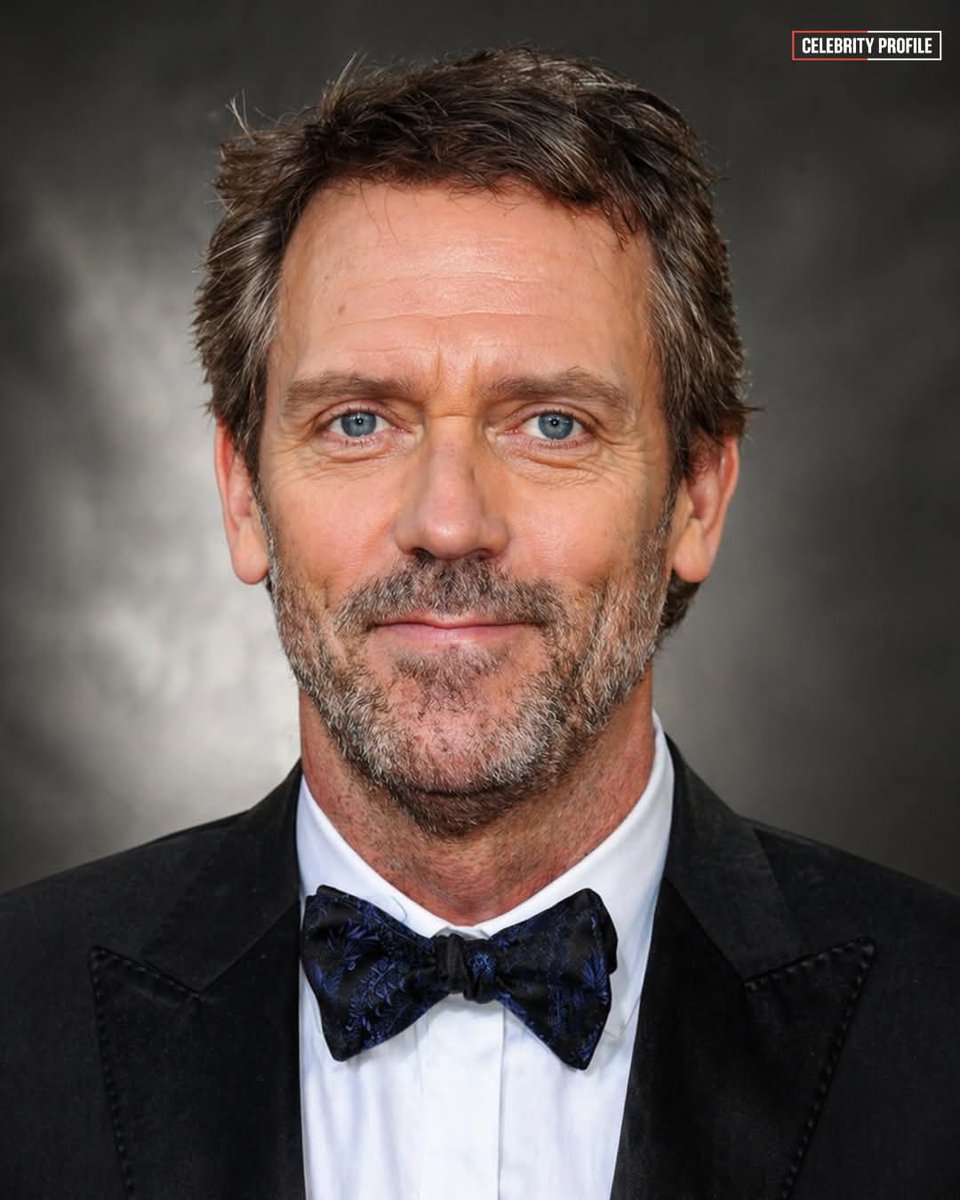
He was paid millions to play a miserable man — and couldn't tell where the character ended and he began. When the creators of House M.D. were casting in 2004, they wanted someone quintessentially American. British actors, they believed, couldn’t pull off the accent convincingly. They weren’t even looking overseas. Thousands of miles away in Namibia, Hugh Laurie was filming a movie and heard about the role. He couldn’t fly to Los Angeles. He couldn’t walk into a polished audition room. So he went into his hotel bathroom — the only space with enough light — propped up a camera, grabbed an umbrella as a cane, and recorded two scenes. He sent the tape, apologizing for how rough it looked. Executive producer Bryan Singer watched it and was captivated. He had no idea Laurie was British. That tape changed everything. The pilot drew seven million viewers. Respectable. Not earth-shattering. But over the following seasons, House became a global phenomenon. Laurie became the most-watched leading man on television, according to Guinness World Records. What nobody saw was the weight he carried. For eight seasons, Laurie worked sixteen-hour days. He was in nearly every scene. Los Angeles on set, London with his wife and three children — six thousand miles apart for nine months each year. The isolation crept in slowly. Laurie had battled depression since his youth, seeking help in 1996. The relentless schedule made it worse. He described “very, very black days” on set, a feeling of being exposed and trapped. The irony was impossible to ignore. Here was a man grappling with darkness, praised for playing a character defined by misery. The line between Hugh and House blurred with every episode. He kept his American accent between takes. Rode his Triumph Bonneville at dawn, finding brief freedom in speed and air rushing over him. But he never walked away. Eight seasons, 177 episodes. He stayed because it was the role of a lifetime. When House ended in 2012, Laurie stepped back. Music called. He released blues albums, toured with a band, and returned to acting on his terms — smaller, stranger roles, a Golden Globe-winning turn in The Night Manager. He didn’t disappear. He just stopped running on someone else’s clock. Playing House was like carrying a heavy, beautiful stone. You can’t set it down. But you can’t ignore its weight. Sometimes the greatest performances come from people who have lived the pain they portray. Laurie didn’t act misery. He understood it.
Crazy Vibes tweet media
English
149
640
7.6K
1.3M
Mutendei Writes retweetledi
Larry Madowo
Larry Madowo@LarryMadowo·
BREAKING VIDEO: Kenya’s Sabastian Sawe becomes the first person ever to win a regular marathon in under two hours, setting a new world record at the London Marathon in 1:59:30! Kenyans invented running™
English
818
12.9K
51.1K
3.4M
Mutendei Writes retweetledi
daz
daz@MetamateDaz·
They call it “corruption” in third world countries They call it "lobbying" in the west I promise you it’s the EXACT same thing
English
166
9.7K
44.7K
463K
Mutendei Writes retweetledi
SokoAnalyst
SokoAnalyst@SokoAnalyst·
By avoiding Western Kenya, the SGR risks becoming economically unviable. Skipping Kakamega, Bungoma, and Vihiga, regions with real movement of goods, people, trade, and enterprise, then pushing the line elsewhere weakens the project’s revenue logic. If SGR must pay for itself, it cannot bypass Western. Who changed the plan, and why?
English
75
44
208
44.7K
Mutendei Writes retweetledi
🇺🇸 Ronald Carter
🇺🇸 Ronald Carter@USronaldcarter·
🚨🚨🚨 TEN OIL REFINERIES HAVE BLOWN UP IN 21 DAYS. YOU HAVE NO IDEA WHAT THEY JUST TRIGGERED. 🚨🚨🚨 Since April 3rd, ten oil refineries, power plants, and energy facilities across seven countries have been destroyed by "fires," "explosions," and "accidents." Let that sink in. 💀 Russia — THREE facilities destroyed in 21 days 💀 India — THREE facilities destroyed in 21 days 💀 Australia — 10 percent of national fuel production GONE in one night 💀 Mexico, Romania, Texas — ALL lost a major energy site in the same 21-day window 💀 Every single one is being reported as "unrelated" ⚠️ The Viva Energy refinery in Geelong, Australia produces 120,000 barrels per day. One fire took that offline for months. ⚠️ Russian refineries have been hit by drones for 18 months — the West cheered. The same signature is now hitting refineries on four continents. Do you understand the scale of what's happening? ⚠️ There are roughly 600 operational refineries on Earth. Losing 10 of them in 3 weeks is not statistical noise. That is a campaign. ⚠️ Global refining has ZERO spare capacity. Every facility is running at max because post-COVID demand never softened. One lost refinery = real shortages within 60 days. ⚠️ In 2019, a SINGLE attack on Saudi Abqaiq knocked out 5.7 million barrels per day and sent oil up 15 percent in one session. We are watching that same dynamic, distributed across the planet. They're showing you "isolated accidents." They're NOT showing you that the exact same signature — unannounced, unclaimed, blamed on "a faulty valve" — is hitting different countries on different continents in the same 21-day window. Here's the logic — follow it carefully: → Refineries on four continents burn in 3 weeks → Zero suspects named → Zero coordinated response → Zero insurance classified as terrorism → Every single one gets the same word: "accident" If these were truly accidents, why is every major insurance carrier quietly rewriting refinery attack exclusion clauses RIGHT NOW? Complete silence. This is no longer an energy story. This is a civilization-level infrastructure war hiding behind the word "accident." this was just part one.. follow me because part two is going to be the one everyone shares. 🚨
🇺🇸 Ronald Carter tweet media
English
421
7.3K
13.2K
534K
Mutendei Writes retweetledi
Daily News Iran
Daily News Iran@DailyNewsIran·
Iran destroy American radars in the region,Increased rainfall Dams are overflowing after 7 years. Tucker Carlson Exposed American Weather Engineering in Iran. Follow Us for updates.
English
145
5.5K
13.1K
326.7K
Mutendei Writes retweetledi
SiriusB
SiriusB@SiriusBShaman·
They did not take cursive from the schools because children no longer needed it. They took it because of what it was quietly building in them. Consider what the exercise actually is. A child, six years old, is handed a pen and asked to draw a single unbroken line that becomes a word. The wrist must float. The fingers must hold a living pressure, never quite the same twice, always correcting. The eye must follow the ink forward and trust the hand to finish what it has begun. There is no lifting, no stopping, no starting over mid-word. The loop must close. The ascender must rise and return. The sentence must travel from one margin to the other as a single continuous gesture, and at the end of it the hand must still be steady. Twelve years of this. Every day. Ten thousand small acts of sustained, self-correcting attention, carried out below the level of conscious thought, until the motion belongs to the body and the body belongs to the motion. This is not penmanship. It is the slow construction of an interior form. The hand that has learned to carry a line without breaking it is the hand of a mind that has learned to carry a thought without breaking it. The two are not metaphors for one another. They are the same faculty, trained in the same child, by the same daily discipline. Continuity of the stroke becomes continuity of the reasoning. The patience of the loop becomes the patience of the argument. The commitment to finish a word one has started becomes the commitment to finish a sentence, a paragraph, a life's idea, without reaching for the nearest distraction halfway through. Print is a different creature entirely. Print lifts. Print stops. Print assembles a word out of separate, stamped, interchangeable pieces, each one beginning and ending in isolation. A mind raised only on print learns to think the way print is made, in discrete tokens, in replaceable units, in fragments that can be recombined by any outside hand without the owner noticing the substitution. It is precisely the shape of thought a language model produces. It is precisely the shape of thought a language model can steer. Cursive is kata. This is the whole of it. A form repeated daily, for years, not for the sake of the form but for what the repetition lays down in the practitioner beneath the form. The swordsman does not train kata so that one day he may fight in kata. He trains it so that when the moment comes and there is no time to think, the movement is already inside him, older and deeper than thought, and it rises on its own. Cursive was the kata of the literate mind, the daily quiet drilling of continuity, of patience, of a line held steady under the long pressure of its own length. And the signature it produced at the end, that small flourished mark unique to a single human being on earth, was only the outward proof of an inward form no machine and no other hand could ever reproduce. Take the kata away and the practitioner is left with vocabulary in place of faculty. He can recognise a whole thought when he encounters one. He cannot carry one himself. He can admire a finished argument. He cannot sustain one long enough to close its loop. He begins books he does not finish, sentences he does not end, ideas he abandons the moment the screen in his palm offers him a brighter one. And when the machine begins feeding him tokens in the exact shape his schooling taught him to receive, he meets it with no interior resistance at all, because no interior form was ever built in him to push back with. They removed it quietly, across a generation, and they removed it in the last years before the machines arrived. Twelve years of daily practice in unbroken, embodied, self-authored thought, gone from the curriculum of almost every child in the Western world, just as the instruments designed to complete their sentences for them came online. The hand forgets. The mind, having never been taught the kata, forgets a thing it never knew it had. That is what cursive was. That is what was taken. And that is why the thought of anyone who still writes by hand, in long unlifted lines, remains, quietly, stubbornly, and without their ever needing to announce it, their own. Now the question stands open. What else has been banned, phased out, quietly retired from the curriculum and from common life over these same decades, under the same soft excuses? Mental arithmetic. Memorisation of poetry. Latin. Logic as a formal subject. Map reading. Knot work. The keeping of a commonplace book. The reading aloud of long passages in class. Singing in parts. What was each of those actually building in the child, beneath the surface of the lesson, and whose interest was served by its disappearance?
English
363
3.1K
8.6K
437K
Mutendei Writes retweetledi
Anish Moonka
Anish Moonka@anishmoonka·
Mongolian kids start shooting bows at age 3. By 5, they're hunting from horseback. By 7, many race horses bareback, some of them across 18 miles of open grassland. The girl in that photo is ordinary for where she grew up. The country has more horses than people. About 3.5 million horses to 3.3 million humans, the highest ratio on earth. The bow itself is old-school engineering. It is made from birch wood, horn, deer sinew, fish glue, bamboo, deer antler, and silk thread, all glued and bound together. Shorter than an English longbow, but it hits harder and farther. A Mongol bow could drop an arrow on a target about three and a half football fields away. The English longbow, the best Europe ever made, maxed out at two and a half. A 13th-century account says Yesünge, one of Genghis Khan's nephews, hit a dinner plate six football fields out. Roughly a third of a mile, with a bow of wood, horn, and glue. And girls have always been part of this, for practical reasons. In old nomad camps, boys took the big animals like camels and cattle far from the tent. Girls stayed close with the sheep and goats. Wolves preferred sheep. Camels were too big. So the girls had to learn to shoot, fast, at something moving, often with one arrow to spare the herd. They got good because they had to. The most famous was Khutulun, the great-great-granddaughter of Genghis Khan. A trained archer and undefeated wrestler who commanded troops alongside her father in battle. Marco Polo wrote about her. In his words, she could ride into enemy lines and grab men off their horses like a hawk snatches a bird. She said she would marry any man who could beat her in a wrestling match, and they had to bet horses on it. She never lost. Collected thousands of horses from losers. Modern Mongolia still shuts down for three days every summer to do all three things at once. The festival is called Naadam, "The Three Games," held July 11 to 13. Wrestling, horse racing, archery. UNESCO added it to its cultural heritage list in 2010. Archery has always been open to women and men alike, and at a recent national event, a 78-year-old man competed alongside a 3-year-old boy. One detail about Mongolian archery: the archers pull the string with the thumb. In Western archery, you pull with three fingers. Here, a single thumb does the whole job, protected by a ring of bone or jade. It gives a cleaner release on horseback, when one hand is all you have free for the bow. Look at that photo again. She is doing what her ancestors were doing on these same grasslands eight centuries ago, with the same kind of bow. Not many cultures can say that.
Explorer Of Moments@ExplorerMoment

Young Mongolian girl, mounted archery, Mongolia.

English
19
882
4.3K
138.5K
Mutendei Writes retweetledi
Kateri Seraphina
Kateri Seraphina@KateriSeraphina·
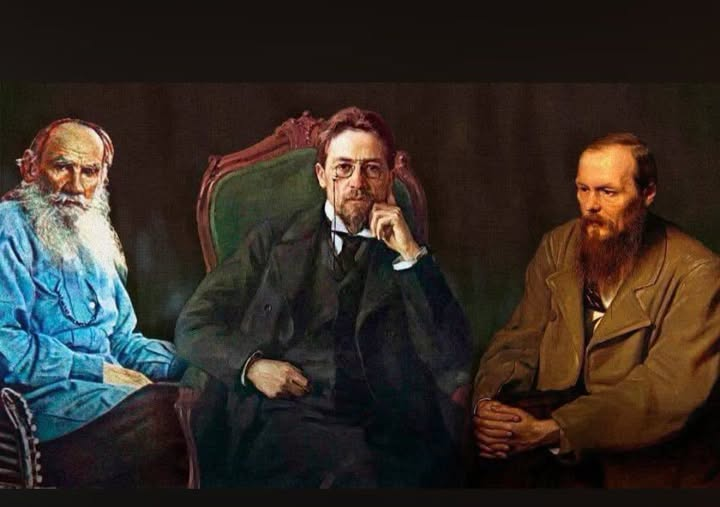
Anonyme. Saviez-vous que… un jour, pour expliquer les différences entre Tolstoï, Dostoïevski et Tchekhov, j’ai dit à mes élèves : imaginez les trois grands écrivains russes au bord de la mer. Tolstoï vous décrira la mer dans toute sa largeur, dans toute sa profondeur, dans toute son immensité ; il vous dira d’où vient cette vague et où elle va, il écrira sur les courants et le sable, les barques et les navires, le vent et les voiles, puis les îles, les falaises, les plages, les poissons, les coquillages, les mouettes, les marées ; puis encore les couleurs et les sons, les odeurs et les images, les gestes et les mouvements, les ombres et les lumières, etc., et pour chaque chose il vous expliquera les caractéristiques, les détails, les particularités, les spécificités, les origines, les nuances. Dostoïevski, en revanche, s’attardera sur cette partie de la mer en pleine tempête, sur les cyclones et les tourmentes, et il vous expliquera pourquoi les vagues écument, se brisent, bouillonnent, pourquoi le vent souffle, se déchaîne, gronde ; il écrira sur des typhons soudains, des tornades et des ouragans, des naufrages et des fortes houles ; il écrira sur des tourbillons meurtriers, où ils se forment, pourquoi ils se forment, pourquoi ils apportent douleur et souffrance, tourment et délire ; pourquoi, même dans la mer, il y a le mal, la passion, l’inquiétude. Tchekhov, de son côté, portera sur cette étendue immense un regard apparemment plus lent, plus détaché, plus circonspect, et peut-être se concentrera-t-il davantage, en silence, sur ces petits cailloux entraînés sur le rivage, sans se demander d’où ils viennent, ni où ils finiront, ni pourquoi ils sont là, ni où ils seront à l’avenir ; il en écrira brièvement, de manière concise, peut-être en les décrivant avec son ironie subtile, aiguë et tranchante. #russie #littératurerusse #dostoïevski
Kateri Seraphina tweet media
Français
140
950
4.6K
172.5K
Mutendei Writes retweetledi
Anish Moonka
Anish Moonka@anishmoonka·
Shōgun won 18 Emmys in 2024, the most any show has ever won in one season. Hiroyuki Sanada has been acting since 1966. Shōgun was the first time any studio ever gave him a producer credit. That single word in the credits is why. The tweet you're seeing makes it sound like Sanada walked into a room, slammed his fist on a table, and refused to sign until the studio respected Japan. The full story is quieter and explains a lot about how Hollywood actually decides what to make. Sanada was first asked to play Toranaga around 2016. He asked the studio one question: would they hire Japanese actors and crew specialists for each department. They said yes. He signed on. The show then sat in limbo for years. In 2020, the new showrunners Rachel Kondo and Justin Marks took over and asked Sanada to come on as a producer. It was the first producer credit anyone had ever given him in nearly 60 years of acting. His words to USA Today: "It means I can say anything, anytime." Sanada moved to Los Angeles in the early 2000s and got his first big role in The Last Samurai in 2003, opposite Tom Cruise. The two became friends after a moment on set where Cruise insisted Sanada use a real samurai sword in their fight scene. Sanada swung the blade up to Cruise's neck and stopped just short of drawing blood. Cruise didn't blink. After that film, almost every time Hollywood made a project set in Japan, they called Sanada. He consulted on 47 Ronin, The Wolverine, Mortal Kombat, Westworld and others as the actor. On set he would adjust how a sword was being held or fix armor that had been put on backwards, then walk young cast members through how someone in 17th-century Japan would have moved. He kept hitting the same wall. He told Backstage magazine: "I started feeling the limit of saying something just as an actor. It was a hesitation, I don't want to break their pride, the crews." When you are only the actor, you can suggest things to the director and the costume team but you cannot make them happen. You cannot fire someone who keeps getting it wrong, and you cannot bring in the specialists you know in Tokyo. You are a guest in someone else's house, and there is only so much you can rearrange before being rude. A producer can. The minute they put the title next to his name, Sanada brought in Japanese specialists for every department, from a master of gestures and period movement advisers to a Kabuki-style stage movement coach and obi-tying experts. Co-creator Rachel Kondo told Rolling Stone it was as if Sanada had been waiting 20 years to make those phone calls. The show came out in February 2024 and swept the Emmys seven months later. Eighteen wins, beating a record HBO's John Adams had held since 2008. First non-English show to ever win Best Drama at the Emmys. Sanada became the first Japanese actor in history to win a Primetime Emmy. His co-star Anna Sawai became the first Asian woman to win Best Actress in a Drama. The first episode racked up 9 million views in its first six days, beating the premiere of The Bear season 2. The clip you are watching is the visible top of a very deep iceberg. Underneath is a 63-year-old who had been pushing for the same thing for 20 years, in the small ways an actor is allowed to push, until someone finally handed him the title that let him push out loud.
Best Movie Moments 🍿@BestMovieMom

Hiroyuki Sanada agreed to star in Shōgun on one strict condition. He demanded the studio hire Japanese experts for every single department to avoid Hollywood stereotypes. He refused to sign the contract until he was sure the history would be respected.

English
12
891
6.1K
495.5K
Mutendei Writes retweetledi
😼
😼@dutchessprim·
Damn they don’t miss a fkin beat 🤣🤣🤣
English
43
1.2K
6.3K
105.9K
Mutendei Writes
Mutendei Writes@Mutendei_Writes·
Daniel Foubert 🇵🇱🇫🇷@d_foubert

The Crusader Kingdom of Jerusalem ended in a complete disaster because King Guy de Lusignan and Renaud de Chatillon did exactly what Trump and Netanyahu are doing right now. The Kingdom of Jerusalem did not fall because Islam was stronger than Christendom. It fell because two men — King Guy de Lusignan and Renaud de Chatillon — decided that provocation was a strategy, that the rules didn't apply to them, and that they could drag a fragile coalition into a war of their choosing on a timeline no one else had agreed to. At the Battle of Hattin in 1187, Saladin didn't defeat Jerusalem. Jerusalem defeated itself. Renaud de Chatillon was a maximalist operating on the logic that audacity is its own deterrent, that if you push hard enough — raid the caravans, strike the convoys, threaten the holy cities — the adversary will eventually capitulate rather than escalate. Renaud raided Muslim pilgrimage routes under active truce, attacked caravans Saladin had personally guaranteed safe passage, and treated every ceasefire as a staging period for the next provocation. He was not reckless by accident. He was reckless by doctrine. He believed the enemy's restraint was weakness. Saladin personally beheaded him after Hattin — a gesture he extended to almost no one else — because some men are too dangerous to ransom. Guy de Lusignan was legitimacy-challenged, politically dependent on his maximalist partner, and structurally incapable of restraining him because restraint means losing the coalition that keeps him in power. Guy didn't want to march into the waterless plateau above Tiberias in the July heat. His best commander, Raymond of Tripoli, told him it was a trap — that Saladin had designed the siege of Tiberias specifically to pull the Crusader army into terrain where it would die of thirst before it could fight. Guy knew this. He marched anyway. Because Renaud and the hawkish barons had made backing down politically impossible. The Crusader army did not lose at Hattin. It suffocated, on its feet, in the sun, before Saladin's cavalry closed in. The structure is identical. A dominant power whose strength is real but whose strategic position is more fragile than it appears. A political leader whose survival depends on a partner he cannot control. A partner whose entire identity is built on escalation and who has long since foreclosed the diplomatic exits. A patient adversary who has read the terrain, prepared the trap, and is waiting for the coalition to march into it of its own free will. Hattin was not a battle. It was the terminus of a political logic that had been running for years, and everyone involved could see where it was going except the people with the power to stop it. Jerusalem fell three months later. The Kingdom had hollowed itself out before Saladin needed to strike it. Some defeats are not inflicted. They are chosen, incrementally, by men who confused audacity with strategy and called the result God's will.

QHT
0
0
0
7
Khan 🧢 🌟
Khan 🧢 🌟@Khanstillday·
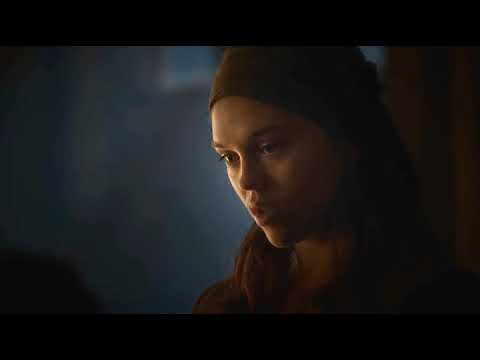
I dare you to name a more iconic scene from a TV show!
English
276
938
24K
297K
Mutendei Writes retweetledi
Anish Moonka
Anish Moonka@anishmoonka·
A samurai was sent to kill an evil lord. He cornered him, drew his sword. Right before the strike, the lord spat in his face. The samurai felt rage, and that rage ruined everything. If he killed now, it wouldn’t be duty. It would be personal. So he sheathed his sword, walked away, and never went back. Del Toro read that story before Sicario. It changed how he played the entire role. His character Alejandro is a former lawyer whose wife and daughter were murdered by a cartel. The whole movie is a revenge mission. But del Toro realized something from the samurai: to function as a killer, Alejandro has to bury all of that. Lock it away completely. So when del Toro saw pages in the script where his character explains his trauma to Emily Blunt’s character, he started crossing lines out. He told Villeneuve it felt fake. A man who’s locked his grief in a box doesn’t open it for a stranger he met fifteen minutes ago. Villeneuve agreed. They kept cutting. By the time they were done, 90% of everything Alejandro was supposed to say in the entire film was gone. Not just the dinner scene. The whole movie. Villeneuve’s take: dialogue belongs in plays. Movies are about movement and presence. The studio got nervous. They made the crew shoot a backup dinner scene with more talking, just in case the quiet version didn’t work. Took half a night to film. They never used it. I love that other actors ran with this same instinct. In the entire runtime of Drive, Ryan Gosling speaks just 891 words. Seven words every time he opens his mouth. He and Carey Mulligan skipped a bunch of their scripted lines because silence told the story better. Keanu Reeves did the same in John Wick 4, cutting his own dialogue in half. 380 words across almost three hours of screen time. The first John Wick had 484 words in half the runtime. Movies got longer, Wick got quieter. Sicario made $85 million on a $30 million budget. Three Oscar nominations. Del Toro got a BAFTA nod (basically the British Oscars) for Best Supporting Actor. And the whole thing was Taylor Sheridan’s first screenplay. He was still a struggling actor on Sons of Anarchy when he wrote it in four months. Now he runs the Yellowstone empire. Sicario 3 (called Capos) is officially in the works. Brolin called it “very, very real” last year. If del Toro comes back, I’d bet good money he has even fewer lines.
Best Movie Moments 🍿@BestMovieMom

For the dinner scene in Sicario (2015) Benicio del Toro cut 90% of his dialogue. The script featured a long speech explaining his revenge but he told Denis Villeneuve that his character did not travel there to talk. He went there to kill.

English
16
201
2.4K
263.8K