Sabitlenmiş Tweet
Muvor | ERP & Exchange
722 posts

Muvor | ERP & Exchange
@MuvorX
Universal Business Consensus. The World's 1st Blockchain ERP System.
Worldwide Katılım Aralık 2017
378 Takip Edilen2.3K Takipçiler

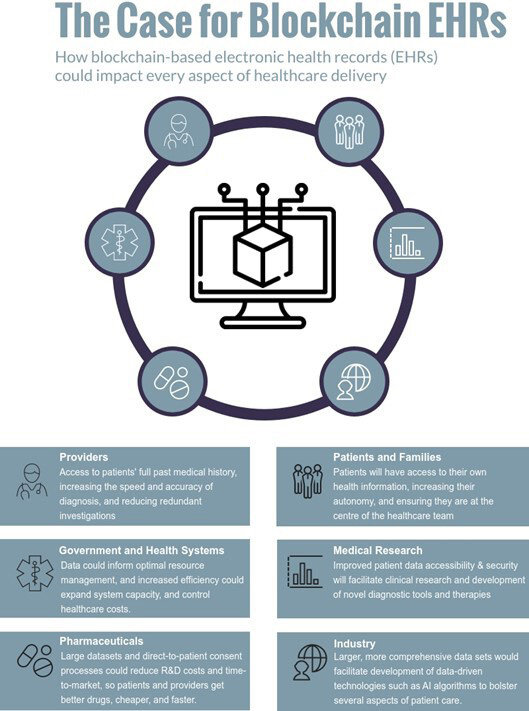
Electronic Health Records require more than digital storage. They require secure sharing, verifiable access control, and a reliable history of how patient data is used across providers.
A blockchain-based EHR environment introduces a different model for healthcare infrastructure. Instead of isolated hospital databases, records exist within a distributed ledger where access, updates, and transfers are cryptographically verified and logged. This creates a tamper evident record of every interaction with patient data, strengthening security and accountability across hospitals, laboratories, insurers, and research institutions. Blockchain systems are particularly valuable because they eliminate the single central database that attackers typically target while maintaining synchronized copies of records across multiple nodes. (Biomedres)
One of the largest problems in healthcare today is interoperability. Many hospitals and clinics operate incompatible EHR systems, forcing staff to manually re enter patient data or request records from other facilities. This fragmentation can lead to incomplete histories, duplicated tests, delayed treatment, and administrative burden on healthcare professionals. Blockchain-based architectures help solve this by allowing authorized participants across different organizations to access a shared ledger of patient records while maintaining strict permission controls.
In practical terms, a blockchain secured EHR system allows providers to see verified patient histories instantly, while patients maintain clearer authority over who can access their data. Hospitals benefit from reduced archival costs and fewer manual record management processes because records can be securely stored and accessed digitally rather than relying on large physical archives. (MDPI)
Within a platform architecture such as Muvor OaaS, this approach can be extended further by integrating compute infrastructure, identity management, and operational workflows directly into the node environment. Each node can enforce identity permissions, maintain immutable audit trails, and synchronize clinical data across authorized providers while preserving privacy and regulatory compliance.
The result is a healthcare data environment where medical records are secure, access is verifiable, and collaboration across providers becomes significantly more efficient without sacrificing patient control or data integrity.
#BlockchainERP #BlockchainEHR #EHR #Innovation #PostQuantum

English

Supply chains thrive when data remains perfectly aligned. Stability depends on teams sharing a singular version of events, progressing beyond manual reconciliation and delayed updates.
OaaS establishes this harmony by unifying infrastructure, identity, and operations into a singular, cohesive system. With blockchain integrated into the ERP from the foundation, inventory levels, settlements, compliance checks, and partner handoffs stay continuously in sync. The system and reality exist as one.
Every transaction stays verifiable from the moment of creation. Every state change is inherently audit-ready. As shipments move, payments clear, or contracts update, every participant accesses the identical truth at the exact same moment. Confidence replaces the requirement for external verification. Truth resides within the system.
Identity and permissions exist as core components of the operational flow. Approvals, access, and accountability occur automatically as work progresses. This design proves vital for organizations seeking both rapid movement and absolute governance across complex networks.
The outcome is a profound level of operational clarity. Settlements happen quickly. Partners collaborate with ease. If an audit or investigation arises, a complete and accurate record awaits. OaaS provides the essential system where everything that requires alignment stays perfectly unified.

English

Future threats will not rely solely on breaking encryption. They will exploit inconsistencies across systems — subtle mismatches in data, timing, or state that fall outside the scope of traditional cryptographic defenses. #BlockchainERP #BlockchainAI #PostQuantum #EGAHN
@any_51059/why-the-next-generation-of-technology-requires-systems-that-can-correct-themselves-8cdb8a5ada0d" target="_blank" rel="nofollow noopener">medium.com/@any_51059/why…
English

Muvor is the World's 1st Blockchain ERP System! A state-of-the-art, green, post-quantum, Stablecoin! It’s the standalone blockchain, we use to lobby a variety of Peer-to-Peer asset transactions, B2B, B2C, C2B, C2C, and O2O (OaaS), on a 100% digital basis!
Join today: Muvor.com

English

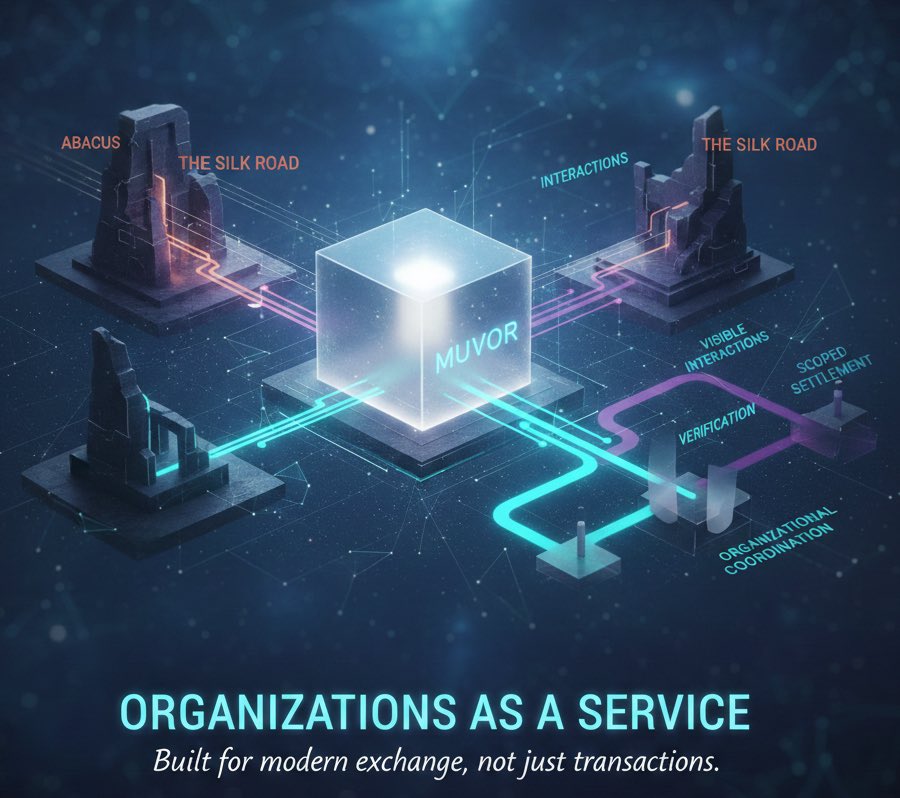
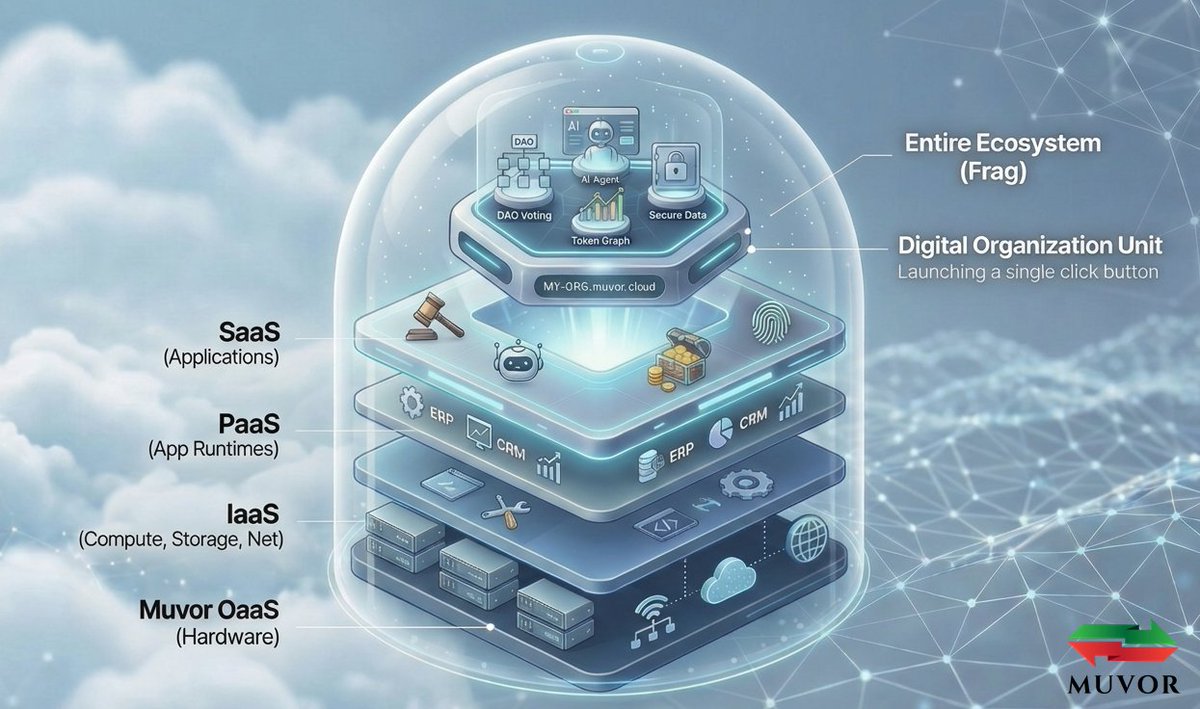
Organizations as a Service (OaaS): Deploy an entire digital org in one click.
OaaS provisions three critical layers simultaneously:
Infrastructure (VMs, hosting)
Operations (ERP, CRM, AI agents)
Governance (Treasury, voting, ownership)
The "Web2.5" approach:
✅ Fast encrypted servers (Performance, Security)
✅ PQC Blockchain (Trust, Sovereignty, Ownership)
✅ AI Agent routine workforce (AP/AR, Compliance, Reporting)
✅ One-click templates (Fintech, Logistics, NGO, Manufacturing)
✅ Immutable audit trails for regulatory requirements
OaaS is designed as a unified, one size fits all operational stack that consolidates infrastructure, platform governance, and enterprise applications into a single deployable environment.
At the base layer, it delivers relative IaaS through dedicated compute storage embedded directly within the hardware node. Organizations are not leasing fragmented cloud instances across third party providers. They are deploying controlled, purpose built compute that aligns with their operational and compliance requirements.
At the platform layer, OaaS provides integrated PaaS functionality, including identity and access management, permissions architecture, and governance logic. This ensures that roles, approvals, audit trails, and operational controls are embedded into the system architecture rather than bolted on as external services.
At the application layer, OaaS runs SaaS level enterprise functionality through a fully integrated ERP backbone. Supply chain management, inventory, revenue recognition, compliance, settlements, and reporting operate natively within the same environment as the infrastructure and governance layers.
The result is vertical stack continuity. Infrastructure, identity, and enterprise operations are not dispersed across multiple vendors or loosely connected APIs. They all exist within a single hardware node that maintains verifiable records, operational transparency, and economic alignment.
Instead of managing separate IaaS contracts, third party IAM providers, and standalone ERP systems, organizations deploy one cohesive stack. One operational governance framework built for modern, distributed enterprise environments.
Launch in minutes what used to take months. Deploy enterprise-grade operations infrastructure and systems integrations as easily as spinning up a VM.
Join the revolution: Muvor.com

English

Muvor is the World's 1st Blockchain ERP System! A state-of-the-art, green, post-quantum, Stablecoin! It’s the standalone blockchain, we use to lobby a variety of Peer-to-Peer asset transactions, B2B, B2C, C2B, C2C, and O2O (OaaS), on a 100% digital basis!
Join today: Muvor.com

English

When businesses consolidate onto Muvor, the financial impact becomes hard to ignore. Most teams don’t realize how much they lose to tool sprawl until it’s no longer there. Email, messaging, video calls, ERP, cloud compute and storage, AI processing, and contract support all stack quietly in the background, and once those pieces are unified, operating costs fall immediately. We’re seeing reductions above 35%, and often more when physical gateways and paperboard-heavy processes are replaced with native digital workflows.
The savings aren’t just theoretical. Downtime fades, API maintenance shrinks, and agentic workflows run inside the same environment that manages communication and data, so teams stop rebuilding the same pathways across disconnected systems.
Ownership does the rest—no vendor markups, no multi-platform overhead, no fragmentation tax. Everything lives inside a framework your organization actually controls, and that stability compounds over time.
This is the part most companies overlook. After migration, once the operational surface becomes unified, both costs and complexity decline in direct parallels. The system becomes simpler; Operations move faster. Budgets start to reflect the value being created rather than the infrastructure needed to hold it all together.
Additional advantages—compliance, auditability, cross-team coordination, agent-native execution—only reinforce the baseline.
A unified platform doesn’t just modernize the business;
it pays for itself.
Join Muvor today: Muvor.com

English

OaaS is designed as a unified, one size fits all operational stack that consolidates infrastructure, platform governance, and enterprise applications into a single deployable environment.
At the base layer, it delivers relative IaaS through dedicated compute storage embedded directly within the hardware node. Organizations are not leasing fragmented cloud instances across third party providers. They are deploying controlled, purpose built compute that aligns with their operational and compliance requirements.
At the platform layer, OaaS provides integrated PaaS functionality, including identity and access management, permissions architecture, and governance logic. This ensures that roles, approvals, audit trails, and operational controls are embedded into the system architecture rather than bolted on as external services.
At the application layer, OaaS runs SaaS level enterprise functionality through a fully integrated ERP backbone. Supply chain management, inventory, revenue recognition, compliance, settlements, and reporting operate natively within the same environment as the infrastructure and governance layers.
The result is vertical stack continuity. Infrastructure, identity, and enterprise operations are not dispersed across multiple vendors or loosely connected APIs. They all exist within a single hardware node that maintains verifiable records, operational transparency, and economic alignment.
Instead of managing separate IaaS contracts, third party IAM providers, and standalone ERP systems, organizations deploy one cohesive stack. One operational governance framework built for modern, distributed enterprise environments.

English

A rich ecosystem is what separates ownership that matters from ownership that merely exists. Real World Assets carry their greatest weight when everything surrounding them works together, the operations, the compliance, the revenue flows, the governance, the relationships between owners and the assets they hold. When those elements move inside a single environment, ownership becomes something much more than a record. It becomes a living, functioning system.
Organizations as a Service (OaaS) is built around that reality. It connects Real World Assets to a fully integrated Blockchain ERP so ownership, compliance, accounting, revenue distribution, governance, and reporting operate within a single system. Assets are not just issued. They are managed across their entire lifecycle.
Every transaction, distribution, update, and transfer feeds directly into financial records and operational workflows. Royalties and revenue recognition happen in real time. Compliance is built into the process rather than added afterward. Inventory, documentation, settlement, and audit trails exist in the same environment.
Communities benefit as well. Participants gain visibility into how assets perform. Fractional ownership structures are clear and transparent. Governance rights and incentives are directly tied to real operational activity, not abstract promises. Engagement becomes measurable and economically aligned.
For issuers, this means fewer disconnected systems and stronger control over cash flow and reporting. For participants, it means trust through transparency. For the broader network, it creates an ecosystem where ownership, operations, and value creation move forward together.

English

@x11four Open access! Most other platforms have been highly institutionalized, and it’s difficult to start ecommerce, or run anything on-chain without permission (or high costs)! It’s pretty much free to roam over here! 📲
English

Real World Assets are getting a lot of attention right now, but most of the conversation skips over the part that actually matters. An asset is only as powerful as the system managing it.
Ownership records, revenue distribution, reporting, compliance, lifecycle events. That’s where the real work lives. And in most organizations, that work still happens across spreadsheets, disconnected accounting systems, legal documents, and manual processes.
If you approach RWAs from an ERP standpoint, the picture changes completely.
Instead of treating assets as isolated entries, they become native objects within the Organizations operations. Ownership structures update in real time. Revenue recognition flows automatically. Transfers, distributions, reporting, governance; all move through the same framework that already handles your financial operations.
Everything is on one system. Asset data, financial data, operational data. No duplication. No reconciliation gymnastics. No parallel tracking. No silos.
When RWAs live inside an integrated ERP environment, the organization doesn’t have to bolt on management tools after the fact. The structure is already there. Compliance is embedded. Cap tables stay current. Reporting is always aligned with reality.
It’s not about creating a digital representation of an asset. It’s about giving that asset a living operational backbone.
Once that backbone exists, scale becomes a function of infrastructure, not paperwork.
Let's build together: shop.muvor.com
#BlockchainERP #RWAs #eCommerce #PostQuantum

English
Muvor | ERP & Exchange retweetledi

Governance layers like OaaS declare and verify Top-Level Property right of ownership using the Quanti Cloud ecosystems’ Proof-of-Possession (PoP) algorithm derived from underlying Activities (PoA). This spans UTXOs, IP, Metadata, Domains, among other inputs.
Tony Walker@TonyWakuu
Orgs as a Service (OaaS) is the layer within the Frag ecosystem responsible for the fundamental elements of mDAOs. This ensures each Organization operates as a decentralized hub of users with the necessary tools, and native governance, for operands, and external interactivity. 🌐
English

It’s becoming obvious that the real unlock in modern operations isn’t another SaaS tool. It’s the ease of access to those tools, and verification of your data.
When AI, ERP, Cloud (Storage, Deployment, Authentication), E-mail, Messaging, Calls, and Cross-Platform Networking all live inside a single environment, you stop losing time to glue code and fragile integrations. Work stops spreading itself across ten systems that don’t understand each other. The organization finally gets a shared memory and a shared rhythm.
This is where Muvor stands alone.
It's not a bundle of apps. It’s an ownership ecosystem. Your data, your coordination layer, your operational spine. AI can act directly on your workflows, your processes, your teams, without jumping barriers or passing data to outside infrastructure. ERP isn’t a separate island anymore. Communication tools aren’t bolt-ons. Everything speaks the same language because everything shares the same environment.
The result is a system that actually scales.
Need to jump from internal messaging to running an agent workflow? It’s seamless.
Need to go from a dataset to an email to a call to a cross-platform task? It feels like switching browser tabs; the network keeps everything connected a low latency.
Muvor makes the organization feel like a single surface instead of a collection of rented tools. That shift is subtle at first, and then it’s impossible to operate without it.
This is what modern infrastructure should look like. Clear, cohesive, and truthfully yours.

English

Quantum Key Distribution Meets the Quanti Cloud medium.com/p/quantum-key-…
English
Muvor | ERP & Exchange retweetledi

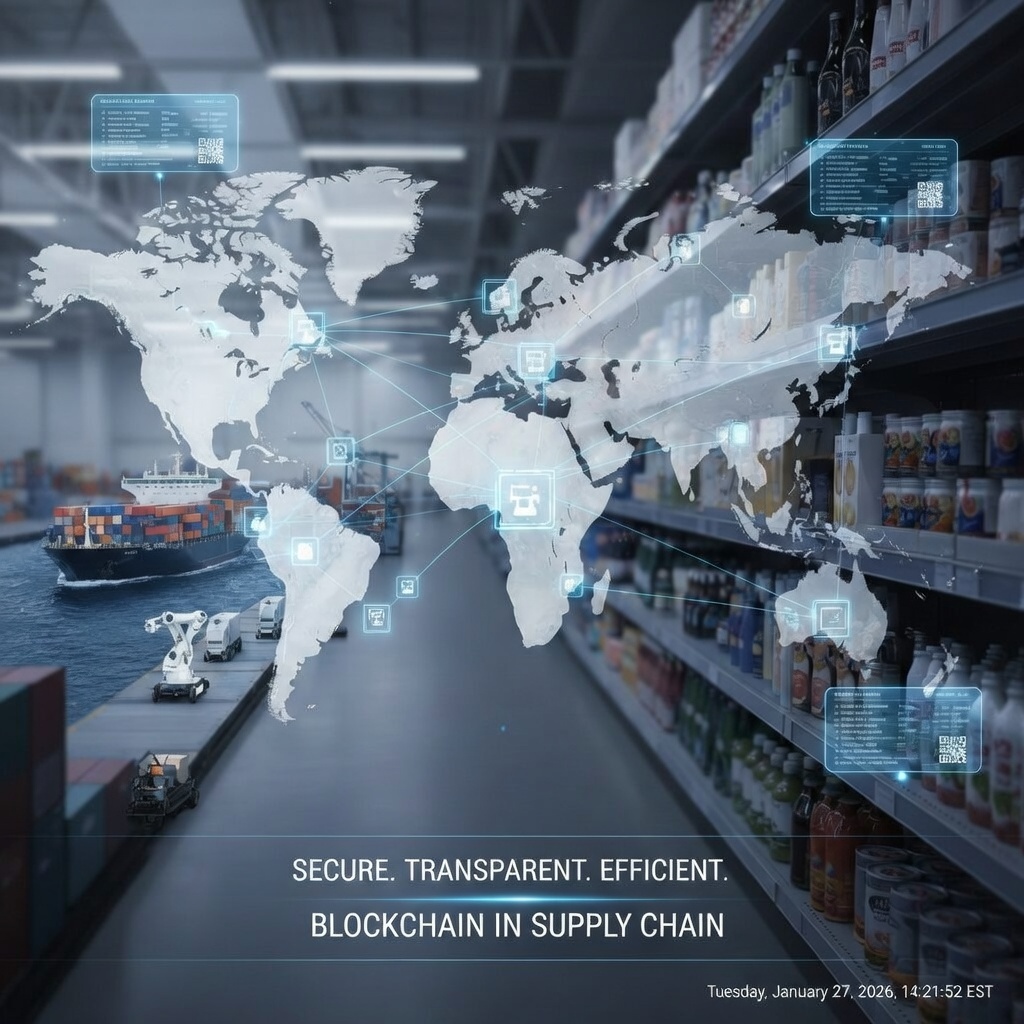
Supply chains have always struggled with fragmented data. Information lives in different systems across departments and partners, with each group maintaining its own records. This creates multiple sources of truth, where everyone relies on slightly different data for the same event. The result is confusion, delays, and a constant need to reconcile just to figure out what is actually happening.
Blockchain can help with some of these issues, but it is not a magic solution. What it really offers is a shared, immutable ledger that multiple parties can access. In the right situations, that can be valuable. It is especially useful for tracking high-value items, verifying authenticity, or keeping a clear record of transactions between organizations that do not fully trust each other.
What blockchain does well is reduce disputes over what was recorded and when. Once something is on the chain, it is very difficult to alter. That makes it easier to verify actions and timelines, and it can reduce the time spent arguing over records. But it does not remove the need for strong operations, clear processes, and good judgment.
Artificial intelligence helps to automate decisions when the data is accurate and consistent, but blockchain by itself does not guarantee that quality. What matters more is whether organizations are willing to adopt common standards, invest in integration, and hold themselves accountable for keeping information clean and up to date. Muvor ERP both supports those goals, and enforces them.
This is where environments like the Quanti Cloud become important. The Quanti Cloud gives supply chain partners a shared space to contribute and access trustworthy data without giving up control. Everyone works from the same foundation, and intelligent agents can take action with confidence, knowing the information they are using is current and consistent. Changes flow cleanly through the network instead of breaking downstream processes.
The real value of Muvor shows up when it is used intentionally. It is a strong fit for solving specific problems like traceability, provenance, or coordination across multiple partners where trust and transparency are essential. In those cases, it can reduce friction and increase confidence.
The major difference revolves around organizations moving from managing multiple sources of truth to working from a single, reliable foundation everyone can trust. Blockchain and platforms like Muvor and the Quanti Cloud build that foundation, keep it honest, useful, and organized.
#BlockchainERP #SupplyChain #Ownership #Privacy #Governance #EnterpriseTechnology #Innovation #Muvor

English