The Children of Oosterbeek
For eighty years, the children of a small Dutch town have kept a promise to soldiers who never made it home.
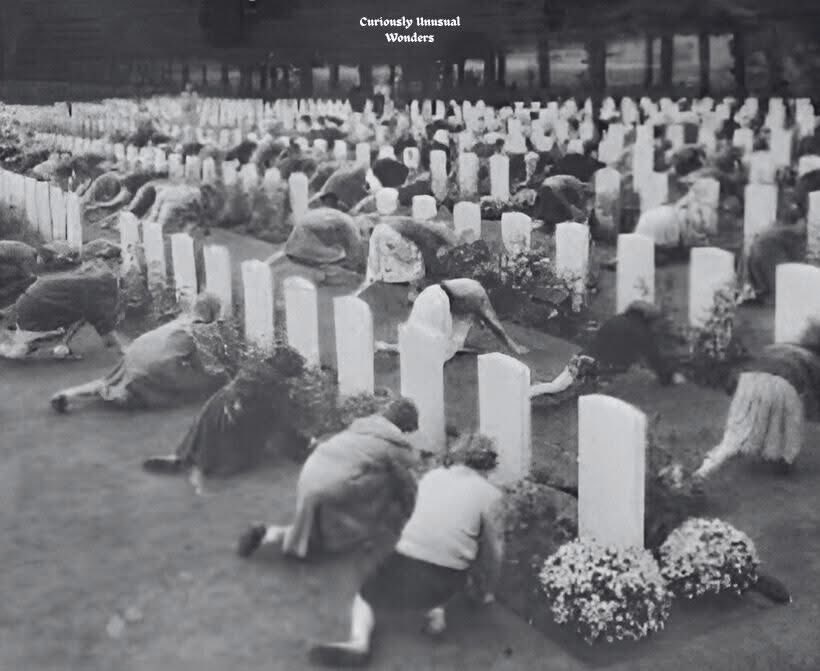
In Oosterbeek, near Arnhem, there’s a quiet cemetery lined with 1,759 white headstones. Beneath them rest the airborne soldiers who fell from the skies in September 1944 men who fought for a bridge, and for a freedom they would never live to see.
When the war ended and the guns went silent, the people of Oosterbeek made a vow: that these men would never be forgotten. And they’ve kept that promise in a remarkable way by passing it on to their children.
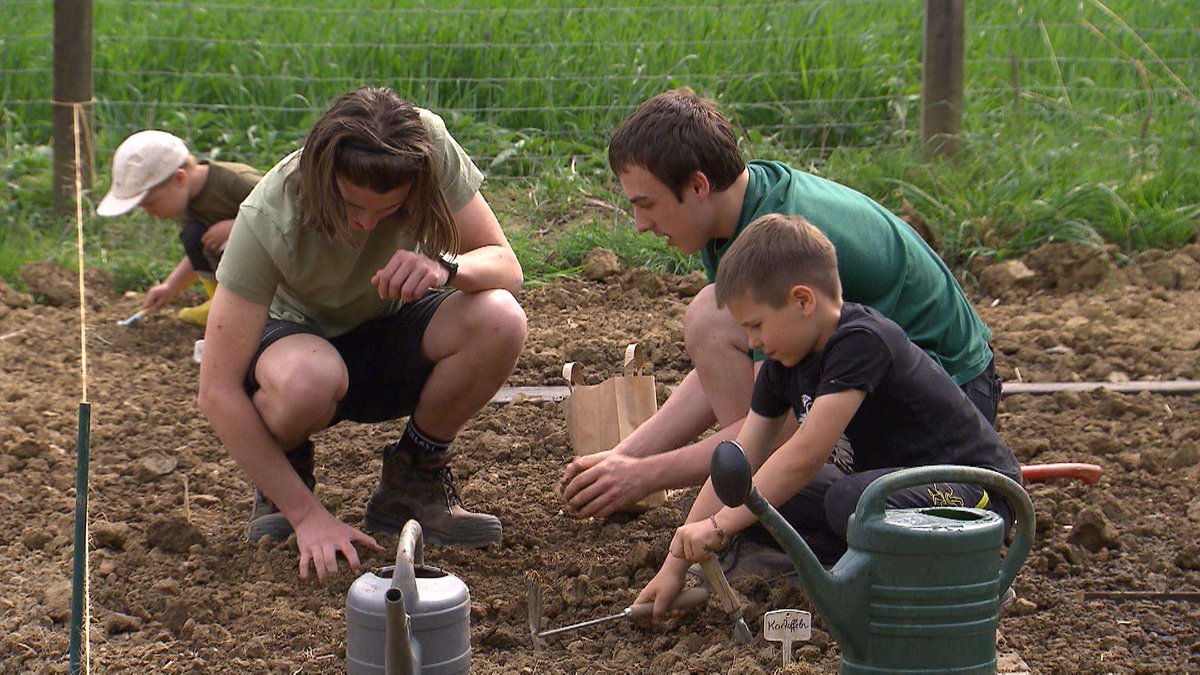
Since 1945, every local schoolchild has “adopted” a grave. They learn the soldier’s name, his age, his story — and on Remembrance Day, they walk to the cemetery with flowers in hand. There, they lay blossoms on the headstones and stand in silence. They are known simply as the Flower Children.
This year marks the 80th time they’ve done it. Little ones, some barely six years old, stand before the graves of men who died long before their grandparents were born. They brush away fallen leaves, straighten the flowers, and whisper thank you in soft voices to soldiers from Britain, Poland, and beyond, who gave everything for a country not their own.
Families of those soldiers still travel from around the world to witness it. They see children tending to the graves of men they never knew and for a moment, sorrow turns into something gentler: gratitude that stretches across generations.
Freedom has always come at a cost.
But in Oosterbeek, they’ve found a way to honor that cost forever by teaching each new generation that remembrance lives not only in monuments or ceremonies, but in small, tender acts of care, passed from one small hand to another.
The soldiers once fell from the sky.
The children keep them from ever fading into it.
17 May 1938 | A French Jewish girl, Arlette Sokolski, was born in Douai.
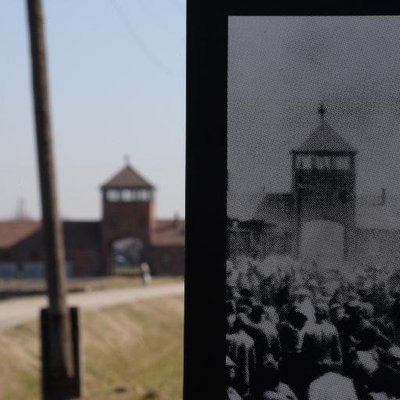
She arrived at #Auschwitz on 17 September 1942 in a transport of 1,048 Jews deported from Mechelen / Malines. She was among 717 of them murdered in gas chambers after the selection.
Man muß die Musik des Lebens hören. Die meisten hören nur die Dissonanzen.
(Theodor Fontane)
Vielleicht liegt darin eine der schwierigsten Aufgaben des Lebens: sich trotz all des Lärms, der Nachrichten und der Unruhe die Fähigkeit zu bewahren, noch das Schöne wahrzunehmen.
Sigmars reiche Tante wurde ermordet. Erst am Tag der Urteilsverkündung erfährt Imhilde von dem Verdacht gegen den Geliebten … Ein seltsamer Fall von Jenny Hirsch bei Amazon amzn.to/2RNIOgE#Werbung#Krimi#historischerkrimi
Bittersüsser Nachtschatten (Solanum dulcamara) - er ist ein kleiner Halbstrauch. Vermehrt sich über Wurzelausläufer und Samen. Die Beeren sind giftig. Als sogenannter Spreizklimmer klettert er, indem er mit Hilfe seiner Blattstiele andere Pflanzen umschlingt.
Wenn 25 Prozent der Einwohner einer Stadt bis morgen früh um 8 Uhr wegen einer 1,8 Tonnen schweren Weltkriegsbombe ihre Wohnungen verlassen müssen, dann ist das die Folge der rechtsextremen Politik von 1933 bis 1945. #Pforzheim
Weiterhin ungebrochen ist in der Steiermark der Trend zum "Urban Gardening". Die Zahl der Gemeinschaftsgärten steigt stetig an; allein in Graz seit 2010 von anfangs fünf auf mittlerweile über 40. steiermark.orf.at/stories/335237…
October 9, 1974.
Oskar Schindler collapsed on a street in West Germany.
When authorities searched his apartment, they found almost nothing:
unpaid bills, old letters, and money sent from Israel.
For the last years of his life, the Jews he saved during the Holocaust were paying his rent and buying his food.
Because Oskar Schindler died broke.
And he was broke for one reason:
he spent his fortune saving people.
The strange part is that Schindler didn’t start as a hero.
He was a Nazi Party member.
A war profiteer.
A heavy drinker.
A serial adulterer.
In 1939, when Germany invaded Poland, Schindler saw opportunity.
He took over a Jewish-owned factory in Kraków and got rich producing enamelware for the German military using cheap Jewish labor.
At first, survival wasn’t the goal.
Profit was.
Then he witnessed the liquidation of the Kraków Ghetto in 1943.
He watched SS troops shoot civilians in the streets.
Children ripped from parents.
People hunted like animals.
Something changed in him after that.
Schindler began using his factory differently.
He bribed Nazi officers constantly — with cash, alcohol, jewelry, anything they wanted — to keep his Jewish workers alive.
He built a subcamp at his factory where conditions were far safer than the concentration camps nearby.
He smuggled food.
Bought medicine on the black market.
Protected workers from deportation.
Every bribe cost money.
He kept paying anyway.
Then came 1944.
The Nazis started emptying camps and sending prisoners to Auschwitz.
Schindler knew his workers would be killed if they stayed behind.
So he made “the list.”
1,200 names.
Men.
Women.
Children.
The elderly.
He claimed they were all essential workers needed for the war effort.
It was a lie.
But it saved 1,200 lives.
When one train carrying the women was accidentally sent to Auschwitz, Schindler personally traveled there and bribed officials until they were released.
By the end of the war, he had burned through his entire fortune.
Everything was gone.
After Germany collapsed, Schindler failed at almost every business he tried.
Argentina failed.
Farming failed.
A cement company failed.
Eventually he ended up alone, bankrupt, and forgotten in a small apartment in Frankfurt.
Except by the people he saved.
The “Schindlerjuden” supported him for the rest of his life.
They mailed him money every month.
Paid his bills.
Kept him alive.
And when he died in 1974, they buried him in Jerusalem.
Not because he was perfect.
He wasn’t.
He began as a profiteer inside one of history’s worst regimes.
But at some point, Oskar Schindler made a choice:
keep the money,
or save people.
He chose people.
And 1,200 descendants are alive today because he did.
This medal belonged to Salli Joseph, a German Jewish tailor. His service during WWI—and the medal he received—did not protect him during the Holocaust. He and his wife, Martha (née Danziger), were deported to Auschwitz in March 1943. Both were murdered after their arrival.
In den letzten Tagen haben einige Menschen geschrieben, dass ihnen längere Texte und ruhigere Formen von Kultur heute oft fehlen.
Vielleicht weil Kultur inzwischen so häufig nur noch aus kleinen Ausschnitten besteht:
ein schneller Beitrag,
ein kurzes Video,
ein paar Sekunden Aufmerksamkeit.
Und dabei manchmal genau das verloren geht, was Bücher, Musik oder Kultur einmal gewesen sind:
Ruhe.
Zeit.
Vertiefung.
Deshalb habe ich den »Leiermann Salon« eröffnet.
Kein schneller Feed.
Kein gewöhnlicher Newsletter.
Sondern ein kleiner Ort für Menschen, die Bücher, längere Texte, europäische Kultur und ruhige Gedanken nicht nur konsumieren möchten.
Mit Büchern, Essayheften, Briefen und direktem Zugang zu neuen Projekten, bevor sie veröffentlicht werden.
Vielleicht ist er ein wenig aus der Zeit gefallen. Aber ich glaube, genau solche Orte brauchen wir heute wieder.
Mehr zum Leiermann Salon: verlag.der-leiermann.com/der-leiermann-…
Die Aichwalder Lokale Agenda 21 wurde 2000 von der Gemeinde ins Leben gerufen. Sie ist eine Initiative, die sich für eine gute Lebensqualität in der Gemeinde einsetzt, ohne sich dabei politischen Parteien oder anderen Gruppen verpflichtet zu fühlen. buff.ly/1xkX042