
Prakash Sangam
13.7K posts

Prakash Sangam
@MyTechMusings
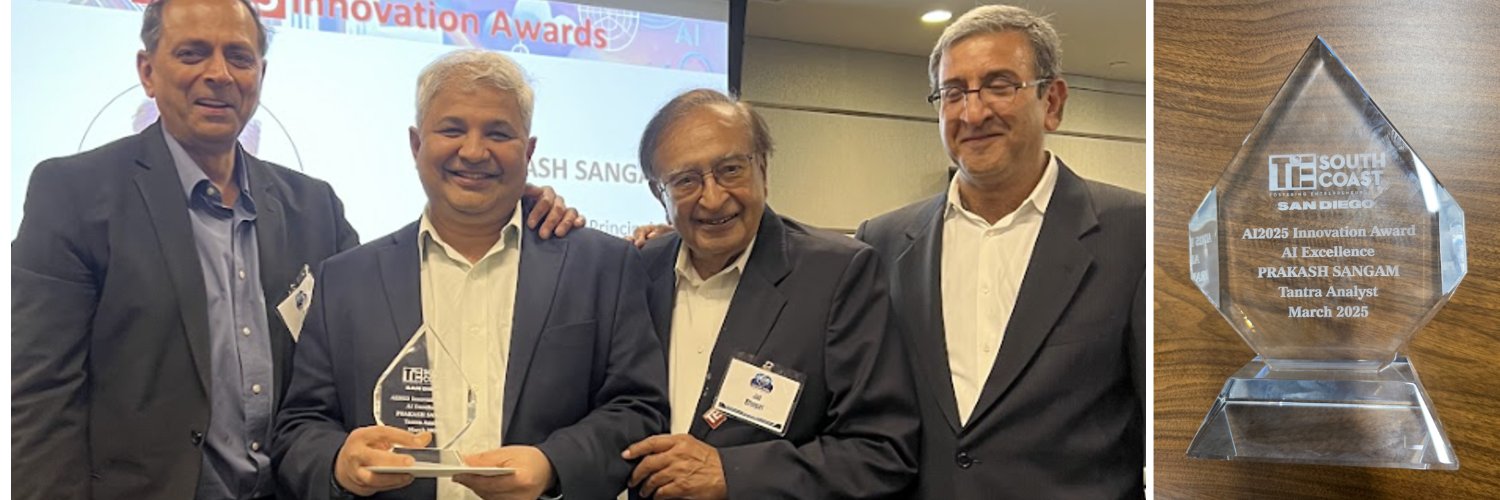
Award winning Tech Industry Analyst, @USAToday @Forbes RCR/Fierce & EETime writer, #TantrasMantra host, Quoted on @WSJ @FT @Reuters, Ex @Qualcomm @Ericsson @ATT


🚀 X2 is now live on Reactor, the newest real-time video model from @XMAXAIOfficial. Drag directly on the video to shape motion as it plays. Instantly swap characters, outfits, or art styles while perfectly preserving the original motion and lighting. Start building now: reactor.inc


🚨 Exclusive: OpenAI hasn't released an AI phone yet, but StepX Neo has already beaten it to the punch. StepX has officially unveiled StepX Neo, the world's first Agentic Phone built around a native large language model. Powered by the native Step AOS operating system and the built in Amoo AI agent, StepX Neo deeply integrates the AI model, software, and hardware into a single system, creating a true next generation AI device and marking the beginning of the Agentic AI smartphone era.

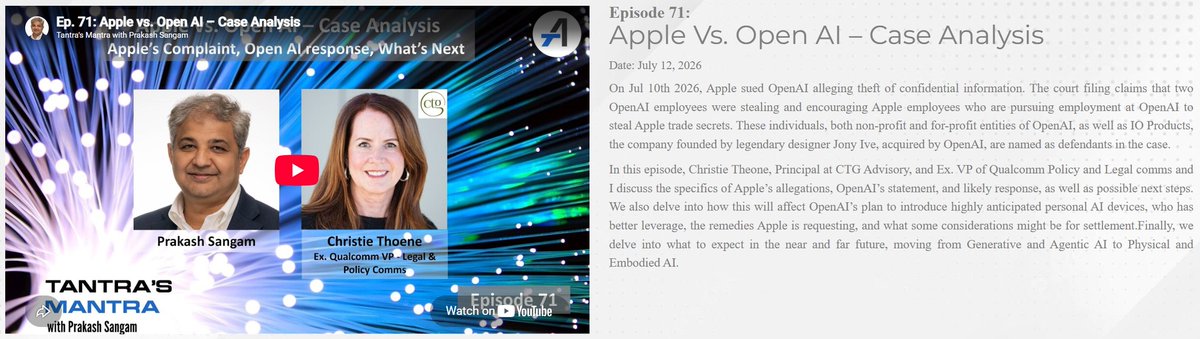
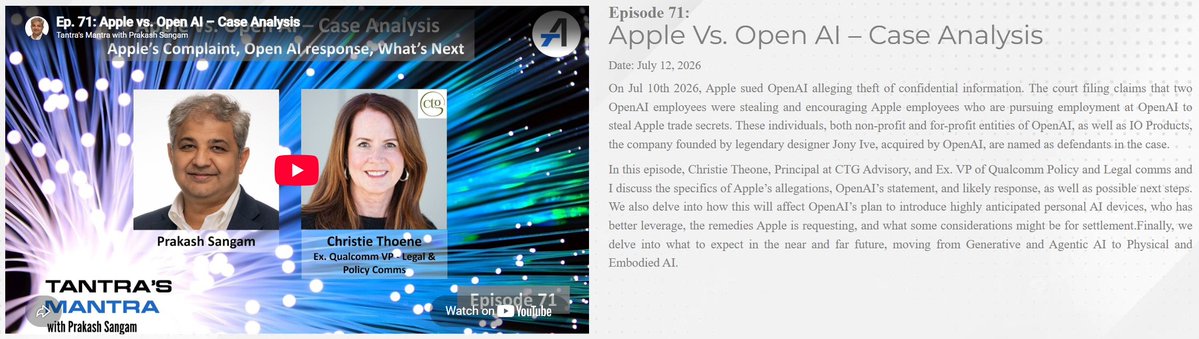
Just dropped the latest episode of #TantrasMantra #podcast, analyzing @Apple 's case against @OpenAI go.tantraanalyst.com/TantrasMantra In this, Christie, Ex. @Qualcomm VP of #Policy & #Legal Comms, and I discuss the specifics of $aapl's allegations, #OpenAI’s statement, and likely legal response, as well as possible next steps. We also delve into how this will affect OpenAI’s plan to introduce highly anticipated personal AI devices, who has better leverage, the remedies Apple is requesting, and what some considerations might be for settlement. Index: 00:00 - Intro 01:43 - Guest intro (Christie Theone, Principal, CTG Advisory and Ex. Qualcomm VP of Policy & Legal Comms) 02:28 - Apple's complaint: Two employees of OpenAI + OpenAI (pro & non-profit) + IO Products (Founded by #JonyIve) 04:05 - Apple's attempt to set a narrative - All OpenAI innovations are tainted by the theft of Apple's #tradesecrets, even what IO Products might be working on 05:05 - Although complaints are centered around two employees (only one is a top-level executive), liability will be borne by the company 07:56 - Apple's complaints are well structured, presented "as a matter of fact," without inflammatory language, making the case very obvious and appearing to be "open and shut." 10:33 - Jony Ive's name never appears in the complaint. Probably out of respect, and not to tarnish his name 12:06 - OpenAI's statement is pretty standard PR response 14:42 - Next steps - Likely request for an extension to file the reply. The question is whether they just reply to Apple's allegation, or countersue to get some leverage 17:02 - Discovery is going to be interesting, with many trade secrets at play. Details will come out if there are conflicts between the companies. Can it be motivation for settlement? 21:05 - As things stand today, OpenAI is at a weaker place, as this case affects its product plans and IPO plans, and time is on Apple's side 22:45 - Apple's remedy requests are not very clear, not sure what "enjoining" in this case means. Injunctions are very hard to come by 25:15 - OpenAI can keep working on whatever they are doing till there is an order from the judge (e.g. 25:33 - The first target for Apple is to seek an early decision to stop OpenAI from whatever they are working on, and the target for OpenAI is to seek early dismissal of the case. Both are hard to come by 29:12 - Closing #AI #PersonalAI #AiDevices #AIWearable #EggeAI #ChatGPT #aaploai #IP @TantraAnalyst


Ken Griffin: top market makers now spend hundreds of millions a year on compute. And all of it is used all the time. The Citadel founder says essentially all available compute is utilized around the clock, so the only question is who pays the most. Per-unit prices have run past every projection. High-margin firms absorb it. Low-margin ones get squeezed out. Sarah Friar @thefriley, OpenAI's CFO, makes the same case: there is no compute to buy, and supply stays constrained toward 2030. Compute inflation is a margin filter. Own the suppliers with pricing power and the scaled incumbents, avoid sub-scale price-takers. Full note on why compute inflation is a margin filter: podcastalpha.substack.com/p/ken-griffin-… Source: Goldman Sachs Exchanges - youtube.com/watch?v=gZweef…


So many cases of Hindu girls raped or murdered by Islamists every day in India, Pakistan and Bangladesh but @nytimes has picked up just this one case from the entire region for their Asia section - a rare case where the victim was from Muslim community You can’t hate them enough for their distortions of ground truth Who wrote this report? @suhasiniraj

I’ve been saying this for months, and the early data is beginning to support it. Five years from now, I believe AI will create more jobs than it eliminates. That may sound counterintuitive. But the data is proving this theory. Here are some factors worth considering. AI is exposing new human bottlenecks When one part of a workflow becomes dramatically faster, the constraint simply moves elsewhere. Organizations then need more people to remove the next bottleneck and capture the value AI has unlocked. Automation does not eliminate the need for human contribution. It often reveals how much more could be accomplished with it. AI fluency will become one of the world’s most valuable skills The emerging divide will not be between humans and agents. It will be between people who are highly fluent with AI and those who are not. AI-fluent people will not be 10% more productive. In some forms of work, they could be 50x or even 100x more effective. They will imagine better uses for AI, orchestrate agents and apply judgment where machines still fall short. These people will be scarce and enormously valuable. Productivity creates demand The assumption behind mass unemployment is that the amount of work the world needs is fixed. It isn’t. When technology becomes dramatically cheaper and easier to create, we do not simply produce the same amount with fewer people. We build more products, start more companies, solve previously uneconomic problems and serve markets that could never be served before. AI will lower the cost of ambition. The real risk, therefore, is not that humanity runs out of work. It is that millions of people are not prepared for how quickly the nature of work changes. The future will likely have more jobs. But they will not be the same jobs, performed in the same way, by people with the same skills. The imperative is not to protect people from AI. It is to help every person become fluent in it.