National Book Trust, India

12.4K posts

National Book Trust, India banner
National Book Trust, India

National Book Trust, India

@nbt_india

An apex body of Ministry of Education, Govt. of India, dedicated to produce good literature in Indian languages and to promote books and reading in the country.

Vasant Kunj, New Delhi Katılım Ocak 2015
221 Takip Edilen14.5K Takipçiler
National Book Trust, India
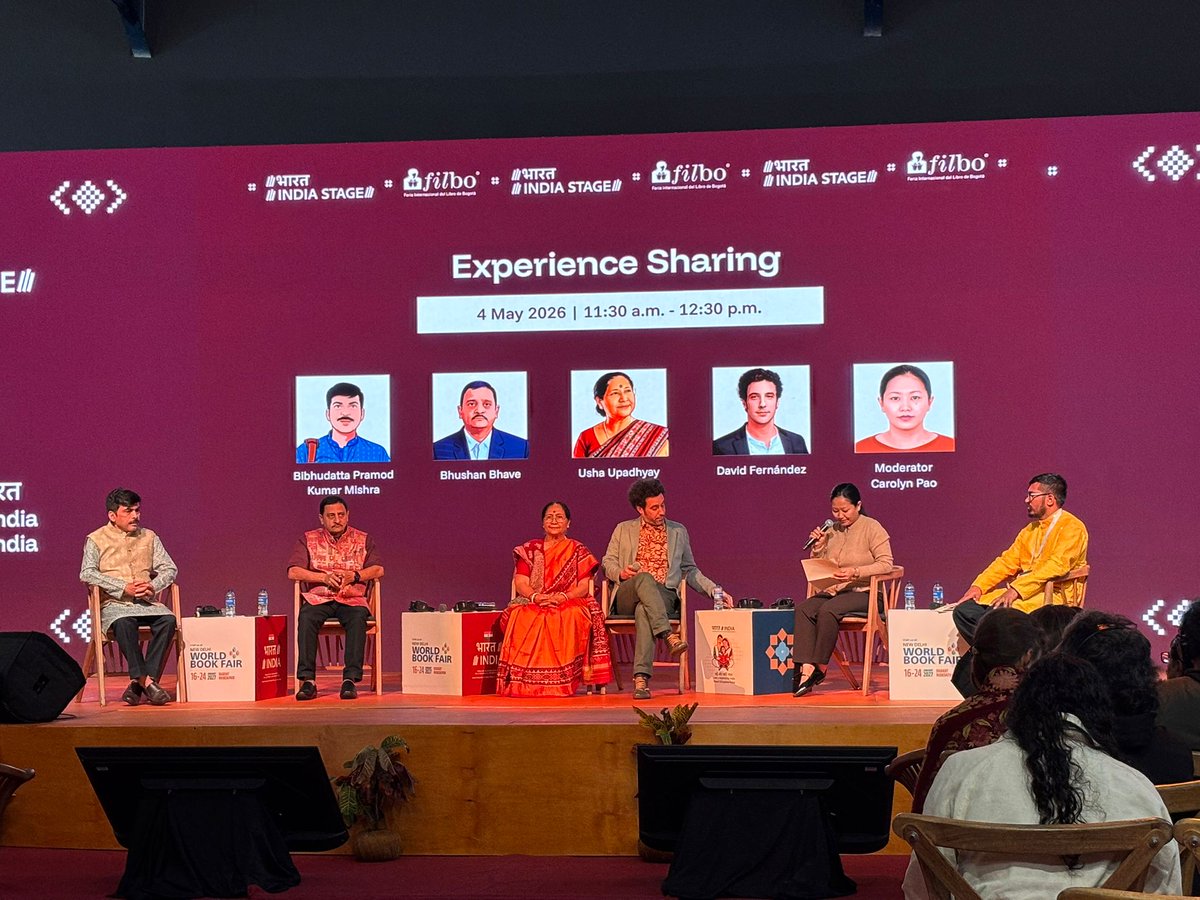
The second and the last literary session was 'Experience Sharing'. The session began with the moderator, Carolyn Pao, asking each panellist to describe their experience at FILBo, setting a warm and reflective tone for the conversation. David Fernandez opened by expressing a deep sense of pride and fulfillment, explaining that being part of this project and serving as a bridge in the cultural exchange between Colombia and India made him feel truly privileged. As a translator, he described his work as a form of cultural connection, where translated books allow societies to understand one another better and continue growing together. Usha Upadhyay described her experience as deeply enriching, especially because of the strong interaction with universities, organisations, and young people. She was particularly impressed by the curiosity of students who were eager to learn more about India, even purchasing books in unfamiliar languages simply out of genuine interest. Bhushan Bhave shared that it was an honour to experience Bogotá and discover Colombia very different from the stereotypes he had previously imagined. He spoke about the city’s beauty, its joyful spirit, and the strong respect people showed towards books, culture, and Indian traditions. For him, some of the most meaningful conversations happened outside the formal sessions, where he was able to learn about the true essence of Colombian life. Carolyn Pao added that the fair had created an opportunity to break old preconceptions and replace them with genuine human connection. Bibhudatta Pramod Kumar Mishra described the experience as both spectacular and deeply welcoming, saying that Colombia felt like a second home. He was especially impressed by the country’s biodiversity. He also shared his belief that Colombia could benefit from introducing more Ayurvedic herbal practices and medicinal plants, encouraging stronger collaboration in this area. He concluded by emphasising that mutual learning, well-being, and happiness should remain at the centre of these international exchanges. The session closed with a shared reflection that this connection between India and Colombia should not end with FILBo. Bhushan Bhave stressed that this is only the beginning of a much deeper relationship, with many more opportunities for collaboration in literature, education, and youth exchange. @PIB_Edu @EduMinOfIndia @dpradhanbjp @FILBogota @IndiaEmbBogota @IndianDiplomacy @CorferiasBogota @mincultura @MIB_India @MEAIndia
National Book Trust, India tweet mediaNational Book Trust, India tweet media
English
0
0
0
40
National Book Trust, India
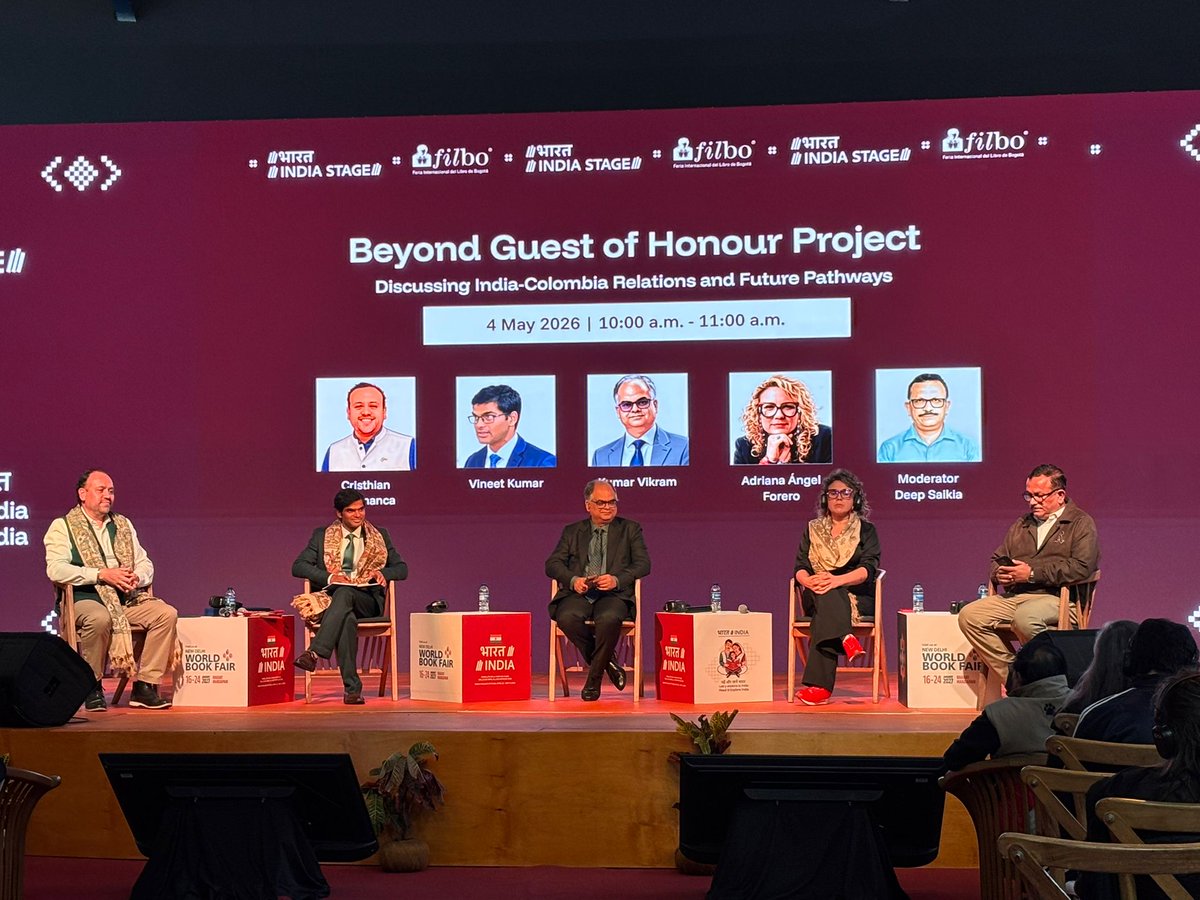
On the last day at Bharat///India stage, two sessions were organised. The first one was 'Beyond Guest of Honour Project: Discussing India–Colombia Relations and Future Pathways'. The session focussed on the long-term impact of India’s participation as Guest of Honour at FILBo and the future of India–Colombia cultural relations. Deep Saikia, the moderator of the session, opened the discussion by expressing his gratitude for being part of the event and reflecting on how significant this year has been in strengthening the connection between both countries. Adriana Àngel Forero emphasised that for making this collaboration a reality, constant work and commitment was required. She expressed gratitude for the trust placed in FILBo as a platform to showcase Indian culture and build lasting opportunities beyond the fair itself. Kumar Vikram highlighted the importance of publishing engagement created during the event, explaining that the impact of the fair goes far beyond the people who physically attended, since those experiences continue to multiply through the people who share them afterward. He celebrated the strong response to Indian children’s books, mentioning that several titles were already sold out and that many young readers and educators had shown great interest. Vineet Kumar, First Secretary, Embassy of India, Bogota, described this as a success of cultural diplomacy, where literature becomes a bridge between societies, strengthened further by the use of technology and new communication platforms. Cristhian Salamanca reflected on how FILBo has allowed Colombians to better understand Indian culture, creating stronger mutual respect and positioning India as an important cultural and strategic ally. He stressed that now Colombia must reciprocate by sharing its own culture more actively. Adriana added that translation must become one of the main priorities moving forward, explaining that this work does not end with the fair. Strengthening translation projects, scholarship opportunities, and professional exchanges will allow both countries to maintain the connections created during the event. The speakers also discussed the importance of bilingualism, educational exchange, tourism, and participation in regional book fairs in both countries. Vineet Kumar pointed out that younger generations, with stronger bilingual skills, create new opportunities for deeper collaboration between publishers, authors, and institutions. He also mentioned the Embassy’s efforts to promote Indian culture through initiatives such as yoga programmes across Colombia. The session concluded with the shared idea that stronger bilateral agreements—both cultural and economic—can grow from these small but meaningful steps, ensuring that India and Colombia continue building a long-term partnership through literature, education, and mutual understanding. @PIB_Edu @EduMinOfIndia @dpradhanbjp @FILBogota @IndiaEmbBogota @IndianDiplomacy @CorferiasBogota @mincultura @MIB_India @MEAIndia
National Book Trust, India tweet mediaNational Book Trust, India tweet mediaNational Book Trust, India tweet media
English
0
1
2
43
National Book Trust, India
As the curtain came down on Bogotá International Book Fair 2026, the India Pavilion leaves behind a tapestry of stories, ideas, and cultural connections.📚 From vibrant dialogues to unforgettable moments, Read and Explore India will continue to resonate far beyond the fair. #IndiaAtFILBo #FILBo2026 #CurtainDown #IndiaPavilion #ReadAndExploreIndia #NBTIndia #CulturalExchange #LiteraryJourney #ClosingMoments @PIB_Edu @EduMinOfIndia @dpradhanbjp @FILBogota @IndiaEmbBogota @IndianDiplomacy @CorferiasBogota @mincultura @MIB_India @MEAIndia
English
0
0
1
49
National Book Trust, India retweetledi
India in Colombia
India in Colombia@IndiaEmbBogota·
"La última sesión del día fue «Celebrando el Tagore Jayanti», organizada por la comunidad india de Bogotá en colaboración con la Embajada de la India en Bogotá. La sesión comenzó con la intervención de S.E Vanlalhuma, Embajador de la India en Colombia, quien destacó que, en 1913, Rabindranath Tagore se convirtió en el primer asiático en recibir el Premio Nobel de Literatura, lo que le convirtió en una figura de la India cuya voz resonó en todo el mundo. Explicó que Tagore tenía una profunda conexión con la idea del diálogo cultural, ya que creía que las civilizaciones no crecen de forma aislada, sino a través del intercambio y el entendimiento mutuo. Para él, el encuentro en Bogotá representaba esa misma visión: la India y Colombia unidas a través de la literatura y los valores humanos compartidos. La Sra. Norma Donato (Decana de Facultad – Seminario Andrés Bello, Instituto Caro y Cuervo) reflexionó sobre la lectura como un acto comunitario y no solo como una experiencia individual. Habló de la poesía como un espacio donde se unen el canto, el pensamiento y la reflexión. También mencionó la visión educativa de Tagore, destacando la escuela que fundó con un concepto completamente diferente: un espacio de aprendizaje al aire libre que él describió como un nido en lugar de una jaula, donde la educación tenía como objetivo inspirar libertad y creatividad en lugar de restricción. Kumar Vikram, redactor jefe y codirector del National Book Trust de la India, y responsable del Proyecto de la India como País Invitado, compartió que era un privilegio ser el invitado de honor en una celebración dedicada a Tagore. Destacó que la exploración de Tagore del internacionalismo y la conexión humana sigue sirviendo de guía en las interacciones globales modernas. Para él, Tagore sigue siendo una presencia constante y una referencia perdurable cada vez que se producen conversaciones sobre cultura, literatura y entendimiento internacional. Tras estas presentaciones, el evento continuó con actuaciones culturales de danza, música y canto, creando una celebración que honró a Tagore no solo a través de las palabras y la reflexión, sino también a través de la expresión artística y la armonía cultural". @PIB_Edu @EduMinOfIndia @dpradhanbjp @FILBogota @IndianDiplomacy @CorferiasBogota @mincultura @MIB_India @MEAIndia
National Book Trust, India@nbt_india

The last session of the day was 'Celebrating Tagore Jayanti’ organised by Indian community in Bogota in association with Embassy of India, Bogota. The session began with the Ambassador of India to Colombia, who highlighted that in 1913, Rabindranath Tagore became the first Asian to receive the Nobel Prize in Literature, making him a figure from India whose voice resonated across the world. He explained that Tagore had a profound connection to the idea of cultural dialogue, believing that civilisations do not grow in isolation, but through exchange and mutual understanding. For him, the gathering in Bogota represented that same vision: India and Colombia coming together through literature and shared human values. Sra. Norma Donato (Decana de Facultad – Seminario Andrés Bello, Instituto Caro y Cuervo) reflected on reading as an act of community rather than only an individual experience. She spoke about poetry as a space where song, thought and reflection come together. She also mentioned Tagore’s educational vision, highlighting the school he founded with a completely different concept—an open-air learning space that he described as a nest rather than a cage, where education was meant to inspire freedom and creativity instead of restriction. Kumar Vikram, Chief Editor and Joint Director of National Book Trust, India, and Head of India Guest Country Project, shared that it was a privilege to be the Guest of Honour in a celebration dedicated to Tagore. He emphasised that Tagore’s exploration of internationalism and human connection continues to serve as a guide in modern global interactions. For him, Tagore remains a constant presence and an enduring reference whenever conversations about culture, literature, and international understanding take place. After these presentations, the event continued with cultural performances of dance, music and singing, creating a celebration that honoured Tagore not only through words and reflection, but also through artistic expression and cultural harmony. @PIB_Edu @EduMinOfIndia @dpradhanbjp @FILBogota @IndiaEmbBogota @IndianDiplomacy @CorferiasBogota @mincultura @MIB_India @MEAIndia

Español
0
1
1
75
National Book Trust, India retweetledi
India in Colombia
India in Colombia@IndiaEmbBogota·
"Un suave silencio ha comenzado a extenderse por la Zona Infantil del Pabellón de la India en la penúltima jornada de la Feria Internacional del Libro de Bogotá, FILBo-2026. El ambiente, antes lleno de risas y descubrimientos, ahora se tiñe de una tierna melancolía, como en las últimas horas de una boda tradicional india, cuando la alegría y la despedida se entrelazan, y los corazones se preparan en silencio para la separación. Los visitantes en Bogotá se demoran un poco más, con sonrisas teñidas de nostalgia, como si se resistieran a dejar atrás un viaje que ha acercado de manera tan hermosa culturas lejanas. En medio de esta suave sombra de despedida, el día transcurrió con una energía luminosa. Deepak Karanjikar, una figura aclamada del teatro indio, dio vida a la mañana con una sesión interactiva titulada «Introducción a las artes escénicas indias: una sesión interactiva con niños». A través de gestos expresivos y ejercicios lúdicos, abrió una ventana al alma de las tradiciones escénicas indias. Su arte trascendió el lenguaje, traducido con delicadeza al español por Omar Ferrer, asegurándose de que cada niño pudiera sentir el ritmo de la emoción y la narración. Los jóvenes participantes respondieron con un entusiasmo desenfrenado: creando personajes, dibujando sueños y encarnando historias que bailaban entre la imaginación y la tradición. El encanto continuó cuando Diego Francisco Sánchez, conocido cariñosamente como Dipacho, guió a los niños a través de «Diversión con imágenes». Desde creaciones caprichosas como «Comemonstruos» hasta cuentos evocadores como «Toro Rojo» y «Tortuga», reveló la magia escondida en formas sencillas. Bajo su guía, las líneas y los colores florecieron en narrativas vivas, alimentando un sentido de asombro y valor creativo entre las jóvenes mentes reunidas. Entre estas sesiones, la risa y la curiosidad encontraron una nueva expresión en animadas rondas del «India Cultural Quiz», donde los niños exploraron con entusiasmo el vasto tapiz del patrimonio de la India, desde sus símbolos y ciudades hasta sus epopeyas y deidades atemporales". @PIB_Edu @EduMinOfIndia @dpradhanbjp @FILBogota @IndianDiplomacy @CorferiasBogota @mincultura @MIB_India @MEAIndia
National Book Trust, India@nbt_india

A gentle hush has begun to settle over the Kids’ Zone of the India Pavilion on the penultimate day of the Bogota International Book Fair, FILBo-2026. The air, once bright with laughter and discovery, now carries a tender melancholy—like the closing hours of a traditional Indian wedding, when joy and parting intertwine, and hearts quietly prepare for separation. Visitors in Bogotá linger a little longer, their smiles tinged with wistfulness, as if reluctant to let go of a journey that has brought distant cultures so beautifully close. Amid this soft shadow of farewell, the day unfolded with luminous energy. Deepak Karanjikar, an acclaimed figure of Indian theatre, breathed life into the morning with an interactive session titled _Introducing Indian Performance Arts: An Interactive Session with Kids_. Through expressive gestures and playful exercises, he opened a window into the soul of Indian performing traditions. His art transcended language, gently carried into Spanish by Omar Ferrer, ensuring that every child could feel the rhythm of emotion and storytelling. Young participants responded with unrestrained enthusiasm—crafting characters, sketching dreams, and embodying stories that danced between imagination and tradition. The enchantment continued as Diego Francisco Sanchez, fondly known as Dipacho, guided children through _Fun with Pictures_. From whimsical creations like _Monster Eater (Comemonstruos)_ to evocative tales such as _Red Bull (Toro Rojo)_ and _Tortoise (Tortuga)_, he revealed the magic hidden in simple shapes. Under his guidance, lines and colors blossomed into living narratives, nurturing a sense of wonder and creative courage among the young minds gathered. Between these sessions, laughter and curiosity found new expression in lively rounds of India Cultural Quiz, where children eagerly explored the vast tapestry of India’s heritage—from its symbols and cities to its timeless epics and deities. @PIB_Edu @EduMinOfIndia @dpradhanbjp @FILBogota @IndiaEmbBogota @IndianDiplomacy @CorferiasBogota @mincultura @MIB_India @MEAIndia

Español
0
1
1
64
National Book Trust, India retweetledi
India in Colombia
India in Colombia@IndiaEmbBogota·
"La última sesión del día fue «Descifrando la comunidad de la diáspora digital». La sesión comenzó con Rochelle Miranda, la moderadora, quien reflexionó sobre cómo muchas personas viven hoy en día entre múltiples mundos: el país en el que nacieron, el país al que emigran y, ahora, el mundo digital que conecta ambos. Explicó que la migración ya no implica una separación total, ya que la tecnología ha tendido un puente que permite que la identidad, la cultura y las relaciones sigan existiendo más allá de las fronteras. Germán Puyana destacó a la India como un país especialmente fascinante por su rica cultura, su gran diversidad biocultural y su presencia migratoria a nivel mundial. Explicó que muchos países buscan profesionales indios altamente cualificados debido a sus sólidas competencias académicas y profesionales. Rajesh Kumar Tripathy añadió que, junto con las personas, la India también transmite profundos valores humanos y riqueza cultural. El debate también se centró en cómo los espacios digitales reducen la distancia emocional de la migración. Rajesh Kumar Tripathy explicó que, aunque la distancia física crea separación de la patria, las herramientas digitales ayudan a preservar la cercanía con la familia, la cultura y la identidad. Deep Saikia compartió que incluso acciones tan sencillas como enviar un mensaje de WhatsApp muestran lo imposible que se ha vuelto permanecer desconectado de la tecnología. También añadió que muchas personas se unen porque la tecnología permite que la información se difunda rápidamente y que las comunidades permanezcan conectadas". @PIB_Edu @EduMinOfIndia @dpradhanbjp @FILBogota @IndianDiplomacy @CorferiasBogota @mincultura @MIB_India @MEAIndia
National Book Trust, India@nbt_india

The last session of the day was ‘Decoding the Digital Diaspora Community'. The session began with Rochelle Miranda, the moderator, who reflected on how many people today live between multiple worlds: the country where they were born, the country to which they migrate, and now the digital world that connects both. She explained that migration no longer means complete separation, because technology has bridged the gap where identity, culture, and relationships can continue to exist across borders. Germán Puyana highlighted India as a particularly fascinating country because of its rich culture, strong biocultural diversity and its global migration presence. He explained that many countries seek highly qualified Indian professionals because of their strong academic and professional skills. Rajesh Kumar Tripathy added that with people, India also sends deep human values and cultural richness. The discussion also focussed on how digital spaces reduce the emotional distance of migration. Rajesh Kumar Tripathy explained that although physical distance creates separation from one’s homeland, digital tools help preserve closeness with family, culture and identity. Deep Saikia shared that even simple actions like sending a WhatsApp message show how impossible it has become to remain disconnected from technology. He also added that many people come together because technology allow information to spread quickly and communities to stay connected. @PIB_Edu @EduMinOfIndia @dpradhanbjp @FILBogota @IndiaEmbBogota @IndianDiplomacy @CorferiasBogota @mincultura @MIB_India @MEAIndia

Español
0
1
1
54
National Book Trust, India retweetledi
India in Colombia
India in Colombia@IndiaEmbBogota·
"La tercera sesión del día se tituló «La evolución de la economía creativa». Harold Trompetero abrió el debate compartiendo su experiencia personal con la dislexia y cómo esta le llevó a buscar formas alternativas de comunicación. Explicó que el hecho de recibir una cámara le permitió expresar sus ideas de forma visual, lo que hizo que la narración audiovisual se convirtiera en su camino natural, a pesar de que en un principio había querido dedicarse a la escritura. Kumar Vikram, el moderador, reflexionó sobre cómo los cambios globales actuales han transformado la forma en que las personas abordan las ideas y la creatividad. Deepak Karanjikar añadió que la economía creativa se ha convertido en una de las fuerzas más influyentes de la actualidad, conectando fuertemente con las generaciones más jóvenes. Hizo hincapié en que no se limita únicamente a los artistas, sino que se extiende a comunidades enteras, creando oportunidades para la colaboración y la innovación. También señaló que tanto la India como Colombia refuerzan aún más esta conexión. Harold habló más tarde sobre el poder transformador del cine, explicando que los creadores audiovisuales contemporáneos recogen la realidad y la reinterpretan a través de la narración. También destacó la importancia de la industria audiovisual de la India, donde cada región tiene su propia y sólida identidad de producción. La conversación también giró en torno a la globalización y la inteligencia artificial. Deepak Karanjikar introdujo la idea de que el concepto tradicional de «ciudadano» ha evolucionado hacia el de ciudadano global, en el que las personas están interconectadas y lo que afecta a una región a menudo repercute en el mundo. Para él, la economía creativa traspasa fronteras y continentes de forma natural. Harold describió la IA como una herramienta útil más que como un sustituto de la creatividad humana. Cree que, aunque muchos procesos puedan cambiar, la mediación humana siempre seguirá siendo esencial, ya que la IA no puede sustituir a la mente humana ni a la profundidad emocional. Kumar Vikram concluyó con sus comentarios señalando que la sociedad es muy dinámica y a menudo vuelve a sus valores originales, especialmente ahora que hay una creciente atención sobre si el trabajo creativo es genuinamente hecho por humanos o generado por la IA". @PIB_Edu @EduMinOfIndia @dpradhanbjp @FILBogota @IndianDiplomacy @CorferiasBogota @mincultura @MIB_India @MEAIndia
National Book Trust, India@nbt_india

The third session of the day was 'Changing Dynamics of the Creative Economy'. Harold Trompetero opened the discussion by sharing his personal journey with dyslexia and how it shaped his need to find alternative ways of communication. He explained that receiving a camera allowed him to express ideas visually, making audio-visual storytelling a natural path for him, even though he had originally wanted to focus on writing. Kumar Vikram, the moderator, reflected on how current global changes have transformed the way people approach ideas and creativity. Deepak Karanjikar added that the creative economy has become one of the most influential forces today, connecting strongly with younger generations. He emphasised that it is not limited to artists alone, but extends to entire communities, creating opportunities for collaboration and innovation. He also pointed out that both India and Colombia make this connection even stronger. Harold later spoke about the transformative power of cinema, explaining that contemporary audio-visual creators collect reality and reinterpret it through storytelling. He also highlighted the importance of India’s audio-visual industry, where each region has its own strong production identity. The conversation also turned to globalisation and artificial intelligence. Deepak Karanjikar introduced the idea that the traditional concept of “citizen” has evolved into that of a global citizen, where people are interconnected and what affects one region often impacts the world. For him, the creative economy crosses borders and continents naturally. Harold described AI as a useful tool rather than a replacement for human creativity. He believes that while many processes may change, human mediation will always remain essential because AI cannot replace the human mind or emotional depth. Kumar Vikram concluded with his remarks that society is highly dynamic and often returns to its original values, especially now that there is increasing attention to whether creative work is genuinely human-made or generated by AI. @PIB_Edu @EduMinOfIndia @dpradhanbjp @FILBogota @IndiaEmbBogota @IndianDiplomacy @CorferiasBogota @mincultura @MIB_India @MEAIndia

Español
0
1
1
40
National Book Trust, India retweetledi
India in Colombia
India in Colombia@IndiaEmbBogota·
"La segunda sesión se tituló «La música: el elixir de la vida». La sesión fue moderada por Rosa Cárdenas, quien comenzó con una reflexión sobre cómo la música actúa como «elixir de la vida». Gustavo Angarita explicó que Colombia es, por naturaleza, un país festivo, donde todo —incluso la tristeza— se transforma en canción. Para él, «la música forma parte de la identidad colombiana y está profundamente ligada a la celebración, la danza y la expresión emocional». También destacó el vínculo cultural entre Colombia y la India, señalando que ambos países comparten colores vibrantes, ritmo, danza y un fuerte espíritu musical. Humayun Khan describió la música como algo universal que pertenece a todos. Explicó que la música está presente en todo: en los latidos del corazón, al caminar e incluso en el sonido del viento. Para él, la música es el alma y una forma de devoción que existe a nuestro alrededor, dependiendo de cómo decidamos percibirla. Gustavo reflexionó sobre sus recuerdos de infancia relacionados con la música vallenata, especialmente el sonido del contrabajo, que representaba la celebración y la alegría, en contraste con la música clásica que escuchaba su padre. Explicó que los colombianos suelen tener un fuerte sentido musical porque la música y la danza están profundamente arraigadas en la vida cotidiana. Ambos ponentes también hablaron de la estrecha relación entre la música y el cine. Humayun Khan explicó que, en la India, las películas siempre han girado en torno a la música y, aunque los estilos cambian con el tiempo, la música sigue siendo fundamental para la experiencia emocional de la narración. Gustavo añadió que, en la India, las canciones suelen promocionarse antes que la propia película, por lo que el público ya conoce la música antes de entrar en la sala de cine, lo que crea una conexión más fuerte con la historia. Contrastó esto con el cine occidental, donde los musicales se han vuelto menos comunes, y expresó su convicción de que debería recuperarse la «magia oriental» de la narración musical, ya que en su día tuvo una presencia más fuerte incluso en la sociedad colombiana". @PIB_Edu @EduMinOfIndia @dpradhanbjp @FILBogota @IndianDiplomacy @CorferiasBogota @mincultura @MIB_India @MEAIndia
National Book Trust, India@nbt_india

The second session was 'Music: The Elixir of Life'. The session was moderated by Rosa Cárdenas, who began with a reflection on how music functions as the “elixir of life.” Gustavo Angarita explained that Colombia is naturally a festive country, where everything—even sadness—is transformed into song. For him, "music is part of Colombian identity, deeply connected to celebration, dance and emotional expression". He also highlighted the cultural connection between Colombia and India, noting that both countries share vibrant colours, rhythm, dance and a strong musical spirit. Humayun Khan described music as something universal that belongs to everyone. He explained that music is present in everything—in the heartbeat, in walking and even in the sound of the wind. For him, music is the soul and a form of devotion that exists all around us, depending on how we choose to perceive it. Gustavo reflected on his childhood memories of vallenato music, especially the sound of the bass, which represented celebration and joy, in contrast with the classical music his father listened to. He explained that Colombians often have a strong musical sense because music and dance are deeply rooted in everyday life. Both speakers also discussed the strong relationship between music and cinema. Humayun Khan explained that in India, films have always revolved around music, and although styles change with time, music remains central to the emotional experience of storytelling. Gustavo added that in India, songs are often promoted before the film itself, so audiences already know the music before entering the cinema, creating a stronger connection with the story. He contrasted this with Western cinema, where musicals have become less common, and expressed his belief that the “Eastern magic” of musical storytelling should be recovered, as it once had a stronger presence even in Colombian society. @PIB_Edu @EduMinOfIndia @dpradhanbjp @FILBogota @IndiaEmbBogota @IndianDiplomacy @CorferiasBogota @mincultura @MIB_India @MEAIndia

Español
0
1
1
59
National Book Trust, India retweetledi
India in Colombia
India in Colombia@IndiaEmbBogota·
"La primera sesión del decimotercer día en el escenario Bharat///India fue «Debate sobre las mujeres santas y poetisas: Lal Ded, Meera Bai y Akka Mahadevi». La sesión comenzó con el moderador, Shantanu Gupta, quien explicó que en la India existe una larga tradición de honrar a las diosas, lo que convierte a lo divino femenino en una parte natural de la vida espiritual y cultural. Dijo que en la India celebramos a diosas como Durga, que representa el poder; Lakshmi, que representa la prosperidad; y Saraswati, que representa la educación y la sabiduría. Shiv Prasad comentó que las mujeres siempre han desempeñado un papel importante en la sociedad india, con una fuerte participación y reconocimiento en muchos ámbitos de la vida. Explicó que incluso textos fundamentales como el Ramayana giran en torno a las mujeres, en particular a Sita, cuyo honor y sufrimiento dan forma a toda la historia. Hizo hincapié en que «la sociedad no debería separar a las “poetas” de los “poetas”, sino reconocer a todos ellos como contribuyentes a la cultura, la literatura y el pensamiento espiritual». Usha Upadhyay reflexionó sobre «cómo las santas poetas indias han servido durante siglos como transmisoras de conocimiento y devoción». Describió tres caminos hacia la conexión espiritual —el yoga, el conocimiento y la devoción— y destacó que, para muchas personas, especialmente aquellas que no pueden visitar lugares religiosos debido a sus responsabilidades diarias, la devoción desde el corazón es igualmente significativa. Compartió una de las ideas más poderosas de la sesión: «el alma no tiene género». El debate se centró en tres importantes poetisas santas. Akka Mahadevi, conocida por su profunda devoción a Shiva y por creer que la verdadera adoración residía en el corazón más que en los rituales. Lal Ded, poetisa y mística devota de Shiva, que compartía sus enseñanzas a través de breves poemas orales conocidos como vakhs, centrados en la espiritualidad y el autoconocimiento. Meera Bai se convirtió en un símbolo de fe y libertad espiritual gracias a su inquebrantable devoción a Krishna. A través de sus poemas y canciones, expresó amor, valentía y resistencia frente a la crítica social. Para concluir, la moderadora destacó que los debates actuales deben ir más allá de separar los logros por género y, en su lugar, reconocer todas las contribuciones por igual". @PIB_Edu @EduMinOfIndia @dpradhanbjp @FILBogota @IndianDiplomacy @CorferiasBogota @mincultura @MIB_India @MEAIndia
National Book Trust, India@nbt_india

The first session on the thirteenth day at Bharat///India Stage was 'Discussing Women Saint Poets: Lal Ded, Meera Bai, and Akka Mahadevi'. The session began with the moderator, Shantanu Gupta, who explained that in India there is a long-standing tradition of honouring goddesses, making the feminine divine a natural part of spiritual and cultural life. He said that in India we celebrate goddesses such as Durga, representing power; Lakshmi, representing prosperity; and Saraswati, representing education and wisdom. Shiv Prasad commented that women have always played an important role in Indian society, with strong participation and recognition in many areas of life. He explained that even major texts such as the Ramayana revolve around women, particularly Sita, whose honour and suffering shape the entire story. He emphasised that "society should not separate 'women poets' from 'poets', but rather recognise all of them as contributors to culture, literature, and spiritual thought." Usha Upadhyay reflected on "how Indian saint poets have served for centuries as transmitters of knowledge and devotion." She described three paths to spiritual connection—yoga, knowledge and devotion—and emphasised that for many people, especially those unable to visit religious places due to daily responsibilities, devotion through the heart is equally meaningful. She shared one of the most powerful ideas of the session: “the soul has no gender.” The discussion was focussed on three important women saint poets. Akka Mahadevi, known for her deep devotion to Shiva and for believing that true worship lived in the heart rather than in rituals. Lal Ded, poet and mystic devoted to Shiva, who shared her teachings through short oral poems known as vakhs, centred on spirituality and self-knowledge. Meera Bai became a symbol of faith and spiritual freedom through her unwavering devotion to Krishna. Through her poems and songs, she expressed love, courage and resistance against social criticism. In conclusion, the moderator highlighted how modern conversations should move beyond separating achievements by gender and instead recognise all contributions equally. @PIB_Edu @EduMinOfIndia @dpradhanbjp @FILBogota @IndiaEmbBogota @IndianDiplomacy @CorferiasBogota @mincultura @MIB_India @MEAIndia

Español
0
1
1
31
National Book Trust, India retweetledi
India in Colombia
India in Colombia@IndiaEmbBogota·
"La cuarta sesión del día se tituló «Historias que calan hondo: escribir para los lectores de la Generación Z». Los ponentes fueron Bibhudatta Pramod Kumar Mishra y Laura Natalia Reina Gómez. La sesión fue moderada por Bhushan Bhave. Bhushan Bhave explicó que la Generación Z no se define solo por la edad, sino por ser una generación moldeada por la tecnología. Laura Natalia Reina Gómez reflexionó sobre cómo la escritura se ha vuelto más accesible hoy en día, ya que cualquiera puede escribir sus pensamientos en el teléfono y convertirlos en historias o reflexiones personales que se comparten en plataformas digitales. Como creadora de contenidos, se adapta a formatos más breves y a plataformas de ritmo rápido para llegar a un público más joven sin dejar de transmitir mensajes significativos. Bibhudatta Pramod Kumar Mishra destacó que esta generación está profundamente conectada con la tecnología, pero también es más sensible emocionalmente y más curiosa. Afirmó: «Los lectores jóvenes quieren hechos, honestidad y autenticidad, y los escritores deben ganarse su confianza abordando temas relevantes, al tiempo que les ayudan a mantenerse conectados con sus raíces y valores». También hizo hincapié en la responsabilidad de las generaciones mayores de guiar a los jóvenes compartiendo experiencias de vida y ayudándoles a comprender la realidad más allá del ritmo acelerado de las redes sociales. Laura destacó la salud mental, las dificultades emocionales y el romance como algunos de los temas más importantes que más resuenan en la Generación Z. Bibhudatta Pramod Kumar Mishra concluyó advirtiendo que la tecnología ha acortado la capacidad de atención, y que la sociedad debe animar a los jóvenes a dedicar más tiempo a explorar experiencias más profundas más allá de los vídeos cortos y la constante distracción digital". @PIB_Edu @EduMinOfIndia @dpradhanbjp @FILBogota @IndianDiplomacy @CorferiasBogota @mincultura @MIB_India @MEAIndia
National Book Trust, India@nbt_india

The fourth session of the day was 'Stories that Resonate: Writing for Gen Z Readers'. The panellists were Bibhudatta Pramod Kumar Mishra and Laura Natalia Reina Gómez. The session was moderated by Bhushan Bhave. Bhushan Bhave explained that Generation Z is not defined only by age, but by being a generation shaped by technology. Laura Natalia Reina Gómez reflected on how writing has become more accessible today, as anyone can write their thoughts in their phone and turn them into stories or personal reflections shared on digital platforms. As a content creator, she adapts to shorter formats and fast-paced platforms in order to reach younger audiences while still preserving meaningful messages. Bibhudatta Pramod Kumar Mishra emphasised that this generation is deeply connected to technology, but also more emotionally sensitive and curious. He said, “Young readers want facts, honesty and authenticity, and that writers must earn their trust by addressing relevant issues while helping them stay connected to their roots and values." He also stressed on the responsibility of older generations to guide young people by sharing life experiences and helping them understand reality beyond the fast pace of social media. Laura highlighted mental health, emotional struggles and romance as some of the strongest topics that resonate most with Gen Z. Bibhudatta Pramod Kumar Mishra concluded by warning that technology has shortened attention spans, and that society must encourage young people to spend more time exploring deeper experiences beyond short videos and constant digital distraction. @PIB_Edu @EduMinOfIndia @dpradhanbjp @FILBogota @IndiaEmbBogota @IndianDiplomacy @CorferiasBogota @mincultura @MIB_India @MEAIndia

Español
0
1
1
27
National Book Trust, India retweetledi
India in Colombia
India in Colombia@IndiaEmbBogota·
"La tercera sesión consistió en la presentación de la traducción al español de «El sueño de Sultana». Juan David Reina Rozo y Alejandra Cala presentaron la traducción al español de «El sueño de Sultana», obra escrita originalmente por Begum Rokeya en 1905, en Calcuta. Explicaron que se considera «una de las primeras obras de ciencia ficción que aborda las luchas feministas, utilizando una narrativa satírica para cuestionar el poder, el cuerpo y la libertad de las mujeres». El libro representa la visión de una mujer que, hace más de cien años, imaginó posibilidades que eran casi imposibles en su época, pero que hoy en día son mucho más reales para nosotros. A través de su imaginación, Begum Rokeya no solo desafió los límites de su propia sociedad, sino que también sigue inspirando a los lectores modernos a imaginar nuevas realidades y a conectar con su historia. Además, mencionaron que el libro fue posteriormente adaptado al cine, lo que ha contribuido a dar mayor visibilidad tanto a la historia como a Begum Rokeya como escritora pionera. Teniendo en cuenta que la ciencia ficción ha sido tradicionalmente un campo dominado por los hombres, destacaron la importancia de reconocer a una autora cuya obra se adelantó mucho a su tiempo". @PIB_Edu @EduMinOfIndia @dpradhanbjp @FILBogota @IndianDiplomacy @CorferiasBogota @mincultura @MIB_India @MEAIndia
National Book Trust, India@nbt_india

The third session was the Launch of the Spanish Translation of 'Sultana’s Dream'. Juan David Reina Rozo and Alejandra Cala presented the Spanish translation of Sultana’s Dream, originally written by Begum Rokeya in 1905, Calcutta. They explained that it is considered as "one of the earliest works of science fiction addressing feminist struggles, using a satirical narrative to question power, the body and women’s freedom". The book represents the vision of a woman who, more than one hundred years ago, imagined possibilities that were almost impossible in her time but are much more real for us today. Through her imagination, Begum Rokeya not only challenged the limits of her own society, but also continues to inspire modern readers to imagine new realities and connect with her story. In addition, they mentioned that the book was later adapted into a film, which has helped bring greater visibility both to the story and to Begum Rokeya as a pioneering writer. Considering that science fiction has traditionally been a field dominated by men, they emphasised the importance of giving recognition to a female author whose work was far ahead of its time. @PIB_Edu @EduMinOfIndia @dpradhanbjp @FILBogota @IndiaEmbBogota @IndianDiplomacy @CorferiasBogota @mincultura @MIB_India @MEAIndia

Español
0
1
1
31
National Book Trust, India retweetledi
India in Colombia
India in Colombia@IndiaEmbBogota·
"La segunda sesión, titulada «Reescribir el futuro: el poder interior, el propósito y el mundo que elegimos», fue organizada por Brahma Kumaris. María Paula, en su presentación, comenzó explicando que podemos observar lo que sucede a nuestro alrededor sin absorber su negatividad. Hizo hincapié en la importancia de dejar ir los pensamientos innecesarios, especialmente aquellos que no nos ayudan a avanzar hacia nuestras metas y nuestro propósito futuro. Describió el yo interior como algo que posee tres facultades principales: la mente, que genera pensamientos; el intelecto, que toma decisiones; y el Sanskar, que se refiere a los rasgos de personalidad y a los patrones internos profundos. Según ella, comprender estos tres elementos nos ayuda a ser más conscientes de nuestras acciones y respuestas emocionales. Animó a transformar los pensamientos negativos en positivos, ya que la paz interior comienza con la forma en que elegimos pensar". @PIB_Edu @EduMinOfIndia @dpradhanbjp @FILBogota @IndianDiplomacy @CorferiasBogota @mincultura @MIB_India @MEAIndia
National Book Trust, India@nbt_india

The second session 'Rewriting the Future: Inner Power, Purpose and the World We Choose' was organised by Brahma Kumaris. María Paula, in her presentation, began by explaining that we can observe what happens around us without absorbing its negativity. She emphasised on the importance of letting go of unnecessary thoughts, especially those that do not help us move toward our goals and future purpose. She described the inner self as having three main faculties: the mind, which generates thoughts; the intellect, which makes decisions; and Sanskar, which refers to personality traits and deep inner patterns. According to her, understanding these three elements helps us become more conscious of our actions and emotional responses. She encouraged transforming negative thoughts into positive ones, since inner peace begins with the way we choose to think. @PIB_Edu @EduMinOfIndia @dpradhanbjp @FILBogota @IndiaEmbBogota @IndianDiplomacy @CorferiasBogota @mincultura @MIB_India @MEAIndia

Español
0
1
1
29
National Book Trust, India retweetledi
India in Colombia
India in Colombia@IndiaEmbBogota·
"El duodécimo día, en el escenario Bharat///India, la primera sesión fue «Una presentación digital a cargo de Juan Alfredo Pinto Saavedra, ex Embajador de Colombia en la India». Juan Alfredo Pinto Saavedra habló sobre la importancia de fortalecer los lazos políticos y culturales con la India y de desarrollar una comprensión más amplia del país. Basándose en su carrera diplomática, reflexionó sobre cómo estas experiencias internacionales enriquecieron su perspectiva y profundizaron su aprecio por los diferentes contextos culturales. Compartió que su estancia en la India fue un viaje tanto personal como profesional. Aunque ya estaba familiarizado con la India y su cultura gracias a sus estudios previos, al llegar se dio cuenta de que Colombia no era muy conocida allí. Esto le inspiró a escribir y a crear un puente cultural más sólido entre ambos países compartiendo historias y perspectivas que conectaran a la India y a Colombia. Habló de su libro «Flor de Loto: Stories from Asia», que posteriormente se tradujo al inglés y al hindi. Explicó que la traducción no era solo lingüística, sino también profundamente cultural. También destacó que el trabajo de un traductor requiere un diálogo constante para preservar la esencia literaria del texto, al tiempo que hay que tener cuidado con las interpretaciones políticas que puedan surgir en la traducción". #IndiaAtFILBo #FILBo2026 #JuanAlfredoPinto #RelacionesIndiaColombia #DiálogoDiplomático #NationalBookTrust #LeeYExploraIndia #IntercambioCultural #FeriaInternacionaldelLibrodeBogotá @PIB_Edu @EduMinOfIndia @dpradhanbjp @FILBogota @IndianDiplomacy @CorferiasBogota @mincultura @MIB_India @MEAIndia
National Book Trust, India@nbt_india

On the twelfth day, at Bharat///India Stage, the first session was 'A Digital Presentation by Juan Alfredo Pinto Saavedra, Former Ambassador of Colombia to India'. Juan Alfredo Pinto Saavedra spoke about the importance of strengthening political and cultural ties with India and developing a broader understanding of the country. Drawing from his diplomatic career, he reflected on how these international experiences enriched his perspective and deepened his appreciation for different cultural contexts. He shared that his time in India was both a personal and professional journey. Although he was already familiar with India and its culture from his earlier studies, he realised upon arriving that Colombia was not widely known there. This inspired him to write and create a stronger cultural bridge between both countries by sharing stories and perspectives that connected India and Colombia. He discussed his book ‘Flor de Loto: Stories from Asia’, which was later translated into English and Hindi. He explained that translation was not only linguistic, but also deeply cultural. He also highlighted that a translator's work required constant dialogue to preserve the literary essence of the text while also being careful with political interpretations that could emerge in translation. #IndiaAtFILBo #FILBo2026 #JuanAlfredoPinto #IndiaColombiaRelations #DiplomaticDialogue #NationalBookTrust #ReadAndExploreIndia #CulturalExchange #BogotaInternationalBookFair @PIB_Edu @EduMinOfIndia @dpradhanbjp @FILBogota @IndiaEmbBogota @IndianDiplomacy @CorferiasBogota @mincultura @MIB_India @MEAIndia

Español
0
1
1
54
National Book Trust, India retweetledi
India in Colombia
India in Colombia@IndiaEmbBogota·
"La Zona Infantil se erigió como el corazón radiante del Pabellón de la India, atrayendo a los visitantes como una constelación que llama la atención. Su encanto no provenía de un único elemento, sino de una mezcla armoniosa: las ilustraciones atemporales que susurraban historias a través de las generaciones, los espacios cuidadosamente diseñados, los vibrantes libros indios en español y los acogedores rincones de actividades creativas. Juntos, dieron forma a un espacio lleno de asombro, donde la curiosidad florecía libremente. En este festivo del Primero de Mayo, las familias llegaron en oleadas —padres y abuelos de la mano de niños ansiosos— atraídos por una promesa compartida: los cuentos atemporales del Ramayana. En el centro se encontraba Shantanu Gupta, autor de renombre internacional y analista político a la vanguardia de la reinterpretación de los textos clásicos indios para el público moderno. Su voz transmitía tanto autoridad como calidez. Lo que comenzó como una sesión de una hora se convirtió en un viaje inmersivo de dos horas, mientras guiaba a sucesivas audiencias a través del vasto tapiz de la epopeya. Con la ayuda de imágenes y de su propia obra, iluminó el Ramayana de Valmiki: sus siete partes, sus miles de versos, sus personajes perdurables y el universo moral que habita. La sesión se adentró en la reflexión, donde valores como la lealtad, la honestidad y la integridad contrastaban con el ego y la arrogancia. Los niños no se limitaron a escuchar; respondieron, reconocieron y se identificaron. A través de preguntas, dibujos y un animado concurso, la epopeya dejó de ser una mitología lejana para convertirse en un espejo de sus propias vidas. Por la mañana, la jornada había comenzado con la suave magia de Irene Vasco. En «Escucha una historia, comparte una sonrisa», la reconocida autora infantil y aclamada promotora de la lectura tejió narrativas utilizando mapas e imágenes, invitando a los niños a co-crear historias que tendían puentes entre continentes e imaginaciones. Al final del día, la Zona Infantil se había convertido en algo más que un espacio: era un diálogo vivo entre culturas, un tapiz de historias compartidas y un testimonio silencioso del poder sanador de la narración en un mundo inquieto". @PIB_Edu @EduMinOfIndia @dpradhanbjp @FILBogota @IndianDiplomacy @CorferiasBogota @mincultura @MIB_India @MEAIndia
National Book Trust, India@nbt_india

The Kids’ Zone emerged as the radiant heart of the India Pavilion, drawing visitors like a constellation drawing the eye. Its charm was not born of a single element, but of a harmonious blend—the timeless illustrations that whispered stories across generations, the thoughtfully curated spaces, the vibrant Indian books in Spanish, and the inviting corners of creative activity. Together, they shaped a space alive with wonder, where curiosity bloomed freely. On this May Day holiday, families arrived in waves—parents and grandparents hand in hand with eager children—gravitating toward a shared promise: the timeless tales of the Ramayana. At the center stood Shantanu Gupta, the internationally acclaimed author and political analyst at the forefront of reinterpreting Indian classical texts for modern audiences. His voice carried both authority and warmth. What began as a one-hour session unfolded into an immersive two-hour journey, as he guided successive audiences through the vast tapestry of the epic. With the aid of visuals and his own work, he illuminated the Valmiki Ramayana—its seven parts, its thousands of verses, its enduring characters, and the moral universe it inhabits. The session deepened into reflection, where values like loyalty, honesty, and integrity stood in contrast to ego and arrogance. Children did not merely listen; they responded, recognised, and related. Through questions, drawings, and a spirited quiz, the epic became not distant mythology but a mirror to their own lives. Earlier, the morning had opened with Irene Vasco’s gentle magic. In “Hear a Story, Share a Smile,” the renowned children’s author and acclaimed reading promoter wove narratives using maps and imagery, inviting children to co-create stories that bridged continents and imaginations. By day’s end, the Kids’ Zone had become more than a space—it was a living dialogue between cultures, a tapestry of shared stories, and a quiet testament to the healing power of storytelling in a restless world. @PIB_Edu @EduMinOfIndia @dpradhanbjp @FILBogota @IndiaEmbBogota @IndianDiplomacy @CorferiasBogota @mincultura @MIB_India @MEAIndia

Español
0
1
1
39
National Book Trust, India retweetledi
India in Colombia
India in Colombia@IndiaEmbBogota·
"La última sesión del día fue «Historias que le debemos a la sociedad: por qué escribo». El moderador, Kumar Vikram, citando el famoso ensayo de George Orwell «Por qué escribo», reflexionó sobre la idea de que escribir puede parecer a veces una actividad egocéntrica y egoísta, ya que muchos escritores quieren dejar huella en el mundo, lograr algo significativo y, a menudo, se sitúan a sí mismos en el centro de la historia. Sin embargo, cuestionó si esto es realmente egoísmo, sugiriendo que la escritura cobra valor cuando trasciende la ambición personal y se convierte en una forma de servir a los demás a través de historias y experiencias compartidas. Rajesh Kumar Tripathy explicó que sus historias no le pertenecen solo a él, sino a las personas que le rodean. Cree que «como escritor, su papel es servir dando voz a experiencias que pertenecen a la sociedad». Kumar Vikram relacionó esta idea con su propia reflexión, señalando que «si la poesía y la narración se crean para los demás y como una forma de servicio, entonces escribir se convierte en un acto de responsabilidad y conexión». David Fernández, hablando desde su perspectiva como gestor cultural, se describió a sí mismo como un puente cultural. Para él, «escribir y compartir historias son actos sociales que permiten a las personas conectar, comprenderse mutuamente y reconocer similitudes en lugar de centrarse únicamente en las diferencias». Explicó que, cuando las historias se plasman en libros, no solo deben reflejar la vida personal del escritor, sino también abrir un espacio para que los lectores comprendan otras realidades, culturas y sociedades. Emilio Aparicio Rodríguez aportó su punto de vista desde la fotografía, explicando que ser fotógrafo también significa ser narrador. Compartió cómo entrar en una cueva durante uno de sus viajes y ver dibujos antiguos le transformó, conectándole con el pasado y mostrándole cómo los seres humanos siempre han utilizado imágenes para preservar historias. Para él, «la fotografía sigue siendo una de las formas más poderosas de contar historias». Swaranjit Savi reflexionó sobre la escritura como una búsqueda continua de identidad y expresión. Explicó que, por mucho que escriba, siempre tiene la sensación de que hay algo que queda sin decir, lo que deja un vacío permanente. A través de la pintura, «puede expresar incluso más que con las palabras». Dijo que sus poemas y sus pinturas a menudo se complementan, aunque a veces también pueden contradecirse. Relató una experiencia profundamente personal sobre cómo afrontó la muerte de su madre y cómo esa emoción le hizo conectar con un público más amplio". @PIB_Edu @EduMinOfIndia @dpradhanbjp @FILBogota @IndianDiplomacy @CorferiasBogota @mincultura @MIB_India @MEAIndia
National Book Trust, India@nbt_india

The last session of the day was 'Stories We Owe the Society: Why I Write'. The moderator, Kumar Vikram, quoting George Orwell’s famous essay ‘Why I Write’ reflected on the idea that writing can sometimes appear to be a self-centred and egoistic activity, since many writers want to leave a mark on the world, achieve something meaningful, and often place themselves at the centre of the story. However, he questioned whether this is truly selfishness, suggesting that writing becomes valuable when it moves beyond personal ambition and becomes a way of serving others through stories and shared experiences. Rajesh Kumar Tripathy explained that his stories do not belong only to him, but to the people around him. He believes that "as a writer, his role is to serve by giving voice to experiences that belong to society". Kumar Vikram connected this idea to his own reflection, pointing out that "if poetry and storytelling are created for others and as a form of service, then writing becomes an act of responsibility and connection". David Fernandez, speaking from his perspective as a cultural manager, described himself as a cultural bridge. For him, "writing and sharing stories are social acts that allow people to connect, understand one another, and recognise similarities instead of focusing only on differences". He explained that when stories are placed in books, they should not only reflect the writer’s personal life, but also open space for readers to understand other realities, cultures and societies. Emilio Aparicio Rodriguez contributed from the perspective of photography, explaining that being a photographer also means being a storyteller. He shared how entering a cave during one of his travels and seeing ancient drawings transformed him, connecting him to the past and showing him how humans have always used images to preserve stories. For him, "photography remains one of the most powerful forms of storytelling". Swaranjit Savi reflected on writing as a continuous search for identity and expression. He explained that no matter how much he writes, there is always a sense that something remains unsaid, leaving a permanent emptiness. Through paintings, "he can express even more than with words". He said that his poems and paintings often complement each other, though at times they can also contradict one another. He related a deeply personal experience of responding to the demise of his mother and how that emotion made him connect with the wider audience. @PIB_Edu @EduMinOfIndia @dpradhanbjp @FILBogota @IndiaEmbBogota @IndianDiplomacy @CorferiasBogota @mincultura @MIB_India @MEAIndia

Español
0
1
1
56
National Book Trust, India retweetledi
India in Colombia
India in Colombia@IndiaEmbBogota·
"La tercera sesión, titulada «El camino hacia el autoliderazgo», fue organizada por Brahma Kumaris. Marcelo Bulk comenzó reflexionando sobre los orígenes de Brahma Kumaris en 1936 y presentó la idea de que el liderazgo no se basa en soluciones rápidas ni en «trucos de magia», sino en la conciencia interior y la responsabilidad personal. Explicó que, en su opinión, el verdadero liderazgo es algo natural que brota desde dentro. Añadió que, en lugar de depender de los demás o esperar a que se produzca el cambio, las personas deben optar por convertirse en sus propios líderes. En tiempos de crisis, el liderazgo no consiste solo en dirigir a los demás, sino en tener la fuerza para guiarse a uno mismo con claridad y determinación. Marcelo Bulk también destacó el poder de la cooperación, explicando que cuando todos contribuyen un poco, es posible alcanzar grandes logros. Hizo hincapié en el autoconocimiento como uno de los aspectos más importantes del liderazgo". @PIB_Edu @EduMinOfIndia @dpradhanbjp @FILBogota @IndianDiplomacy @CorferiasBogota @mincultura @MIB_India @MEAIndia
National Book Trust, India@nbt_india

The third session 'Path Towards Self-Leadership' was organised by Brahma Kumaris. Marcelo Bulk began by reflecting on the origins of Brahma Kumaris in 1936 and introduced the idea that leadership is not based on quick solutions or “magic tricks,” but on inner awareness and personal responsibility. He explained that true leadership, according to him, is something natural that flows from within. He added that instead of depending on others or waiting for change, individuals should choose to become their own leaders. In times of crisis, leadership is not only about directing others, but about having the strength to guide oneself with clarity and purpose. Marcelo Bulk also highlighted the power of cooperation, explaining that when everyone contributes a little, great achievements become possible. He emphasised self-knowledge as one of the most important aspects of leadership. @PIB_Edu @EduMinOfIndia @dpradhanbjp @FILBogota @IndiaEmbBogota @IndianDiplomacy @CorferiasBogota @mincultura @MIB_India @MEAIndia

Español
0
2
2
39