The National Catholic Bioethics Center

17.4K posts

The National Catholic Bioethics Center banner
The National Catholic Bioethics Center

The National Catholic Bioethics Center

@NCBCenter

Addressing ethical challenges in health care and biomedical research through the Light of Jesus Christ.

Philadelphia, PA Katılım Kasım 2016
372 Takip Edilen2.3K Takipçiler
The National Catholic Bioethics Center
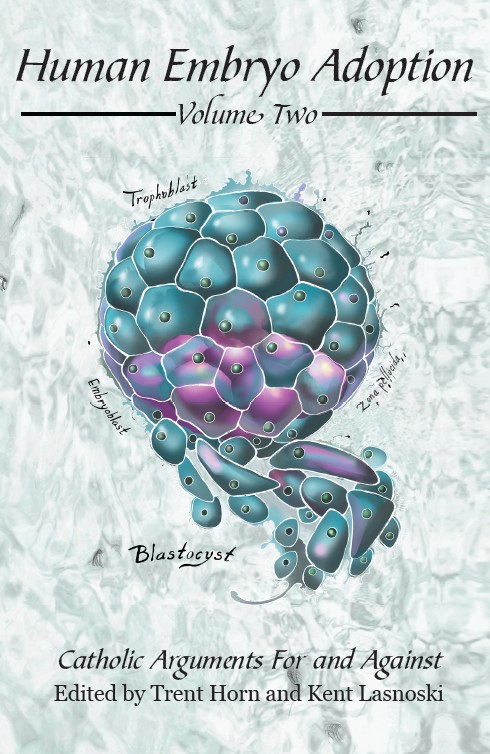
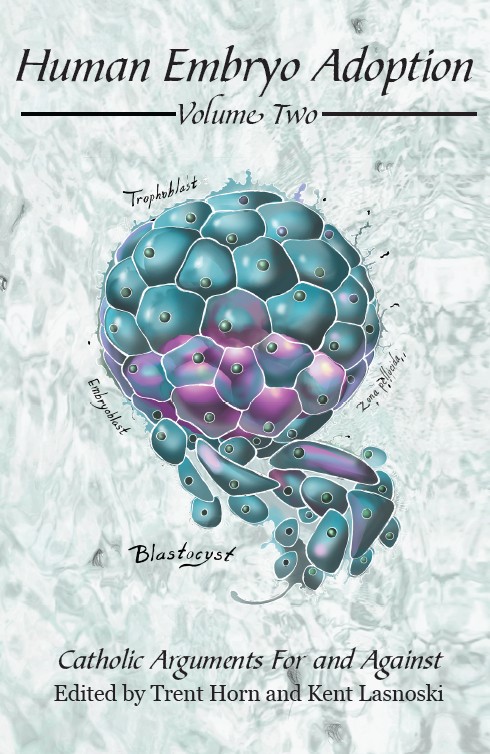
The NCBC’s new book, Human Embryo Adoption, vol. 2: Catholic Arguments For and Against, presents two opposing perspectives on the moral foundation of embryo adoption: Irene Alexander argues, “The embryo adoption issue has brought to the forefront of contemporary bioethical thinking an underlying philosophical divide that Catholic bioethicists cannot ignore: the new natural law analysis of the moral object eschews the underlying philosophy of nature as integral to defining what a moral act is. … Sound moral thinking, especially in bioethics, requires the ethicist to consider the nature of the action chosen in specifying the moral object. This is distinct from a purely first-person perspective, where a moral object is determined by reference to a strict view of the agent’s intention—that is, what he understands himself to be doing through his own interior choice—which he then projects onto a morally neutral external act.” Christopher Reilly asks “the Holy Spirit [to] inspire the unbounded charitable energy of Christian couples who desire to extend compassion and the fulfillment of purpose and justice owed to some of the most endangered and mistreated human beings—children of God who are literally frozen and held captive pending their demise, mistreatment in scientific experiments, and destruction. It is the adoptive couples who are at the center of the moral drama of embryo adoption and who are inappropriately discouraged by those who argue against the astonishing goodness of such an act of love.” What do you think? Share your thoughts in the comments below, we would love to hear from you! Human Embryo Adoption vol. 2 is only $34.95 and available at the NCBC’s online store, and a bundle of Human Embryo Adoption vol. 2 and Human Embryo Adoption, vol. 1: Biotechnology, Marriage, and the Right to Life, is only $39.95. ncbcenter.org/store/human-em…
The National Catholic Bioethics Center tweet media
English
2
5
8
302
The National Catholic Bioethics Center
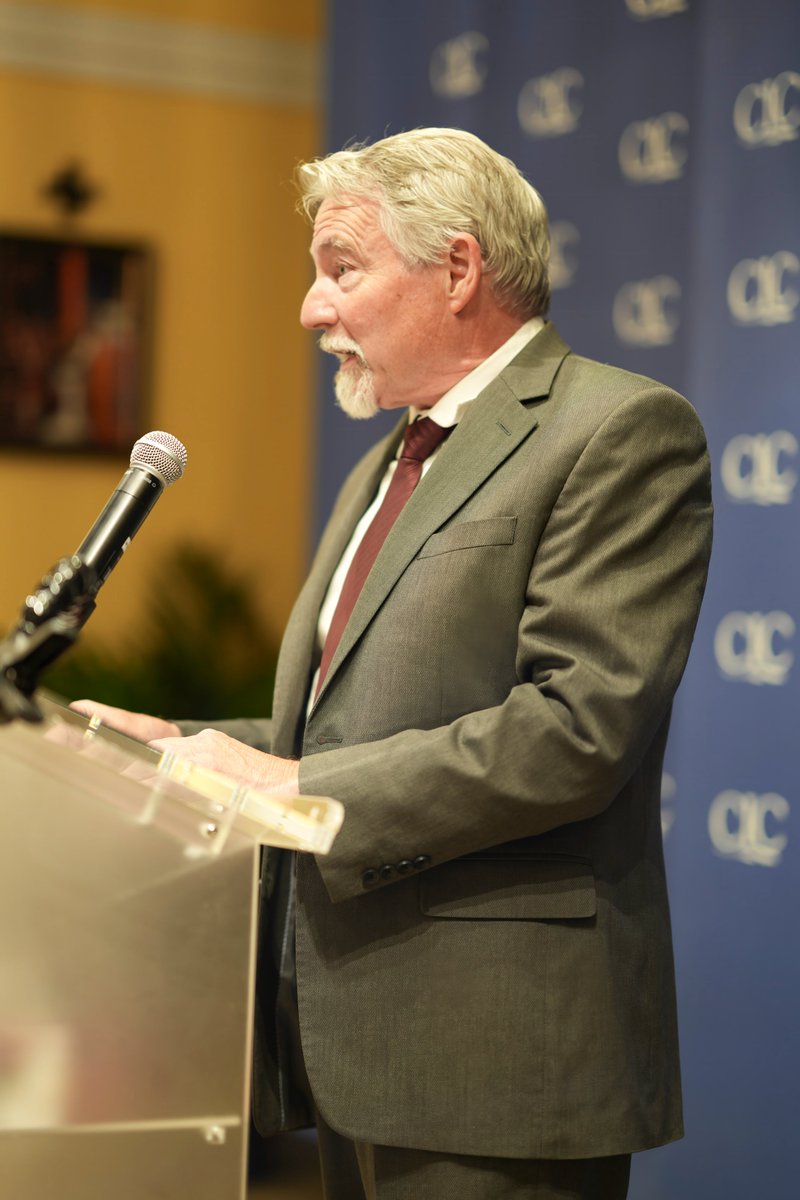
In his talk on the American Founding, NCBC Director of Publications Ted Furton identified the foundation of religious freedom and the separation of Church and state in the complementarity of faith and reason: “There would be complete freedom of religious expression among all sects, but unity would be forged under the rationally known truths of natural religion. … So the American founding rests on a commitment to religious truths that can be known by reason. … The argument that the First Amendment obliges [us] to privatize these truths is based on a misunderstanding between the distinction of faith and reason.” Read the whole story by @NCRegister: ncregister.com/cna/religion-a…
The National Catholic Bioethics Center tweet media
English
0
2
8
182
The National Catholic Bioethics Center
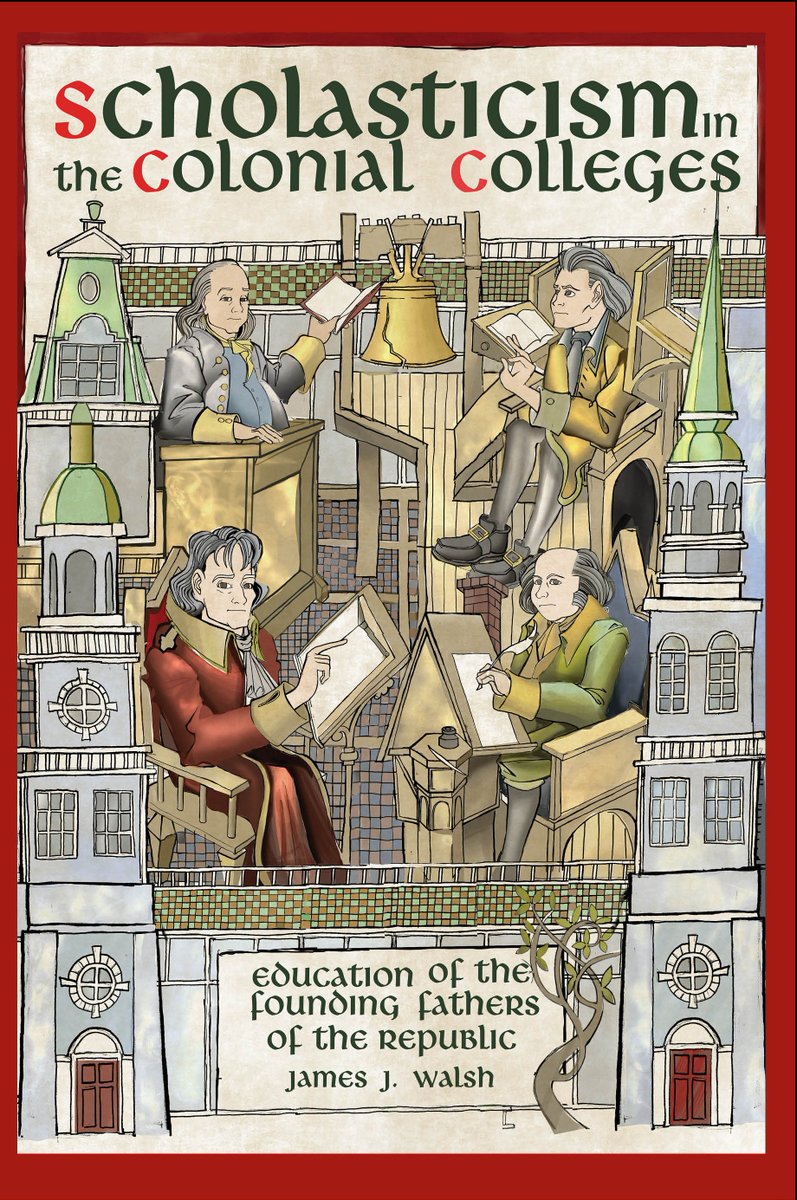
On June 25, NCBC Director of Publications Ted Furton gave a talk at the Catholic Information Center in Washington, DC, titled “Natural Religion and the American Founding.” Parts of the lecture were based on the NCBC’s reprint edition of Scholasticism in the Colonial Colleges by James Walsh. Writing on the Founding Fathers’ education in philosophy, Ted quotes Walsh’s observation that “the core of education was ‘what used to be, and in philosophy classes is still, called natural theology, that is, such a knowledge of God and man’s relation to Him and to the universe as may be secured by the human mind through its own light of reason apart from revelation.’” You can find the book at our online store: ncbcenter.org/store/pre-orde…
The National Catholic Bioethics Center tweet mediaThe National Catholic Bioethics Center tweet media
English
0
2
5
219
The National Catholic Bioethics Center
In the NCBC’s new book, Human Embryo Adoption, vol. 2: Catholic Arguments For and Against, Dr. Cara Buskmiller provides clarity on medical processes, which is needed to morally evaluate of embryo adoption: “Given the unusual separation between these events [fertilization and pregnancy], it is important to clearly restate: ET [embryo transfer] for frozen embryos occurs after the embryonic person begins to exist and cannot strictly be called part of the creation of a new person, except in a casual sense where this refers to all of reproduction. Instead, ET replaces a part of gestation, which is local motion of the embryo into the endometrial cavity prior to implantation. If ET is under discussion as intrinsically evil, then discussion should be on the grounds of gestation or pregnancy not on the grounds of conception, fertilization, or procreation, which is a ‘coming to be’ that finished at the end of the process of fertilization. ET or local motion of the embryo is a ‘becoming (in the uterus),’ which is a different type of change.” What do you think? Share your thoughts in the comments below, we would love to hear from you! Human Embryo Adoption vol. 2 is only $34.95 and available at the NCBC’s online store, and a bundle of Human Embryo Adoption vol. 2 and Human Embryo Adoption, vol. 1: Biotechnology, Marriage, and the Right to Life, is only $39.95. ncbcenter.org/store/human-em…
The National Catholic Bioethics Center tweet media
English
0
3
4
303
The National Catholic Bioethics Center
In the NCBC’s new book, Human Embryo Adoption, vol. 2: Catholic Arguments For and Against, Dr. Jeffrey Keenan describes the experience of couples who place embryos for adoption: “The reasons for placing embryos for adoption or not are often the same. A sense of altruism is positively associated with the preference for donating embryos for both research as well as adoption. … Similarly ironic … ‘concern about or responsibility for the health or welfare of the embryo or child it could become,’ were negatively associated with the preference for donating embryos to another couple but positively associated with thawing and disposing of them, freezing them forever, and so-called compassionate transfer. … A possible reason for these apparently incoherent preferences is that couples who create embryos through IVF are often underinformed.” What do you think? Share your thoughts in the comments below, we would love to hear from you! Human Embryo Adoption vol. 2 is only $34.95 and available at the NCBC’s online store, and a bundle of Human Embryo Adoption vol. 2 and Human Embryo Adoption, vol. 1: Biotechnology, Marriage, and the Right to Life, is only $39.95. ncbcenter.org/store/human-em…
The National Catholic Bioethics Center tweet media
English
0
0
2
123
The National Catholic Bioethics Center
The NCBC’s new book, Human Embryo Adoption, vol. 2: Catholic Arguments For and Against, edited by Trent Horn and Kent Lasnoski, is finally available! 🎉🍾 Today, you can officially purchase a print copy of this carefully balanced dialogue on the most intractable Catholic moral debate. Human Embryo Adoption vol. 2 is only $34.95 and available at the NCBC’s online store, and a bundle of Human Embryo Adoption vol. 2 and Human Embryo Adoption, vol. 1: Biotechnology, Marriage, and the Right to Life, is only $39.95. ncbcenter.org/store/human-em…
The National Catholic Bioethics Center tweet media
English
0
2
2
179
The National Catholic Bioethics Center
The NCBC’s upcoming book, Human Embryo Adoption, vol. 2: Catholic Arguments For and Against, launches on June 16, 2025! 🥳 Examining the debate through the Theology of the Body, Kent Lasnoski lays out two possible descriptions of the moral object of embryo adoption: “The object of the act is to become pregnant by means of an embryo transfer. The object is a synthesis of the immediate means, which is the technical procedure of the embryo transfer, and the most proximate end, which is the resulting pregnancy. … An impregnating act apart from the gift of conjugal love in the consummation of a marriage is intrinsically evil, on account of its violating the exclusivity of the gift of self in marriage.” “One might object, saying that the object is more accurately described as the synthesis of embryo transfer (immediate means) and the gift of self as shelter and food (most proximate end). On this account, the pregnancy could still be the intention (a more remote end) but is in fact an anticipated and hoped for consequence rather than the object of the act itself.” What do you think? Share your thoughts in the comments below, we would love to hear from you! P.S. You still can preorder to receive a 15% discount on Human Embryo Adoption vol. 2 for $29.50, or a 20% discount on a bundle of Human Embryo Adoption vol. 2 and Human Embryo Adoption, vol. 1: Biotechnology, Marriage, and the Right to Life, for $31.95. Be the first to get a copy at the NCBC’s online store. ncbcenter.org/store/human-em…
The National Catholic Bioethics Center tweet media
English
0
0
0
150
The National Catholic Bioethics Center
Only two weeks left until the launch of the NCBC’s new book, Human Embryo Adoption, vol. 2: Catholic Arguments For and Against! 🎉🎉🎉 In his chapter, "Prenatal Adoption and the Magisterium," Jimmy Akin points out that the conflict over embryo adoption is grounded in part in the authoritativeness of magisterial pronouncements: “The entire subject of IVF is new in the experience of the Church, and the magisterium has not yet made infallible pronouncements regarding it. The US bishops’ Committee on Doctrine notes, ‘An example of teaching that is non-definitive and calls for obsequium religiosum [religious submission] is the teaching of the instruction Donum vitae against such practices as artificial insemination, surrogate motherhood, and in vitro fertilization.’ John Paul II’s intervention thus expresses a binding but noninfallible teaching that has not yet been invested with a high level of authority.” What do you think? Share your thoughts in the comments below, we would love to hear from you! P.S. You still can preorder to receive a 15% discount on Human Embryo Adoption vol. 2 for $29.50, or a 20% discount on a bundle of Human Embryo Adoption vol. 2 and Human Embryo Adoption, vol. 1: Biotechnology, Marriage, and the Right to Life, for $31.95. Be the first to get a copy at the NCBC’s online store. ncbcenter.org/store/human-em…
The National Catholic Bioethics Center tweet media
English
0
0
1
141
The National Catholic Bioethics Center
The NCBC’s upcoming book, Human Embryo Adoption, vol. 2: Catholic Arguments For and Against, reveals that a person’s understanding of motherhood can affect one’s view on embryo adoption. Charles Robertson’s opposition to embryo adoption is based in part on the assertion that “the parent-child relation is established at the moment of generation, whether that generation occurs in the body of the woman, thus making her to be pregnant, or outside the body of the woman. Impregnating a woman with a thawed embryo, then, is not an act fit to establish a real relation of maternity, for that relation already exists in the man and woman who contributed the gametes of the conceptus.” Defending embryo adoption, John Berkman asserts, “She [a woman] becomes a mother by virtue of becoming pregnant. However, when a woman becomes a mother via adoption, she becomes a mother by shared choice and commitment. So with prenatal adoption, she is a mother prior to being impregnated via embryo transfer and does not become a mother by technical means any more than one who adopts postnatally. Thus, prenatal adoption does not supplant conjugal acts, because … adoption has nothing to do with the conception of children.” What do you think? Share your thoughts in the comments below, we would love to hear from you! P.S. You still can preorder to receive a 15% discount on Human Embryo Adoption vol. 2 for $29.50, or a 20% discount on a bundle of Human Embryo Adoption vol. 2 and Human Embryo Adoption, vol. 1: Biotechnology, Marriage, and the Right to Life, for $31.95. Be the first to get a copy at the NCBC’s online store. ncbcenter.org/store/human-em…
The National Catholic Bioethics Center tweet media
English
0
1
0
108
The National Catholic Bioethics Center
The NCBC’s upcoming book, Human Embryo Adoption, vol. 2: Catholic Arguments For and Against, investigates how the rights of children can be used to critique and defend embryo adoption. Christopher Bobier writes, “The trade-off, then, is between a completely painless, unaware death followed by confidently hoped-for eternal happiness and a life lived with an uncertain eternal outcome and uncertain traumas. … There is, therefore, good reason … to adopt from foster care in the hopes of providing that child a life that provides for her physical, emotional, and spiritual well-being.” Conversely, Melissa Moschella writes, “From the perspective of the child, being adopted at the embryonic stage involves less psychological rupture than being adopted after birth, just as being adopted soon after birth involves less rupture than being adopted at an older age. … Thus, the child adopted as an embryo does not suffer from the primal wound of separation from his birthmother and is, therefore, saved from what some believe to be the lifelong psychological effects of that wound.” What do you think? Share your thoughts in the comments below, we would love to hear from you! P.S. You still can preorder to receive a 15% discount on Human Embryo Adoption vol. 2 for $29.50, or a 20% discount on a bundle of Human Embryo Adoption vol. 2 and Human Embryo Adoption, vol. 1: Biotechnology, Marriage, and the Right to Life, for $31.95. Be the first to get a copy at the NCBC’s online store. ncbcenter.org/store/human-em…
The National Catholic Bioethics Center tweet media
English
0
0
0
132
The National Catholic Bioethics Center
Be part of a carefully balanced dialogue on the most intractable Catholic moral debate. Editors Trent Horn and Kent Lasnoski bring together sixteen experts in Human Embryo Adoption, vol. 2: Catholic Arguments For and Against, to inform the consciences of faithful Catholics as they consider the practical question of what to do with offspring whose lives have been placed in a state of suspended animation. Human Embryo Adoption vol. 2 is a blueprint for the positions, arguments, and replies as they currently stand and as they are poised to move forward. Human Embryo Adoption vol. 2 launches on June 16, 2025. Preorder to receive a 15% discount on Human Embryo Adoption vol. 2 for $29.50 or a 20% discount on a bundle of Human Embryo Adoption vol. 2 and Human Embryo Adoption, vol. 1: Biotechnology, Marriage, and the Right to Life, for $31.95. Be the first to get a copy at the NCBC’s online store. ncbcenter.org/store/human-em…
The National Catholic Bioethics Center tweet media
English
0
0
2
170
The National Catholic Bioethics Center
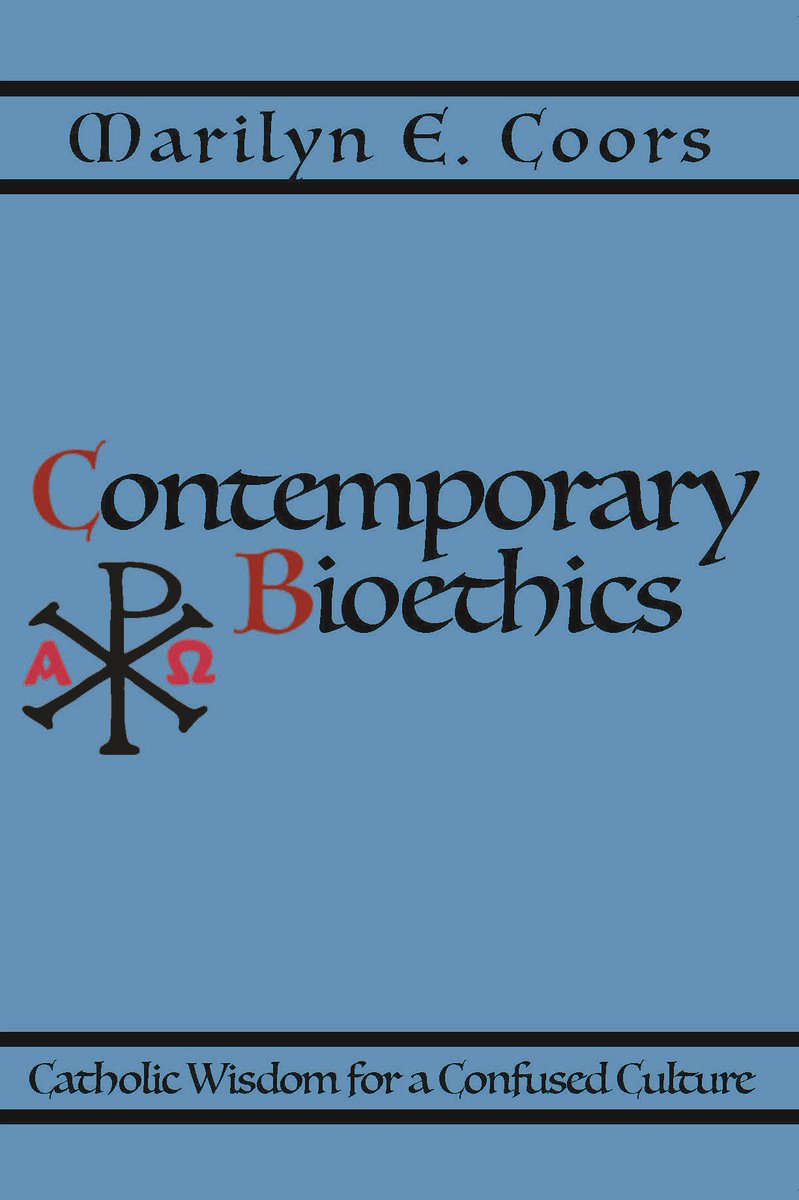
In the NCBC’s new book, CONTEMPORARY BIOETHICS: CATHOLIC WISDOM FOR A CONFUSED CULTURE, Joseph Meaney explains the wider significance of bioethics outside health care: “The burning existential question is no longer the technical one, What can we achieve, but rather the ethical ones, What should be our medical and scientific goals, and what limits need to be placed on research?” “There has never been a time in human history when advancements in the biological sciences and technology have made radical interventions on the human body and the created world easier to carry out.” What do you think? Share your thoughts in the comments below, we would love to hear from you! CONTEMPORARY BIOETHICS is only $21.95 and available at the NCBC’s online store, and a bundle of CONTEMPORARY BIOETHICS and THE DIALOGUE BETWEEN TRADITION AND HISTORY by Rev. Benedict Ashley is only $29.95. ncbcenter.org/store/contempo…
The National Catholic Bioethics Center tweet media
English
1
1
2
320
The National Catholic Bioethics Center
The NCBC’s new book, CONTEMPORARY BIOETHICS: CATHOLIC WISDOM FOR A CONFUSED CULTURE, edited by Marilyn Coors, is finally available! 🎉🍾 Today, you can officially purchase a print copy of this penetrating, crucial guide to witnessing a countercultural vision of conscience and technology in our new apostolic age. CONTEMPORARY BIOETHICS is only $21.95 and available at the NCBC’s online store, and a bundle of CONTEMPORARY BIOETHICS and Marilyn Coors’s 2015 book BIOETHICS ACROSS THE LIFE SPAN is only $29.95! ncbcenter.org/store/contempo…
The National Catholic Bioethics Center tweet media
English
0
0
4
243
The National Catholic Bioethics Center
The NCBC’s upcoming book, CONTEMPORARY BIOETHICS: CATHOLIC WISDOM FOR A CONFUSED CULTURE, launches on September 16, 2024! 🥳 In her chapter, “Language and Its Power in Society,” Dr. Elena Kraus offers a guide to engaging in fruitful cultural discourse: “Understanding language, its use, and its misuse is part of the challenge. If key nuances of language can be recognized, focused on, and not surrendered, even the act of clarifying the definitions of terms can be an instrument of engagement and argumentation. This can be done in a nonthreatening way simply by asking questions and expressing sincere interest. Ask for examples when statements you believe are baseless are made. Calmy correct when your own words or ideas or misinterpreted.” What do you think? Share your thoughts in the comments below, we would love to hear from you! P.S. It’s not too late! You still can preorder to receive a 15% discount on CONTEMPORARY BIOETHICS for $18.50 or a 20% discount on a bundle of CONTEMPORARY BIOETHICS and Marilyn Coors’s 2015 book BIOETHICS ACROSS THE LIFE SPAN for $23.95. Be the first to get a copy at the NCBC’s online store! ncbcenter.org/store/contempo…
The National Catholic Bioethics Center tweet media
English
0
1
6
227
The National Catholic Bioethics Center
Only two weeks left until the launch of the NCBC’s new book, CONTEMPORARY BIOETHICS: CATHOLIC WISDOM FOR A CONFUSED CULTURE! 🎉🎉🎉 To celebrate, we’re offering a free download of Christopher Reilly’s chapter, “Seven Christian Principles for Thriving with Artificial Intelligence.” If you would like a taste of what’s inside, click this link! static1.squarespace.com/static/5e3ada1… Reilly gives insightful encouragement on the possibility of integrating artificial intelligence into society: “Awareness of the nature of AI is important, but even more important is a well-formed conscience which comes from personal development in the virtues. St. Francis of Assisi, for example, would be equally at home in the age of AI as he was in the thirteenth century—or he would find his way.” What do you think? Share your thoughts in the comments below, we would love to hear from you! ncbcenter.org/store/contempo…
The National Catholic Bioethics Center tweet media
English
0
1
2
195
The National Catholic Bioethics Center
In the NCBC’s upcoming book, CONTEMPORARY BIOETHICS, Edward Furton describes how tolerance becomes twisted once it has been separated from truth: "The relativist wants others to show respect for what is not true. This demand does not derive from the virtue of toleration but from the desire to gain an advantage. Once respect for falsehood is granted, the relativist uses force to compel conformity." ncbcenter.org/store/contempo…
The National Catholic Bioethics Center tweet media
English
0
4
6
264
The National Catholic Bioethics Center
Be a witness to a countercultural vision of conscience and technology in our new apostolic age. Editor Marilyn Coors and eight interdisciplinary contributors from medicine, law, theology, and philosophy have written CONTEMPORARY BIOETHICS: CATHOLIC WISDOM FOR A CONFUSED CULTURE to empower readers to speak to contemporary issues from informed and reasoned positions grounded in the light of truth. ncbcenter.org/store/contempo…
English
0
0
4
252