Kostas Moros@MorosKostas
I had previously written some notes on this judge's historical analysis from the preliminary injunction ruling that still seem applicable.
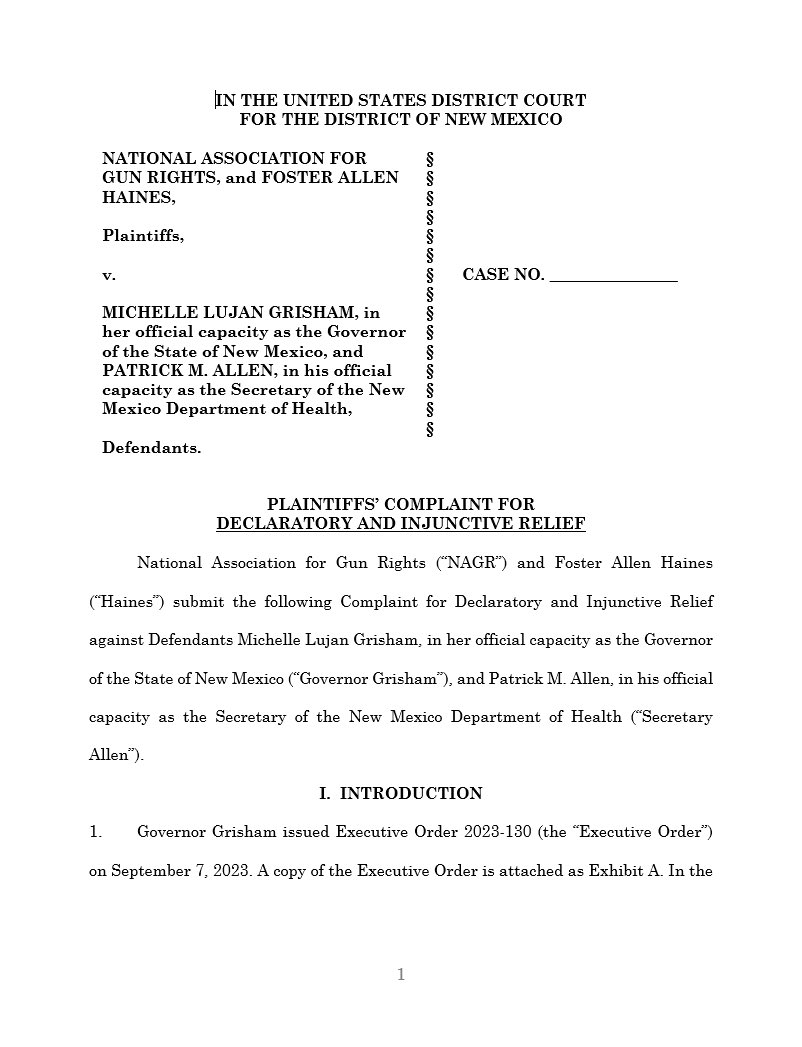
First, the court did not cite any reason why San Jose should be entitled to engage in analogical reasoning. As explained, government defendants may only engage in analogical reasoning when there are “unprecedented societal concerns or dramatic technological changes”. Bruen, 142 S. Ct. at 2132. The insurance mandate would supposedly address the harm resulting from gun accidents, but injuries resulting from such accidents are obviously not a new problem. “[W]hen a challenged regulation addresses a general societal problem that has persisted since the 18th century, the lack of a distinctly similar historical regulation addressing that problem is relevant evidence that the challenged regulation is inconsistent with the Second Amendment.” Bruen, 142 S. Ct. at 2131.
Second, even if the City could engage in analogical reasoning, the court relied solely on 19th century analogues, and none from the founding era. As established previously, the founding era is the relevant time period and 19th century analogues are inapplicable if they contradict what came before. The surety laws the court relied on exclusively were a purely 19th-century invention, and they plainly contradict the founding era.
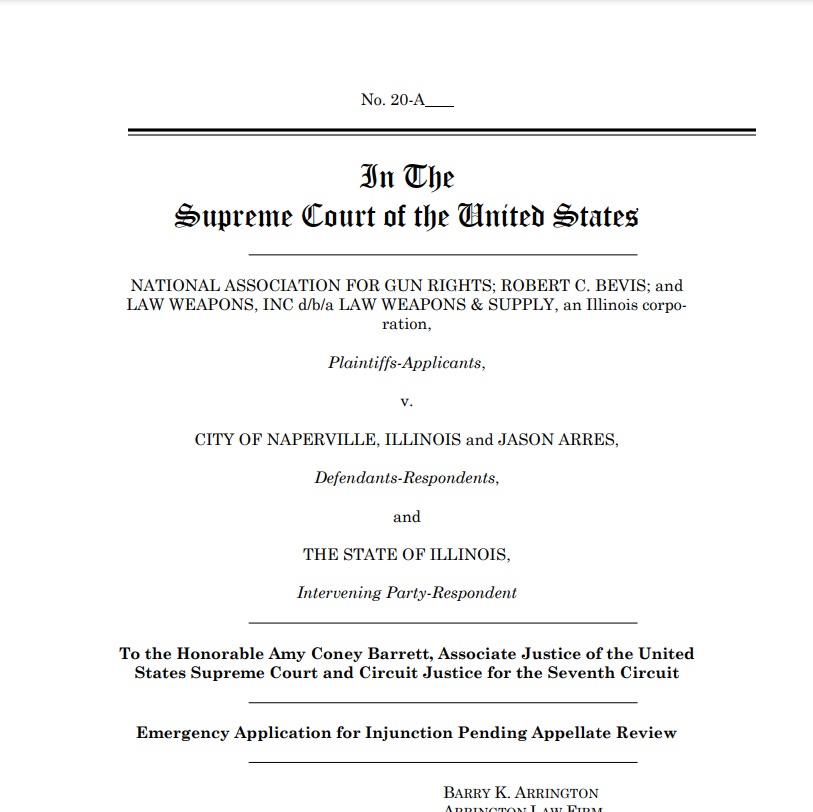
Third, even assuming San Jose may engage in analogical reasoning and may rely exclusively on 19th-century laws without any from the founding era, the surety laws the court relied on are not relevantly similar under Bruen, as they are at most only superficially similar. While the Court explained that “analogical reasoning under the Second Amendment is neither a regulatory straightjacket nor a regulatory blank check” Bruen, 142 S. Ct. at 2133, the ruling in Nat'l Ass'n for Gun Rights ended up giving San Jose something very close to a blank check.
Recall that the relevant metrics in analogical reasoning are “how” and “why” the modern regulation and the proposed analogues burden the Second Amendment right. Id. at 2132-2133. The “how” is entirely different when comparing the modern insurance requirement to surety laws in terms of how the laws operate.
As an initial distinction, unlike surety laws, which were rarely enforced , the City presumably intends to strictly enforce its ordinance. Even if sureties were enforced, surety laws burdened individuals who carried a firearm in public, and even then, only when there was reasonable cause to fear these individuals would cause injury or breach of the peace (everyone else could carry without posting a surety). Id. at. 2148. And if the individual did not breach the peace, they would later be refunded the bond they posted, id, unlike insurance premiums, which are never refunded.
All told, therefore, “[u]nder surety laws . . . everyone started out with robust carrying rights” and only those reasonably accused were required to show a special need in order to avoid posting a bond.” Bruen, 142 S. Ct. at 2149, citing Wrenn v. District of Columbia, 864 F.3d 650, 661 (2017). This is a dramatic difference from the Ordinance’s blanket application to all gun owners. If the Ordinance limited its insurance requirement to those people who are known to have previously had accidental discharges with their firearm, then perhaps it would be somewhat closer to the historical surety laws (though there would still be the critical difference of it applying to mere possession and not carry). Instead, it applies to all firearm owners generally, even if they have never given the City reasonable cause to fear they would have an accidental discharge.
But even if the ordinance were so limited, it would still fail to be a “relevantly similar” analogue under Bruen because the “why” is also entirely different. Sureties were primarily concerned with people intentionally causing harm, not accidents. San Jose’s Ordinance only applies to gun accidents, not intentional harm (likely because no insurer would ever agree to cover intentional crimes). Again, “generally, a historical statute cannot earn the title “analogue” if it is clearly more distinguishable than it is similar to the thing to which it is compared”, Antonyuk, 2022 U.S. Dist. LEXIS at *20, and the insurance requirement is plainly more different than similar to the historical surety laws.
Further, the court in Nat'l Ass'n for Gun Rights also noted that “the history of reallocating costs of firearm-related accidents—from which the Insurance Requirement descends—can be traced back to the early American practice of imposing strict liability for such accidents.” Nat'l Ass'n for Gun Rights, 2022 U.S. Dist. LEXIS 138385, at *30. This is true – but it is a point that does not help the City. Given that in the past we dealt with the harm of firearm-related accidents in a materially different way than the insurance requirement San Jose has now enacted (i.e., by imposing strict liability), that is evidence that the insurance requirement is unconstitutional. “[I]f earlier generations addressed the societal problem, but did so through materially different means, that also could be evidence that a modern regulation is unconstitutional.” Bruen, 142 S. Ct. at 2131.