Helen

2.4K posts

Helen banner
Helen

Helen

@NHSGas

Anaesthetist, perioperative physician, prehabilitation enthusiast. Honorary secretary iPOETTS, POM Lead for Devon ICB/NHSE.

South West, England Katılım Şubat 2012
319 Takip Edilen137 Takipçiler
Helen retweetledi
Paul Wischmeyer MD
Paul Wischmeyer MD@Paul_Wischmeyer·
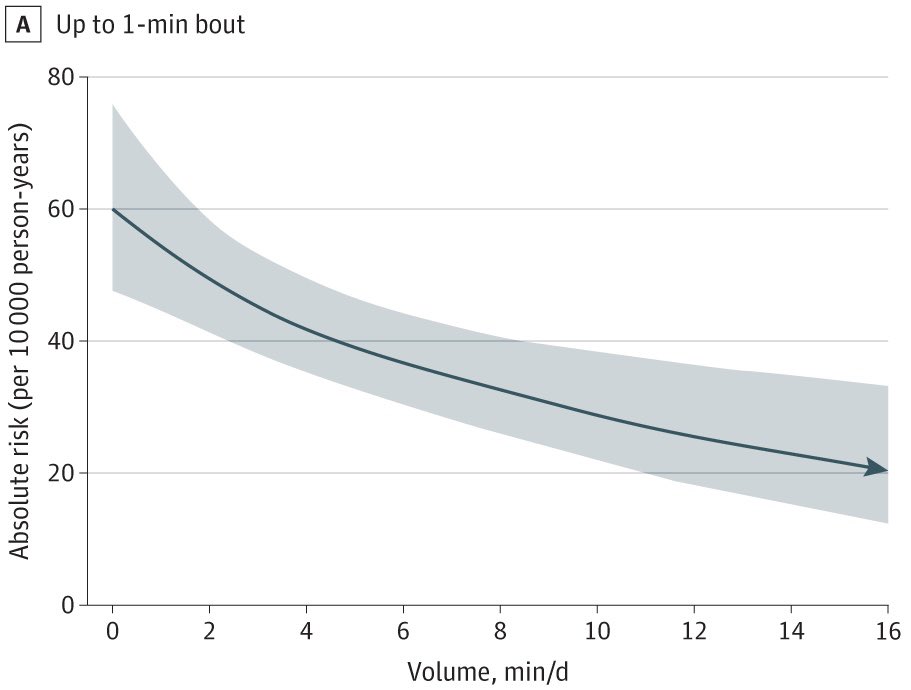
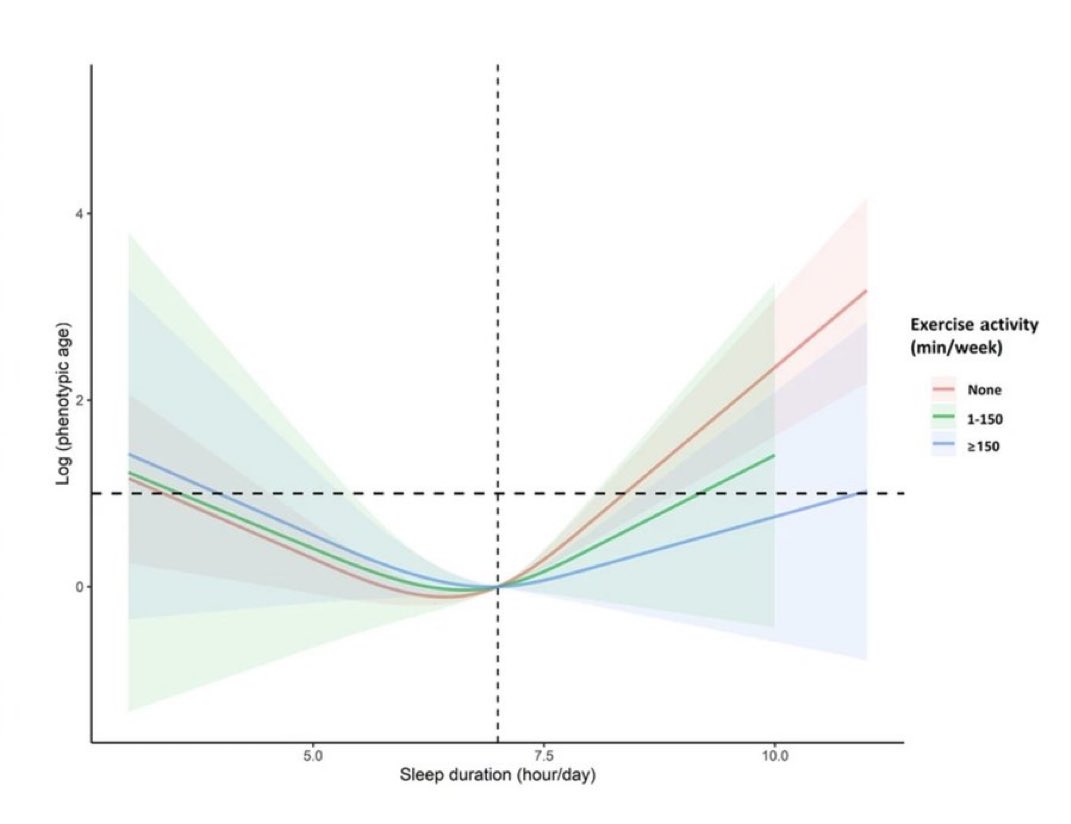
Regular exercise is linked to slower biological aging - but only in people sleeping 7+ hours. People who slept under 6 hours and exercised actually aged faster.
Paul Wischmeyer MD tweet media
English
1
3
18
683
Helen retweetledi
Steve Magness
Steve Magness@stevemagness·
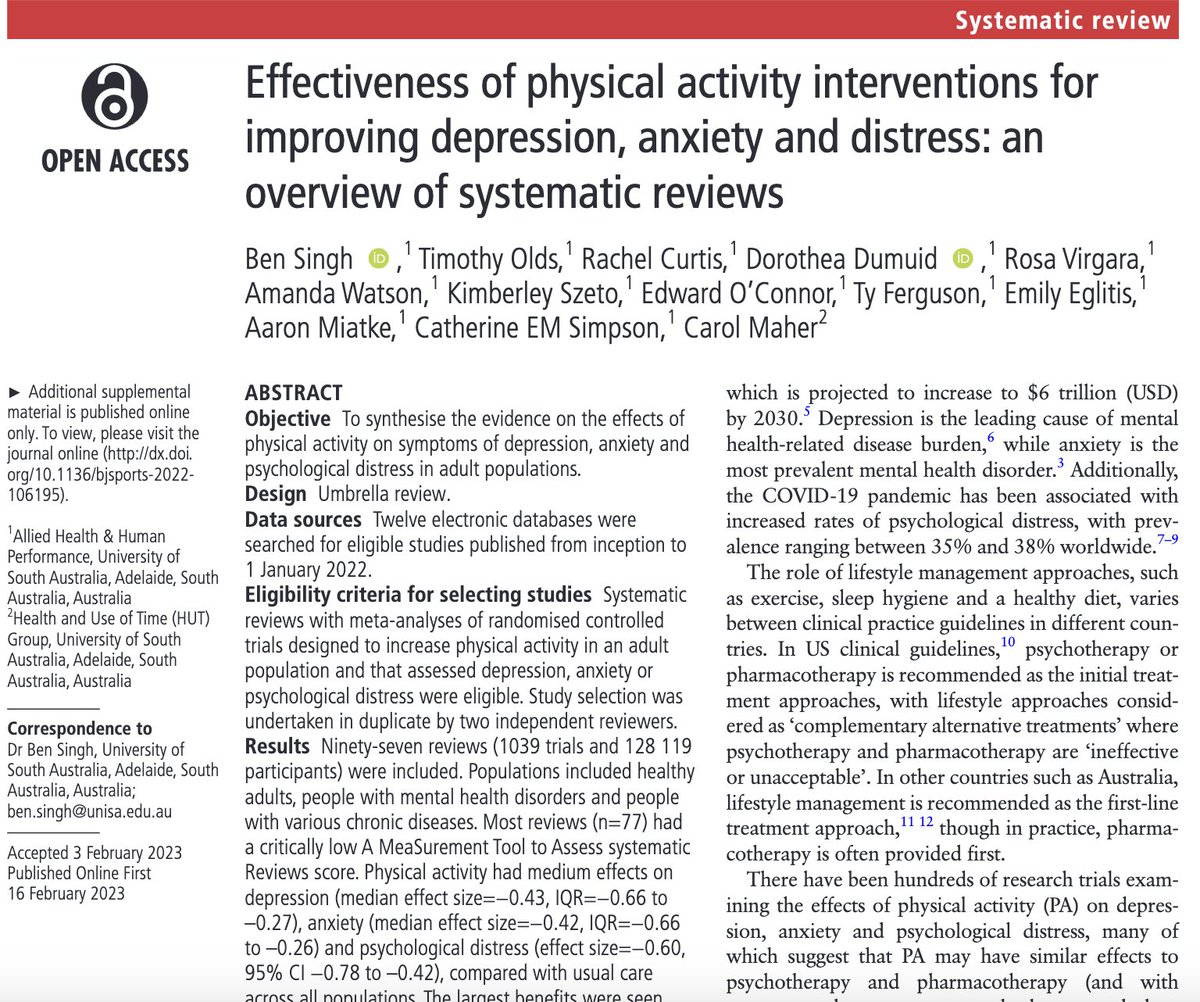
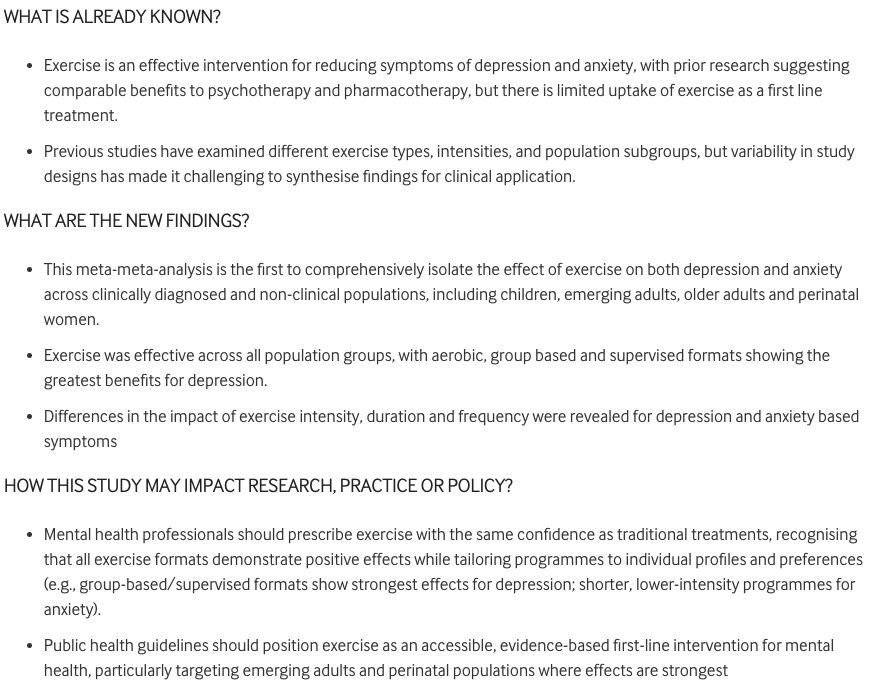
Movement is medicine. Large systematic review of over 1,000 trials and 120,000 participants finds that exercise has a significant effect on symptoms of depression, anxiety, and psychological distress. We need to do a better job of integrating mental and physical health.
Steve Magness tweet media
English
21
175
621
28K
Helen retweetledi
Nick Krontiris
Nick Krontiris@nick_krontiris·
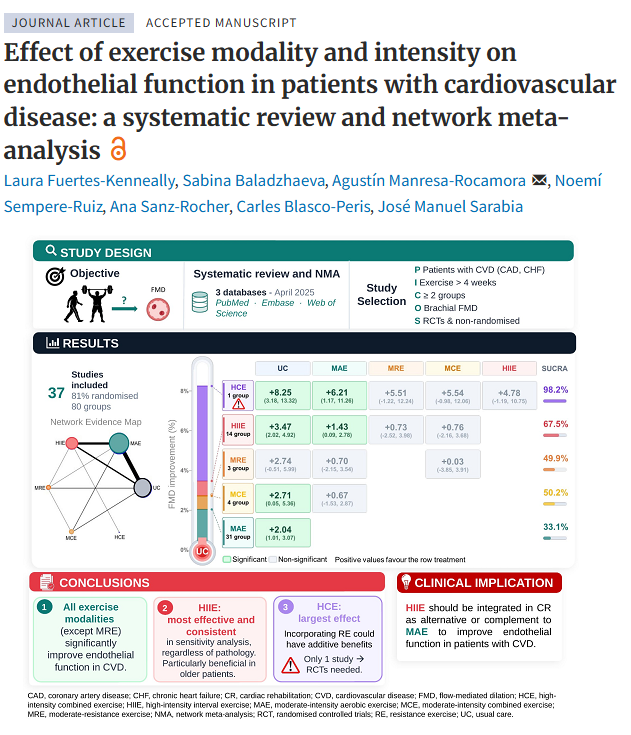
This systematic review and meta-analysis finds that exercise is likely to enhance endothelial function in patients with cardiovascular disease and that high-intensity interval aerobic exercise demonstrates superior efficacy over moderate continuous exercise.
Nick Krontiris tweet media
English
3
15
61
2K
Helen retweetledi
Dr. Filippo Cademartiri
Dr. Filippo Cademartiri@FCademartiri·
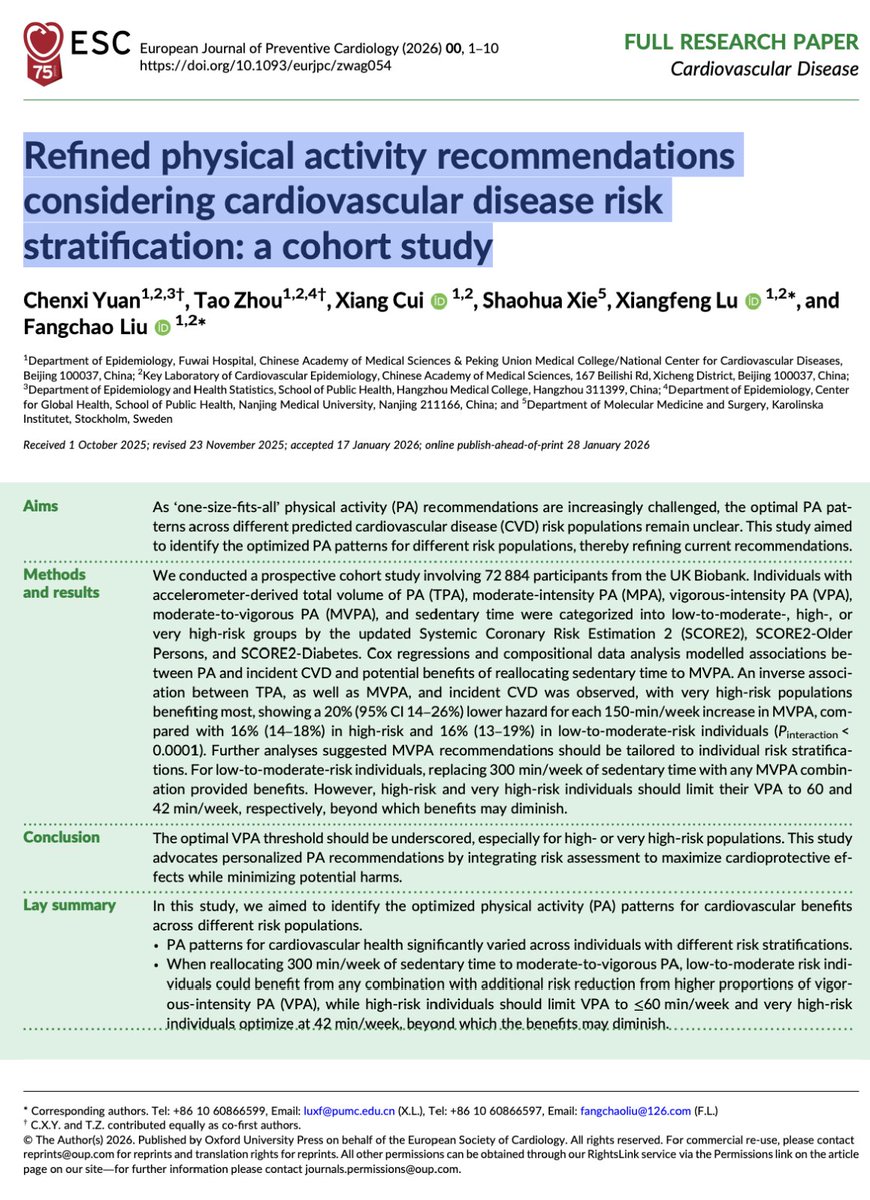
🏃‍♂️🫀 Exercise Prescriptions Should Be Risk-Stratified — Not Generic Current guidelines recommend ≥150 min/week of moderate-to-vigorous physical activity (MVPA) for everyone. But is that optimal for a 45-year-old low-risk individual and a 70-year-old very high-risk patient? This large UK Biobank cohort (72,884 participants, median 13.2-year follow-up) provides a more nuanced answer  . 🔬 What’s innovative? • Objective 7-day wrist accelerometer data • ESC-aligned SCORE2 risk stratification • Isotemporal substitution modeling (reallocating sedentary time) • Identification of optimal vigorous activity thresholds by risk group 📊 Key findings Each +150 min/week MVPA → • 20% lower CVD risk in very high-risk individuals • 16% reduction in high- and low-to-moderate-risk groups Higher-risk individuals benefit the most from increasing activity. BUT intensity matters. When replacing 300 min/week sedentary time: 🔹 Low-to-moderate risk → Any mix of moderate (MPA) and vigorous (VPA) works. More VPA = more benefit. 🔹 High risk → VPA should be ≤60 min/week (~20% of MVPA). 🔹 Very high risk → Optimal VPA ≈ 42 min/week (~14% of MVPA). Beyond that, benefits decline. In high-risk groups, excessive VPA may attenuate benefit—likely due to hemodynamic stress, endothelial dysfunction, and oxidative burden. 🎯 Take-Home Messages 1️⃣ Physical activity remains powerfully protective across all risk strata. 2️⃣ Higher-risk patients gain the largest relative benefit. 3️⃣ Vigorous exercise has a ceiling effect in high-risk individuals. 4️⃣ Exercise prescriptions should integrate formal risk stratification (e.g., SCORE2). Precision prevention now extends to lifestyle medicine. One size does not fit all.
Dr. Filippo Cademartiri tweet media
English
2
68
178
12.4K
Helen retweetledi
Anesthesiology Journals
Anesthesiology Journals@_Anesthesiology·
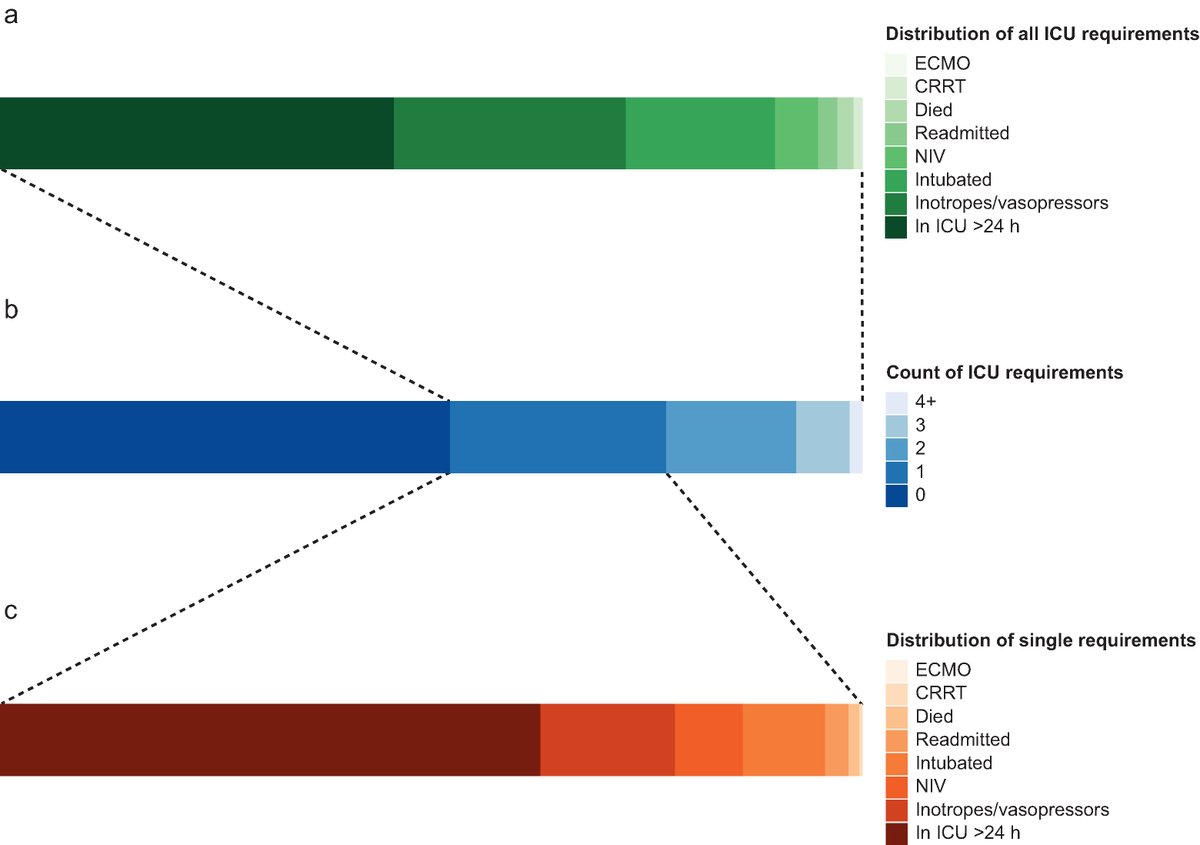
💊 Read a summary of "A preventive care strategy to reduce moderate or severe acute kidney injury after major surgery (BigpAK-2): A multinational, randomised clinical trial," in the March 2026 Science, Medicine, and the Anesthesiologist: ow.ly/mHnM50YljSQ
Anesthesiology Journals tweet media
English
0
4
8
1.1K
Helen retweetledi
JAMA Surgery
JAMA Surgery@JAMASurgery·
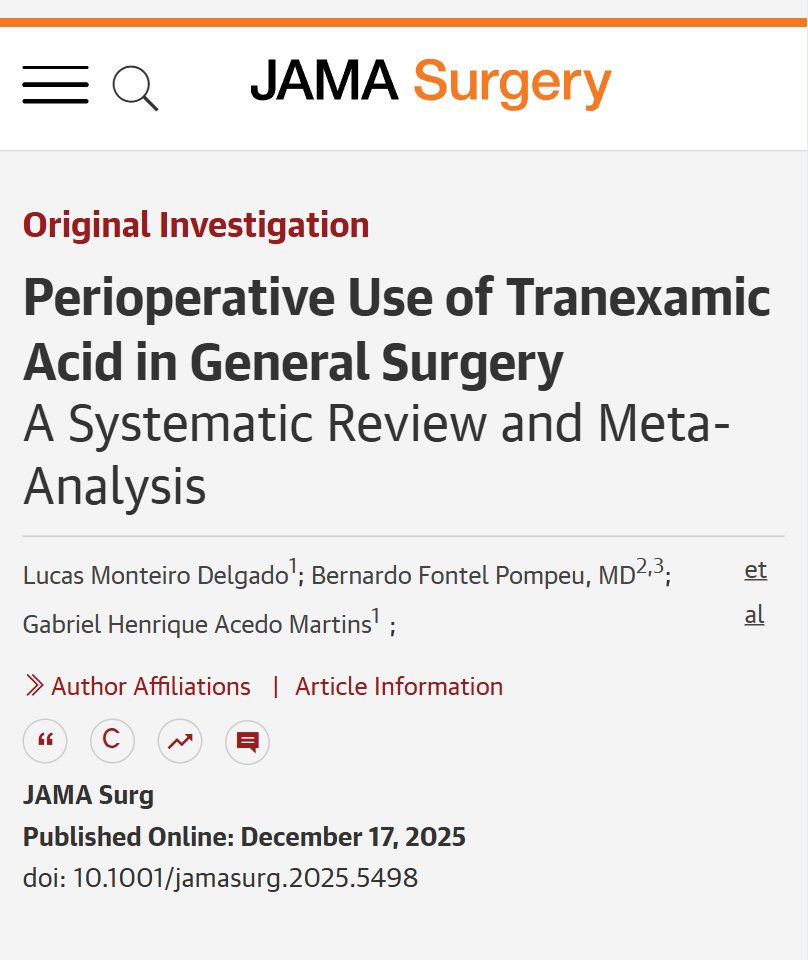
Systematic review and meta-analysis: Prophylactic TXA use was associated with lower intraoperative blood loss, transfusion requirements, and major bleeding without an observed increase in thromboembolic or mortality risk. ja.ma/4c8OJZU
JAMA Surgery tweet media
English
2
85
246
20.1K
Helen retweetledi