Natangu retweetledi
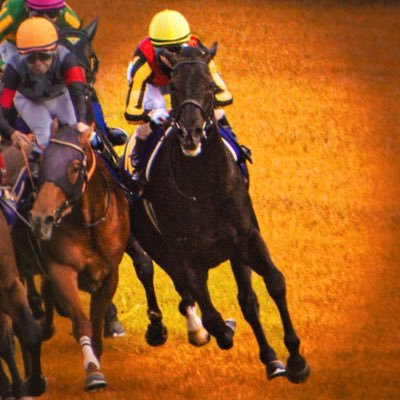
Taiki Shuttle: Runs Like He’s Just Playing
He was the first foreign-bred horse—and the first horse who made his living at a mile or shorter—to be voted JRA Horse of the Year.
⸻
Akazawa, then head of Taiki Farm, once explained the core idea behind his ownership model: “You can breed in America, raise in Ireland, and bring the horse to race in Japan. I thought: why not build a co-ownership club around that?” He rated American breeding highly enough that he bought property there—Big Sink Farm (Taiki Farm’s U.S. division)—and from that vision Taiki Shuttle emerged. He was foaled in the United States at Big Sink Farm, then shipped to Ireland as a yearling for his early development.
At the time, many U.S.-bred horses imported to Japan arrived through training sales. Because those youngsters had already been put through disciplined under-saddle prep, they tended to run well early; the flip side was a reputation—fair or not—for being precocious and peaking young. I can’t say how fair that stereotype really was, but because so many of the American horses people saw in Japan came through those training sale pipelines, “American-bred = early type” became a bit of conventional wisdom. Taiki Shuttle didn’t fit that template. He hadn’t been produced specifically to sell through a breeze-show ring, and there was no need to grind him hard as a 2-year-old.
He finally came over to Taiki Farm in Japan as a 2-year-old. The farm’s breaking/conditioning manager remembered thinking, “He looks bigger than the scale says…” The transition wasn’t smooth. Stress from the change of environment left him with a skin issue along the crest of his neck. Once that cleared up, he kicked a paddock fence and opened up a wound on his left hind. When that healed, he started favoring his left front—he just didn’t want to put it down squarely. His feet were a little soft; hoof issues would haunt him again and again throughout his career.
It took time before he could even hold new shoes. When he finally got going under tack, he promptly dumped his rider, tore off down a rough, stony track for about a kilometer, then finished the self-directed workout by trotting calmly into his stall and tucking into his feed as if nothing had happened. No injuries. Progress, of a sort.
⸻
In February of his 3-year-old year he shipped into trainer Kazuo Fujisawa’s yard at the Miho Training Center. Fujisawa had spent time in England at age twenty-one and absorbed a lot from British training philosophy. He was fond of saying things like, “Driving them hard once or twice before a race doesn’t change a horse’s actual ability.” He put more weight on daily foundation work than on flashy final times, and he based his program on what we’d call no-push gallops rather than repeated all-out drills.
A work rider recalled his earliest sits on Taiki Shuttle: “He was looking around and not really running in earnest—but he still clocked a decent time. I thought: this one can win.” Most horses tense up when first asked to go up the Miho uphill, but Taiki Shuttle would just glide. After his very first go up the hill he came back full of himself—so full, in fact, that he tried to bite the groom. Fujisawa, deciding the colt was basically just playing, handed him a riding crop as a toy. Taiki Shuttle chomped on it and happily swung it around. The next morning the whip lay on the ground, snapped clean in two.
Everyone who got on him said the same thing: good horse. Even so, just before his planned debut he went off in his action again, so Fujisawa pushed the debut back rather than hurry him.
🧵1/4

English