Nathan Jacobs

343 posts

Nathan Jacobs banner
Nathan Jacobs

Nathan Jacobs

@NathanJacobsPod

Philosopher. Theologian. The Nathan Jacobs Podcast on YouTube Theological Letters on Substack

Katılım Ekim 2024
12 Takip Edilen524 Takipçiler
Nathan Jacobs retweetledi
Fr. Daniel☦️
Fr. Daniel☦️@Fragbaza·
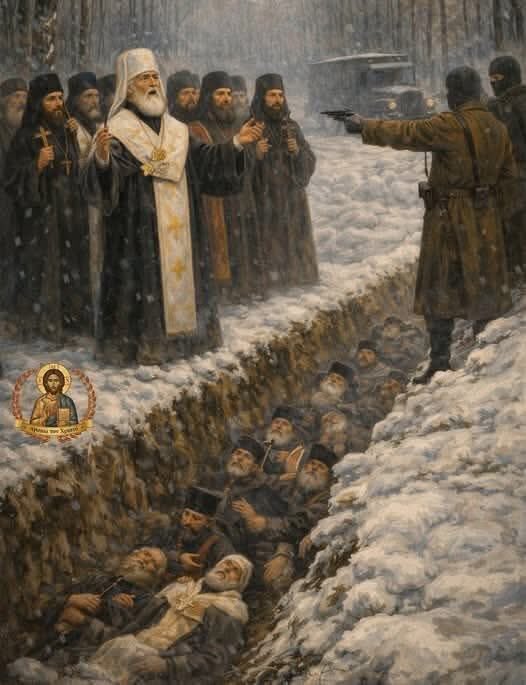
Where over 900 clerics were executed - The Forest of Butovo It was the winter of 1937 a group of priests, including an old bishop, were transported in the "black crow" (Stalin's closed trucks of the Communist secret police) to the scene of the execution. The ground was icy, hard as a rock. The guards, with their faces covered, ordered them to come out. The procedure was regular, cold and fast. However, something happened that the municipalities did not expect. As they were set at the edge of the plough, the bishop, with a trembling but clear voice, began to sing "Christ is Risen". The other priests, instead of crying or asking for mercy, joined him. Their chants echoed in the forest, breaking the absolute silence of death. An officer yelled to stop, marking the bishop in the face. He looked at him in the eyes with a peace that seemed eerie. "We forgive you, my children," he whispered, "for you do not know what you do." Every time a priest fell into the gap, the next would pick up the hymn from where the previous one had left off. With the last priest standing, the congregations were frozen. It wasn't the fear of death that shook them, but the lack of fear on the part of their victims. The last priest made the sign of the Cross, blessed his shooters, and fell into the pit before the final bullet was even heard. It is said that for years later, the inhabitants of the surrounding areas avoided approaching the Butovo Forest. They said that at nights, when the wind was blowing from the north, you could still hear the heavenly chants coming from through the earth. Today, a magnificent temple is erected on that spot. At its foundations are guarded thousands of objects found in the excavations: small crosses, etc., witnesses to a faith not defeated by bullets. From the book: Testimonies of Butovos - the Calvary of the Russian New Martyrs.
Fr. Daniel☦️ tweet media
English
117
1.3K
4.8K
166.2K
Nathan Jacobs
Nathan Jacobs@NathanJacobsPod·
The modern religious landscape has recently been host to a rather surprising trend: Westerners, both young and old, have grown increasingly interested in Eastern Orthodox Christianity. Following a notable exodus from religion nearly a decade ago, many are now returning to religion, and Eastern Orthodoxy — an ancient but notably small tradition within the United States — is one of the havens to which religious pilgrims have turned. But despite the allure of the Christian East, many find the differences between Eastern and Western Christianity to be unclear. The uninitiated sense that a great many differences exist, brushing against examples both in print and online, but inquirers often struggle to pinpoint the exact nature of these differences and what it all means. One might expect that the most natural starting point is to ask a native member of the Orthodox Church. However, those who have known only Eastern Christianity often struggle to explain its doctrines to the Western mind. Why? Simply put, Eastern and Western Christianity share a common vocabulary, born from common Scriptures, and even a common Creed (the Nicene Creed). Yet, how these traditions understand this common vocabulary is worlds apart. Therefore, the Eastern Christian often fails to understand the questions being asked by a Western Christian, and the Western Christian is no better equipped to understand the answers offered by the East. For these Western questions are informed by a very specific history, with very specific concerns, that inform very specific understandings of the Christian faith and its vocabulary. In short, the two parties often talk past one another. What is needed is a translator, one who not only understands Eastern Orthodoxy but also the Western mind — its history, the presuppositions and concerns born from this history, and the resulting vocabulary. Only by understanding such things, can one translate the Eastern doctrines into terms that make sense to the Western mind. Such translation work is the goal of the present series. To support the creation of this endeavor, and to get the series at the lowest price it will ever be available, visit theeastwestseries.com.
English
1
5
16
737
Nathan Jacobs retweetledi
Jonathan Pageau
Jonathan Pageau@PageauJonathan·
Dr. Nathan Jacobs will be producing a 25-part lecture series to bridge the gap between Eastern and Western Christianity. You can pre-order the series at the lowest price it will ever be offered, or support at higher levels to bring the series to life. Link below.
English
17
26
300
13.2K
🏛 Kassandra Troy ☦
🏛 Kassandra Troy ☦@KassieTroy·
@NathanJacobsPod Nathan, I'm ready to sign up as a community supporter, but I don't see any option to pay in the 4 instalments you mention. Am I overlooking something?
English
1
0
1
25
Nathan Jacobs
Nathan Jacobs@NathanJacobsPod·
Natural law acknowledges that there is an order to nature, reflective of providence and divine Wisdom, which weaves into the fabric of our world natural goods and evils. Evils, such as rape or murder, are so named because they violate the order of nature. These do not become evil when God prohibits them. Rather, God prohibits them because they are evil. But the same cannot be said for every command of God. There is nothing inherently evil about wearing a garment made from two different types of fabric, for example, but God prohibits this in the Old Testament (Lev 19:19) as a symbol to remind the Hebrews not to mingle with the surrounding Nations. Now, though there is no innate evil to wearing such a garment, there is an innate duty that man obey God, his Maker — just as a child has a natural duty to obey his parents. Hence, moral properties supervene on the act as a result of the command, not because of the innate good or evil of mixed garments. Such is the nature of the ceremonial law: These laws concerning certain foods or garments or washings were symbolic shadows, anticipating the substance of Christ. Their moral weight was found solely in the commands of God. theologicalletters.com/p/lord-of-the-…
Nathan Jacobs tweet media
English
0
3
9
374
Nathan Jacobs
Nathan Jacobs@NathanJacobsPod·
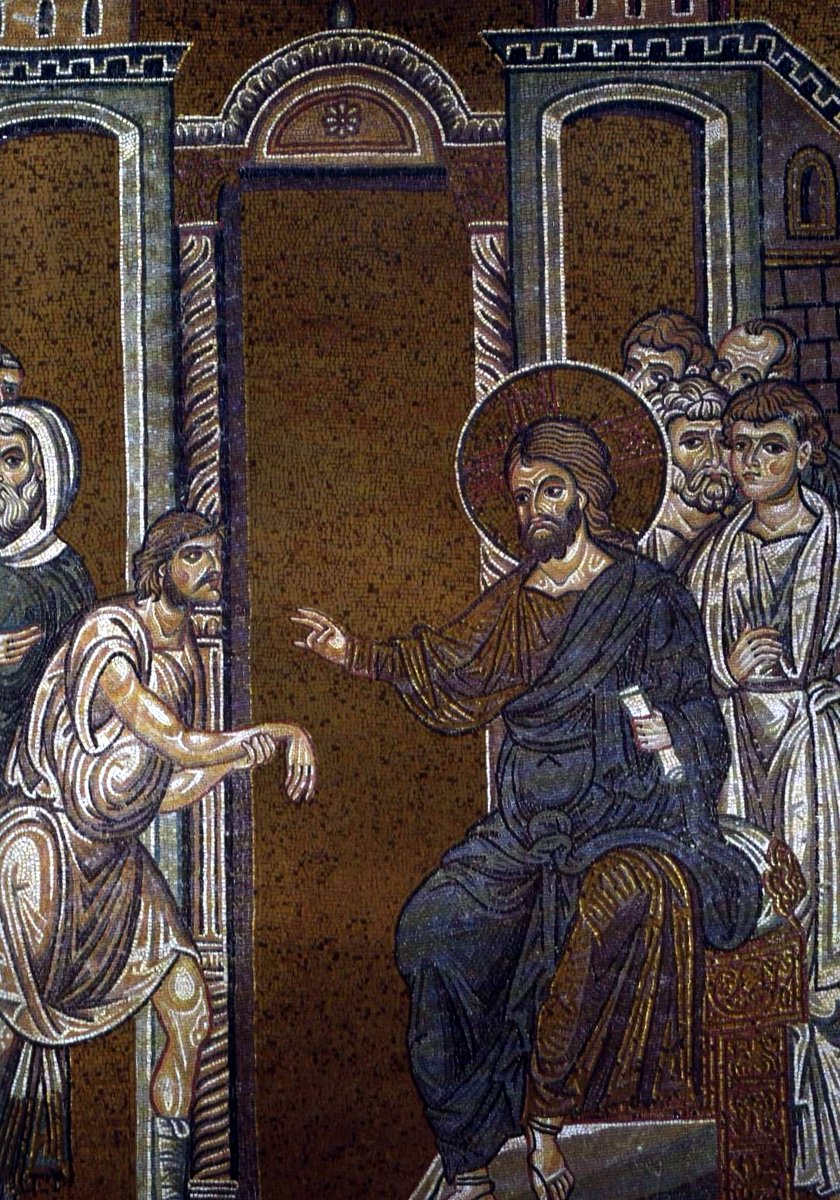
Such language might lead one to think the Sabbath is little more than an empty husk to be discarded. Yet, Chrysostom argues that the lesson Christ here teaches — and will teach again when healing the man with the withered hand — fulfills the purpose of the Sabbath. So, what was that purpose? In answer, Chrysostom points out a great many goods that the Sabbath taught men: “it made them gentle towards those of their household, and humane; it taught them God’s providence and the creation, as Ezekiel says; it trained them by degrees to abstain from wickedness, and disposed them to regard the things of the Spirit” (Hom. 39, Matt.). But it taught this by teaching them to refrain from all work. Having learned to bind their hands from all things on the Sabbath, they can now move into the fulfillment of this: Binding their hands from evil only — not from good. And this, Chrysostom argues, was already hinted at darkly through the prophets by adding to the command an exception, “You must do no work, except what shall be done for your life” (Ex 12:16). So, Chrysostom goes on, “even by the very shadow He was secretly opening unto them the truth” (ibid). theologicalletters.com/p/lord-of-the-…
Nathan Jacobs tweet media
English
0
1
6
273
Nathan Jacobs
Nathan Jacobs@NathanJacobsPod·
Whenever I taught on historical Christianity, I would ask my students a series of basic questions about this. “In terms of historical advantage, who has a better lens for interpreting and understanding Christianity: us or the Church Fathers? The biblical text is written in Koine Greek. So, who is more likely to understand the grammar and the language of that text: some guy like me, who learned it at university, or somebody who grew up using it as their native language?” Well, obviously, the person who is a native speaker understands the language better. “Who understands the culture better? The people who are digging in the dirt and paging through old texts and trying to piece together in retrospect a couple of thousand years later what that culture was like and what the mindset of the culture was like, or people who actually lived and breathed that culture?” The answer is obviously the people who lived and breathed in that culture. “Who is more likely to understand the mindset of the Apostles? Is it people who knew them, such as the Apostolic Fathers—like Irenaeus, who was discipled by Polycarp, who was, in turn, discipled directly by the Apostle John? Or is it one of us, who merely sits here now with access only to the Gospel of John and his letters?” Well, obviously, the people who knew John are going to understand his mindset much better than you or I—people who were able to sit with him and listen to him and have a conversation with him and ask questions and so on. “Who has better perspective on what the practices were?” theologicalletters.com/p/what-we-lear…
Nathan Jacobs tweet media
English
0
2
11
211
Nathan Jacobs
Nathan Jacobs@NathanJacobsPod·
That was one of the reasons why the Eastern Church Fathers were so refreshing: precisely because I was sitting there in this crisis of asking, What is Christianity? Once I saw that cohesive vision, it all snapped into place, and it was quite obvious to me that I should relinquish my own innovations and my own innovative ideas to this thing that was handed down and preserved by them. In that, of course, I also came to see the providence of God in preserving and protecting the Church, which is something that Christ promises to do. And so in that preservation of this religion passed down from one father to the next to the next, and preserved in the councils and so on, I also saw the hand of providence. theologicalletters.com/p/what-we-lear…
Nathan Jacobs tweet media
English
0
1
5
152
Nathan Jacobs
Nathan Jacobs@NathanJacobsPod·
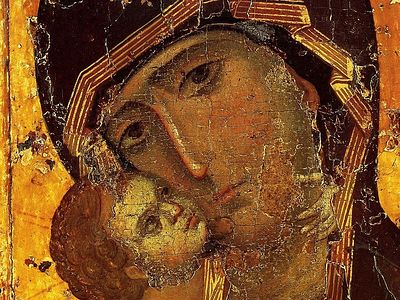
The Theotokos is the gate of Ezekiel, through whom the Son of God entered the world; she is the ladder that Jacob saw, on which the Son descended to the earth; she is the ark that carried the Word of God. theologicalletters.com/p/why-is-mary-…
Nathan Jacobs tweet media
English
0
1
6
133
Nathan Jacobs
Nathan Jacobs@NathanJacobsPod·
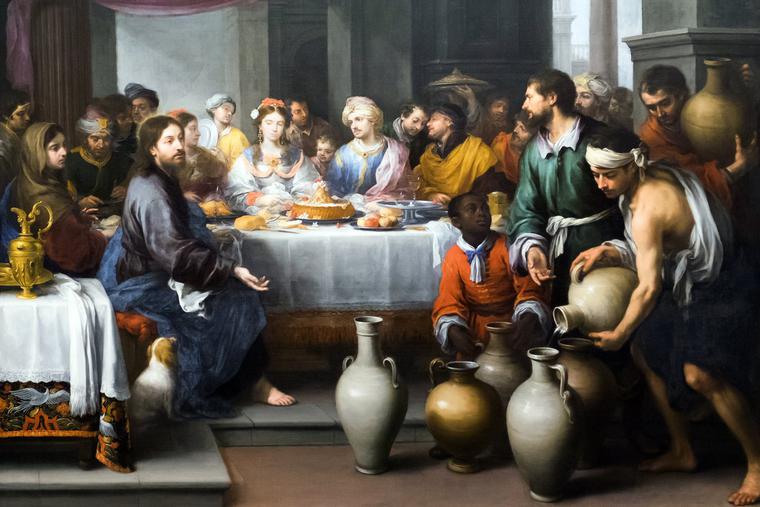
The Theotokos is recognized to have great influence on her Son, as demonstrated at the wedding of Cana, which is then reflected in prayers that ask for her to intercede on our behalf with her son. theologicalletters.com/p/why-is-mary-…
Nathan Jacobs tweet media
English
0
1
5
125
Nathan Jacobs
Nathan Jacobs@NathanJacobsPod·
Saint Paisios & the Devil
Français
0
1
7
204
Nathan Jacobs
Nathan Jacobs@NathanJacobsPod·
While Christ’s role as mediator is unquestionably unique — reconciling humanity with divinity by uniting these in his person — the term “mediator” has never been narrowed to indicate only that role. theologicalletters.com/p/why-is-mary-…
Nathan Jacobs tweet media
English
0
1
6
113
Nathan Jacobs
Nathan Jacobs@NathanJacobsPod·
The Theotokos's role as a gate, an ark, a ladder, and so on is certainly unique in redemption history. Hence, she is honored as mediatrix, even if her mode of mediation is not identical with Christ's mode of mediation. theologicalletters.com/p/why-is-mary-…
Nathan Jacobs tweet media
English
0
1
5
111
Nathan Jacobs
Nathan Jacobs@NathanJacobsPod·
There are a great many others who advocate for us; who intercede for us; who serve as go between agents for us; who, in short, act as mediators of one kind or another. The Theotokos is most certainly one such individual. theologicalletters.com/p/why-is-mary-…
Nathan Jacobs tweet media
English
0
1
4
94