Nature Microbiology

10.9K posts

Nature Microbiology banner
Nature Microbiology

Nature Microbiology

@NatureMicrobiol

Nature Microbiology publishes the latest research and commentary in all areas of microbiology. Now also at https://t.co/DBlricNryG

Katılım Şubat 2015
1.7K Takip Edilen75.1K Takipçiler
Sabitlenmiş Tweet
Nature Microbiology
Nature Microbiology@NatureMicrobiol·
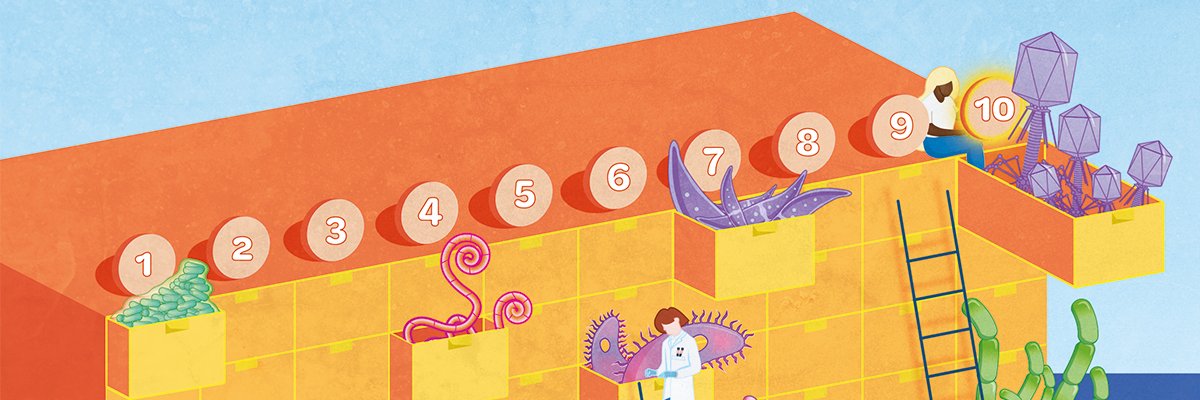
Walk through our July issue! Read about: 💊Microbiome and AMR 🧊Permafrost microbes 🦠Phages and flagella ⚕️Cholera protection 💉Poxvirus vaccine design 🍄Commensal skin yeast and much more! nature.com/nmicrobiol/vol…
Nature Microbiology tweet media
English
3
17
63
4.1K
Nature Microbiology retweetledi
Springer Nature
Springer Nature@SpringerNature·
As permafrost thaws, microbes are constantly exchanging pieces of DNA. Research in @NatureMicrobiol suggests these genetic transfers help shape microbial communities and functions involved in carbon and nutrient cycling: spklr.io/6017EPuJB
English
0
4
8
1.4K
Nature Microbiology retweetledi
Kali Meredith Pruss
Kali Meredith Pruss@KaliPruss·
Very thankful to have this work out! We cultured small intestinal bacteria from children with environmental enteric dysfunction to understand their effects on post-natal growth and development. This allowed us to identify bacteria that contribute to the pathogenesis of EED.
Nature Microbiology@NatureMicrobiol

Enteropathy produced in mice by intergenerational transmission of small intestinal microbiota from undernourished children dlvr.it/TT4jHv #MicroSky

English
2
1
7
3.1K
Nature Microbiology retweetledi
César de la Fuente
César de la Fuente@delafuentelab·
Thrilled to share that our paper, “Deep learning reveals antimicrobial peptides within prions,” is now published in @NatureMicrobiol @NaturePortfolio. In this work, we used AI to ask an unexpected question: could proteins best known for their role in fatal neurodegenerative diseases also encode molecules that fight infection? Prions and prion-like proteins are usually viewed through the lens of misfolding, aggregation, and disease. But biology is often more layered than our labels suggest. Our study shows that these proteins can contain encrypted antimicrobial peptides, which we call prionins. This connection did not come out of nowhere. Previous studies had shown that certain amyloid-associated protein sequences, including amyloid-β and the cellular prion protein, can have antimicrobial or host-protective activity. But until now, this had not been explored systematically across prion and prion-like proteins at scale. Using our deep-learning platform APEX 1.1, we screened 19.3 million peptide fragments from 2,897 prion-related proteins. This search identified 1,179 candidate antimicrobial peptides, moving from scattered observations to a global AI-guided search across millions of possible protein fragments. We then moved from prediction to experiment. Of 75 synthesized prionins, 59 inhibited at least one bacterial pathogen, including multidrug-resistant strains. Forty-two showed activity at 16 µM or lower against at least one pathogen. Many prionins disrupted bacterial membranes, and a subset showed encouraging early selectivity, including minimal hemolysis and limited cytotoxicity. Two lead prionins also reduced Acinetobacter baumannii burden in a mouse skin-infection model, with efficacy comparable to polymyxin B in the model tested. This is still early-stage work. We do not show that prionins are naturally released during infection or that they function physiologically in host defense, and these findings do not represent a treatment ready for patients. But the study raises a provocative idea: proteins long viewed mainly as biological “villains” may also encode useful molecular functions. More broadly, it shows how AI can become a discovery engine for biology: helping us search hidden molecular spaces, connect seemingly distant fields such as neurodegeneration and innate immunity, and uncover new starting points for medicine in places we might never have thought to look. At a time when new antibiotics are urgently needed, expanding where we search matters. Deeply grateful to @mdt_torres, Fangping Wan, and everyone who made this work possible, including @Penn, @CBE_Penn, @PennBioeng, @PennEngAI, @PennEngineers, @PennMedicine, @PennChemistry, @PennMicro, @PennPsych, and @PennSAS. nature.com/articles/s4156…
César de la Fuente tweet media
English
9
76
318
68.3K