Sabitlenmiş Tweet
Dailyscienceinfo
1.2K posts

Dailyscienceinfo
@NatureScienceA1
Home of the best science(focusing physics, astronomy) and technology news since 2020. We are curious about universe are you?
Katılım Ekim 2019
4.2K Takip Edilen18.3K Takipçiler

This is Phobos... Mars' moon that is slowly falling toward the planet. And one day, Mars will tear it apart.
Phobos is one of two moons orbiting Mars, and it's unlike any moon you've seen. It's not round, not smooth, and not large. Just a battered, cratered rock about 22 km wide, covered in deep grooves and ancient scars.
But here's what makes Phobos truly fascinating...
It orbits Mars closer than any other moon orbits its planet in our entire Solar System. Just 6,000 km above the Martian surface. For comparison, our Moon is 384,000 km from Earth.
And because it orbits so fast — completing a full lap around Mars every 7 hours and 39 minutes — it actually rises in the west and sets in the east. The opposite of what we see on Earth.
But Phobos is doomed. Mars' gravity is slowly pulling it inward at 1.8 cm every year. In around 50 million years, the tidal forces will become too great... and Phobos will be ripped apart, likely forming a ring of debris around Mars.
This image was captured by ESA's Mars Express on March 26, 2010.
📷 Credit: ESA/DLR/FUBerlin/AndreaLuck

English

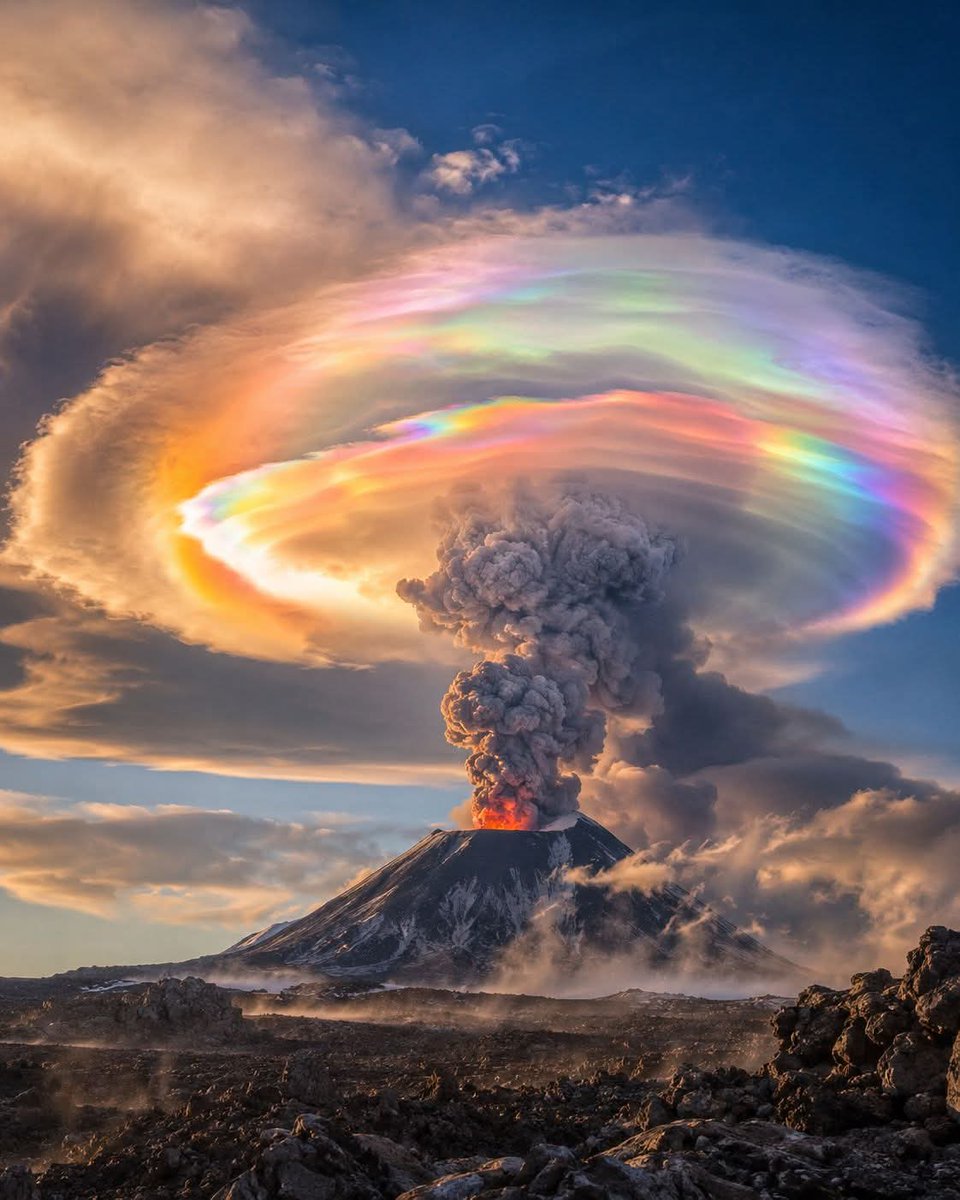
This isn’t CGI or a UFO hovering above a volcano. 🌋🌈
It’s a rare iridescent lenticular cloud forming above an active volcanic eruption — one of the most surreal atmospheric phenomena on Earth.
As sunlight passed through microscopic ice crystals high in the atmosphere, the cloud scattered light into glowing rainbow colors, creating a massive luminous halo above the ash plume below.
At the same time, the volcano continued erupting beneath it… sending smoke, ash, and heat into the sky.
Fire below.
Ice crystals above.
And for a few unforgettable moments, Earth looked like an alien world. ✨
Nature still creates scenes that feel impossible to believe.
📍Kamchatka Peninsula, Russia

English

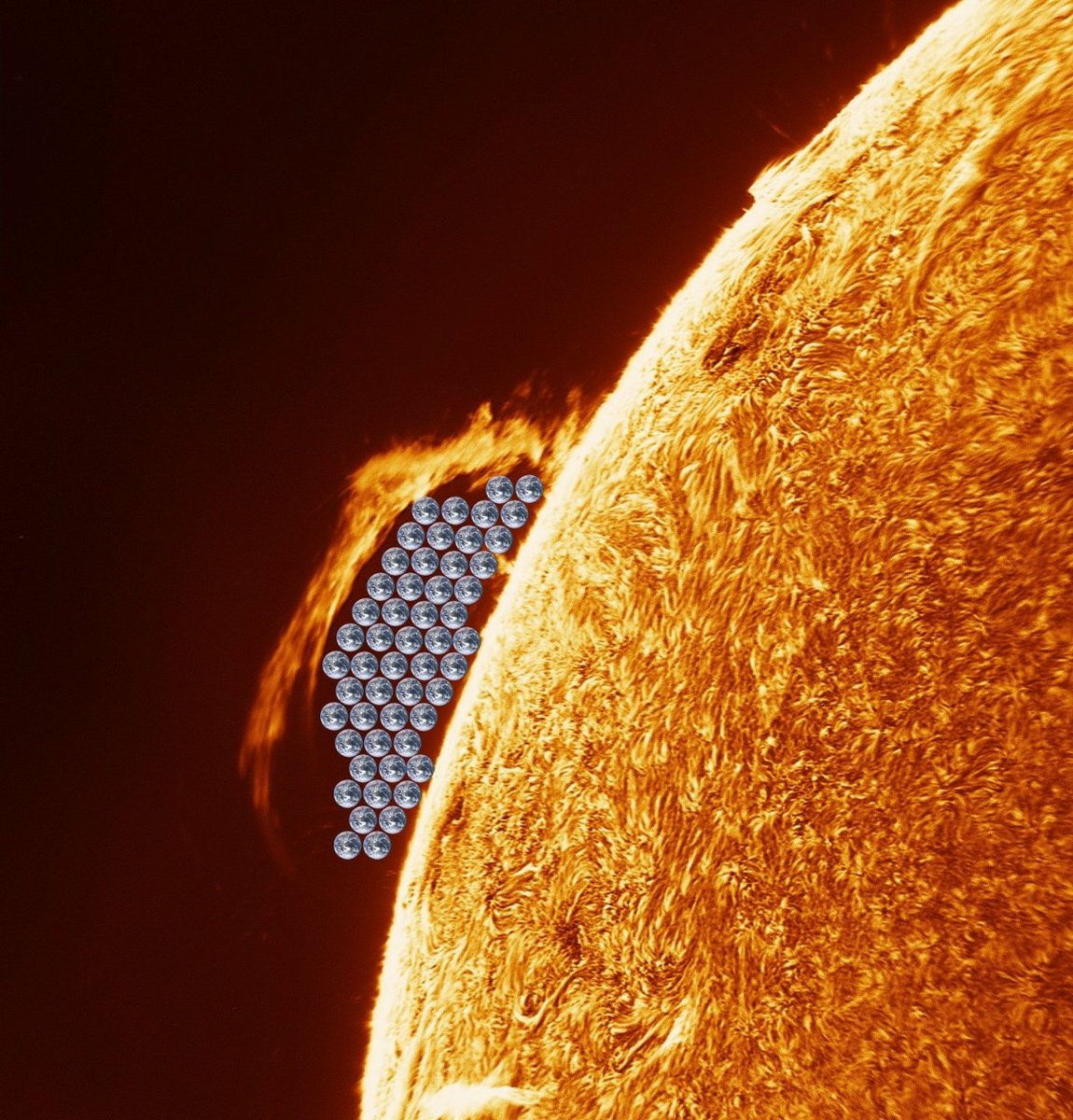
People don't realize how big the Sun actually is.
The orange wall is the Sun's surface. The arc rising from it is a prominence — a single loop of plasma, lifted off the Sun's surface by magnetic forces.
Each blue dot in that arc is the size of Earth.
Not the size of a country. Not the size of a continent. The size of our entire planet.
The Sun isn't a star.
It's an entire universe of fire we happen to orbit.
📸 Andrew McCarthy

English

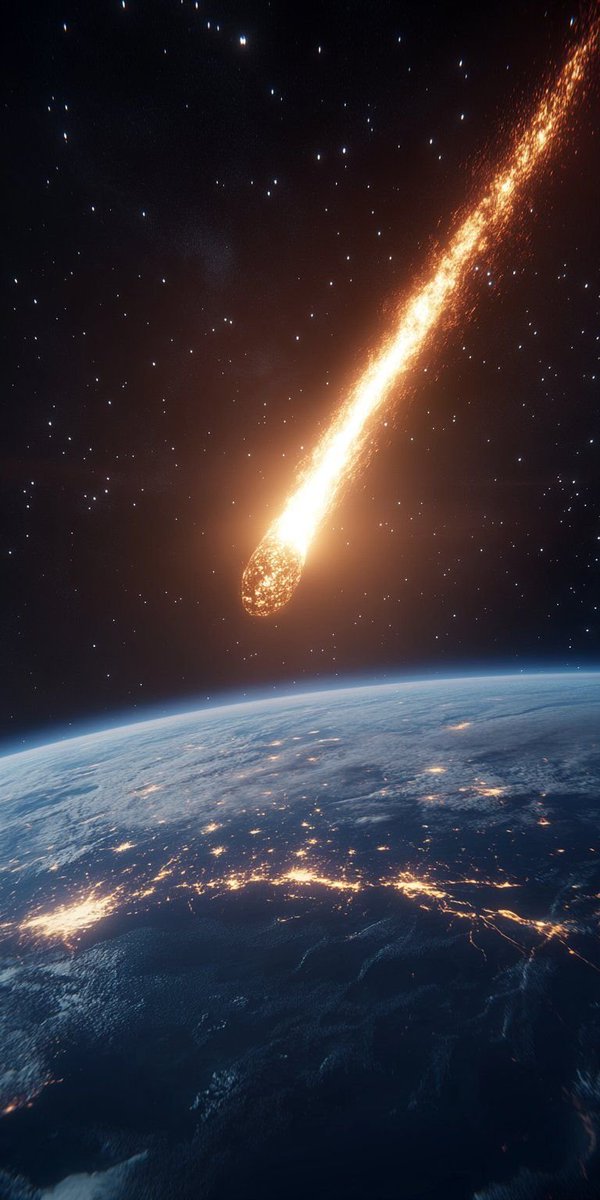
A brilliant green meteor streaked across the desert sky like something out of a science fiction movie. ☄️✨
For just a few seconds, the entire night sky lit up as the space rock burned through Earth’s atmosphere at incredible speed.
That glowing green color isn’t edited — it happens when certain minerals, like nickel and magnesium, vaporize during entry and release energy into the air.
Some meteors are smaller than a pebble, yet they can still create trails bright enough to be seen for hundreds of miles.
📍Mojave Desert, California, USA

English

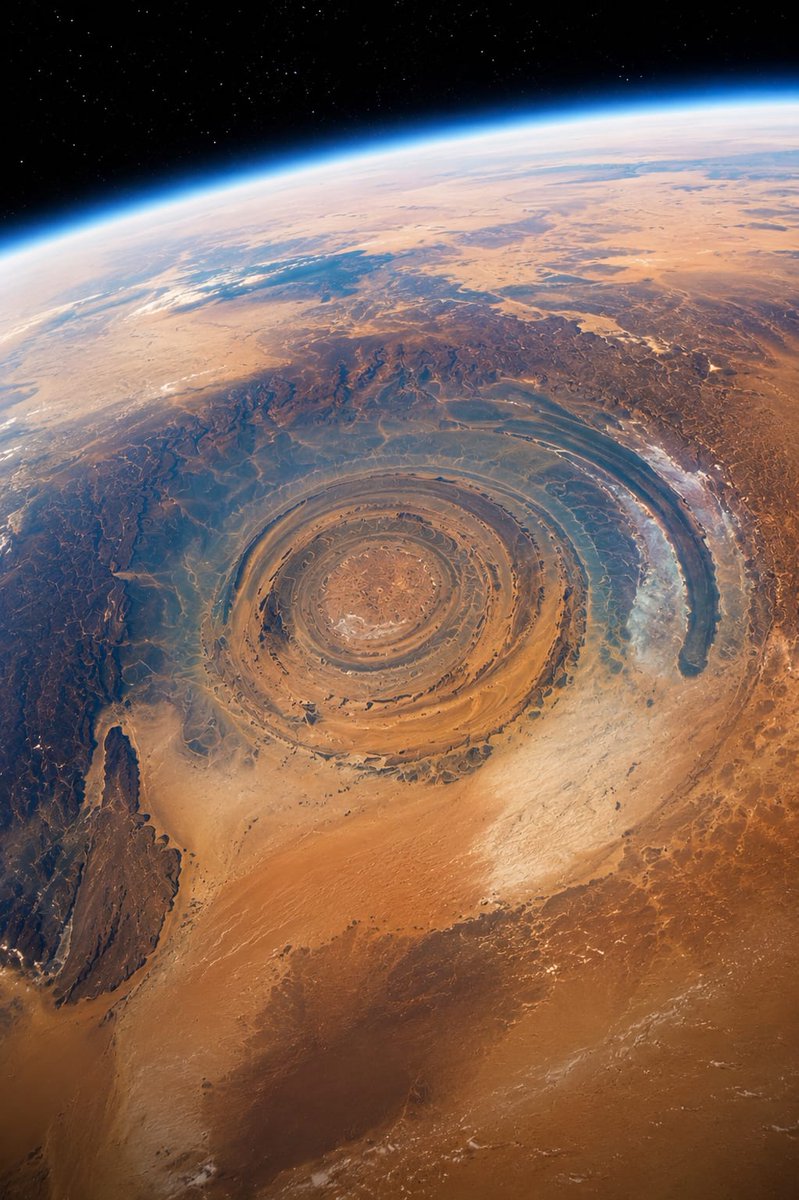
A Breathtaking Look at the Eye of the Sahara From Space 🌍✨
One of Earth’s most mysterious geological formations, stretching across the Sahara Desert.
From high above the planet, its massive circular patterns almost look impossible to be natural.
Often called the “Eye of Africa,” this incredible landmark has fascinated explorers and scientists for decades.
A reminder that some of the most extraordinary sights on Earth can only truly be appreciated from space. 🚀

English

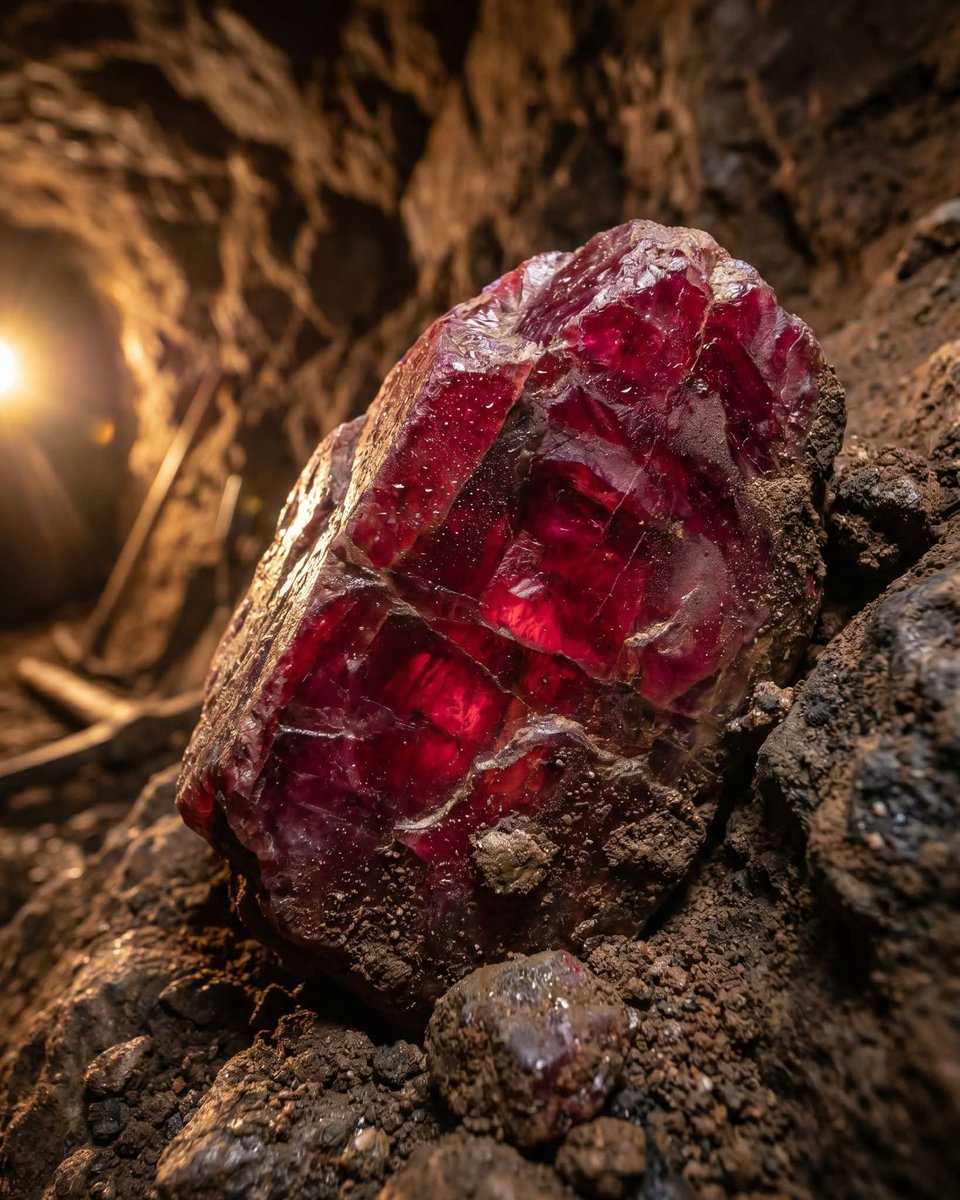
An enormous 11,000-carat ruby has been discovered in Myanmar… and it could be one of the largest gem-quality rubies ever found. 💎🌍
The giant gemstone was uncovered near Mogok — a legendary mining region often called the “Valley of Rubies,” famous for producing some of the rarest and most valuable rubies on Earth.

English