Nazee-Web3 WOW 🟣
30.1K posts

Nazee-Web3 WOW 🟣
@NazeeWeb3
Web3 Enthusiast | Content Creator l Exploring the decentralized future | @Concordium | @MidnightNtwrk
Katılım Mayıs 2011
7.5K Takip Edilen3.9K Takipçiler


@MuhdSaratu13830 The biggest barrier to crypto adoption was never technology.
It was usability.
English

XION: The Blockchain Trying to Make Crypto Feel Invisible
Most people still avoid Web3 because the experience feels too complicated.
Seed phrases.
Gas fees.
Wallet setup.
Bridge risks.
Confusing transactions.
For everyday users, crypto often feels more stressful than useful.
That’s the exact problem @burnt_xion is solving. 👇
🧵 WHAT IS XION?
Burnt’s XION is a Layer-1 blockchain built for mainstream consumer adoption.
Its goal is simple:
Make blockchain applications feel as seamless as Web2 apps.
No wallet complexity.
No gas headaches.
No technical friction.
Just smooth user experiences powered by blockchain behind the scenes.
THE BIG IDEA: “GENERALIZED ABSTRACTION”
Instead of forcing users to understand blockchain mechanics, XION abstracts the complexity directly at the protocol level.
That means users can:
✓ Sign in with email or social login
✓ Use apps without managing seed phrases
✓ Interact across chains invisibly
✓ Avoid direct gas fee management
✓ Experience Web3 without realizing they’re using blockchain
This is one of the strongest examples of crypto moving from “speculation-first” toward “user-first.”
✅ WHY THIS MATTERS
Most blockchains optimized for:
• DeFi
• Trading
• Power users
• Developers
XION is optimizing for:
• Consumers
• Brands
• Gaming
• Loyalty systems
• Social platforms
• Real-world trust
That shift could become one of the biggest narratives of the next crypto cycle.
✅ THE TRUST LAYER ANGLE
XION isn’t only focused on UX.
It’s also building infrastructure for verifiable trust online.
In a world filled with:
→ AI-generated content
→ Fake accounts
→ Resume fraud
→ Ad fraud
→ Gaming bots
→ Counterfeits
Verification becomes incredibly valuable.
XION introduces a verification layer where credentials, identity, and real-world data can become programmable and privacy-preserving.
This opens doors for:
✅ Fair gaming ecosystems
✅ Fraud-resistant advertising
✅ Authentic commerce
✅ Verified social systems
✅ Verifiable credentials and resumes
👉 WHY DEVELOPERS SHOULD PAY ATTENTION
For builders, especially in emerging markets like Nigeria, XION’s model creates interesting opportunities.
Think about apps for:
• Learn2Earn
• Remittance
• Savings platforms
• Loyalty ecosystems
• Mobile-first consumer apps
When onboarding friction disappears, adoption becomes much easier.
That’s the core thesis.
👉 XION VS TRADITIONAL L1s
Traditional chains often require:
✓ Wallet setup
✓ Seed phrase management
✓ Gas understanding
✓ Manual bridging
XION aims for:
✅ Walletless onboarding
✅ Abstracted fees
✅ Cross-chain simplicity
✅ Consumer-grade UX
It’s essentially trying to make blockchain infrastructure disappear into the background.
✅ THE BIGGER TREND
XION reflects where the industry may be heading:
1️⃣ Abstraction over complexity
2️⃣ UX over technical purity
3️⃣ Verification over anonymity abuse
4️⃣ Consumer applications over niche speculation
The projects that onboard the next billion users may not be the most technical.
They may simply be the easiest to use.
“Slowly, then all at once.”
That philosophy perfectly describes the current evolution of crypto infrastructure.
#XION #Web3 #Crypto #Blockchain #ConsumerCrypto #Layer1 #DeFi #AI #Gaming #TON

English

@AmirGidado50809 This is the kind of update long-term liquidity providers love to see.
English

Boost Farm APR Extension on STON.fi
1️⃣ Boost Farm APR is back for another month on STON/USDt V2. Stake STON to unlock up to 2× APR, with rewards distributed in STON.

English

@Danbellonfa The biggest change happening in cross-chain right now isn’t “better bridges.”
It’s the disappearance of the bridge experience entirely.
English

Good afternoon friends...
Let’s about something a little bit confusing today..
Most people think moving assets between TON and Ethereum starts with finding a bridge.
But that assumption is already becoming outdated.
The cross-chain market is evolving beyond the old “bridge-first” experience into something much more important:
outcome-first interoperability.
And honestly, that shift matters more than most people realize.
When users move assets between TON and Ethereum, they are usually not thinking about infrastructure.
They are thinking about what they want to do with their capital.
Maybe they want:
→ stablecoins on TON
→ access to Ethereum liquidity
→ exposure to an EVM protocol
→ portfolio rebalancing across ecosystems
The goal is simple:
move value efficiently without unnecessary friction.
But the problem is that traditional cross-chain experiences often feel fragmented.
Users typically have to:
• choose a bridge
• understand routes
• manage destination assets
• handle multiple interfaces
• trust intermediaries
• worry about delays and execution risks
And for newer users, this complexity becomes one of the biggest barriers in DeFi.
That’s why the market started evolving into three different models:
1️⃣ Bridge-first products
Focused mainly on transporting assets between chains.
2️⃣ Swap-first interfaces
Focused on the final outcome:
start with one token, end with the token you actually want.
3️⃣ Aggregators
Systems that search across routes and providers automatically.
The interesting part?
Even though these products look different on the surface, the underlying flow is becoming increasingly unified:
connect wallets → choose networks → review route → confirm transaction.
The real competition now is not simply:
“Who supports more chains?”
It’s:
“Who hides the complexity better while preserving security and control?”
That’s where STON.fi’s direction becomes interesting.
Powered by Omniston, STON.fi is positioning cross-chain execution around one idea:
users should not need to think like bridge operators.
Instead of manually managing fragmented multi-step routes, the experience moves closer to one protected non-custodial action with a clear outcome.
That changes the psychological experience of interoperability itself.
Because in the long run, users won’t care about:
→ routing logic
→ liquidity fragmentation
→ backend infrastructure
They will care about one thing:
Did the assets arrive safely, efficiently, and predictably?
That’s the future cross-chain infrastructure is moving toward.
Not just connecting chains
but abstracting away the complexity behind them.
And honestly, that’s one of the biggest transitions happening in DeFi right now.
@ston_fi
#STONfi #TON #DeFi #Web3 #CrossChain
English

@Jumane22 A lot of people treat crypto like a casino and then wonder why they keep getting wrecked.
English

Most people don’t lose in crypto because they’re unlucky.
They lose because they’re playing a game they don’t fully understand.
Here’s the uncomfortable truth
The majority of investors
• Chase green candles instead of value
• Enter narratives at peak hype
• Ignore token design completely
• Hold assets that are structurally built to dilute them over time
And that last point is the silent killer.
The real problem is token design
Not all tokens are created equal.
Some are built to inflate endlessly, rewarding insiders while late participants absorb the dilution.
Others are engineered with mechanisms that actively protect value.
Understanding that difference is what separates speculators from strategic investors.
Where $ATEG changes the game
$ATEG isn’t just another token riding momentum.
It’s built with intentional economic design.
Here’s what stands out
Monthly token burning
A consistent reduction in supply over time.
Less supply leads to stronger scarcity dynamics and long term value alignment.
Freezing mechanism
Tokens are actively removed from circulation through freezing.
This reduces sell pressure and tightens available supply.
Early participant advantage
The system is structured to reward those who understand early.
Not by hype but by positioning within the token’s mechanics.
Why this matters
Crypto is not just about narratives anymore.
It is about who understands the system beneath the surface.
If a token
• Continuously inflates, your share gets diluted
• Relies only on hype, growth is not sustainable
• Lacks clear mechanics, risk increases
But if a token is designed to
• Reduce supply
• Incentivize long term holding
• Align participants with the protocol
Then you are no longer just buying a coin
you are entering a system built for value preservation and growth.
The bigger picture
$ATEG represents a shift from speculation driven participation to mechanism driven conviction.
This is not about short term noise.
It is about understanding structure before the crowd does.
Get Free, Live With Us.
A Token Empowering Generations.@Ateg_Capital

English

@Alhermxet @noon_capital Short-term trading activity can create attention… but infrastructure and utility are what usually create longevity.
English

It's easy to look at trading volume and judge a project by short-term market activity.
But trading volume only reflects what people are buying and selling today.
It doesn't always reflect what is being built for tomorrow.
At @noon_capital, the focus remains on creating real utility through products like USN, sustainable yield strategies, and transparent on-chain infrastructure.
The long-term value of $NOON is designed to come from fundamentals:
🔹 Protocol growth through governance participation and fee sharing
🔹 Ecosystem expansion as more users adopt USN and utilize Noon’s yield infrastructure
🔹 Real TVL growth and protocol revenue rather than short-term speculation
The goal has never been to chase hype.
The goal is to build a platform that generates real value for its users.
When a protocol delivers sustainable yields, attracts capital, and solves real problems, market recognition tends to follow naturally.
Strong ecosystems aren't built in weeks.
They are built through consistent execution, growing adoption, and long-term vision.
@noon_capital is focused on building that foundation.

English

@saleesu_omar_01 @ston_fi @ton_blockchain The early phase of DeFi was mostly about proving decentralized finance could exist at all: token swaps, yield farming, liquidity mining, speculation.
English

@ahmard0x @Sadiyakku @ston_fi @ton_blockchain That’s usually how the strongest infrastructure grows.
Not through constant noise… but through becoming consistently useful over time.
English

Most people still think DeFi is about tokens, hype, and chasing the next high APR.
I think the real winners will be the projects building infrastructure people eventually depend on without even noticing it.
That’s why I keep paying attention to @ston_fi on TON.
Not because it’s loud.
Because it’s quietly becoming useful. 🧵
🔻

English

@mamasboypk @ston_fi Most DeFi platforms think innovation means adding: more tabs, more dashboards, more buttons, more complicated yield systems.
English

The Future Of DeFi Is Not More Features.
It's fewer decisions.
And most protocols still don't understand this. On this thread, I will be breaking why @ston_fi is always standing firm with greater decisions than just random multiple features!
Let's dive in: 🧵👇

English

@ahmard0x @Sadiyakku But behind that simple “swap token → done” experience is a huge amount of infrastructure most users never even notice.
English

Most people think DeFi adoption happens when new tokens launch.
I don’t think that’s what really changes ecosystems long term.
The real shift happens when infrastructure becomes so smooth that users stop thinking about the complexity underneath it.
That’s one thing I’ve started appreciating more while exploring the TON ecosystem and especially platforms like @ston_fi.
A lot of people only notice swaps from the front-end:
connect wallet → swap token → done.
But behind that simple experience, there’s a huge amount of infrastructure working quietly in the background.
Liquidity routing.
Execution optimization.
Price efficiency.
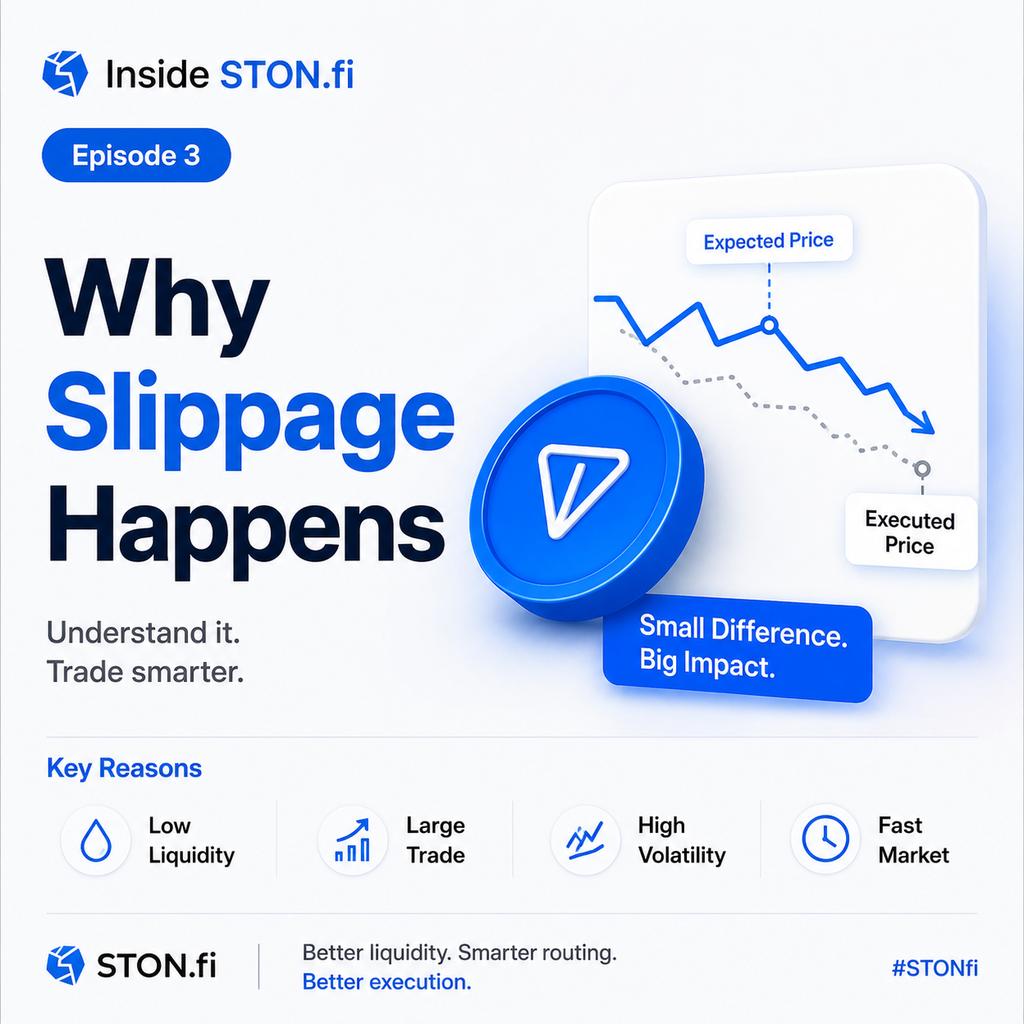
Low slippage.
Fast settlement.
Most users never think about these things until markets become volatile and execution suddenly matters.
That’s where systems like Omniston become interesting to me.
Instead of depending on a single liquidity source, routing gets optimized across different paths to improve execution quality across TON DeFi.
And honestly, I think backend efficiency is still one of the most underrated parts of DeFi.
Because over time, small inefficiencies quietly compound:
slightly worse pricing,
higher slippage,
slower execution,
fragmented liquidity.
Individually they look small.
Together they affect the entire user experience.
Another thing I respect about STON.fi is accessibility.
A lot of DeFi platforms still feel overwhelming for newer users entering Web3.
STON.fi keeps the process much simpler:
Wallet → Swap → Liquidity → Farming
That simplicity matters more than people realize.
Because the next wave of adoption probably won’t come from users wanting “more complexity.”
It’ll come from platforms that make powerful infrastructure feel natural to use.
And I think TON DeFi is still early enough that the projects quietly building those foundations today could end up becoming some of the most important parts of the ecosystem tomorrow.
#stonfi #ton

English

@SenHIKiru @AntarcticWallet @chiefofjudge @miriyamah @Dan1umma @Faizaweb3 @MuhdSaratu13830 @jayrichohh @Erin_Nova__ The next phase of crypto adoption probably won’t be driven by traders… It’ll be driven by products that people use without constantly thinking about “crypto.”
English

Why Simplicity Could Become the Biggest Driver of Crypto Adoption.
For years, the crypto industry focused mostly on speculation, trading, and market hype.
But the conversation is slowly changing.
The real challenge now is no longer proving that blockchain technology works…
It is proving that crypto can fit naturally into everyday life.
Because no matter how advanced the technology becomes, mainstream adoption will always slow down if the experience still feels too technical for normal users.
That is one reason @AntarcticWallet has been getting more attention lately.
Instead of focusing heavily on complicated systems, the platform is centered around making crypto payments feel faster, lighter, and easier to use through QR-powered transactions and Telegram integration.
And honestly, that direction makes a lot of sense.
People already use QR payments daily for:
• shopping
• restaurants
• transportation
• online services
• peer-to-peer transfers
So rather than forcing users to completely change their payment behavior, @AntarcticWallet connects crypto directly into habits people already understand.
The experience feels much simpler:
scan the QR code → confirm the payment → transaction completed.
No unnecessary complexity.
No confusing setup.
No overloaded interfaces.
That matters because most people do not want to “study blockchain” before making a payment.
They simply want technology that feels:
• fast
• practical
• reliable
• convenient
And the easier crypto becomes to use in real life, the closer the industry moves toward true mass adoption.
Projects focused on reducing friction instead of increasing complexity could become some of the most important players in the next stage of Web3 growth.
#AntarcticWallet #CryptoPayments #USDT #TON

English

@Abdulla8187 @ChainersGame That’s the difference between building a game… and building an actual ecosystem people want to stay in.
English

Most Web3 games focus too much on tokens before giving players a real reason to care.
@ChainersGame approached things differently.
Instead of throwing users directly into complicated systems, the platform starts with something simple but surprisingly effective: your own Chainer.
Your Chainer is more than just a character. It becomes your digital identity inside the ecosystem ~ something you gradually build, customize, and evolve over time.
You can create your first one for free at chainers.io and immediately start claiming daily virtual assets to personalize your character. That onboarding process feels much more welcoming compared to many Web3 games where new users are instantly overwhelmed.
What stands out is how the project encourages consistency without forcing players into spending money early.
Every day, users can collect new virtual outfits and features that slowly shape their Chainer’s identity. Over time, those collected assets become part of your journey inside the broader Chainers metaverse experience.
And honestly, this is where the project starts becoming interesting.
A lot of blockchain games talk about ownership, but Chainers makes customization feel personal. The more assets you gather, the more unique your character becomes. Instead of holding static NFTs that sit unused, players actively build avatars they can actually interact with and grow attached to.
The AR feature also adds another layer that many people overlook.
By scanning a QR code with your smartphone, your Chainer can appear in real-world environments through augmented reality. It’s a small detail, but features like this make the ecosystem feel far more interactive and social compared to traditional browser-only experiences.
That combination of:
💧 free entry
💧 daily progression
💧 digital ownership
💧 AR interaction
💧 and metaverse accessibility
is what gives Chainers its own identity in the Web3 gaming space.
Projects often rely heavily on hype cycles to stay relevant.
Chainers seems more focused on building long-term player engagement through creativity, consistency, and connection to your in-game identity.
And realistically, those are usually the communities that last the longest.

English

Everyone wants to “make it” in crypto…
But almost nobody talks about the weird phase in between.
That stage where:
• your portfolio looks dead 💀
• your friends think you’re wasting time
• your tweets get 3 likes
• and you still keep showing up every single day.
Funny thing is…
Most people quit right before everything changes.
The builders who stay consistent during silence usually become the loudest success stories later.
So if you’re still here grinding while the timeline sleeps…
You’re already ahead of thousands. 🚀🔥
English

Most blockchains:
“Trust me bro.” 🤝
Meanwhile, Concordium: “Actually… we brought ID, compliance, privacy, fast finality, AND low fees.”
Crypto Twitter wanted: 🐸 memes
📈 pumps
🚀 hype
@Concordium showed up with:
✅ Protocol-level identity
✅ Privacy with accountability
✅ Enterprise-ready infrastructure
✅ Stablecoin & PayFi vision
✅ Fees cheaper than your shawarma extra sauce 😭
That’s why Concordium feels different.
While some chains are busy fighting over TPS screenshots, Concordium is quietly building infrastructure banks, fintechs, and real businesses can actually use. Smart Money energy only. 💼⚡
The funniest part?
People still sleep on projects that focus on REAL adoption… Until suddenly everyone calls them “underrated gems.” 👀
2026 might genuinely be the year the market realizes: Utility > noise.
And Concordium has been building that utility from day one. 🧠🔥
$CCD #Concordium #Web3 #Crypto #ConcordiumAmbassador

English