
Chad Engle. retweetledi

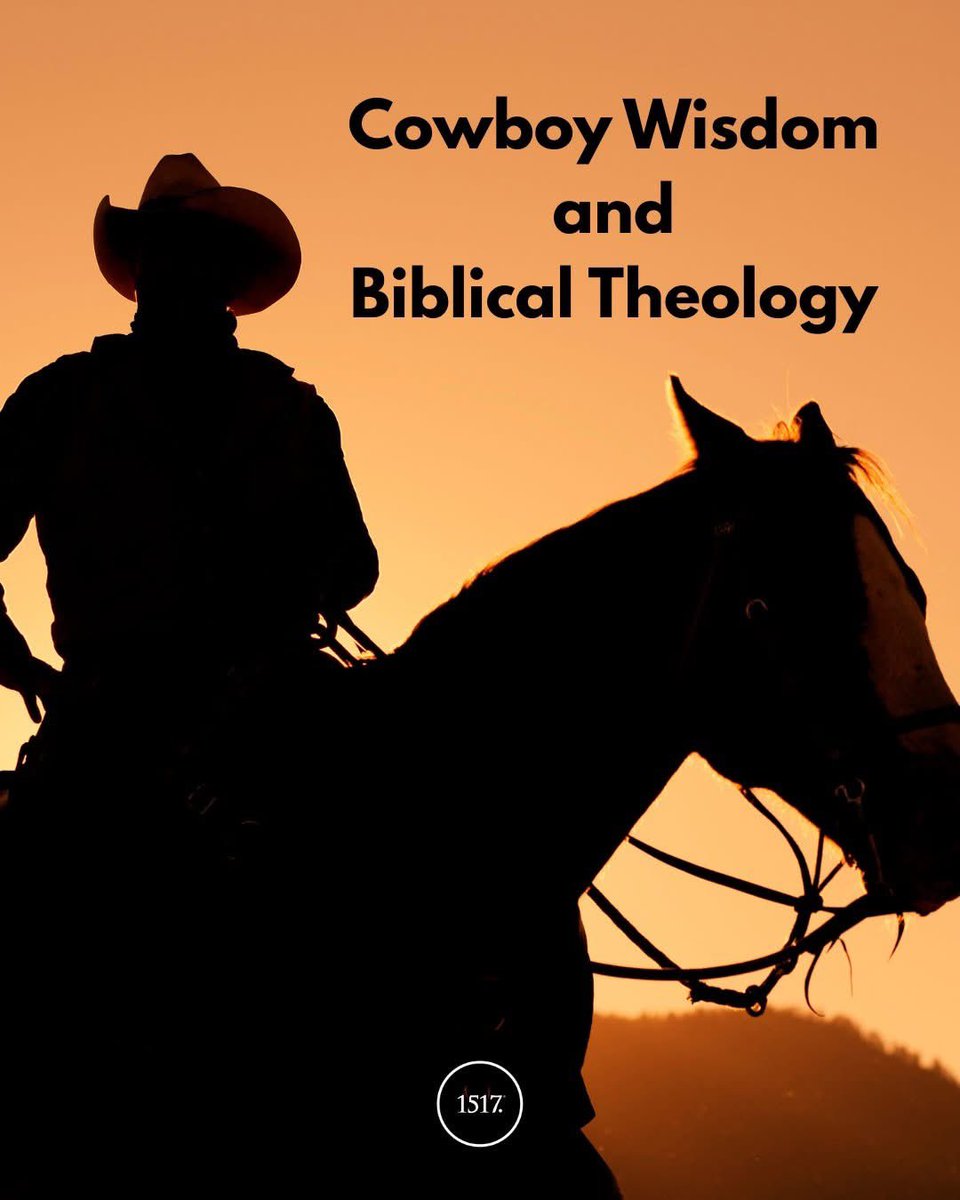
“Son, you learn a lot about a man by the way he treats his horse.” That was one of the many bits of wisdom that my dad passed on to me. He was a man born not only with a love of horses but a respect for them. Their strength, their intelligence, their loyalty.
Watch how a man treats his horse, and you will discover what kind of man he is.
I have often wondered if my dad picked up that idea from Proverbs. Every day of the month, he read one chapter of the 31-chapter book of Proverbs. On the 12th of each month, he would have read these words, “Whoever is righteous has regard for the life of his beast, but the mercy of the wicked is cruel” (Prov. 12:10).
In Hebrew, the verb for “has regard” is ידע (yada), which is usually translated “know.” How does a righteous man “know” his horse, his oxen, his sheep? As Robert Alter puts it, “The righteous man is so compassionate that he has an intuitive sense of the needs and discomforts of his beast.” He does not treat it as an object that he can mistreat or neglect. His righteousness is demonstrated in how he treats something that he *could* abuse, but chooses instead to care for.
That is why you learn a lot about a man by the way he treats his horse. A wicked man, Proverbs says, even his “mercy…is cruel.” To quote Alter again, “The wicked person…is so utterly devoid of compassion that even what he affects to be an expression of mercy turns out to be cruel.”
A righteous person is exemplified by many things, but one of them is compassion, concern, and taking care of the needs of the person or even the animal under his protection.
Equestrian wisdom turns out to be biblical theology as well.
____
We read Proverbs 12 today in Bible in One Year. Join us at 1517.org/oneyear
English