Neil Floch MD
103K posts

Neil Floch MD
@NeilFlochMD
Associate Professor #DABOM @Yalemed #Obesity #SoMe Editor @soard_journal / bariatric surgery Tweets are my views and not my employer @yalesurgery


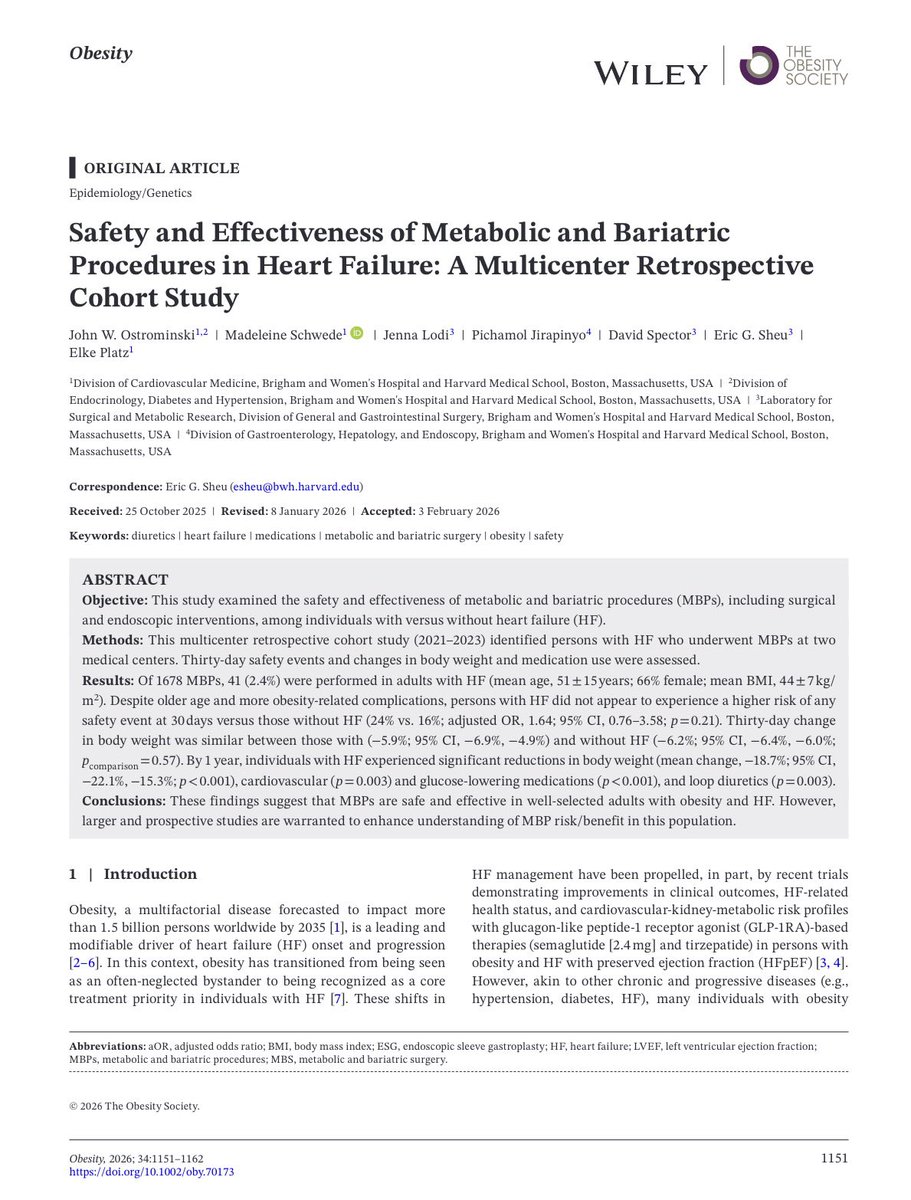
A new finding after stopping GLP-1 drugs in a large cohort with Type 2 diabetes: rapid erosion of CV benefit/protection New @bmj_latest by @zalaly @Biostayan bmjmedicine.bmj.com/content/5/1/e0… See thread: x.com/zalaly/status/…


One in eight Americans is currently taking a GLP-1 drug, and the safety picture keeps getting worse. A new study analyzing five years of medical records from over 146,000 adults found GLP-1 users had a 30% higher chance of osteoporosis, a 100% higher chance of osteomalacia, and a 12% higher risk of gout compared to non-users. Researchers aren't yet sure why the drugs may be causing bone loss. It could be nutrient depletion from dramatically reduced appetite, or bones simply adapting to the lower body weight. What they do know is there is no long-term safety data for taking these drugs for 5, 10, or more years. And a separate review published this month found that 60% of lost weight returns within a year of stopping the drug, with projections pointing to a 75% plateau. Researchers are openly wondering whether the weight regained is disproportionately fat, leaving users worse off than when they started. The answer from some health professionals? Stay on the drug forever. Meanwhile, the FDA issued a formal warning letter to Novo Nordisk (the maker of Ozempic and Wegovy) for failing to report deaths to the agency as required. Two deaths were not reported at all. A third, involving a patient who died by suicide, was submitted late and only after an FDA inspection raised the issue. The suicide warning that was previously on semaglutide labels has since been quietly removed. Gastroparesis. Blindness. Bone loss. Gout. Unreported deaths. The chance there are serious mental health risks... This is the drug one in eight Americans is currently taking. Full story by @smiddendorp22 : bit.ly/GLP-1_Osteopor…


FDA approves Wegovy HD, a higher-dose Wegovy (7.2 mg semaglutide), in just 54 days—marking the 4th success under @DrMakaryFDA's National Priority Voucher pilot program. Learn more about how FDA is accelerating access to innovative treatments: fda.gov/news-events/pr…

Americans are furious about drug prices. The Trump administration’s answer? A new website. But more than a month after its launch, the site, TrumpRx.gov, remains small — offering discounts on just 54 prescription drugs. nbcnews.com/health/health-…

Do GLP1s cause pancreatitis? I ran the systematic review and meta-analysis: 31 RCTs with 40,274 patients Results: Placebo — 50 cases/17433 patients GLP1 (Semaglutide or Tirzepatide) — 59 cases/22841 patients OR 0.99 (95% CI 0.67-1.45) Conclusion: There's no obvious pancreatitis safety signal in these pooled randomized data, but the overall incidence of acute pancreatitis was very very low

There is no issue with physician-led hospitals- the issue is about the conflict of interest when physicians self-refer patients to their own hospitals. The data is clear: POHs tend to treat more commercially insured and healthier patients than full-service hospitals. In rural communities, this can leave rural hospitals with a greater financial burden, further threatening their ability to keep their doors open and keep 24/7 care available in their communities. Read more: fah.org/wp-content/upl…


It was an honor to testify in front of the @HouseCommerce subcommittee on health regarding healthcare affordability. We discussed consolidation and the demise of independent physician practice. My solutions include: Repeal section 6001 of the ACA which banned physician owned hospitals Reform Stark law Implement site neutral payments Reform 340B Use FMAP to encourage states to be pro-competition (repeal CON, eliminate non competes)


We're now requiring all health providers and insurers to post their prices publicly so you can shop around and make an informed decision.