NephroPOCUS

38K posts

NephroPOCUS banner
NephroPOCUS

NephroPOCUS

@NephroP

#POCUS #MedEd education 📖 | by Abhilash Koratala MD @KoraAbhi, “Echo-friendly” Nephrologist and Intensivist I Founding Member @POCUSIAPN | X≠ medical advice

Katılım Kasım 2018
307 Takip Edilen95.6K Takipçiler
Sabitlenmiş Tweet
NephroPOCUS
NephroPOCUS@NephroP·
Time to update the #VExUS resources pinned thread 🧵📌 1/ Tweetorial on image acquisition. #POCUS #MedEd x.com/NephroP/status…
NephroPOCUS@NephroP

#POCUS #MedTwitter #Nephpearls Many #VExUS enthusiasts asked for a #tweetorial on image acquisition pearls. Did one b4 but time for an updated one 🧵 #1 Let's start with basics Color Doppler identifies the flow + tells the direction (blue is away & red towards the probe [BART])

English
27
394
895
0
NephroPOCUS
NephroPOCUS@NephroP·
Point related to attenuation. ⭕️ What is half-intensity depth? 🟢 It's the depth at which the ultrasound beam intensity drops to half of its original value. The simplified formula is: 6/frequency in MHz 🟤 Example #echoboards question - a 3 MHz transducer loses half its intensity by what depth? - 6/3 = 2 cm
English
0
0
2
456
NephroPOCUS
NephroPOCUS@NephroP·
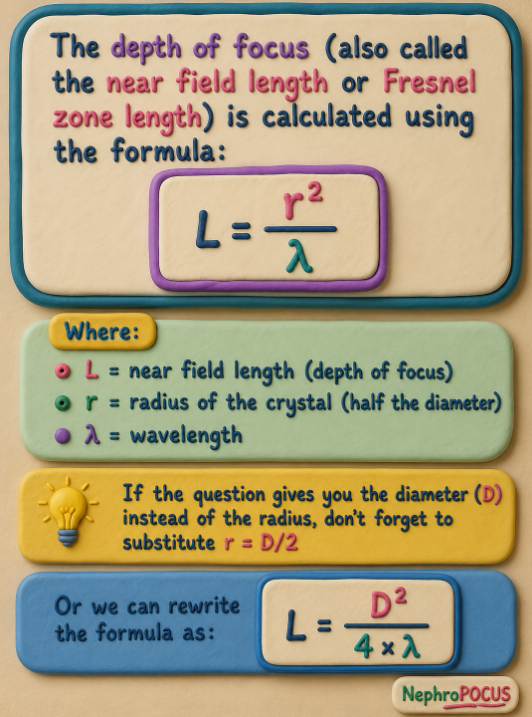
In the above 🧵, we learned that a bigger crystal keeps the beam focused deeper into tissue. A #echoboards relevant question - ⭕️How do you calculate depth of focus when they give you crystal diameter and wavelength? 🟢L = r2/λ L = near field length (depth of focus) r = radius of the crystal λ = wavelength 🟤For example, if given diameter = 10 mm and wavelength = 0.5 mm, r = 5 mm; L = 5 square/0.5 = 25/0.5 = 50 mm
NephroPOCUS tweet media
English
1
0
3
812
NephroPOCUS
NephroPOCUS@NephroP·
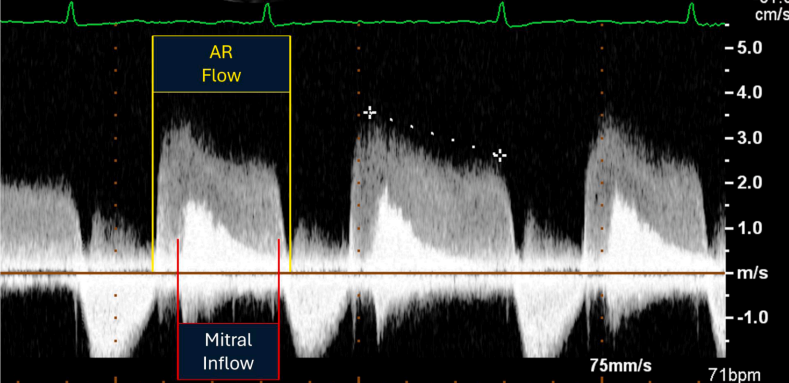
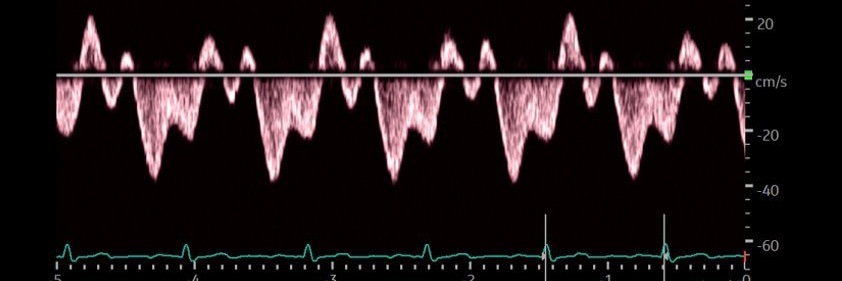
🎯High-yield ⭕️Spectral Doppler beam width artifact. In this artifact, adjacent flow signals superimpose into one waveform. This happens when Doppler picks up two jets at the same time - for example, AR with mitral stenosis inflow, or MR overlapping the TR jet (especially if the MR jet is directed medially). Positive side: It can be useful because it allows simultaneous recording of LV inflow and outflow, making it easier to measure isovolumic relaxation time (IVRT).
NephroPOCUS tweet media
English
2
1
3
2.3K
NephroPOCUS retweetledi
POCUS Journal
POCUS Journal@POCUSJournal·
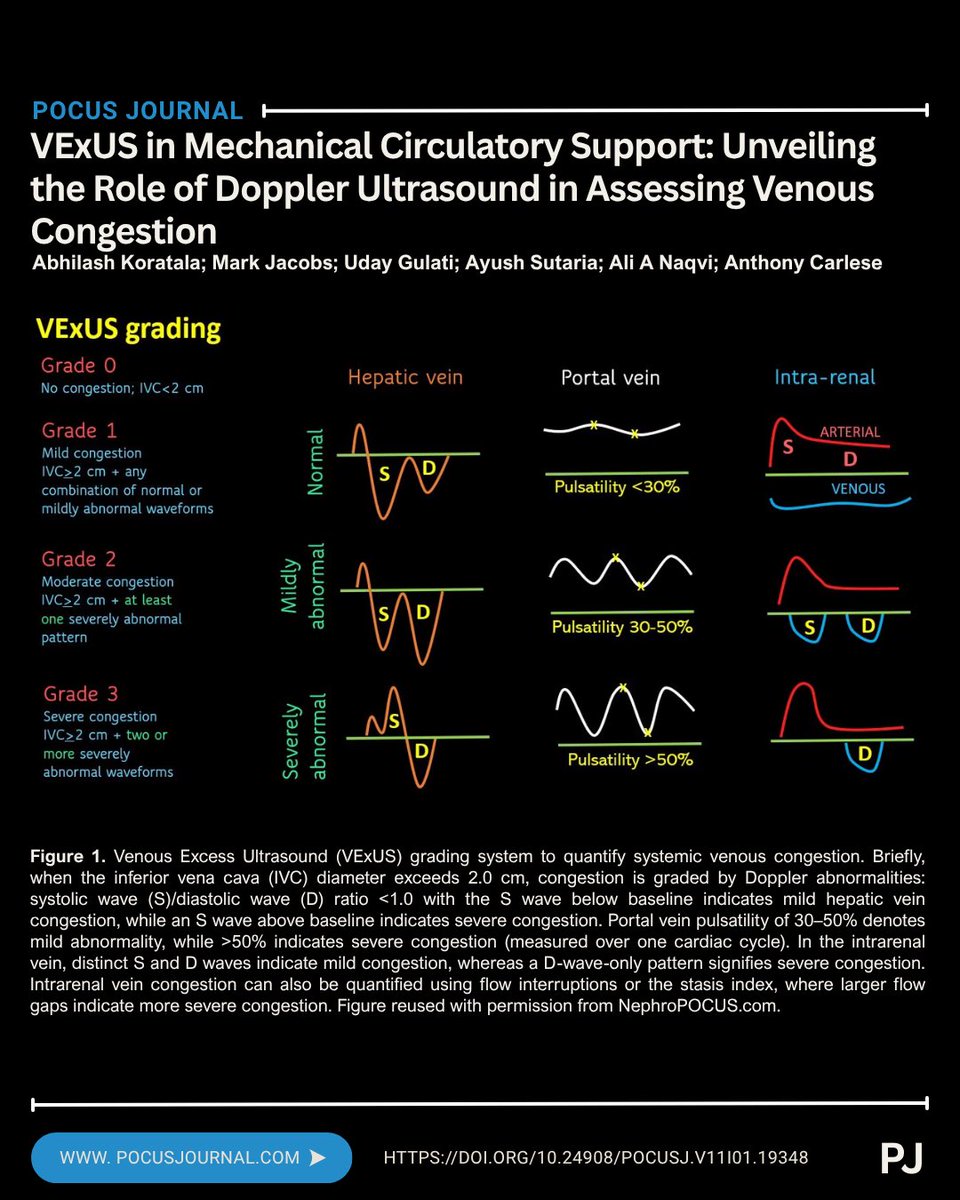
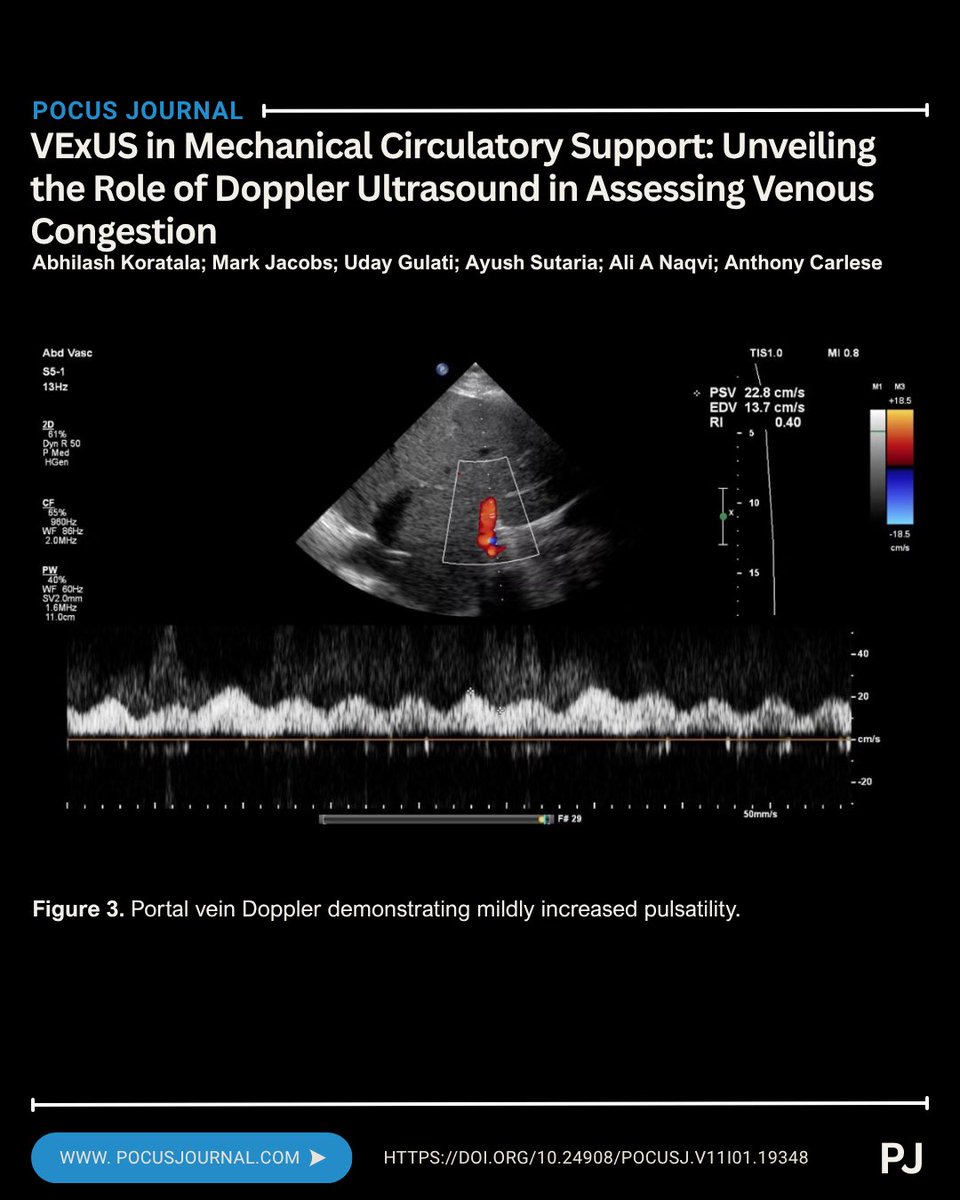
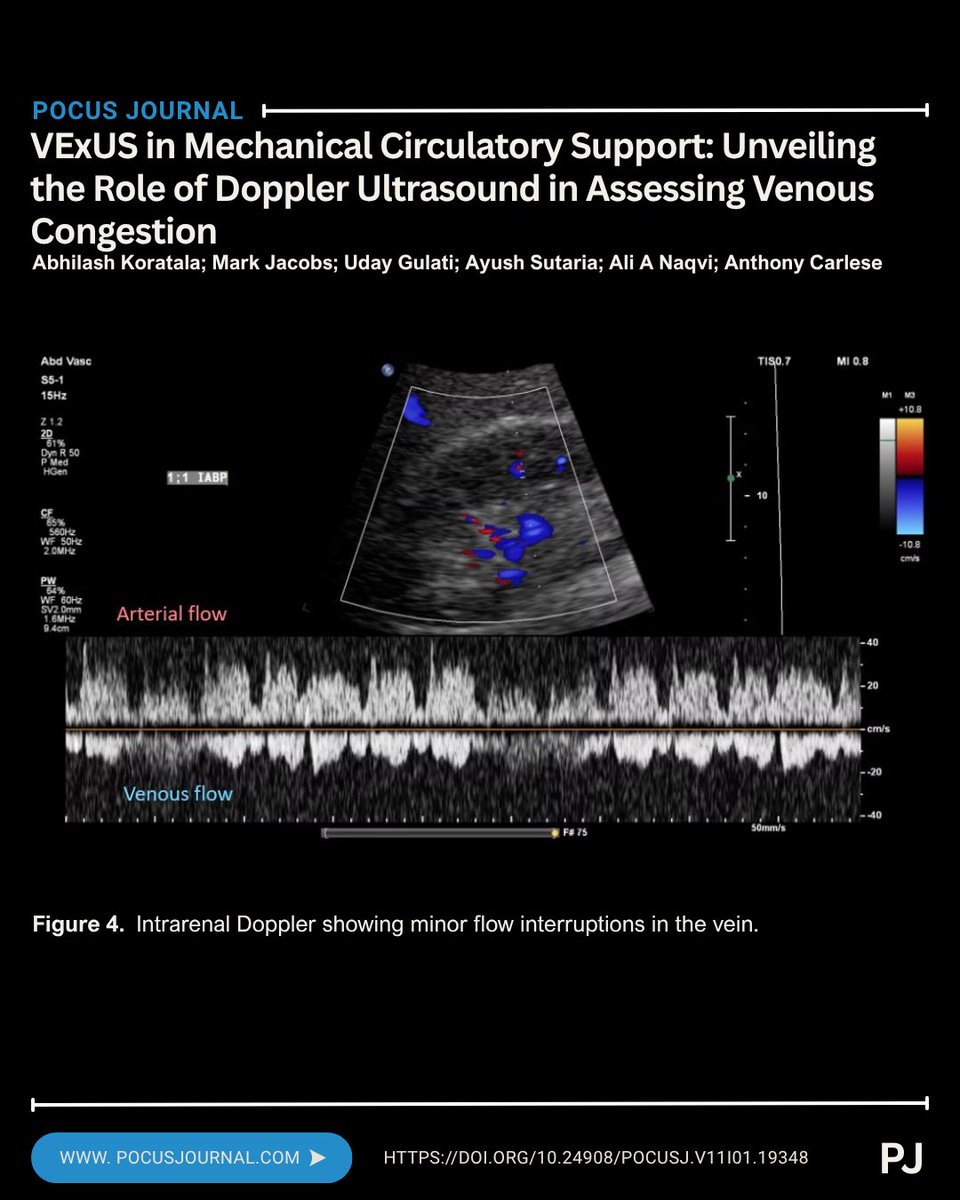
🫀 Can an ultrasound reveal what traditional hemodynamic measurements might miss? Venous congestion is often an underrecognized driver of organ dysfunction in patients receiving mechanical circulatory support—but what if we had a simple, bedside tool to detect it earlier? From evaluating complex hemodynamics to guiding clinical decision-making, VExUS has the potential to become an invaluable point-of-care tool for optimizing patient management and improving outcomes. This article dives into… 🔹How Doppler ultrasound is reshaping the assessment of venous congestion. 🔹 Why VExUS is gaining momentum in the management of patients with mechanical circulatory support. 🔹 The exciting potential of integrating this noninvasive approach into everyday clinical practice. 🔗 Article: pocusjournal.com/article/19348/ 🦋 Follow us on BlueSky: bsky.app/profile/pocusj… #VExUS #POCUS #DopplerUltrasound #CriticalCare #Cardiology #HeartFailure #Hemodynamics #Ultrasound #MedicalInnovation #pocusjournal
POCUS Journal tweet mediaPOCUS Journal tweet mediaPOCUS Journal tweet mediaPOCUS Journal tweet media
English
0
11
43
2.8K
NephroPOCUS
NephroPOCUS@NephroP·
Now added 2 missed #physics concepts after the artifacts section of the 🧵 - sector width and calculation of depth of focus. #echofirst #echoboards
NephroPOCUS@NephroP

#Physics notes for those taking #echoboards. Will add more points to this thread 🧵 #POCUS #Nephpearls ⭕️Sound is a mechanical wave that results from the back and forth vibration of the particles of the medium through which the sound wave is moving. These compressions and rarefactions are typically depicted as a sine wave. ⭕️ Wavelength (λ): The "distance" between two consecutive identical points on a wave (e.g., peak to peak or compression to compression), measured in millimeters. ⭕️Frequency: The number of complete wave cycles occurring per second, measured in Hertz (Hz). ⭕️ Amplitude: The maximum pressure variation (height) of the wave above or below the baseline. ⭕️Period: The "time" it takes for one complete wave cycle to occur, measured in seconds. It is the reciprocal of frequency: T = 1/f. ⭕️Spatial Pulse Length: The physical "length" of a pulse in space - the distance the pulse occupies in tissue. Equals the number of cycles in the pulse multiplied by the wavelength: SPL = number of cycles × λ (4 cycles in the example below). ⭕️Pulse Duration (PD): The total "time" the transducer is transmitting a single pulse. PD = number of cycles × period. ⭕️Pulse Repetition Period (PRP): The time from the "start" of one pulse to the "start" of the next pulse, including both the transmit time and the listening (receive) time. Determined by imaging depth. ⭕️Pulse Repetition Frequency (PRF): The number of pulses emitted per second, measured in Hz. It is the reciprocal of PRP: PRF = 1/PRP. Determined by imaging depth - deeper imaging requires lower PRF.

English
0
0
12
3.4K
Taweevat “Games” Assavapokee
@NephroP TBO, You are hands-down the best POCUS instructor ( especially NephroPOCUS.com and on Twitter) I have ever known. I’m here today because of your incredible teaching and passion — thank you so much. Kudos to you! 🙏
English
1
1
3
995
NephroPOCUS
NephroPOCUS@NephroP·
#echofirst #POCUS Fellows preparing for the #echoboards often say #physics is the toughest part of the exam. I tried to put together a thread 🧵covering the high-yield topics from wave mechanics and resolution to duty factor, tissue harmonic imaging, and more. Hope you find it useful. Good luck!👍
NephroPOCUS@NephroP

#Physics notes for those taking #echoboards. Will add more points to this thread 🧵 #POCUS #Nephpearls ⭕️Sound is a mechanical wave that results from the back and forth vibration of the particles of the medium through which the sound wave is moving. These compressions and rarefactions are typically depicted as a sine wave. ⭕️ Wavelength (λ): The "distance" between two consecutive identical points on a wave (e.g., peak to peak or compression to compression), measured in millimeters. ⭕️Frequency: The number of complete wave cycles occurring per second, measured in Hertz (Hz). ⭕️ Amplitude: The maximum pressure variation (height) of the wave above or below the baseline. ⭕️Period: The "time" it takes for one complete wave cycle to occur, measured in seconds. It is the reciprocal of frequency: T = 1/f. ⭕️Spatial Pulse Length: The physical "length" of a pulse in space - the distance the pulse occupies in tissue. Equals the number of cycles in the pulse multiplied by the wavelength: SPL = number of cycles × λ (4 cycles in the example below). ⭕️Pulse Duration (PD): The total "time" the transducer is transmitting a single pulse. PD = number of cycles × period. ⭕️Pulse Repetition Period (PRP): The time from the "start" of one pulse to the "start" of the next pulse, including both the transmit time and the listening (receive) time. Determined by imaging depth. ⭕️Pulse Repetition Frequency (PRF): The number of pulses emitted per second, measured in Hz. It is the reciprocal of PRP: PRF = 1/PRP. Determined by imaging depth - deeper imaging requires lower PRF.

English
3
5
31
5.7K
Kevin 🤓🐶🇦🇺
Kevin 🤓🐶🇦🇺@Kevin34050619·
@NephroP This is a superb thread Professor! Many questions answered for me. I have wondered about the effects of refraction due to variances in Vp (quite an issue in NDT US), never quite understood the connection to mirroring until now. 🙂👌
English
1
0
2
53
NephroPOCUS
NephroPOCUS@NephroP·
⭕️ Swirling on contrast echo usually means the microbubbles are either being destroyed or there just aren't enough of them in the LV. Typically happens with poor LV function + high mechanical index (MI). In severe LV systolic dysfunction, blood moves more slowly, so the same microbubbles stay longer → If you're imaging with a mechanical index that's even moderately high, those bubbles get hit by many more ultrasound pulses before they leave the imaging plane → swirling. #echoboards pearl: If you see swirling, the first thing to try is lowering the MI. In LV dysfunction, use a low MI of <0.3 or very low MI of <0.2.
GIF
English
1
1
1
521
NephroPOCUS
NephroPOCUS@NephroP·
⭕️Ultrasound enhancing agent attenuation - don't inject more, just give it some time! 🟢Typically happens due to rapid injection of contrast [central line] or a high cardiac output state. (Do you remember the optimal MI for contrast imaging? - go back in the thread and read about THI)
GIF
English
1
1
2
479
NephroPOCUS
NephroPOCUS@NephroP·
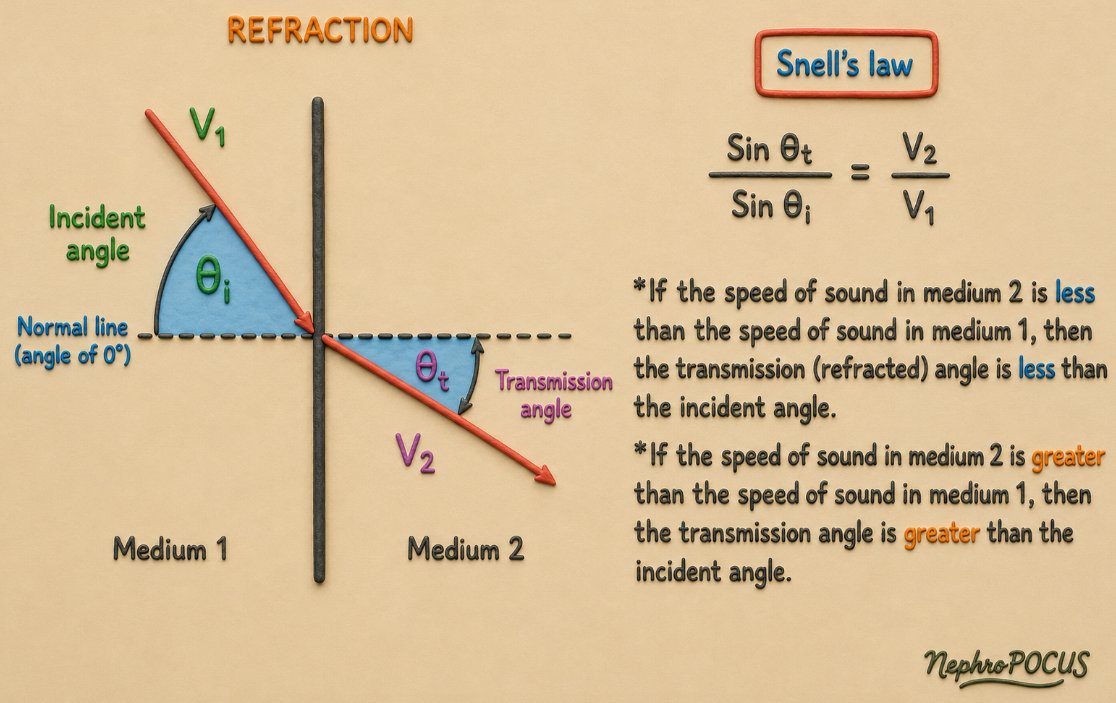
Another potentially testable concept on #echoboards - Snell's law ⭕️Snell's law describes how an ultrasound beam changes direction (refracts) when it crosses a boundary between two tissues with different propagation velocities. sinθt/sinθi = V2/V1 θi - angle of the incoming beam (angle of incidence) θt - angle of the transmitted beam (angle of refraction) V2 - speed of sound in the second tissue V1 - speed of sound in the first tissue (incident) 🌟Both angles are measured from the perpendicular (normal) to the tissue boundary, not from the boundary itself. *Very important to understand‼️* 🎯 Board pearl - If the speed of sound in medium 2 is less than the speed of sound in medium 1, then the transmission (refracted) angle is less than the incident angle and vice versa. *Since it violates the machine's assumption that ultrasound travels in a straight line, refraction may result in artifacts (e.g., second copy of a true reflector).
NephroPOCUS tweet media
English
1
1
3
1.5K