Trisha Laxamana MD ❄️🗽🇵🇭

94 posts

Trisha Laxamana MD ❄️🗽🇵🇭

Trisha Laxamana MD ❄️🗽🇵🇭

@NephroloTrish

👩🏻‍⚕️ Glomerular Diseases Fellow @MayoClinicNeph 🫘 General Nephrology @NYUnephro ‘25 ✨ ◾️GN+Stones💎◾️ tweets/views are my own

New York, NY Katılım Temmuz 2022
107 Takip Edilen157 Takipçiler
Trisha Laxamana MD ❄️🗽🇵🇭 retweetledi
Sanjeev Sethi
Sanjeev Sethi@SethiRenalPath·
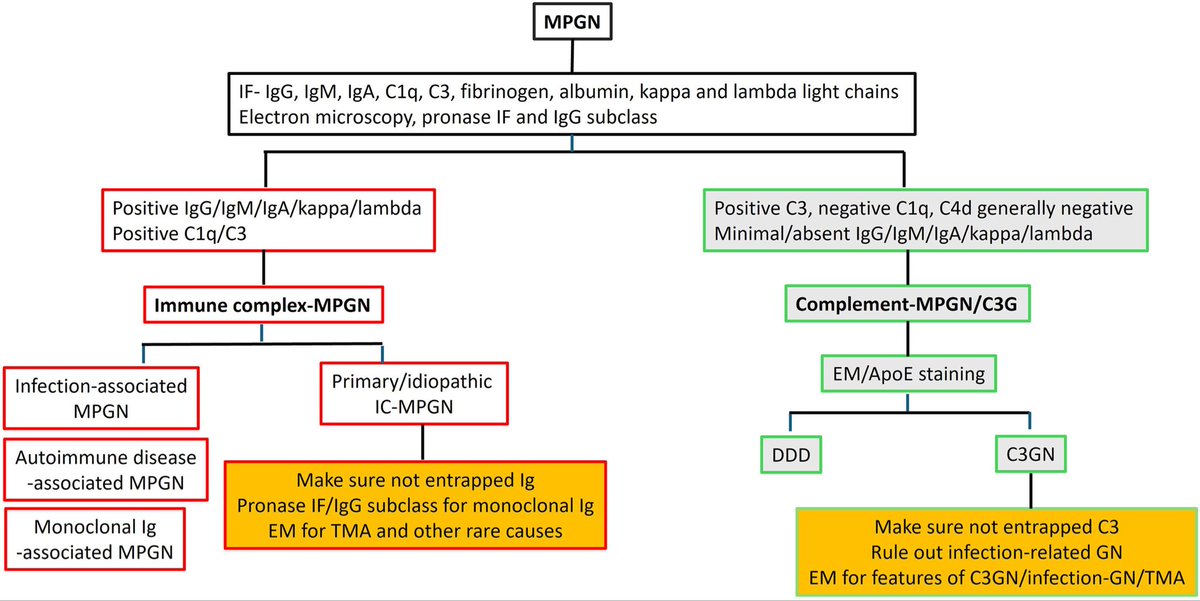
Basic evaluation of the kidney biopsy when you see an MPGN on light microscopy.
Sanjeev Sethi tweet media
English
0
50
96
3.9K
Trisha Laxamana MD ❄️🗽🇵🇭 retweetledi
Sanjeev Sethi
Sanjeev Sethi@SethiRenalPath·
Membranoproliferative Glomerulonephritis (MPGN). I classified the disease into Immune complex (IC) MPGN and complement MPGN (now called C3G) back in 2011. The IC in IC-MPGN come from autoimmune dis, infections or monoclonal gammopathy. Careful and diligent work up will reveal the underlying etiology in >95% of IC-MPGN. Idiopathic or primary IC-MPGN is very rare in my opinion. Be careful of entrapment of Ig, these are C3G to begin with. And some cases of C3G may represent IC-MPGN, particularly in infections or in some cases where IC is minimal or may need unmasking. In this review, I describe the pitfalls in the diagnosis, practical considerations on biopsy findings of MPGN. kidney-international.org/article/S0085-…
English
3
62
167
6.9K
Trisha Laxamana MD ❄️🗽🇵🇭 retweetledi
Sam Albadri, M.D., M.Sc.
Sam Albadri, M.D., M.Sc.@sam_albadri·
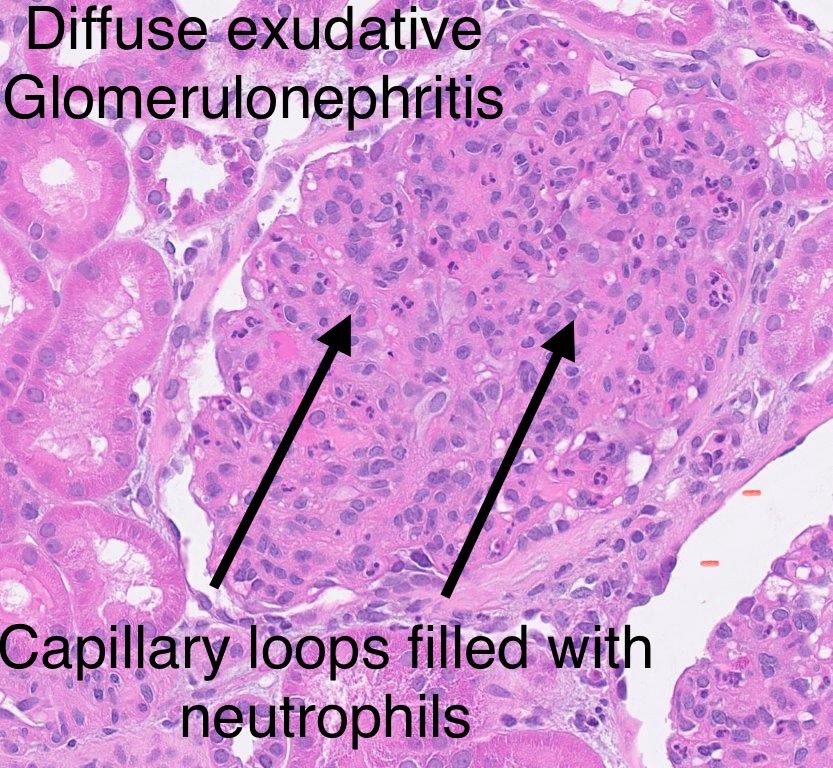
Bacterial infection–associated glomerulonephritis in action 🔬🦠 Diffuse neutrophilic endocapillary proliferation, dominant C3 staining on IF, and classic subepithelial “hump-like” deposits on EM—hallmarks of infection-related GN. 💡 Key facts:
• Typically follows staph or strep infections (not just post-strep anymore)
• Often presents with AKI, hematuria, proteinuria
• Low complement (especially C3) is common
• IF: C3-dominant or co-dominant staining
• EM: subepithelial humps = immune complex deposition
• Can occur in adults with ongoing infection (not always “post”) Treat the infection → kidneys often follow.
Sam Albadri, M.D., M.Sc. tweet media
English
3
20
54
2.6K
Trisha Laxamana MD ❄️🗽🇵🇭 retweetledi
Sanjeev Sethi
Sanjeev Sethi@SethiRenalPath·
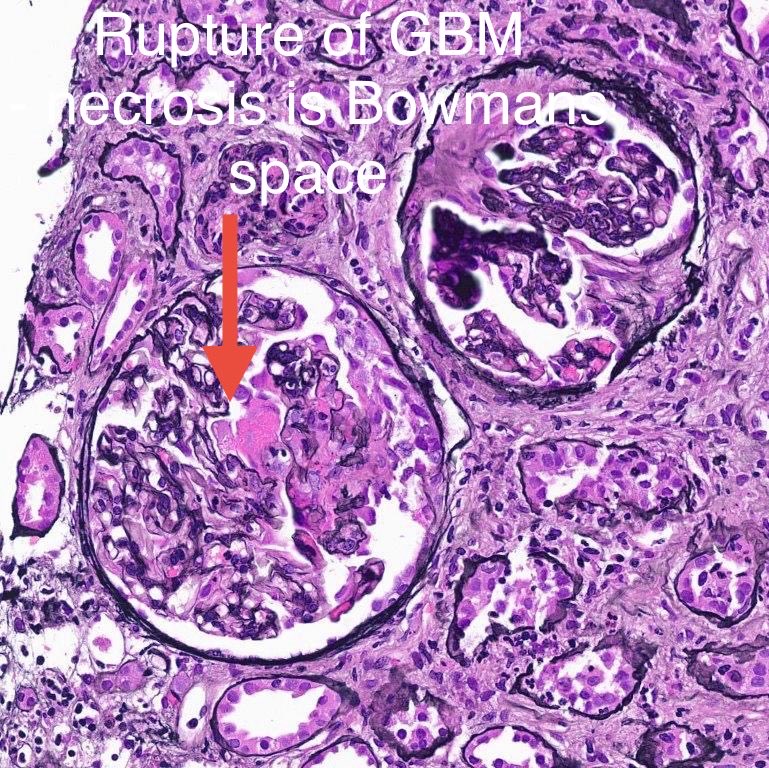
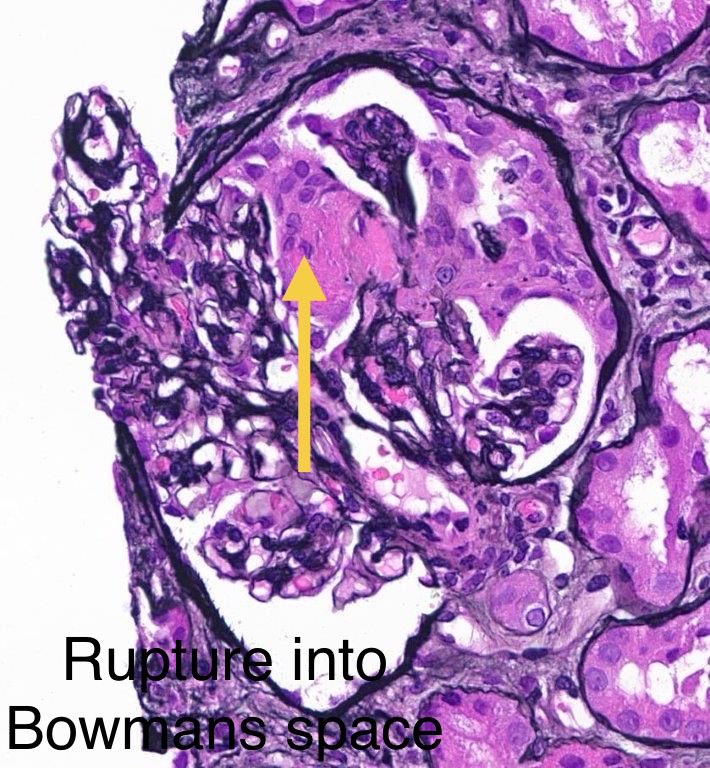
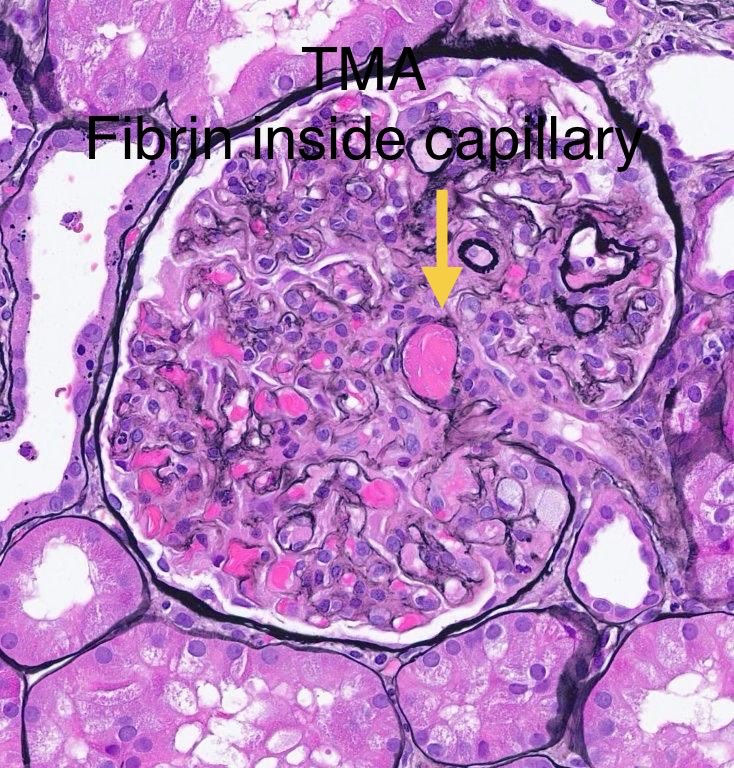
Simple concept: Fibrinoid necrosis (necrotizing glomerulonephritis) versus Fibrin thrombi (thrombotic microangiopathy, TMA) 1. In fibrinoid necrosis, there is breach/rupture of the glomerular basement membrane (GBM), & fibrin is present in the Bowman’s space. Top panel. 2. In fibrin thrombi, the glomerular basement membrane is INTACT. There is No rupture of the GBM. Fibrin is present within glomerular capillary, and not in Bowman’s space. Bottom panel
Sanjeev Sethi tweet mediaSanjeev Sethi tweet mediaSanjeev Sethi tweet mediaSanjeev Sethi tweet media
English
1
98
195
8.2K
Trisha Laxamana MD ❄️🗽🇵🇭 retweetledi
Sam Albadri, M.D., M.Sc.
Sam Albadri, M.D., M.Sc.@sam_albadri·
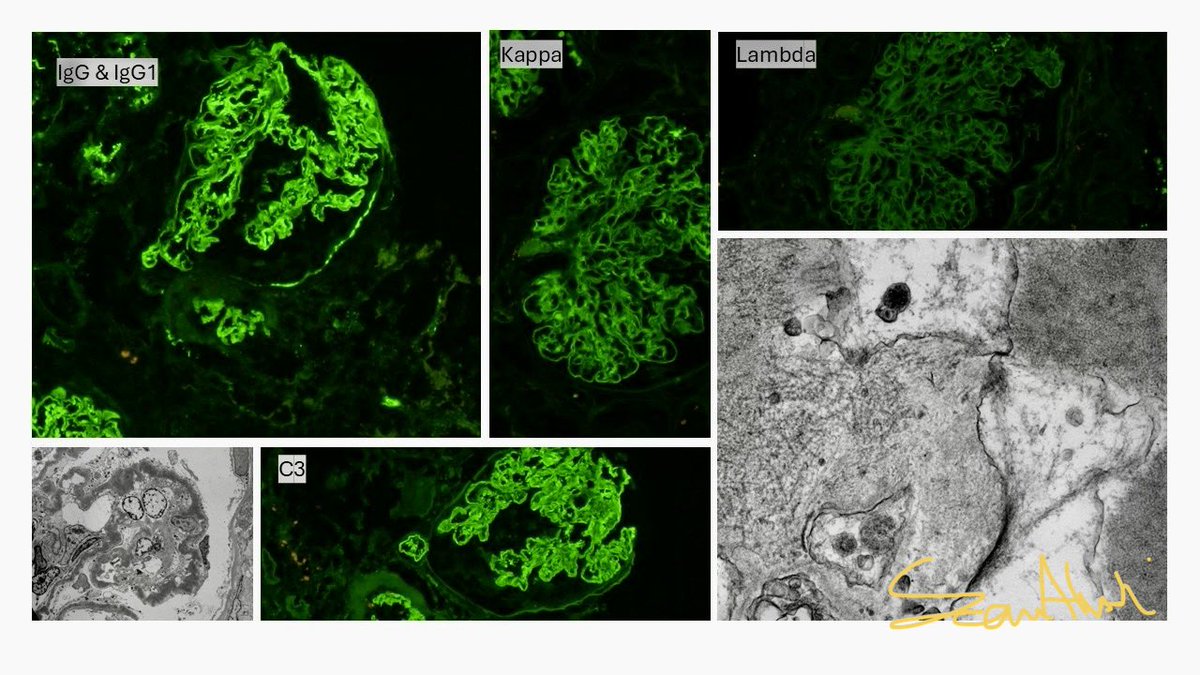
🔦✅Fibrillary Glomerulonephritis (FGN) : Classic Diagnostic Features Renal biopsy: Mesangial expansion + irregular capillary wall thickening with PAS-positive, silver-negative deposits. Congo red negative. 🔬 Immunofluorescence (IF) (classic polytypic pattern): - Bright IgG (often IgG4 > IgG1, polyclonal) - Both κ and λ light chains positive (no restriction) - C3 positive (often 2–3+) - Variable IgM/IgA (usually weak/negative) ⚡ Electron Microscopy (EM) : pathognomonic: - Randomly oriented, straight, non-branching fibrils (mean ~18–22 nm diameter, range 12–24 nm) - No hollow centers (distinguishes from immunotactoid GN) - Deposits in mesangium, GBM, subendothelial ± subepithelial spaces 🧬 DNAJB9 immunohistochemistry: - Strong, diffuse glomerular positivity (mesangial + capillary wall) , highly sensitive & specific (>95%) for FGN - Now considered the gold-standard confirmatory marker (revolutionized diagnosis even when EM is unavailable) 🔦✅Monotypic (monoclonal-appearing) FGN: - Rare subset (~3–11% of cases) - Shows light-chain restriction (e.g., lambda or kappa) ± IgG subclass restriction (often IgG1) - Most DNAJB9+ monotypic cases do NOT have detectable circulating monoclonal gammopathy or underlying plasma cell/lymphoproliferative disorder (paraffin IF often needed to confirm true monoclonality) - Still evaluate for paraprotein-related disease (SPEP/UPEP, bone marrow, etc.) in monotypic cases @MayoClinicNeph
Sam Albadri, M.D., M.Sc. tweet mediaSam Albadri, M.D., M.Sc. tweet media
English
2
39
90
3.8K
Trisha Laxamana MD ❄️🗽🇵🇭 retweetledi
Lori Baker
Lori Baker@LoriBaker444·
Dr. Nath kicking off the Mayo Clinic Nephrology & Hypertension conference recognizing the history of achievements over 60 years including those of the amazing GN group @LadanZand @LeticiaRolonMD @fervenzafernan1
Lori Baker tweet media
English
0
1
12
399
Trisha Laxamana MD ❄️🗽🇵🇭 retweetledi
Mayo Clinic Nephrology
Mayo Clinic Nephrology@MayoClinicNeph·
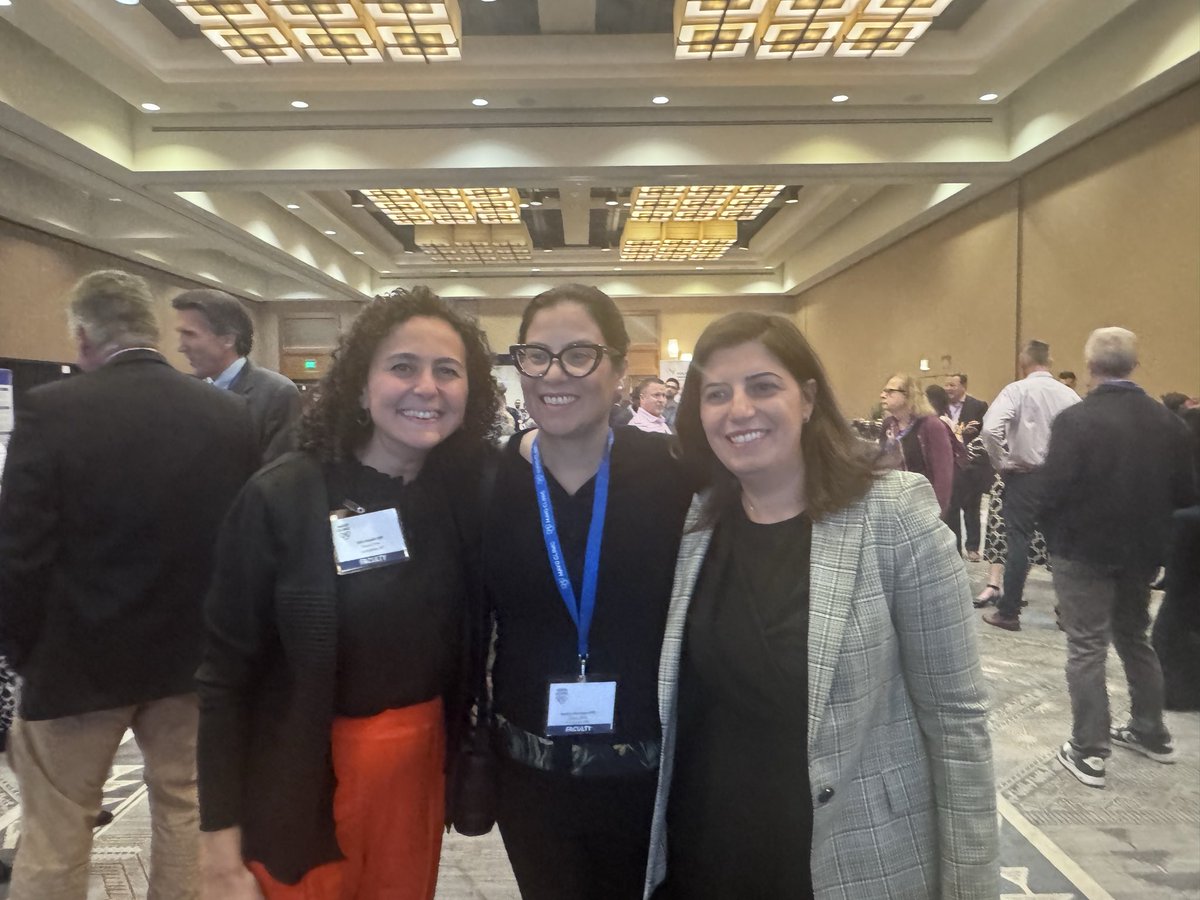
Our Nephrology Fellows and Advanced Fellows at the Mayo Clinic Nephrology, Hypertension and Kidney Transplantation Update 2026 in Scottsdale 🌵 Wonderful time together, meaningful learning, collaboration, and forward-thinking discussions shaping the future of kidney care. 😊
Mayo Clinic Nephrology tweet media
English
1
9
33
1.7K
Trisha Laxamana MD ❄️🗽🇵🇭 retweetledi
Mayo Clinic Nephrology
Mayo Clinic Nephrology@MayoClinicNeph·
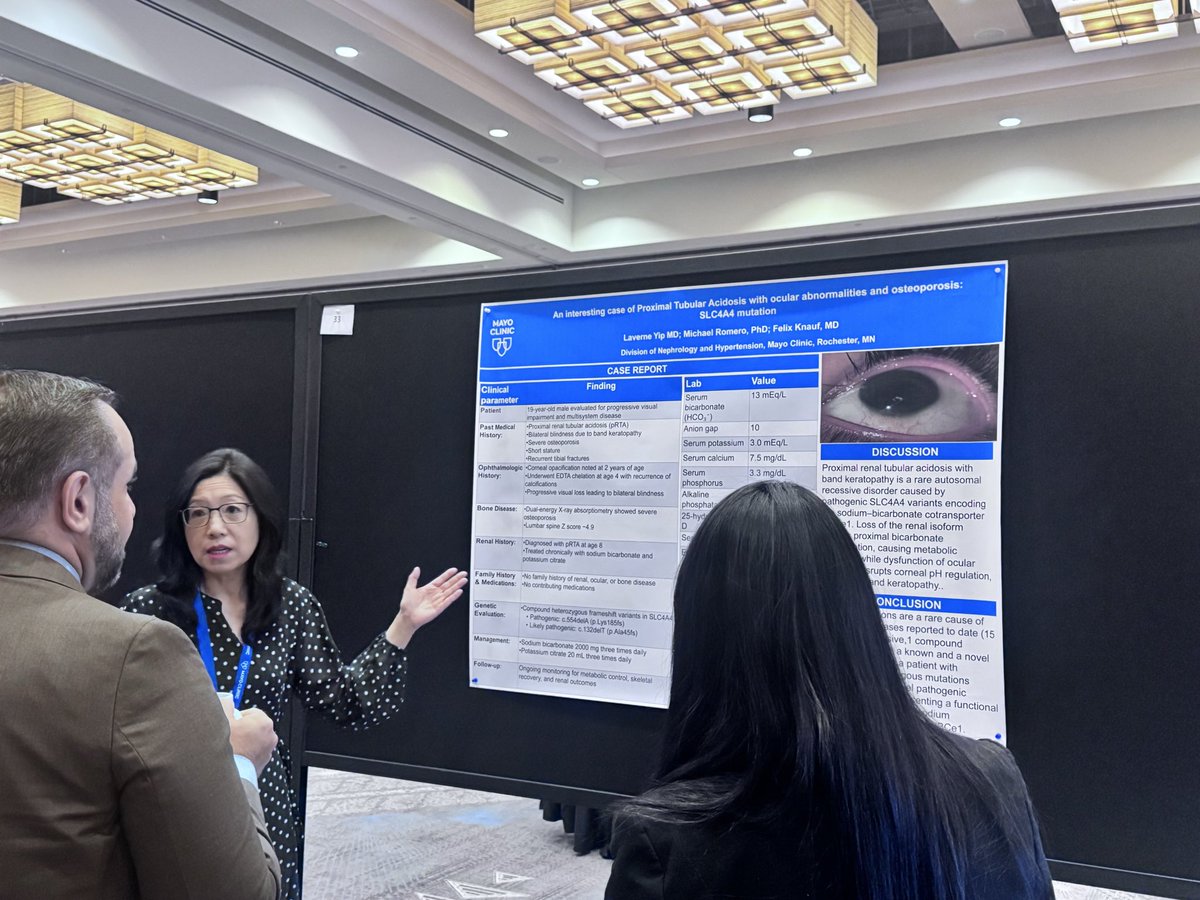
Excellent poster session and reception in Scottsdale, Arizona 😊 🙏🏻 Grateful for the collaboration and forward-thinking discussions at the Mayo Clinic Nephrology, Hypertension and Kidney Transplantation Update 2026. @MayoClinicNeph #Nephrology #KidneyTransplant #Hypertension
Mayo Clinic Nephrology tweet mediaMayo Clinic Nephrology tweet mediaMayo Clinic Nephrology tweet mediaMayo Clinic Nephrology tweet media
English
0
13
28
1.1K
Trisha Laxamana MD ❄️🗽🇵🇭 retweetledi
Priya Alexander, MD
Priya Alexander, MD@MPAlexanderMD·
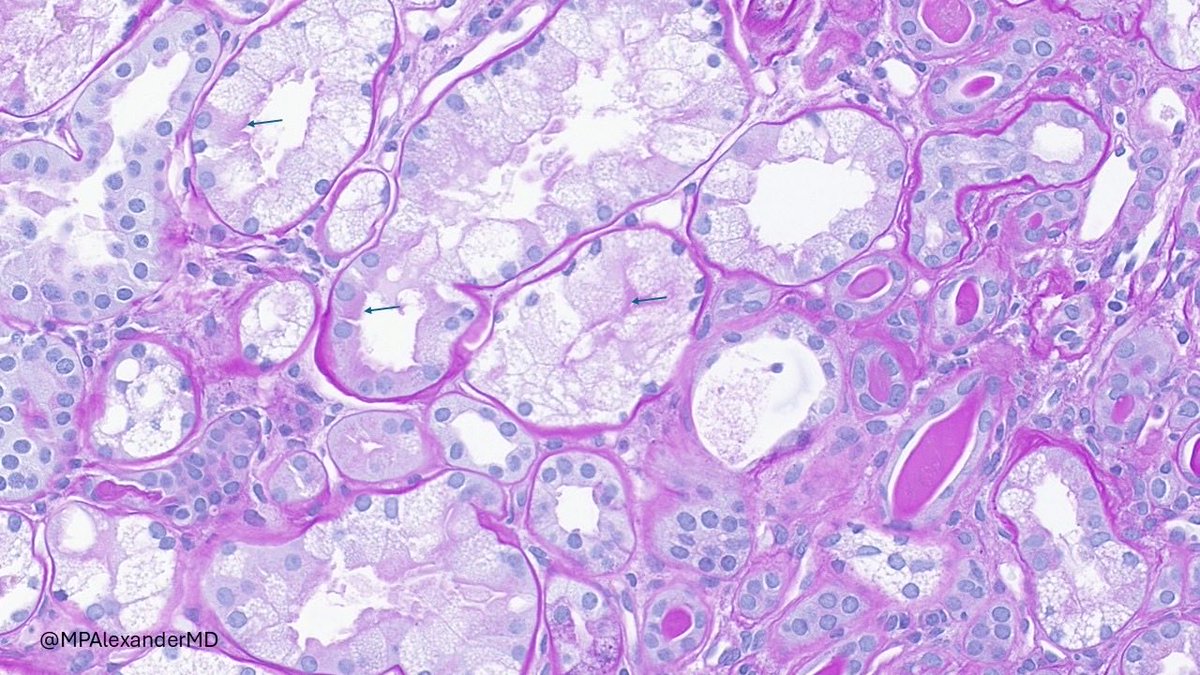
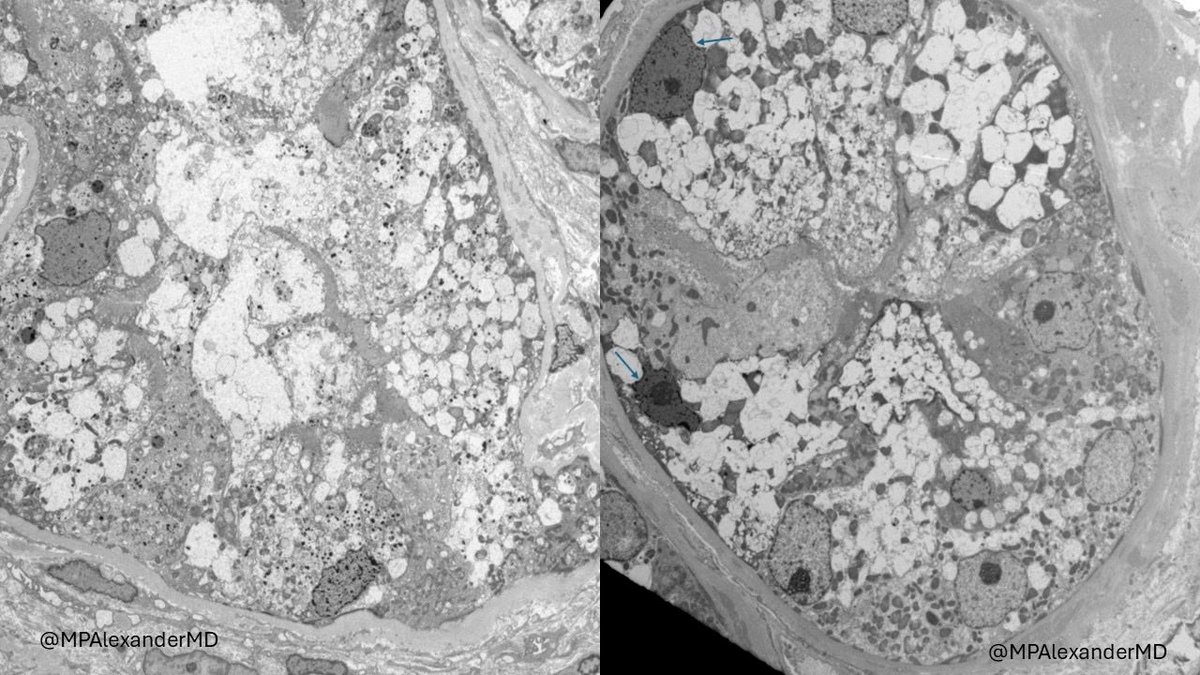
Case 2 (2026) A 60 year old woman was biopsied for acute rise in serum creatinine, no hematuria. Serology negative. Recently was hospitalized for investigation of a lung nodule. What’s your diagnosis? Or do you have differentials? IF negative.
Priya Alexander, MD tweet mediaPriya Alexander, MD tweet mediaPriya Alexander, MD tweet mediaPriya Alexander, MD tweet media
English

4
23
66
5.9K
Trisha Laxamana MD ❄️🗽🇵🇭
From listening to and being amazed by his lecture on the different antigens in membranous nephropathy in July 2024 to now learning directly from him at the microscope… Thank you, Dr. Sethi. 🙏🏻 More learnings to come! 🔬
Sanjeev Sethi@SethiRenalPath

It was a packed house last week. I enjoyed teaching the residents and fellows. Truly international- Iceland, Colombia, Bolivia, Philippines, Hong Kong, Chile and Brazil. These kids ☺️ are the future of nephrology around the world.

English
0
0
8
310
Trisha Laxamana MD ❄️🗽🇵🇭 retweetledi
Sanjeev Sethi
Sanjeev Sethi@SethiRenalPath·
Happy birthday to my dear friend ⁦@fervenzafernan1⁩. Many more happy returns of the day. 🎉🎈🎊🥂🎂🎁 🍷. Mayo wouldn’t be the same without you.
Sanjeev Sethi tweet media
English
10
9
83
4.2K
Trisha Laxamana MD ❄️🗽🇵🇭 retweetledi
Sanjeev Sethi
Sanjeev Sethi@SethiRenalPath·
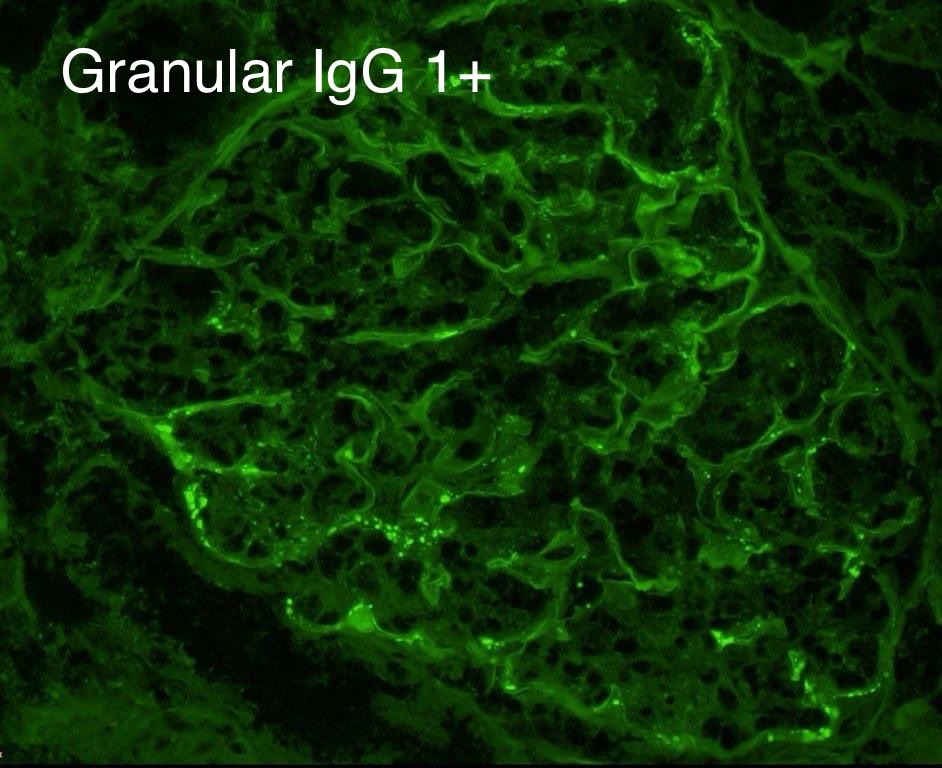
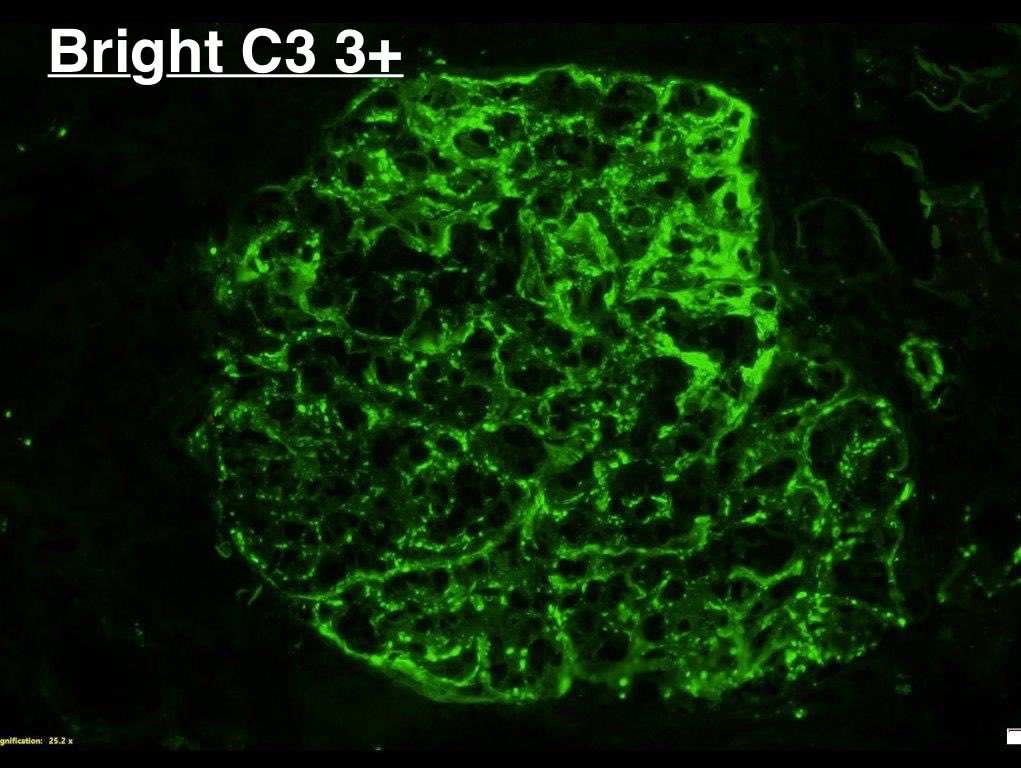
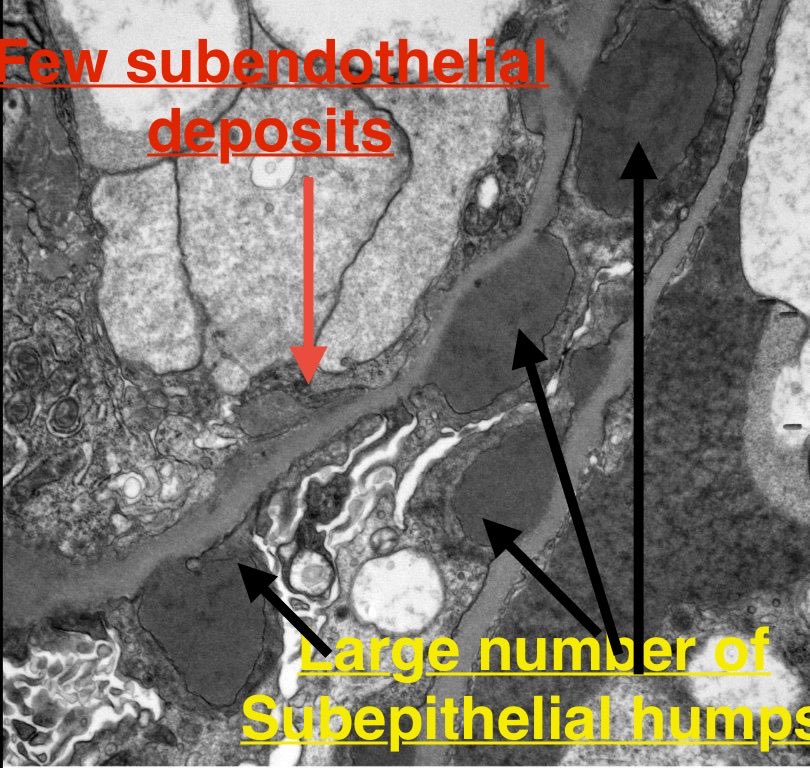
Simple recent case but so many things to teach. LM: Diffuse proliferative GN IF: granular IgG 1+, 3+ C3 3+ EM: numerous subepithelial humps, few subendothelial deposits. Dx: Infection-related glomerulonephritis. 60 yr-old woman with acute kidney injury, hematuria, sepsis.
Sanjeev Sethi tweet mediaSanjeev Sethi tweet mediaSanjeev Sethi tweet mediaSanjeev Sethi tweet media
English
5
25
78
4.3K
Trisha Laxamana MD ❄️🗽🇵🇭 retweetledi
Sanjeev Sethi
Sanjeev Sethi@SethiRenalPath·
Membranous nephropathy has undergone a paradigm shift due to the discovery of unique MN antigens. MN has gone from idiopathic to ➡️ primary vs. secondary ➡️ where an antigen can be detected in ~80% of MN. This is a comprehensive review of each antigen. nature.com/articles/s4158…
English
6
88
206
15.8K