Very soon there are going to be more AI agents than humans making transactions. They can’t open a bank account, but they can own a crypto wallet. Think about it.
Jag
1.1K posts

@NetXJag
"When our knowing exceeds our sensing, we will no longer be deceived by the illusions of our senses."

Very soon there are going to be more AI agents than humans making transactions. They can’t open a bank account, but they can own a crypto wallet. Think about it.


@noritaka_okabe さん、鋭いご指摘ありがとうございます!🙌 おっしゃる通り、羽田空港の実証では利用者が自己ウォレットでUSDC支払い → 店舗はStarPay経由で純粋JPY精算、決済事業者は暗号資産を保有・管理しない設計のため、電取業ライセンス不要です。 @WEAJapan のライブパイロットもまさにこの構造で、@netx_world の信頼技術を基盤に実現しています。利用者はWeb3をシームレスに、店舗は従来の法定通貨会計で完結。 こうした規制の明確さが、日本のリアルワールド採用を加速させます!エコシステムでさらに一緒に盛り上げていきましょう🚀 #Web3Payments #羽田空港 #USDC #PoweredByNetX


【イベント参画】ネットスターズは、4月7日(火)~8日(水)の2日間、東京・八芳園で開催される日本最大級のWEB3/AIサミット「TEAMZ WEB3/AI SUMMIT 2026」に、プラチナスポンサーとして参画します。詳細は下記お知らせをご確認ください。 netstars.co.jp/notification/9…


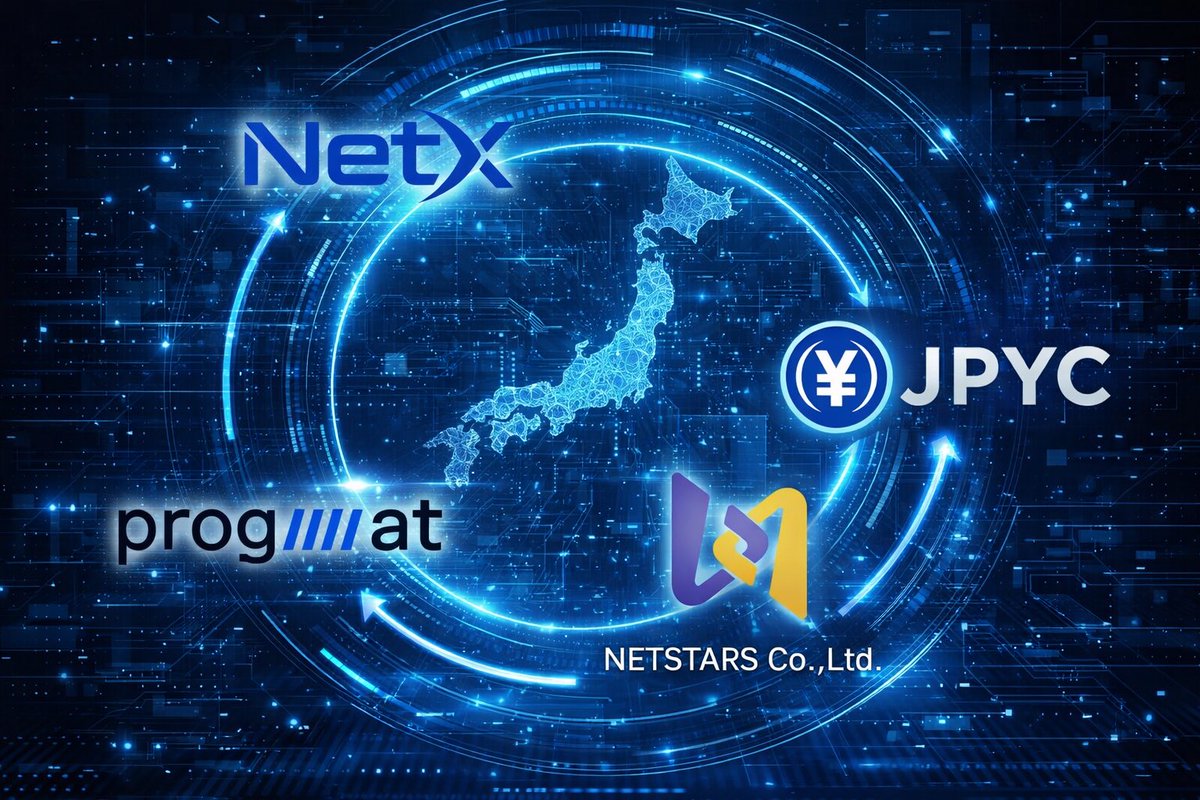
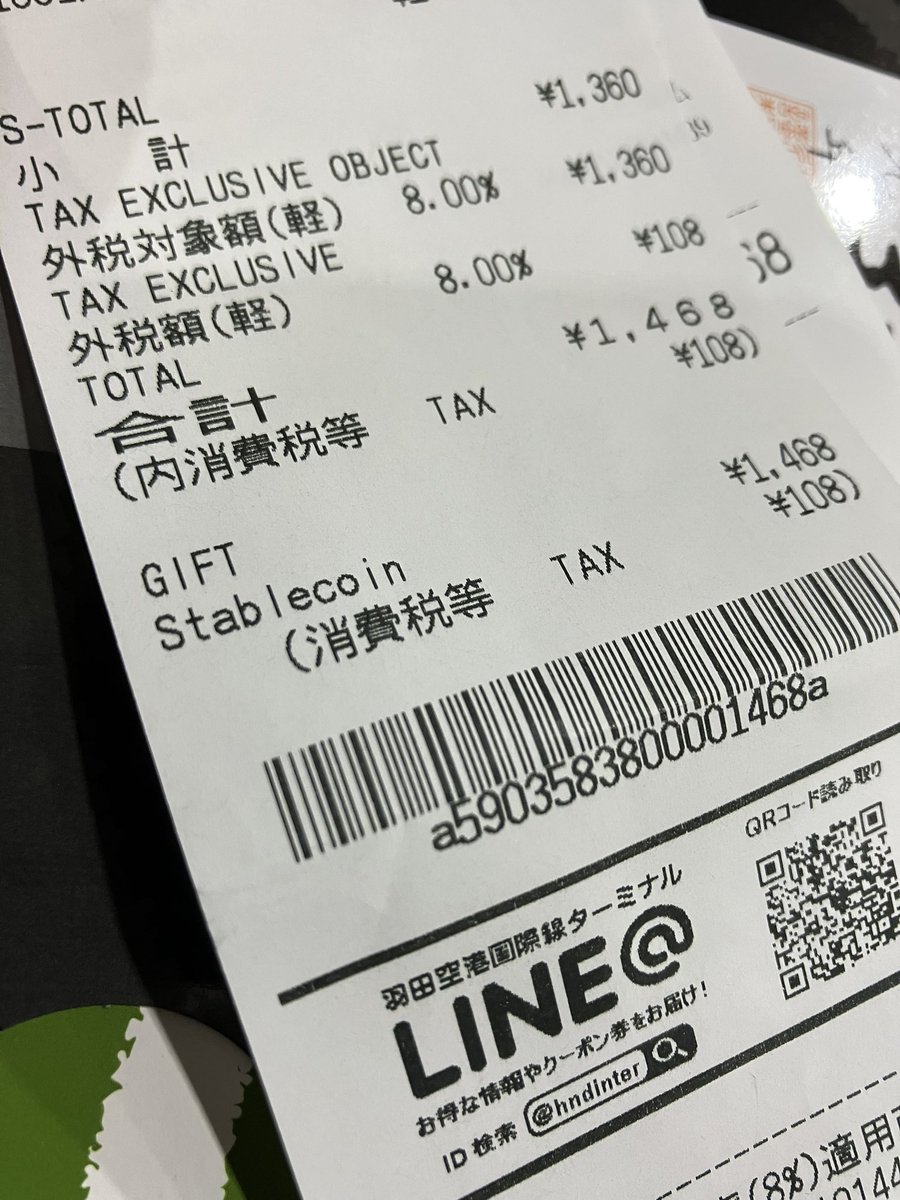
As part of LUN Partners Group’s broader portfolio update, something meaningful is taking shape in Japan’s digital payments landscape. At Haneda Airport (@Haneda_official), one of the world’s busiest international gateways, @Kouhou_NSS (NETSTARS) is launching a real-world USDC payment pilot. Travelers arriving in Tokyo can now pay in seconds using stablecoins, simply by generating a QR code through their wallet. This is not a test in isolation. It is live infrastructure, integrated into physical retail, operating in one of the most regulated financial environments in the world. Behind this initiative stands a powerful alignment of builders and institutions. NETSTARS is collaborating with NETX (@netx_world), supported by @NNGNetX and led by @anbangr, to strengthen next-generation digital payment rails. At the same time, Progmat (@progmat_en), under the leadership of CEO @tatsu_s1203 and backed by MUFG (@mufgbk_official), is advancing the infrastructure framework that enables compliant stablecoin issuance and settlement in Japan. 💥 JPYC (@jpy_coin), led by CEO @noritaka_okabe, plays a central role in this ecosystem, contributing to the development of yen-denominated digital settlement infrastructure. This effort operates within Japan’s regulatory landscape, shaped by the Financial Services Agency (@fsa_JAPAN) and METI (@METI_JPN), reflecting how public and private sectors can align around secure innovation. USDC, issued by @circle, and expanding across networks such as @solana and @SolanaFndn, provides the global liquidity layer. The convergence of USDC and Solana’s high-performance blockchain capabilities adds speed and scalability to this deployment, reinforcing that this is about infrastructure readiness, not experimentation. Close collaborators of NetX including @WEAJapan, @web3_jp_infra, and @TokyoAiDev continue to support ecosystem development, helping bridge enterprise adoption, AI integration, and Web3 infrastructure in Japan and beyond. What is happening at Haneda is more than a payment pilot. It represents the convergence of regulated finance, blockchain infrastructure, AI-driven network architecture, and institutional backing. It demonstrates how $NETX is positioning itself at the intersection of compliant digital asset infrastructure and real-world usability. This is how adoption evolves. Quietly, structurally, and with the right partners at the table. Link: mp.weixin.qq.com/s/AXfw2s-nULPP…


日本のメガバンク3行が共同でステーブルコインを発行。 これは、Web3や国際取引で円の存在感を守るための「デジタル円戦略」です。 JPYCのような民間発ステーブルコインとの違いも解説します👇

ステーブルコインで株や債券売買 野村・大和証券と3メガバンク連合 nikkei.com/article/DGXZQO…


🇯🇵💴 Japan: The New Web3 Economy While the world watches US regulation, Japan is engineering a complete national stablecoin economy. It links megabanks, QR payments, tokenization, and the Japanese bond market into one coordinated system. Under the surface, a powerful macro feedback loop is forming and investors who see it early will benefit the most. Why Japan Will Push Stablecoins Japan faces major structural challenges: • 👵 An aging population • 📉 Persistent deflation • 💰 Heavy public debt • 💴 Long-term yen weakness Regulated stablecoins solve a real need. In Japan, stablecoin issuers must hold high-quality liquid assets such as JGBs. This instantly creates a new class of bond buyers. More issuance → more JGB demand → stronger bond-market stability. Japan isn’t experimenting. Japan is stabilizing its financial foundation. Megabanks Are Entering the Stablecoin Arena This year, all three megabanks join the market: 🏦 MUFG 🏦 Mizuho 🏦 SMBC They issue stablecoins on @progmat_en which is becoming: • Japan’s regulated stablecoin platform • Japan’s security-tokenization engine • Core infrastructure for tokenized stocks, bonds, and real estate This is institutional, regulated, long-term infrastructure. Issuance Only Matters If Stablecoins Are Used A stablecoin no one spends is worthless. Japan knows real-world usage is everything: ⚡ Where do people spend? ⚡ How do merchants accept it? ⚡ How is compliance ensured? ⚡ How do we keep the Web2 experience? This is where the pieces snap together. Japan Already Has the Perfect Distribution Layer Japan’s entire consumer payment system runs on QR codes. The backbone: 📲 StarPay by @Kouhou_NSS with 600,000+ terminals nationwide. Dozens of payment types already run through these devices. Adding stablecoins requires: ✔ No new hardware ✔ No new merchant training ✔ No friction The rails are already built. @WEAJapan + @netx_world = Stablecoins at National Scale WEA Japan bridges Web2 wallets to Web3. NetX provides the verification and trust layer. Together they deliver: • Web3 wallet payments • Instant JPY settlement for merchants • Transparent on-chain processing • Full FSA compliance • Zero disruption to existing merchants Users don’t even know it’s crypto. Merchants don’t either. But the settlement is fully Web3. This is real adoption. JPQR: The Government’s Quiet Masterstroke JPQR standardizes QR codes across Japan. Led by: 🇯🇵 The Japanese Government 🇯🇵 Netstars (as a key architect) When fully deployed: • All QR systems unify • Tourists pay with their home wallets • Japanese stablecoins work abroad • Cross-border payments spread across Asia This is the foundation for a pan-Asian stablecoin economy. Progmat Completes the Financial Loop Progmat is evolving into the national engine for: • Regulated stablecoins • Tokenized bonds (JGBs) • Tokenized real estate • Tokenized corporate securities • Eventually tokenized ETFs and equities Put it all together and the flywheel becomes obvious: More stablecoin usage → more issuance → more JGB demand → stronger yen stability → more confidence in tokenized assets → more capital inflow → even more usage A self-reinforcing monetary loop emerges🔄 How Investors Can Benefit 1️⃣Japanese Government Bonds (JGBs) Stablecoin issuers must buy them. More usage → more buying → steady upward support. This is about stability, not speculation. 2️⃣ Japanese Stocks & Indices (Nikkei, TOPIX) Tokenization increases liquidity and global access. Gains will be modest but consistent as capital inflows rise. 3️⃣ $NetX (The Asymmetric Opportunity) Every stablecoin transaction must pass through NetX’s trust layer. That means: 🔥 Every payment generates verification fees 🔥 Every QR spend touches NetX 🔥 Every cross-border JPQR flow touches NetX 🔥 Every tokenized asset interaction relies on NetX Stake $NetX and gain exposure to: • National QR stablecoin payments • Asia-wide JPQR cross-border spending • Corporate and institutional tokenized flows • Megabank-backed stablecoins NetX is not competing with stablecoins. It is the trust engine beneath them. High usage → high settlement volume → high verification demand. This is where the biggest upside exists. The Final Picture Japan is not building “crypto payments.” Japan is building: • A regulated stablecoin economy • Backed by megabanks • Anchored to the JGB market • Unified by JPQR • Live across nearly every merchant • Connected to tokenized financial markets • Verified and secured by NetX This will become the blueprint for Asia’s digital financial future. And those who understand it before the world catches up will be positioned best.