
Sabitlenmiş Tweet
Net Zero Watch
46.7K posts


Net Zero Watch
@NetZeroWatch
Campaign to highlight the serious economic and societal implications of expensive and poorly considered climate and energy policies #CostOfNetZero
London Katılım Eylül 2014
928 Takip Edilen69.6K Takipçiler
“The problem is that these are not my allegations – they are the allegations of [the NESO’s] own staff.”
@Ed_Miliband and @mgshanks had no basis for dismissing these allegations as “scaremongering”. The proper response was to acknowledge their seriousness and investigate them fully.
Claire Coutinho@ClaireCoutinho
The control room engineers at the NESO balance Britain’s electricity supply and demand. If they don’t get it right, the lights go out and people die. This is, in part, why I have been approached by multiple whistleblowers from within NESO who are concerned that it is getting harder to keep the lights on in Britain. Few things can be more serious. As we saw in last year’s Iberian blackout, without electricity, people die. The allegations made to me are threefold. First, on 23 June, NESO failed to meet standards on constraints and reserves put in place to prevent blackouts. Second, the Corporate Affairs team interfered with operational decisions, prioritising NESO's reputation over security of supply. And third, operational decisions are being kept in ‘live documents’ with no audit trail, therefore preventing them from being accessed for Freedom of Information requests. It is undeniable that the system is becoming harder to balance. And yet, as of Monday, NESO launched an investigation into allegations of bad record-keeping and interference from their PR team, but it will not include whether control room operators think the system is being run securely. I understand that at an all-staff meeting yesterday, Fintan Slye, NESO’s Chief Executive, said “my” allegations were false. The problem is that these are not my allegations – they are the allegations of his own staff. If this remark was indeed said, it would be an extraordinary prejudgment of the whistleblowers’ concerns and would potentially deter other people from coming forward. Ed Miliband and his ministers, in a grotesque show of complacency, dismissed me as “scaremongering”. Ofgem, the regulator responsible for monitoring NESO, are seemingly fine taking a backseat role. As for NESO, their reaction has been to tell staff, who are so worried they have resorted to whistleblowing, that their concerns are false – rather than to seriously consider whether they have a problem. And who will be to blame if it all goes wrong? I fear in the court of public opinion it will be the control room operators, who do an enormous and increasingly difficult service for our country. That’s why I am fighting their corner now. They deserve to be listened to and to have their worries addressed. I can assure them I will not stop until that happens.
English
Net Zero Watch retweetledi

@miktorVeldre @NetZeroWatch @ClaireCoutinho She has. She changed her mind about net zero. She was never against energy security
English
Net Zero Watch retweetledi
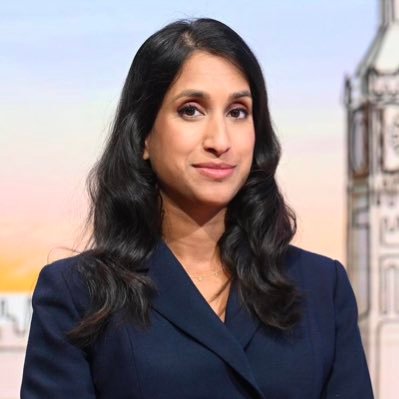
The control room engineers at the NESO balance Britain’s electricity supply and demand.
If they don’t get it right, the lights go out and people die.
This is, in part, why I have been approached by multiple whistleblowers from within NESO who are concerned that it is getting harder to keep the lights on in Britain.
Few things can be more serious. As we saw in last year’s Iberian blackout, without electricity, people die.
The allegations made to me are threefold.
First, on 23 June, NESO failed to meet standards on constraints and reserves put in place to prevent blackouts.
Second, the Corporate Affairs team interfered with operational decisions, prioritising NESO's reputation over security of supply.
And third, operational decisions are being kept in ‘live documents’ with no audit trail, therefore preventing them from being accessed for Freedom of Information requests.
It is undeniable that the system is becoming harder to balance.
And yet, as of Monday, NESO launched an investigation into allegations of bad record-keeping and interference from their PR team, but it will not include whether control room operators think the system is being run securely.
I understand that at an all-staff meeting yesterday, Fintan Slye, NESO’s Chief Executive, said “my” allegations were false.
The problem is that these are not my allegations – they are the allegations of his own staff.
If this remark was indeed said, it would be an extraordinary prejudgment of the whistleblowers’ concerns and would potentially deter other people from coming forward.
Ed Miliband and his ministers, in a grotesque show of complacency, dismissed me as “scaremongering”.
Ofgem, the regulator responsible for monitoring NESO, are seemingly fine taking a backseat role.
As for NESO, their reaction has been to tell staff, who are so worried they have resorted to whistleblowing, that their concerns are false – rather than to seriously consider whether they have a problem.
And who will be to blame if it all goes wrong? I fear in the court of public opinion it will be the control room operators, who do an enormous and increasingly difficult service for our country.
That’s why I am fighting their corner now.
They deserve to be listened to and to have their worries addressed.
I can assure them I will not stop until that happens.

English
"Miliband has his eye on the second most senior job in government: Chancellor of the Exchequer. But he himself has queered his own pitch by taking an apparently ideological approach to curbing Britain’s carbon emissions, even to the extent of refusing to exploit our own oil and gas reserves," says Tom Harris, warning "An eco-zealot would be a lot more dangerous in No 11 than in the Department for Energy Security and Net Zero."
#CostOfNetZero

English
Net Zero Watch retweetledi

NESO is still gaslighting British people & DESNZ is either naive or complicit
This is a major attempt to cover up emergency action to prevent a blackout
We had to stop our interconnectors sending electricity to Europe. If they do same to us at any time, we are done for
All caused by rush to renewable Net Zero
Kathryn Porter@KathrynPorter26
This is just more of the old nothing to see here nonsense On 23 June the system was outside the "safe operational limit" for extended periods and this was resolved only when "Emergency Assistance" was instructed on the interconnectors to France and the Netherlands The names "safe operational limit" and "Emergency Assistance" are relevant here. They indicate there IS something to see here Craig Dyke claims "no customer demand was disconnected". This is not true. EA on the interconnectors means you cut off interconnector demand ie you're cutting the demand of other countries Industry contacts tell me this has not gone down well in these other countries who think we should use our own reserves before cutting them off Blaming "adverse interconnector flows" is pathetic. Interconnectors flow both ways. Is NESO seriously saying it assumes they will always import to us?? Instead of half truths why not explain... 1. Why was the frequency so low for so long? 2. Was there any reserve left? 3. Why did they cut interconnectors before doing voltage reduction? 4. Why was there no EMN or Notice of High Risk of Demand Control issued that day? 5. Were any transmission constraints violated? 6. Would the grid have been secure if NSL or Viking, the largest infeeds, had tripped? These are simple questions. Let's have some candid answers
English
China’s coal power usage has surged…
Meanwhile Net Zero is blighting Britain's industries, households and landscape.
#CostOfNetZero

English
BP has revealed a fresh £750m hit from its botched net zero strategy, just days after its new chief executive promised to restore stability to the embattled oil giant. The FTSE 100-listed company has been seeking to unwind a green energy strategy set out in 2020 under its former chief executive, to cut fossil fuel production and reach net zero emissions by 2050, following a backlash from shareholders.
#CostOfNetZero

English
“The reality is that the real battle for net zero is in the Treasury... [which has] historically been a roadblock to a lot of net zero investment." Our Campaign Director @MDC12345678 reacts to Ed Miliband's possible North Sea u-turn.
English
Net Zero Watch retweetledi

Barwell and others keep invoking the "broad church" analogy. But even a broad church needs a common creed!
The issue is not whether Conservatives - or any other party for that matter - should tolerate disagreement. It is whether people who reject a defining part of the party's diagnosis and governing programme should continue to represent it in Parliament.
If the party has concluded that the statutory Net Zero target damages Britain’s economy and national security and should therefore be repealed, why should it select candidates who remain committed to preserving it?
What is striking is that Barwell never defends the statutory framework on its merits. Instead, he falsely equates opposition to the 2050 target with climate inaction, diverts the argument towards tolerance and party management, and appeals to headline polling on a term that most voters cannot define.
Support for the vague label "Net Zero" is not the same as informed support for the CCC’s pathway, its costs or its trade-offs.
How many people fully understand that the 2050 target was designed to go beyond the older equal per-capita approach and instead reflects an equity-based framework?
Indeed, when you explain what this means to priority voter groups, as recent market research conducted by Dominic Cummings shows, the reaction is often one of surprise, scepticism and outright rejection. Polling I conducted in September last year shows the exact same. dominiccummings.substack.com/p/regime-chang…
Personally, I think Barwell's reliance on straw men, red herrings and bogus appeals to popularity is very revealing. If the framework were genuinely defensible, its supporters would defend its assumptions, consequences and trade-offs directly.

Gavin Barwell@GavinBarwell
It turns out I did have the Whip taken off me yesterday despite no one having the courtesy to talk to me. Some thoughts on what it means for me (tl;dr sad, but won't stop me speaking my mind) and what it says about @KemiBadenoch linkedin.com/posts/gavinbar…
English
"Net zero is a fundamentally unconservative policy, a big-government statist capture of policy-making that has more in common with communism than with free markets and wealth creation." @DavidGHFrost
#CostOfNetZero

English
Net Zero Watch retweetledi

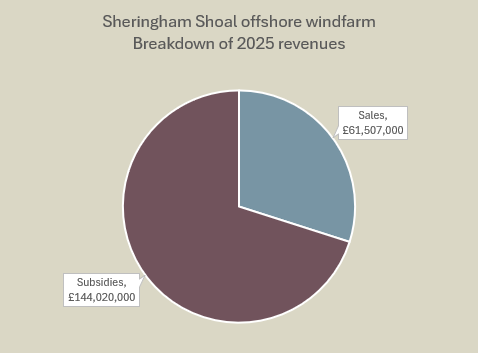
I have been sickened once again by the extent to which we are being ripped off by the Green Blob.
English
Net Zero Watch retweetledi
.@Ed_Miliband thinks we were all born yesterday.
Under no circumstances should this man become Chancellor. In Go Big, he makes clear that he sees his mission as replacing Britain’s 300-year model of economic growth.
Let us be clear what that means in practice. It means moving away from cheap, abundant energy, private investment and rising levels of material comfort, and towards a state-directed economy built around rationing, redistribution, behavioural control and permanent limits on growth. That is the logic of the legal framework he set-up and supports.
I have long suspected that he viewed North Sea oil and gas as a bargaining chip because he knows the real battle over Net Zero, taxation, subsidies and economic redistribution sits in the Treasury. But his cynical political games over domestic oil and gas (both onshore and offshore), which he is now presenting as a form of pragmatism, have come at big cost.
A man who has spent decades pursuing various ideological projects at the expense of Britain’s national security, industrial base and economy should not hold one of the great offices of state.
It reflects badly on both @Keir_Starmer and @andyburnham that they ever considered him suitable for such a central role in government and the Labour Party.

English
Do not be fooled. Ever the Machiavel, @Ed_Miliband is making a small tactical concession to gain control of the Treasury. He is not a pragmatist.
Approving one North Sea project does not change his destination. It merely changes his route to power.
As Chancellor, he would control the taxes, subsidies and spending decisions needed to turn the statutory Net Zero target - which means demand reduction, fewer livestock, lower red meat and dairy consumption, major land-use change and tighter constraints across car use, aviation, shipping and industry - into the organising principle of the whole British economy.
He has no mandate to deliver any of this.

Maurice Cousins@MDC12345678
.@Ed_Miliband thinks we were all born yesterday. Under no circumstances should this man become Chancellor. In Go Big, he makes clear that he sees his mission as replacing Britain’s 300-year model of economic growth. Let us be clear what that means in practice. It means moving away from cheap, abundant energy, private investment and rising levels of material comfort, and towards a state-directed economy built around rationing, redistribution, behavioural control and permanent limits on growth. That is the logic of the legal framework he set-up and supports. I have long suspected that he viewed North Sea oil and gas as a bargaining chip because he knows the real battle over Net Zero, taxation, subsidies and economic redistribution sits in the Treasury. But his cynical political games over domestic oil and gas (both onshore and offshore), which he is now presenting as a form of pragmatism, have come at big cost. A man who has spent decades pursuing various ideological projects at the expense of Britain’s national security, industrial base and economy should not hold one of the great offices of state. It reflects badly on both @Keir_Starmer and @andyburnham that they ever considered him suitable for such a central role in government and the Labour Party.
English
Ed Miliband wants to approve drilling in the North Sea to calm market jitters about his possible appointment as chancellor and prove he is no net zero “zealot”. Mr Miliband is keen to show the markets he would be willing to put Britain’s economic growth ahead of his net zero ambitions if he became chancellor amid reports more wealthy people are planning to flee Britain if he moves into No 11.
#CostOfNetZero

English