Benjamin Stecher

5.8K posts

Benjamin Stecher banner
Benjamin Stecher

Benjamin Stecher

@Neuronologist1

Author of Reprogramming The Brain and Brain Fables
Toronto, Ontario Katılım Eylül 2016
1.5K Takip Edilen3.4K Takipçiler
Benjamin Stecher
Benjamin Stecher@Neuronologist1·
Misfolded proteins aren't the cause of neurodegenerative diseases; they are debris in a system-wide energy failure. Biology gives us a list of parts, but physics writes the manual. Read more at the link below: tmrwedition.com/2026/02/16/a-b…
English
0
0
0
324
Benjamin Stecher retweetledi
Hesheng Liu
Hesheng Liu@hesheng3·
A short but super cool video that gives a quick overview of our Nature paper on the SCAN of PD, along with videos showing patients with Parkinson's before and after non-invasive brain surface stimulation (see thread).🧠 nature.com/articles/s4158…
English
2
57
125
8.6K
Benjamin Stecher retweetledi
Alberto J Espay
Alberto J Espay@AlbertoEspay·
In Parkinson’s, we obsess over what α-synuclein becomes when aggregated, and ignore what neurons lose when its normal form disappears. New data in α-syn KO mice: hyposmia, apoptosis, impaired autophagy. Depletion may matter more than we think. linkedin.com/posts/alberto-…
English
4
8
55
4.8K
Benjamin Stecher retweetledi
Bo Wang
Bo Wang@BoWang87·
Everyone’s hyped about “AI for Science.” in 2025! At the end of the year, please allow me to share my unease and optimism, specifically about AI & biology. After spending another year deep in biological foundation models, healthcare AI, and drug discovery, here are 3 lessons I learned in 2025. 1. Biology is not “just another modality.” The biggest misconception I still see: “Biology is text + images + graphs. Just scale transformers.” No. Biology is causal, hierarchical, stochastic, and incomplete in ways that language and vision are not. Tokens don’t correspond cleanly to reality. Labels are sparse, biased, and often wrong. Ground truth is conditional, context-dependent, and sometimes unknowable. We’ve made real progress—single-cell, imaging, genomics, EHRs are finally being modeled jointly—but the hard truth is this: Most biological signals are not supervised problems waiting for better loss functions. They are intervention-driven problems. They demand perturbations, counterfactuals, and mechanisms, beyond just prediction. Scaling obviously helps. But without causal structure, scaling mostly gives you sharper correlations. 2025 reinforced my belief that biological foundation models must be built around perturbation, uncertainty, and actionability, not just representation learning. 2. Benchmarks are holding biology back more than compute is. Let’s be honest: Benchmarking in AI & biology is still broken. Everyone reports SOTA. Everyone picks a different dataset slice. Everyone tunes for a different metric. Everyone avoids prospective validation. We’ve imported the worst habits of ML benchmarking into a domain where stakes are much higher. In biology and healthcare, a 1% gain that doesn’t transfer is worse than useless—it’s misleading. What’s missing isn’t more benchmarks. It’s hard benchmarks: •Prospective, not retrospective •Perturbation-based, not static •Multi-site, not single-lab •Failure-aware, not leaderboard-optimized If your model only works on the dataset that created it, it’s not a foundation model—it’s a dataset artifact. In 2026, we need fewer flashy plots and more humility, rigor, and negative results. 3. “Reasoning” in biology is not chain-of-thought. There’s a growing tendency to directly apply the word reasoning onto biological LLMs. Let’s be careful. Biological reasoning isn’t verbal fluency, longer context windows, or prettier explanations. Those are surface-level improvements. Real reasoning in biology shows up elsewhere: in forming hypotheses, deciding which experiments to run, updating beliefs when perturbations fail, and constantly trading off cost, risk, and uncertainty. A model that explains a pathway beautifully but can’t decide which experiment to run next is not reasoning, it’s narrating. 2025 convinced me that the future lies in agentic biological AI: systems that couple foundation models with experimentation, simulation, and decision-making loops. Closing thought: AI & biology is not lagging behind AI for code or language. It’s just playing a harder game. The constraints are real. The data is messy. The feedback loops are slow. The consequences matter. If 2025 clarified anything for me, it’s this: We won’t make progress by treating biology like text. We’ll make progress by building AI that behaves more like a scientist : skeptical, iterative, and willing to be wrong. Onward to 2026.
Bo Wang tweet media
English
54
166
743
66.5K
Benjamin Stecher retweetledi
Kariem Ezzat
Kariem Ezzat@Kariem_Ezzat·
Can prions carry biological information? The answer is definitely NO, not in a million years. We explain why in this recently published paper: pubs.acs.org/doi/10.1021/ac… Information is actually lost during amyloid formation (pic). More discussion here: linkedin.com/feed/update/ur…
Kariem Ezzat tweet media
English
3
4
18
1.9K
Benjamin Stecher
Benjamin Stecher@Neuronologist1·
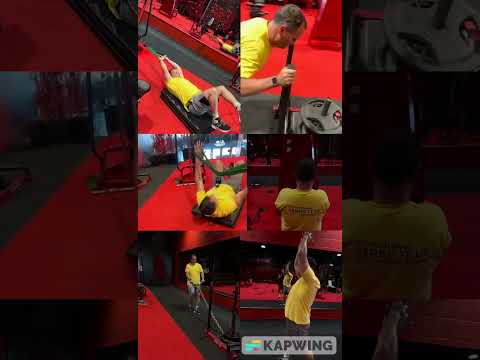
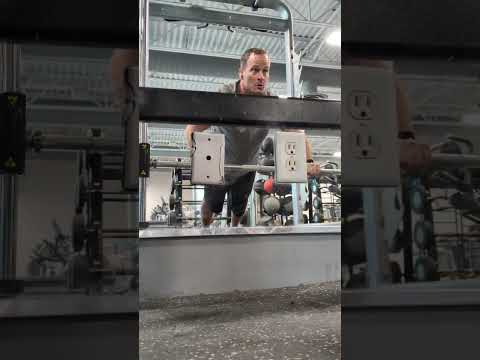
@UHN @Medtronic I have lost 30 pounds since and feel about as good as I can remember. If you're looking for a sign to start—this is it. Hobbling to the gym that day was the best birthday present I could have possibly given myself. (Below is 15 months ago) youtube.com/shorts/rk-IiHf…
YouTube video
YouTube
English
0
0
0
155
Benjamin Stecher
Benjamin Stecher@Neuronologist1·
I owe much of that to the fusion of stubborn will and cutting-edge technology within me. Over 4 years ago, with crucial support from @UHN and @Medtronic's team, Dr. Alfonso Fasano and I decided to turn on my adaptive Deep Brain Stimulator.
English
1
0
1
125
Benjamin Stecher
Benjamin Stecher@Neuronologist1·
I started seriously going to the gym just before my 40th birthday. I still remember having to use walking sticks just to hobble up the hill to get there. It is now nearly 15 months later and the results in the pictures below speak for themselves.
Benjamin Stecher tweet media
English
1
0
2
119
Benjamin Stecher
Benjamin Stecher@Neuronologist1·
@AdrianoAguzzi @Kariem_Ezzat The future is often created by those who learn from and then are able to selectively ignore the mistakes of the past. Find a new way through young scientists.
English
0
0
0
80
Benjamin Stecher retweetledi
Alberto J Espay
Alberto J Espay@AlbertoEspay·
How does physics inform neurodegeneration? Supersaturation lowers the nucleation barrier for the precipitation of monomeric proteins into their pathological state. In normal aging, replacement matches loss; in accelerated aging, it does not. (1/4) onlinelibrary.wiley.com/doi/10.1002/bi…
English
3
19
72
7.1K
Benjamin Stecher
Benjamin Stecher@Neuronologist1·
Watch the video linked above, I make a punchy cameo at the 5 minute mark. If you are curious and want to learn more, click the link below to read the book I wrote along with Alfonso about adaptive Deep Brain Stimulation called Reprogramming the Brain. amazon.com/Reprogramming-…
English
0
0
3
147
Benjamin Stecher
Benjamin Stecher@Neuronologist1·
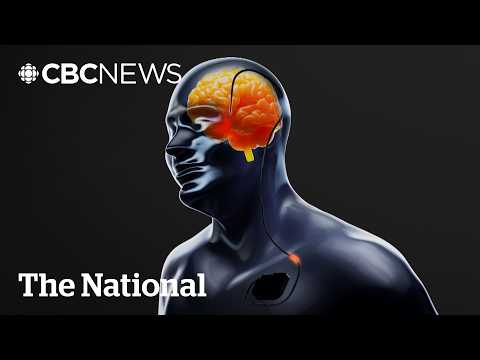
Thanks to Fabio Dwyer, Dr. Alfonso Fasano and the teams @CBCNews, @UHN, @Medtronic for allowing us to showcase the benefits of aDBS in this video which will run on The National tonight. I am not exaggerating when I say that it has given me my life back. youtube.com/watch?v=YLqkUj…
YouTube video
YouTube
English
3
0
5
504
Benjamin Stecher retweetledi
Kevin McFarthing
Kevin McFarthing@InnovationFixer·
The latest Parkinson's Hope List is out now, at bit.ly/ParkinsonsHope… . It has 202 projects in research and 153 in clinical phases. It also has 438 inactive projects that completed or stopped since the List started in 2017. #Parkinsons
Kevin McFarthing tweet media
English
0
5
9
624