
Nick Parr

7.4K posts

Nick Parr banner
Nick Parr

Nick Parr

@NickP1963

Demographer. Former Professor of Demography at Macquarie University, Sydney. Interested in demographic trends and policy issues. Census.

Sydney Katılım Temmuz 2009
1.1K Takip Edilen1.6K Takipçiler
Sabitlenmiş Tweet
Nick Parr
Nick Parr@NickP1963·
"It is important that public discussion and policy relating to fertility levels is founded on an understanding of the interrelationships between fertility and population growth ... that considers potential effects of non-zero levels of migration" My paper genus.springeropen.com/articles/10.11…
English

0
0
0
218
Nick Parr retweetledi
Population Council
Population Council@Pop_Council·
New research published in #PDRjournal challenges the usefulness of "lowest-low fertility" on today's demographic reality. Read the authors' recent blog on the challenges behind “lowest-low fertility”: bit.ly/47QgKCy Read the article: bit.ly/47jCt5E
Population Council tweet media
English
0
1
5
355
Nick Parr retweetledi
Saloni
Saloni@salonium·
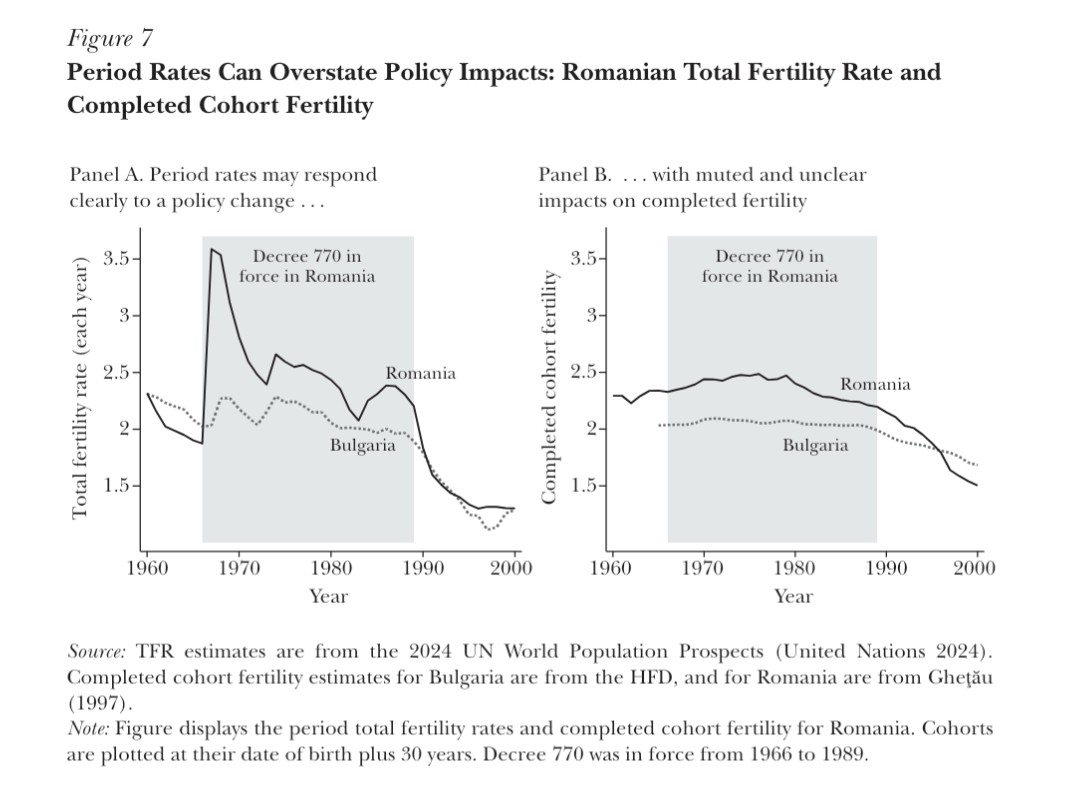
The period TFR can overstate (or understate) effects of policy on fertility. “If a policy change causes some mothers to choose childbearing earlier than they otherwise would have, but does not affect the total children ever born to those women, then it will influence TFR and yet have no impact on the outcomes that matter for long-run population trends” Great chart from a great paper by Michael Geruso and Dean Spears: pubs.aeaweb.org/doi/pdfplus/10…
Saloni tweet media
English
2
11
43
4.5K
Nick Parr
Nick Parr@NickP1963·
TFR for 2024-25 is 1.52.
English
0
0
0
37
Nick Parr
Nick Parr@NickP1963·
Australia’s #population growth rate has fallen since 2023, but is still rapid by world standards. The very high rate of net migration is the main component of growth but natural increase is also positive.
Nick Parr tweet media
English
0
0
0
60
Nick Parr
Nick Parr@NickP1963·
Nice article by Gietel-Basten & Pardo shows the wide differences in “lowest-low” #fertility patterns, their national geographic, demographic, economic & social contexts, and in the demographic implications of “lowest-low” TFRs with different net migration. onlinelibrary.wiley.com/doi/epdf/10.11…
English
0
0
0
49
Nick Parr
Nick Parr@NickP1963·
“The overall pattern is one of a mixture of country of birth groups. We do not have (horrible expression but for want of anything better) ethnic ghettos in Sydney”. I provided explanatory comments for this article on where immigrants live in Sydney. smh.com.au/national/nsw/t…
English
0
0
0
71
Kevin Rudd AC
Kevin Rudd AC@AmboRudd·
The Australia-US defence partnership is stronger than ever. Great to discuss how Australia’s $3B investment through AUKUS is supercharging the US industrial base with Under Secretary Michael Duffey and our new Defence Attaché Carl Newman
Kevin Rudd AC tweet media
English
74
6
53
14K
World Demographics
World Demographics@WDemograph73569·
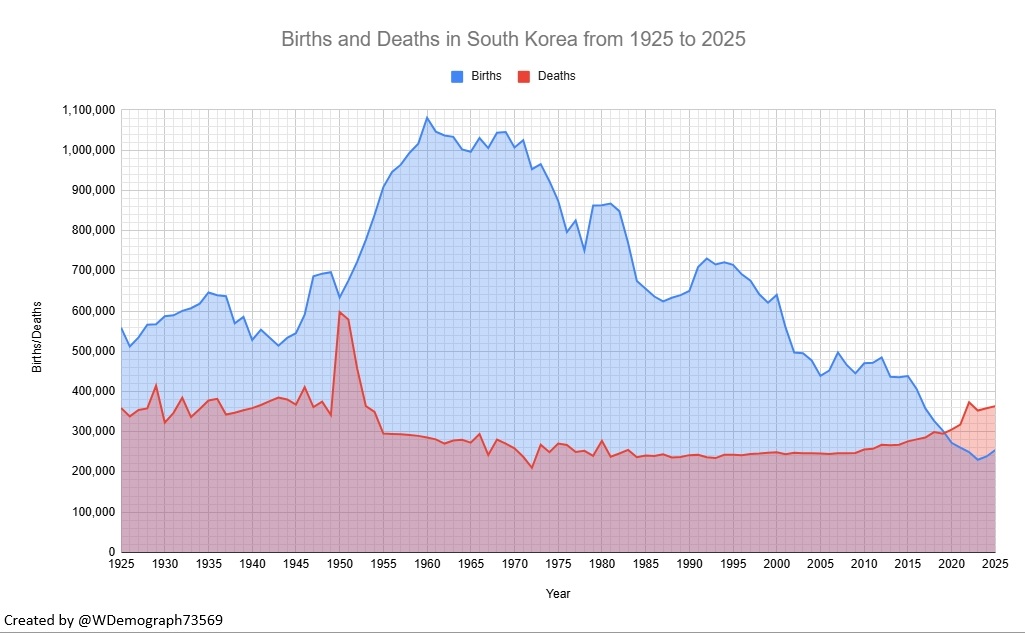
The uptick in TFR is likely due an echo from the 90s birth surge. Being a homogenous country with a low TFR a large group of women approaching the mean age of childbirth (early 30s in ROK) is likely to inflate the TFR and will likely deflate it when they leave this age bracket.
World Demographics tweet media
World Demographics@WDemograph73569

Fertility Rate of South Korea in 2025. Overall, the TFR was 0.80, which is a 0.05 increase from the TFR of 0.75 in 2024. Two Provinces have a TFR above 1, Sejong & South Jeolla. Sejong contains some government ministries & was partial built to create a family-friendly city.

English
6
13
142
10.6K
Nick Parr
Nick Parr@NickP1963·
In Australia generally decreasing Total Fertility has coincided with increased age at birth. However, as this nice article shows, such a pattern has not been universally observed in fertility declines around the world. niussp.org/fertility-and-…
English
0
0
0
69
Nick Parr retweetledi
GENUS
GENUS@GENUS_journal·
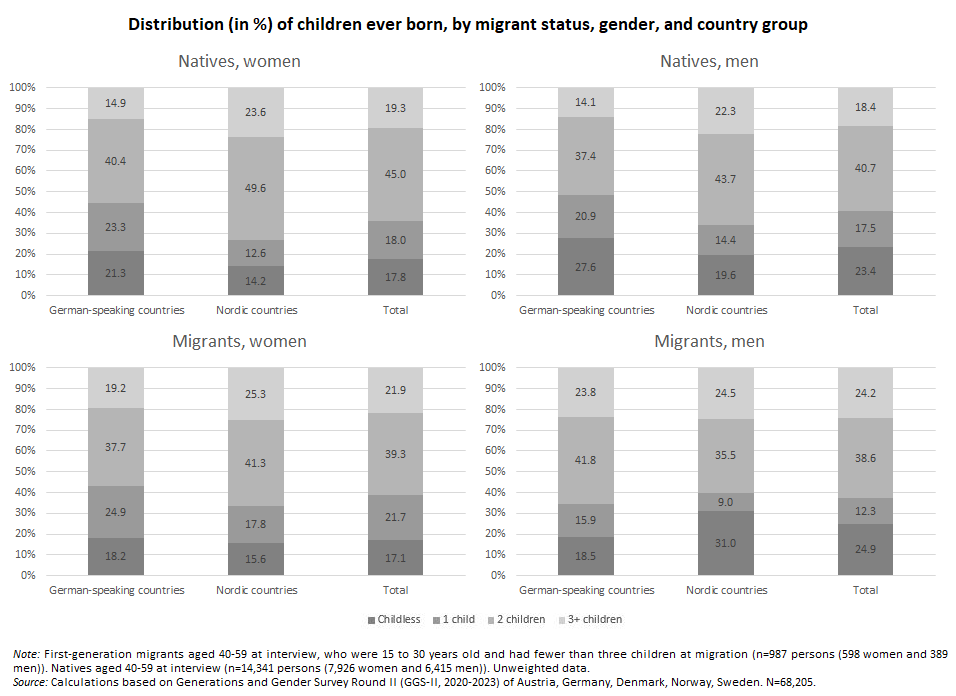
New publication by Friedrich & Milewski shows that👇 Migrant women’s fertility mirrors that of natives in Nordic & German-speaking countries but men face high childlessness in the Nordics. Migration disrupts men’s childbearing careers more than women’s. 🔗link.springer.com/article/10.118…
GENUS tweet media
English
0
2
5
192
Nick Parr
Nick Parr@NickP1963·
@jdpoc So in a world of ever deepening climate crisis your primary concerns are inverted snobbery and dog whistling regional prejudice?
English
0
0
0
77
John O'Connell
John O'Connell@jdpoc·
#Gorton and #Denton By-election; Local working class candidates against a parachuted-in posh #Reform #racist media boy from the South. Make your choice, and make it a wise one. Reject the hatred.
John O'Connell tweet media
English
56
238
612
6.6K
Nick Parr
Nick Parr@NickP1963·
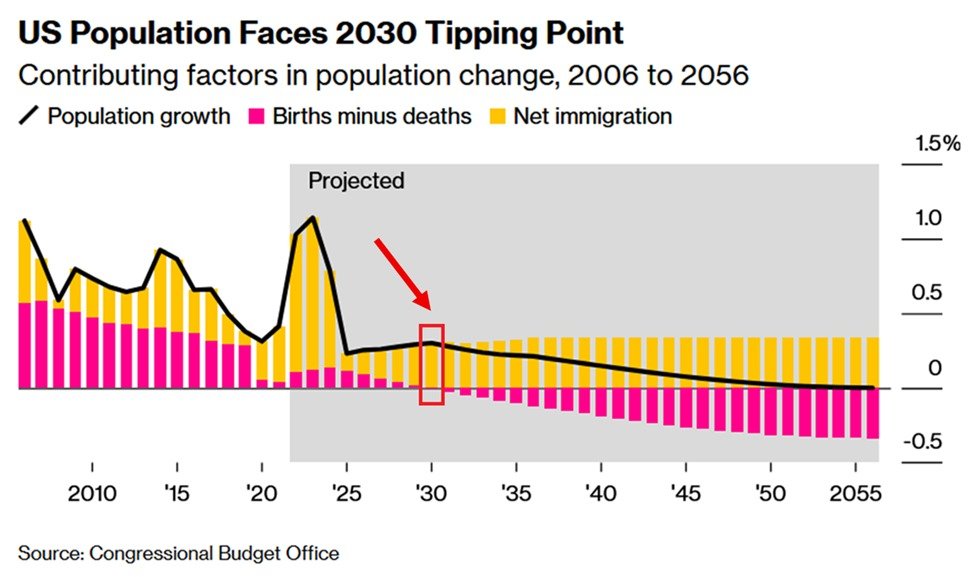
@KobeissiLetter Time for the US to have a national conversation about whether a decreasing national population would be undesirable? Such a conversation should recognise that positive net immigration will be integral to preventing such a decrease.
English
0
0
0
32
The Kobeissi Letter
The Kobeissi Letter@KobeissiLetter·
US demographic outlook is deteriorating: Starting in 2030, annual deaths are projected to exceed births for the first time in US history, according to CBO projections. After that point, the gap between deaths and births is expected to widen every year through 2056. This means that beginning in 2030, net immigration will be the only source of US population growth. Meanwhile, the overall population growth rate is projected to slow, from 0.3% annually over the next decade to just 0.1% starting in 2040. The US population is expected to stop growing entirely in 2056, reaching 364 million people. This is 8 million fewer than the CBO projected last January, marking a significant downward revision. Is a demographic crisis on the horizon?
The Kobeissi Letter tweet media
English
187
205
1.3K
187.8K
Nick Parr retweetledi
Jesús Fernández-Villaverde
Jesús Fernández-Villaverde@JesusFerna7026·
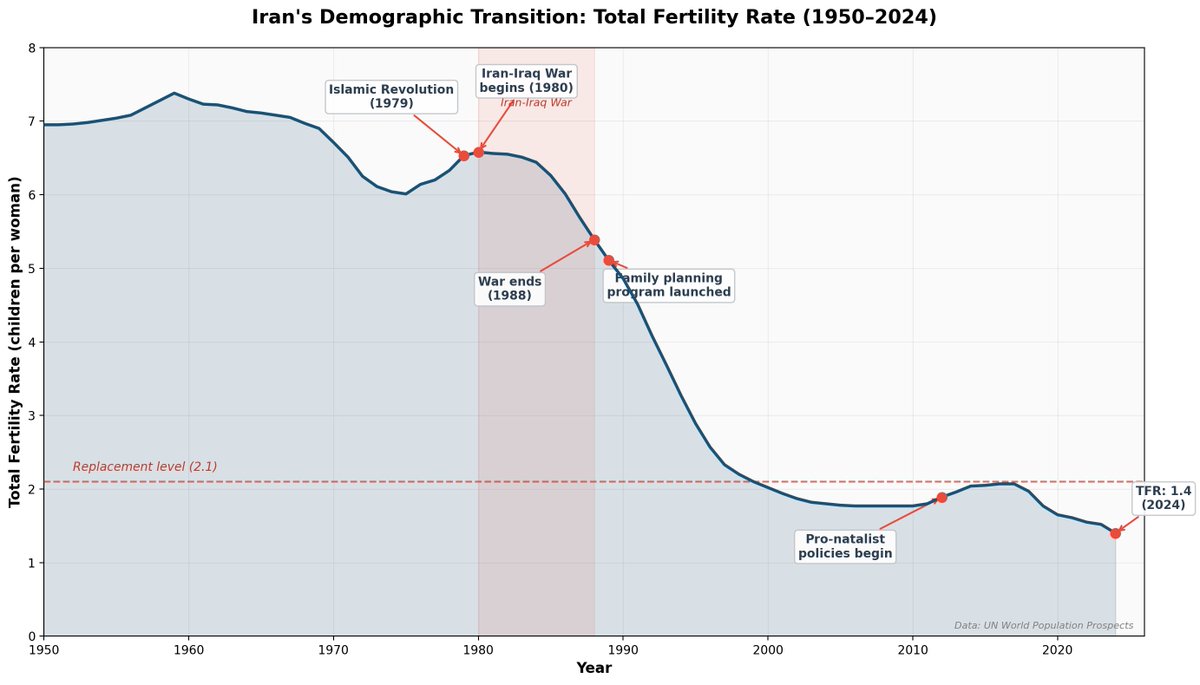
Given the recent events in Iran, I briefly examined the country’s demographic history. During the 1950s and 1960s, Iran had one of the highest fertility rates in the world, approximately 7, which led to a population explosion: from 17 million in 1950 to nearly 56 million in 1990, with annual growth rates often exceeding 3%. After some cyclical fluctuations, fertility began to decline in the 1980s at a rapid rate. It only took Iran 15 years to go from a fertility rate of 6.44 in 1984 to below replacement rate in 2000. This was one of the most rapid declines in fertility ever recorded. After 2000, fertility stabilized and even increased slightly (perhaps due to pro-natalist policies or a mild prosperity associated with higher oil prices), but it never again reached the replacement rate. As in many other countries, the second half of the 2010s witnessed a renewed drop in fertility. By now Iran is at 1.4, well below the U.S. (around 1.6) and even the U.K. (1.44). Because of population momentum (the large cohort of Iranian women born in the 1990s is having children now, while their parents have not yet passed away), Iran is still adding approximately half a million people to its population every year, corresponding to a 0.6% annual growth rate. If fertility continues dropping, for example, following the pattern of Turkey, Iran’s population will peak at around 2035 at slightly over 90 million people, but forecasting the peak of a concave function (Iran’s population right now) is difficult because just a small difference here or there can move the peak several years. But think about it in this way. In 2024, there were 980k births in Iran, and life expectancy was 76. My favorite rule of thumb is to multiply the number of annual births by life expectancy to estimate where the population would end under current behavior: around 75 million, rather than the current 88.5 million. But of course, since the fertility rate is well below replacement, 75 million is an upper bound (as long as fertility is below replacement and life expectancy is capped by any sensible number, the population will asymptotically approach zero). Now, Iran is a poor country despite (or because?) its oil wealth: its income per capita, when adjusted for the cost of living, is around 20% of the U.S. And yet, Iran’s fertility is extremely low and declining. Of course, completed fertility might end up slightly above 1.4, but note that Iran’s fertility rate has been below replacement since 2000, so completed fertility will be well below replacement with probability 1.0. If the world economy decarbonizes (as I hope) by 2050, how will Iran survive economically? The task facing the new government, when freedom and democracy return to Iran, is daunting.
Jesús Fernández-Villaverde tweet media
English
13
51
340
42K
Nick Parr
Nick Parr@NickP1963·
@cornu__copia Not so. Over time immigrants have children, grandchildren etc. and hence working age descendants that counterbalance the effects of their retirement.
English
1
0
0
743
Antony Green - elections
Antony Green - elections@AntonyGreenElec·
Little known Sir Anthony Meyer challenged Margaret Thatcher for the Conservative leadership in December 1989. He was no chance but 60 MPs didn't back Thatcher and it triggered a challenge by Michael Heseltine that brought Thatcher down. Who will Colin Boyce flush out?
English
54
137
998
36.9K
IM David Shahinyan
IM David Shahinyan@ImShahinyan·
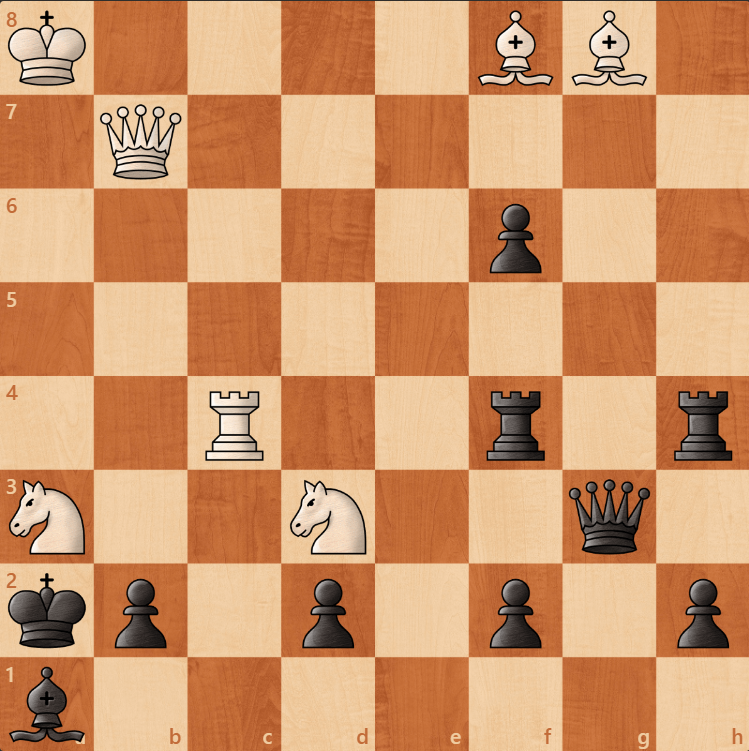
Mighty Mike couldn’t find the solution😮 Can you? White mates in 2!
IM David Shahinyan tweet media
English
95
10
120
65.3K
Nick Parr
Nick Parr@NickP1963·
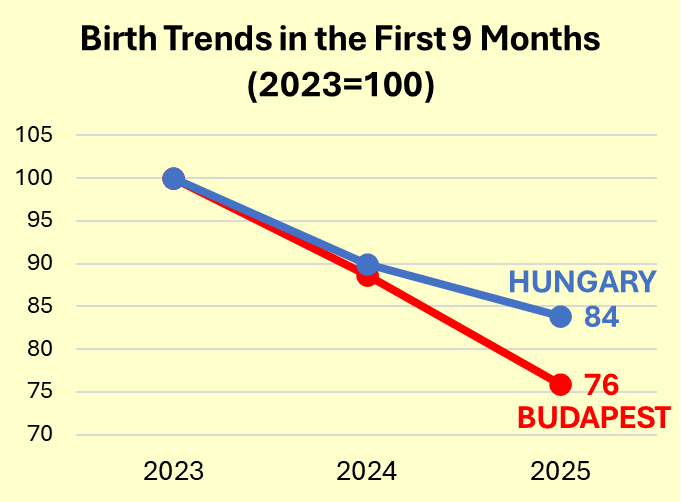
@TothGCsaba It would be interesting to know which other trends have accompanied Budapest’s greater decrease in fertility. Might a diffusion of new family formation patterns from the big city to smaller cities and even to rural areas follow in the future?
English
0
0
1
314
Csaba G. Tóth
Csaba G. Tóth@TothGCsaba·
Births in Budapest declined sharply by nearly 25% over the past two years in the January–September period, far exceeding the already large 16% decline at the national level in Hungary. #demography #fertility #Budapest #Hungary
Csaba G. Tóth tweet media
English
13
20
149
46.6K