Nico Fara 🧭The PMF Architect

3K posts

Nico Fara 🧭The PMF Architect banner
Nico Fara 🧭The PMF Architect

Nico Fara 🧭The PMF Architect

@NicoFara_

Helping tech startups turn early traction into compounding growth Ex-Founder & Engineer @ProductMarketPr | @WhyGrowthStops https://t.co/2FxUZCG2ke

San Francisco, CA Katılım Ekim 2019
5.3K Takip Edilen3.9K Takipçiler
Sabitlenmiş Tweet
Nico Fara 🧭The PMF Architect
Optionality is not a strategy. It’s a tax. In Deep Tech, companies don’t stall because they lack tech. They stall because they refuse to choose. I’ve made a decision to stop enabling that. I’m pivoting my firm to focus on one thing: Decision Architecture for AI & Deep Tech. 🧵👇
English
1
1
7
360
Nico Fara 🧭The PMF Architect
I'll be at NVIDIA GTC next week. Not for the keynote. I'm looking for AI companies where the technology works but growth doesn't compound. That's what I do — go-to-market strategy for technically complex AI companies. If you're a founder at GTC and want to grab coffee, DM me.
Nico Fara 🧭The PMF Architect tweet media
English
1
0
6
56
Nico Fara 🧭The PMF Architect
Most founders treat their code like architecture and their customer journey like a series of ad hoc conversations. That gap is where growth dies.
Nico Fara 🧭The PMF Architect tweet media
English
6
0
6
102
Nico Fara 🧭The PMF Architect
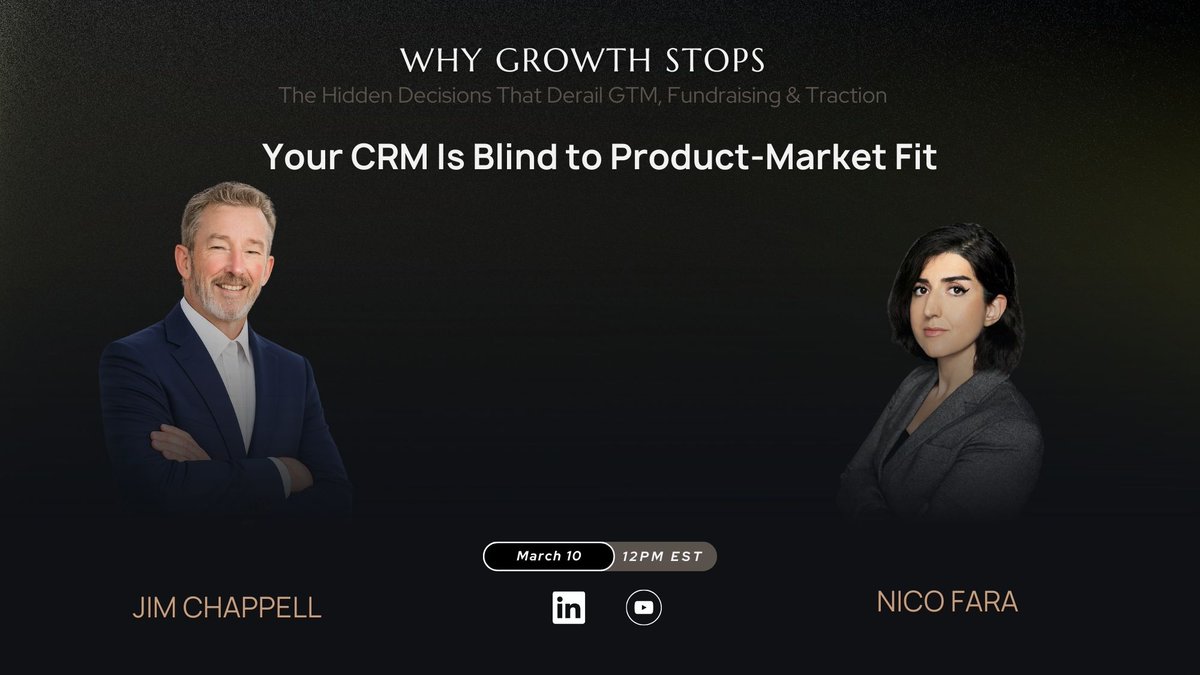
"Is it interesting enough that you'd pay to get it?" Most founders hear "that's interesting" from a prospect and count it as traction. It's not. Investor and advisor @JamesPChappell breaks down the real signal in 60 seconds. Full episode March 10.
English
4
1
6
92
Nico Fara 🧭The PMF Architect
Most founders build systems for shipping code. Almost none build a system for moving a stranger to a loyal customer. Investor and advisor @JamesPChappell maps the full journey: anonymity to awareness to education to evaluation to transaction to loyalty. That's the operating system most startups are missing. Full episode March 10. Link below👇
English
3
0
5
83
Nico Fara 🧭The PMF Architect
@circlenaut @JamesPChappell That's exactly the trap. One person says 'interesting,' the founder hears 'demand,' and suddenly engineering is building for a market of one. Jim's test is simple: did they bring anyone else into the room on their own? If not, you're building on hope.
English
0
0
2
10
Phillip Strefling
Phillip Strefling@circlenaut·
@NicoFara_ @JamesPChappell I've been the engineer scoping custom features for a prospect whose only signal was 'cool demo.' This clip should be mandatory viewing before any startup approves a custom build.
English
1
0
2
7
Nico Fara 🧭The PMF Architect
@circlenaut @JamesPChappell Three times. That's the hidden cost nobody puts on a spreadsheet. Jim talks about this exact scenario. The product team builds for a use case that sales never validated in the customer's words. Then it shifts. Then it shifts again.
English
0
0
3
14
Phillip Strefling
Phillip Strefling@circlenaut·
@NicoFara_ @JamesPChappell I've rebuilt the same integration three times because the ICP shifted and nobody tracked why. The 'ad hoc conversations' part is painfully accurate.
English
1
0
3
14
Nico Fara 🧭The PMF Architect
We got into why founders chase seven use cases before hardening one ICP, what happens when geographic expansion outruns market intelligence, and why a full pipeline still doesn't compound if the focus isn't there.
English
0
0
5
32
Nico Fara 🧭The PMF Architect
That missing field is the join between your product and your customer. Without it, you can't tell from your own data whether you actually have product-market fit.
English
0
0
5
17
Nico Fara 🧭The PMF Architect
I sat down with investor and advisor, @JamesPChappell , for this month's @whygrowthstops . He's advised 50-60 B2B founding teams over 20+ years. His observation: most CRMs don't have a single field for the use case written in the customer's own language.
English
0
0
5
37
Nico Fara 🧭The PMF Architect
This is the part that founders underestimate. The ICP decision feels like a strategy question, but the cost of not making it lands directly in the codebase. Your rule is right. Someone has to narrow it. Better if it's a deliberate decision than engineering doing it by default under pressure.
English
0
0
1
5
domelian 🇺🇦
domelian 🇺🇦@dmytroomelian·
@NicoFara_ @circlenaut @whygrowthstops this hurts to read because i can literally picture the codebase my rule now: if product keeps icp fuzzy engineering has to narrow use cases anyway otherwise you end up building: 3 onboarding flows 4 pricing rules 10 edge case branches all for users that dont even exist yet
English
1
0
3
20
Nico Fara 🧭The PMF Architect
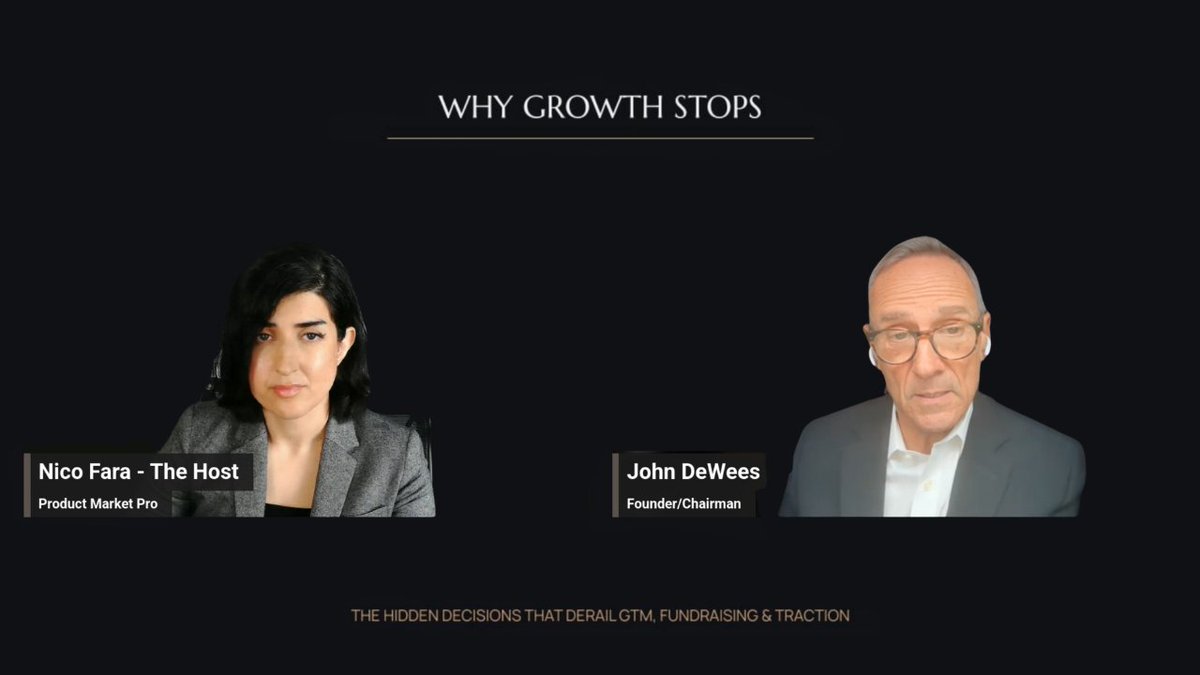
Everyone is talking about what AI can do for your company. Nobody is talking about what it's doing to your company. First episode of @whygrowthstops with investor & serial entrepreneur, John DeWees. Thread:
Nico Fara 🧭The PMF Architect tweet media
English
3
0
5
82
Nico Fara 🧭The PMF Architect
@Productmarketpr That's the sentence from the episode that keeps coming back. The communication problem is real, but it's the symptom. The uncommitted product-market fit decision is the cause.
English
0
0
1
4
Nico Fara 🧭The PMF Architect
This is the part that doesn't get talked about enough. The business keeps the ICP question open because it "feels like optionality." Engineering absorbs the cost of that indecision in duplicated architecture, edge cases, and support debt. By the time the business side notices, the codebase is three products held together with duct tape.
English
1
0
2
11
Phillip Strefling
Phillip Strefling@circlenaut·
@NicoFara_ @whygrowthstops From the engineering side: when the business hasn't picked one direction, AI helps every team build their own version of the product faster. You end up with three half-built products instead of one that works. The alignment problem becomes an architecture problem real fast.
English
1
0
3
24