

Nick Mehta
16K posts

Nick Mehta
@nrmehta
Startups: Gainsight (sold to Vista), LiveOffice (sold to Symantec), Chipshot (sold for parts). Boards: F5, Larridin and PubMatic. Very quirky.
San Francisco, CA Katılım Ekim 2007
7K Takip Edilen36.4K Takipçiler

I'm proud to share that @Glean has surpassed $300M ARR, just five months after crossing $200M and growing ~3x over the past 15 months. This is an exciting milestone for Glean, and it's a signal about where the enterprise AI market is heading.
We’ve long believed the real challenge in enterprise AI is not access to models. It is grounding AI in how a company actually works: its people, knowledge, workflows, permissions, and systems.
That’s even clearer now. The companies creating real value with AI are not just adopting better models. They are building systems that understand their business well enough to deliver reliable outcomes at scale. That is the real moat, and it is what we’ve been building at Glean: an unrivaled context layer for enterprise AI.
That context has to work across the business, not just inside a single team or use case. We see that in how customers adopt Glean: more than 85% use it across five or more job functions.
It also has to meet the security and governance demands of complex enterprises. We see that in who is choosing Glean: our Fortune 500 customer count nearly doubled year over year.
And it has to make economic sense as usage grows. In our recent benchmark with Claude Cowork, Glean was preferred roughly 2.5x as often as off-the-shelf MCP tools and used 30% fewer tokens on average. Better context improves both quality and efficiency.
I enjoyed talking with @CNBC's @dee_bosa about this broader shift. In enterprise AI, the winners will not be defined by better models alone. They will be defined by who builds the strongest foundation for enterprise context.
Thank you to our customers, partners, and team for helping us build the future of enterprise AI.
English
Fired up for @chuckganapathi @GainsightHQ to be taking the lead on AI Native Services! Good read by @alexrkonrad
Alex Konrad@alexrkonrad
Exclusive: Gainsight is shifting its business to go all-in on AI-native services. I spoke to CEO Chuck Ganapathi about the move -- and what conditions he thinks can make for a successful transition from Software-as-a-Service (SaaS) to Service-as-Software (SaS) in the AI era.
English
@garrytan's quote below around using AI to create new products and services is so spot on - and so hard to do.
5 Failure Patterns in New Product Introduction to Avoid in the AI Era:
Every established company has face-planted one or more times trying to get into a new market. Think of all of the failed product launches from even the most iconic companies like Google, Amazon and others.
In my experience, there are at least 5 common patterns:
1. No "Right to Win." This is the biggest. What do you bring to the table in the new market that helps you win? Amazon had no right to win with the "Fire" phone. Apple had a right to win with AirPods (due to iTunes and iPhone). AI opens up infinite market - so choose the part where you are the logical winner.
2. Inferior v1. So many large companies have the hubris to think they can enter a new category with a "good enough" product. In the olden days where transparency was limited and switching was hard, this worked (e.g., Oracle). Now, every new space is a new fight. So you need to have a great product from day 1. AI obviously helps a lot here in terms of iteration speed. But don't let your incumbency go to your head.
3. No Sales Channel. Another challenge (particularly for B2B enterprise businesses) is they have an inability to sell the new offering. Maybe it's too cheap and the sales force focuses on the core. Maybe it requires a product-led motion and your main business is sales-led. This is where using AI to give the builders control of the go-to-market is huge. Before, product people would wait months for marketing to build a separate PLG site or for campaigns to go out. Now, speed can be rapid.
4. No Portfolio. The truth is that new products are bets. Author Jim Collins famously advised "fire bullets, not cannonballs" - meaning try lots of small things first. The problem is that in the pre-AI world, it was expensive to test new products. Hence companies often did it serially and with a lot of resource. Now, parallel processing is possible.
5. "Limited Talent." There was a perception that larger organizations failed to launch new products due to a lack of talent. I think this is partially true. I believe much of the talent was suffocated under a mountain of "cross-functional alignment meetings" for the new business. These are soul-crushing and demotivate the people that you want to be fired up. Free them by giving them autonomy and using AI as a part of that.
What else would you add in terms of why incumbents fail in new markets and how AI can help?
Garry Tan@garrytan
@karrisaarinen Use AI effectively to create new products and services that didn’t exist before that customers love
English
Lots of talk about AI ROI. Seems like all of us on X are getting an Econ 101 class now, with the questions about AI spend at Uber and Microsoft.
In some ways, the logic we’ve all been following is:
1. Intuitively, AI/AGI should drive massive growth in corporate profits and GDP.
2. AI-native companies like Anthropic and OpenAI are operating at revenue/employee and growth rates never before seen in business.
3. If companies “adopt” AI, they should similarly benefit.
The South Park meme below is a nice summary!
What’s been challenging is finding the path between token consumption and improving revenue/employee.
Revenue/employee has two solves: (1) more revenue or (2) fewer employees (you can pay me later).
The latter is intellectually easier to grasp. Can AI reduce employees? Do you do it discretely in a function (e.g., through customer support AI agents) or in broad brush layoffs (e.g., Meta, Block, Cloudflare)? If the latter, do you have an organizational design strategy? (e.g., “fewer managers!” or “more senior people!” or “more ICs!”)
The challenge with all of these approaches is they are brand new. No one has data on how they have worked yet. Indeed, there is a risk that they make the firm less competitive long-term, hurt revenue and therefore make revenue/employee worse.
But even more complex is growing the revenue in revenue/employee? So many questions come up:
* Do 1000 flowers bloom? If you give a coding harness to each employee and encourage token maxing, do new ideas emerge that accelerate growth?
* Should you be top down? Do you hire McKinsey et al to figure out where to focus?
* Even if you made your existing products better (e.g., power through the backlog with AI), do sales grow? Or are customers fully saturated? Frankly, for many products, I want less features, not more!
* Is the answer to build new products? Do you have the talent to do it? Do you have the brand? Do you have the capital base?
* Are the public markets too tough to do this in? Do you need to go private to make the transformation real?
No one knows the answer. But the challenge is with the aggregate spend on AI in the economy, investors are going to demand answers sooner rather than later.
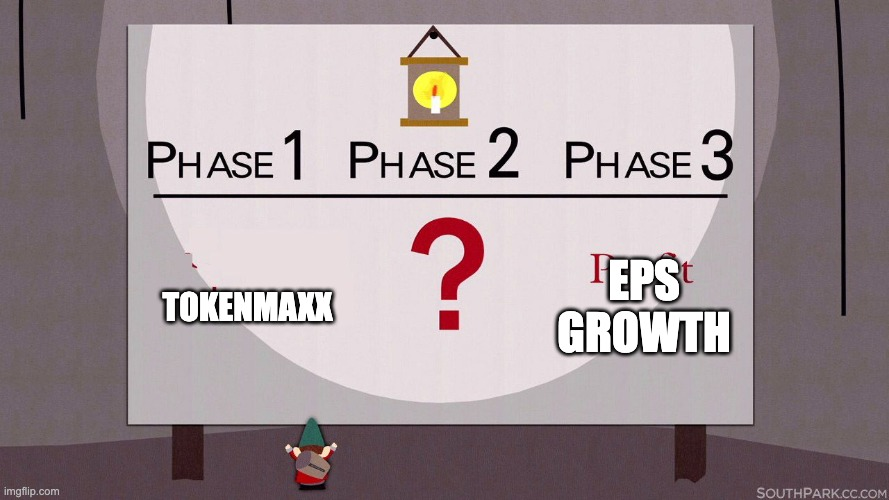
English
@garrytan @karrisaarinen Totally agree. A corollary is it's not obvious to me adding more functionality to existing products (due to agentic coding) changes company trajectories en-masse. One's backlog may not be there answer.
English

@karrisaarinen Use AI effectively to create new products and services that didn’t exist before that customers love
English

We keep hearing about 10x or 100x productivity gains in engineering and knowledge work.
But outside the model labs, I haven’t seen the corresponding 10-100x revenue growth across the market or increase in quality.
So where is the productivity going?
English

Today, we're promoting Ashraf Alkarmi to co-CEO of @Dropbox. Ashraf and I will jointly lead the company, and after a transition period, I'll move into the role of executive chairman and Ashraf will be sole CEO.
Ashraf has transformed our core business since joining — the business has gotten stronger every quarter under his leadership, and he's the leader I trust to run this company.
What’s next for me: my focus right now is making sure Dropbox is in the strongest possible shape. But knowing myself, it won't be long before I'm getting credit card alerts for my Cursor token spend.
English

First time I met @nrmehta was at our enterprise software trivia night in SF and I was blown away by how curious he was. He carried himself with such humility and was trying to learn from everyone there.
Was special to see-- showed me that the greats are lifelong students
Nick Mehta@nrmehta
Experienced People Want Information: I remember being early in my career and meeting with a famous investor. I had no idea what to talk about. What could I say from my limited experience that would help him? Well, it turned out he was curious. He kept asking questions about what's on peoples' minds, what I'm seeing, etc. I was pleasantly surprised. Last Thursday night, after guest teaching a class at the Stanford Graduate School of Business, we had dinner with 6 of the top students from the class. And I learned so much. I asked them about the job market, their views on AI and SF apartment costs (!!) They asked me some questions too, but I learned more from them. When you're meeting someone who you feel like is more experienced than you, remember that you something valuable that they don't have: information. Nearly every successful person is curious.
English
Experienced People Want Information:
I remember being early in my career and meeting with a famous investor. I had no idea what to talk about. What could I say from my limited experience that would help him?
Well, it turned out he was curious. He kept asking questions about what's on peoples' minds, what I'm seeing, etc. I was pleasantly surprised.
Last Thursday night, after guest teaching a class at the Stanford Graduate School of Business, we had dinner with 6 of the top students from the class. And I learned so much.
I asked them about the job market, their views on AI and SF apartment costs (!!) They asked me some questions too, but I learned more from them.
When you're meeting someone who you feel like is more experienced than you, remember that you something valuable that they don't have: information.
Nearly every successful person is curious.
English
Come for @Noahpinion's warning about debt and stay for the alliteration!
"There is a pernicious and persistent pattern among many partisan pundits and politicians, pertaining to public debt."
noahpinion.blog/p/america-is-h…
English
Such a simple econ 101 point that we can forget. Even great operators with great products can compete away each others' margins over time.
Rick Zullo@Rick_Zullo
English
@daniel_mac8 David Deutsch is undefeated in his wisdom on knowledge!
English

GPT-5.6* just split the atom of knowledge.
An AI model created explanatory knowledge.
This is only the beginning.
*Unconfirmed. Though people I trust told me it was GPT-5.6 that solved the unit distance problem.
Dan McAteer@daniel_mac8
English
It's kind of cute that we in Silicon Valley battle over the latest agentic personal assistant startup and meanwhile GLPs might become one of the biggest businesses and most impactful technologies to life in human history.
David Wallace-Wells@dwallacewells
English
In 2020, we worked with Stanford's Graduate School of Business to write a case on Customer Success and @GainsightHQ. And each term since, I've had the pleasure of joining the class "Building & Managing Sales Orgs" for a day.
This term, Gainsight CEO @chuckganapathi and I teamed with with lecturers @DannieHerz @JoshMLeslie to cover how CS and Forward-Deployed Engineering are relevant in today's world.
I focused on the FDE topic and learned so much from the students.
Some of the bull cases were:
* "Forward-Deployed Engineers allow companies to fit their product to their customers' processes, versus forcing customers' processes to fit their product."
* "FDEs are sometimes a higher ROI investment than additional sales reps."
* "FDEs are the best way to funnel product insights back to the founding team."
And on the flipside:
* "FDE can't be a one-size-fits-all and, in particular, it can't be used to paper over fundamental product issues."
* "FDE means so many things from domain expert to deep architect."
* "So much of product-market fit is getting the right customers and no amount of FDE fixes the wrong clients."
Each year, I'm blown away by the existing knowledge and first principles' thinking of GSB students. Pretty awesome to watch.

English

My birthday was Tuesday. And it was wonderful. It's strange saying that, given what I've gone through with my daughter's loss and the last few years personally, but the sentiment is real. I am feeling gratitude and love more than I've ever experienced.
I used my latest substack post (in the comments), to explore the feeling of falling (in my typical nerdy fashion - across etymology, science, poetry and music!) and how sometimes, you've fallen so much that you learn to love the leap.
This is quite different from the typical talk about grief and loss you hear - about healing, about protection, about a process. And I respect that each person is on a different path, so this definitely isn't for all. But I wanted to share one person's experience and turn grief from a caricature into a photograph.
I feel like Summer's birthday present to me was to remind me that falling open-heartedly is my nature.
English

@nrmehta I love you sharing Nick as you know.
I just heard about this documentary on Martin Short whose dealt with so much...
netflix.com/title/82128115
English
I'm SO fired up for this event. Two of the smartest people I know both have the last name Kurzweil. One (Ethan) co-founded Chemistry, a VC firm I've been spending time with. The other (Ray) prognosticated almost every step toward AGI so far, from decades ago.
As someone who is a hardcore nerd about the future of tech, business, economics and life with AI, I'm getting ready to unleash my fanboy kraken for this one!
Ethan Kurzweil@ethankurz
There are very few people who have been thinking seriously about AI since long before it became the center of every single conversation as it today. In this case, 60 years before... My dad, Ray Kurzweil, is one of them. On June 2, as part of @chemistry's Elements series, I’ll be sitting down with him in San Francisco for a conversation on AI, intelligence, and the future. Who knows? I may even toss in a few questions about philosophy and the meaning of life.
English

On Supply-Constrained Versus Demand-Constrained Startups:
As I've met with ~100 founders over the last few months, I'm struck with one dichotomy.
Limited Demand:
Most live in the world of "unlimited supply, limited demand." This is the normal world. They haven't found something that everyone wants right now, yet. They work hard to drive growth and keep up with the stereotype of outlier companies. They throw paid ads, influencers and dark patterns at the problem. Growth keeps up but it's not natural. Customers emerge outside of the ICP. The cracks of churn show.
Unlimited Demand:
Then there's the bizarro world of "unlimited demand, limited supply." Basically, anything that falls into the agent stack (from chips to data centers to models to neoclouds to inference clouds to observability to evals to orchestration). Here, the competition is off the charts. But the reality is that everyone is supply-constrained, so anyone that has supply is crushing it.
Different Paths:
In demand constrained businesses (which are most businesses!), many are best served to grow more naturally and not attempt to mimic the growth rates of the unlimited demand cohort. It's like me trying to imitate Dechambeau's golf swing. I really should shoot for Happy Gilmore's.
By contrast, people looking at founding, working in or investing in supply-constrained categories should worry less about competition and more about the companies' access to supply.
One of the biggest mistakes people mistake right now is confusing these two cohorts for each other.
English