

Cocobeauty
3K posts
Cocobeauty
@NurseCHIGURL
Christian||Nurse
Lagos, Nigeria Katılım Ekim 2019
295 Takip Edilen344 Takipçiler

Over 300 Nigerians in Canada followed me today because of this tweet!
I’ve been follwing back and I’ll make sure I do that to the last person.
I’m also sending the WhatsApp group link to your inboxes! 🤝
Hightea🍁@Highteaspeaks
Please interact with this if you’re a Nigerian and lives in Canada. There are lots of us here and I really want to connect with everyone. 🇨🇦 🇳🇬 🇨🇦 🇳🇬 🇨🇦 🇳🇬 🇨🇦 🇳🇬
English

Customer bought 2 sambas from me and sent me this video as review
I love it soooooo much.😍😍😍
Kindly help RT for other lovebirds🫠
English

Today, I pray for you:
A heart free of sadness;
A mind free of worries;
A life full of gladness;
A body free of illness;
And a spirit full of God's blessing. Amen🙏🏽
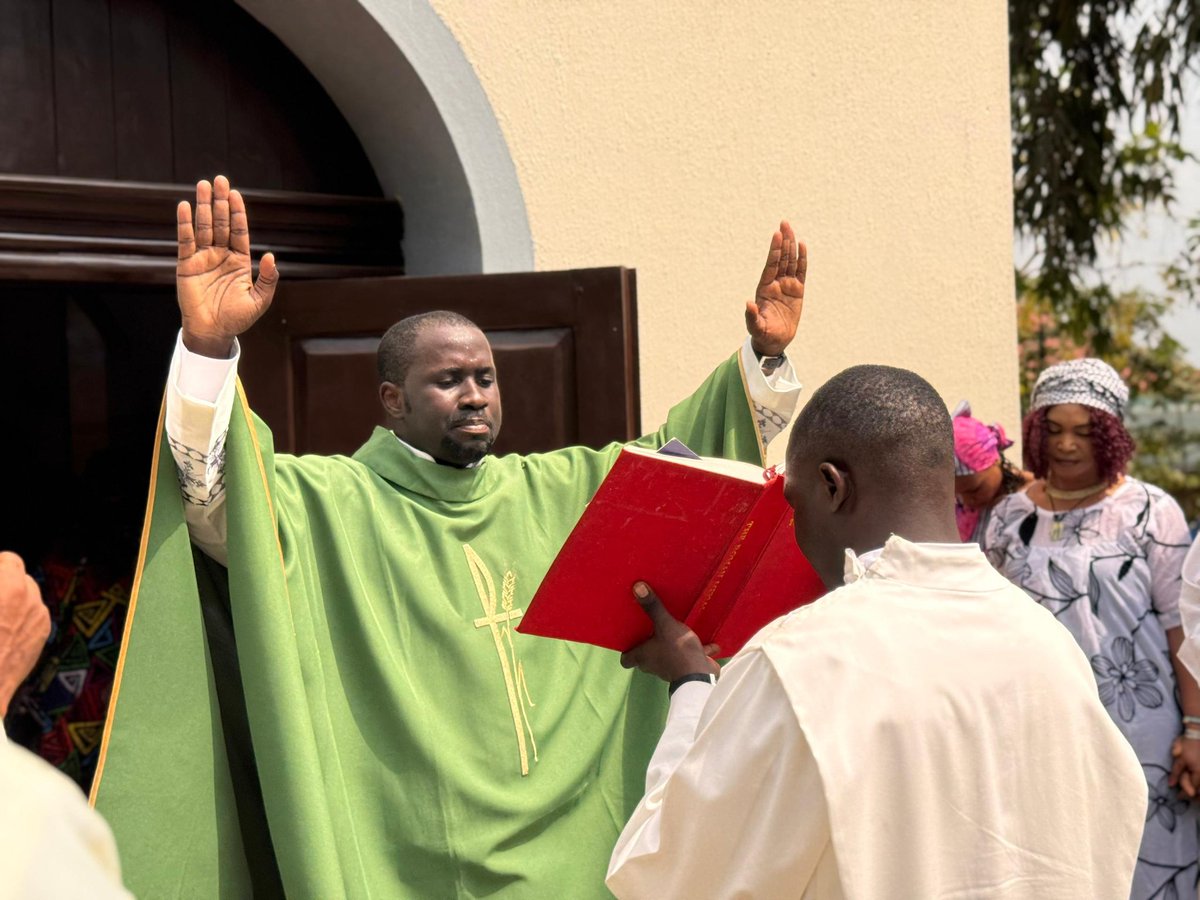
English

This song hits differently during procession with the priest and incense.
#Catholichymn #CatholicX
English
With my brother, Fr Tony Odoh, at the Lagos Business School @LBSNigeria for the PAU convention.
Fr Tony is the Chancellor of Pan-Atlantic University, Lagos. He was a medical doctor by profession before choosing the priestly vocation.

English


Cocobeauty retweetledi




Went to buy clementine and apple for my child, met this man there buying fruits too, he turns to me and asks the difference between clementine and our regular tangerine, after explaining what I can, I end with “my son really likes it too”
He agrees to buy some and ends with “give me your number so I can give you the review after trying it out.
I no understand, na me dey produce am?
Mtcheww
English
Cocobeauty retweetledi
What’s your baptismal name?
I’ll go first, UGOCHUKWU.
English

@OurFavOnlineDoc Yoruba is the language of music; Igbo is the Language of heaven. They speak Igbo in Heaven
English

I love this video too much 😂
I don’t even know the meaning of the words.
Happy Sunday everyone.
English
Cocobeauty retweetledi
You don’t need to go to the gym.
You just need to be disciplined and serious with your health, your body and your life.
Please share this. It will help someone.
English
Cocobeauty retweetledi

Chai. Oriental brothers too cook. 😭
Alpha@barralpha1
This regal father daughter dance was Oriental Brothers appreciation moment for me. It is a song fit for Royalties
English

Naaaa
BamBam is GOOD!!!!!!!!
Ohh! She carries her roles well👏🏼👏🏼👏🏼👏🏼👏🏼👏🏼👏🏼👏🏼👏🏼
English
Cocobeauty retweetledi
She’s absolutely right. Highlife exists, but Oriental Brothers stand in a league of their own. 🔥
English
JOY IN A DRY AND WEARY LAND
Third Sunday of Advent, Year A
Isaiah 35:1-6, 10; James 5:7-10; Matthew 11:2-11
The third Sunday of Advent is also known as Gaudete Sunday or Rejoice Sunday. In the midst of Advent’s purple, today the Church lifts up rose. In the midst of waiting, she commands joy. But this invitation to rejoice does not come to people living in ideal conditions; it comes to people like us - people living in a dry, insecure, hopeless, and weary land, where joy often feels fragile, temporary, or even impossible.
When we look at our world today, joy seems almost unreasonable to contemplate. We live in a time of constant economic hardship - prices rise daily, families struggle, and many wonder how they will survive the week. We live with insecurity, terrorism, kidnappings, corruption, and widespread fear. Many people carry hidden burdens: broken homes, delayed hopes, depression, isolation, sickness, or grief. Even globally, we see wars, disasters, and political tensions. Truly, we live in a dry and weary land where joy seems to evaporate like water on a scorching day.
This is the same world Isaiah addressed in the First Reading (Is 35:1-6,10). Israel was living through national collapse - land ruined, hope dimmed, people exiled. Yet Isaiah proclaims: “The desert and the parched land will exult… the steppe will rejoice and bloom.” Here, God does not deny the dryness; He promises transformation. The joy Isaiah announces is not based on circumstance but on God’s decisive action - He comes to save His people, strengthen weak hands, heal broken bodies, restore the blind, the lame, and the fearful. In other words, joy is possible not because the land is good, but because God is good.
The Gospel reading (Matt 11:2-11) deepens this message. John the Baptist, from prison, sends messengers to Jesus: “Are you the one who is to come?” Even John - fiery, committed, prophetic - enters a weary land moment. Jesus does not give him theories; He gives him signs of hope: the blind see, the lame walk, lepers are cleansed, the poor hear good news. Jesus reveals that God’s Kingdom is already breaking into the dryness. Joy begins when we recognize God at work, even quietly, even slowly, even in small but real signs.
Why, then, should we rejoice today? First, we rejoice because God is not absent. Even in a weary land, God is quietly restoring, healing, reconciling, strengthening. The fact that Jesus came and comes again means our dryness is not the final story. Second, we rejoice because God’s promises are reliable. Isaiah’s words were fulfilled in Christ, and they continue to unfold in us. God does not abandon those who hope in Him. His timing may not be ours, but His faithfulness is certain.
Third, we rejoice because joy is an act of spiritual resistance. To rejoice is not to pretend everything is fine. It is to declare that darkness will not define our destiny. Christian joy is not naïve optimism; it is rooted in God’s victory. Fourth, we rejoice because salvation is near. Advent reminds us that Christ comes daily in grace, comes sacramentally in the Eucharist, and will come again in glory. Each coming brings strength for the weary. Finally, James reminds us: “Be patient… the coming of the Lord is at hand.” (Jas 5:7-10). Patience is the bridge between dryness and joy. It is the confidence that God’s work is unfolding even when we do not see fruit immediately.
Dear friends, Gaudete Sunday teaches us that Christian joy is not the denial of pain but the proclamation of hope. Yes, we walk through a dry and weary land but Emmanuel walks with us. And because He is near and with us, we can rejoice. Amen.
Fr. Ugochukwu Ugwoke, ISch

English

I couldn’t leave Chicago without getting a cut from my old barber, Zariff!
English
Cocobeauty retweetledi
