CA$H FLOW 2.0
3K posts

CA$H FLOW 2.0
@OKCBullyshow
French bulldog breeder entrepreneur bully dog show host cannabis enthusiast down for my crown circle small ambition tall tap in
Oklahoma City, OK Katılım Mart 2013
3.3K Takip Edilen810 Takipçiler
@archeohistories This is not cleopatra this is a white woman cleopatra was black African dark brown skin Nubian African Ethiopian and sudanese people ruled Egypt for thousands of years stop trying to take our greatness and make it yours your devils soulless creatures
English

Cleopatra VII was born in 69 BC in Alexandria, Egypt, the daughter of Ptolemy XII, ruler of the Ptolemaic Kingdom.
She was the only Ptolemaic ruler known to have learned the Egyptian language, along with several others including Latin, Arabic, and Parthian.
When her father died in 51 BC, she became queen alongside her younger brother Ptolemy XIII.
A power struggle between the siblings erupted into civil war, forcing Cleopatra into exile in Syria, where she raised an army to reclaim Egypt.
The Roman general Pompey fled to Egypt after his defeat at the Battle of Pharsalus in 48 BC, seeking refuge, but was ambushed and killed on the orders of Ptolemy XIII.
Julius Caesar arrived in Alexandria shortly after and demanded the siblings reconcile, leading to Cleopatra's famous secret meeting with him inside the royal palace.
Caesar and Cleopatra became lovers, and Caesar sided with her against Ptolemy XIII during the Siege of Alexandria.
Ptolemy XIII drowned in the Nile during the Battle of the Nile in 47 BC, ending the civil war.
Caesar declared Cleopatra and her younger brother Ptolemy XIV as joint rulers, and she gave birth to a son, Caesarion, who she claimed was Caesar's child.
Cleopatra traveled to Rome in 46 BC as a client queen, residing at Caesar's villa, where she stayed until his assassination on the Ides of March in 44 BC.
After Caesar's death, Ptolemy XIV died under suspicious circumstances, possibly on Cleopatra's orders, and she named Caesarion as her co-ruler.
When the Roman Second Triumvirate formed under Octavian, Mark Antony, and Lepidus, Cleopatra aligned with them to protect her kingdom.
Antony summoned Cleopatra to meet him at Tarsus in 41 BC, beginning a political and romantic alliance that would define the final decade of her reign.
Antony and Cleopatra had three children together and built a formidable political partnership, with Antony granting Cleopatra significant former Ptolemaic territories in exchange for military and financial support.
Their power peaked with the Donations of Alexandria in 34 BC, when their children were publicly declared rulers of various kingdoms under Antony's authority.
Octavian exploited the event as propaganda, portraying Antony as a traitor who had surrendered Roman interests to a foreign queen.
Rome declared war on Cleopatra in 32 BC, not Antony, framing the conflict as a defense against a foreign threat rather than a civil war.
At the Battle of Actium on September 2, 31 BC, the naval forces of Octavian defeated the combined fleet of Antony and Cleopatra.
Antony and Cleopatra retreated to Egypt as Octavian's forces closed in from multiple directions in 30 BC.
Antony received a false message that Cleopatra had taken her own life and fatally wounded himself in despair.
Cleopatra, learning that Octavian planned to parade her through Rome in chains, chose death over captivity.
She died on August 10 or 12, 30 BC, at age 39, likely by poison, though the exact method remains debated by historians.
Octavian executed Caesarion shortly after to eliminate any rival claimant to Caesar's legacy.
Egypt became a province of the Roman Empire, ending both the Ptolemaic dynasty and the Hellenistic period that had begun under Alexander the Great.
Cleopatra's three surviving children were taken to Rome and raised under the guardianship of Octavian's sister Octavia, and her daughter Cleopatra Selene II later became queen of Mauretania.
Her image and legacy became a battleground for competing narratives almost immediately after her death, shaped heavily by Augustan propaganda that portrayed her as a dangerous seductress.
She has since become one of history's most depicted figures, appearing in ancient Roman art, Renaissance paintings, Shakespeare's plays, Hollywood films, and countless other cultural works.
#archaeohistories

English
@archeohistories This is not cleopatra she was of African decent not a European so stop posting this Hollywood white wash image of our queen thank you and be accurate and stop trying to take our history and accomplishments as your own she belongs to us
English
Cleopatra ascended the throne at the age of 17 and died at the age of 39. She spoke 9 languages. She knew the language of Ancient Egypt and had learned to read hieroglyphics, a unique case in her dynasty. Apart from this, she knew Greek and the languages of the Parthians, Hebrews, Medes, Troglodytes, Syrians, Ethiopians and Arabs. With this knowledge, any book in the world was open to her. In addition to languages, she studied geography, history, astronomy, international diplomacy, mathematics, alchemy, medicine, zoology, economics, and other disciplines. She tried to access all the knowledge of her time.
Cleopatra spent a lot of time in a kind of ancient laboratory. She wrote some works related to herbs and cosmetics. Unfortunately, all her books were destroyed in the fire of the great Library of Alexandria in 391 AD. The famous physicist Galen studied her work, and was able to transcribe some of the recipes devised by Cleopatra. One of these remedies, which Galen also recommended to her patients, was a special cream that could help bald men regain their hair. Cleopatra's books also included beauty tips, but none of them have come down to us.
The queen of Egypt was also interested in herbal healing, and thanks to her knowledge of languages she had access to numerous papyri that are lost today. Her influence on the sciences and medicine was well known in the early centuries of Christianity. She, without a doubt, is a unique figure in the history of humanity.
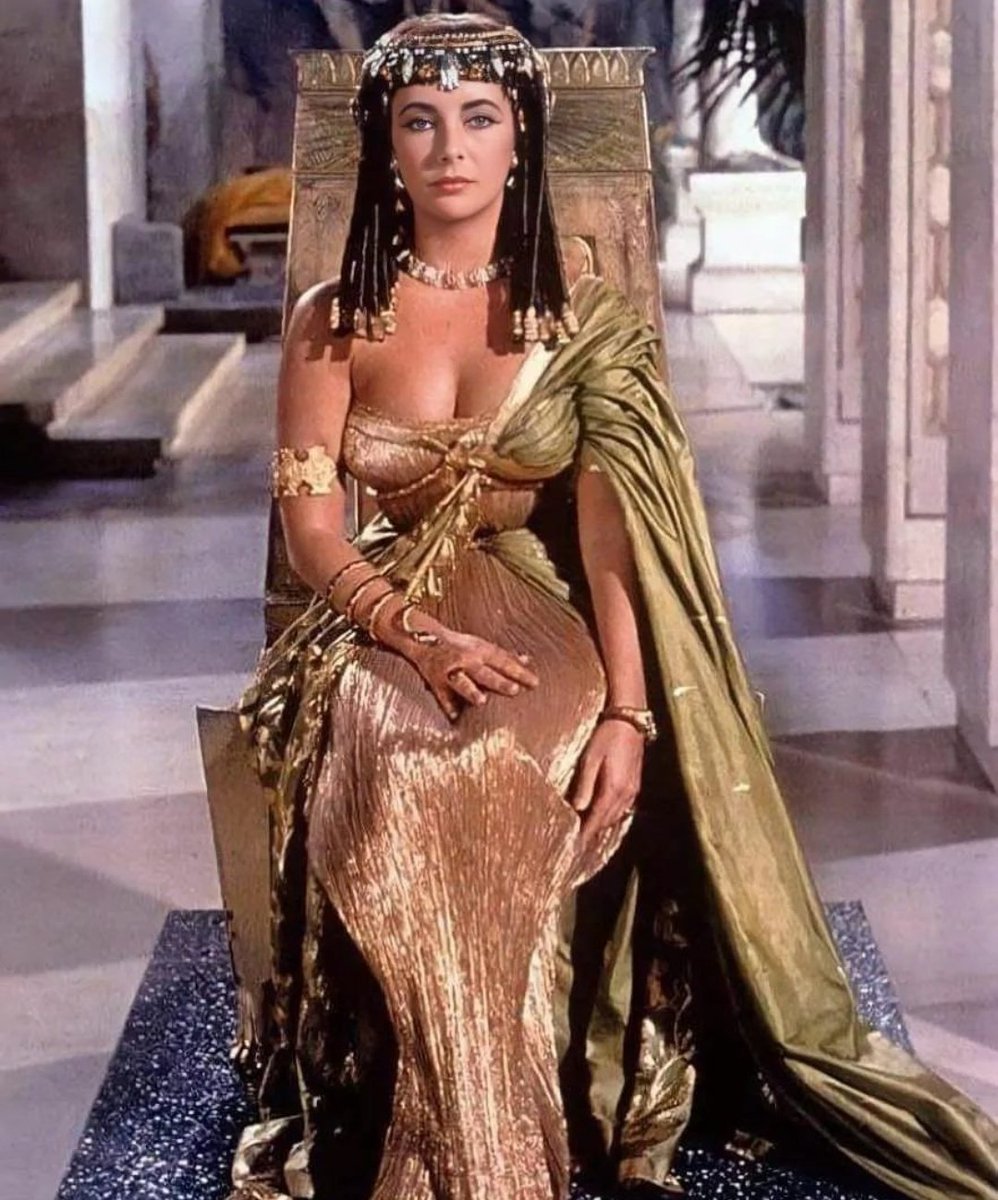
📷 © Elizabeth Taylor in Cleopatra (1963) by Joseph L. Mankiewicz/Universal History Archive/Universal Images Group via Getty Images
#archaeohistories
English
@archeohistories You white colonizer devils kill everybody and every thing you touch or come in the knowing of disease your parasites a plague on the earth you ad nothing positive to our planet universe galaxy realm fact s
English
In 1923, a poignant photograph captured a Selk'nam woman with her young daughter—an image that offers a rare and powerful glimpse into a culture on the brink of disappearance. The Selk'nam people, also known as the Ona, were one of the indigenous groups native to Tierra del Fuego, the southernmost tip of South America, in what is now Argentina and Chile. For thousands of years, they lived as nomadic hunters and gatherers, moving across the harsh Patagonian landscape with resilience and deep spiritual connection to the land.
The Selk'nam were hunter-gatherers who lived in the region for over 10,000 years. The Selk'nam faced near extinction due to European colonization and the introduction of sheep farming. They inhabited the northeastern part of the archipelago, Isla Grande de Tierra del Fuego, which they called Karukinká. Selk'nam were organized into family clans called harowen, with no central leader. Respect was given to figures like the xo'on (doctor) and the elders. Their beliefs were centered around connections with ancestors (hoowen), nature (merremen), and spirits (kaspek). European colonization, particularly sheep farming, led to a drastic decline in their population. Estimates suggest thousands were murdered. The Selk'nam had a rich culture, including ceremonies like the Hain initiation ritual. Despite historical attempts to erase their identity, the Selk'nam are actively working towards recognition and preserving their cultural heritage.
Tragically, by late 19th and early 20th Centuries, the Selk'nam were subjected to systematic extermination during the colonization of Patagonia. European settlers, driven by land expansion and sheep farming, viewed the indigenous people as threats to their economic interests. This led to violent campaigns, often state-sanctioned, in which Selk'nam communities were hunted, displaced, and decimated. Diseases brought by outsiders and forced assimilation further accelerated the destruction of their way of life.
This 1923 photograph stands as one of the last visual testaments to a people who faced cultural genocide. The quiet dignity in the faces of the mother and child reflects not only survival but the profound loss and injustice endured by their community. Today, images like these serve as essential reminders of the Selk'nam’s existence, urging a deeper reckoning with the colonial histories that nearly erased them and a commitment to honoring and preserving what remains of their legacy.
© Colorized History
#archaeohistories

English
@archeohistories She was not white so this is a lie Sudan people were dark skinned people so this is another attempt to white wash the true Egypt color
English
Face Reconstruction of Queen Tiye (1398-1338 BC), based on her Mummy, found at the Tomb of Amenhotep II (KV35) in 1898. Now preserved at GEM, Cairo...
Tiye (Tye) was the Great Royal Wife of the Egyptian Pharaoh Amenhotep III (r. 1391-1353 BC), mother of Pharaoh Akhenaten (r. 1353-1336 BC) and grandmother of Tutankhamun (1341-1323 BC) ; her parents were Yuya and Thuya.
Mainstream scholars reject the notion that Egypt was a white or black civilization; they maintain that, despite the phenotypic diversity of Ancient and present-day Egyptians, applying modern notions of black or white races to ancient Egypt is anachronistic.
In addition, scholars reject the notion, implicit in the notion of a black or white Egypt hypothesis, that Ancient Egypt was racially homogeneous; instead, skin color varied between the peoples of Lower Egypt, Upper Egypt, and Nubia, who in various eras rose to power in Ancient Egypt.
Moreover, "Most scholars believe that Egyptians in antiquity looked pretty much as they look today, with a gradation of darker shades toward the Sudan". Within Egyptian history, despite multiple foreign invasions, the demographics were not shifted by large migrations.
© Moe_APHG
#archaeohistories

English