Presidential Library & Archives

810 posts

Presidential Library & Archives banner
Presidential Library & Archives

Presidential Library & Archives

@OPLMKe

Official Twitter for the Office of The Presidential Library, Museum and Exhibitions, Kenya.

Katılım Mayıs 2021
49 Takip Edilen22.2K Takipçiler
Presidential Library & Archives
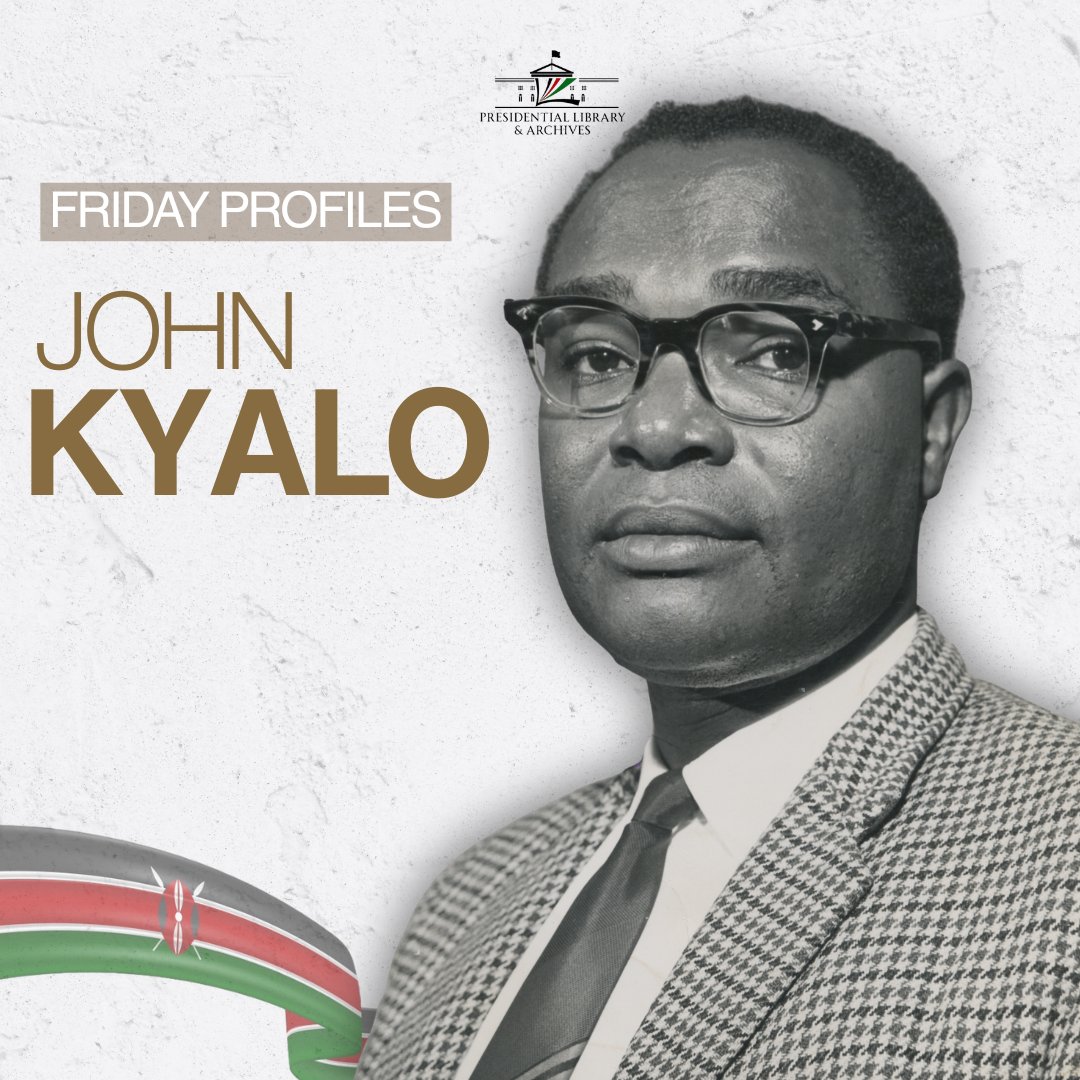
John Musembi Kyalo — The Minister Who “Misplaced” a Hospital In Kenya’s political folklore, few stories are told with as much amusement—and quiet admiration—as that of John Musembi Kyalo, the man who, depending on who you ask, either made a bureaucratic blunder… or pulled off a masterstroke. But long before he stepped into the charged arena of elections, he had already climbed to the very top of government administration—serving as a District Officer, rising through the ranks to become Director of Immigration, and eventually Permanent Secretary under both Jomo Kenyatta and Daniel arap Moi. He was, by all accounts, a technocrat—methodical, efficient, and deeply embedded in the machinery of the State. But the true measure of the man—nicknamed "Kyalo wa Makindi" or "the forceful one"—was revealed only after he traded his suit for the unpredictable arena of politics. Except, politics proved less forgiving. He tried once. Lost. Tried again. Lost. And even after the 1982 attempted coup reshaped Kenya’s political landscape, Kyalo still couldn’t quite break through. Then in 1988, on his third attempt—and through the controversial mlolongo (queue voting) system—he finally entered Parliament. By then, he had learned something important: he was not a rally man. Not a crowd-stirring orator. So, he built a different kind of campaign—quiet, deliberate, almost surgical. He knocked on doors at night, speaking one-on-one, building trust in whispers rather than speeches. It worked. By 1992, he was no longer just an MP—he was in Cabinet, appointed Minister for Health by President Moi, a sign of both trust and proximity to power, aided in no small measure by his alliance with the legendary Ukambani kingmaker, Mulu Mutisya. And then came the hospital. It was during his tenure as Minister for Health that Kyalo executed his most audacious "clerical error"—a story that remains a hilarious and legendary footnote in Kenyan governance. At the time, the people of Makueni were suffering, traveling 60 kilometres to Machakos just for basic medical care. Kyalo saw the need, but the bureaucratic wheels moved slowly, and the funds were often earmarked elsewhere. Suddenly, a multi-million-shilling modern hospital began rising in Makueni with unprecedented speed, overseen by the Minister himself. When the ribbon was cut and the doors opened, a confused cry rose from Nyeri District. The political leaders there were wondering what had happened to their own planned facility in Mukurweini. With the straightest of faces, Kyalo launched a "thorough investigation" into the matter. His conclusion? A tragic, unfortunate clerical mix-up. He apologised profusely to the people of Nyeri, blaming the ministry’s confusion for sending Mukurweini’s hospital to Makueni. He promised to "correct" the error in the next budget—which he eventually did—but the deed was done. Years later, over drinks with close friends, the "forceful" Kyalo finally dropped the mask, admitting with a wink that the mix-up had been a calculated means to an end. He had simply decided that his people had waited long enough. A Final Farewell Kyalo’s voice, once used for quiet night-time persuasion and clever ministerial defences, began to fail him midway through his term. Diagnosed with throat cancer, he passed away in 1995 while still in office. He was buried with the full honours of the state, mourned by the President and the entire Ukambani leadership—leaving behind a legacy of a man who knew exactly how to work the system, even if it meant "losing" a whole hospital along the way.
Presidential Library & Archives tweet media
English
3
62
142
14.2K
Presidential Library & Archives
President Daniel arap Moi delivers a pointed lesson in demographics, warning that land cannot stretch like rubber to keep pace with a growing population.
English
0
7
15
782
Presidential Library & Archives
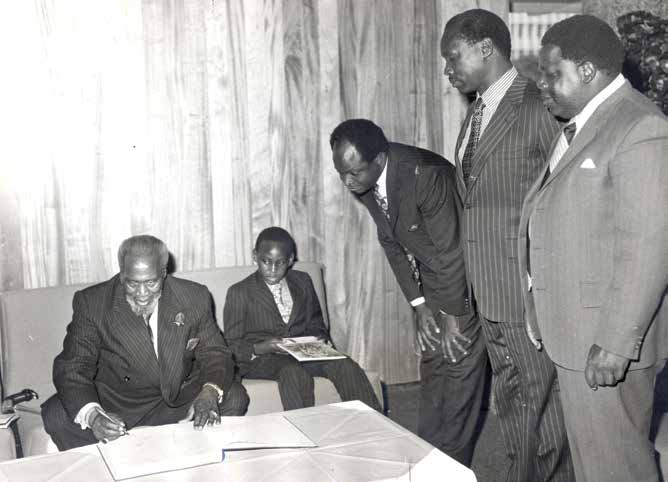
Power, proximity, and legacy in one frame. Jomo Kenyatta attends to official business as Daniel arap Moi and Mwai Kibaki look on—figures who would later steer the nation in their own right. Seated quietly beside them is Muhoho Kenyatta, a reminder that beyond the weight of statecraft, this was also a moment of family, continuity, and the subtle intersections between public duty and private life.
Presidential Library & Archives tweet media
English
1
4
10
592
Presidential Library & Archives
25 November 2001, Narok Town: President Daniel arap Moi takes to the streets, walking into a sea of chants of “Nyayo!”—a familiar call that followed him for decades. In a brief, tender pause, he lifts a young girl in a pink jacket from the crowd—an unscripted moment of contact in the middle of the procession—before moving on, the chants trailing behind him. Moments like these—do they take you back? Where were you in 2001?
English
3
13
33
3.3K
Presidential Library & Archives
President Daniel Moi raises a toast to Queen Elizabeth II during a State Banquet at State House, Nairobi, on 10 November 1983. The Queen was on a four-day state visit to Kenya, a journey that included a return to the historic Treetops Hotel—where in 1952 she learned she had become queen following the death of her father King George VI. Her return to Kenya three decades later carried both diplomatic significance and a personal link to the moment her reign began. Did you know that this turning point in British royal history took place in Kenya?
Presidential Library & Archives tweet media
English
0
8
69
6.8K
Presidential Library & Archives
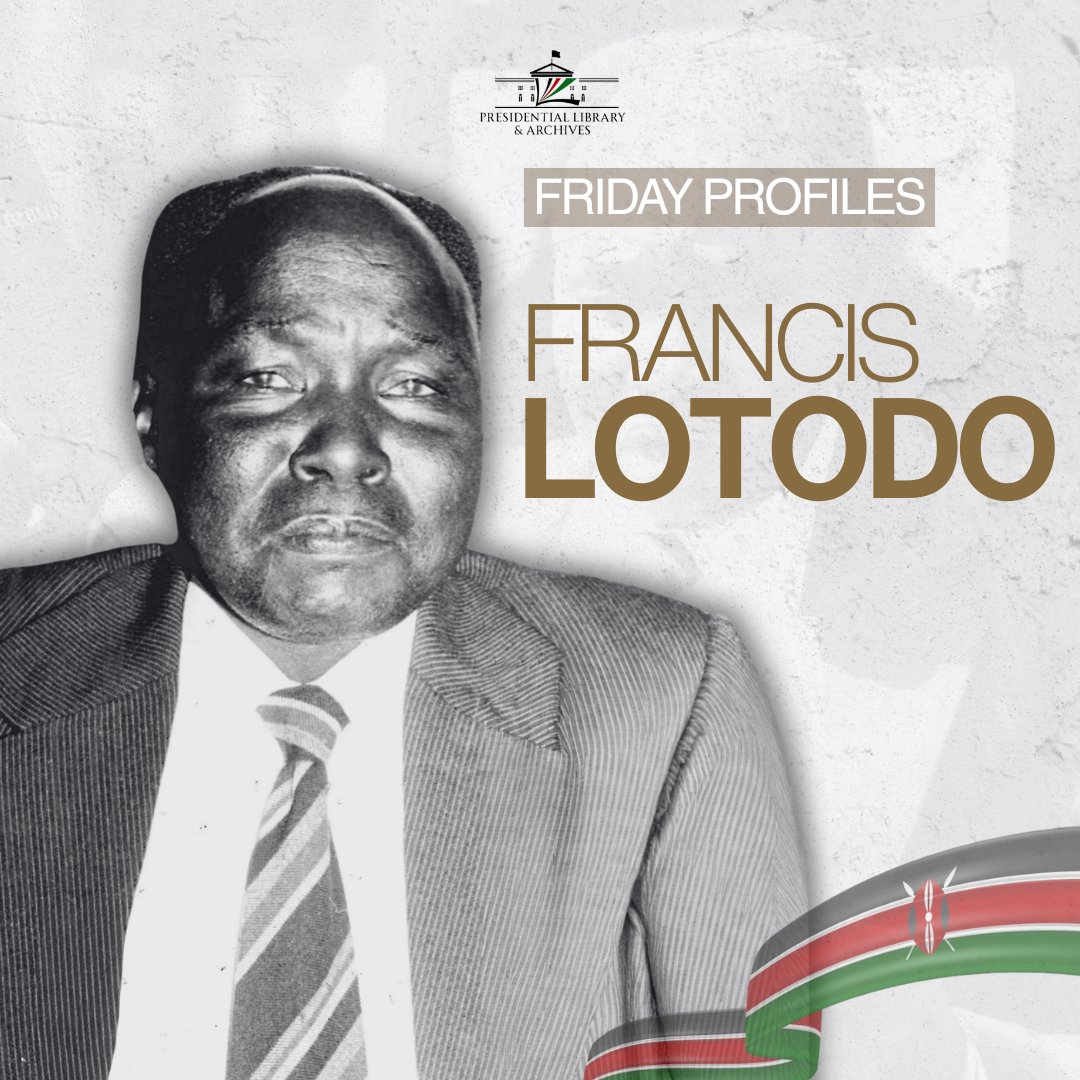
Friday Profiles: Francis Lotodo In the rugged corridors of Kenya’s political history, few figures cast a shadow as long—or as polarising—as Francis Loile Polis Lotodo. To the people of West Pokot County he was a fearless patriarch who gave everything for those he led, but in the corridors of power in Nairobi he remained an enigma—walking the razor’s edge between Cabinet minister and revolutionary. Little is documented about his early years. What is known is that the staunch Catholic sharpened his administrative skills as a clerk in Kapenguria and the Kitale African Court before the winds of politics carried him into Parliament in 1969 as MP for the larger Pokot constituency. It was a seat he would retain through successive elections in 1974, 1979, 1983, 1988 and into the multiparty era of the 1990s. Lotodo was a man of striking contradictions. A Cabinet minister in the government of Daniel arap Moi, he headed several portfolios including Energy, Lands and Physical Planning, Information and Broadcasting, Environment and Natural Resources, and Local Government. Yet he was also jailed and expelled from the ruling party, Kenya African National Union, for his uncompromising defence of traditional Pokot interests. When Moi ascended to the presidency, the northern frontier was marked by marginalisation and ethnic tension. Within this volatile environment, Lotodo emerged as a fierce voice for a community that felt ignored by the modern state. A staunch traditionalist, he famously viewed cattle rustling not simply as crime but as a cultural pillar—and was prepared to face imprisonment rather than betray his convictions. His career was often marked by controversy. In the late 1990s, while serving as Minister for Environment and Natural Resources, he found himself at the centre of inter-ethnic tensions. At one point he issued an ultimatum for other communities to leave Pokot land—a move that cost him his Cabinet post and landed him back in prison. Even in Parliament, he remained defiant. During the controversy over forest land allocations in Karura Forest, Lotodo famously refused to revoke the allotments, declaring that if it had to be done, “maybe another minister will do that. I will not revoke any allotment come what may.” Toward the end of his career, while serving as Minister for Energy, he oversaw key developments in Kenya’s power sector, including the licensing of geothermal power generation at Olkaria Geothermal Field. Yet the man who often fanned the flames was also called upon to douse them. In 1998, President Moi placed the same firebrand at the forefront of brokering peace between the Pokot, Turkana, Samburu and Marakwet communities—testament to his unique influence. When Lotodo died in 2000, President Moi described him as a loyal and faithful minister. Supporters remembered him as something more—a fearless leader who never hesitated to speak his mind.
Presidential Library & Archives tweet media
English
0
8
15
1.5K
Presidential Library & Archives
13 April 1979: President Daniel arap Moi flags off the legendary East African Safari Rally at the KICC in Nairobi. The rally would eventually be won by Kenyan driver Shekhar Mehta. However, you’ll notice that the machines of that era looked very different from the high-tech cars competing in today’s World Rally Championship, which returns from tomorrow to Sunday. But while the technology has evolved, the spirit of the Safari has remained the same—endurance, dust, mud, and drivers pushing to the limit.
English
1
15
26
1.4K
Presidential Library & Archives
In the early ’90s, the dawn of multiparty politics saw Mwai Kibaki exit KANU to forge the Democratic Party. Here, the Othaya MP is pictured alongside fellow Opposition titan Raila Odinga —a snapshot of the alliances and re-alignments that redefined Kenya’s political landscape. What memories do you have of this period in Kenya’s politics—or, it's history you are learning?
Presidential Library & Archives tweet media
English
1
4
13
1.2K
Presidential Library & Archives
Our Taita Taveta school tour came to a close today at Mwamunga Primary School in Voi Sub-County. Three days, three schools, countless curious young minds, and the next generation of custodians of our national story. Thank you, Taita-Taveta for having us!
English
0
2
6
455
Presidential Library & Archives
Our Taita Taveta school tour rolled into Kitivo Primary School today, where curious young minds stepped into Kenya’s history through film and storytelling. From moments of independence to the leaders who shaped our nation, the session sparked plenty of excitement and questions from the pupils — proof that history truly comes alive when it’s shared.
English
0
2
3
334
Presidential Library & Archives
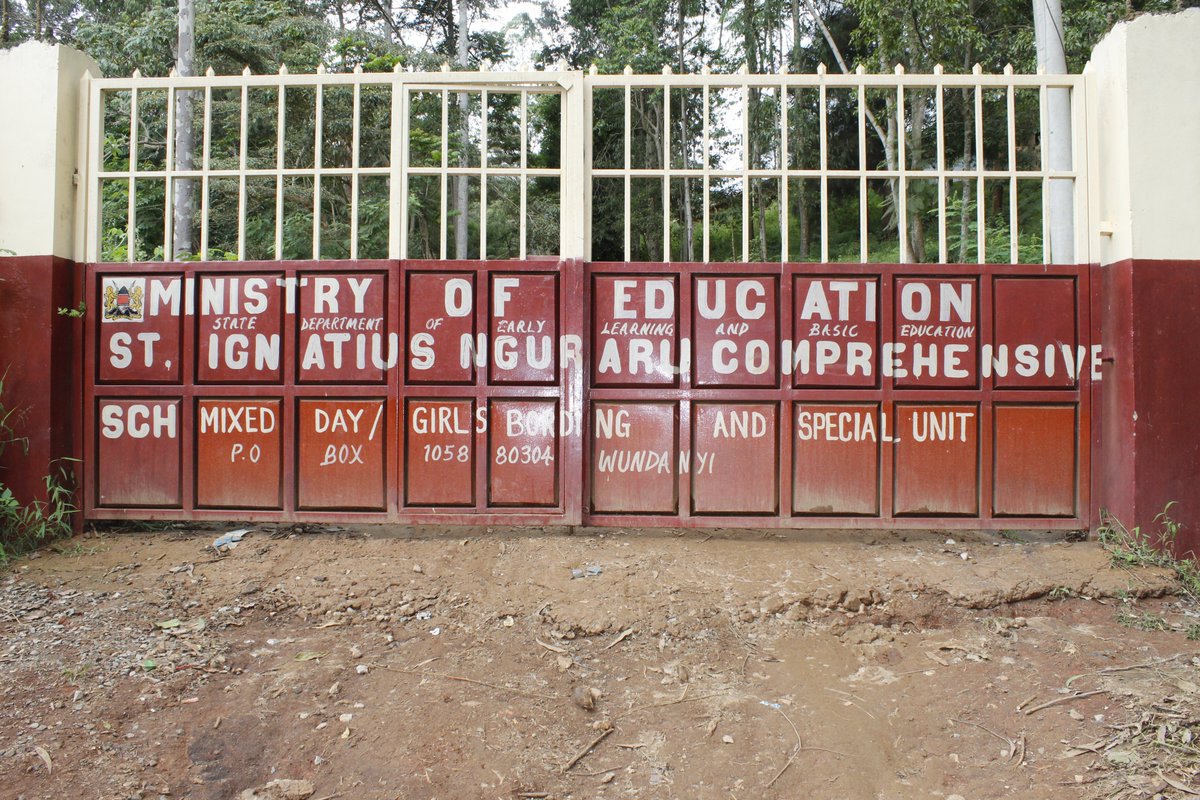
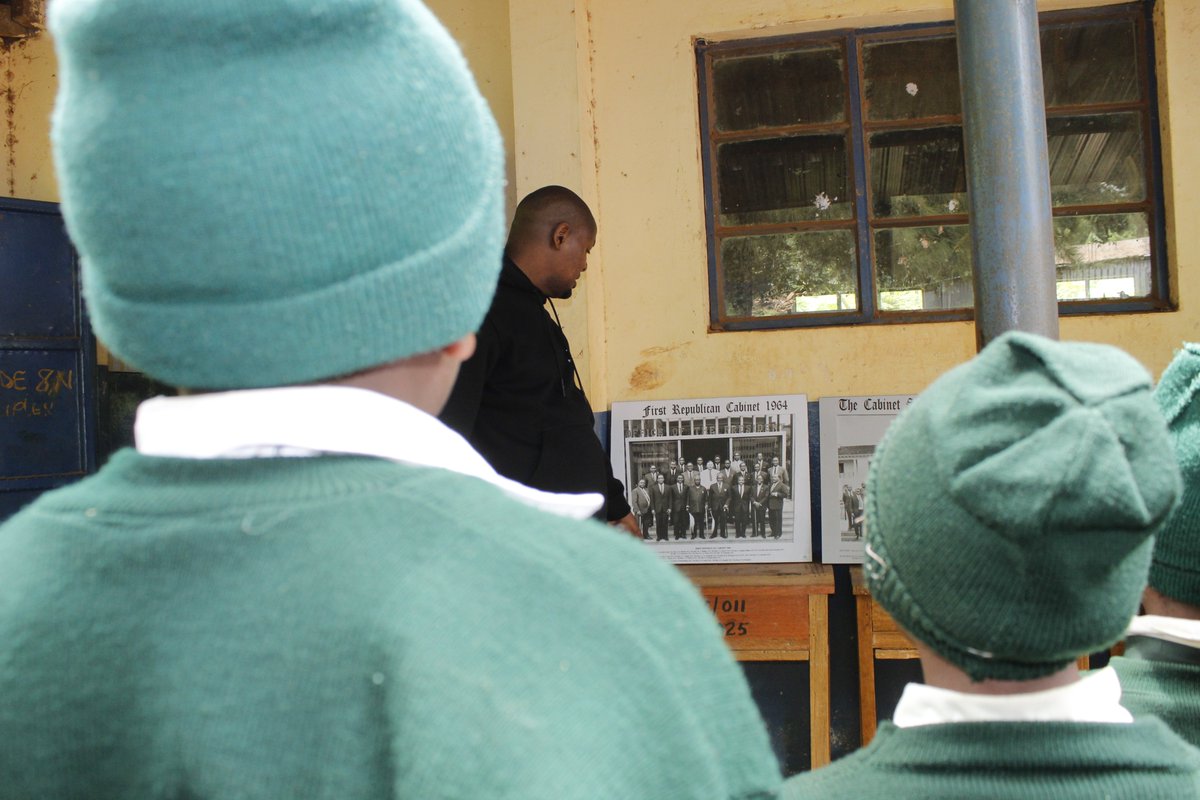
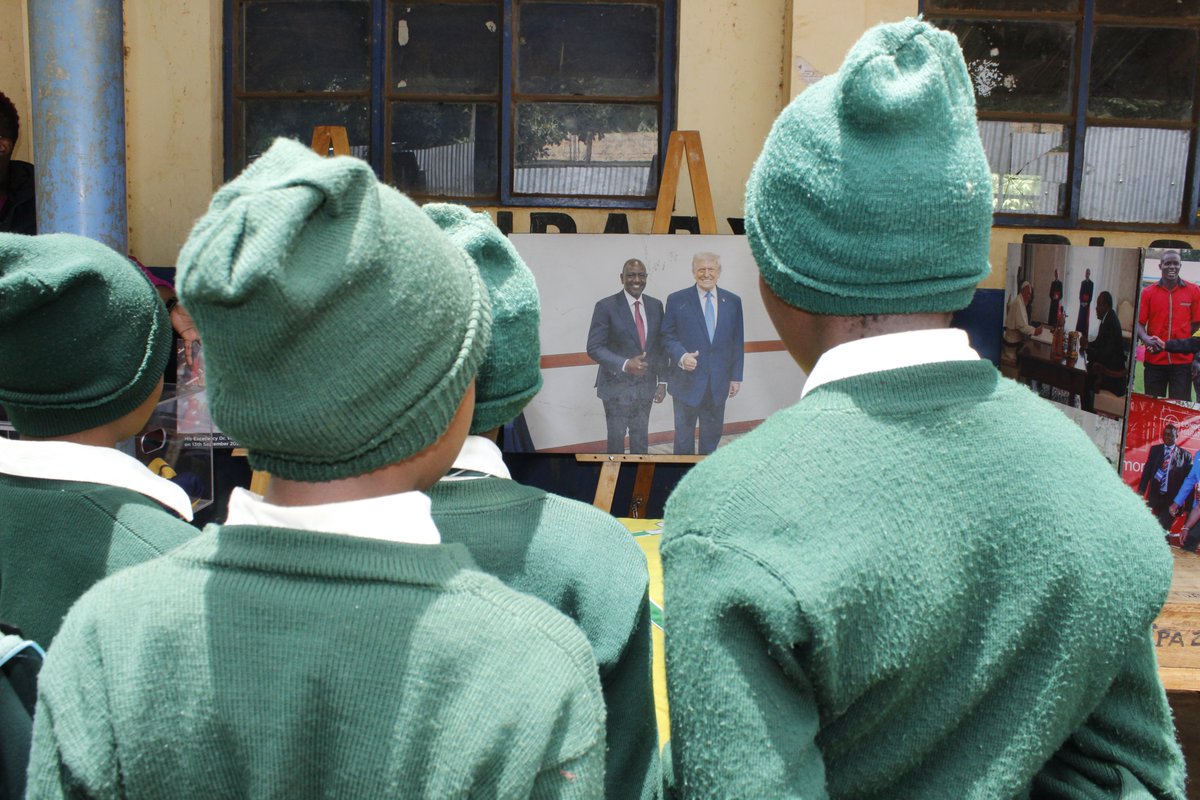
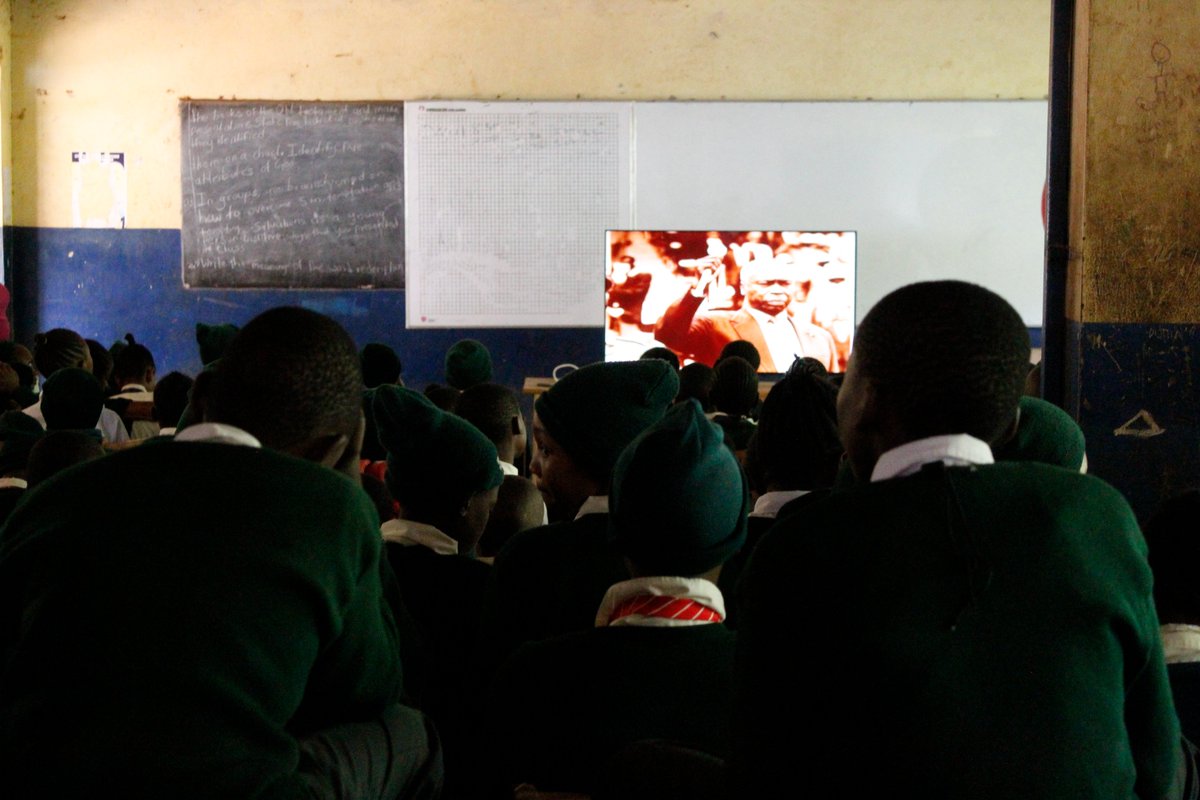
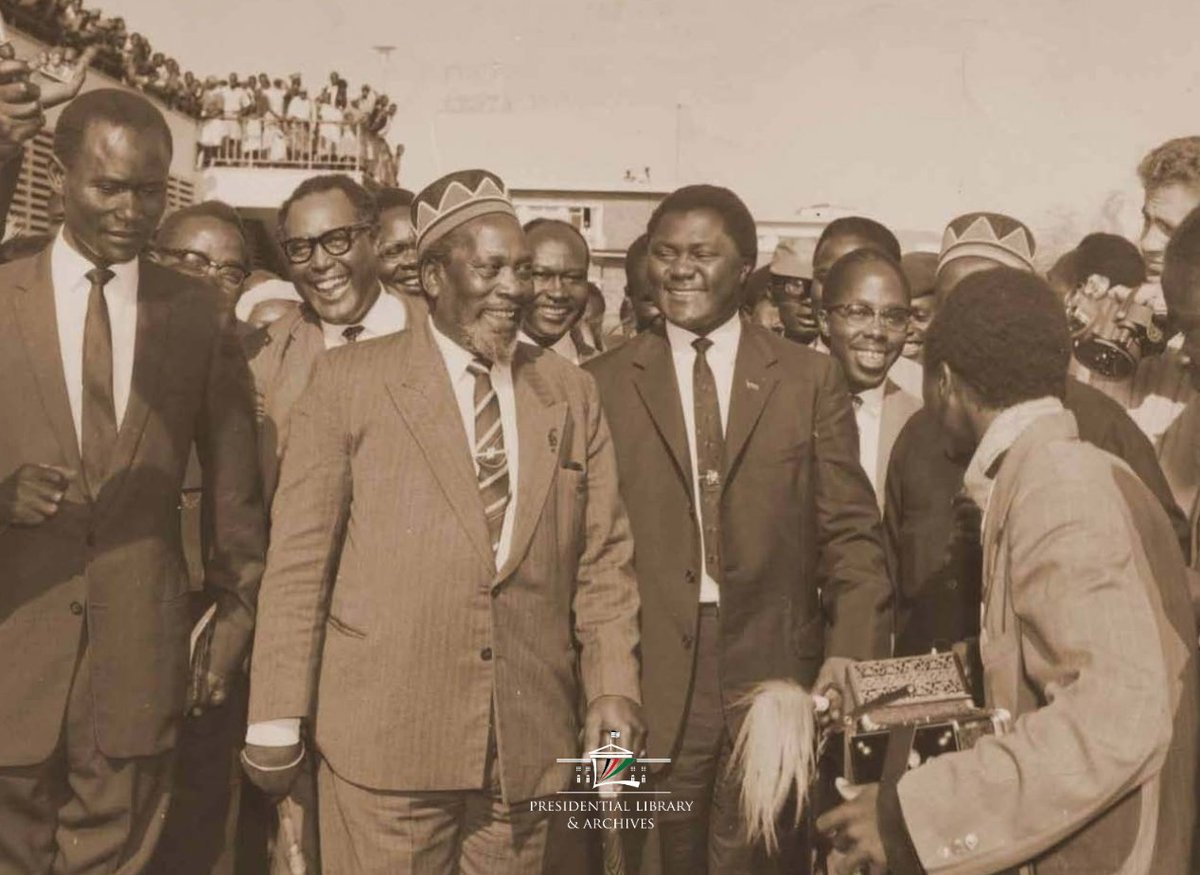
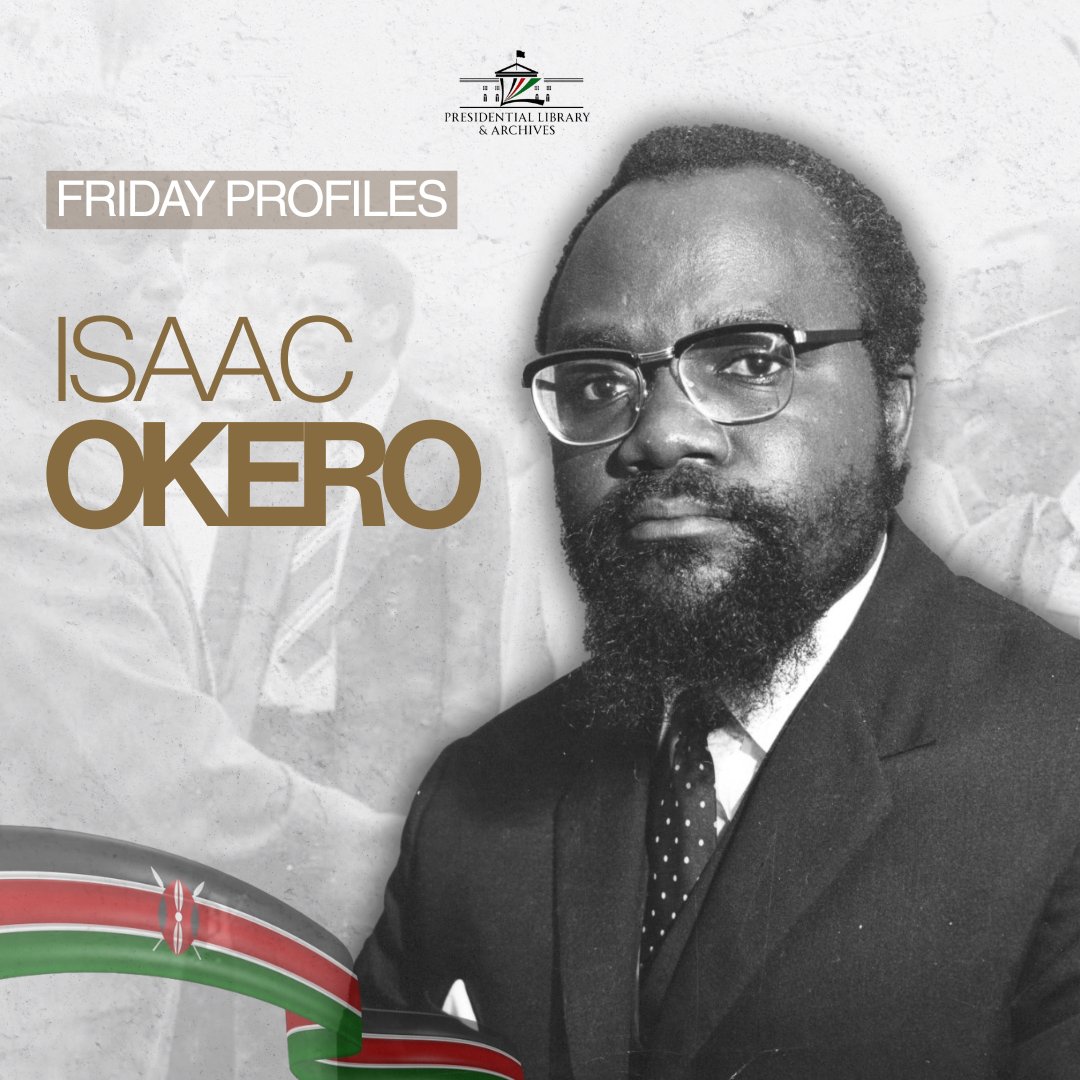
A wonderful start to our Taita Taveta County school tour today at St Ignatius Nguraru Comprehensive School. Through historical films, photographs, and stories from Kenya’s presidencies, pupils had a chance to connect with moments that helped shape the nation we know today. Thank you to the pupils and teachers for the warm reception and lively engagement. Tomorrow, the journey continues at Kitivo Primary School.
Presidential Library & Archives tweet mediaPresidential Library & Archives tweet mediaPresidential Library & Archives tweet mediaPresidential Library & Archives tweet media
English
0
3
6
261
Presidential Library & Archives
1962: Jomo Kenyatta arrives at Embakasi Airport (now Jomo Kenyatta International Airport —JKIA), after the historic Lancaster House Conference, greeted by jubilant crowds. At his side are fellow nationalist leaders including Jaramogi Oginga Odinga, Tom Mboya, Joseph Murumbi, Mbiyu Koinange, Achieng’ Oneko and Gikonyo Kiano—figures who would soon help steer Kenya toward independence. The delegation had gone to negotiate a nation’s future; they returned carrying the promise of freedom.
Presidential Library & Archives tweet media
English
2
15
60
3.2K
Presidential Library & Archives
In the heart of Nyanza’s Gem constituency, they called him "Rayier —the hairy-bearded one—a name that came to symbolise a brand of leadership that was as ruggedly independent as it was intellectually sharp. His story begins in the village of Ulumbi, born into a legacy of discipline under the shadow of the legendary Chief Odera Kang’o, who believed that without education, a man was nothing. Young Okero took this to heart, though his spirit was always a restless one. As a student at Makerere, he didn't just study; he led, spearheading a strike in 1952 that saw him expelled for his "hot-headed" conviction. But you cannot cage a rising star. From the lecture halls of Bombay, where he recorded banned songs of freedom for the Mau Mau struggle, to the prestigious chambers of London’s Middle Temple, Okero forged himself into a formidable barrister. When he finally returned to Kenya, it was to a nation on the cusp of a new dawn, and he ascended the civil service ranks with a speed that made his talent "obvious to all". Yet, it was the turbulent year of 1969—a year marked by the dark shadows of assassination and political detention—that called him to the "August House". Yielding to public pressure, Okero stepped into the shoes of fallen giants to represent Gem and for the next decade, he was a fixture on the front benches, a trusted lieutenant to President Mzee Jomo Kenyatta. Whether he was steering the Ministry of Health or commanding the massive dockets of Power and Communications, he was known as a "results-oriented manager". It was during these years that he pulled Kenyatta aside after a Cabinet meeting, securing with a few brief words the authorisation for what would become the Siaya District Hospital. However, the political labyrinth is full of mirrors. In 1978, as the nation transitioned to the Moi era, Okero was elected National chairman of the ruling KANU party. But while he walked the aisles of the KICC to the cheers of delegates, powerful forces were meeting in the dead of night to seal his fate. When the betrayal was revealed the next morning, many expected a roar of protest. Instead, "Rayier" rose with a dignity that silenced the room. He strode to the microphone, acknowledged the "night meeting" that had conspired against him, and simply wished his successor well. He left the stage as he had entered it: on his own terms. Even when he was eventually "rigged out" of Parliament and relegated to the political cold, his impeccable track record remained a beacon. Decades later, he was called back to save the national airline, Kenya Airways, midwifing its most successful privatisation and turning a loss-making carrier into the "Pride of Africa". Now, in the twilight of his years, the veteran sits back, preferring the quiet of his hobbies—flying and golf—to the vanity of self-praise. And, that is the not-so-short story of the bearded lawyer from Gem who proved that in the game of power, one’s principles are the only true currency.
Presidential Library & Archives tweet media
English
3
18
44
5.3K
Presidential Library & Archives
Flashback to September 1, 1999, at Mombasa’s Tononoka Grounds. President Daniel arap Moi had the crowd in the palm of his hand, leading the famous KANU salute with calls to tingisha , and the response was deafening. What is the one thing you remember most about the rallies of the 90s?
English
3
39
76
11.1K
Presidential Library & Archives
May 24, 1968, Mombasa: President Jomo Kenyatta and Vice President Daniel arap Moi sing to the “KANU yajenga nchi” tune—a song that had become the unmistakable anthem of the ruling Kenya African National Union and the soundtrack of a young nation in motion. For many, its rhythm carried the optimism of the era. What memories does this song stir for you?
Presidential Library & Archives tweet media
English
3
7
49
2.9K
Presidential Library & Archives
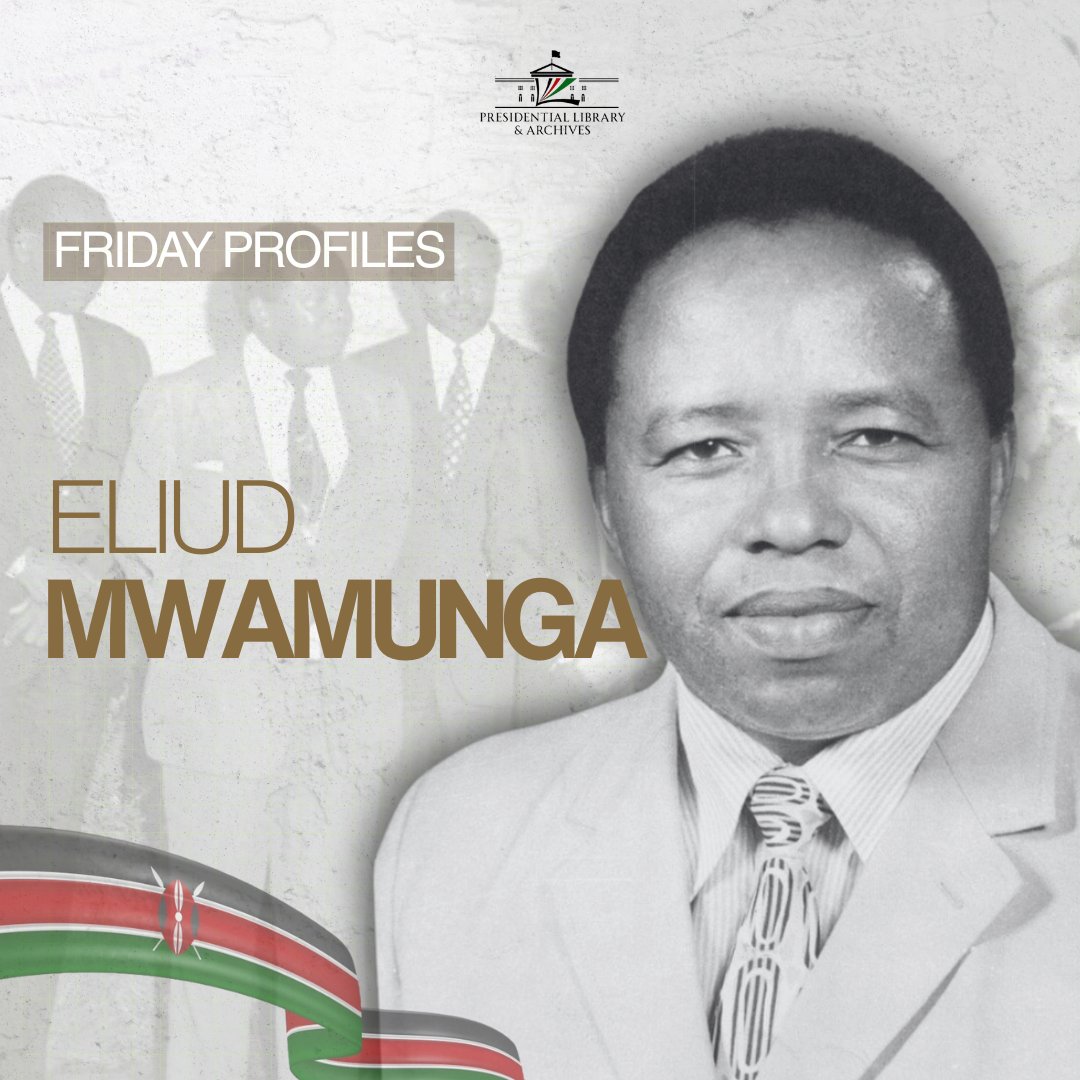
For this week’s Friday Profiles, we look back at the life of a man who navigated the "choppy waters" of Kenyan politics for two decades, serving two presidents before becoming a foundational pillar of the opposition. It's the story of Eliud Mwamunga: Master of the Taita Hills. Born in 1935 in Ishamba, at the foot of the Taita Hills, Eliud Timothy Mwamunga was a man of the land and the law. A graduate of the "educational Mecca" Makerere University and the University of Dar-es-Salaam, he entered adulthood as a teacher during the height of the Mau Mau uprising and the struggle for independence. Inspired by the coastal activism of Ronald Ngala, Mwamunga eventually transitioned into local government as a Clerk to the Taita Taveta County Council. It was during these early years, traveling across his native land, that he witnessed the dire need for basic necessities, leading him to wage a relentless campaign against land grabbing and for the protection of local ranchers. In 1969, at the age of 34, Mwamunga traded his clerk’s robes for a seat in Parliament, beginning a remarkable 20-year uninterrupted tenure as the MP for Voi. He proved to be an astute navigator of the "choppy waters" of government, serving under both President Jomo Kenyatta and his successor, Daniel arap Moi. Under Kenyatta, he spearheaded the nation’s first dam projects as Minister for Water Development and later accelerated the "Africanisation" of trade as the Minister for Commerce and Industry. Even on the global stage, he held his own, hosting the 4th Session of the UN Conference on Trade and Development in 1976 alongside international giants like Henry Kissinger. However, the political tides began to turn in the 1980s. Despite his strategy of playing "low-profile politics" to avoid the sudden dismissals common at the time, Mwamunga found himself caught in the crosshairs of the "traitor" affair involving Charles Njonjo. His standing with the Moi administration further deteriorated due to a long-standing rivalry with coastal powerhouse Shariff Nassir and his perceived closeness to Mwai Kibaki. By January 1988, the man who had been a fixture of the Cabinet for years was sacked from his post as Minister for Information and Broadcasting, subsequently losing his seat in the controversial "queue-voting" elections of that year. Rather than retreating into silence, Mwamunga chose a final, bold act of political defiance. In 1992, he joined Mwai Kibaki to co-found the Democratic Party (DP), serving as its Coast representative and helping to usher in the era of multiparty democracy. Though he eventually lost his seat to a new crop of leaders and retired to a quiet life of farming and business in Ishamba, his legacy was already secure. When he passed away in 2018 at the age of 83, he was remembered not just as a savvy politician, but as a leader who had successfully protected over one million acres of community land for the people he loved. Which Cabinet Minister from previous regimes would you like to read about on Friday Profiles?
Presidential Library & Archives tweet media
English
1
9
12
2K
Presidential Library & Archives
We stand with the Muslim community in observing this sacred and holy month. Ramadhan Mubarak. 🌙
Presidential Library & Archives tweet media
English
0
1
4
316
Presidential Library & Archives
As Kenya’s population surged in the early years of his presidency, Daniel arap Moi turned to a practical solution to ease overcrowding in hospitals: the creation of Nyayo Wards. Rather than wait for entirely new facilities, these wards expanded bed capacity within existing hospitals—bringing relief closer to patients who needed it most. Some, like the 44-bed ward at Moi Teaching and Referral Hospital, quickly became lifelines. Others, including projects at Pumwani Maternity Hospital and Embu Provincial Hospital, reflected the era’s spirit of Harambee, rising through community effort despite economic strain. Today, many former Nyayo Wards remain in service—quietly carrying forward a legacy of access, resilience, and care.
Presidential Library & Archives tweet media
English
0
6
17
2.9K