Hello friend. First and foremost we share that Catholic background. I too came to the realization that you have. I would encourage you to remove the thought or word religion from your mind. Religion isn’t what the Lord wants. He wants belief, faith, trust, and heartfelt repentance. Find yourself a good Bible preaching church. Usually Non Denominational.
What if the most sobering moment of your eternity is not judgment for sin, but the unveiling of how your life will echo into Christ’s kingdom?
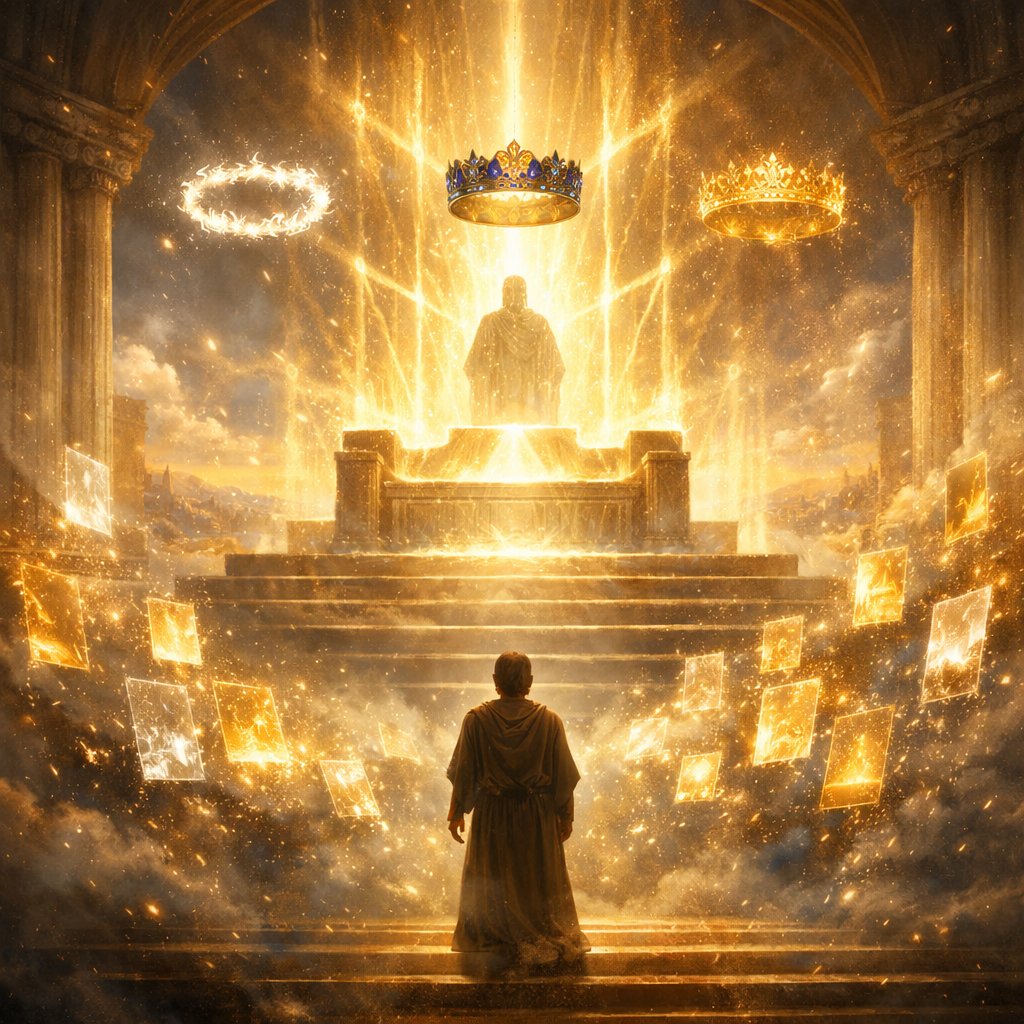
Scripture teaches that every believer will stand before Christ in a moment of evaluation often called the Bema Seat. Paul writes:
“For we must all appear before the judgment seat of Christ, so that each one may receive what is due…”
2 Corinthians 5:10
This is not a trial to determine salvation. The cross has already settled condemnation forever:
“There is therefore now no condemnation for those who are in Christ Jesus.”
Romans 8:1
The Bema is not about entering heaven. It is about entering the kingdom with a revealed record of stewardship. It is the moment when Christ discloses what our faith produced, what endured, and what follows us into His reign.
Jesus gave two parables that function like narrative previews of that encounter.
In the parable of the talents, a master entrusts his servants with wealth and leaves. After a long absence, he returns and settles accounts:
“He came and settled accounts with them.”
Matthew 25:19
The emphasis is not on equal gifting, but on faithful response. Each servant receives according to ability, yet the reward language is identical for the faithful:
“Well done, good and faithful servant… I will set you over much. Enter into the joy of your master.”
Matthew 25:21
The joy of the master is more than emotional affirmation. It includes expanded responsibility. Faithfulness in what seemed small becomes qualification for what is greater. Christ is teaching that present obedience prepares us for future participation in His kingdom.
This theme becomes even clearer in the parable of the minas. A nobleman departs to receive a kingdom and returns invested with authority. When he evaluates his servants, the reward is described in unmistakably governmental terms:
“Because you have been faithful in a very little, you shall have authority over ten cities.”
Luke 19:17
“You are to be over five cities.”
Luke 19:19
This is administrative language. Jesus is describing a real structure of delegated authority in the coming kingdom. Faithfulness now is not symbolic theater. It is training for rulership. Scripture repeatedly reinforces this connection:
“If we endure, we will also reign with him.”
2 Timothy 2:12
“They came to life and reigned with Christ…”
Revelation 20:4
Chuck Missler once summarized it this way:
“Heaven is not a retirement plan. It is a job assignment.”
The Bema Seat is therefore not simply about personal honor. It is about kingdom assignment. Christ evaluates who can be entrusted with responsibility in a restored world where righteousness governs, justice is visible, and His rule extends over the earth. The parables suggest that present stewardship becomes the basis for our future role in that administration.
The New Testament also speaks of rewards using the imagery of crowns. These are not ornamental trophies. They are symbols of recognized faithfulness.
Paul describes the crown of righteousness given to those who long for Christ’s appearing (2 Timothy 4:8). James speaks of the crown of life promised to those who endure trial (James 1:12). Peter describes the unfading crown of glory reserved for faithful shepherds (1 Peter 5:4). Paul adds the imperishable crown, awarded to those who exercise disciplined endurance in the race of faith (1 Corinthians 9:25).
These crowns testify that God remembers in detail. Every act of perseverance, every resisted temptation, and every quiet obedience is registered in heaven’s economy. Nothing done for Christ evaporates. The reward language of Scripture is not exaggeration. It reveals a moral universe in which faithfulness has measurable, eternal consequence.
Yet the parables also contain a warning. One servant buries what he was given. His failure is not scandalous rebellion, but unused trust. Paul describes the spiritual equivalent:
“If what has been built survives, the builder will receive a reward. If it is burned up, the builder will suffer loss but yet will be saved, even though only as one escaping through the flames.” (1 Corinthians 3:14–15)
Here Scripture introduces a sobering category: salvation without reward. A believer may arrive in eternity secured by grace, yet watch parts of his earthly life dissolve under divine evaluation. This is not condemnation, but it is irreversible forfeiture. The New Testament refuses to flatten eternity into sameness. Faithfulness carries weight.
This explains Paul’s intensity:
“I discipline my body… lest… I myself should be disqualified.”
1 Corinthians 9:27
He is not afraid of losing salvation. He is unwilling to waste his stewardship. The early church lived with the awareness that history is rehearsal for reign. Choices echo forward. Obedience prepares us for participation in Christ’s rule.
John writes:
“…abide in him, so that when he appears we may have confidence and not shrink from him in shame…”
1 John 2:28
A believer may meet Christ with confidence or with regret. Both are saved. Not both are equally entrusted.
The parables are not about money management. They are about borrowed existence. Time, gifts, influence, and breath are temporary trusts placed in our hands by a returning King:
“Behold, I am coming soon, bringing my recompense with me…”
Revelation 22:12
The Bema Seat is not meant to terrify believers. It is meant to awaken them. Every ordinary day participates in eternity. No faithfulness is trivial. No obedience disappears. No sacrifice is forgotten.
The cross guarantees heaven. Faithfulness determines what survives the fire and what you carry into the kingdom.
When you stand before Christ, the question will not be whether you were saved. That was settled at Calvary.
The question will be what kind of stewardship you place before the King who entrusted you with a life.
@LKisback@Mark_Wilson_25 I feel somehow relieved knowing that when I follow the Bible and follow God, what really matters is my faith in Him, not the religion.
@DonnieDarkened My understanding is that Yahweh is God, and that no matter your religion, you can follow Him if you follow the Bible. I don’t see Jewish people as bad, I think there’s just a lot of misunderstanding and conflict around them and around Jerusalem that causes division between people
@DonnieDarkened This is just me trying to understand all of this. I have started following your account and my understanding is that Yahweh is God, and that no matter your religion, you can follow Him if you follow the Bible. I say this cause I was raised as Roman Catholic
There is a deep, powerful theological warfare playing out right under our noses.
Make no mistake, there is a multi-faith effort to frame the biblical God, Jehovah/Yahweh as Baal/Satan/etc.
This will become more apparent to the saints as things unfold.
Be vigilant.
Proud to be supported by @MitsubishiAust 🚗
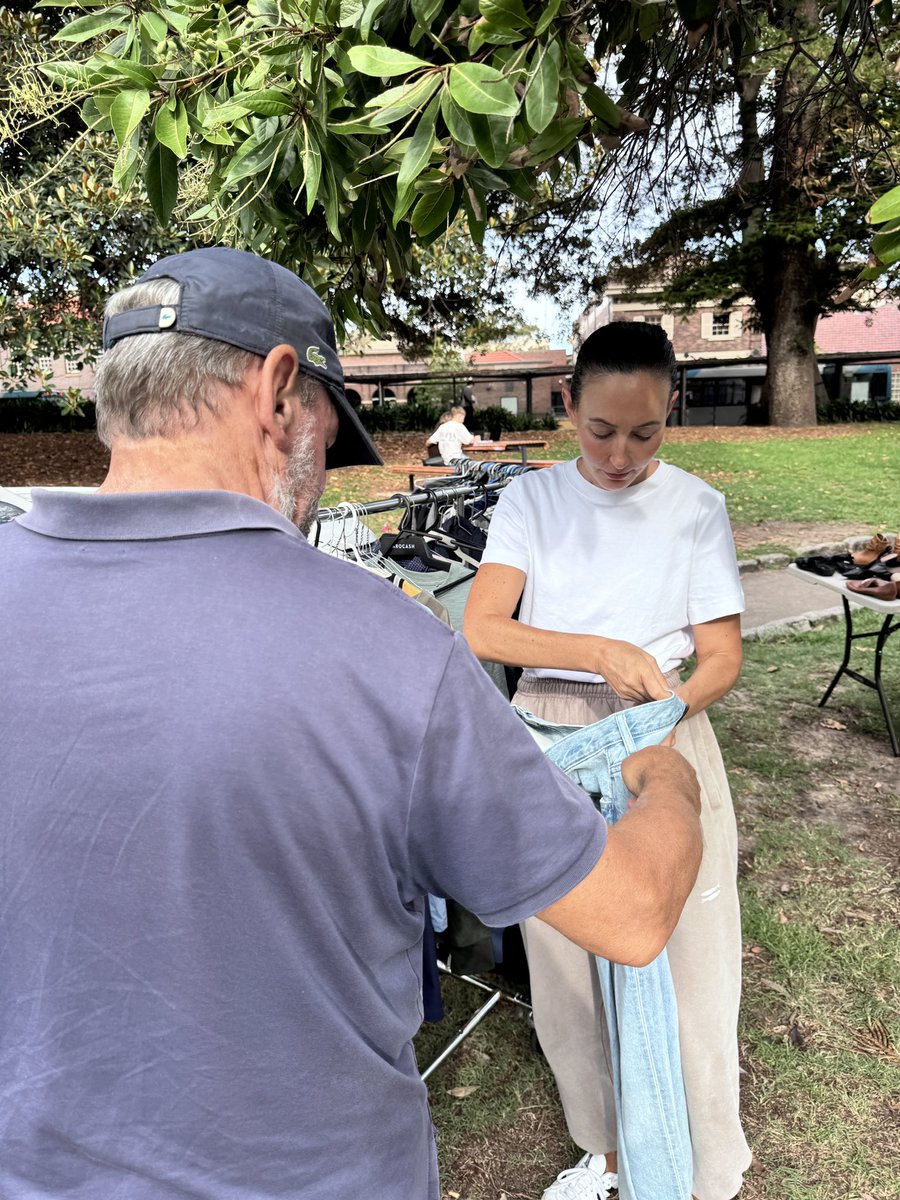
This car helps us deliver clothes, confidence, and dignity across Sydney — every outreach, every week.
Grateful for partnerships that create real community impact.
👉🏼 passitonclothing.com.au@OStyle2@ReadingThePlay